Why Korea Still Offers Exceptional Shopping Value in 2026
Korea's shopping advantage in 2026 is structural rather than circumstantial: K-beauty products sell for 30–50% less in Korean stores than at international retailers, and that figure is before factoring in the immediate VAT deduction available to foreign passport holders. According to Korea Experience, Seoul is not merely cheaper for skincare — it is the origin market for most of these brands, meaning the widest stock, the freshest production batches, and seasonal formats that rarely reach export channels. For K-pop fans already planning a Seoul trip around a concert or event, the shopping proposition requires almost no extra planning: it layers naturally on top of the itinerary.
Quick Answer: K-beauty products in Korea typically cost 30–50% less than international retail, and foreign visitors receive an immediate ~6–7% VAT refund on qualifying purchases between ₩30,000–₩500,000 at major chains like Olive Young — present a physical passport at a staffed cashier before paying, and the deduction is applied on the spot with no airport paperwork required.
The VAT system is the first mechanism to understand. Foreign tourists presenting a physical passport — not a digital copy, not a residence card — at a staffed cashier (not a self-checkout kiosk) receive an on-the-spot deduction of approximately 6–7% for purchases between ₩30,000 and ₩500,000 per transaction. According to Korea Tourism Organization, over 121 Olive Young locations across the country participate in this immediate refund program, so the airport kiosk queue on departure day is simply unnecessary.
Seoul's shopping geography has also shifted. Myeongdong remains the highest-density strip for international visitors, but Seongsu — a former industrial district on the north bank of the Han River — has developed into a legitimate secondary hub since around 2023. The Olive Young Seongsu flagship spans three floors, drawing a mix of domestic Korean shoppers and tourists arriving for the area's café culture. Newmix Coffee, the specialty coffee brand born in Seongsu, has expanded to Bukchon and Hannam while keeping its flagship rooted in the neighborhood — a natural stop on any Seongsu loop.
Timing also materially affects what you pay. Olive Young runs quarterly sales in March, June, September, and December, with discounts reaching up to 70% during peak event days. Weekly rotating 1+1 deals — where a second unit costs only ₩2,000–3,000 more than a single — reset every Monday and are trackable via the Olive Young app. If your visit window overlaps with a quarterly sale, prioritize sunscreens and toner pads first — that is where the per-unit savings are highest.
K-Beauty & Skincare at Olive Young: What to Actually Buy
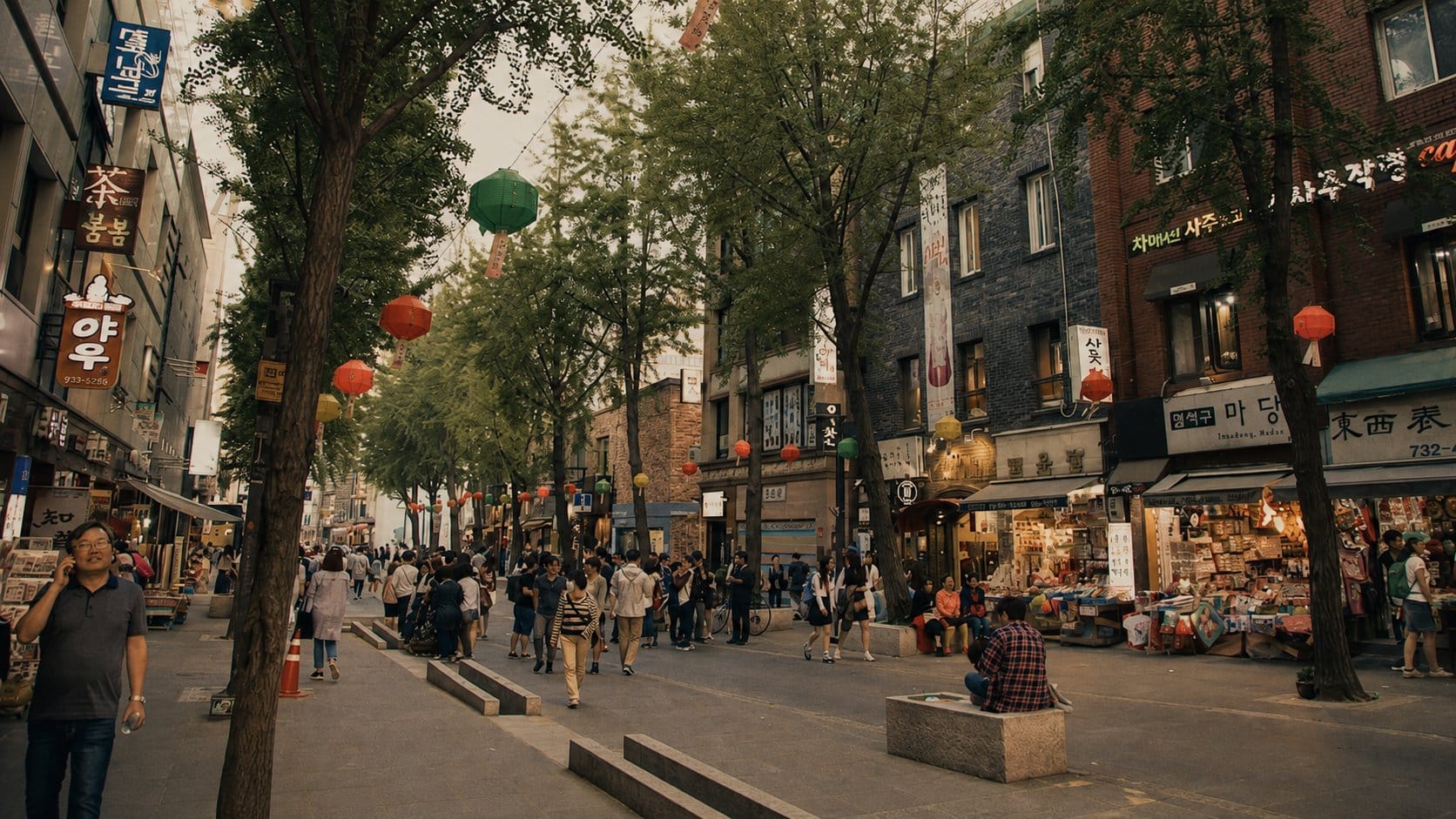
Olive Young is South Korea's dominant health and beauty chain, operating as the closest domestic equivalent to a curated beauty department store. The product mix skews heavily toward domestic Korean brands rather than global names — which is precisely why prices diverge so sharply from what those same brands fetch in airport retail or overseas pharmacies. The clearest evidence of the gap: a product widely available on Amazon for $28 USD routinely sits on the shelf here for the equivalent of $11–13.
The sunscreen category offers the most striking price differential for most visitors. Beauty of Joseon Relief Sun: Rice + Probiotics retails in-store for approximately ₩16,000, a product that routinely lists for $22–28 USD internationally. Round Lab Birch Juice Moisturizing Sun Cream (SPF50+ PA++++) runs approximately ₩25,000 for a 1+1 set during quarterly sales, effectively delivering two tubes for what a single costs abroad. Both are lightweight, non-greasy formulas that have topped Korean skincare rankings for multiple consecutive years. According to Korea Experience's 2026 Olive Young guide, these two sunscreens are consistently among the top foreign visitor purchases.
For serums and essences, the value logic is equally compelling. CosRX Advanced Snail Mucin Essence retails in-store for ₩18,000–25,000, noticeably cheaper than its price on international platforms. Torriden Dive-In Hyaluronic Acid Serum (50ml, ~₩22,000) is a consistent bestseller favored for its fragrance-free, low-irritant formula. VT Reedle Shot, priced between ₩30,000 and ₩50,000 depending on size, is a micro-tipping serum that has generated significant social content coverage in 2025–2026 — Korean shoppers have been buying it for its texture-refining effect long before it trended internationally (video: Beauty Within).
"These are the products Koreans are actually buying for themselves — the sunscreens, the snail essences, the ceramide creams. They're not buying them because of trends; they've been using them for years." — Beauty Within, YouTube channel covering Korean skincare from an insider perspective (video: Beauty Within)
For makeup, three products stand out for format originality and price-to-performance. The Clio Kill Cover The New Founwear Cushion (~₩28,000) comes in a refillable compact with buildable coverage in a format rarely replicated at equivalent price points abroad. Rom&nd Juicy Lasting Tint (~₩9,000) is a lightweight lip product with an extensive shade range, priced at roughly one-third of comparable Western tints. Dasique Shadow Palette (~₩28,000) delivers pigmented, blendable shades in a travel-sized compact that slips into a carry-on without adding meaningful weight.
For hair and toner pads: UNOVE Deep Damage Treatment EX (~₩22,000) is a deep conditioning treatment popular with color-treated hair, and Skinfood Carrot Carotene Calming Water Pad (~₩18,000 for 60 pads) has been a multi-year Olive Young bestseller — a high per-pad value at that price point.
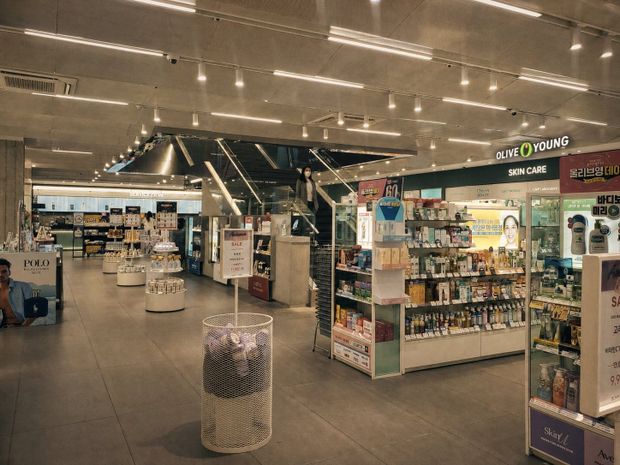
The Olive Young Myeongdong Town flagship is the most accessible store for first-time visitors: English-speaking staff are stationed on the floor, and a "Global Hot Issue" corner curates the top purchases made by foreign visitors, updated based on actual sales data. If you are short on time or uncertain which products to prioritize, that corner is the lowest-friction starting point.
📍 View Olive Young Myeongdong Town on Google Maps
The Seongsu flagship organizes its three floors by category: 1F for new and trending introductions, 2F for all makeup, and 3F for hair and skincare. It draws a more domestic Korean crowd, so stock reflects what local buyers are actually purchasing rather than a tourist-curated selection. Weekday mornings are noticeably less crowded than weekends or evenings before or after nearby events.
📍 View Olive Young Seongsu on Google Maps
| Category | Product | In-Store Price (₩) | Why It's Worth the Bag Space |
|---|---|---|---|
| Sunscreen | Beauty of Joseon Relief Sun: Rice + Probiotics | ~₩16,000 | Lightweight finish; $22–28 abroad; eligible for 1+1 during sales |
| Sunscreen | Round Lab Birch Juice Sun Cream SPF50+ PA++++ | ~₩25,000 (1+1 set) | Two units for the price of one during quarterly sales |
| Serum | Torriden Dive-In Hyaluronic Acid Serum (50ml) | ~₩22,000 | Fragrance-free; consistent dermatology bestseller; import markup is high |
| Essence | CosRX Advanced Snail Mucin Essence | ₩18,000–25,000 | Noticeably cheaper than international platforms including Amazon |
| Serum | VT Reedle Shot | ₩30,000–50,000 | Micro-tipping formula; viral 2025–2026; limited international availability |
| Toner Pads | Skinfood Carrot Carotene Calming Water Pad (60 pads) | ~₩18,000 | Multi-year bestseller; excellent per-pad value |
| Makeup | Clio Kill Cover The New Founwear Cushion | ~₩28,000 | Refillable compact; buildable coverage format rarely replicated abroad |
| Makeup | Rom&nd Juicy Lasting Tint | ~₩9,000 | ~1/3 the price of comparable Western tints; wide shade range |
| Makeup | Dasique Shadow Palette | ~₩28,000 | Travel-sized; pigmented; high-value relative to international equivalents |
| Hair Care | UNOVE Deep Damage Treatment EX | ~₩22,000 | Deep conditioning; popular with color-treated hair; 300ml goes in checked bag |
Korean Snacks & Packaged Food Gifts: What Survives the Flight
Korean packaged food gifts occupy a practical sweet spot in the souvenir economy: they are inexpensive at origin, lightweight, and — when factory-sealed — clear customs without issue in most international destinations. The logic is simple: dried, shelf-stable foods like ramen, seaweed, and baked goods travel as carry-on or checked baggage reliably across most international routes. The category also offers the widest range of price points, from ₩800 convenience store items to presentation-grade department store gift sets well above ₩30,000.
Instant ramen delivers the most obvious price arbitrage. Shin Ramyun, the most globally recognizable Korean ramen brand, retails for ₩800–1,200 per pack at supermarkets and convenience stores in Seoul, compared to ₩2,500–4,000 or higher at Korean specialty importers abroad. Buldak fire chicken noodles (Samyang) come in multiple heat levels, from ₩800 for a single pack to ₩4,000 for a multi-pack set, and are sold at every convenience store (GS25, CU, 7-Eleven) and major supermarket. Buying a variety box from a department store basement provides neater gift presentation if you prefer not to assemble individual packs (video: Strictly Dumpling).
Classic packaged snacks travel without complication. Choco Pie, Pepero (chocolate-dipped snack sticks), and honey butter almonds are all shelf-stable solid foods within airline regulations and under customs declaration thresholds in most countries. Gift sets combining these items start around ₩2,000 for small formats and scale up at department store food halls, where presentation-grade packaging suits formal gift-giving. According to YourKorea.Life, these classic formats remain among the most reliably received Korean gifts for overseas recipients unfamiliar with the cuisine.
For 2026's standout artisanal gift, Yakgwa — traditional Korean honey cookies made from wheat flour, sesame oil, and ginger — have crossed into mainstream souvenir territory. Gift boxes start at approximately ₩15,000 at specialty shops, and sealed factory versions are appearing on department store basement floors and online platforms. They are solid, relatively flat, and hold well in checked luggage. Sealed Tteok (rice cake) gift boxes from approximately ₩15,000 also travel reliably when refrigerator-sealed and labeled for export — avoid fresh, unpackaged tteok, which has a short shelf life and is typically not export-labeled.
Newmix Coffee (₩9,000–17,900 per item) is a brand born in Seongsu that has grown into a multi-location specialty coffee operation with flagships in Seongsu, Bukchon, and Hannam. Its ground coffee, beans, and packaged blends make strong souvenir candidates — light, TSA-compliant, and genuinely representative of Seoul's contemporary café scene. Visit on a weekday morning between 11 AM and 1 PM to avoid the longest queues (video: Angelica & Aileen Wanders).
📍 View Newmix Coffee Seongsu on Google Maps
Gim (dried seaweed) rounds out the practical gift list: lightweight, customs-friendly, and available in individually portioned gift sets at department stores from around ₩20,000. Larger food hall sets from Lotte, Shinsegae, or Hyundai department stores bundle gim alongside sesame oil and condiment sets in gift-ready packaging. These clear most international customs declarations when contents are dried or processed goods, though travelers to Australia and New Zealand should declare all food items regardless of processing.
Traditional Crafts & Ceramics: Insa-dong Shopping Without the Tourist Traps
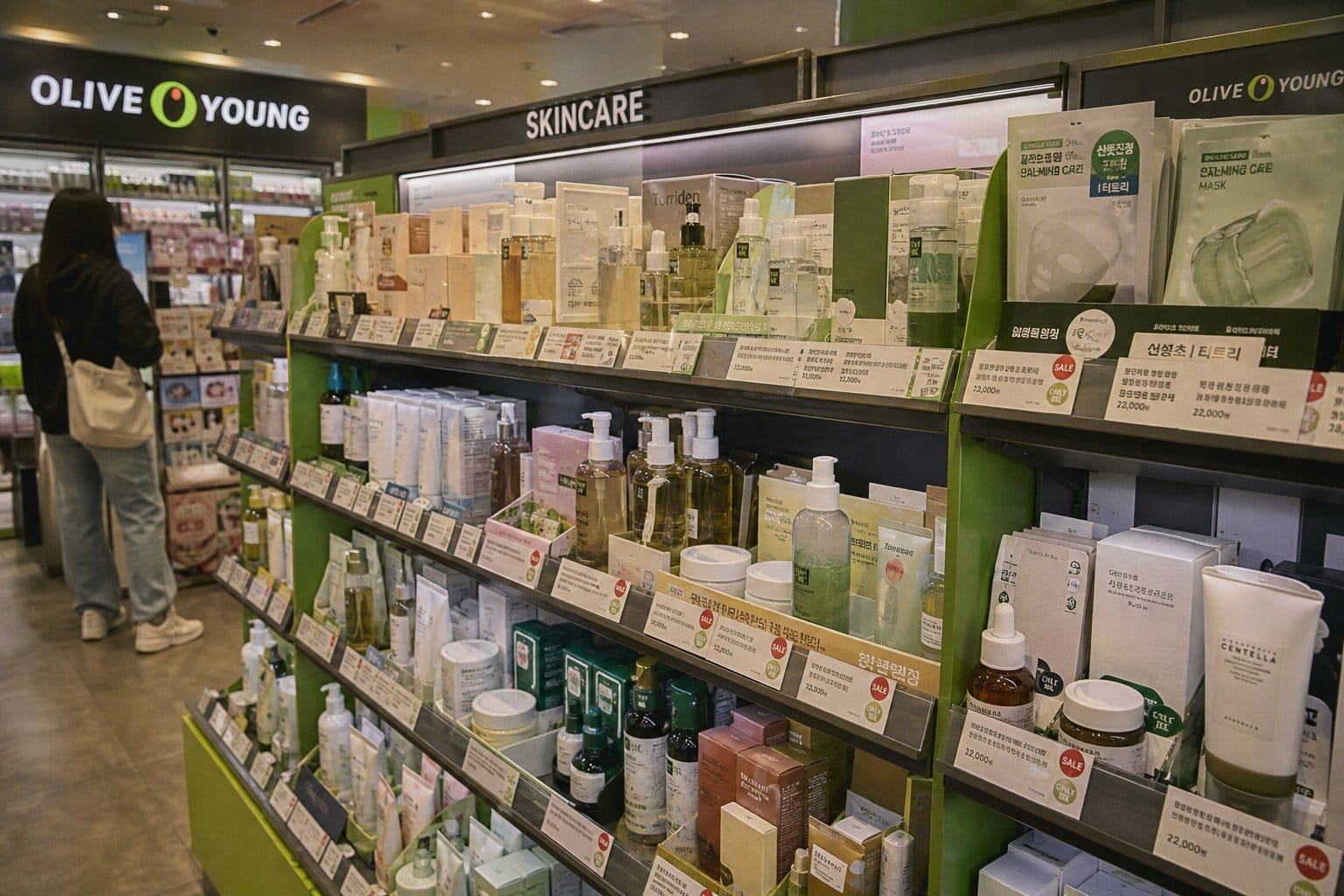
Insa-dong is Seoul's established hub for traditional craft shopping, running along a pedestrianized main street and its covered side alleys in the area between Anguk Station and Gyeongbokgung. The practical challenge is distinguishing handmade and regionally sourced items from mass-produced tourist goods — a distinction that vendors do not always make obvious, and that matters considerably in terms of cultural and monetary value.
📍 View Insa-dong, Seoul on Google Maps
The Ssamziegil building — an open-air courtyard complex inside Insa-dong — is the most reliable cluster for Hanji paper goods. Notebooks run ₩10,000–20,000 and postcards start from ₩3,000. Hanji is handmade Korean mulberry paper: notably lighter per square meter than ceramic alternatives, making it the most packable traditional gift available in the area. Its durability — traditional hanji is produced through a long-fiber mulberry pulp process that archivists consider among the most stable paper types — is a function of material rather than modern finishing.
📍 View Ssamziegil (Insa-dong) on Google Maps
Metal chopstick and spoon sets are practical gifts that hold up well in luggage. Basic stainless sets start at ₩8,000; personalized or engraved versions with fabric pouches run ₩20,000–40,000. Prioritize stainless or silver-finished sets over lacquered wooden chopsticks — the lacquered wood versions are more commonly mass-produced tourist items and degrade faster over time with regular use.
Hanji folding fans from ₩15,000 are among the most visually striking souvenirs available in the area, but quality varies significantly. Authentic hanji fans are noticeably heavier in the hand, with textured paper that shows a slight visible grain under light. Plastic-frame fans with glossy printed paper are mass tourist versions, priced similarly — they look comparable on a shelf but have no traditional craft value and degrade quickly with use.
"The difference between a handmade piece and a factory item in Insa-dong often comes down to three things: small surface irregularities in the material, a handwritten price tag rather than a printed barcode label, and whether the seller can tell you which province or specific workshop it came from. If they can't answer that third question, that tells you something." — YourKorea.Life, Traditional Craft Shopping Guide
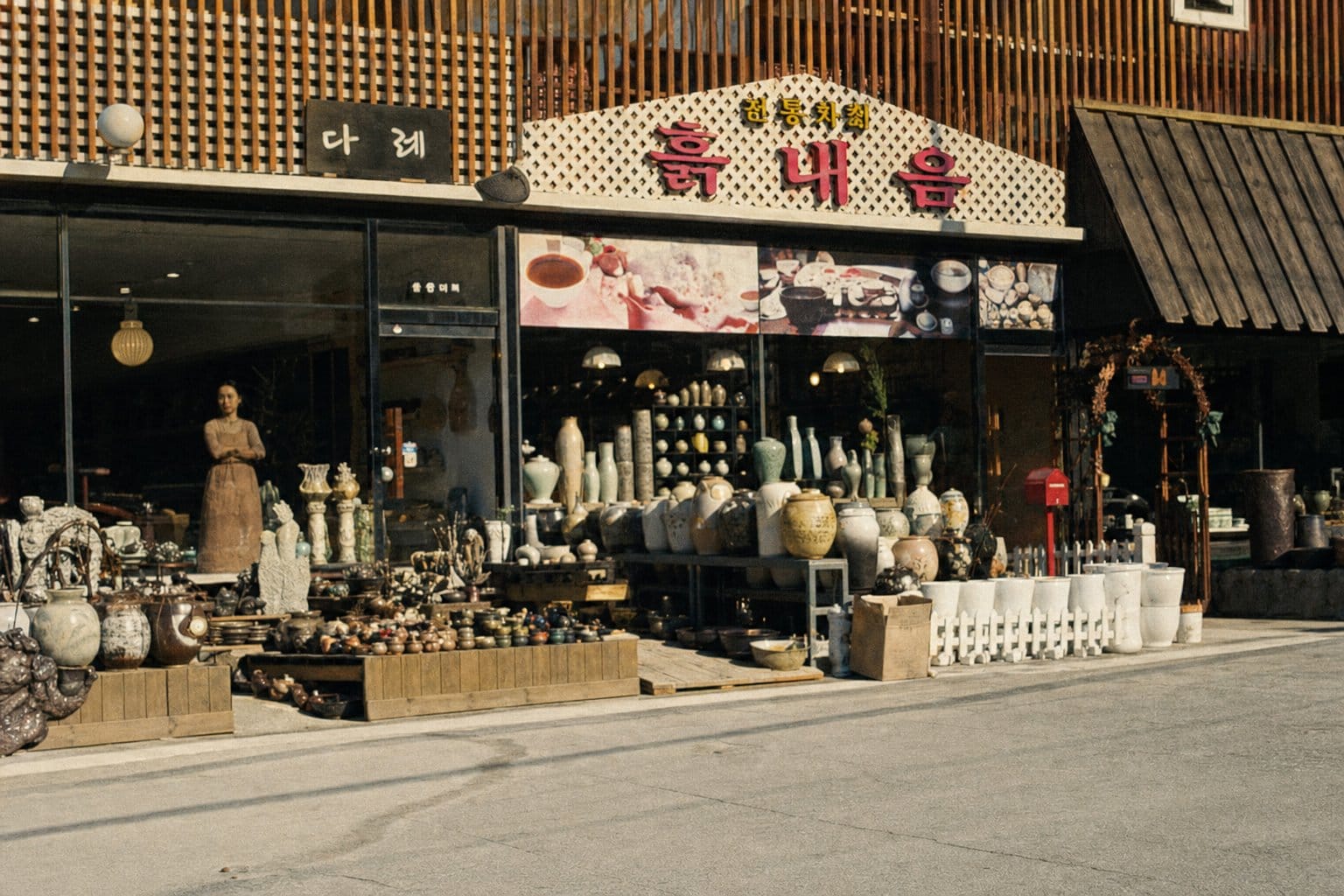
Celadon ceramics represent the highest-value traditional purchase in the category but require the most luggage care. Cups start at approximately ₩20,000 and teapots from ₩40,000 in Insa-dong and Bukchon shops. The deepest selection of authentic celadon is at Icheon Ceramics Village, a town approximately 80km southeast of Seoul that has been a recognized ceramic production center since the Goryeo dynasty. For visitors without a day trip in the itinerary, Insa-dong carries accessible tourist-grade ranges; look for pieces with slight glaze variations and foot-ring irregularities that indicate wheel-thrown production rather than slip-casting.
Tax Refund, Sale Timing & Store Strategy
The immediate VAT refund available to foreign visitors in Korea differs from the airport refund system most international travelers are accustomed to. At Olive Young and other participating retailers, presenting a physical passport — not a digital copy, not a residence card — at the staffed cashier (not at self-checkout kiosks) triggers an on-the-spot deduction of approximately 6–7% for purchases between ₩30,000 and ₩500,000 per transaction. The refund is immediate, appears on your receipt, and requires no airport paperwork, no kiosk visit, and no minimum stay duration. If a single purchase exceeds ₩500,000, splitting into two separate transactions may allow both to qualify for the deduction.
Olive Young's quarterly sales — concentrated in March, June, September, and December — represent the highest-discount windows of the year, with some categories reaching up to 70% off. For visitors whose travel does not align with those windows, the Monday-resetting weekly 1+1 deals are the next best mechanism. During a 1+1 promotion, a second unit of a participating product is included for only ₩2,000–3,000 more than the single price, effectively halving the per-unit cost. The Olive Young app lists current 1+1 participants and updates Monday mornings — checking it before heading to the store is the most efficient way to align your specific shopping list with active promotions (video: Angelica & Aileen Wanders).
For traditional crafts in Insa-dong, price negotiation is less common than visitors accustomed to open-air markets might expect. Fixed retail shops — which represent most of the Ssamziegil building — price items without negotiation room. Vendors in the covered side-alley arcades between Insa-dong's main street may offer small multi-item discounts if you are buying three or more pieces from the same stall, but this is not systematic practice. Framing the ask as "do you have a set price for multiple?" is more effective than straightforward price negotiation.
Carry-on strategy deserves attention before you pack. Korean skincare liquids and serums must comply with the 100ml-per-container rule for cabin baggage under standard aviation security requirements. Most sunscreens and toners in 50ml and 80ml formats are carry-on compliant; the UNOVE hair treatment (300ml tube) should go into checked luggage. Yakgwa, Gim, and packaged ramen are all solid or dried goods that pack flat and clear customs in most destination countries. Travelers entering Australia, New Zealand, or the United States should confirm all food items are factory-sealed and declare them — dried, processed packaged goods pass customs in most cases, but fresh, unpackaged food products do not.
Budget Planner: How to Allocate Your Shopping Budget in Korea
A realistic Korea shopping budget for a 5-night visit breaks into three functional categories: K-beauty, food gifts, and traditional crafts and souvenirs. The combined range for all three sits between approximately ₩200,000 and ₩400,000 — roughly $150–300 USD at 2026 exchange rates — with K-beauty absorbing the largest share for most visitors due to the combination of product volume and the price gap versus home markets. These are conservative in-store figures at standard pricing; a visit during a quarterly sale can meaningfully extend each allocation.
The K-beauty figure of ₩100,000–200,000 covers a practical one-week skincare rotation: a sunscreen, one serum or essence, toner pads, and one makeup item at standard in-store prices before the tax refund is applied. Targeting 1+1 promotions or visiting during a quarterly sale window can extend the same budget to eight or nine products. The food gift allocation of ₩30,000–50,000 covers a generous variety: three to four ramen packs in different varieties, two packaged snack gift sets, and either a Yakgwa gift box or a Gim set. The craft and souvenir budget of ₩50,000–100,000 funds a folding fan, a chopstick-and-spoon set, a Hanji notebook from Ssamziegil, and one small ceramic piece from Insa-dong or Bukchon.
| Category | Budget Range (₩) | Approx. USD (2026) | What It Covers |
|---|---|---|---|
| K-Beauty / Skincare | ₩100,000–200,000 | $75–150 | Sunscreen, serum/essence, toner pads, 1 makeup item (5–7 products) |
| Snacks & Food Gifts | ₩30,000–50,000 | $22–37 | 3–4 ramen packs, 2 snack gift sets, Yakgwa or Gim selection |
| Traditional Crafts & Souvenirs | ₩50,000–100,000 | $37–75 | Folding fan, chopstick set, Hanji notebook set, 1 small ceramic piece |
| Total (5 nights) | ₩200,000–400,000 | ~$150–300 | All three categories, moderate quantity, standard in-store pricing |
These figures exclude K-pop merchandise, fashion, and specialty items such as Nuflaat tableware or designer eyewear — categories that can extend the budget considerably depending on priorities. Department store food hall sets and ginseng products (best purchased at airport duty-free where tax savings are genuine) also fall outside this baseline. According to Creatrip's Korea shopping deals guide, visitors who time their trip around a quarterly sale window consistently see their K-beauty allocation stretch by 30–50% in product count relative to standard-price visits.
Frequently Asked Questions
Which Olive Young store is best for tourists in Seoul?
The Myeongdong Town flagship is the most accessible for first-time visitors: English-speaking staff are stationed on the floor, and a dedicated "Global Hot Issue" corner curates the products most frequently purchased by foreign visitors, updated based on actual in-store sales data. It is centrally located in Myeongdong, close to most midrange tourist accommodations. The Seongsu flagship — a three-floor store organized by category, with 1F for new releases, 2F for makeup, and 3F for hair and skincare — is less crowded on weekdays and carries a fuller product range reflecting what domestic Korean shoppers are actively buying. Both locations participate in the immediate passport-based tax refund program.
How does the immediate tax refund at Olive Young work?
Present your physical passport (not a digital photo, not a residence card) at a staffed cashier — not at a self-checkout kiosk — before the transaction is processed. The refund applies to purchases between ₩30,000 and ₩500,000 per transaction and is deducted on the spot at approximately 6–7% of the qualifying amount. No airport paperwork or kiosk is required — the deduction appears directly on your receipt. If your single transaction total exceeds ₩500,000, consider splitting into two separate purchases so that both fall within the qualifying range.
What Korean snacks are safe to bring home on a flight?
Factory-sealed dry and solid foods clear most international customs restrictions without issue: packaged ramen (Shin Ramyun, Buldak fire noodles), Choco Pie, Pepero, honey butter almonds, Gim (dried seaweed), and Yakgwa gift boxes are all non-liquid and non-perishable when sealed. Fresh unpackaged tteok (rice cake) has a short shelf life and is typically not export-labeled — avoid it unless buying sealed, refrigerated gift boxes specifically marked for export. Travelers entering Australia, New Zealand, or the United States should declare all food items at customs; sealed, processed packaged goods generally pass without issue, but fresh or unpackaged produce, meat, and dairy do not.
When are Olive Young sales in 2026?
Olive Young's four major sale windows in 2026 fall in March, June, September, and December, with discounts reaching up to 70% across participating product lines during peak event days. In addition to the quarterly sales, weekly 1+1 rotating deals reset every Monday and can significantly reduce the per-unit cost on sunscreens, toner pads, and essences — a second unit is included for ₩2,000–3,000 more than the single price. The Olive Young app (available for iOS and Android) lists active 1+1 participants and is the fastest way to check what is running before you enter the store. Staff at the Global Hot Issue counter in Myeongdong can also advise on current promotions.
What is the price difference between buying K-beauty in Korea vs abroad?
In-store prices in Korea are typically 30–50% lower than at international beauty retailers, even before the VAT deduction is applied. The gap is most pronounced for CosRX Snail Mucin Essence, popular sunscreens like Beauty of Joseon and Round Lab, and serum formats that carry significant import markups. The price gap narrows somewhat for items available through Korean e-commerce platforms like Coupang, which now ships internationally — but in-store 1+1 promotions during quarterly sales create a pricing floor that eliminates the comparison: two units bought in-store during a sale consistently undercut any imported single unit. Skincare purchased in Korea also tends to be more recently manufactured due to higher domestic turnover, which matters for formulas sensitive to shelf age.
Watch / Sources
- Strictly Dumpling — 20 BEST Korean Cheap Eats in Seoul South Korea
- Angelica & Aileen Wanders — Korea 2026 Travel Guide: Best Places to Visit & Things to Do • Itinerary & Expenses • Budget Vlog
- Beauty Within — Everyone Uses THESE in Korea 👌 What Koreans ACTUALLY buy!
Making Your Korea Shopping Trip Work
The decision framework here is practical: K-beauty at Olive Young with your passport ready and the app open for active 1+1 deals; packaged snacks and food gifts from any convenience store or department store basement; and at least one afternoon in Insa-dong if traditional crafts are on your list. The Seongsu district adds a newer dimension — the Olive Young flagship and Newmix Coffee's origin location make it a logical loop for visitors already spending time in that part of the city, particularly on concert days at nearby venues.
The budget figures in this guide reflect conservative, standard-pricing scenarios. In practice, a visitor who arrives during a quarterly Olive Young sale and targets their 1+1 list will consistently come in under the lower end of the K-beauty allocation in spend while exceeding it in product count. The largest variable is carry-on space rather than price: ceramics and glass-bottled products require bubble wrap and checked luggage planning, while ramen, Yakgwa, and Hanji goods are genuinely flat-packable and fit into most weekend bags without restructuring. Shopping strategy in Korea rewards preparation — a few minutes with the Olive Young app and a physical passport in your bag before you walk in the door will have more practical impact than almost any other single decision.
For K-pop fans visiting Seoul around a concert or event, the shopping itinerary integrates naturally into the surrounding schedule: the Myeongdong Olive Young Town for a pre-show skincare run, or a Seongsu loop — Olive Young flagship, Newmix Coffee, and the surrounding design shops — on the day before or after a stadium event. The neighborhoods are distinct enough to feel like two different cities, yet close enough to each other via subway that building both into a four- or five-night visit is genuinely efficient rather than aspirational.
Last updated: 2026-05-30. Prices reflect in-store conditions reported through early 2026; sale dates and product availability are subject to change — verify current 1+1 promotions via the Olive Young app or at the Global Hot Issue counter before visiting.
This article was written using information collected and analyzed by NAMANE's in-house K-pop research AI engine. We use AI technology to bring you faster, broader coverage, and in the process some details may occasionally differ from the latest facts. For important information such as dates, venues, and prices, please double-check with official sources.


