When BTS returned to a Seoul stage in spring 2026, the city didn't just sell out a venue — it filled a public square and, by the official numbers, reshaped a tourism month. Here is what actually happened, and how big April's surge really was.
What Happened: BTS at Gwanghwamun and Seoul's April Surge
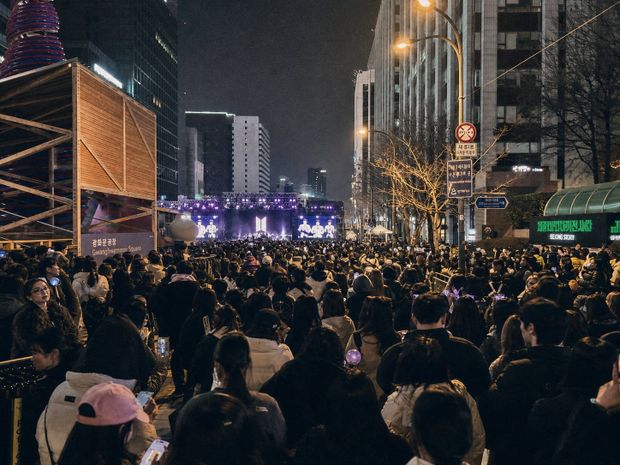
BTS opened its 2026 comeback with a free outdoor show — BTS Comeback Live: ARIRANG — at Gwanghwamun Square in central Seoul on March 21, 2026, at 20:00. Roughly 22,000 seats were allocated, but about 104,000 people gathered on-site, and Netflix live-streamed the performance to more than 190 countries . The free format and global stream turned a single concert into an international fan-travel trigger.source
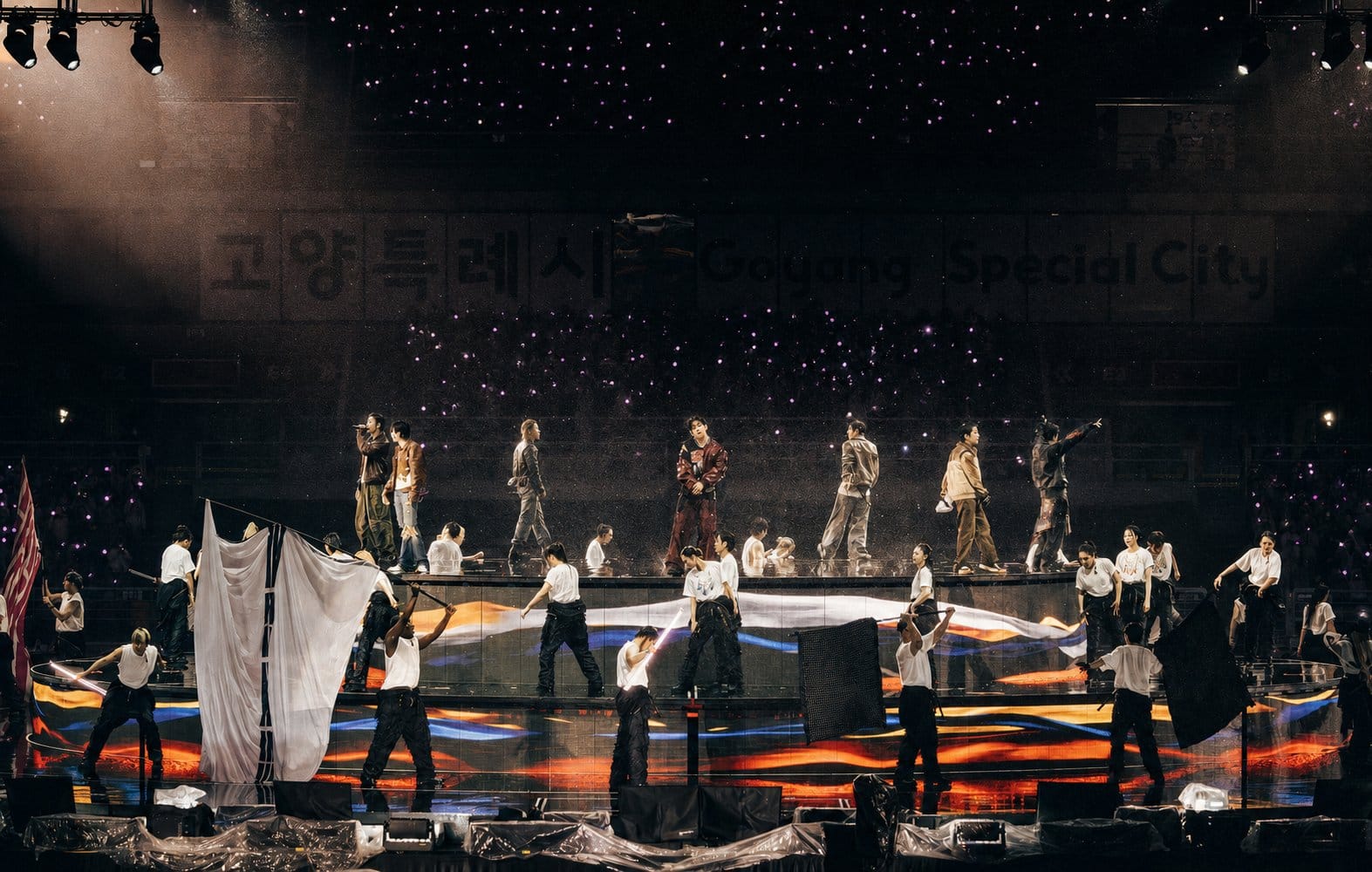
The momentum carried into early April, when BTS's concerts in Goyang, just outside Seoul, drew 48,581 foreign tourists, and local spending in the host city surged 3,699% from the comparison period . Those crowds landed in the middle of an already strong inbound month.
For April, the Seoul Metropolitan Government counted 1.56 million foreign tourist visits, up 18.8% year-on-year, while the cumulative January–April total reached 5.20 million, up 21.4% . Nationally, the Korea Tourism Organization logged 2.03 million arrivals to Korea in April — 124.0% of the April 2019 level, confirming a full post-pandemic recovery . Official releases stop short of crediting BTS directly, but the concert sat at the center of the month's story.source
The Fan-Travel Premium: 8.7 Days, ₩3.53 Million Per Visit
BTS-linked visitors didn't just show up — they stayed longer and spent more. Foreign tourists tied to the Gwanghwamun performance averaged 8.7-day trips and spent about 3.53 million won (roughly USD 2,400) per person, against a first-quarter baseline of 6.1 days and 2.45 million won . That works out to stays about 1.4 times longer and roughly 1.08 million won (about USD 720) more in spending per visitor — the clearest measure yet of a K-pop fan-travel premium, per a joint Culture Ministry, Korea Tourism Organization and Korea Culture & Tourism Institute impact analysis.source
The pattern repeated outside the capital. BTS's early-April concerts in Goyang drew 48,581 foreign tourists and 337.8 million won in local spending — up 3,377% and 3,699% respectively from comparison-period levels — with Goyang visitors staying 7.4 days and spending 2.91 million won each . Scaling that demand up, analysts estimated a single BTS concert in Seoul could generate up to 1.2 trillion won (about USD 798 million) in total economic impact .
"K-pop's BTS comeback tour rallies South Korea's global soft-power drive," — as framed in coverage of the tour's role in the country's tourism and soft-power strategy (source: Al Jazeera).
One detail complicates a naive reading of the numbers: the Gwanghwamun event was free, and crowd-control measures actually limited on-site card use, so very little of the windfall showed up at the venue gate . The BTS effect is better understood as fans extending their trips and spreading spending across Seoul — hotels, shopping, dining and beauty — rather than as box-office or concession revenue. That city-wide diffusion is exactly what makes the premium visible in April's broader tourism and card-spending data.
Which Markets Came: China, Taiwan, Japan, and the US
April's arrivals to Seoul were Asia-led, with China the largest single source at about 440,000 visitors — 112.6% of the April 2019 level, a clean return past the pre-pandemic benchmark . Japan followed at roughly 230,000, Taiwan at about 150,000 and the United States at about 130,000, with the Philippines adding around 60,000 . The mix matters: these are the high-spend markets that drove the card-spending record described earlier.
| Market | Seoul arrivals (April 2026) | YoY change |
|---|---|---|
| China | ~440,000 | 112.6% of 2019 |
| Japan | ~230,000 | +17.9% (national) |
| Taiwan | ~150,000 | +34.4% |
| United States | ~130,000 | +13.1% (national) |
Taiwan was the standout. Seoul arrivals grew about 34.4% year-on-year, and at the national level Taiwan reached 170.6% of its 2019 volume — the strongest proportional recovery of any major market . The United States showed a similar pattern, sitting at 169.2% of its 2019 baseline nationally despite a more modest 13.1% annual gain, while Japan held near parity at 104.8% of 2019 .
Timing compounded the effect. Japan's Golden Week and China's Labor Day holiday both fell within the same four-week window, concentrating high-spend leisure travel into a single month already lifted by the BTS comeback — a convergence Seoul flagged in its own Welcome Week materials .
Where ₩1.15 Trillion Went: Shopping, Clinics, and Gangnam
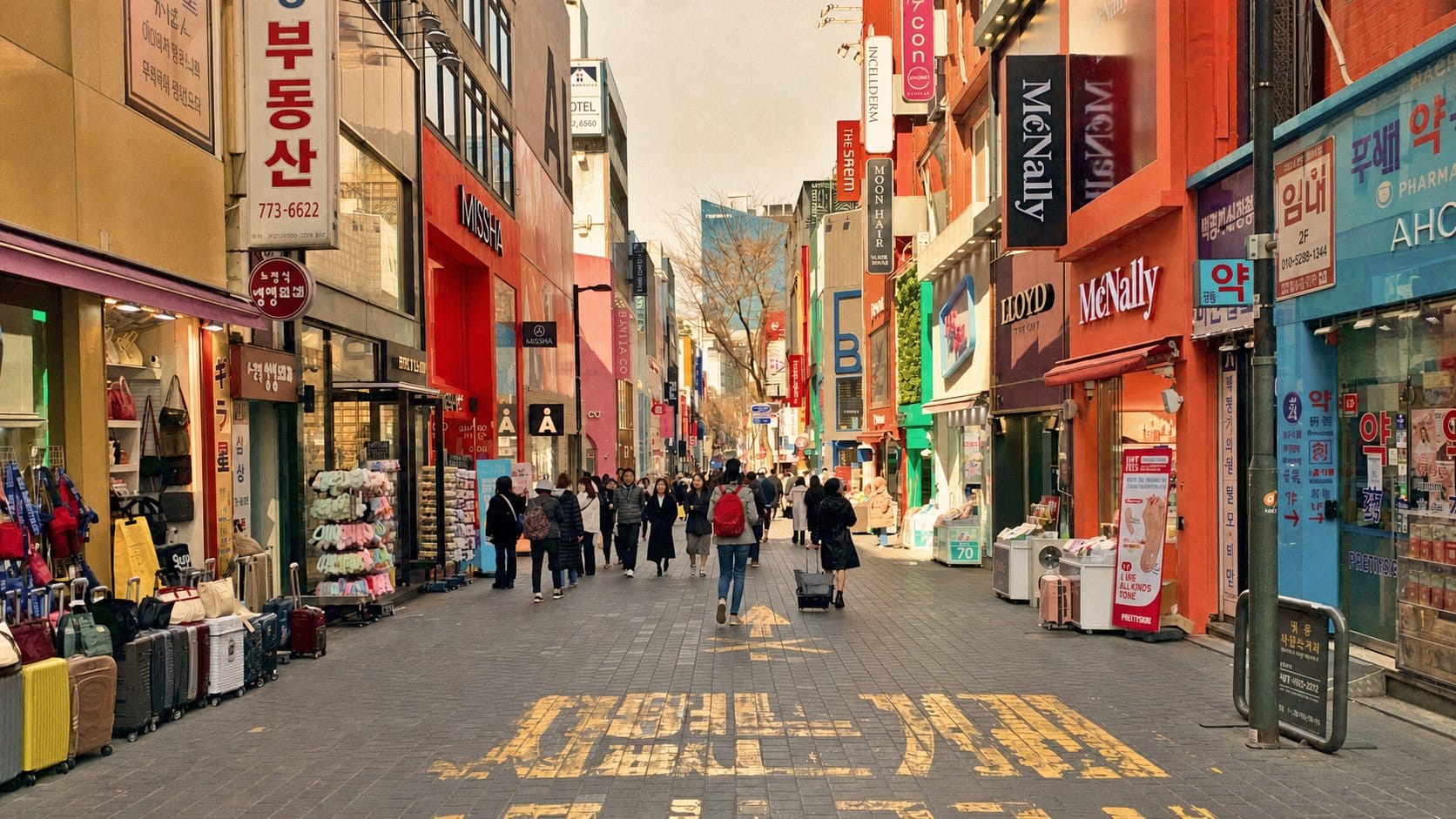
Foreign card spending in Seoul reached 1.153 trillion won (about USD 762 million) in April 2026, up 50.5% year-on-year and the first month above 1 trillion won since the KTO Data Lab began tracking in 2018 . The capital absorbed 72.3% of all offline foreign-card spending nationwide, confirming Seoul as the primary spending hub even as arrivals spread across the country .source
The money split unevenly across categories, with retail and high-value services dominating:
- Shopping — 45.4% of foreign spending, led by large shopping malls at 245.2 billion won (+62.5%).source
- Medical and wellness — 24.8%, with medical tourism at 192.1 billion won (+59.2%) and beauty services up 35.0%.source
- Food and beverage — 13.1%.
- Accommodation — 11.0%.
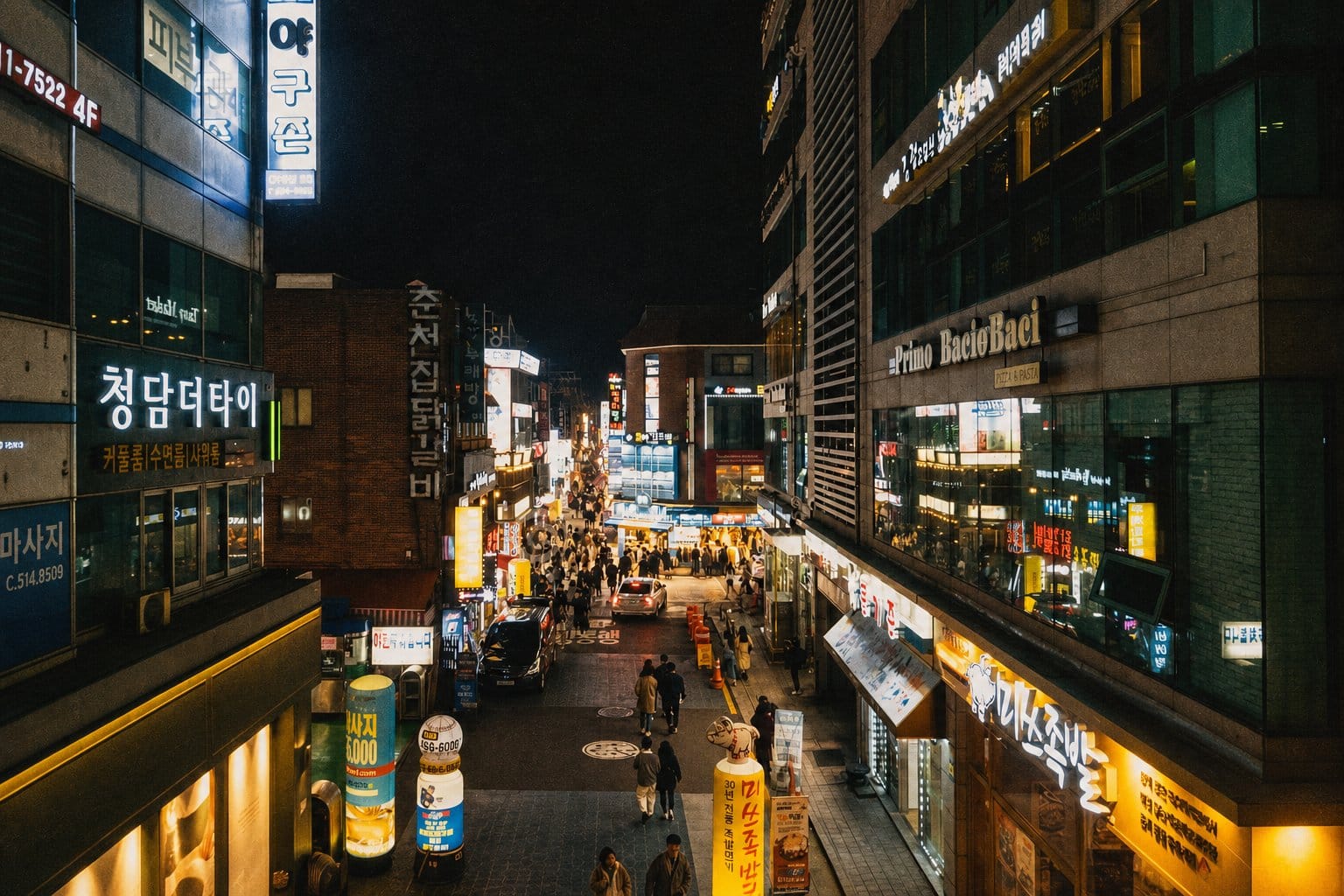
By district, spending concentrated south of the Han River and in central retail and heritage zones. Gangnam-gu took the largest share at 29.1%, just ahead of Jung-gu at 27.5%, followed by Mapo-gu at 7.4%, Seocho-gu at 6.5% and Jongno-gu at 5.5% . The pattern reflects two distinct pulls: traditional shopping and palace-district tourism around Jung-gu and Jongno-gu, and a heavier draw toward clinics, beauty services and premium lifestyle spending in Gangnam-gu and Seocho-gu. For fans extending a concert trip into a longer stay, that is where the days — and the won — accumulated.
What April's Numbers Signal for K-Pop-Driven Travel in 2026
The BTS fan-travel premium is now a measurable, documented pattern rather than an anecdote: concert visitors stay longer, spend more per day, and distribute that spending across retail and wellness. The Culture Ministry/KTO impact analysis put Gwanghwamun-linked visitors at an average 8.7-day stay and about 3.53 million won spent, versus a 6.1-day, 2.45 million won Q1 baseline . That is a model city planners can deliberately repeat.
Seoul has already built K-pop demand into official strategy. The city ran May 1–8 Welcome Week events in Myeong-dong and Yeouido — featuring AI travel guidance, K-pop cover dance and K-beauty programs — explicitly to extend post-comeback momentum, amplified by Japan's Golden Week and China's Labor Day holidays .
One caveat tempers the outlook: the Culture Ministry flagged oil prices, jet-fuel surcharges and Middle East risk as possible headwinds for later-2026 long-haul demand, even though most April trips were already booked .
For fans planning trips around future K-pop events, the takeaway is concrete: budget for a week-plus stay weighted toward shopping and wellness, not a single-night concert run — that is where April's days and won actually went.
Frequently asked questions
How many foreign tourists visited Seoul in April 2026?
Seoul recorded about 1.56 million foreign tourists in April 2026, up 18.8% from roughly 1.30 million in April 2025, with cumulative January–April visitors reaching 5.20 million, up 21.4% year-on-year . These are Seoul Metropolitan Government estimates built on Korea Tourism Organization and Culture Ministry datasets — official estimates of visits to the city, not border-control entry counts at a single port of arrival.
How much more did BTS concert fans spend compared to average tourists?
Foreign visitors tied to the Gwanghwamun BTS performance spent about ₩3.53 million (roughly USD 2,400) per trip, against a first-quarter baseline of ₩2.45 million — about 44% more — and stayed an average of 8.7 days versus 6.1 days, per a joint Culture Ministry, KTO and Korea Culture & Tourism Institute impact analysis . The premium reflects longer stays and city-wide spending rather than venue ticket revenue.
Which country sent the most tourists to Seoul in April 2026?
China sent the most, with about 440,000 arrivals to Seoul in April 2026, recovering to 112.6% of the April 2019 level . Japan followed with about 230,000, Taiwan with about 150,000 and the United States with about 130,000. Taiwan was the growth standout, rising roughly 34.4% year-on-year and reaching 170.6% of 2019 levels nationally .
What did foreign tourists spend most on in Seoul?
Shopping led foreign card spending at 45.4% of the total, followed by medical and wellness at 24.8%, food and beverage at 13.1% and accommodation at 11.0% . The fastest-growing segments were large shopping malls at ₩245.2 billion (+62.5%) and medical tourism at ₩192.1 billion (+59.2%), while overall foreign card spending in Seoul reached ₩1.153 trillion, up 50.5% year-on-year.
Does the BTS tourism effect repeat for other K-pop concerts in Seoul?
The April 2026 data provides a documented template, but the scale depends on the artist, event format and holiday overlap. Both the free Gwanghwamun event and BTS's ticketed early-April Goyang concerts produced measurable fan-travel premiums — Goyang drew 48,581 foreign tourists who stayed 7.4 days and spent ₩2.91 million each . That consistency across formats suggests the effect is replicable, though smaller acts will generate proportionally smaller surges.
Official Sources
This article was written using information collected and analyzed by NAMANE's in-house K-pop research AI engine. We use AI technology to bring you faster, broader coverage, and in the process some details may occasionally differ from the latest facts. For important information such as dates, venues, and prices, please double-check with official sources.


