What Is Neo Joseon at Hippie Hannam Gallery?
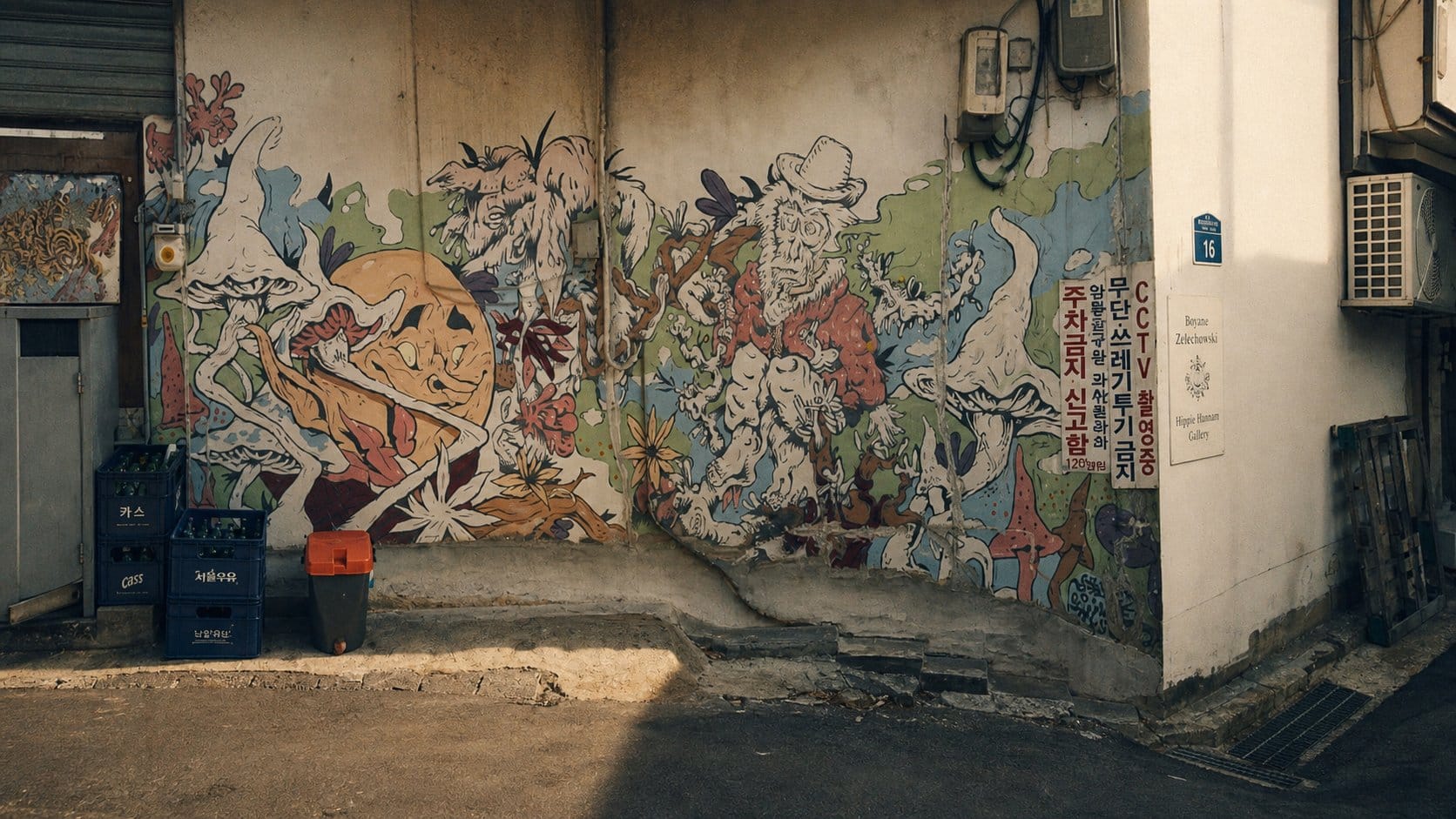
A French street artist who once tagged abandoned buildings around Saint-Étienne is now painting the color code of Korean palaces onto mulberry paper in Hannam-dong. The result opens to the public during the busiest week of Seoul's art calendar.
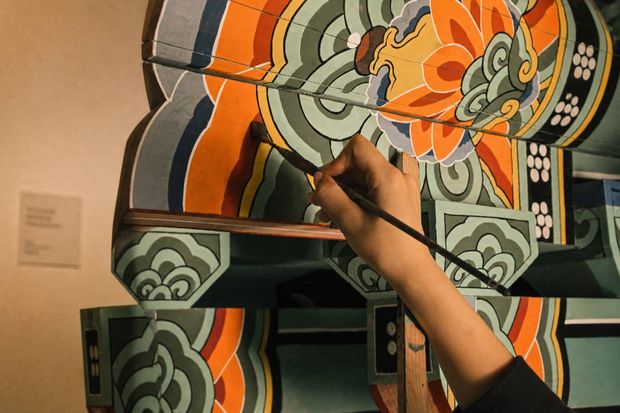
"Neo Joseon" is a solo exhibition by French artist Boyane Zelechowski at Hippie Hannam Gallery in Yongsan-gu, Seoul, running through September 19, 2026 with free admission . The show fuses dancheong — the traditional polychrome painting applied to the beams, eaves and columns of Korean palaces and temples, documented as far back as a Goguryeo tomb mural dated 357 AD — with European graffiti, comic-styled illustration and calligraphy .
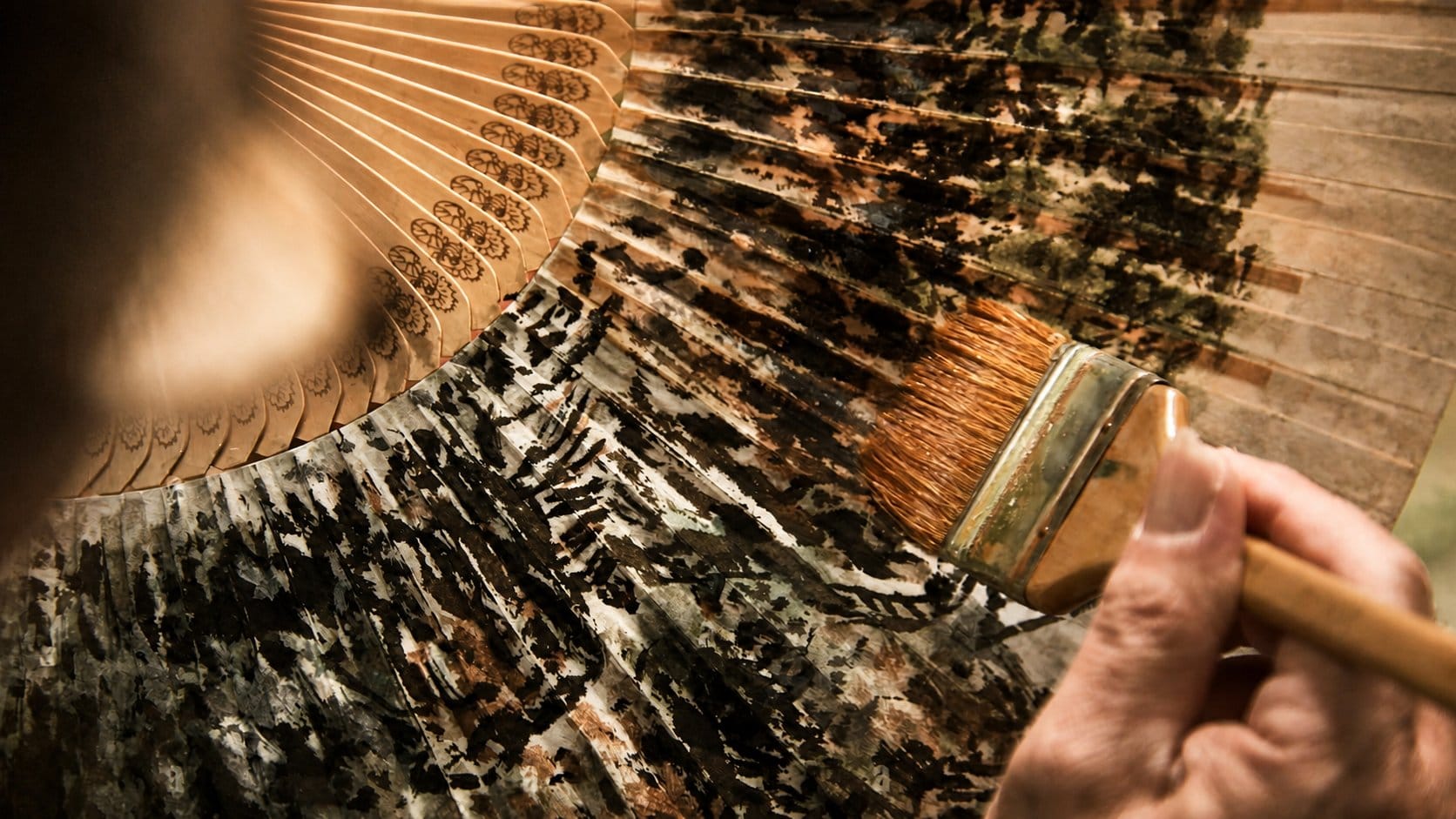
Roughly half the works are painted on hanji, traditional handmade Korean mulberry paper, with the remainder on canvas . Zelechowski calls the approach "Retro-Futurism," shifting tones and layering transparencies so the palette reads as a memory of dancheong rather than a reproduction of it.
The exhibition is programmed as part of Seoul Art Week 2026, with an opening reception on September 1 from 5 p.m. to 7 p.m. — the same evening Frieze Seoul's Neighbourhood Nights program dedicates to Hannam . For visitors, that makes a free-entry independent gallery an easy addition to a night already built around the district's galleries.
Who Is Boyane Zelechowski, the Artist Behind Neo Joseon?
Boyane Zelechowski is a French artist who has lived and worked in Seoul since 2011 , building a roughly 15-year Korean career as a muralist, silkscreen printer and fine artist. He came out of the European graffiti scene of the early 2000s, tagging abandoned buildings and street corners at night while training formally at the École des Beaux-Arts de Saint-Étienne by day — a split he says still structures how he paints . That combination of street-trained hand and academy technique is the background he brings to a state-protected heritage craft.
The vandal-and-student dichotomy is not a biographical footnote in his account of the work. Graffiti gave him speed, scale and a comfort with public surfaces; the Beaux-Arts training gave him composition, calligraphic line and the patience for layered material. In Korea, that vocabulary absorbed a local sensibility rather than staying imported — the pieces keep street-art grit but read as work made in Seoul rather than work about Seoul from the outside .
He labels his current method "Retro-Futurism." In practice that means he does not copy the historical palette. He alters tones and works in transparencies so the dancheong reference arrives as recollection rather than replica — the color registers as, in his phrasing, "a reference or a memory" . The same logic governs the source colors: "The colors of dancheong are based on 'obangsaek,' the traditional five-color system. I was inspired by these colors, but I tried to find my own way of using them," he told the Korea Times.
Material choice follows the same thinking. Roughly half the works in Neo Joseon are painted on hanji, the traditional handmade Korean mulberry paper, with the remainder on canvas . "I really enjoy working with hanji. You can paint many layers, and the paper has a lot of depth," he said — a property that suits a technique built on stacked transparencies rather than flat opaque fields .
His stated intent is closer to study than to appropriation for style's sake:
"Painting in the Neo Joseon style is, for me, a way to celebrate this place and create a dialogue with Koreans... It is also a way to understand Korean history and East Asian art from its early roots. My goal is to make it look modern and futuristic," — Boyane Zelechowski, artist (source: Korea Times, 2026-08)
He has described the show more directly as "a real fusion of Europe and Asia... a dedicated love letter to Korean art," and framed the outcome he wants from Korean viewers: "I hope that with 'Neo Joseon,' Koreans can see traditional crafts with a different eye, as something more modern and technological" . One gap worth noting for anyone researching him further: the Korea Times profile does not list his Korean mural or brand commissions, individual work prices, or a curator credit for this exhibition .
Dancheong, Explained: The Five-Color Code He's Repainting
Dancheong (단청) is the traditional Korean decorative polychrome painting applied to the beams, eaves, bracket sets and columns of palaces and temples, and its name literally means "cinnabar and blue-green" — a compound that names its two dominant pigments . The earliest documented example survives in a Goguryeo tomb mural dated 357 AD, which gives the practice more than 1,600 years of continuity before it reached the wall of a Hannam-dong gallery . That is the vocabulary Boyane Zelechowski is working through in "Neo Joseon."
The color logic underneath dancheong is obangsaek (오방색), the five cardinal colors of yin-yang and five-element cosmology. Each color carries a fixed direction, season and element, and the set read together was understood to signify stability, peace and a rewarding afterlife . It is a code before it is a palette — which is why altering it, as Zelechowski does, registers as more than a stylistic choice.
| Color | Direction | Season | Element |
|---|---|---|---|
| Blue (청) | East | Spring | Wood |
| Red (적) | South | Summer | Fire |
| Yellow (황) | Center | — | Earth |
| White (백) | West | Autumn | Metal |
| Black (흑) | North | Winter | Water |
Dancheong was never purely ornamental. The pigments were bound with agyo (아교), an animal glue, and the resulting coating shielded exposed timber from moisture, seasonal temperature swings and insect damage — a preservative layer that measurably extended the lifespan of wooden architecture across Korea's climate . The visual system and the maintenance system were the same system. The tradition was elaborated further under Goryeo and Joseon, and the craft is still transmitted through living practitioners: painters known as dancheongjang (단청장) are designated under South Korea's National Intangible Cultural Heritage framework .
That designation is the part that gives this exhibition its friction. Dancheong is not a public-domain aesthetic; it is a state-protected craft with a certified lineage of transmission. Zelechowski, trained at the École des Beaux-Arts de Saint-Étienne and in the European graffiti scene, is handling that vocabulary without that lineage — and he is explicit that he is not attempting reproduction.
"The colors of dancheong are based on 'obangsaek,' the traditional five-color system. I was inspired by these colors, but I tried to find my own way of using them." — Boyane Zelechowski (source: The Korea Times, 2026-08)
In practice that means deliberate tonal shifts and layered transparencies, so the five colors arrive as what he calls "a reference or a memory" rather than a faithful copy of a temple eave . Two things are worth separating when you stand in front of the work. The historical dancheong on a palace column encodes direction and cosmology and protects the wood. The dancheong in these paintings does neither — it is quotation, moved onto hanji and canvas, stripped of its structural job and reassigned to a graffiti-trained composition. Whether that reads as dialogue or as flattening is the question the show puts to visitors, and it is a more interesting one than the "East meets West" framing usually allows.
Hippie Hannam Gallery: Address, Hours and How to Get There
Hippie Hannam Gallery sits at 26-20 Hannam-daero 27ga-gil, Yongsan-gu, Seoul, on the first floor of a building along the Hannam-dong cafe street, and opens Tuesday through Saturday from 11:00 to 19:00 . Admission to "Neo Joseon" is free, and the exhibition runs through September 19, 2026 . The nearest subway access is Hangangjin Station on Line 6, about a 10-minute walk.
The closure schedule is the part most likely to trip up visitors building a Seoul Art Week itinerary. The gallery is closed Sundays, Mondays and public holidays , which removes two of the week's most obvious walk-around days from the calendar. If you are in Hannam-dong on a Sunday visiting the larger institutions, this particular show will not be available to you.
Key logistics at a glance:
- Address: 26-20 Hannam-daero 27ga-gil, Yongsan-gu, Seoul — 1st floor, Hannam-dong cafe street
- Hours: Tuesday–Saturday, 11:00–19:00; closed Sunday, Monday and public holidays
- Nearest station: Hangangjin Station, Line 6 — roughly a 10-minute walk
- Admission: Free
- Opening reception: September 1, 5–7 p.m.
- Exhibition closes: September 19, 2026
The space itself is a small independent gallery rather than a museum floor. It reopened after a COVID-era hiatus and a refurbishment, and describes its programming around pairing everyday life with art; recent shows include YEYE's solo exhibition "My Idol" and Jihoon Ha's "Diverse Hybridity" in 2024 . That scale is worth knowing before you arrive — this is a walk-through of maybe fifteen to twenty minutes at an unhurried pace, not a half-day visit, which makes it easy to slot between larger stops in the district.
The one date that changes the experience is September 1. The opening reception runs 5 p.m. to 7 p.m. , and it is the evening you are most likely to encounter Boyane Zelechowski in the room and the least likely to have the hanji works to yourself. Visitors who want to read the layering and transparency closely may prefer a weekday morning slot after the opening — the gallery is open from 11:00, and mid-week hours in a free space rarely draw a queue.
Why September 1 Matters: Hannam Night and Seoul Art Week 2026
September 1, 2026 is Hannam Night — the evening Frieze Seoul's Neighbourhood Nights program assigns to Hannam-dong, when galleries across the district stay open late and coordinate their openings for fair visitors walking the neighborhood . The "Neo Joseon" reception falls inside that window, which means the show's first public evening shares its foot traffic with an internationally attended gallery crawl rather than sitting alone on a quiet Tuesday in Yongsan-gu.
Neighbourhood Nights runs across four consecutive evenings, each tied to one of Seoul's gallery clusters, and the schedule is worth reading before booking anything :
- Monday, August 31 — Euljiro Night
- Tuesday, September 1 — Hannam Night (the "Neo Joseon" opening, 5–7 p.m.)
- Wednesday, September 2 — Cheongdam Night
- Thursday, September 3 — Samcheong Night
The fair itself opens the day after Hannam Night. Frieze Seoul 2026 runs September 2–5 at COEX in Gangnam, its fifth edition, with more than 125 galleries from 30 countries; over 70% of the exhibitors are based in the Asia-Pacific region and more than 50 of them operate permanent spaces in Seoul . Kiaf SEOUL, the domestic fair that shares the venue, runs a day longer — September 2–6 — and marks its 25th edition under the theme "Coexistence" . Seoul Art Week functions as the city-wide umbrella over both, spanning roughly September 2–6 and taking in on the order of 135 visual art spaces .
There is a structural reason 2026 carries more weight than a routine fair year. Reporting indicates this is the final edition in which Frieze Seoul and Kiaf SEOUL share the COEX halls: following COEX redevelopment, Frieze Seoul is set to move to the Zaha Hadid-designed Dongdaemun Design Plaza in 2027 . For anyone planning a trip around the week, that makes the Gangnam-centered version of Seoul Art Week a closing chapter rather than a fixed annual pattern.
The scheduling logic cuts a specific way for a free, independent space like Hippie Hannam. Fair booths in Gangnam absorb collector attention from September 2 onward; Hannam Night on September 1 is the one evening in the calendar when the district's smaller galleries have the crowd to themselves. Frieze's programming also pushes beyond the fair walls — Ryan Gander's citywide project scatters some 16,000 coin-shaped works across Euljiro, Hannam, Cheongdam and Samcheong, so the same four neighborhoods carrying the night program also carry the commissioned work . A visitor arriving in Seoul for the fairs can reach the "Neo Joseon" opening a full day before Frieze's VIP preview, then spend the rest of the week at COEX without a conflict.
Hannam-dong's Art Cluster: What Else Is Showing Nearby
Hannam-dong is one of Seoul's densest art districts, and Hippie Hannam sits inside a walkable cluster anchored by the Leeum Museum of Art and the Amorepacific Museum of Art, with international gallery outposts including Pace, Thaddaeus Ropac, Gladstone and Esther Schipper operating in the same few blocks . That density is why a single afternoon in Hannam can cover a museum survey, two or three blue-chip gallery shows and a free independent exhibition without a subway transfer.
During Seoul Art Week the district's headline institutional programming is Koo Jeong A at Leeum and "Sol LeWitt: Open Structure" at the Amorepacific Museum of Art . Both are ticketed museum shows with fixed timed entry patterns, so they anchor the daytime half of a Hannam itinerary while the galleries — Hippie Hannam included — carry the evening.
The neighborhood also absorbs part of Ryan Gander's citywide commission, which scatters roughly 16,000 coin-shaped works across Euljiro, Hannam, Cheongdam and Samcheong . Practically, that means the walk between venues is itself part of the program rather than dead time between appointments.
Set against that lineup, "Neo Joseon" occupies a specific slot: the free, small-scale, independent end of a week otherwise defined by ticketed fairs and international galleries. Frieze Seoul 2026 brings more than 125 galleries from 30 countries to COEX for its fifth edition, over 70% of them Asia-Pacific-based and more than 50 running permanent Seoul spaces , while Kiaf SEOUL marks its 25th edition under the theme "Coexistence" . A one-room show by a French muralist working in a state-protected craft vocabulary is not competing with that scale — it reads as counter-programming, and the contrast is part of what makes the Hannam route worth walking rather than taxiing through.
For visitors building a route, the sequencing that works is museum first, galleries second, Hippie Hannam last: Leeum and Amorepacific close earlier in the evening, while Hannam's smaller spaces stay open into the night on September 1 . Seoul Art Week as an umbrella covers roughly 135 visual art spaces citywide , so Hannam is best treated as one concentrated day rather than an attempt to cover everything.
Practical Tips for Visiting Neo Joseon During Seoul Art Week
The simplest way to see "Neo Joseon" properly is to skip the crowd and go on a weekday afternoon between Tuesday and Saturday, when Hippie Hannam is open 11:00–19:00 . Admission is free, and the show runs through September 19, 2026 , which means the exhibition stays viewable for roughly two weeks after Frieze Seoul and Kiaf SEOUL have both closed.
Timing is the main variable. The September 1 opening reception runs 5 p.m. to 7 p.m. and coincides exactly with Frieze Seoul's Hannam Night, the district's assigned evening in the Neighbourhood Nights program . That is the night to attend if you want the artist and the neighborhood energy; it is not the night for unhurried looking at hanji surfaces that reward close viewing.
- Quiet viewing: any weekday afternoon, Tuesday–Saturday, 11:00–19:00 .
- Busiest window: Tuesday, September 1, 17:00–19:00 — reception plus Hannam Night foot traffic .
- Post-fair window: September 7–19, after Frieze (Sept 2–5) and Kiaf (Sept 2–6) have ended .
- Closed days: Sundays, Mondays and public holidays .
- Access: Hangangjin Station, Line 6, about a 10-minute walk to 26-20 Hannam-daero 27ga-gil, Yongsan-gu .
Check the closing days carefully. Many Seoul Art Week venues run seven days through the fair period, but Hippie Hannam does not — a Sunday or Monday trip to Hannam-dong will find the door shut . Build the visit around a museum anchor instead: Leeum Museum of Art and the Amorepacific Museum of Art sit within the same walkable Hannam-dong stretch, with Koo Jeong A at Leeum and "Sol LeWitt: Open Structure" at Amorepacific on view during the week .
The concrete takeaway: if you only have one slot, take a weekday afternoon in the week of September 7–19, when the fair crowds have left Seoul and a free, small-room show built on a 1,600-year-old color system can be looked at the way it was painted — slowly, layer by layer.
Frequently asked questions
What is dancheong?
Dancheong (단청) is the traditional Korean decorative polychrome painting applied to the beams, eaves, brackets and columns of wooden palaces and temples. The name literally means "cinnabar and blue-green," after its two dominant pigments, and its color logic comes from obangsaek — the five cardinal colors of blue, white, red, black and yellow, mapped onto directions, seasons and the five elements . It is also functional: pigments bound with agyo animal glue shield timber from moisture, temperature swings and insects . The earliest documented example is a Goguryeo tomb mural dated 357 AD, and today's practitioners, called dancheongjang, are designated under South Korea's National Intangible Cultural Heritage system . Full background: Dancheong overview.
Where and when is the Neo Joseon exhibition?
"Neo Joseon," the solo exhibition by French artist Boyane Zelechowski, runs at Hippie Hannam Gallery (갤러리 히피한남) in Hannam-dong, Yongsan-gu, Seoul, through September 19, 2026 . The gallery is at 26-20 Hannam-daero 27ga-gil, Yongsan-gu, 1st floor, with published hours of Tuesday–Saturday 11:00–19:00, closed Sundays, Mondays and public holidays . Admission is free, and an opening reception is scheduled for September 1 from 5 p.m. to 7 p.m. . Details: Hippie Hannam.
📍 30 Samcheong-ro, Jongno District, Seoul
🕒 Monday–Tuesday 10:00 AM – 6:00 PM / Wednesday 10:00 AM – 9:00 PM / Thursday–Friday 10:00 AM – 6:00 PM / Saturday 10:00 AM – 9:00 PM / Sunday 10:00 AM – 6:00 PM
⭐ 4.6 (4,229 reviews)
📞 02-3701-9500
🔗 View on Google Maps
How do I get to Hippie Hannam Gallery?
Take Seoul Subway Line 6 to Hangangjin Station; the gallery is roughly a 10-minute walk from there, on the Hannam-dong cafe street . The building address is 26-20 Hannam-daero 27ga-gil, Yongsan-gu, and the space is on the 1st floor . Because the gallery closes Sundays, Mondays and public holidays, plan a Tuesday-to-Saturday visit between 11:00 and 19:00 . The same walk puts you within reach of the Leeum Museum of Art and the Amorepacific Museum of Art, so it combines easily with a longer Hannam-dong gallery route .
Who is Boyane Zelechowski?
Boyane Zelechowski is a French artist based in Seoul who works as a muralist, silkscreen printer and painter. He came out of the European graffiti scene of the early 2000s, tagging abandoned buildings and street corners while simultaneously training formally at the École des Beaux-Arts de Saint-Étienne — a split he says still shapes how he works . He relocated to Seoul in 2011 and has built roughly 15 years of practice there . About half the works in "Neo Joseon" are painted on hanji, traditional handmade mulberry paper, with the rest on canvas; he calls the approach "Retro-Futurism" . Interview: The Korea Times.
What is Frieze Seoul's Hannam Night?
Hannam Night is one evening in Frieze Seoul's Neighbourhood Nights program, which assigns each night of the week to a different gallery district for late openings. In 2026 the schedule runs Euljiro Night on Monday, August 31; Hannam Night on Tuesday, September 1; Cheongdam Night on Wednesday, September 2; and Samcheong Night on Thursday, September 3 . That places the "Neo Joseon" opening reception inside Hannam Night itself. The fairs follow: Frieze Seoul runs September 2–5 at COEX for its fifth edition with more than 125 galleries from 30 countries, and Kiaf SEOUL runs September 2–6 for its 25th edition under the theme "Coexistence" . See k-artnow and Frieze.
Enjoyed this article? Subscribe to get new stories by email whenever they're published.
This article was written using information collected and analyzed by NAMANE's in-house K-pop research AI engine. We use AI technology to bring you faster, broader coverage, and in the process some details may occasionally differ from the latest facts. For important information such as dates, venues, and prices, please double-check with official sources.


