
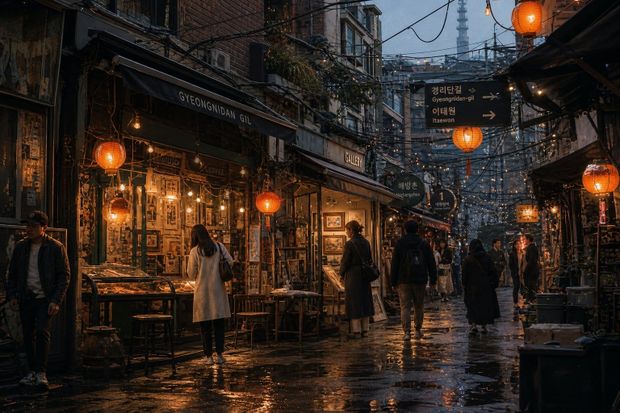
Itaewon in 2026: A Neighborhood Transformed
Itaewon is Seoul's most internationally diverse district, located in Yongsan-gu on the north side of the Han River (Gangbuk), and accessible from anywhere in the city via Seoul Metro Line 6 . Its origins trace to a Joseon-era inn established for foreign diplomatic envoys; after the Korean War (1950–1953) a large US military installation in adjacent Yongsan transformed the neighborhood into a hub of tailor shops, leather goods dealers, and bars catering to American soldiers. The October 29, 2022 crowd crush fundamentally altered the neighborhood's character; the years since have brought quieter brunch cafes, independent bookstores, art galleries, and vegan restaurants in place of large-venue nightlife. In 2026, Itaewon remains one of Seoul's most visited areas for international travelers — more intentional, more creative, and more varied than its pre-2022 identity suggested.
Quick Answer: Itaewon is Seoul's globally diverse neighborhood in Yongsan-gu, reachable on Metro Line 6. Since 2022, large-venue nightlife has given way to indie cafes, galleries, and international dining across four distinct sub-neighborhoods — Gyeongnidan-gil, Haebangchon, Usadan-ro, and Hannam-dong — each with its own character and transit access.
The neighborhood's historical arc is unusual among Seoul's central districts. During the Joseon Dynasty, Itaewon functioned as a diplomatic inn (yegwan) for foreign envoys arriving at court — an early foundation for its reputation as a cross-cultural meeting point. The establishment of the US 8th Army's Yongsan Garrison following the Korean War shaped Itaewon for the following five decades, drawing an expatriate community and international commercial strip that persists today. English is widely spoken throughout the area, and nearly every restaurant and cafe provides an English-language menu .
The recovery from late 2022 has been steady and deliberate rather than a simple return to prior conditions. Venue-heavy blocks have been repurposed as gallery and cafe spaces; the food scene has expanded into more distinct culinary niches; and foot traffic on weekends is distributed more evenly across the neighborhood's several sub-districts rather than concentrated on a single strip. For K-POP fans visiting Seoul, Itaewon and adjacent Hannam-dong also offer proximity to Blue Square concert hall, making the broader district a natural base for concert itineraries (video: Lais).
Four Sub-Neighborhoods: How to Orient Yourself
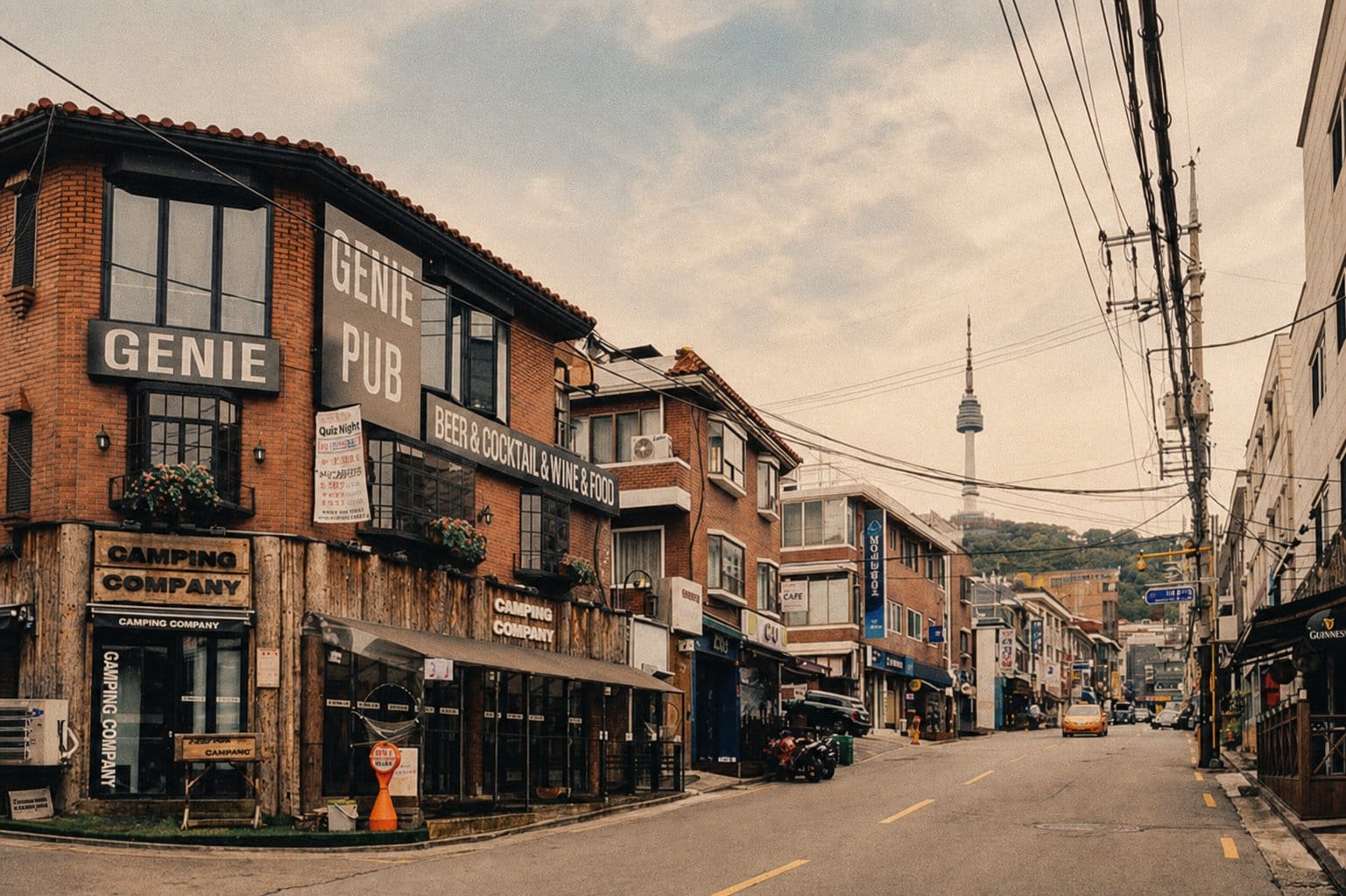
Itaewon is not a single street but a cluster of four distinct zones, each with its own transit access point, terrain, and visitor profile. Understanding which sub-neighborhood to target for a given activity prevents unnecessary climbing up Seoul's steep Yongsan hillsides . The four areas — Gyeongnidan-gil, Haebangchon, Usadan-ro, and Hannam-dong — share a Yongsan-gu postal address but feel noticeably different in character, price point, and pace.
| Sub-Neighborhood | Station & Exit | Terrain | Character | Best For |
|---|---|---|---|---|
| Gyeongnidan-gil | Noksapyeong Stn, Exit 2 (Line 6) | Steep hillside | Indie cafes, specialty coffee, bistros, weekend pop-up markets | Coffee, brunch, afternoon browsing |
| Haebangchon (HBC) | Noksapyeong Stn, Exit 2 (Line 6) | Very steep slope above Gyeongnidan | Residential, quiet galleries, independent bakeries, local market | Slow mornings, gallery visits |
| Usadan-ro | Itaewon Stn, Exit 3 (Line 6) | Moderate slope | Emerging dining corridor, rooftop terraces, converted-warehouse galleries | Experimental dining, rooftop bars |
| Hannam-dong | Hannam Stn, Exit 1 (Bundang Line) or Itaewon Stn, Exit 4 | Flat to gentle | Upscale cafes, natural wine bars, embassy district, Blue Square | Fine dining, concerts, museum visits |
Walking between zones is possible but demands awareness of Seoul's topography. The route from Noksapyeong Station to Itaewon Station follows relatively flat ground along the main road and takes 10–15 minutes; adding the uphill sections into Gyeongnidan-gil or Haebangchon extends any leg by another 10–15 minutes of genuine climbing . From Itaewon Station east to central Hannam-dong takes 15–25 minutes on foot; the Bundang Line covers the same distance in a single stop. Flat-soled, comfortable footwear is a practical requirement for the western sub-neighborhoods.
The four zones also differ by optimal time of day. Gyeongnidan-gil peaks mid-morning through afternoon when cafes are open and the alley foot traffic remains manageable. Usadan-ro and the Homo Hill strip grow more active from early evening onward. Hannam-dong operates across the full day — morning coffee, midday gallery visits, evening wine bar — and suits concert days at Blue Square particularly well (video: Angelica & Aileen Wanders).
Gyeongnidan-gil: The Hillside Alley Scene
Gyeongnidan-gil is a hillside alley network in the western portion of the Itaewon area, officially named Hoenamu-gil and nicknamed after the nearby ROK Army Central Finance Corps (Gyeongnidan). Access is via Noksapyeong Station Exit 2 on Line 6, followed by a short uphill walk to the main cluster along Hoenamu-ro 13-gil . The alley network spreads out from this central spine in multiple directions, with individual lanes turning residential within a few hundred metres — which gives the area its distinctive blend of foot traffic and neighbourhood quiet.
📍 View Gyeongnidan-gil on Google Maps
"Gyeongnidan-gil offers a simple yet exotic atmosphere" — Seoul Metropolitan Government
That framing captures something accurate about the area. The streets feel simultaneously residential and cosmopolitan: hand-lettered menus appear in several languages outside small-format restaurants, specialty roasters share blocks with neighbourhood Korean eateries, and the converted architecture — low-rise brick buildings with modern glass cafe fronts — is visually distinct from Seoul's denser commercial strips.
The area emerged in the early 2010s when young entrepreneurs converted older low-rise residential structures into indie cafes and small bistros. The timing coincided with rising rents in Hongdae and Insadong pushing creatives toward less-developed neighborhoods. By the mid-2010s, Gyeongnidan-gil had developed a clear identity around Korean-Western fusion dining and specialty coffee roasters; that identity has held into 2026, though the post-2022 period has added art spaces and vegan options to the mix .
Weekend pop-up markets operate along the main alley intermittently through spring and autumn months, bringing ceramics, vintage clothing, and handmade goods alongside the permanent cafe offer. For visitors arriving from other parts of Seoul, the journey takes approximately 20 minutes from Dongdaemun and 15 minutes from Hongdae on Line 6 , making it a practical afternoon stop in a multi-neighborhood day (video: Doobydobap).
Haebangchon & Usadan-ro: Quieter Corners with Character
Haebangchon, commonly abbreviated as HBC and translated as Liberation Village, sits above Gyeongnidan-gil on a steep slope within Yongsan-gu. Its name honors Korea's liberation from Japanese colonial rule in 1945 — the neighborhood's first settlers were diaspora Koreans returning from Japan and North Korean refugees who arrived in the years immediately following liberation. That founding history shaped a residential character that persists: Haebangchon is the quietest of Itaewon's sub-neighborhoods and the most authentically local in its daily rhythms.
Sinheung Market has operated in Haebangchon since the 1960s and remains the historic anchor of the area. Today the market's narrow lanes sit surrounded by small cafes in renovated houses, independent bakeries, and low-key galleries. Its relatively slow pace of change compared to the rest of Itaewon is precisely the quality that draws visitors seeking a more everyday Seoul experience alongside the broader sightseeing circuit.
📍 View Sinheung Market (Haebangchon) on Google Maps
Both Haebangchon and the connecting hillside streets suit slow mornings and afternoon gallery visits far better than high-density nightlife. The residential pace — light street noise, no queues outside venues — makes it a genuinely restful half-day. For K-POP fans who want a break between Seoul concert dates, this corner of the neighborhood offers a different register entirely: neighbourhood bakeries, quiet gallery rooms, and elevated viewpoints over Yongsan-gu from the upper slope paths.
Usadan-ro, a few minutes' walk toward Itaewon Station at Exit 3, operates at a different tempo. This is an emerging corridor rather than an established scene: experimental restaurants occupy converted warehouses, rooftop terraces of varying sizes serve cocktails and natural wine from afternoon onward, and small-format galleries open and close with the exhibition calendar. The energy here is distinctly younger and more provisional than Hannam-dong's established bar scene, which suits visitors who prefer discovering something new over seeking out known destinations .
Hannam-dong: Upscale Cafes, Wine Bars & Blue Square
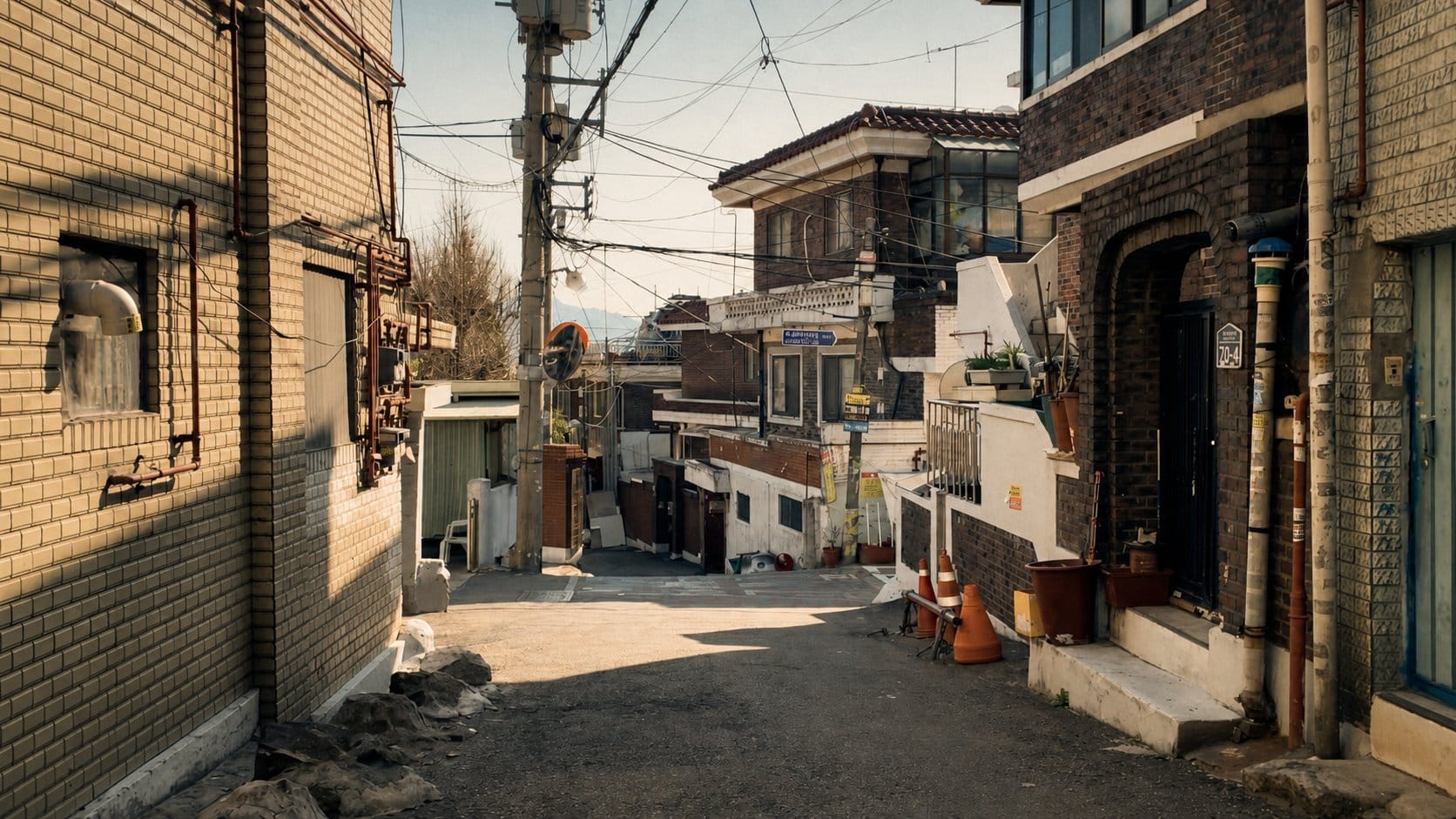
Hannam-dong is the upscale eastern counterpart to Itaewon's internationally mixed main strip — quieter in pace, more uniform in polish, and anchored by embassy buildings from the 1960s and 1970s that still define much of the streetscape. Access is via Hannam Station Exit 1 on the Bundang/Sinbundang Line, or a 15-minute walk east from Itaewon Station Exit 4 . The embassy district geography — wide-set roads, walled compounds, mature trees — gives Hannam-dong a spatial quality distinct from most of Seoul's denser neighborhoods.
Blue Square concert hall is the neighborhood's primary live-event anchor and a regular venue on Seoul's K-POP and musical theater calendar. The hall hosts K-POP concerts, musicals, and theatrical productions throughout the year, appearing consistently on Seoul itineraries for international fans. From Hannam Station Exit 1, it is approximately a 5-minute walk. For visitors planning a Seoul concert trip, Hannam-dong provides a natural pre-show dining and afternoon cultural circuit within walking distance of the venue.
📍 View Blue Square on Google Maps
The Let's Seoul Hannam-dong guide identifies Big Lights as a neighborhood landmark: Seoul's first dedicated natural wine bar, which opened in 2017 and operates as a neo-French bistro with seasonal ingredients and a wood-charcoal grill. The wine list favors small-producer European labels; the food is available as full dinner service or a shorter bar menu. Rubies Cafe offers rooftop seating with city views; coffee is ₩6,000 per cup . Aanzee, positioned near the Han River waterfront, serves brunch at approximately ₩40,000–60,000 for two . Tartine Bakery brings artisan baguettes and croissants to the neighborhood's morning circuit.
📍 View Big Lights on Google Maps
📍 View Rubies Cafe on Google Maps
📍 View Tartine Bakery on Google Maps
For a concert day at Blue Square, Hannam-dong supports a practical sequence: morning coffee at Rubies, midday visit to Leeum Museum of Art (a 10-minute walk toward Hangangjin Station), early dinner at Big Lights or a nearby bistro, then the short walk to the venue. Most of central Hannam-dong is flat or gently sloped — significantly more walkable than Gyeongnidan-gil's hillside sections. For side-street navigation, Naver Map or Kakao Map handles the area more reliably than Google Maps .
Global Food in Itaewon: Block by Block
Itaewon functions as one of Seoul's most concentrated multi-cuisine dining routes, with Turkish, Korean-Mexican, Indian, and Lebanese options sitting within a few city blocks of one another, grouped loosely around the cultural communities that have historically settled in each area. According to Let's Seoul, Itaewon delivers "a world food tour within walking distance" — a characterization that holds in 2026 as the dining offer has expanded rather than contracted since the neighborhood's post-2022 restructuring. Budget meals run ₩5,000–15,000 per person; mid-range options ₩20,000–35,000; and premium dining starts at ₩40,000+ .
| Restaurant | Cuisine | Signature Order | Price Range (per person) |
|---|---|---|---|
| Vatos Urban Tacos | Korean-Mexican fusion | Kimchi carnitas fries | ₩15,000–25,000 |
| Maple Tree House | Korean BBQ — galbi (short ribs) | Galbi set; baby seating available | ₩30,000–50,000 |
| Kervan | Turkish | Mixed grill and pide bread | ₩15,000–30,000 |
| Taj Palace | Indian | Tandoori chicken, butter chicken, naan | ₩15,000–25,000 |
| All That Jazz | Live jazz dinner venue | Seasonal dinner menu with live set | ₩35,000+ |
Vatos Urban Tacos is a long-running Itaewon landmark in the Korean-Mexican fusion category. The kimchi carnitas fries have become a signature order that draws repeat visitors and appears in travel recommendations across multiple generations of the neighborhood's evolution . Maple Tree House is the more practical choice for group dinners of mixed ages — the galbi (short ribs) format works across most palates, and the restaurant provides baby seating, making it functional for families or groups where not everyone wants an adventurous meal .
📍 View Vatos Urban Tacos on Google Maps
📍 View Maple Tree House on Google Maps
Kervan is one of Itaewon's oldest international restaurants, operating near the mosque cluster on the north side of Itaewon-ro. Turkish grills and pide are the core offer; the surrounding block forms a loose "Little Arabia" cluster, with halal restaurants serving Egyptian, Palestinian, and Saudi cuisine alongside the Turkish options. For visitors from halal-observant backgrounds, this cluster provides the widest selection of certified-halal dining in Seoul .
Beyond sit-down dining, Itaewon's cafe circuit is extensive. Cafe Foyer's second-floor windows offer elevated views of the main street; Hemian Coffee Bar combines specialty espresso with terrace seating; June Coffee Itaewon operates a rooftop with a city panorama. Arriving on a weekday allows comfortable movement between the cafe circuit and the dining options without competing with weekend crowd concentrations (video: Angelica & Aileen Wanders).
Cultural Landmarks, Nightlife & Getting to Itaewon
Itaewon's cultural infrastructure extends considerably beyond its food and nightlife reputation. The Leeum Museum of Art, accessed via Hangangjin Station Exit 1 on Line 6, holds traditional Korean art, modern masterpieces, and contemporary works in a landmark building co-designed by architects Mario Botta, Jean Nouvel, and Rem Koolhaas — three separate structures unified by a shared courtyard . The museum functions as a half-day destination in its own right and connects naturally to a Hannam-dong afternoon.
📍 View Leeum Museum of Art on Google Maps
Seoul Central Mosque, completed in 1976 , stands near Itaewon Station Exit 1 and is Korea's first and largest Islamic mosque. Its white Middle Eastern façade with twin minarets is visually distinct from the surrounding streetscape and marks the beginning of the halal dining cluster extending along the north side of Itaewon-ro. The mosque is open to non-Muslim visitors outside of prayer times; the surrounding block is among the most architecturally varied in Seoul.
📍 View Seoul Central Mosque on Google Maps
Antique Furniture Street runs from Itaewon Station toward the Hamilton Hotel area and traces its origins to the 1970s and 1980s, when military surplus goods from the adjacent US base found their way into street-level shops . Today the street stocks vintage European furniture, classic typewriters, architectural salvage pieces, and rare interior props. It operates less as a casual browsing market and more as a specialist destination — visitors seeking specific pieces return here deliberately.
📍 View Itaewon Antique Furniture Street on Google Maps
Nightlife in 2026 is substantially different from pre-2022 Itaewon. Large clubs and high-density venue blocks have largely given way to rooftop bars, natural wine bars, and craft cocktail spaces. The Usadan-ro terrace circuit and the Homo Hill strip remain active on Thursday through Saturday evenings; Contact Record Bar (DJs and records) and Off The Record (vinyl and cocktails, transitioning from lounge to late-night) represent the current direction of the nightlife offer . Overall crowd density on peak weekend nights is significantly lower than pre-2022 levels.
Getting to Itaewon: The primary access is Itaewon Station (Line 6) with four exits serving distinct parts of the neighborhood. Noksapyeong Station (also Line 6) provides a scenic approach for Gyeongnidan-gil via a walking bridge with Namsan Tower views. From Incheon Airport, take the AREX express train (approximately 45 minutes, approximately $7 USD) to Seoul Station, then transfer to Line 6. A direct airport taxi runs approximately $50–70 USD plus a $6 USD expressway toll . Purchase a T-money transit card at Incheon Airport vending machines (₩4,000 purchase fee, balance refundable) — it covers subway, bus, and taxi. Use Naver Map or Kakao Map for walking navigation in Itaewon's side streets; Google Maps handles subway routing reliably but is less accurate for the area's narrower alleys .
Frequently Asked Questions
Is Itaewon safe to visit in 2026?
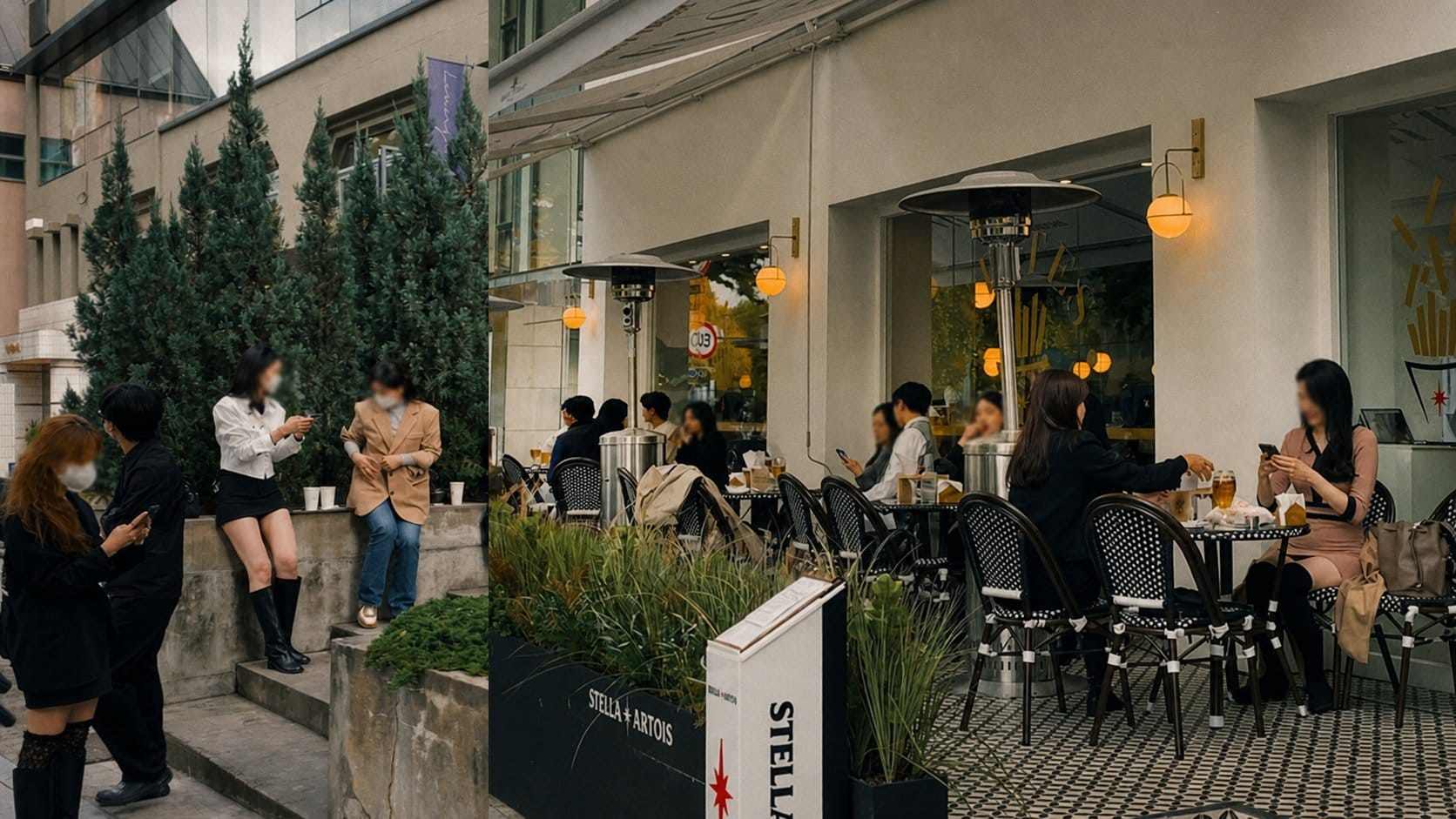
Itaewon in 2026 is generally safe and comparable to other central Seoul districts. Following the October 29, 2022 crowd crush , significant changes were implemented in crowd management, and many high-density venues closed or relocated. The neighborhood's character has shifted substantially toward cafes and galleries, which operate at lower foot traffic levels. Standard urban awareness applies on busy weekend evenings — as it does throughout Seoul's entertainment districts. The area feels notably calmer than its pre-2022 reputation suggested, which often surprises first-time visitors.
How do I get from central Seoul to Gyeongnidan-gil?
Take Seoul Metro Line 6 to Noksapyeong Station and use Exit 2. The journey takes approximately 20 minutes from Dongdaemun and 15 minutes from Hongdae . From the exit, follow Hoenamu-ro uphill for roughly 5 minutes to reach the main alley cluster on Hoenamu-ro 13-gil. The climb is steady but short. Flat or supportive footwear makes the walk comfortable. Naver Map or Kakao Map handles the specific alley system more reliably than Google Maps for this part of Itaewon.
What is the difference between Itaewon and Hannam-dong?
Itaewon proper refers to the multicultural main strip centered around Itaewon Station — diverse global food, an active nightlife scene, and a distinctly international community feel at a range of price points. Hannam-dong, directly east, is quieter and more upscale, shaped by its embassy district history. Natural wine bars, artisan cafes, the Leeum Museum of Art, and Blue Square concert hall define Hannam-dong's offer. Price points in Hannam-dong are generally higher, and the pace is slower. The two areas are adjacent and walkable between, but they feel like different neighborhoods in atmosphere and visitor profile.
Are there K-POP concert venues near Itaewon?
Blue Square in Hannam-dong is the primary concert and performance venue serving the Itaewon area. It hosts K-POP concerts, musicals, and theatrical productions regularly and appears frequently on Seoul concert itineraries for international fans. Blue Square is approximately a 15-minute walk east from Itaewon Station Exit 4, or one stop on the Bundang Line from Itaewon to Hannam Station Exit 1 . For larger productions, KSPO Dome and the Olympic Park venues in the Banpo-Songpa area are accessible by Seoul Metro but require a transfer.
What international food options are in Itaewon beyond Korean cuisine?
Itaewon has one of the highest concentrations of non-Korean restaurants in Seoul . Key options include Turkish grills and pide at Kervan, Korean-Mexican fusion at Vatos Urban Tacos (known for kimchi carnitas fries), tandoori and curry dishes at Taj Palace, and neo-French dining with natural wine at Big Lights in Hannam-dong. Tartine Bakery serves artisan baguettes and pastries. The mosque cluster near Itaewon Station Exit 1 hosts a concentrated halal dining strip with Egyptian, Palestinian, Saudi, and Turkish options. Nearly every restaurant in the area provides a menu in English.
Watch / Sources
- Doobydobap — I Went to Every Neighborhood in SEOUL, KOREA (25 Districts)
- Angelica & Aileen Wanders — Korea 2026 Travel Guide: Best Places to Visit & Things to Do • Itinerary & Expenses • Budget Vlog
- Lais — 3 Days in Seoul 2026 - What to do in Seoul South Korea
Planning Your Itaewon Visit
Itaewon in 2026 operates across a wider range of activities than the neighborhood's earlier nightlife-district reputation indicated. The four sub-neighborhoods — Gyeongnidan-gil's hillside cafe scene, Haebangchon's residential quiet and Sinheung Market, Usadan-ro's emerging experimental dining, and Hannam-dong's polished embassy-district cafe and concert culture — together form a cohesive day or multi-day visit depending on your pace and interests.
For K-POP fans building a Seoul trip around a Blue Square concert or other Yongsan-area event, Hannam-dong offers the most practical base: proximity to the venue, consistent dining quality, and a walkable daytime cultural circuit through Leeum Museum and the surrounding gallery spaces. Linking Gyeongnidan-gil coffee in the morning with Leeum in the afternoon and an evening concert covers a meaningful cross-section of what the broader Itaewon district offers — on two Line 6 stops and a 15-minute eastward walk.
The neighborhood rewards visitors who arrive with a specific interest — a particular cuisine, a gallery opening, a concert date — more than those seeking a general entertainment district. That shift is the most significant thing to understand about Itaewon in 2026: it has grown into a more intentional destination, and planning that matches its current character produces a noticeably better visit than approaching it with pre-2022 expectations.
Last updated: 2026-05-27. This article is reviewed against current transit schedules, venue operating status, and neighborhood developments on a quarterly basis.
This article was written using information collected and analyzed by NAMANE's in-house K-pop research AI engine. We use AI technology to bring you faster, broader coverage, and in the process some details may occasionally differ from the latest facts. For important information such as dates, venues, and prices, please double-check with official sources.


