
Did Kim Se-jeong Buy a ₩3 Billion Penthouse? What BH Actually Confirmed
A single anonymously sourced sentence turned Kim Se-jeong's home purchase into a national talking point — and her agency spent the same afternoon taking half of it back.
BH Entertainment confirmed on July 15, 2026 that Kim Se-jeong bought a home in South Korea, but denied within hours that it was a penthouse in the 30억 won range — roughly 3 billion KRW, or about US$2.0–2.2 million . The purchase itself is the only element every outlet agrees on; the price, district and dwelling type are not established.source
Quick Answer: Kim Se-jeong did buy a home, confirmed by BH Entertainment on July 15, 2026. But BH denied the reported ₩3 billion (~US$2.0–2.2M) Gwangjin-gu penthouse figure the same day, calling it "not factual," and declined to give a corrected price or location, citing the actor's privacy.
The agency's statement to Newspim was two-part and near-identical across outlets:
"주택을 구입한 것은 사실" (the home purchase is a fact), but "30억 원대 펜트하우스라는 내용은 사실이 아니며, 가격 등은 개인적인 부분이라 확인이 어렵다" — the ₩3 billion penthouse claim is not true, and price details are private and difficult to confirm. — BH Entertainment statement, July 15, 2026 (source: Newspim, 2026-07)
What BH rejected was a composite claim — price, penthouse designation and district bundled together — without substituting a corrected figure of any kind. Hankook Ilbo carried the fuller line: the purchase is true, but location and amount are the actor's private life . So which element is wrong — the ₩3 billion, the word "penthouse," the Gwangjin-gu location, or more than one — remains unstated.
How the Story Started: JTBC's Anonymous-Source Report
The entire ₩3 billion figure traces back to a single broadcast item. On July 15, 2026, JTBC Entertainment News reported — citing an unnamed entertainment-industry source — that Kim Se-jeong had recently purchased a penthouse in Seoul's Gwangjin-gu in the 30억 won range, roughly ₩3 billion or about US$2.0–2.2 million . The report was mirrored the same morning on Daum's news portal, where it reached a far larger audience than the original segment . Every subsequent headline, English or Korean, descends from that one anonymously sourced sentence.
What the original report did not contain is the more instructive part. It named:
- No building and no complex name
- No unit number, floor, or exclusive area (전용면적)
- No seller, no contract date, and no completion date
- No registry extract (등기부등본) or transaction record
- No financing structure, and no statement on whether the property was bought solely in her name
In Korean property reporting, those fields are the normal evidentiary backbone. A claim anchored to a named complex can at least be checked against public transaction data; a claim with a price and a district alone cannot be. The story arrived, in other words, with a specific number attached to nothing verifiable — which is precisely the gap BH Entertainment's statement stepped into hours later on the same day .
Downstream, the qualifier thinned out. Several English-language aggregators continued presenting the story as a settled ₩3 billion Gwangjin-gu penthouse purchase even after the agency's rebuttal was on the record . Others handled it more carefully, framing the episode as a valuation dispute and noting that BH declined to reveal an actual purchase price or a move-in timeline, so the denial produced uncertainty rather than a correction . Korean wire coverage from Financial News and Kyunghyang's sports desk stayed closer to the two-part framing: purchase confirmed, figure disputed .source
BH's Denial, Word for Word — And What It Doesn't Say
BH Entertainment's statement on July 15, 2026 was a two-part position, not a blanket rejection: the agency confirmed the home purchase while disputing the specific characterization of it. Hankook Ilbo carried the fuller line — "주택 구입은 사실이 맞지만 위치나 금액 등은 배우의 사생활로 밝히기 어렵다" ("the home purchase is true, but the location and amount are the actor's private life and difficult to disclose") . StarNews reported the agency calling the "3 billion won range penthouse" characterization "사실과 다르다" — not factual . Newspim carried a near-identical formulation: the purchase is a fact, but "30억 원대 펜트하우스라는 내용은 사실이 아니며, 가격 등은 개인적인 부분이라 확인이 어렵다" .
"주택 구입은 사실이 맞지만 위치나 금액 등은 배우의 사생활로 밝히기 어렵다" — the home purchase is true, but the location and amount are the actor's private life and difficult to disclose. — BH Entertainment official statement, July 15, 2026 (source: Hankook Ilbo)
That the wording arrived near-identically across Newspim, Hankook Ilbo, TenAsia and ChosunBiz's English OSEN feed raises confidence that outlets were quoting one consistent agency line rather than paraphrasing separate calls . But the structure of the denial is what limits it. BH rejected a composite claim — a penthouse, in Gwangjin-gu, in the ₩3 billion range — without identifying which element was wrong, and explicitly declined to substitute a corrected figure, district or dwelling type.
Logically, any of the following could be the false component, and the statement does not narrow it:
- The price. Whether the transaction was above, below, or nowhere near ₩3 billion is unstated.source
- The "penthouse" designation. Whether the property is a top-floor unit at all remains open.
- The district. Gwangjin-gu came from the same anonymous sourcing the agency disputed.
- The dwelling type. Apartment, officetel, villa or detached house — none confirmed.
- More than one at once. A partial denial does not certify the remainder.
Also unconfirmed as of this writing: the building name and unit number, the floor, the exclusive area, whether the property was bought solely in her name, the financing structure, the contract and completion dates, and whether she intends to occupy it . Some outlets softened the reporting further, stating only that BH confirmed the purchase but would not verify the exact price or related details . The practical result is that the July 15 statement closed one question — did she buy a home — and left every quantitative detail exactly where the original report found it: unsupported by any document.source
Why Public Records Can't Settle This: How Korea's MOLIT System Works
South Korea's public property database cannot identify who bought a home, which is why this dispute has no documentary tiebreaker. The Ministry of Land, Infrastructure and Transport (MOLIT) operates a real-transaction disclosure system at rt.molit.go.kr that publishes each recorded sale by property — apartment address, complex name, exclusive area, contract-date period, transaction amount, floor, building year and road-name address . Purchaser identity is not among those fields. A researcher can look up what a given unit sold for; nobody can query the system for "homes bought by Kim Se-jeong."
That design choice is the structural reason the July 15, 2026 claim remains open. Verification would normally run in one of two directions — from a name to a property, or from a property to a price. The first direction is closed by law and system design. The second requires a lead: a building name, a complex, a unit or at minimum a dong-level address. JTBC's report supplied none of these, naming no building, no unit, no floor, no exclusive area and no contract date , and BH Entertainment declined to substitute any of them, treating location and amount as private . Without a starting coordinate, the database has nothing to match against.
Timing adds a second layer of friction. MOLIT rules require that purchase contracts generally be reported within 30 days, and the transaction then appears on the public system only after local-government approval . Even for a named building, that sequence produces a lag between signing and public visibility — so a recent contract may simply not be searchable yet, and the absence of a matching record proves nothing either way.
What MOLIT-derived data can still do is bounded but useful:
- Supply district context. Aggregated per-pyeong averages and recent comparables for a neighborhood show whether a reported price band is typical, high or unusual for the area.
- Price a specific named building. If a building were ever identified, its recorded sales would give a concrete range for units of a given exclusive area and floor.
- Establish market direction. Year-on-year movement in a district's transaction prices is documented and citable.
What it cannot do is attach any of that to a named individual. Registry extracts (등기부등본) list owners and can be requested per property, but they too require knowing which property to pull — the same missing lead. So the ₩3 billion figure sits outside the reach of public verification: not disproven, not documented, and dependent entirely on an anonymous industry source on one side and a partial agency denial on the other.source
Gwangjin-gu Penthouse Prices: Does ₩3 Billion Even Match the District?
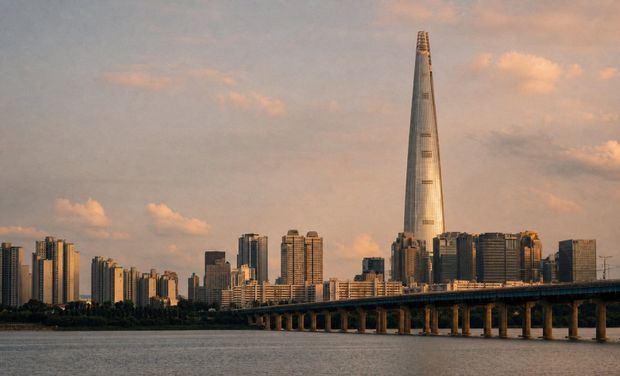
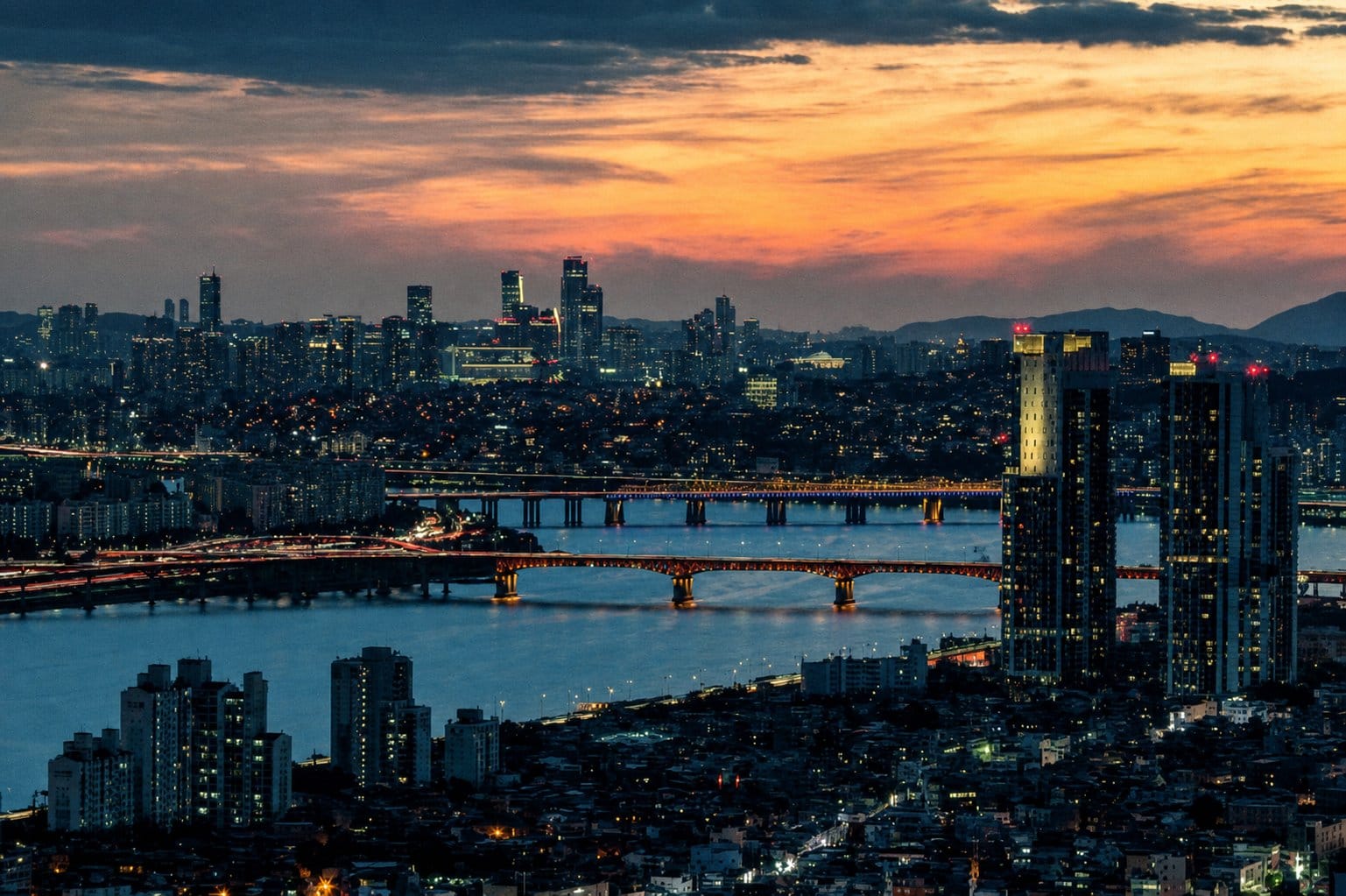
Gwangjin-gu is a mid-to-upper-tier Seoul district where a ₩3 billion residential purchase would sit near the top of the local market rather than in its middle. Jayang-dong apartments — the riverside neighborhood anchoring the district's premium stock — averaged about 69.64 million KRW per pyeong in 2025, up 10.4% year-on-year and roughly 6.6% above the Seoul citywide apartment average of about 54 million KRW per pyeong . At that rate, ₩3 billion implies roughly 43 pyeong (about 142㎡) of exclusive area — a large unit by Seoul standards, and one reason the reported figure drew scrutiny rather than a shrug.source
The district's most obvious comparable undercuts the number more directly. The Raum Penthouse (더 라움 펜트하우스) at 81 Neungdong-ro, completed in 2022, is Gwangjin-gu's best-known branded high-end product — and a 58.81㎡ unit there sold for 1.125 billion KRW in December 2025, about 63.11 million KRW per pyeong . A building carrying "penthouse" in its name was trading at roughly a third of the reported figure for a mid-sized unit. Eaton Tower River sits higher: 84.76㎡ changed hands for 2.33 billion KRW in June 2026 . Even that transaction — larger unit, river-front positioning, recent date — lands well short of ₩3 billion.
| Reference point | Exclusive area | Price (KRW) | Date | Per pyeong |
|---|---|---|---|---|
| Jayang-dong apartment average | — | — | 2025 (+10.4% YoY) | ~69.64M |
| Seoul citywide apartment average | — | — | 2025 | ~54M |
| The Raum Penthouse, 81 Neungdong-ro | 58.81㎡ | 1.125B | Dec 2025 | ~63.11M |
| Eaton Tower River | 84.76㎡ | 2.33B | Jun 2026 | ~90.9M |
| Reported figure (unverified) | not stated | ~3B range | Jul 2026 report | n/a |
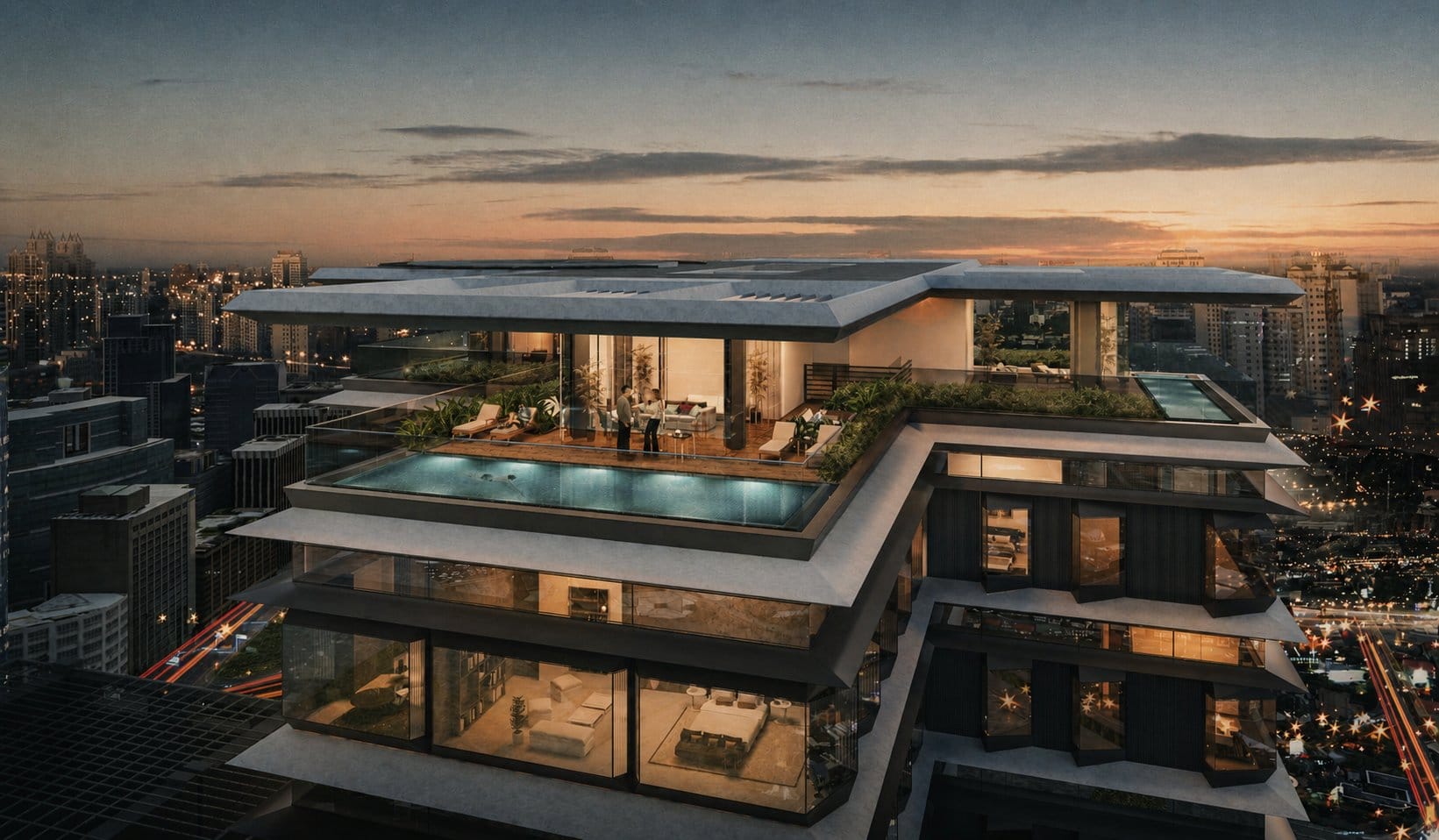
None of this makes ₩3 billion impossible. Larger river-front stock exists in the district — Gwangjin Housetory Hangang, an 82-unit development with 53- and 80-pyeong layouts and Lotte World Tower views, has been a repeated celebrity choice and has set recent local highs . At 80 pyeong, Jayang-dong's 2025 average rate alone would clear ₩5.5 billion. So a ₩3 billion Gwangjin-gu residence is plausible in principle; it simply requires an unusually large riverside or top-floor unit rather than the branded-penthouse product the word "penthouse" would suggest to most readers.
That gap between the label and the comparables is worth naming precisely, because it is the one part of the story that can be examined without a registry extract. The figures above describe the district, not her transaction. They cannot confirm that Kim Se-jeong bought anything in Gwangjin-gu, and they cannot rule it out. What they do show is why a ₩3 billion "penthouse" reading invited pushback: at typical branded-penthouse unit sizes in this district, the arithmetic does not land there, and BH Entertainment's denial of the composite claim left open which element — price, district, or dwelling type — was the one that failed.
Kim Se-jeong's First Home in Her Own Name — And the 2026 Celebrity Property Wave
Strip away the disputed figure and one confirmed detail remains the actual story: Kim Se-jeong bought a home, and it is reported as the first property registered in her own name, roughly a decade after her 2016 debut with I.O.I . She had previously bought and renovated a house under her mother's name, which is why Korean coverage framed the July 2026 purchase as a personal milestone rather than a portfolio move .
The biographical detail that gave the story its emotional weight is well documented and independent of the property claim. Kim has said that when she first came to Seoul she lived with her mother and older brother in a 12-pyeong apartment — about 40㎡ — belonging to an aunt . Her long-repeated promise to her mother, "꽃길만 걷게 해줄게" ("I'll make sure you only walk on flower paths"), became a personal catchphrase and later fed into her song "Flower Path" . She is also known domestically as a 짠테크 (thrifty-finance) figure who keeps nine separate bank accounts for categorized spending and saving, and whose mother works in accounting .
The purchase also landed in a busy year for celebrity property filings. TWICE's Nayeon completed registration in 2026 on land and a building in Cheongdam-dong, Gangnam-gu for ₩9.5 billion after signing in May; TWICE's Jihyo bought a neighborhood-facility building in Seongsu-dong 2-ga, Seongdong-gu for ₩4.0 billion, reportedly all cash given the absence of a mortgage lien on the register; and broadcaster Seo Jang-hoon listed his Dabo Building near Yangjae Station for ₩45 billion . The common thread is structural: tightened loan rules on high-priced residential property, heavier holding taxes and reinstated capital-gains surcharges for multi-home owners have pushed celebrity capital toward commercial 근린생활시설 buildings rather than apartments . If Kim's home is residential and owner-occupied, it runs against that pattern — but that framing rests on the unverified characterization, so it stays conditional.
The concrete takeaway: as of this writing, one fact is established and everything downstream of it is not. BH Entertainment confirmed the purchase on July 15, 2026, denied the ₩3 billion Gwangjin-gu penthouse description, and declined to substitute a corrected price, district or dwelling type . Readers encountering English aggregator headlines that still present the ₩3 billion penthouse as settled should treat that number as an anonymously sourced report the agency has explicitly contested, not as a verified transaction.
Frequently asked questions
Is it confirmed that Kim Se-jeong bought a penthouse in Seoul?
No. What is confirmed is only that Kim Se-jeong bought a home. BH Entertainment stated on July 15, 2026 that "주택을 구입한 것은 사실" (the home purchase is a fact) while explicitly rejecting the description of it as a penthouse in the ₩3 billion range as "사실이 아니며" — not true . Because the agency denied the composite description without correcting any single element, whether the property is a penthouse at all remains unverified, as does the dwelling type — apartment, officetel, villa or otherwise .
How much did Kim Se-jeong pay for her new home?
Unknown. The ₩3 billion (roughly US$2.0–2.2 million) figure comes from a single JTBC Entertainment News report of July 15, 2026 that cited an unnamed entertainment-industry source and named no building, unit, contract date or transaction record . BH Entertainment called that number inaccurate but declined to supply a corrected one, saying "가격 등은 개인적인 부분이라 확인이 어렵다" — price details are private and difficult to confirm . No verified purchase price exists in the public record.
Where is Kim Se-jeong's new home located?
The location is unverified. JTBC's July 15, 2026 report placed the property in Gwangjin-gu, Seoul, but that district attribution rests on the same anonymous source as the disputed price . BH Entertainment has never confirmed the district. Hankook Ilbo carried the agency's fuller statement: "주택 구입은 사실이 맞지만 위치나 금액 등은 배우의 사생활로 밝히기 어렵다" — the purchase is true, but location and amount are the actor's private life and difficult to disclose .
Can I look up the transaction on Korea's public real estate records?
Not for this case. South Korea's Ministry of Land, Infrastructure and Transport publishes real-transaction data at rt.molit.go.kr with fields covering complex name, exclusive area, contract-date period, transaction amount, floor, building year and road-name address — but the system is organized around properties, not buyers, and never discloses purchaser identity . Purchase contracts must generally be reported within 30 days and appear publicly after local-government approval . Without a specific building and unit lead or a registry extract, MOLIT data can only describe a district's market, not confirm who bought what.
Why are Korean celebrities buying commercial buildings instead of homes in 2026?
Tax and lending policy is steering the money. Tightened loan rules on high-priced residential property, heavier holding taxes and reinstated capital-gains surcharges for multi-home owners have pushed celebrity capital toward commercial 근린생활시설 (neighborhood-facility) buildings . Recent examples follow that pattern: TWICE's Nayeon completed registration in 2026 on land and a building in Cheongdam-dong, Gangnam-gu for ₩9.5 billion after signing in May, and TWICE's Jihyo bought a neighborhood-facility building in Seongsu-dong 2-ga, Seongdong-gu for ₩4.0 billion, reportedly all cash given no mortgage lien on the register . A residential owner-occupied purchase, if that is what Kim's turns out to be, would run against the trend.
Enjoyed this article? Subscribe to get new stories by email whenever they're published.
This article was written using information collected and analyzed by NAMANE's in-house K-pop research AI engine. We use AI technology to bring you faster, broader coverage, and in the process some details may occasionally differ from the latest facts. For important information such as dates, venues, and prices, please double-check with official sources.


