Korea's transportation system consists of three core modes: subway, bus, and taxi, all of which can be used with a single transportation card, making it easy for foreign travelers to get around. Here's a summary of each transportation mode's characteristics and situational recommendations.
Comparison of Korea's 3 Major Transportation Modes
- Subway: Optimal for traveling on a precise schedule. Unaffected by traffic conditions
- Bus: For destinations far from stations. Access to areas not covered by subway
- Taxi: Efficient for late night travel, when carrying lots of luggage, or group travel of 3-4 people
Subway — Core of Seoul Transportation
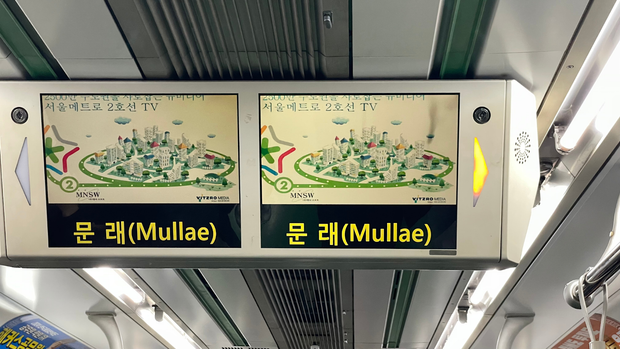
Seoul subway features color-coded lines for easy navigation, and station signs are marked in English, making it easy for foreigners to use.
Subway Features
- Intuitive navigation with color-coded lines
- Complete English (and other foreign language) station signage
- Board simply by tapping your transportation card
- On-time operation regardless of traffic conditions
- Covers most major tourist attractions in Seoul
Subway Usage Tips
- Recommend 'Subway Korea' or 'KakaoMap' app for route planning
- Transfers between lines are free
- Last train: approximately 23:30~24:00 (varies by line)
- Very crowded during rush hours (08~09 AM, 18~19 PM)
Bus — To Places Subway Doesn't Reach
Korean buses are categorized by color: blue (trunk), green (branch), red (express), yellow (circular).
Bus Usage Tips
- Must tap card when both boarding and alighting (important for fare calculation)
- Real-time arrival information available at bus stops
- Transfer between bus and subway is free within 30 minutes
- Night buses (owl buses) operate on some routes after midnight
- Use KakaoMap or NAVER MAP for route search
Taxi — Convenient Late Night & Group Travel
Korean taxis are relatively affordable compared to other countries. The base fare is approximately 4,800 won (for regular taxis) and available 24 hours.
Taxi Usage Tips
- Use 'Kakao T' app for calling (similar to Uber)
- Late night (midnight~04:00) 20~40% surcharge applied
- For 3-4 people traveling together, taxi may be cheaper than individual transportation fares
- Most taxis accept card payment and transportation cards
- Showing destination in Korean text prevents misunderstandings
Transportation Precautions & NAMANE Card
- Must prepare a transportation card (NAMANE or T-money) — much more convenient than single-ride tickets
- Google Maps has limited functionality in Korea — use NAVER MAP or KakaoMap
- During rush hours, subway is usually faster than taxi or bus
For all transportation in Korea, we recommend the NAMANE card. It's an all-in-one card that can be used for subway, bus, taxi, and even shopping. NAMANE Card Getting Started Guide | Transportation Card Comparison Guide
Korea Transportation FAQ — Frequently Asked Questions
Q. Can I travel without a transportation card?
It's possible, but not recommended as purchasing single tickets is cumbersome and you can't receive transfer discounts. NAMANE cards can be purchased immediately at convenience stores or subway station vending machines, and can be used right after charging.
Q. What do I do if I miss the last train?
Night buses (owl buses) operate on major routes after midnight, and taxis are available 24 hours. However, late night taxis have a 20~40% surcharge, so check the fare in advance using the Kakao T app.
Q. What's the fastest way from Seoul to Incheon Airport?
The Airport Railroad (AREX) express train is fastest, taking about 43 minutes from Seoul Station to Incheon Airport. The fare is approximately 9,500 won and can be paid with NAMANE card. Limousine buses take about 60~80 minutes.
This article was written using information collected and analyzed by NAMANE's in-house K-pop research AI engine. We use AI technology to bring you faster, broader coverage, and in the process some details may occasionally differ from the latest facts. For important information such as dates, venues, and prices, please double-check with official sources.


