

K-pop's physical album business just crossed a line no one had seen before: for the first time on record, the United States — not Japan — is the world's biggest buyer of Korean CDs.
What Just Happened: $257M and a Historic Market Shift
South Korea's K-pop album exports reached an all-time record of US$257.48 million in the first half of 2026 (January–June), a 125 percent jump from a year earlier and the highest half-year total ever recorded for the sector . The figures come from Korea Customs Service trade statistics dated July 17, 2026, as reported by The Korea Times and UPI.
The headline shift is who is buying. The United States overtook Japan as the single largest importer of Korean physical albums for the first time, at $74.12 million versus Japan's $45.61 million — with China second at $61.18 million . Japan had long been the bedrock of K-pop's overseas physical sales; its drop to third marks a genuine changing of the guard.
| Rank | Market | H1 2026 imports |
|---|---|---|
| 1 | United States | $74.12M |
| 2 | China | $61.18M |
| 3 | Japan | $45.61M |
| 4–10 | Germany, Taiwan, Hong Kong, Netherlands, UK, France, Poland | — |
This was not a late-half surge. First-quarter exports alone crossed $100 million for the first time — roughly $120 million, up about 159 percent year-on-year — with the US already accounting for about 28 percent of exports and outpacing Japan that quarter . The trend held steady from January onward, pointing to a structural realignment rather than a one-off spike.
The Two Albums That Broke the Record: 'Arirang' and 'Deadline'

Two comebacks did most of the heavy lifting. BTS released its fifth studio album, Arirang, in March 2026 — the group's first new album in roughly three years and nine months — and both the album and its lead single reached No. 1 on Billboard's main charts . Arirang sold around 567,000 copies, according to Herald Business . A month earlier, in February 2026, BLACKPINK dropped its third mini album, Deadline, which had sold nearly 2 million copies by the end of June .
The scale of those two releases matters because they landed inside a single half-year window. When a top boy band's first album in nearly four years arrives within weeks of a major girl group's comeback, the demand spike arrives all at once rather than spreading across the calendar. That concentration is precisely what Japan — historically the largest and most orderly buyer of Korean physical albums — could no longer absorb on its own, and it helps explain why the surge spilled so heavily into the US market.
The catalog behind the record ran deeper than two names. Physical sales in the first half were also propelled by a wide slate of acts, per Herald Business :
- Enhypen
- Ateez
- Stray Kids
- Tomorrow X Together
- Cortis
- Katseye
Together with BTS and BLACKPINK, that lineup meant fans had multiple high-profile releases to buy in the same six months — the kind of stacked release schedule that turns individual comebacks into a sector-wide export record. Luminate, the US analytics firm tracking the trend, went as far as to describe K-pop as building "a new consumption formula for the music industry" — a formula in which the album itself, not just the music on it, is the product fans are lining up for.
For fans planning to follow these comebacks to Korea, this blog is operated by NAMANE Card, which ran a limited-edition BTS Arirang-themed prepaid card bundled with a multi-day unlimited transit pass around the album's release, alongside one-stop concert travel packages (ticket, prepaid card, hotel and activities). Exact inclusions and current pricing are listed on the official event page and via NAMANE's announcement.
Why Americans Buy K-pop CDs Without a CD Player
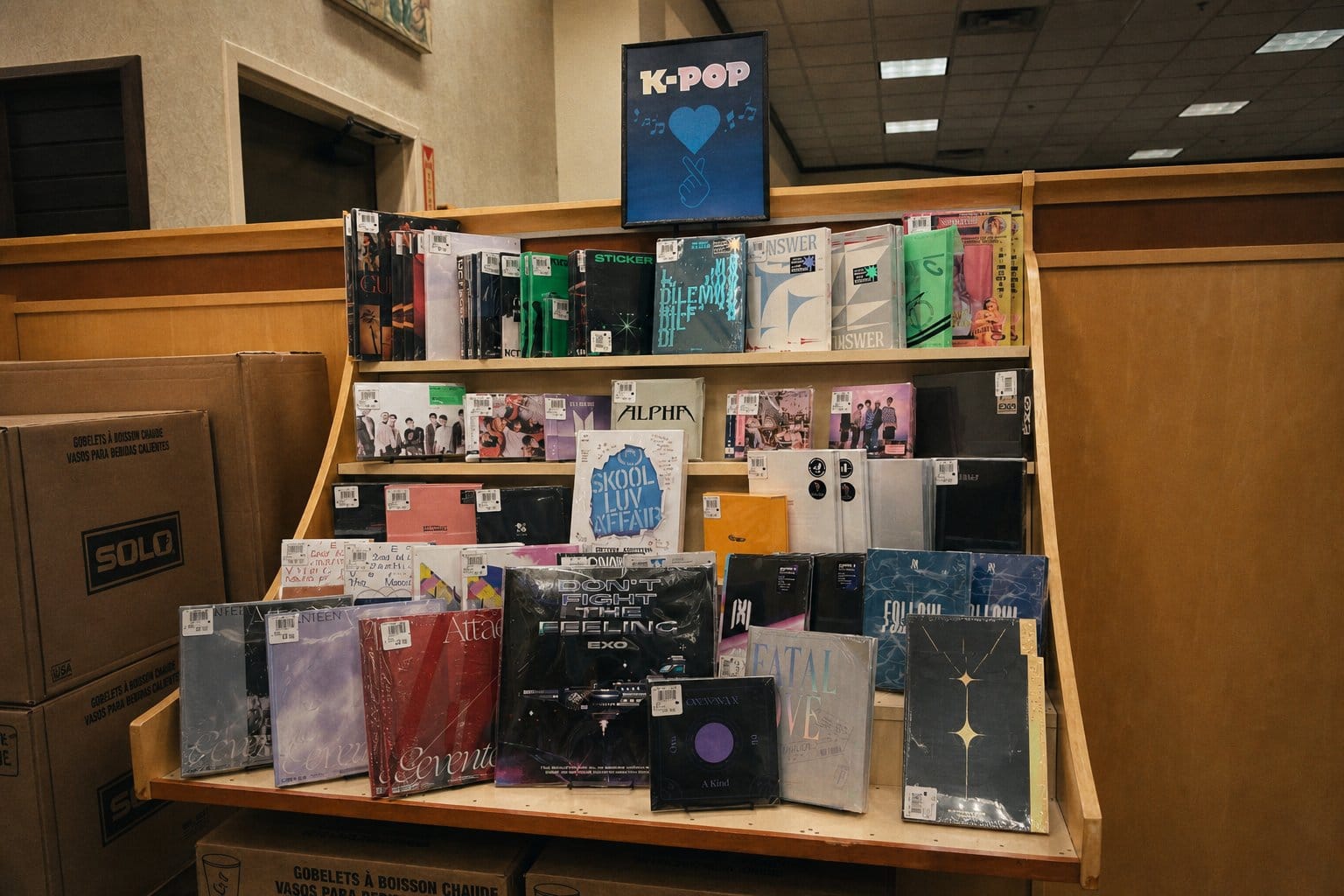
Americans now buy K-pop CDs mainly as collectible merchandise, not as music to play. According to Luminate, cited in a Herald Business report, roughly half of Generation Z and millennial CD buyers in the United States do not own a CD player . In practice the physical album functions as a high-value fan object — built around photocard pulls, limited editions, version variants and community rituals like unboxing — rather than a playback medium.
The scale of the effect is visible in the wider US market. US CD sales rose 16 percent in the first half of 2026, but strip out K-pop acts and that growth collapses to about 6.7 percent . Luminate attributed the bulk of the gain specifically to K-pop, and to BTS in particular.
Luminate CEO Rob Jonas credited much of the US CD-sales growth to K-pop and especially to BTS, with Luminate describing K-pop as creating "a new consumption formula for the music industry" — Rob Jonas, CEO, Luminate (source: Herald Business).
That "new consumption formula" is fandom-driven purchasing. Each album can hold randomized photocards, sealed inclusions and multiple editions, so dedicated fans often buy several copies of the same release to complete a set or support chart performance. The value sits in the packaging and the collectible extras, not in the disc itself — which is why ownership of a CD player has become largely beside the point for this buyer group.
This collectible model is the direct reason the United States can now outspend Japan on physical Korean albums. Japan has long had a far deeper base of traditional CD buyers, yet the US reached $74.12 million in H1 2026 K-pop album imports against Japan's $45.61 million . When albums are bought as fan merchandise rather than for listening, the size of a country's conventional music-buying market matters less than the depth and intensity of its fandom — and on that measure the American fanbase has moved to the front.
55 Million Copies Shipped — What It Means for Fans Going Forward
That depth of fandom now shows up in raw volume. Physical album shipments reached nearly 55 million copies in the first half of 2026, a pace that could push the sector past 100 million physical albums for the full year . For fans, the headline takeaway is not that any one market shrank — it is that the buyers driving those copies have shifted.
Japan's fall to third place does not signal weakening demand. Japan still imported $45.61 million in Korean physical albums in H1 2026 and remains a large, structurally important market — the first international base where Korean acts built album, touring and fan-club ecosystems . What changed is speed: the United States ($74.12 million) and China ($61.18 million) simply accelerated faster .
Expect labels to follow the money. With the US and China now the top two buyers, planning will likely lean toward English-language packaging, US-targeted bundle versions, and US-market fan events tied to physical releases — the kind of collectible-first strategy that produced this record. Meanwhile the public sector is pushing in parallel: South Korea staged K-Expo France 2026 in Paris to mark the 140th anniversary of Korea-France diplomatic ties, part of a run of state-backed K-Expo events held since 2022 .
For fans planning to buy in — or to travel to Korea for a comeback — the practical takeaway is that physical releases are increasingly built around events, and event-timed logistics matter. This blog is operated by NAMANE Card, which around BTS's 'Arirang' release offered a limited-edition BTS 'ARIRANG'-themed NAMANE Card plus a multi-day unlimited transit pass for fans traveling to Korea; exact inclusions and current availability are on the sale page. The bottom line: the US now sets the pace for K-pop's physical market, and the next wave of releases, bundles and fan events will be shaped accordingly.
Frequently asked questions
Why did the US overtake Japan in K-pop album imports for the first time?
Two factors converged in early 2026. First, back-to-back blockbuster releases — BLACKPINK's 'Deadline' in February and BTS's 'Arirang' in March — created a concentrated demand spike, and both acts sell heavily into the American fandom market. Second, US buying is driven by a fast-growing collectible model rather than audio playback, so it expanded quicker than Japan's older, more mature physical-music market, which peaked earlier. The result: US imports reached $74.12 million in H1 2026, ahead of Japan's $45.61 million, per Korea Customs Service data.
Which K-pop albums drove the $257M H1 2026 export record?
The primary catalysts were BTS's fifth studio album 'Arirang,' released in March 2026 and reported at around 567,000 copies with a Billboard main-chart No. 1, and BLACKPINK's third mini album 'Deadline,' released in February 2026 and selling nearly 2 million copies by June. Enhypen, Ateez, Stray Kids, Tomorrow X Together, Cortis and Katseye also contributed to the surge, according to the Herald Business report.
Do US fans actually listen to the physical K-pop albums they buy?
Mostly not. Citing Luminate, the Herald Business report notes that roughly half of Gen Z and millennial CD buyers in the US do not own a CD player. The albums function as high-value collectibles — bought for photocards, limited editions and fan-community participation rather than audio playback. Luminate CEO Rob Jonas credited K-pop, and BTS in particular, for much of the 16 percent rise in US CD sales in H1 2026; excluding K-pop acts, that growth fell to about 6.7 percent.
Which countries import the most K-pop albums as of mid-2026?
Per Korea Customs Service H1 2026 statistics, the top three buyers are the United States ($74.12M), China ($61.18M) and Japan ($45.61M). Rounding out the top 10 destinations were Germany, Taiwan, Hong Kong, the Netherlands, Britain, France and Poland, according to UPI.
How many physical K-pop albums were shipped worldwide in the first half of 2026?
Total physical album shipments reached nearly 55 million copies during the six-month period, putting the sector on pace to potentially exceed 100 million total physical album sales for the full year. That volume accompanied a record $257.48 million in export value, up 125 percent year-on-year — a milestone that would have seemed improbable a few years ago.
Enjoyed this article? Subscribe to get new stories by email whenever they're published.
This article was written using information collected and analyzed by NAMANE's in-house K-pop research AI engine. We use AI technology to bring you faster, broader coverage, and in the process some details may occasionally differ from the latest facts. For important information such as dates, venues, and prices, please double-check with official sources.


