

If you are planning a Korea trip around a concert date, a fan meeting or a festival weekend outside Seoul, the timing of your train booking just changed. From Oct. 1, 2026, KTX seats go on sale 60 days before departure instead of 30.
What Changed: KTX Booking Opens 60 Days Out, Not 30
South Korea is doubling the advance-booking window for KTX and other KORAIL-operated rail services from one month to two months, effective Oct. 1, 2026 . The change was announced on Sept. 20, 2026 in a joint release by the Ministry of Land, Infrastructure and Transport (MOLIT) and KORAIL, titled in Korean "철도여행 2개월 전부터 준비하세요" — "Prepare your rail trip from two months out" . Practically, a seat on a Seoul–Busan or Seoul–Gwangju train can now be locked in at the same point in your planning where you are still comparing flight prices.
Quick Answer: From Oct. 1, 2026, KTX and other KORAIL trains can be booked up to 60 days before departure, double the previous 30-day limit. MOLIT and KORAIL announced the change on Sept. 20 after 6.69 million foreign passengers used Korean rail from January to August 2026, up 68 percent year-on-year.
The demand figure behind the decision is specific: government data show 6.69 million foreign passengers used KTX and Korean rail services from January through August 2026, a 68 percent increase over the same period a year earlier . MOLIT's stated reason for the fix is a mismatch in buying habits rather than a capacity problem. Overseas visitors commonly buy international flights two months or more ahead of departure, while domestic rail seats opened only one month out — leaving a stretch of weeks in which a trip was booked into Korea but not yet booked inside Korea .
Kim Tae-byeong (김태병), Director General of MOLIT's Railway Bureau, framed the goal in scheduling terms rather than promotional ones.
Travelers "will be able to book KTX at the same time as purchasing airline tickets, making it easier to plan domestic trips," — Kim Tae-byeong, Director General, Railway Bureau, Ministry of Land, Infrastructure and Transport (source: Travel Trade Journal, 2026-09)
Kim added that the ministry would continue multilingual and payment upgrades "without disruption" so that visitors can travel beyond the Seoul metropolitan area, describing the target as global-standard railway service that both Korean and foreign passengers can feel . Domestic riders are covered by the same rule: MOLIT noted the longer window also helps residents secure seats for vacation-season and peak-period travel .
One limit is worth stating clearly before the rest of this article gets into booking mechanics: this is a booking-window extension and nothing more. The announcement does not change fares, seat inventory, refund rules or the separate special-sale procedures used for Chuseok and Seollal periods, and no reviewed source explains how the 60-day window interacts with those holiday sales.
How to Book a KTX Ticket as a Foreign Visitor

Foreign visitors should book KTX seats through KORAIL's own channels: the Let's KORAIL website at letskorail.com and its companion app, which carry the official foreigner-facing ticketing pages . That is where the two-month window that opens on Oct. 1, 2026 applies, where overseas cards are processed, and where seat assignments are actually issued . Third-party resellers add a markup layer and a support layer you do not need for a route the operator sells directly.
Payment is the part most likely to trip up a first booking. Overseas credit cards — Visa, Mastercard and UnionPay — are already accepted on KORAIL's foreigner ticketing flow . Global mobile wallets are a different story: KORAIL says system support for WeChat Pay and Alipay is under development, and the Sept. 20 announcement gave no launch date . Treat wallet payment as unavailable when you plan a trip in late 2026, and have a card ready.
The practical sequence, in the order you should actually do it:
- Book the flight first, then the train — in the same sitting. From Oct. 1, 2026 the rail window is 60 days instead of 30, which is the gap MOLIT said it was closing, since overseas travelers typically buy international tickets two months or more before departure .
- Count backward from your travel date, not forward from today. Seats for a given departure open exactly 60 days ahead, so a Dec. 20 Seoul–Busan run becomes bookable around Oct. 21.
- Use the English-language ticketing pages. KORAIL's foreigner-facing page currently runs in seven languages, including English, Chinese, Japanese, Thai and Vietnamese .
- Reserve specific seats even if you hold a pass. A KORAIL Pass does not guarantee a seat; the reservation is a separate step .
- Keep 1330 on hand. The Korea Travel Helpline offers multilingual support if a booking or payment fails mid-flow .
The volume argument for booking early rather than on arrival is straightforward. Government figures show 6.69 million foreign passengers used KTX from January through August 2026, up 68 percent year on year . That is the pool competing for the same Friday-evening Seoul–Busan seats you want. Nothing in the Oct. 1 change adds inventory — it only lets you get in line a month sooner than before.
KTX or SRT? Why That Question Barely Matters Anymore
KTX and SRT are no longer two competing high-speed rail products — KORAIL and SR were institutionally merged effective Sept. 1, 2026, after the Korea Fair Trade Commission approved the deal on Aug. 2, 2026 . That ended a decade-old dual-operator split in which SR ran the cheaper SRT network out of Suseo Station while KORAIL ran KTX out of Seoul and Yongsan. For a visitor booking a Seoul–Busan seat today, the practical consequence is that both used to require separate sites, separate accounts and separate seat maps — and now do not. Details are in the Korea Times report on the approval.
Former SRT services have been folded into unified KTX operations: one ticketing system, one booking platform and shared rolling stock . In fare terms the integration moved in the passenger's favour — KTX fares were cut by roughly 10 percent on average to bring them down to former SRT levels . The older advice circulating in fan travel threads — "book SRT instead, it's cheaper" — no longer describes a real price gap on the merged network.
What remains is a departure-station decision, not an operator decision. The routes that used to define the split now surface side by side in a single search:
- Seoul Station / Yongsan — the traditional KTX origins, central and directly connected to Line 1, Line 4 and the AREX airport line. Convenient if you are staying in Myeongdong, Hongdae or anywhere on the northern side of the Han River.
- Suseo Station — the former SRT origin in southeastern Seoul, on subway Line 3 and the Suin-Bundang Line. Faster to reach if you are based in Gangnam, Jamsil or Songpa.
- Both — now appear in the same booking flow, so you compare them by departure time and travel time to the station rather than by brand.
Practically, that changes how you use the wider 60-day window. Instead of checking two sites and hedging, you run one search, see every high-speed departure for your date, and pick on schedule fit. Seoul Station saw queues for commemorative transit cards marking the merger and the launch of integrated KTX-SRT service on Sept. 1 — a small sign of how visible the change was domestically, even if for foreign visitors the merger mostly shows up as one fewer website to learn. Booking still runs through Let's KORAIL.
Language and Payment Support: What's Live in 2026

KORAIL's foreigner-facing ticketing page currently runs in seven languages — including English, Chinese, Japanese, Thai and Vietnamese — and French, German and Mongolian are being added to reach 10 languages by the end of 2026 . On payments, overseas credit cards from Visa, Mastercard and UnionPay are already accepted, while support for global mobile wallets such as WeChat Pay and Alipay is still in development with no announced launch date . The practical read for a fan planning a concert-weekend trip: book with a card, not a wallet.
The language and payment items were announced on Sept. 20, 2026 as companion measures to the 60-day booking window, in the same joint release from the Ministry of Land, Infrastructure and Transport and KORAIL . They sit on different timelines, and it is worth keeping them apart when you plan:
- Live now: seven-language booking (English, Chinese, Japanese, Thai, Vietnamese among them) and overseas Visa, Mastercard and UnionPay cards .
- Committed with a date: French, German and Mongolian, bringing the total to 10 languages by the end of 2026 .
- Under development, no date: WeChat Pay and Alipay integration. The release describes system support as being built, not switched on .
Kim Tae-byeong, Director General of the Railway Bureau at the Ministry of Land, Infrastructure and Transport, said the ministry would push the multilingual and payment upgrades "without disruption" so visitors can move beyond the Seoul metropolitan area to destinations nationwide, and described the goal as "global-standard railway services" that both Korean and foreign passengers can feel . That framing matters for anyone whose Korea trip is not Seoul-only — a Busan festival date, a Daegu tour stop, a Gwangju fan meet. The friction the ministry is describing is not the train itself; it is the checkout page.
The demand behind the upgrades is documented: 6.69 million foreign passengers used KTX from January through August 2026, up 68 percent year on year . What the announcement does not say is equally worth noting: nothing here changes fares, seat inventory or refund rules. If your language is not among the current seven and French, German or Mongolian is what you are waiting for, the fallback until the rollout completes is the English page at Let's KORAIL or the multilingual 1330 Korea Travel Helpline .
Do You Need a KORAIL Pass? Eligibility and Where to Get One
The KORAIL Pass is a rail pass sold exclusively to foreign tourists, and eligibility is narrower than most visitors expect: Korean nationals cannot buy it, and neither can foreign residents who have lived in Korea for more than six months . If you are flying in for a comeback showcase, a festival weekend or a multi-city tour run, you qualify. If you are on a student or work visa and have been here since last spring, you do not — you buy ordinary tickets through Let's KORAIL like everyone else.
The pass comes in two shapes. Consecutive-day formats run for a fixed block of calendar days from first use, while flexible-day formats let you pick your travel days inside a longer window — the better fit if your trip is two concerts a week apart with studio-district wandering in between. There is also KORAIL Pass+, which bundles the rail pass with a prepaid transport and debit card that works on city buses, the subway and at retailers . For a fan itinerary that mixes intercity KTX legs with a lot of short Seoul hops between venues, cafés and pop-up stores, the bundled card removes a separate top-up errand on arrival day.
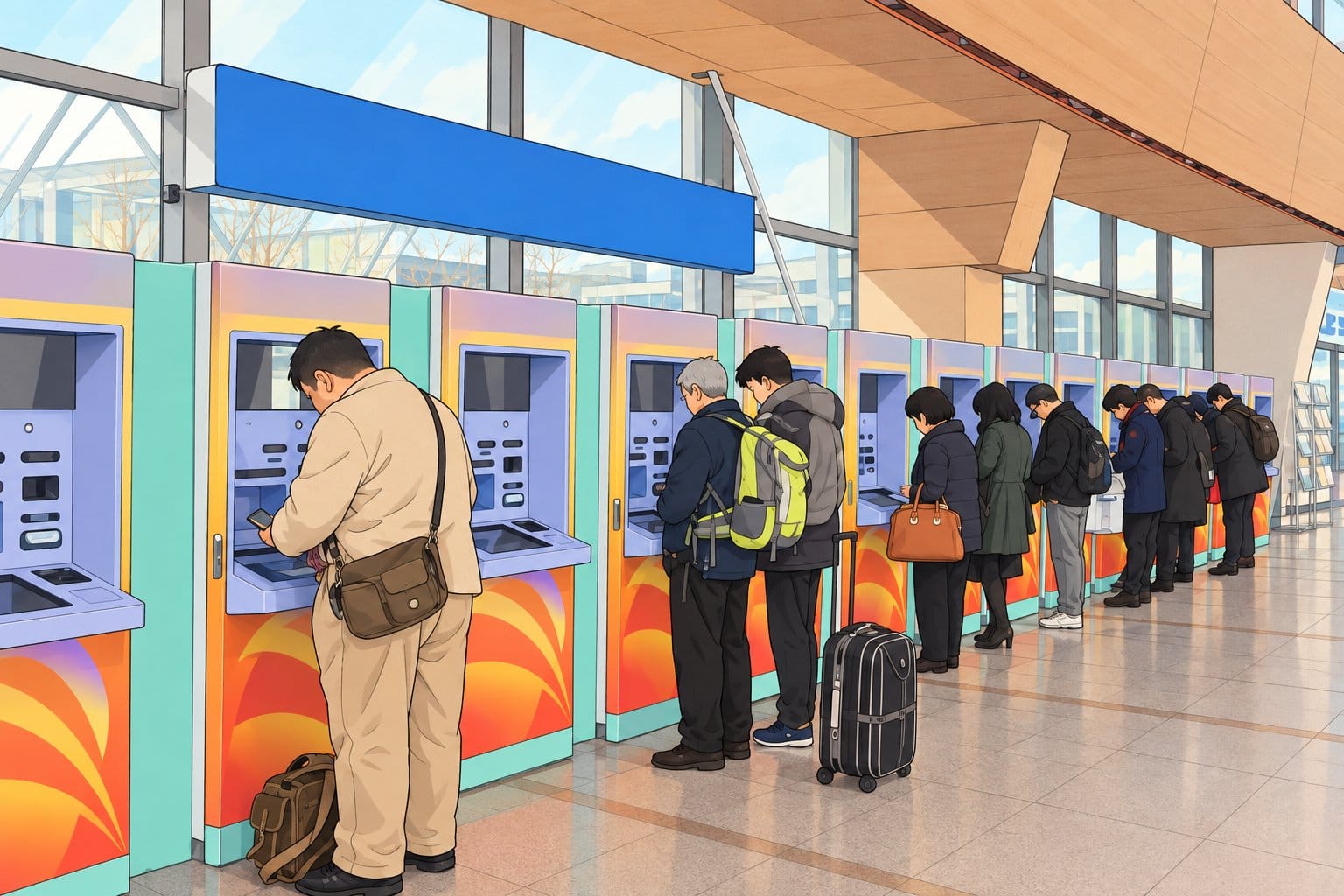
Pickup is handled at roughly 80 kiosks nationwide, including Incheon International Airport and Seoul Station . Collecting at Incheon on landing is the low-friction option if your first train leaves the same day; Seoul Station suits anyone spending a night in the capital before heading to Busan or Daegu.
Here is the part that connects directly to the Oct. 1 change: a KORAIL Pass does not guarantee you a seat. It covers the fare, but seat reservations still have to be made separately . Under the old 30-day rule, a pass holder who bought a flight three months out had no way to lock in the Seoul–Busan train on concert day and simply hoped. From Oct. 1, 2026, that reservation opens 60 days before departure , so the pass and the seat can finally be settled in the same planning session. Pass or no pass, the reservation is the step that decides whether you make the show.
If anything about eligibility or pickup is unclear once you land, the multilingual 1330 Korea Travel Helpline handles pass questions as well as ticketing ones .
Booking Timeline: Old Rule vs. New Rule
The practical difference comes down to one number: reservations open 60 days before departure from Oct. 1, 2026, instead of 30 . The Ministry of Land, Infrastructure and Transport and KORAIL announced the extension on Sept. 20, 2026, and it applies to KTX and other KORAIL-operated services . For a fan booking a concert weekend in Busan or Daegu, that means the train seat and the flight can now be locked on the same afternoon.
| Item | Until Sept. 30, 2026 | From Oct. 1, 2026 |
|---|---|---|
| Advance booking window | 30 days before departure | 60 days before departure [SBS] |
| Covered services | KTX and KORAIL rail services | Same — KTX and KORAIL rail services, including former SRT routes under the merged operator |
| Fares | Unchanged by this measure | Unchanged by this measure |
| Seat inventory and refund rules | Existing rules | Existing rules — not addressed in the announcement |
| Booking channels | Let's KORAIL site and app | Let's KORAIL site and app Let's KORAIL |
Read the change narrowly. It is a booking-window extension and nothing more: the joint release does not change fares, add seats, or rewrite refund terms . The fare cut of roughly 10 percent on average that KTX riders saw this year came from the separate KORAIL–SR merger, approved by the Korea Fair Trade Commission on Aug. 2, 2026 and effective Sept. 1 — a different measure with a different timeline.
One open question matters for anyone planning around a holiday comeback stage or year-end festival: no announcement reviewed states how the 60-day window interacts with Chuseok or Seollal special reservation periods, which Korea has historically handled through separate sale procedures. Do not assume the longer window automatically grants access to holiday-season seats. If your dates fall near a major holiday, confirm before you build an itinerary around them — the multilingual 1330 Korea Travel Helpline answers booking questions by phone in several languages .
The concrete takeaway: from Oct. 1, count back 60 days from your travel date and put that morning in your calendar alongside the day tickets drop for whatever you came for. With 6.69 million foreign passengers riding KTX between January and August 2026, up 68 percent year on year , the seats you want on a Friday evening run to a tour stop are not getting less contested.
Frequently asked questions
When can I start booking KTX tickets two months in advance?
From Oct. 1, 2026. On that date KORAIL's reservation window widens from 30 days to 60 days before departure, so a trip on Dec. 1 becomes bookable on Oct. 2 rather than Nov. 1 . The Ministry of Land, Infrastructure and Transport and KORAIL announced the change jointly on Sept. 20, 2026, framing it as a way for overseas visitors to reserve rail seats at the same time they buy their flights . The change is a booking-window extension only — fares, seat inventory and refund rules are untouched by the announcement.
Is SRT still a separate train service from KTX?
No, not as an operator. KORAIL and SR merged institutionally on Sept. 1, 2026, after the Korea Fair Trade Commission approved the deal on Aug. 2, 2026, ending the dual-operator split that had run for about a decade . SRT services were folded into KTX operations, ticketing and rolling stock under one booking platform, and KTX fares were cut by roughly 10 percent on average to SRT levels as part of the integration . What still differs is the platform you stand on: Suseo remains its own departure station, distinct from Seoul Station and Yongsan, so check the origin field before you pay.
Can I pay for KTX tickets with WeChat Pay or Alipay?
Not yet. Overseas credit cards — Visa, Mastercard and UnionPay — are already accepted on KORAIL's foreigner-facing booking channels, and those are the reliable options today . KORAIL says it is developing system support for global mobile wallets including WeChat Pay and Alipay, but the September 2026 release described that work as under development and gave no launch date . Plan on a card for now, and treat wallet support as unconfirmed until KORAIL announces it.
Does a KORAIL Pass guarantee me a seat on KTX?
No. A KORAIL Pass covers the cost of travel, but riders still have to reserve a seat separately for each train, and an unreserved pass holder may end up standing or waiting for a later departure . That is exactly why the 60-day window matters for pass holders: the reservation, not the pass, is the scarce part. The pass is sold only to foreign tourists — Korean nationals and foreign residents of more than six months are ineligible — and comes in consecutive-day and flexible-day formats .
What languages can I use to book KTX tickets online?
Seven right now. KORAIL's foreigner-facing ticketing page supports seven languages, including English, Chinese, Japanese, Thai and Vietnamese, with French, German and Mongolian due to be added to reach 10 languages by the end of 2026 . Official booking runs through KORAIL's Let's KORAIL site and app , and the 1330 Korea Travel Helpline offers multilingual assistance if a screen or a station announcement leaves you stuck .
Enjoyed this article? Subscribe to get new stories by email whenever they're published.
This article was written using information collected and analyzed by NAMANE's in-house K-pop research AI engine. We use AI technology to bring you faster, broader coverage, and in the process some details may occasionally differ from the latest facts. For important information such as dates, venues, and prices, please double-check with official sources.


