
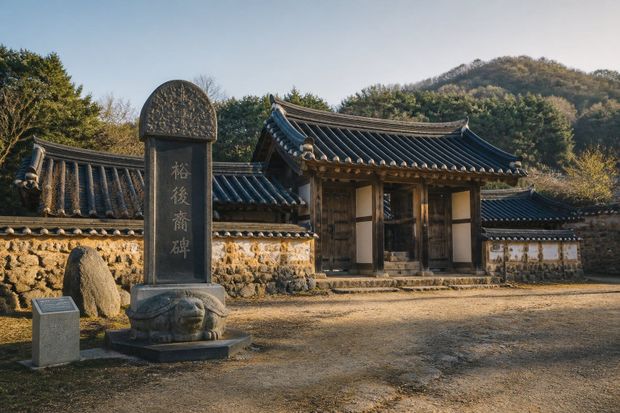
In a mountain hamlet in northern Gyeongsangbuk-do, roughly seven households still tend the ancestral rites of a Vietnamese prince who fled his collapsing dynasty by sea in the 13th century. Their surname reads as Korean, their ancestral seat is a Korean hill, and their genealogy opens in Dai Viet.
Who Are the Seven Households of the Hwasan Yi Clan?
The Hwasan Yi clan is a Korean lineage that traces its descent to Ly Long Tuong (Korean name Yi Yong-sang), a prince of Vietnam's Ly dynasty born in 1174 who resettled in Goryeo Korea after the Tran clan took the throne . Today only around seven households of direct-line descendants remain in the immediate hamlet of Changpyeong-ri, Bongseong-myeon, Bonghwa-gun, and Bonghwa County identifies this village as the only place in Korea where Ly-dynasty descendant sites survive: the Chunghyodang shrine, the Yuheobi memorial stele and a jaesil ritual house .
Quick Answer: About seven households in Changpyeong-ri, Bonghwa-gun descend from Vietnamese prince Ly Long Tuong. Their clan, the Hwasan Yi, numbered 1,775 members in Korea's 2000 census. Their shrine, Chunghyodang, is a Gyeongsangbuk-do Monument and the only visitable Ly-dynasty descendant site in Korea.
The clan is small nationwide: 1,775 members across roughly 230 households in the 2000 Korean census . Its bon-gwan, or ancestral seat, is Hwasan — a name Goryeo gave the local hill after Ly Long Tuong helped repel a Mongol force under General Sartai in 1232, when he was titled Hwasan-gun and granted a fief .
For travellers, the story splits across three geographies, and only one of them is reachable:
- Hwanghae Province, North Korea — the traditional landing zone at Ongjin and Haeju, plus his grave near Panmunjeom: not accessible .
- Bonghwa-gun, Gyeongsangbuk-do — the living clan village and shrine cluster, open to visitors as a quiet rural site.
- Bac Ninh, Vietnam — Den Do temple in Dinh Bang, honouring the eight Ly kings, where Hwasan Yi delegations attend the annual festival .
The Vietnamese Prince Who Became a Goryeo War Hero
Ly Long Tuong (Lý Long Tường; Korean: Yi Yong-sang, 이용상) was a prince of Dai Viet's Ly dynasty who fled to Korea after the Tran clan seized the throne and became the founding ancestor of the Hwasan Yi clan. He was born in 1174 and held the office of Great National Tutor before the dynastic collapse; his death date is not reliably recorded, and Korean and Vietnamese sources commonly render his dates as "1174–?" . Everything that follows about his voyage and his years in Korea is preserved chiefly in the clan's own genealogy rather than in the official dynastic annals — a distinction worth carrying with you to Bonghwa.
The escape is dated to the fall of the Ly house. According to the account summarised at the English-language record of Lý Long Tường, he sailed from the Than Phu estuary in present-day Thanh Hoa Province with three large ships carrying roughly 6,000 mandarins, retainers and servants, explicitly framed as a departure "to avoid further bloodshed by the Tran family" . A typhoon forced the fleet ashore in Taiwan, where his son Ly Long Hien stayed behind with some 200 followers; the remainder continued north and landed in Ongjin County and Haeju in Hwanghae Province . Clan tradition holds that King Gojong of Goryeo (1192–1259) had dreamt of a great phoenix flying in from the south and ordered the Haeju authorities to receive the arrivals. In Korea the exiles are said to have built fishing and breeding settlements, and he is credited with opening two schools — one for letters, one for martial arts and the art of war .
His military reputation rests on the Mongol invasions. In 1232, when a Mongol force under General Sartai struck Hwanghae by both sea and land, he led local troops to victory; because he rode a white horse in the field, he was nicknamed the "White Horse General" . A second campaign is dated 1253, under Mongke Khan, when he would have been over 70. In recognition, Goryeo renamed the local hill Jin-san to Hwa-san, titled him Hwasan-gun (花山君) and granted him a fief — which is why the clan's bon-gwan, its ancestral seat, is Hwasan rather than any Vietnamese place name .
Three sites tied to this chapter — the Su-hang-mun or "Gate of Accepting Surrender," his grave near Panmunjeom, and the "Peak of Nostalgia" where he is said to have looked south toward Vietnam — all lie in what is now North Korea and cannot be visited .
Korean scholarship is careful on one point: the naturalisation narrative derives largely from the Hwasan Yi-ssi sebo, the clan genealogy, and is not corroborated in the Goryeosa, the official history of the dynasty — so the Ongjin arrival is best read as clan tradition rather than documented state record (source: 화산 이씨 clan overview).
That caveat does not empty the trip of substance. What is documented sits further south: the descendants' settlement in Gyeongsangbuk-do, a heritage-designated shrine, a dated memorial stele, and a modern diplomatic relationship built on the story. The genealogy explains why the village exists; the Bonghwa records explain what you can actually stand in front of.
Chunghyodang: The Shrine at the Center of Hwasan Yi Heritage
Chunghyodang (봉화 충효당, 奉化忠孝堂) is the physical anchor of Hwasan Yi heritage in Korea — a small Joseon-era memorial hall at 19-1 Changpyeongbonma-gil, Bongseong-myeon, Bonghwa-gun (lot address Changpyeong-ri 220), set on the western flank of Munsusan . It was designated Gyeongsangbuk-do Cultural Material No. 466 on 28 June 2004 and reclassified as Gyeongsangbuk-do Monument No. 181 on 22 February 2021 . The designated site covers two structures and remains privately owned and managed by a clan descendant, which is the single most important fact for planning a visit (source: Korea Heritage Service).
The hall does not commemorate Ly Long Tuong himself. It honours Yi Jang-bal (1574–1592), the clan's 13th-generation descendant, who joined a righteous army at nineteen and was killed in action at Mungyeong during the Imjin War . Gwanghaegun granted him posthumous rank in 1622, and descendants together with local Confucian scholars built the hall at his birthplace around 1750 to mark his loyalty and filial piety — the two virtues in the name chung-hyo . In other words, the building records a Korean war death, not a Vietnamese exile; the Vietnamese origin reaches it only through the genealogy that names Yi Jang-bal as a 13th-generation heir.
Architecturally it is modest and legible in a single walk-around. The tiled hall measures four bays by two and a half bays under a paljak (hipped-and-gabled) roof, built to the jungdang-hyeopsil plan: a two-bay daecheong wooden floor hall flanked by ondol rooms, with a half-bay porch across the front . An earth-and-stone perimeter wall with a four-post gate encloses the compound. On the daecheong, wooden plaques carry Yi Jang-bal's death poem and the Chunghyodang-gi, the hall's founding record.
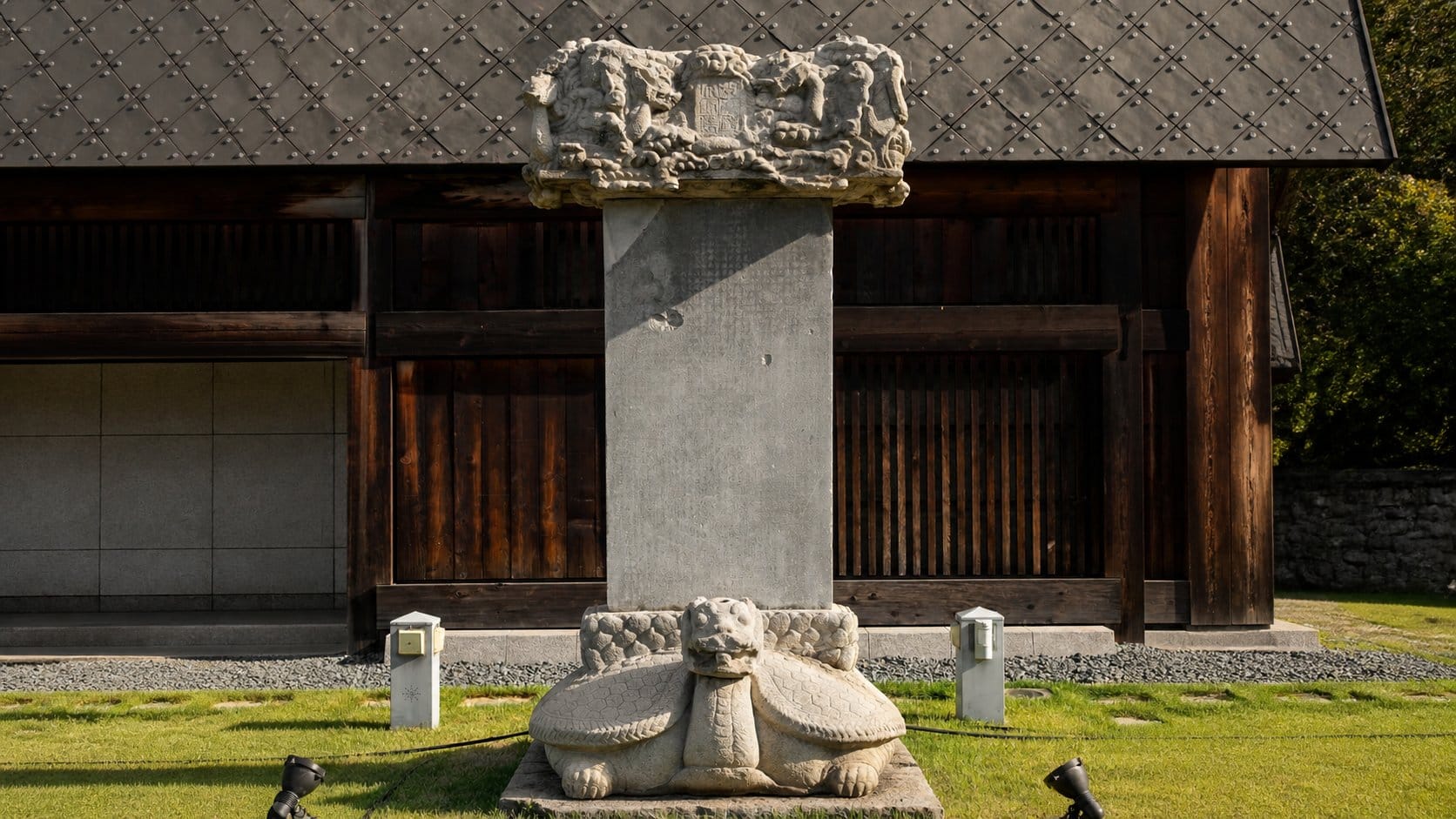
Outside the wall, on the rise above the hall, stands the second designated structure — the Chunghyodang Hwasan Yi-gong Yuheobigak, a stele pavilion sheltering a memorial marker. The National Research Institute of Cultural Heritage dates the Yi Jang-bal Yuheobi to 1750 (Yeongjo 26) and records it at 243.5 cm high, 58.5 cm wide and 30.5 cm thick . Bonghwa County describes this hamlet as the only place in Korea where Ly-dynasty descendant sites survive as a cluster — shrine, stele, jaesil ritual house and resident direct-line households in one small valley .
📋 주소 · 19-1 Changpyeongbonma-gil, Bongseong-myeon, Bonghwa-gun, Gyeongsangbuk-do (Changpyeong-ri 220) · 영업시간: no published fixed hours — privately managed, enquiries to Bonghwa County Culture & Tourism 054-679-6334 / 054-679-6341 or the 1330 tourist hotline · 특징: Gyeongsangbuk-do Monument No. 181, two structures (memorial hall + Yuheobi stele pavilion)
💡 Allow 45–90 minutes to cover the hall, the stele pavilion, the ritual-house area and the nearby Ly Thai To statue and community-centre precinct. Call ahead: because a descendant family manages the property, arriving unannounced can mean a locked gate, and the compound is a residential village rather than a ticketed attraction.
Getting to Bonghwa: Transit From Seoul, Busan, and Daegu
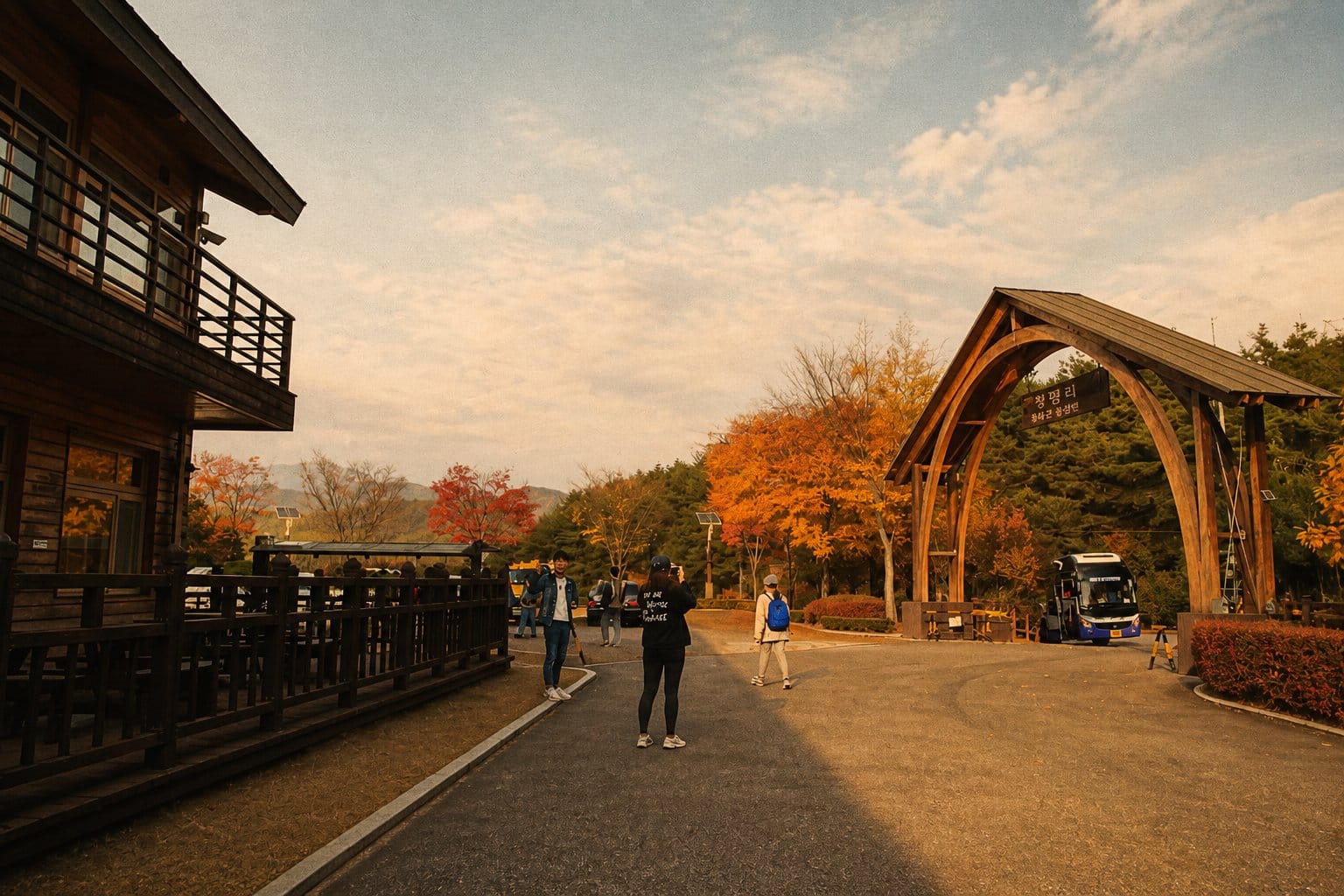
Bonghwa County sits in the mountains of northern Gyeongsangbuk-do, and reaching Changpyeong-ri takes roughly three hours from Seoul plus a last-mile leg by taxi or car. Bonghwa County's own directions page puts driving time from Seoul at 3 hours 20 minutes, Busan at 3 hours 30 minutes, Daejeon at 2 hours 50 minutes and Uljin at 1 hour . There is no direct long-distance service to the shrine itself, so plan the trip in two stages: get to Bonghwa-eup or Yeongju first, then arrange local transport.
By rail, the fastest published option is Cheongnyangni Station in Seoul to Yeongju: 1 hour 47 minutes by KTX or about 2 hours 30 minutes on regular rail, followed by onward local movement toward Bonghwa . Bonghwa Station handles enquiries on 054-672-7788, and Korail's customer centre is 1544-7788 . By intercity bus, count on roughly 2 hours 40 minutes from Seoul's Eastern (Dong Seoul) Terminal and 2 hours 30 minutes from Daegu North Terminal .
| Origin | Mode | Time to Bonghwa area |
|---|---|---|
| Seoul (Cheongnyangni) | KTX to Yeongju | 1 hr 47 min + local transfer |
| Seoul (Cheongnyangni) | Regular rail to Yeongju | 2 hr 30 min + local transfer |
| Seoul (Eastern Terminal) | Intercity bus | 2 hr 40 min |
| Daegu (North Terminal) | Intercity bus | 2 hr 30 min |
| Seoul | Car | 3 hr 20 min |
| Busan | Car | 3 hr 30 min |
| Daejeon | Car | 2 hr 50 min |
| Uljin | Car | 1 hr |
The last leg is where itineraries break down. Changpyeong-ri is a rural hamlet in Bongseong-myeon on the western flank of Munsusan, and there is no dependable high-frequency bus into the village, so the safer planning baseline is a taxi or a rented car from Bonghwa-eup or Yeongju. Drivers heading in from the coast should note the Uljin approach at 1 hour, which makes the East Sea an easy pairing rather than a detour .
- Self-drive — the most flexible option, since the shrine, the Ly Thai To statue precinct and nearby county sites are spread out.
- Rail + taxi — KTX to Yeongju, then a taxi for the final stretch; confirm a return pickup before the driver leaves.
- Bus + taxi — intercity bus to Bonghwa-eup, then a short taxi ride; check the last outbound departure the same day.
If you are relying on public transport, treat the visit as a full-day trip rather than a half-day stop, and check schedules through Korea's tourist interpretation hotline 1330 or Bonghwa County's Culture & Tourism office on 054-679-6334 .
When to Visit: Hours, Access, and Nearby Sites
Chunghyodang has no published ticket price and no fixed opening hours, because it is privately owned and managed by a Hwasan Yi descendant rather than run as a staffed museum . The outer precinct — the hall, the earth-and-stone wall, and the stele pavilion on the rise outside it — is generally approachable in daylight, but interior access depends on whether a family member is present. Call ahead through Bonghwa County's Culture & Tourism office on 054-679-6334 or 054-679-6341, or use Korea's tourist interpretation hotline 1330, which offers English, Japanese and Chinese support .
Budget 45 to 90 minutes on site . That covers four things at walking distance from one another:
- Chunghyodang hall — the paljak-roofed shrine and the wooden plaques carrying Yi Jang-bal's death poem.
- Yuheobi stele pavilion — the 1750 memorial stone, 243.5 cm tall, outside the perimeter wall .
- Jaesil ritual house — the clan's ceremonial building in the same hamlet.
- Ly Thai To statue and community centre — installed and opened in August 2025, a roughly 370 m² hanok-form building built for 1.4 billion won near the shrine .
The obvious pairing for a half-day is the Bonghwa Pavilion Culture Center at Burangi-gil 88, Bongseong-myeon, in the same township. It opens 09:00–17:00 in winter and 09:00–18:00 in summer, closes Mondays plus 1 January, Seollal and Chuseok, and charges KRW 2,000 for adults and KRW 1,000 for children and youth . Because it keeps posted hours and Chunghyodang does not, it is the more reliable anchor to build a schedule around — visit the shrine first, then the centre.
One expectation to set correctly: there is no confirmed annual Ly-dynasty festival in Bonghwa. Events tied to the Vietnamese connection have so far been episodic and diplomatic in nature. The clearest example is 22 September 2023, when roughly 50 Vietnamese exchange students from Gyeongnam Information University and Vietnamese multicultural residents gathered at Chunghyodang to perform a ceremonial dance and lay flowers — an occasion that doubled as the sister-city signing between Bonghwa and Tu Son City in Vietnam . Check with the county office before planning a trip around any date.
📍 View Chunghyodang on Google Maps
Inside Bonghwa's 200 Billion Won K-Vietnam Valley Project
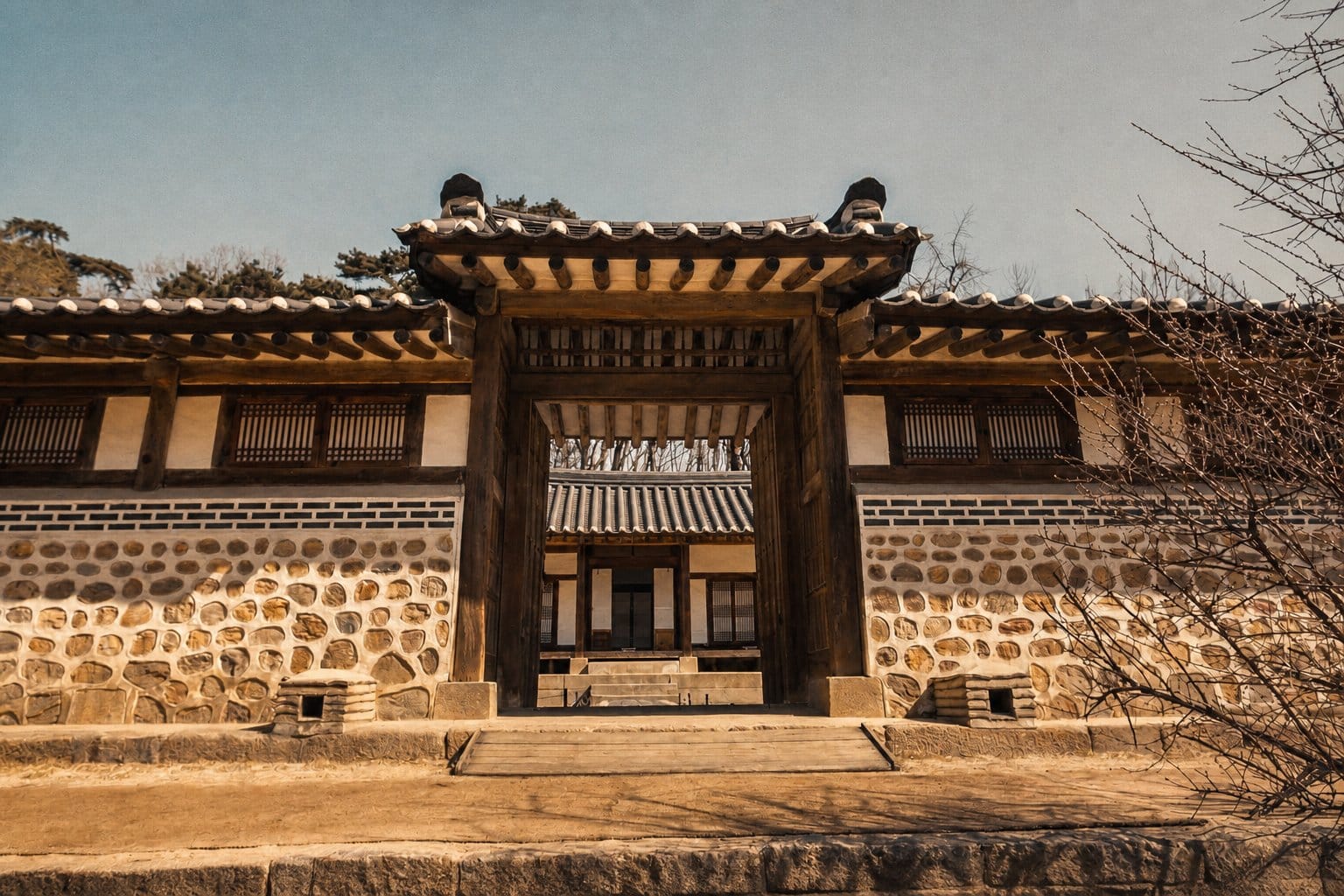
K-Vietnam Valley is Bonghwa County's plan to turn the Hwasan Yi clan's story into permanent built infrastructure around Changpyeong-ri, and it is the reason the hamlet will not stay quiet for long. The core project covers roughly 118,000 to 118,890 m² and carries a budget of about 200 billion won running through 2033 . Locals call it "Bongtnam," a contraction of Bonghwa and Vietnam. The masterplan splits the land into three districts: history, culture-exchange, and rest/experience .
The named component list is long and, for now, mostly on paper. Planned elements include a Vietnam History Museum (also described as a Korea–Vietnam history experience hall), an Iljumun gate, a replica of Hanoi's One Pillar Pagoda, a King Ly Thai To statue, a Vietnamese cultural centre, a performance stage, a multicultural international school, a career connection centre, a lake park, a terraced-field experience area, a lotus-shaped guesthouse, gardens, a riverside garden, a floating house, and a pedestrian bridge — all arranged around the existing Chunghyodang precinct .
Two pieces are already standing. In August 2025 the community centre opened and the King Ly Thai To statue was installed near Chunghyodang; the centre cost 1.4 billion won and occupies roughly 370 m² in a hanok form with Vietnamese detailing . Visitors arriving today should budget time for that statue-and-centre precinct alongside the shrine, and should expect an active construction zone rather than a finished attraction.
The administrative track moved quickly in 2026. Bonghwa held a public hearing on 10 February 2026 on designating the planned zone a Special Local Development Zone, with a March 2026 application to Korea's Ministry of SMEs and Startups . That application cleared: on 6 August 2026 the Ministry's 60th Regional Specialized Development District Committee designated the "Bonghwa K-Vietnam Valley Special District," covering 877,372 m² for a five-year term to 2030, with 347.6 billion won across eight projects and ten regulatory exemptions spanning immigration, land use and housing supply . The designated district is therefore several times larger than the original village footprint.
The village is "gradually completing" its facilities and is intended as a destination for visitors interested in Vietnam–Korea historical ties — Vietnam Government News, 27 July 2026 (source: baochinhphu.vn)
Read that phrasing literally. "Gradually completing" is the accurate frame for 2026: the heritage core — shrine, stele, ritual house, seven households — is visitable now, while the museum, pagoda replica, school and guesthouse belong to later phases stretching toward 2030 and 2033 .
Practical Tips for Visiting a Living Clan Village
Changpyeong-ri is a working residential hamlet, not a curated heritage park, and the visit should be planned that way. Chunghyodang is privately owned and managed by a Hwasan Yi descendant, with only around seven households remaining in the immediate hamlet . That means no ticket desk, no staffed reception, and no guarantee that the hall is open when you arrive. Treat the grounds as someone's front yard: stay outside the earth-and-stone wall unless invited in, do not enter the ritual house or the shrine interior without permission, and keep photography of residents and their homes to a minimum.
Because there are no published opening hours for the shrine, build the itinerary around phone confirmation rather than assumption. Three numbers cover almost every question:
- Bonghwa County Culture & Tourism — 054-679-6334 or 054-679-6341, for shrine access, construction closures and whether any Vietnam-related event is scheduled .
- Bonghwa Station — 054-672-7788, and the national railway customer centre at 1544-7788, for last-train timing out of the county .
- 1330, Korea's multilingual tourist interpretation hotline, if the county line is Korean-only .
Make the detour earn its travel time by pairing it with something else in Bongseong-myeon. The Bonghwa Pavilion Culture Center on Burangi-gil is the easiest add-on — 09:00–17:00 in winter, 09:00–18:00 in summer, closed Mondays, 1 January, Seollal and Chuseok, with admission at KRW 2,000 for adults and KRW 1,000 for children and youth . Allow 45–90 minutes for the shrine, stele, ritual-house area and the Ly Thai To statue precinct, then loop back through Yeongju for the KTX to Cheongnyangni at 1 hr 47 min .
Finally, calibrate expectations for the construction. The K-Vietnam Valley special district covers 877,372 m² on a five-year term running to 2030, with the wider village plan phased through 2033 . Sections of road and land near Chunghyodang will read as work sites rather than attractions. The concrete takeaway: come for the 1750 shrine, the 243.5 cm stele and the seven households that still carry the line — call ahead, budget half a day, and let the Vietnam Village be whatever it happens to be that month.
Frequently asked questions
Who was Ly Long Tuong?
Ly Long Tuong (Lý Long Tường; Korean: Yi Yong-sang, 이용상) was a prince of Dai Viet's Ly dynasty, born in 1174, who held the office of Great National Tutor before the Tran clan seized the throne . Clan tradition records that he sailed from the Than Phu estuary in present-day Thanh Hoa with three ships and roughly 6,000 mandarins, retainers and servants, landing in Ongjin County and Haeju in Hwanghae Province . In 1232 he led local troops against a Mongol force under General Sartai, and because he always rode a white horse he was nicknamed the White Horse General; Goryeo renamed the local hill Hwasan and titled him Hwasan-gun, giving the clan its ancestral seat . His death date is not reliably recorded, and the naturalisation account rests largely on the clan genealogy rather than the Goryeosa, so it is best read as clan tradition .
Where is Chunghyodang and how do you get there?
Chunghyodang (봉화 충효당) stands at 19-1 Changpyeongbonma-gil, Bongseong-myeon, Bonghwa-gun, Gyeongsangbuk-do (Changpyeong-ri 220), on the western flank of Munsusan . The most common approach from Seoul is rail plus road: Cheongnyangni to Yeongju takes 1 hr 47 min by KTX or about 2 hr 30 min on regular service, followed by a taxi or hired car for the last leg . Driving to Bonghwa County office is listed at roughly 3 hr 20 min from Seoul, 3 hr 30 min from Busan and 2 hr 50 min from Daejeon, with intercity buses at 2 hr 40 min from Eastern Seoul and 2 hr 30 min from Daegu North . Changpyeong-ri is rural, so plan the final stretch by car rather than assuming frequent local buses.
📍 656 Hahoe-ri, Pungcheon-myeon, Andong, Gyeongsangbuk-do
🕒 Daily 4:00 PM – 11:00 AM
⭐ 4.2 (35 reviews)
📞 054-852-3588
🔗 View on Google Maps
Can visitors enter Chunghyodang, and are there set hours?
Chunghyodang is privately owned and managed by a clan descendant, and no ticket price or fixed opening hours are published . Call ahead before travelling: Bonghwa County's Culture & Tourism office is reachable on 054-679-6334 or 054-679-6341, and Korea's tourist interpretation hotline 1330 handles English, Japanese and Chinese enquiries . The site was designated Gyeongsangbuk-do Cultural Material No. 466 on 28 June 2004 and reclassified as Gyeongsangbuk-do Monument No. 181 on 22 February 2021, covering two Joseon-era structures . Treat it as a residential shrine compound: keep visits quiet, ask before photographing interiors, and allow 45-90 minutes for the hall, stele and surrounding precinct.
What is the K-Vietnam Valley project in Bonghwa?
K-Vietnam Valley is Bonghwa County's multi-year development around Changpyeong-ri, budgeted at about 200 billion won through 2033 across roughly 118,000 m² and split into history, culture-exchange and rest/experience districts . Planned components include a Vietnam history experience hall, a One Pillar Pagoda replica, an Iljumun gate, a Vietnamese cultural centre, a multicultural international school, a lake park and a lotus-shaped guesthouse . On 6 August 2026 Korea's Ministry of SMEs and Startups designated the Bonghwa K-Vietnam Valley Special District, covering 877,372 m² for a five-year term to 2030, with 347.6 billion won across eight projects and ten regulatory exemptions . Delivered so far: a 1.4 billion won, roughly 370 m² hanok-form community centre and a King Ly Thai To statue, both opened in August 2025 .
Are there still Hwasan Yi clan descendants living in Bonghwa today?
Yes. Bonghwa County states that around seven households of direct-line descendants remain in the hamlet immediately around Chunghyodang, and describes the village as the only place in Korea where Ly-dynasty descendant sites — the shrine, the Yuheobi stele and a jaesil ritual house — survive together . Wider clan branches live across Bonghwa-eup, Chunyang-myeon, Murya-myeon and Bongseong-myeon . Nationally the clan is small: the 2000 Korean census counted 1,775 members in roughly 230 households . The link to Vietnam remains active — the clan typically sends a delegation of about 15 people each year to the Do Temple festival in Bac Ninh, whose 2026 edition opened on 1 May for the 1,016th anniversary of Ly Cong Uan's enthronement .
Enjoyed this article? Subscribe to get new stories by email whenever they're published.
This article was written using information collected and analyzed by NAMANE's in-house K-pop research AI engine. We use AI technology to bring you faster, broader coverage, and in the process some details may occasionally differ from the latest facts. For important information such as dates, venues, and prices, please double-check with official sources.


