
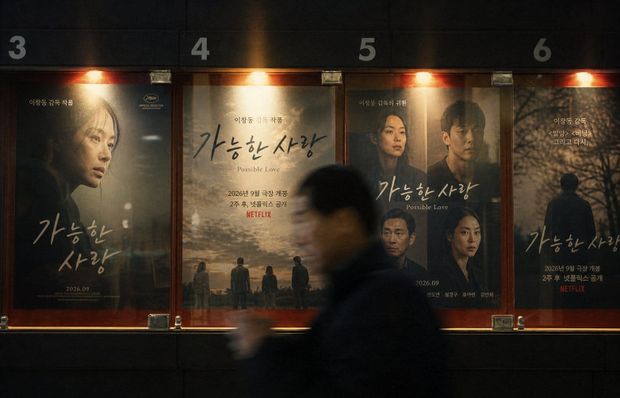
After eight years of silence, one of Korean cinema's most awarded directors is returning with a film that has become a test case for how movies reach audiences at all.
What Is Possible Love and What Does '2 Cinema Weeks Before Netflix' Actually Mean?
Possible Love (working title; Korean 가능한 사랑) is Lee Chang-dong's first feature in eight years, following 2018's Burning, and his seventh film overall . The phrase "2 cinema weeks before Netflix" refers to the reported rollout: a short theatrical run in Korean cinemas first, then a global streaming debut. Trade reporting from SBS and Sports Donga describes an approximately two-week Korean theatrical window before the film becomes available on Netflix in roughly 180 countries, with the global streaming launch planned for Q4 2026 .
Quick Answer: Possible Love is Lee Chang-dong's first film in eight years, a 164-minute, adults-only drama financed and distributed by Netflix. Reports say it will play Korean cinemas for roughly two weeks in Q3 2026 before streaming globally in about 180 countries in Q4 — but Netflix has issued no official dates.
The most concrete evidence sits with Korea's ratings authority. The Korea Media Rating Board listed 가능한 사랑 on 16 June 2026 under classification number 2026-MF01759, with a running time of 164 minutes and 2 seconds — making it Lee's longest film — and gave it a 청소년관람불가 (adults-only) rating . The rating reflects direct depictions of nudity and sexual content within a story of laid-off workers, love, loss and the restoration of human relationships . Because Korean streaming-only releases do not necessarily require this theatrical classification workflow, the KMRB listing supports the reading that a cinema release was at least operationally planned .
One caveat matters above all: as of publication, none of this is locked. Netflix's own Korea slate presentation on 21 January 2026 confirmed the director and cast but gave no theatrical date, screen count, territory scope or exact streaming day . The two-week window, the Q3-then-Q4 sequence and the 180-country figure all come from trade and media outlets, not from a dated Netflix announcement. Readers should treat the theatrical-first model as reported rather than officially confirmed.
Cast and Plot: Four of Korea's Most Decorated Actors, One Long-Awaited Story
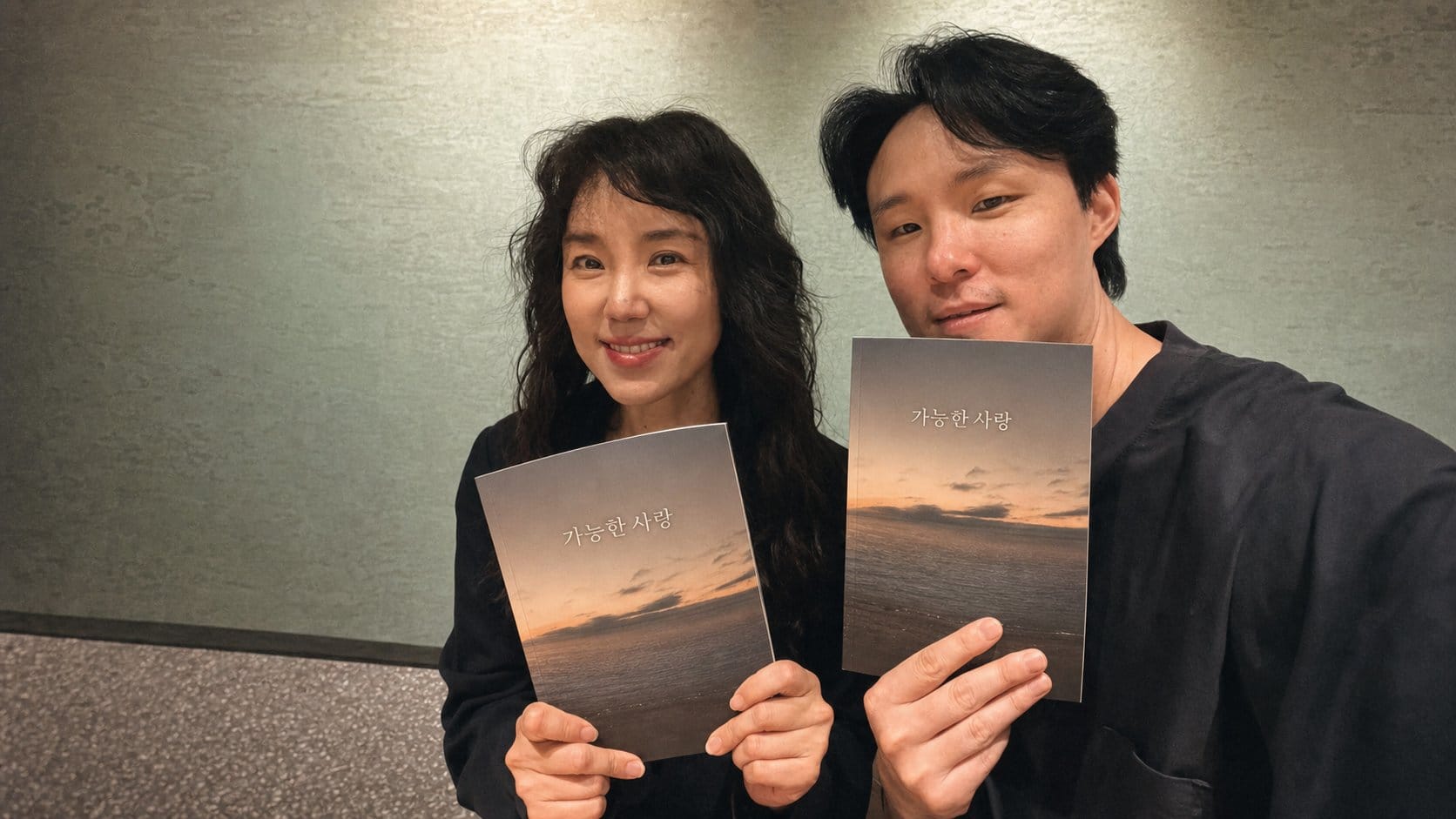
Possible Love pairs four of Korea's most awarded screen actors in a slow-burn drama about two married couples whose chance meeting unravels into emotional entanglement. Jeon Do-yeon plays Mi-ok, Sul Kyung-gu plays Ho-seok, Zo In-sung plays Sang-woo and Cho Yeo-jeong plays Ye-ji . For Jeon and director Lee Chang-dong it is a reunion 19 years in the making — she won the Cannes Best Actress prize for his 2007 film Secret Sunshine .
The four leads carry a rare concentration of festival and domestic honors, including three Cannes acting prizes between them, which is part of why the project drew attention long before any distribution plan was set . The story sits in familiar Lee Chang-dong terrain: laid-off workers, love, loss, trauma and the gradual restoration of human relationships, told through a chance encounter that sends two couples into overlapping emotional orbits .
This is not shaped as a multiplex crowd-pleaser. The Korea Media Rating Board classified 가능한 사랑 as 청소년관람불가 (adults-only) on 16 June 2026 under classification number 2026-MF01759, with a running time of 164 minutes 2 seconds — Lee's longest feature . The rating reflects direct depictions of nudity and sexual acts woven into the drama . A 164-minute adult-rated art film is an unusual candidate for a wide theatrical push, which is precisely what makes the decision to seek any cinema run at all worth examining.
That artistic-over-commercial character has framed the film from the start. Pinehouse Film's Lee Joon-dong, who produces, has said the project drew interested investors who nonetheless "lacked courage" because the film had artistic quality without overt commerciality (source: Kyunghyang Shinmun). The credited producers are Pinehouse Film, Anonymous Content and NOWFILM, and Netflix announced the title on 4 August 2025 as a project it both finances and distributes . The next section turns to the awards calendar that helps explain why a streaming-owned film would still want the big screen first.
The Oscar Clock: Why a Korean Theatrical Run Has a Hard September Deadline

A theatrical run first is largely an Oscar-eligibility move. The Academy's rules for the 99th Oscars, posted 1 May 2026, set a qualifying period of 1 January–31 December 2026 and an International Feature Film submission deadline of 30 September 2026. Eligibility requires a minimum seven-day commercial theatrical run, so a Q3 2026 Korean opening clears that clock before the cutoff (source: The Korea Times, 2026-07). For a Netflix-owned film, that seven-day requirement is the practical reason the big screen comes first.
The 2026 rules also opened a second door. A film can now qualify by winning one of six named festival awards — the Berlin Golden Bear, the Busan Award, the Cannes Palme d'Or, the Sundance World Cinema Grand Jury Prize, the Toronto Platform Award, or the Venice Golden Lion (source: KOFIC / Academy rules, 2026-05). That festival path is why a fall bow matters as much as the theatrical week itself.
Venice, held in September, is seen as the more likely launch than Cannes. The reading is straightforward: Cannes and Netflix remain at odds over France's theatrical holdback, which keeps Netflix titles out of the main competition, while Venice has hosted them. The venue also fits Lee Chang-dong's record — he won the Venice Silver Lion for Best Direction for Oasis in 2002 (source: Netflix, 2026-01). Reports that Possible Love was submitted to Venice remain unconfirmed by Netflix or the festival, so treat the venue as anticipated rather than announced.
None of this is new for Netflix. The company has repeatedly used brief theatrical windows to position streaming films for awards, and a Korean precedent already exists.
| Film | Year | Awards role of the theatrical window |
|---|---|---|
| Okja (Bong Joon-ho) | 2017 | Set the Korean Netflix-theatrical template |
| Roma | 2018 | Brief theatrical run for Oscar positioning |
| The Irishman | 2019 | Limited theaters ahead of streaming |
| Glass Onion | 2022 | Short exhibition window for awards reach |
The difference with Possible Love is that most Korean Netflix films since Okja have gone straight to streaming, making a theatrical-first plan for a homegrown auteur title unusual (source: The Korea Times, 2026-07). A roughly two-week Korean run comfortably satisfies the seven-day floor and lands before the 30 September deadline — the awards calendar, not box-office ambition, is doing the scheduling here.
How Possible Love Ended Up on Netflix: A Financing Gap the Industry Cannot Ignore
Possible Love landed on Netflix because a 164-minute adults-rated art film could not raise the money to open in Korean theaters on its own. According to The Korea Times, the project first targeted a conventional theatrical release, but domestic financiers balked at a slow, dialogue-driven drama with no obvious commercial hook — the same running time of 164 minutes that the Korea Media Rating Board later confirmed. Netflix stepped in with financing certainty and a distribution reach no domestic chain can match.
Producer Lee Joon-dong of Pinehouse Film described the impasse plainly. Reporting from Kyunghyang Shinmun on 11 August 2025 quoted him on why interested backers still walked away:
"Investors were interested, but they lacked the courage — the film has artistic quality without overt commerciality, and Korea's film-investment capacity is nearly exhausted," — Lee Joon-dong, producer, Pinehouse Film (source: Kyunghyang Shinmun, 2025-08).
The public-funding trail shows how far the project had already traveled down the theatrical path before it turned. Possible Love had been selected for the Korean Film Council's mid-budget production-support category, which covers net budgets in the roughly KRW 6 billion to under 8 billion band. After the move to Netflix, the production voluntarily withdrew and forfeited a reported KRW 1.5 billion in support, per Asia Economy. A France–Korea co-production structure that had been part of the original plan also collapsed as outside investment dried up.
None of this happened in a vacuum. Korea's major distributors have thinned their slates sharply. The five majors — CJ ENM, Lotte, NEW, Showbox and PlusM — have roughly 22 Korean films slated for 2026, down from 37 in 2022 and 40 in 2023, according to Deadline. In that climate, a mid-budget auteur film without a franchise or a marquee action premise is exactly the kind of project theatrical investors now avoid.
What Netflix offered, therefore, was not just a check but a floor: guaranteed financing plus distribution across roughly 180 countries, with none of the recoupment risk that had frozen domestic backers. For a director returning after an eight-year absence, that trade — theatrical ownership for completion certainty and global reach — was the difference between the film existing and staying unmade. The tension that follows is structural, not personal: a culturally Korean work by one of the country's most decorated filmmakers is now contractually owned by a global platform, and that is precisely the fault line the broader policy fight has formed along.
The Bigger Fight: Korea's Theatrical Window Debate That Possible Love Just Made Urgent
The window controversy around Possible Love is really a proxy for a structural crisis in Korean exhibition: theatrical admissions fell roughly 45%, from about 226 million in 2019 to around 123 million after COVID, while box-office revenue dropped from about $1.3 billion to $812 million . Over roughly the same span, streaming pulled ahead: OTT revenue jumped from $546 million in 2020 to $1.519 billion in 2024, while theatrical revenue grew more modestly, from $454 million to $924 million . A two-week cinema run before a global stream is, in that light, a test case for who controls the release calendar.
Quick Answer: Korea's theatrical window debate asks whether local films must play cinemas before streaming. In May 2026, the Culture Ministry and KOFIC convened about 22 industry representatives, and a National Assembly bill proposes a six-month theater-first rule .
The policy machinery is now formal. In May 2026, the Ministry of Culture, Sports and Tourism and the Korean Film Council (KOFIC) launched a public-private consultative body, involving Culture Minister Chae Hwi-young and roughly 22 industry representatives, to debate a mandatory theatrical window . A parallel National Assembly bill from Assemblywoman Oh Kyung-lim would amend the Act on the Promotion of Motion Pictures and Videos to require Korean-origin films to play theaters for six months before any streaming release, with an industry response sought by August 2026 .
The industry is split along predictable lines. Cinema operators favor a longer window; producers, investors and distributors warn that delaying secondary releases slows recoupment and deters already-scarce financiers . The scarcity is measurable: the five majors — CJ ENM, Lotte, NEW, Showbox and PlusM — have about 22 Korean films slated for 2026, down from 37 in 2022 and 40 in 2023 . Auteurs, meanwhile, increasingly view Netflix as the only available patron for non-commercial work.
"Investors were interested but lacked the courage, because the film had artistic quality without overt commerciality," said Lee Joon-dong of Pinehouse Film, describing why Possible Love could not close domestic financing (source: Kyunghyang Shinmun reporting). That gap, he added, reflects a Korean film-investment capacity he called nearly exhausted.
France is the comparative benchmark policymakers keep citing, and it is far stricter than anything Korea has enacted: Canal+ receives a six-month window, Netflix 15 months plus a 4% French and European content-spend obligation, and other broadcasters 22 months . A Korean six-month rule would sit closer to the Canal+ tier than to Netflix's French terms.
The concrete takeaway: Possible Love's reported two-week theatrical run is not just a rollout detail — it is the live example the window debate now argues over. Both the film's release and the KOFIC window decision are expected to crystallize by the end of 2026 , so whichever way the policy lands will likely be shaped, in part, by how this one film performs in its brief time on Korean screens.
Frequently asked questions
When does Possible Love release in Korean cinemas and on Netflix?
Possible Love is reported to open in Korean cinemas in Q3 2026, followed by a global Netflix debut in Q4 2026 across roughly 180 countries . SBS and Sports Donga reporting describes an approximately two-week theatrical run before streaming availability . As of publication, Netflix has not issued an official dated announcement — its 21 January 2026 Korea slate confirmed director and cast but gave no theatrical date or exact streaming day , so treat the window timing as reported rather than locked.
Who stars in Possible Love?
Possible Love stars Jeon Do-yeon (as Mi-ok), Sul Kyung-gu (Ho-seok), Zo In-sung (Sang-woo) and Cho Yeo-jeong (Ye-ji) . The headline reunion is Jeon Do-yeon with director Lee Chang-dong, who last worked together on 2007's Secret Sunshine — the role that made Jeon the Cannes Best Actress winner that year . With the film opening in 2026, that on-screen reunion is 19 years in the making.
Why is Possible Love getting a theatrical release if Netflix financed it?
The theatrical run is driven by awards eligibility and festival positioning. The Academy's 99th Oscars rules set an International Feature Film submission deadline of 30 September 2026, and Korean outlets stress the practical need for a seven-day commercial theatrical run to qualify — so a Q3 theatrical bow fits before that deadline . A fall festival premiere is anticipated, with Venice in September seen as the most likely venue given the Netflix–Cannes standoff over France's theatrical holdback . The approach mirrors Netflix's awards playbook for Roma and The Irishman.
What is Korea's theatrical window debate and how does Possible Love fit in?
A National Assembly bill from Assemblywoman Oh Kyung-lim, amending the Act on the Promotion of Motion Pictures and Videos, would require Korean-origin films to play in theaters for six months before streaming, with an industry response sought by August 2026 . Possible Love's reported two-week window is far shorter than that proposed six months, making it a live example of the tension: a prestige film exits cinemas before most viewers discover it, even as domestic investment capacity shrinks and the five majors have about 22 Korean films slated for 2026, down from 40 in 2023 .
How long is Possible Love and why does it have an adults-only rating?
Possible Love runs 164 minutes 2 seconds, making it Lee Chang-dong's longest film . The Korea Media Rating Board issued an adults-only (청소년관람불가) classification on 16 June 2026 under classification number 2026-MF01759 . The rating reflects direct depictions of nudity and sexual acts within a story of laid-off workers navigating love, loss, trauma and the restoration of human relationships .
Enjoyed this article? Subscribe to get new stories by email whenever they're published.
This article was written using information collected and analyzed by NAMANE's in-house K-pop research AI engine. We use AI technology to bring you faster, broader coverage, and in the process some details may occasionally differ from the latest facts. For important information such as dates, venues, and prices, please double-check with official sources.


