
Getting from Incheon Airport to Seoul City Centre
Arriving at Incheon International Airport, travelers face three practical transfer options into Seoul: the AREX Express train, airport limousine buses, and taxis or ride-hailing services. The AREX Express is the consistently fastest option — it costs ₩9,500 (~$7 USD) and reaches Seoul Station in 43 minutes, unaffected by road traffic at any hour of day. Airport limousine buses cost ₩10,000–17,000 and take 60–80 minutes depending on traffic and route, but they drop passengers at hotel zones across central Seoul — useful if your accommodation is far from a subway station. Taxis and Uber run approximately $40 USD for the same 60-minute journey, making them most practical for groups traveling with luggage. Before leaving the arrivals hall, buy a T-money card at any 7-Eleven or subway ticket window — it handles all metro, bus, and selected convenience store payments throughout your entire trip and saves time at every gate.
Quick Answer: The AREX Express train from Incheon Airport to Seoul Station costs ₩9,500 (~$7 USD) and takes a fixed 43 minutes regardless of traffic. It is the fastest and most reliable transfer for solo travelers. Pick up a T-money card on arrival — it covers all subsequent subway and bus journeys across the city.
The T-money card is available at every 7-Eleven and GS25 convenience store inside the arrivals terminal and throughout Seoul. It loads via cash top-up at ticket machines and automatically applies transit discounts when transferring between subway lines and buses within 30 minutes. For a 4-day trip, loading ₩30,000–50,000 initially covers most metro and bus travel. The card does not expire between visits and can be refunded at designated machines at Incheon on departure.
The AREX (Airport Railroad Express) terminates at Seoul Station, which sits at the hub of the city rail network and provides direct subway access to Myeongdong, Itaewon, and Gangnam without line changes. A slower all-stop AREX service also runs between Incheon and Seoul Station at a lower fare of approximately ₩4,750, with stops at Digital Media City and intermediate stations; journey time extends to around 66 minutes. For most first-time visitors, the express service at ₩9,500 is the practical choice.
Airport limousine buses serve hotel clusters in Jongno, Myeongdong, Hongdae, and Gangnam. If your accommodation sits in one of these zones, the bus can eliminate a subsequent subway ride entirely. Departure boards at Exits 5 and 6 of the arrivals hall list bus route numbers by destination zone. Taxis are metered and reliable; the journey from Incheon to central Seoul runs roughly ₩50,000–60,000 on the meter, though road tolls and late-night surcharges apply.
| Transfer Mode | Cost (approx.) | Journey Time | Best Suited For |
|---|---|---|---|
| AREX Express Train | ₩9,500 (~$7 USD) | 43 minutes | Solo travelers and couples; fastest and fixed-time |
| Airport Limousine Bus | ₩10,000–17,000 | 60–80 minutes | Hotel zone drop-offs; avoids subway connections |
| Taxi / Uber | ~$40 USD (metered) | ~60 minutes | Groups with heavy luggage; door-to-door convenience |
Day 1: Jongno District — Heritage Corridors and Street Food After Dark
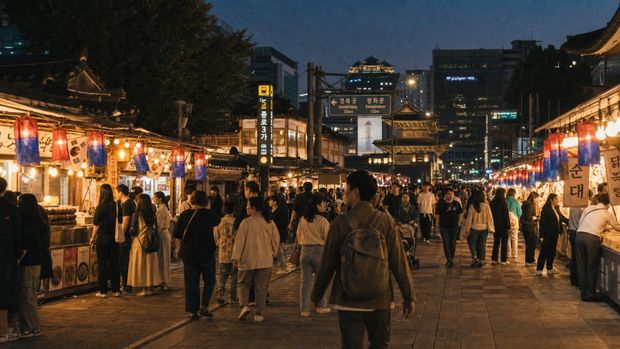
Jongno is where Seoul's Joseon-era royal history sits closest to the surface, offering the city's most concentrated run of historical landmarks within a single walkable corridor. The district anchors on Gyeongbokgung Palace — the largest of Seoul's five Joseon royal palaces, originally constructed in 1395 — with admission priced at approximately $3 USD and the ceremonial changing of the guard running twice daily at 10am and 2pm. Arriving by 9:30am lets you secure a position near the Heungnyemun gate before organized tour groups crowd the main courtyard. From there the day flows northeast into Ikseon-dong's early 20th-century alley district, then south along Insadong's gallery row, and finishes at Gwangjang Market's covered street-food circuit — heritage, craft, and local dining across one compact district. All Joseon-era palace sites close on Tuesdays, so schedule this day on a Monday, Wednesday, or later in the week.
Gyeongbokgung Palace | 경복궁
Gyeongbokgung sits at the northern axis of central Seoul, framed by Bugaksan mountain to the north and accessible directly via Line 3 (Gyeongbokgung Station). The main gate, Gwanghwamun, faces south toward the broad ceremonial boulevard that still shapes the city's street grid today. The palace grounds cover roughly 43 hectares and include the throne hall, royal banquet pavilion (Gyeonghoeru), and the National Folk Museum of Korea — which offers free entry within the same walled complex. Hanbok rental stalls near the east gate charge ₩15,000–25,000 per hour, and wearing hanbok grants complimentary palace entry — a frequently used option that meaningfully reduces the cost of a longer visit.
"Gyeongbokgung gives you more accessible royal architecture per square metre than anywhere else in Seoul — arrive before the tour coaches and the atmosphere is genuinely remarkable," — Editorial team, The Broke Backpacker
📍 161 Sajik-ro, Jongno District, Seoul
🕒 Monday 9:00 AM – 5:00 PM / Tuesday Closed / Wednesday–Sunday 9:00 AM – 5:00 PM
⭐ 4.6 (46,201 reviews)
📞 02-3700-3900
🔗 View on Google Maps
Ikseon-dong Alley District | 익선동
A ten-minute walk east of Gyeongbokgung brings you to Ikseon-dong, a compact grid of early 20th-century hanok (tiled-roof) buildings repurposed as specialty coffee bars, cocktail rooms, and Korean fusion eateries. The neighborhood's preserved low-rise scale — single-storey slate-roofed structures pressed against narrow lanes — makes it visually distinct from anything else in central Seoul. Afternoons are the most atmospheric time to visit; western light catches the curved rooflines from around 3pm, and most food and drink venues are fully open by early afternoon. The grid is small enough to walk completely in 20–30 minutes, with most visitors drifting slowly between café entrances.
📍 Ikseon-dong, Jongno District, Seoul
🕒 Monday–Tuesday 10:00 AM – 9:00 PM / Wednesday 11:30 AM – 9:00 PM / Thursday–Sunday 10:00 AM – 9:00 PM
⭐ 4.3 (8,293 reviews)
📞 02-2148-5243
🔗 View on Google Maps
Insadong Gallery Row | 인사동
Insadong runs along a pedestrian-friendly main street south of Ikseon-dong and has functioned as Seoul's primary traditional arts and crafts corridor for decades. The street and its tributary alleys hold independent galleries, celadon ceramics shops, tea accessory stores, and print studios. Prices for handmade ceramics start around ₩15,000 for small pieces and rise substantially for gallery-quality work. The Ssamziegil courtyard complex, embedded within Insadong, clusters independent fashion and lifestyle vendors across four levels around an open atrium — worth a brief circuit before moving south to the market.
📍 Insa-dong, Jongno District, Seoul
🕒 Daily 10:00 AM – 10:30 PM
⭐ 4.3 (13,600 reviews)
🔗 View on Google Maps
Gwangjang Market | 광장시장
Gwangjang Market is a traditional covered market in eastern Jongno that has operated continuously since 1905. Its street-food section is best visited in the early evening when vendors are fully staffed and the cooking volume peaks. Bindaetteok (mung-bean pancakes), mayak kimbap (bite-size sesame rice rolls), and raw bibimbap each run ₩3,000–6,000 per portion. The standard approach is to take a seat at a communal table and order directly from the vendor in front of you — no Korean-language ability or translation app required. A circuit of three or four dishes across two stalls makes a complete and inexpensive dinner.
📍 88 Cheonggyecheon-ro, Jongno District, Seoul
🕒 Daily 9:00 AM – 10:30 PM
⭐ 4.2 (43,859 reviews)
📞 02-2267-0291
🔗 View on Google Maps
Day 2: Urban Waterway, Hilltop Views, and a K-Beauty Stroll
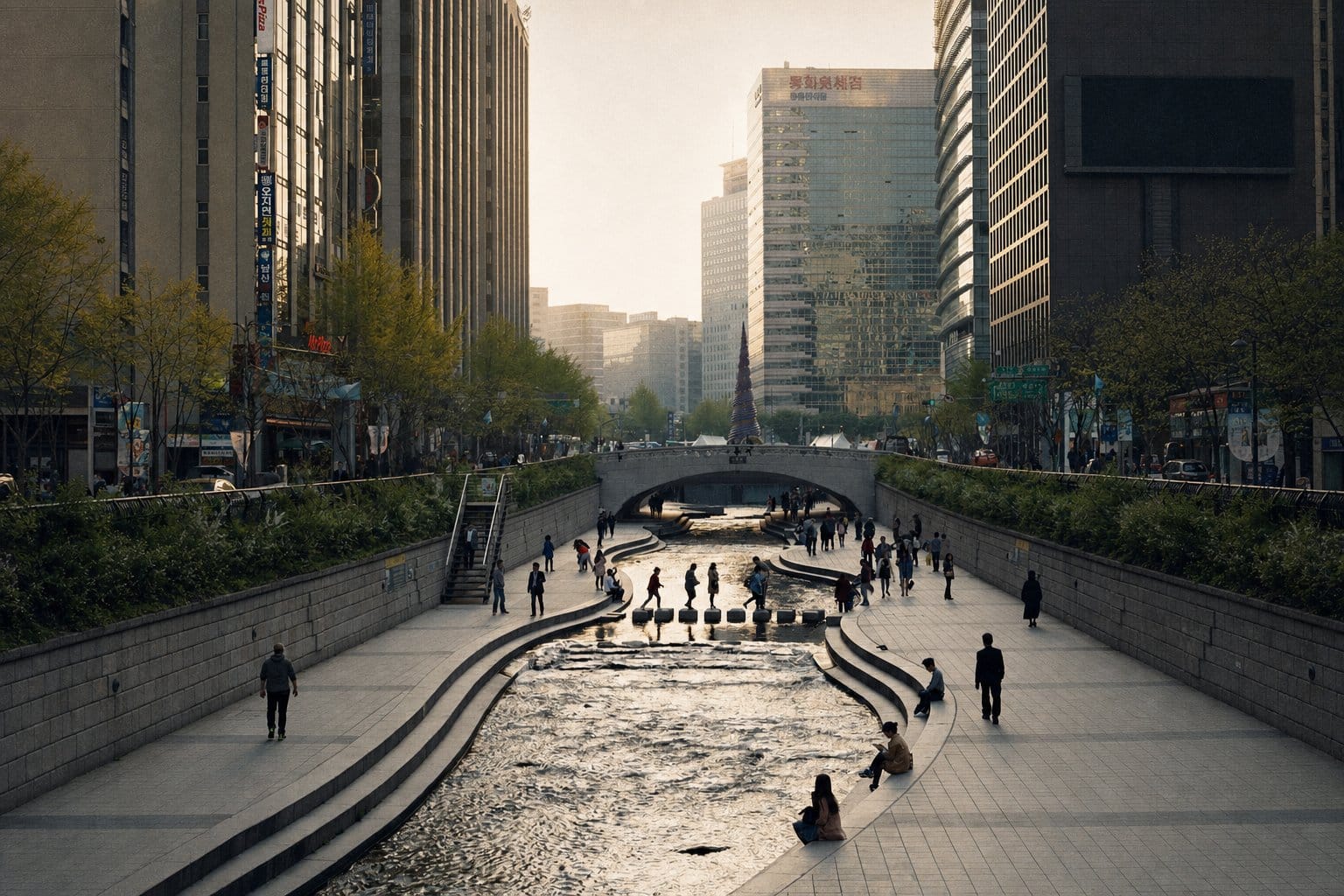
Day 2 traces a north-to-south arc through central Seoul: from the Cheonggyecheon Stream's flat landscaped channel through the city center, up Namsan hill to the N Seoul Tower observatory, then back down through Myeongdong's retail corridor. Cheonggyecheon is a 5.8-kilometre restored urban waterway running from Cheonggye Plaza near City Hall to Sindap in the east — free to walk, largely flat, and partially shaded in warmer months. N Seoul Tower occupies the Namsan ridge at 480 metres above sea level and is reachable by cable car or a 20-minute hiking trail; observatory admission runs approximately $9 USD, and TripAdvisor rates the experience 4.2 out of 5 from 9,668 reviews. The southwest-facing deck provides optimal late-afternoon light across the Gangnam skyline from approximately 6:30–7:30pm in spring and summer, making a late-afternoon visit worthwhile if the day's schedule allows.
Cheonggyecheon Stream | 청계천
The stream was restored in 2005 after decades as a covered elevated highway — one of South Korea's most-cited urban renewal interventions. The walkable path descends slightly from the plaza entrance at Cheonggye Plaza and passes through stone-paved sections, small waterfalls, and rotating public art installations. Morning hours before 10am are quieter; by midday the central sections near Gwangtonggyo Bridge draw larger numbers. The eastern stretch past Hwanghak bridge remains noticeably less crowded and connects toward Dongdaemun Design Plaza for visitors who want to extend the walk.
📍 Jongno District, Seoul
🕒 Daily Open 24 hours
⭐ 4.5 (10,640 reviews)
📞 02-2290-7111
🔗 View on Google Maps
N Seoul Tower | 남산타워
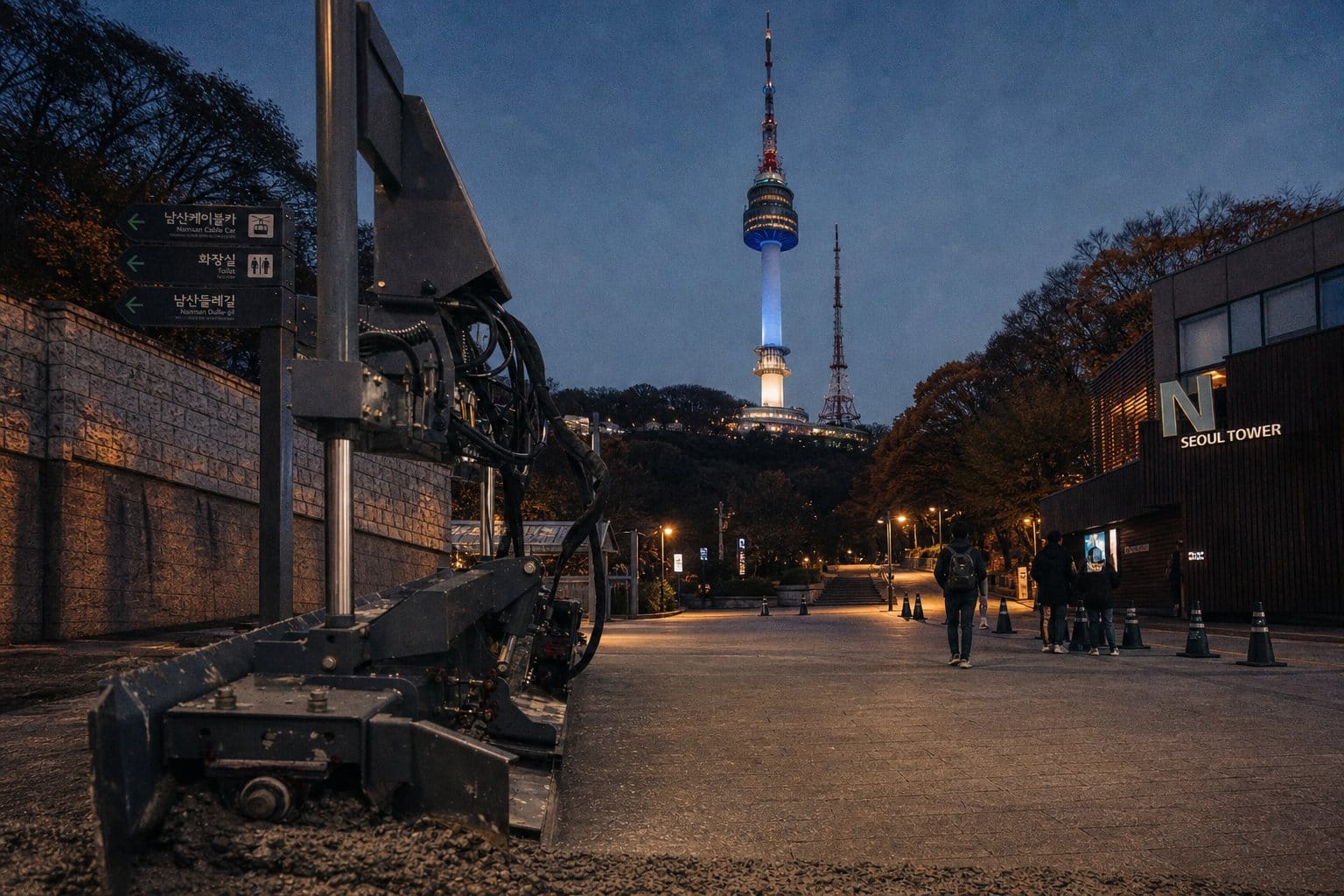
N Seoul Tower stands at the summit of Namsan and has served as one of Seoul's primary viewpoints since it opened to the public in 1980. The Namsan Cable Car departs from a station near Myeongdong and runs every few minutes throughout the day. A marked hiking trail from the Huam-dong trailhead takes approximately 20 minutes through a forested urban park — a reasonable option if the weather is mild. The observatory deck offers 360-degree views across the Han River basin and, on clear days, the mountain ridges ringing Seoul's northern edge.
"N Seoul Tower remains the single clearest vantage point for grasping Seoul's scale — the Han River, the palace district to the north, and Gangnam's glass towers to the south are all visible in a single sweep," — Editorial team, Bon Traveler
📍 105 Namsangongwon-gil, Yongsan District, Seoul
🕒 Monday–Friday 10:30 AM – 10:30 PM / Saturday–Sunday 10:00 AM – 11:00 PM
⭐ 4.5 (66,849 reviews)
📞 02-3455-9277
🔗 View on Google Maps
Myeongdong K-Beauty District | 명동
Myeongdong is Seoul's most concentrated cosmetics and K-beauty corridor — a cluster of brand flagships, sheet-mask vendors, and skincare sampling counters across a six-block pedestrian grid. Street-food stalls line the main pedestrian street from late afternoon: hotteok (sweet filled pancakes) and egg bread sell for ₩1,500–3,000 each. The area becomes considerably busier after 6pm, so arriving in the mid-afternoon allows more comfortable browsing before the evening foot-traffic peaks. The street closes to vehicles on weekends, further easing the experience for pedestrians moving between shops.
📍 20 Myeongdong 8-gil, Jung District, Seoul
🕒 Daily 9:00 AM – 12:00 AM
⭐ 3.5 (20 reviews)
📞 010-2128-9989
🔗 View on Google Maps
Day 3: World-Class Museums, Contemporary Art, and a Non-Verbal Show
Day 3 focuses on Seoul's institutional cultural infrastructure — two museum visits of different scales and characters, followed by an evening performance that requires no Korean-language ability. The National Museum of Korea offers free admission to its permanent galleries and holds more than 330,000 artifacts spanning Korean history from prehistoric implements through late Joseon court objects, placing it among Asia's largest collections by object count; allocate 2–3 hours minimum to cover the main permanent floors without rushing. The Leeum Samsung Museum of Art, reachable from Itaewon, charges approximately $9 USD for access to two architecturally distinct buildings — one focused on traditional Korean art, the other on international contemporary works. The Nanta Show has run continuously since 1997 across multiple Seoul venues and offers an accessible evening option for non-Korean speakers at $35–62 USD per ticket.
National Museum of Korea | 국립중앙박물관
The National Museum occupies a large site in Yongsan, west of Itaewon, with its permanent collection organized chronologically from the prehistoric period through the Unified Silla, Goryeo, and Joseon dynasties. Highlight galleries include the Goryeo celadon room — among the finest such collections in existence — and the Buddhist sculpture hall. Free admission applies to all permanent galleries; temporary exhibitions carry separate fees. The museum grounds also include an outdoor sculpture garden, a dedicated children's museum, and café facilities that make a longer visit comfortable.
"The National Museum of Korea is genuinely world-class and often underestimated by first-time visitors — the Goryeo celadon galleries and Joseon-era court objects alone justify a full morning," — Editorial team, The Broke Backpacker
📍 137 Seobinggo-ro, Yongsan District, Seoul
🕒 Monday–Tuesday 9:30 AM – 5:30 PM / Wednesday 9:30 AM – 8:30 PM / Thursday–Friday 9:30 AM – 5:30 PM / Saturday 9:30 AM – 8:30 PM / Sunday 9:30 AM – 5:30 PM
⭐ 4.7 (28,340 reviews)
📞 02-2077-9000
🔗 View on Google Maps
Leeum Samsung Museum of Art | 리움미술관
Leeum sits in the Hannam-dong hillside neighborhood above Itaewon and was designed by three internationally recognized architects — Mario Botta, Jean Nouvel, and Rem Koolhaas — each responsible for one of the three buildings. The collection moves from Goryeo-era celadon and Joseon folding screens through a contemporary wing holding works by Lee Ufan, Anish Kapoor, and Damien Hirst. Admission costs approximately $9 USD. The rooftop terrace provides a secondary city viewpoint and is typically uncrowded even when the galleries below are busy.
📍 60-16 Itaewon-ro 55-gil, Yongsan District, Seoul
🕒 Monday Closed / Tuesday–Sunday 10:00 AM – 6:00 PM
⭐ 4.6 (3,037 reviews)
📞 02-2014-6901
🔗 View on Google Maps
Itaewon for Lunch | 이태원
Itaewon's main street and the side streets running toward Haebangchon offer Seoul's most varied midday dining: halal restaurants, Japanese ramen counters, Mexican tacos, Indian curry houses, and Middle Eastern grills all sit within a few walkable blocks of the main Itaewon intersection. The neighborhood is geographically positioned between the National Museum to the west and Leeum up the hill to the northeast, making it a natural and practical midday stop between the two museum visits. Itaewon Station (Line 6) serves the area directly.
📍 1 floor, 118 Bogwang-ro, Yongsan District, Seoul
🕒 Monday–Friday 4:00 PM – 12:00 AM / Saturday–Sunday 12:00 PM – 12:00 AM
⭐ 4.9 (3,014 reviews)
📞 010-3648-3118
🔗 View on Google Maps
Nanta Show | 난타
The Nanta Show is a percussion-comedy performance built around a kitchen setting, using cooking utensils as the primary instruments throughout. It runs at dedicated Nanta venues in Myeongdong and Hongdae, among other locations, with multiple evening showtimes. The show is entirely non-verbal, making it equally accessible to visitors regardless of Korean-language ability. Book at least one day in advance — particularly for Friday and Saturday evening performances, which fill quickly.
📍 UNESCO House, 26 Myeongdong-gil, Jung District, Seoul
🕒 Monday–Friday 1:00 – 9:30 PM / Saturday 10:00 AM – 9:30 PM / Sunday 1:00 – 9:30 PM
⭐ 4.5 (5,573 reviews)
📞 02-739-8288
🔗 View on Google Maps
Day 4: Seongsu-dong, COEX Starfield, and a Korean BBQ Send-Off
Day 4 moves east then south across Seoul along a route that ends in Gangnam — a practical sequence for travelers with an evening or next-morning departure from Incheon. Seongsu-dong, on the north bank of the Han River, is Seoul's most discussed creative district of the past decade: converted leather-factory buildings now operating as independent roasters, design studios, and fashion pop-ups along a riverside corridor. The Starfield Library inside COEX Mall in Gangnam provides a visually striking free cultural stop in the afternoon — a 13-metre-high open bookshelf installation inside the mall's main atrium. Seoul Forest Park's 35-hectare green belt along the Han River offers a relaxed walk before a farewell samgyeopsal dinner in the Gangnam area, with per-person costs running ₩15,000–25,000 including banchan sides and drinks.
Seongsu-dong Creative District | 성수동
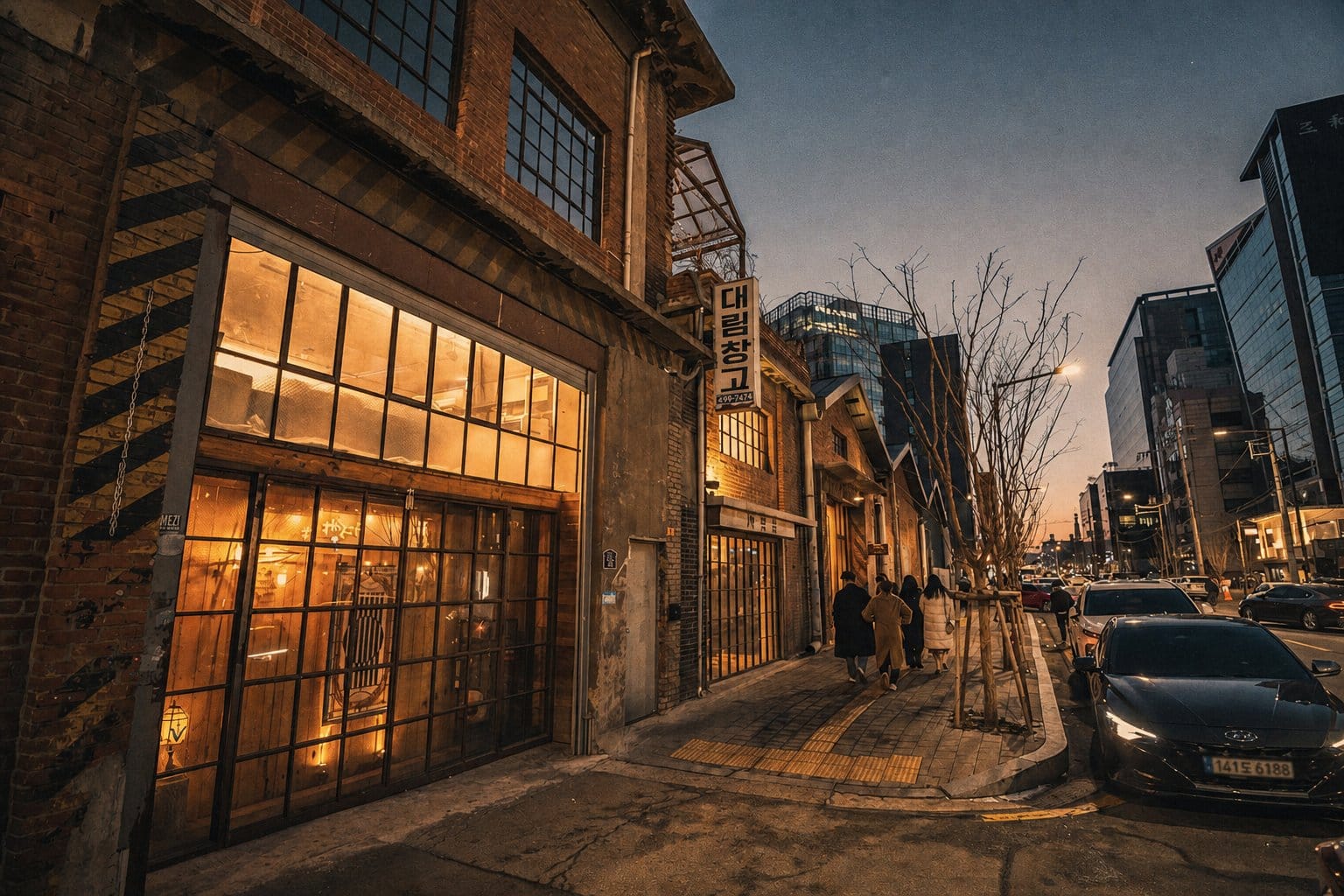
Seongsu-dong built its current creative identity from the 2010s onward as small studios, roasters, and boutiques moved into the area's low-rent industrial spaces. The most concentrated stretch runs along Yeonmujang-gil and the adjacent streets between Seongsu Station (Line 2) and Seoul Forest. Korean fashion labels frequently open short-run pop-up stores here, with the roster changing on a near-weekly basis. Most independent spots are active from 10am to 5pm; many close on Mondays. Morning is the recommended arrival time — the cafés are at their quietest and the light in the brick-facade alleyways is favorable for photography before the midday crowds arrive.
📍 14 Seongsui-ro 14-gil, Seongdong-gu, Seoul
🕒 Daily 10:30 AM – 9:00 PM
⭐ 4.2 (211 reviews)
📞 010-8979-8122
🔗 View on Google Maps
Starfield Library at COEX Mall | 별마당 도서관
The Starfield Library is a publicly accessible free installation inside COEX Mall's central atrium in Samseong-dong, Gangnam. The central bookshelf structure rises 13 metres and holds tens of thousands of volumes, with reading seating at the base and a mezzanine level. It functions simultaneously as a working library and one of the most widely photographed interiors in Gangnam. COEX Mall connects to the COEX Aquarium, the SM Entertainment flagship store, and multiple subway lines — making it a useful convergence point for visitors with overlapping interests.
📍 South Korea, Seoul, Gangnam District, Yeongdong-daero, 513 스타필드 코엑스몰 B1
🕒 Daily 10:30 AM – 10:00 PM
⭐ 4.6 (5,920 reviews)
📞 02-6002-3031
🔗 View on Google Maps
Seoul Forest Park | 서울숲
Seoul Forest covers 35 hectares along the Han River's north bank in Seongdong-gu, adjacent to the Seongsu-dong district. The park is divided into five themed zones — culture and art, eco-forest, nature experiential learning, wetland ecology, and Han River waterfront. Entry is free. The deer enclosure in the eco-forest zone, where fallow deer roam in a semi-open paddock, is a frequently noted feature. Afternoons from 3–5pm, when the riverside light softens, offer the most comfortable walking before heading south to Gangnam for a final dinner.
📍 273 Ttukseom-ro, Seongdong-gu, Seoul
🕒 Daily Open 24 hours
⭐ 4.6 (10,684 reviews)
📞 02-460-2905
🔗 View on Google Maps
Half-Day Excursions from Seoul Worth Adding
Two half-day excursions fit naturally within a 4-day Seoul trip without disrupting the main city schedule: the DMZ Tour and Nami Island. Both depart in the morning and return by mid-to-late afternoon, leaving Seoul evenings free for dining. The DMZ (Demilitarized Zone) is a guided half-day experience running approximately $60–90 USD per person through licensed Seoul-based operators, typically including the 3rd Infiltration Tunnel — a North Korean-dug tunnel discovered in 1978 — and Dora Observatory, the northernmost public viewpoint in South Korea. Nami Island is a 1.5-hour transit journey from central Seoul via subway and ferry, with a round-trip island entry fee of ₩16,000. Book both at least 24–48 hours in advance.
DMZ tours are most efficiently slotted into Day 2 or Day 3 if the main itinerary is adjusted. Most licensed tours depart from central Seoul — Myeongdong or the Gwanghwamun area — at around 8am and return by 1–2pm. Independent access to the DMZ is not permitted for foreign nationals; a licensed agency tour is the only option.
Nami Island (Namiseom) is most associated with its elm and metasequoia tree-lined promenades — the same corridors featured in the 2002 Korean drama Winter Sonata. The island also holds open-air sculpture installations and cycle paths. Cherry blossoms peak in late March to early April and autumn foliage from October onward significantly influence visitor numbers; weekday visits outside these peak foliage windows are substantially quieter and more relaxed.
2026 Seoul Travel Essentials: Passes, Apps, and Timing
A small number of practical decisions made at or before arrival can meaningfully improve the flow of a 4-day Seoul trip. The Discover Seoul Pass — available in 24-hour, 48-hour, and 72-hour tiers — covers free entry to 70+ attractions including N Seoul Tower and Lotte World, plus 100+ discount coupons and a complimentary airport bus. Whether it saves money depends entirely on which specific attractions you plan to visit; add up individual admissions against the pass price before purchasing. For navigation, Naver Map and Kakao Map both provide accurate Seoul transit routing — Google Maps has documented gaps for bus lines and transfer timing across Seoul's metro system. Restaurant reservations through the Catchtable app are strongly recommended; walk-in waits at popular venues regularly exceed 60 minutes on weekends. All five Joseon-era palace sites close on Tuesdays — a firm scheduling constraint that governs when Day 1 can fall.
Korean Won (KRW) is required at many smaller vendors and traditional markets — Visa and Mastercard are accepted at most restaurants and larger shops, but cash remains preferred at street-food stalls and older market vendors. 24-hour ATMs at GS25, 7-Eleven, and CU convenience stores reliably dispense KRW and accept international cards with a modest fee. Bank ATMs in subway stations are an additional option during business hours. The T-money card, once loaded at arrival, covers all subway lines, city buses, and some convenience store purchases — the single most useful item for the entire trip.
Timing affects the experience significantly. Spring (March–May) brings cherry blossoms peaking in late March to mid-April, with temperatures in the 10–20°C range comfortable for full-day outdoor walking. Autumn (September–November) offers foliage color and similarly mild conditions. Summer (June–August) is hot and humid with monsoon rainfall from late June through July — outdoor itinerary elements become less comfortable during this period. For K-POP fans visiting in 2026, Gangnam-gu hosts several label-adjacent fan venues: HYBE Insight in Yongsan and SM Town COEX Artium in Gangnam are both worth factoring into the schedule if label-specific content is a priority. Concert and fan event schedules are announced by individual agencies and rarely with more than a few weeks' notice; check official channels directly for events during your travel dates.
| Practical Item | What to Do | Where / App |
|---|---|---|
| Transit card | Buy T-money card on arrival; load ₩30,000–50,000 initially | 7-Eleven, GS25, subway ticket machines at Incheon |
| Navigation | Use Naver Map or Kakao Map for accurate bus and subway routing | Naver Map app, Kakao Map app |
| Restaurant reservations | Reserve 1–3 days ahead; walk-in waits often exceed 60 min | Catchtable app |
| Palace schedule | All Joseon palace sites closed on Tuesdays — plan Day 1 accordingly | Schedule Day 1 Mon, Wed, Thu, Fri, Sat, or Sun |
| ATM access / cash | Withdraw KRW at convenience store ATMs; accept international cards | GS25, 7-Eleven, CU — open 24 hours |
| Discover Seoul Pass | Compare individual admission totals against pass price before buying | Discover Seoul Pass website or airport sales kiosks |
Frequently Asked Questions
Is 4 days enough time to see the main areas of Seoul?
Four days is sufficient for a focused first visit to Seoul's primary cultural, historical, and modern districts. The itinerary above covers Jongno (Day 1), central Seoul and Namsan (Day 2), Yongsan and Itaewon (Day 3), and Seongsu-dong and Gangnam (Day 4) — the four areas most commonly prioritized by first-time visitors. Neighborhoods like Hongdae, Bukchon Hanok Village, and the Han River waterfront parks will require return visits; the four-day structure handles the main landmarks comfortably without compressing any single day too tightly.
What is the fastest and cheapest way from Incheon Airport to central Seoul?
The AREX Express train is both the fastest and one of the least expensive options at ₩9,500 (~$7 USD), with a fixed 43-minute journey to Seoul Station regardless of traffic conditions. Buy a T-money card before boarding — it covers the train fare and then handles all subsequent subway and bus travel throughout the trip. Airport limousine buses (₩10,000–17,000) are a practical alternative if your hotel sits in a bus-served zone and you prefer a direct drop-off rather than a subway connection.
Which Seoul attractions require advance booking in 2026?
Changdeokgung Palace's Secret Garden (Huwon) requires a timed-entry ticket reserved in advance — this is a separate admission from the palace's main grounds. The Nanta Show should be booked at least one day ahead, particularly for Friday and Saturday evening performances. DMZ tours require 24–48 hours advance reservation through a licensed operator. Popular restaurants need Catchtable reservations, especially on weekends when walk-in waits regularly exceed an hour. The main grounds of Gyeongbokgung and other major palaces are walk-in, but all Joseon palace sites close every Tuesday without exception.
How much does a day in Seoul cost on average?
A budget traveler covering transit, street food, and one paid attraction can expect to spend approximately ₩60,000–80,000 per day in 2026. A mid-range day that includes a museum visit, a cable car or observatory entry, and a sit-down dinner runs ₩120,000–180,000. The Discover Seoul Pass can reduce the mid-range total noticeably if the included attractions align with your plans. Upscale spending — luxury hotel, fine dining, and private guiding — can reach ₩600,000 or more per person per day. Food is the most forgiving variable: street-food meals run ₩3,000–6,000 each, and full samgyeopsal dinners average ₩15,000–25,000 per person.
Is the Discover Seoul Pass worth buying for a 4-day trip?
Whether the Discover Seoul Pass saves money depends on which specific attractions you plan to visit. The 72-hour pass includes free entry to N Seoul Tower, Lotte World, and 70+ venues, plus a complimentary airport bus and 100+ discount coupons. Add up the individual admission prices for the attractions you actually intend to visit, then compare that total against the pass price before purchasing. For a 4-day itinerary that includes N Seoul Tower, Lotte World, and several additional paid venues, the 72-hour pass is likely cost-effective. For a trip weighted toward free attractions — the National Museum, Cheonggyecheon, and Seoul Forest — the pass may not recoup its price.
What to Prioritize for Your Seoul Trip
A 4-day Seoul itinerary works most smoothly when Days 1 and 2 are placed on non-Tuesday weekdays, keeping full access to the Joseon palace sites that anchor the northern city. Days 3 and 4 involve primarily museum visits, parks, and commercial districts where Tuesday closures are not a factor. The AREX Express and a loaded T-money card resolve almost all transit logistics from the moment you land, and Naver Map handles routing for everything that follows.
For K-POP fans anchoring a Seoul visit around a concert, the itinerary above positions Days 3 and 4 nearest to the major label venues in Yongsan and Gangnam. If concert dates are already fixed, build the sightseeing days around the performance schedule rather than the reverse — Seoul's metro system makes cross-city transit straightforward from any of these neighborhoods, and most venues are within 30–40 minutes of each other by subway. Check agency-official social channels in the weeks before travel for any in-store or fan-facing events that might open up during your dates.
Food costs in Seoul carry a notably low floor compared to most major Asian cities — ₩3,000–6,000 for a complete street-food dish, ₩15,000–25,000 for a full table-grill dinner. The main variable in overall trip spend is accommodation tier. Establish the hotel category first, then layer paid attraction and dining choices around that baseline. With the Discover Seoul Pass calculated against your specific plans, the admissions budget is the easiest element of the trip to predict in advance.
Last updated: 2026-05-18. Admission prices, transit fares, and attraction hours reviewed against 2026 travel season sources from Visit Seoul and leading independent travel guides.
Related Articles
- 2026 K-Pop粉丝见面会:首尔与亚洲各艺人日程总览
- K-Popファンミーティング2026:アーティスト別ソウル&アジアスケジュール
- 2026 K-Pop 팬미팅: 아티스트별 서울 & 아시아 일정
- K-Pop Fan Meetings 2026: Seoul & Asia Schedule by Artist
- 2026年首尔地铁指南:T-money、Climate Card与无限次通票
This article was written using information collected and analyzed by NAMANE's in-house K-pop research AI engine. We use AI technology to bring you faster, broader coverage, and in the process some details may occasionally differ from the latest facts. For important information such as dates, venues, and prices, please double-check with official sources.


