
Seoul's K-Culture Cafe Scene: Four Distinct Types
Seoul's K-culture cafe landscape has consolidated into four recognizable subtypes, each serving a different visitor profile and rooted in different parts of the city. Hanok teahouses occupy restored traditional architecture in Jongno-gu, drawing visitors who want historical atmosphere alongside their tea. Structured tea education venues — a niche but growing category — layer cultural instruction onto the cafe format, making them relevant to fans with a deeper interest in Korean heritage. K-pop birthday cafes (생일카페) convert ordinary venues into fan-curated, idol-dedicated spaces on a temporary, event-driven schedule. Contemporary design hubs, concentrated in Seongsu-dong, function as rotating pop-up platforms as much as fixed hospitality venues. According to LetSeoul's 2026 B.E.Y.O.N.D trend analysis, the city's cafe scene is evolving under six intersecting movements — community, wellness, personalization, local identity, sustainability, and digital integration — that collectively explain why these four subtypes feel so different from standard coffee shops.
Quick Answer: Seoul's K-culture cafes span four types — hanok teahouses (Jongno-gu), tea education venues (Jongno-gu), K-pop fan birthday cafes (Mapo-gu), and contemporary design hubs (Seongsu-dong). Experience-based tourism in Korea rose from 14% to 37% of inbound activities between 2023 and 2025, making these venues central to how international fans engage with Seoul.
Three neighborhoods anchor this scene. Seongsu-dong (Seongdong-gu) is Seoul's contemporary design-cafe district — its industrial-heritage streetscape hosts venues that operate as pop-up event platforms, sustainability-forward spaces, and curated retail environments simultaneously. Mapo-gu, covering the Hongdae and Sinchon corridor, has become the primary geography for K-pop birthday cafe events, where fan communities regularly convert permanent cafes into temporary idol-dedicated spaces. Jongno-gu — specifically Ikseon-dong, Bukchon, and the Insa-dong strip — remains the primary address for hanok cafes and tea-focused venues with educational programming.
What cuts across all four subtypes is immersive commerce. Ceramics for purchase sit on shelves at tea education cafes. Idol merchandise, branded macarons, and exclusive print items circulate at birthday cafes during active events. Seongsu venues integrate select-shop retail floors into the same building as the coffee bar. This deliberate layering of retail, culture, and hospitality distinguishes K-culture cafes from standard cafe service. Experience-based activities accounted for 37% of inbound tourism activities in Korea in 2025, up from 14% in 2023, according to kculture.com's 2026 Korea travel trend report. The K-culture cafe functions as a physical node in that broader experiential economy.
K-Pop Birthday Cafes (생일카페): How the Phenomenon Works
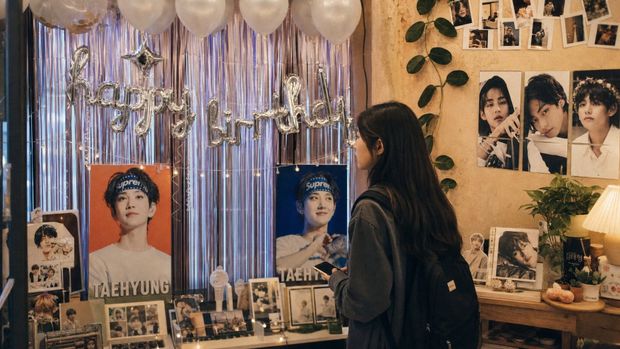
A K-pop birthday cafe — 생일카페 in Korean — is a fan-organized temporary event that transforms an existing cafe into a dedicated space celebrating a specific idol on or around their birthday. The venue itself is permanent; what changes is the programming layered on top for the event period, typically three to seven days. Standard elements include four-cut photo booths fitted with custom fan-designed frames, macarons and cookies printed with the idol's image, exclusive print merchandise (posters, photocards, acrylic stands) produced and sold by the organizing fan team, and lucky draw formats where purchases unlock a chance at higher-value prizes. According to Visit Seoul's fan cafe documentation, these events have established a recognizable structure across different fandoms, though each fan team customizes the specific merchandise lineup and activity format.
Finding upcoming birthday cafe events requires following the right fandom accounts. There is no central listing platform — announcements appear on X (formerly Twitter) and Weverse through the official or prominent fan accounts for a specific artist. If you follow a BTS member's fan account, an NCT unit's fan community, or a Stray Kids member's dedicated account, event details will appear there: venue address, dates, merchandise list, and whether walk-in access is possible or reservation is required. Events tend to be announced one to three weeks in advance and sell out quickly for high-profile artists.
Gallery Café BIAS (53 Wausan-ro 35-gil, 2F, Mapo-gu) takes a participatory format that distinguishes it from the standard birthday cafe template. Rather than a purely transactional merchandise setup, BIAS invites fans to display their own idol photos in a gallery layout alongside a message book addressed directly to the artist. The effect is closer to a curated fan archive than a pop-up shop — visitors come to contribute, not only to purchase. This format has proved effective for fandoms with a strong visual creative culture, including those organized around SEVENTEEN, BTS, and NCT.
"The birthday cafe format is fan creativity made physical — the merchandise, the decorations, the photo booths are all produced by fans, not the agency. It's the fandom expressing their relationship with the artist in a shared public space," — Visit Seoul, K-Hallyu Fan Culture series, 2025.
The birthday cafe phenomenon is also an index of fandom organizational capacity. Running a successful event — securing the venue, producing custom merchandise, managing walk-in versus reservation queues, coordinating photo booth logistics — requires sustained collaborative effort from fan teams. The Mapo-gu venues that have become regular hosts have developed working relationships with fan organizers over time, providing predictable technical infrastructure (video screens, booth setups) while fan teams supply the creative layer. Basic Americanos at these venues typically cost ₩5,000–7,000 (~$3.60–5.00 USD), keeping access affordable for fans attending multiple events in a single Seoul trip. Desserts and themed food items typically run ₩6,000–9,000 (~$4.30–6.50 USD).
Four Fan Cafe Venues in Mapo-gu: What Each Offers
Four established venues in Mapo-gu — covering the Hongdae and Sinchon corridor — have become the primary infrastructure for K-pop birthday cafe events in Seoul. Each offers a different spatial format and a distinct event history, making them suited to different types of fan programming. FAN SPACE and Café Now Here handle the high-volume merchandise-and-photo model; Gallery Café BIAS anchors the participatory gallery format; Chulboozi Espresso combines fandom event hosting with a food-led identity. All four operate as permanent cafes outside event periods, so understanding the non-event experience matters if you plan to visit for the space itself rather than a scheduled event.
| Venue | Address | Event Format | Notable Past Events |
|---|---|---|---|
| FAN SPACE | 22 Sinchon-ro 16-gil, B1, Mapo-gu | Four-cut photo booths, idol video screens, printed macarons, exclusive merchandise | BTS Jimin, SEVENTEEN members, NCT Jisung |
| Café Now Here | 30-5 Yanghwa-ro 16-gil, 3F, Mapo-gu | Natural-light aesthetic, idol-printed cookies, lucky draw format | BTS Jin, BTS V, Stray Kids Hyunjin, NCT Dream Jeno |
| Gallery Café BIAS | 53 Wausan-ro 35-gil, 2F, Mapo-gu | Gallery-layout photo display, message books addressed to artists | Rotating; gallery format suits multiple fandoms |
| Chulboozi Espresso | 25 Wausan-ro 32-gil, 1F, Mapo-gu | Specialty bungeo-ppang, regular fandom event hosting | Multiple fandoms; food-first identity alongside events |
FAN SPACE (22 Sinchon-ro 16-gil, B1) is the most infrastructure-heavy of the four. The basement location provides a contained environment well-suited to the photo booth and merchandise table setup that defines birthday cafe events. Idol video screens run during active events, and four-cut photo booth frames are fan-designed and replaced with each new event. Past events have covered major figures across HYBE labels — BTS Jimin, SEVENTEEN members, and NCT Jisung among them — reflecting the venue's proximity to Sinchon, a neighborhood with a high density of university-age K-pop fans.
📍 서울특별시 마포구 서교동 양화로16길 24
🕒 월요일–목요일 오전 11:30 ~ 오후 9:30 / 금요일–일요일 오전 10:00 ~ 오후 9:30
⭐ 4.7 (4,057 리뷰)
📞 050-71383-2112
🔗 Google Maps에서 보기
Café Now Here (30-5 Yanghwa-ro 16-gil, 3F) occupies a third-floor space that maximizes natural light — a deliberate aesthetic choice that makes idol-printed cookies and displayed merchandise photograph well. The lucky draw format is a consistent programming element across its events: purchases above a minimum threshold qualify for draws with higher-value merchandise prizes. BTS Jin, BTS V, Stray Kids Hyunjin, and NCT Dream Jeno are among the artists whose fandoms have organized events at this venue.
📍 View Café Now Here on Google Maps
Gallery Café BIAS (53 Wausan-ro 35-gil, 2F) operates a participatory gallery model. Fans bring and display their own idol photography alongside the event's commissioned pieces, and message books are left open for visitors to write directly to the featured artist. The format creates a cumulative archive of fan expression — something between a community board and a curated exhibit — that distinguishes it from the standard merchandise-focused setup at FAN SPACE and Café Now Here. The rotating nature of events means repeat visits to BIAS yield a different experience depending on which artist's birthday is being marked.
📍 View Gallery Café BIAS on Google Maps
Chulboozi Espresso (25 Wausan-ro 32-gil, 1F) has a distinct identity among the four: it is primarily a food-driven specialty cafe whose signature item is bungeo-ppang — the traditional fish-shaped Korean pastry — in unconventional flavors including mozzarella and corn butter alongside the classic red bean. Fandom event hosting is a regular programming layer rather than the venue's sole identity, which means non-event visits offer a substantively different experience from a standard birthday cafe: the food menu remains the core reason to visit regardless of whether an idol event is active.
📍 View Chulboozi Espresso on Google Maps
Hanok Tea Cafes: Traditional Architecture Meets Modern Tea Culture
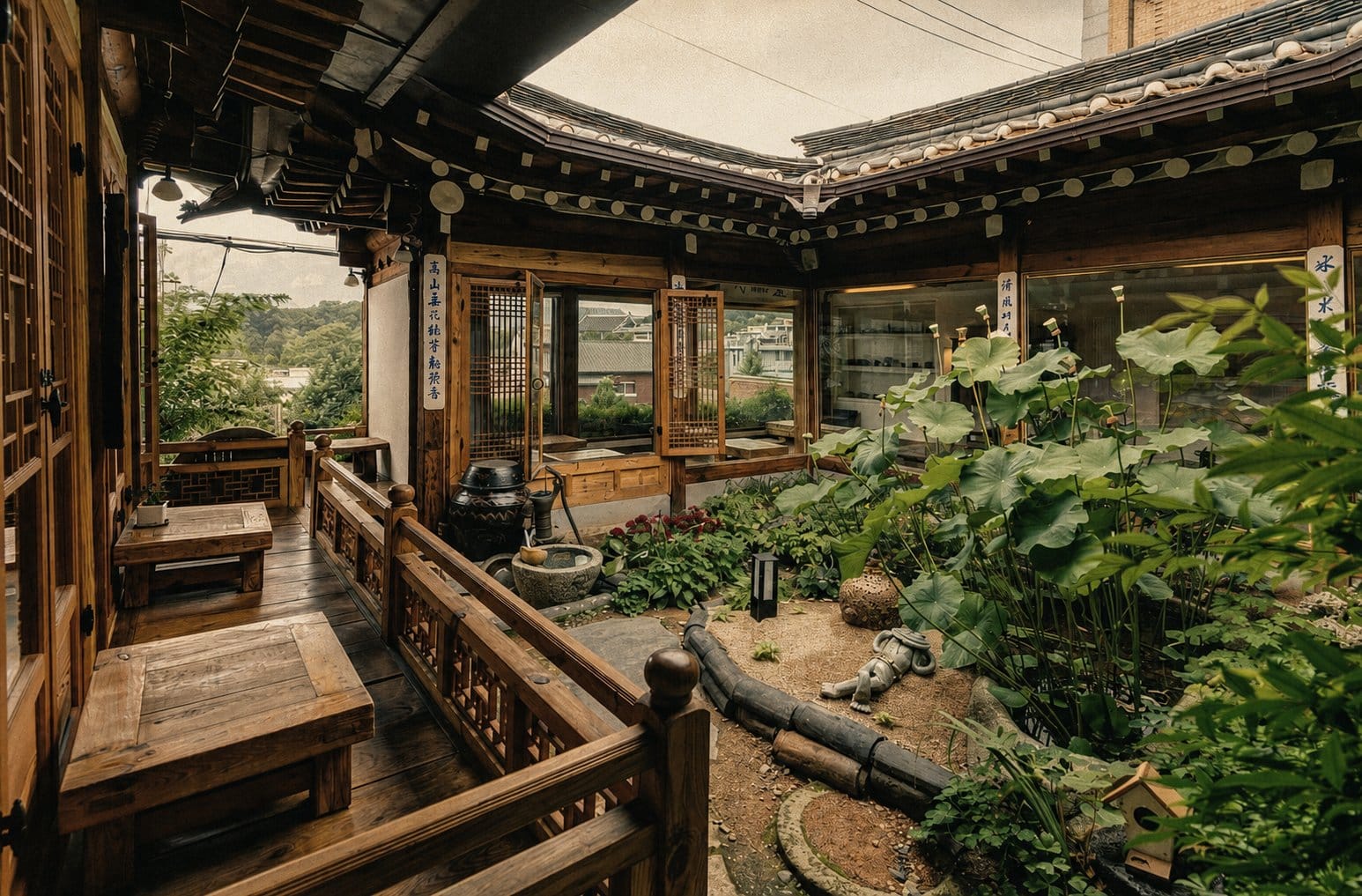
Hanok tea cafes are defined by physical architecture as much as by what they serve. A hanok — a traditional Korean timber-framed house — produces a spatial experience characterized by low ceilings, small lattice-paned windows, and interior-facing courtyard arrangements that naturally moderate sound and light. Operating a tea cafe inside this format means visitors sit in rooms built for a fundamentally different domestic scale than the modern open-plan hospitality venue. Three venues in Jongno-gu each represent a distinct interpretation of this format: Tteruan Teahouse in Ikseon-dong specializes in 100% Korean-ingredient teas brewed through a labor-intensive slow method; Cha Masineun Ttuel in Bukchon occupies a century-old building whose visual atmosphere rivals its menu as a draw; and The Hanok Teahouse in Insa-dong creates theatrical interior conditions through fireplaces and antique furniture. According to Visit Seoul's hanok cafe guide, the hanok spatial qualities — intimacy, quietness, historical material presence — produce a social dynamic that modern cafes cannot replicate.
| Venue | Address | Hours | Key Characteristic |
|---|---|---|---|
| Tteruan Teahouse | 51 Samil-daero 17-gil, Ikseon-dong, Jongno-gu | Daily 12:00–21:00, closed Mondays | 10+ Korean-ingredient tea varieties; herbs slow-boiled for over 10 hours |
| Cha Masineun Ttuel | Bukchon-ro 11na-gil, Jongno-gu | Daily 12:00–21:00, closed Mondays | 100-year-old hanok; garden courtyard; widely cited cinematic entrance |
| The Hanok Teahouse | 9 Insa-dong 12-gil, Jongno-gu | Daily 11:00–22:00 | Firewood-burning fireplaces; solid wood antique furniture throughout |
Tteruan Teahouse (51 Samil-daero 17-gil, Ikseon-dong; daily 12:00–21:00, closed Mondays) serves a menu limited exclusively to teas made from Korean-origin ingredients. The range covers more than 10 varieties spanning herbal, fermented enzyme, wild leaf, and floral categories. The preparation method — herbs slow-boiled for more than 10 hours — distinguishes the output from standard cafe herbal infusions and marks a genuine commitment to a historical brewing approach. Ikseon-dong itself is a cluster of 1930s hanok preserved in their original lane pattern, so the street-level approach through narrow alleys between traditional rooflines frames the tea experience before visitors even enter.
📍 서울특별시 종로구 인사동12길 9
🕒 매일 오후 12:00~9:50
⭐ 4.3 (466 리뷰)
📞 02-737-0538
🔗 Google Maps에서 보기
Cha Masineun Ttuel (Bukchon-ro 11na-gil, Jongno-gu; daily 12:00–21:00, closed Mondays) occupies a house estimated at approximately 100 years old. Its garden courtyard arrangement and the entrance path — widely described by visitors as resembling a film or drama set — draw visitors who arrive as much for the visual experience as for the tea menu. The venue's position in Bukchon, adjacent to the main hanok village cluster that faces Gyeongbokgung Palace across the hillside rooflines, means a visit can fold naturally into the broader Bukchon and K-drama location itinerary that many international fans follow in Jongno-gu.
📍 View Cha Masineun Ttuel on Google Maps
The Hanok Teahouse (9 Insa-dong 12-gil; daily 11:00–22:00) extends its hours later than the other Jongno-gu venues and does not observe the Monday closure pattern, making it viable for evening visits or Monday arrivals when Tteruan and Cha Masineun Ttuel are closed. The interior design — firewood-burning fireplaces, solid wood antique furniture — creates an atmospheric density unusual even by hanok cafe standards. The low ceiling and small-window spatial qualities of traditional hanok architecture already produce quieter, more intimate conditions; The Hanok Teahouse layers fireplace light and historical furniture on top, creating an interior environment with few equivalents in contemporary Seoul.
📍 View The Hanok Teahouse on Google Maps
Tea Education Cafes: Hojeondasil and Ilsang Dabangsa
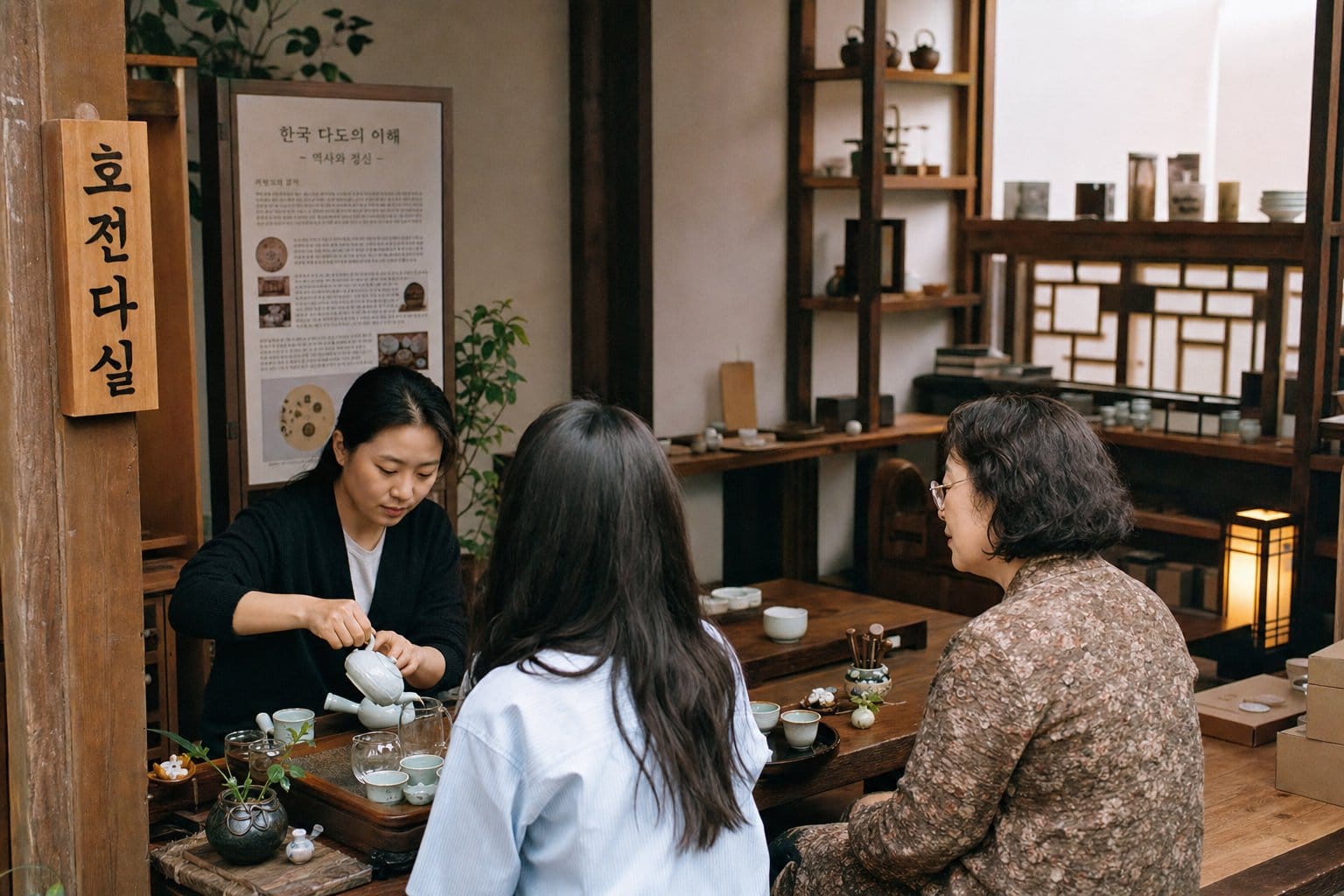
Tea education cafes occupy a specific niche within Seoul's K-culture cafe landscape — they are designed for visitors who want to understand Korean tea culture, not simply to consume it. Hojeondasil (16-2 Jahamun-ro 11-gil, Jongno-gu; daily 10:00–21:00, closed Sundays; Gyeongbokgung Station Line 3 Exit 2) is the clearest example: it offers structured lecture courses on tea knowledge alongside its full menu of Korean and international teas, functioning as a cultural education space as much as a cafe. Ilsang Dabangsa (33 Hyoja-ro, Jongno-gu) approaches the same territory from a different direction — sourcing its teas from Gyeongsangnam Province and building a menu around blended infused teas paired with tteok rice cakes and gelato, available for purchase alongside ceramic tea sets. Both venues sell ceramic tea sets, converting them into retail environments where visitors can leave with functional craft objects as part of the experience.
Hojeondasil sits near Gyeongbokgung Palace in a neighborhood dense with cultural institutions — the National Folk Museum and several independent galleries are walkable from its Jahamun-ro address. The lecture course format means the venue rewards visitors who plan around a session rather than dropping in casually; the seating dynamic shifts based on whether a course is in session. The tea menu ranges across global and Korean varieties, giving the educational component a comparative dimension that purely Korean-focused tea venues do not offer. For fans seeking a quieter cultural interlude between concert or sightseeing commitments, Hojeondasil provides depth that standard tea service does not. Its 10:00 opening — earlier than the 12:00 pattern of Ikseon-dong and Bukchon venues — also makes it viable for morning visits before the day's main itinerary.
📍 필리핀 4026 라구나 시티 오브 산타 로사 돈 조제 63X6+5MJ
🕒 월요일–목요일 오전 7:00 ~ 오후 10:00 / 금요일–토요일 오전 7:00 ~ 오전 3:00 / 일요일 오전 7:00 ~ 오전 12:00
⭐ 4.4 (65 리뷰)
📞 0919 459 6065
🔗 Google Maps에서 보기
Ilsang Dabangsa has a more accessible entry point: its menu centers on blended teas with flavor combinations — rose camellia, grapefruit chrysanthemum — that bridge traditional Korean tea ingredients and contemporary palates. The Hyoja-ro address in Jongno-gu places it adjacent to the recently opened Cheong Wa Dae grounds, making it a natural stop on a Jongno cultural walk. The ceramic tea sets available for purchase reflect a curation philosophy consistent with the tea selection — objects chosen for daily use rather than display only.
📍 View Ilsang Dabangsa on Google Maps
"Tea culture cafes in Seoul are becoming learning spaces — visitors don't just want to drink tea, they want to understand what they're drinking, where it comes from, and how it connects to Korean daily life and heritage," — Visit Seoul, Hallyu Cafe Culture series, 2025.
Both Hojeondasil and Ilsang Dabangsa sit within walking distance of major K-drama filming locations and heritage sites in Jongno-gu, making them natural integrations into a fan itinerary that combines cultural depth with K-pop or K-drama references. Seoul remains the destination for 77.3% of Korea's inbound visitors, and the Jongno-gu tea cafe cluster provides heritage-oriented fans a specific, low-cost anchor point for a half-day in the neighborhood.
Seongsu-dong: Seoul's Contemporary K-Culture Cafe District
Seongsu-dong is Seoul's most referenced contemporary cafe district — a former light-industrial neighborhood in Seongdong-gu whose brick factories and workshops have been converted into cafes, galleries, brand flagship stores, and event venues. Unlike Hongdae, which carries a legacy identity tied to university nightlife and indie music, or Jongno-gu, which is defined by historical depth, Seongsu's identity is explicitly contemporary and deliberately design-forward. Four venues illustrate the neighborhood's current programming logic in 2026: Scene, Glow Seongsu, Cafe IO3, and Quiet Space Seongsu each address a different visitor expectation within the district. According to Visit Seoul's venue profile, Scene exemplifies the multi-layer Seongsu model — cafe, curated retail, and event infrastructure in a single address, a format that has become replicable across the neighborhood.
Scene (1F, 20 Yeonmujang 5-gil; daily 8:30–22:00; Seongsu Station Line 2 Exit 4, approximately 189m) divides its programming vertically: a ground-floor coffee bar with outdoor pet-friendly seating handles daily cafe traffic, while an upper-floor select shop provides curated retail alongside. Year-round pop-up rental programming means the venue's character shifts week to week depending on which brand or fan event has taken the space. For K-pop fans visiting during a scheduled pop-up, Scene's infrastructure — flexible floor space, indoor-outdoor flow, design-forward interior — makes it a capable event host.
📍 서울특별시 성동구 성수이로
⭐ 4.4 (44 리뷰)
📞 02-2286-5114
🔗 Google Maps에서 보기
Glow Seongsu is notable for its outdoor scale: 140 of its 200 total seats are on terraced outdoor sections integrated with greenery. Outdoor terrace capacity at this scale is uncommon in central Seoul, where real estate density typically limits outdoor seating to small sidewalk arrangements. The green-integrated terrace aligns with the neighborhood's sustainability-forward positioning and makes Glow Seongsu a practical choice for extended outdoor visits, particularly in spring and autumn when Seoul's climate suits outdoor seating.
📍 View Glow Seongsu on Google Maps
Cafe IO3 operates a premium charge on single-use disposable items as an explicit sustainability policy. The policy signals the type of customer the venue targets — design-conscious visitors who factor environmental accountability into their venue choices. It is a behavioral design intervention as much as a pricing decision, consistent with LetSeoul's identification of "Nature Forward" as one of the six movements reshaping Seoul's 2026 cafe culture.
📍 View Cafe IO3 on Google Maps
Quiet Space Seongsu addresses a different niche: 15 solo seats with privacy partitions cater to visitors who need focused, low-stimulation downtime during multi-venue travel days. The format is particularly practical for fans who have full concert or event schedules and need a mid-day reset before evening commitments — a function that few cafes in any Seoul neighborhood are configured to serve.
📍 View Quiet Space Seongsu on Google Maps
Design Trends and Planning Your Visit
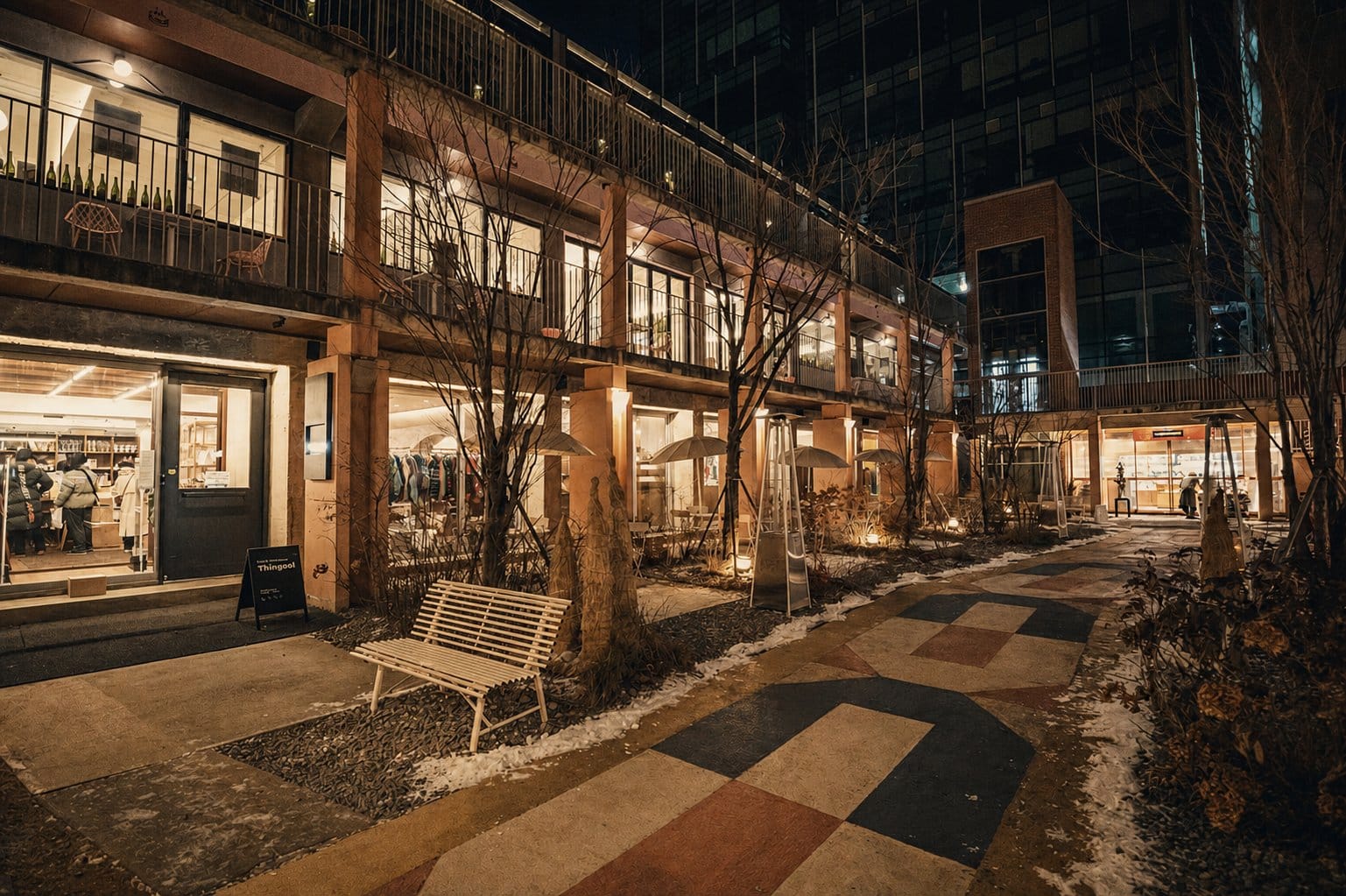
Several operational and design trends shape the 2026 K-culture cafe landscape across all four subtypes. Pop-up rental programming has become standard infrastructure in Seongsu-dong — venues like Scene offer year-round rental schedules that allow brands, fan teams, and artist agencies to layer event programming onto a permanent cafe base. This means Seongsu venues are not stable in the way a traditional cafe is: the visual identity, merchandise, and queue composition can change week to week. Checking the venue's social media account before visiting — rather than relying on a review from three months prior — is the practical implication for travelers. According to LetSeoul's 2026 B.E.Y.O.N.D framework, this programming dynamism falls under the "Better Community" movement — spaces actively functioning as event hubs rather than passive hospitality venues.
Immersive commerce is present across all four subtypes and is a deliberate design layer rather than incidental retail. Tea education cafes sell ceramics; hanok cafes sell teas; birthday cafes sell idol merchandise; Seongsu design cafes integrate select shops. The physical object available for purchase is part of how each venue type creates a sense of meaningful participation — visitors leave with something that encodes the experience. This distinguishes the K-culture cafe from the standard Western specialty-coffee model, where the transactional endpoint is only the beverage. Korea House in central Seoul now exemplifies the furthest extension of this logic: it pairs vegan temple food menus with media-art performances of traditional dance in 200-year-old hanok settings, blurring the line between cafe, museum, and performance venue.
"Seoul's cafe spaces in 2026 are designed for participation, not just consumption — whether that's leaving a message for an idol, purchasing a handmade ceramic, or contributing a photo to a gallery display. The object you take home is part of the experience architecture," — LetSeoul, Seoul Spring Cafe Trends 2026: B.E.Y.O.N.D, 2026.
Sustainability design — premium charges on single-use disposables, zero-waste commitments, ingredient provenance transparency — is concentrated in Seongsu-dong and newer venue openings citywide. It reflects the demographic profile of Seongsu's customer base: design-conscious visitors who factor environmental positioning into venue selection. For visitors, the practical result is that bringing a reusable cup to Seongsu cafes is both a cost reduction and a values signal the venue is likely to acknowledge.
On timing: weekdays are advisable for hanok tea cafes in Jongno-gu, where weekend foot traffic in Ikseon-dong and Bukchon creates queues that work against the quiet intimacy that makes these spaces worth visiting. Cherry blossom season in early April draws peak crowds across all Jongno-gu venues; April weekday mornings outside the blossom peak provide the most accessible conditions. K-pop birthday events peak on weekends — fan teams organizing events expect their highest attendance Saturday and Sunday. Check organizing fan accounts on X or Weverse one to two weeks before your travel dates to see which events are scheduled for your specific window in Seoul.
Frequently Asked Questions
What is a K-pop birthday cafe and how do I find upcoming events?
A K-pop birthday cafe (생일카페) is a fan-organized temporary event that converts an existing cafe into a dedicated space celebrating a specific idol on or around their birthday. The event typically runs three to seven days and includes custom merchandise (photocards, posters, acrylic stands), idol-printed macarons and cookies, four-cut photo booths with fan-designed frames, and lucky draw formats. There is no central listing platform for these events. To find upcoming ones, follow the dedicated fan account for the specific artist you are interested in on X (formerly Twitter) or Weverse — announcements typically appear one to three weeks before the event and include the venue address, event dates, merchandise list, and reservation instructions if walk-in access is limited. Established Mapo-gu venues such as FAN SPACE, Café Now Here, Gallery Café BIAS, and Chulboozi Espresso host events regularly; following those venues' own social accounts can also give advance notice of upcoming event bookings.
Do I need to book in advance to visit a fan cafe in Mapo-gu?
It depends on the venue and whether an active birthday event is running. During scheduled events at FAN SPACE (22 Sinchon-ro 16-gil, B1) and Café Now Here (30-5 Yanghwa-ro 16-gil, 3F), demand can fill capacity quickly — particularly for major artists — and the organizing fan team may require advance reservation via a linked booking form. The fan account for the specific event will post reservation instructions if they apply. Gallery Café BIAS and Chulboozi Espresso also vary by event. Outside active event periods, all four venues operate as standard cafes and generally accept walk-in visitors without prior arrangement. If you have a specific event and artist in mind, confirming logistics through the relevant fan account two weeks before your visit is the straightforward approach.
What are the opening hours for hanok tea cafes in Jongno-gu?
The standard pattern for Jongno-gu hanok tea cafes is 12:00–21:00 daily with Monday closures. Tteruan Teahouse (51 Samil-daero 17-gil, Ikseon-dong) and Cha Masineun Ttuel (Bukchon-ro 11na-gil) both follow this schedule. The Hanok Teahouse in Insa-dong (9 Insa-dong 12-gil) runs daily 11:00–22:00 without a Monday closure, making it the most accessible option for evening visits or Monday arrivals. Hojeondasil (16-2 Jahamun-ro 11-gil, Jongno-gu) follows a different pattern — open daily 10:00–21:00, closed Sundays rather than Mondays. Seasonal adjustments are possible across all venues; confirm directly via each venue's social media or a call before planning your visit around specific hours.
Which neighborhood is better for K-culture cafes — Seongsu-dong or Mapo-gu?
The choice depends on what you are looking for. Seongsu-dong is Seoul's contemporary design cafe district — the venues there prioritize aesthetic innovation, pop-up event programming, outdoor terrace spaces (Glow Seongsu has 140 outdoor seats across a 200-seat total), and sustainability-forward policies. Mapo-gu (the Hongdae/Sinchon corridor) is the primary geography for K-pop birthday cafe events — FAN SPACE, Café Now Here, Gallery Café BIAS, and Chulboozi Espresso are all in this area and regularly host idol-specific events. If your Seoul trip is organized around a concert or specific artist's birthday window, Mapo-gu is the more relevant destination. If you want contemporary design atmosphere, flexible pop-up event spaces, or outdoor greenery, Seongsu-dong is the better fit. For traditional Korean tea culture and educational tea experiences, both neighborhoods give way to Jongno-gu.
Can I visit K-culture cafes without speaking Korean?
Yes, for the majority of venues. Seongsu-dong cafes and Mapo-gu fan cafes generally provide English menus or picture menus that make ordering straightforward. Tea education venues in Jongno-gu vary: Hojeondasil, near Gyeongbokgung, has some English signage, and Tteruan Teahouse in Ikseon-dong includes partial English descriptions on its tea menu. For lecture-format experiences at Hojeondasil, checking in advance whether English-language sessions are available is worthwhile. Translation apps — Naver Papago or Google Translate — handle most remaining interactions reliably, including reading merchandise descriptions at birthday cafes. Fan accounts organizing birthday cafe events at Mapo-gu venues often post English-language summaries for international fans, and the merchandise at these events is largely visual and self-explanatory. Language is rarely a practical barrier for the cafe experience itself; the main language-dependent task is identifying upcoming events through social media, where fan accounts vary in their use of English alongside Korean.
K-Culture Cafes in Seoul: What the Four Types Mean for Your Itinerary
The four cafe subtypes covered here — hanok teahouses, tea education venues, K-pop birthday cafes, and Seongsu design hubs — operate in the same city but address fundamentally different visitor needs, and they are worth treating separately when planning a Seoul trip. A fan arriving for a specific concert at Jamsil Olympic Stadium who wants to experience idol fan culture in person should organize their Mapo-gu birthday cafe visit around the specific artist's fan account schedule, not around generic neighborhood guides. A visitor with a deeper interest in Korean cultural heritage should choose between Tteruan, Cha Masineun Ttuel, and Hojeondasil based on whether they prefer atmospheric immersion or structured tea learning. Seongsu-dong rewards flexible visitors who can adapt to a pop-up-driven weekly schedule and are drawn to contemporary design as much as K-pop content. None of these subtypes are static — the programming layers change more frequently than in standard hospitality venues, which makes current social media research a practical prerequisite for any specific visit, not a supplement to it.
The broader travel context supports continued growth across all four subtypes. Experience-based activities accounted for 37% of inbound Korea tourism activities in 2025, up from 14% in 2023. The shift toward immersive, participation-driven tourism — what the 2026 Korea travel trend consensus describes as 'immersive living,' mixing K-pop pilgrimages, heritage space visits, and personal-taste-driven exploration over landmark checklist tourism — places K-culture cafes at the intersection of the two strongest currents in contemporary Korean tourism: heritage and fandom. The venues described here give international fans a specific, navigable framework for engaging with both, at an accessible price point (Americanos ₩5,000–7,000, desserts ₩6,000–9,000) that keeps the experience open regardless of budget.
Last updated: 2026-05-19. Venue hours, event schedules, and birthday cafe programming are subject to change. Confirm opening hours directly with each venue before visiting, and follow relevant fan accounts on X or Weverse for the most current birthday cafe event listings.
This article was written using information collected and analyzed by NAMANE's in-house K-pop research AI engine. We use AI technology to bring you faster, broader coverage, and in the process some details may occasionally differ from the latest facts. For important information such as dates, venues, and prices, please double-check with official sources.


