
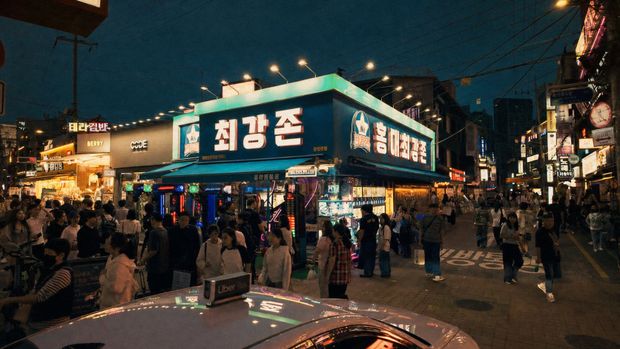
Hongdae After Midnight: Clubs, Live Music, and Norebang
Hongdae — the dense commercial district radiating from Hongik University Station on Seoul Metro Line 2 — is Seoul's most accessible and highest-energy nightlife zone. The scene centres on Wausan-ro and the narrow lanes branching off it, where clubs, live-music bars, norebang (private karaoke) rooms, and busking stages occupy a compact, walkable footprint. Peak hours on weekends run between midnight and 3 AM, with crowds building from around 10 PM onward. Cover charges at most clubs fall in the 10,000–20,000 KRW range and typically include one drink — lower than comparable venues in Gangnam or Itaewon. A full evening following the local pattern — dinner, a bar crawl through neon-lit alleys, club entry, and a final session in a norebang room — averages 50,000–80,000 KRW per person. Weekend busking stages near the university gates draw large informal street audiences and run live well past midnight, giving Hongdae as much character as an outdoor performance venue as a clubbing district.sourcesource
Quick Answer: Hongdae is Seoul's most accessible nightlife hub, centred on Wausan-ro near Hongik University Station. Club covers run 10,000–20,000 KRW including one drink, and a full night out — dinner, bar crawl, club, norebang — averages 50,000–80,000 KRW per person. Peak hours are midnight to 3 AM on weekends.sourcesource
The Hongdae district's appeal comes from the sheer density of options within walking distance of each other. Clubs on and around the Wausan-ro strip have distinct musical identities — some lean toward EDM and commercial pop, others toward hip-hop or indie dance — allowing visitors to move between venues as the night progresses. Smaller live-music venues operate throughout the surrounding grid, with local bands and touring acts taking the stage from around 9 PM. The cover charge at most clubs doubles as the first drink, making entry costs transparent and predictable compared to bars with complex table-minimum systems.sourcesource
Norebang rooms are a central part of the Hongdae experience. Private rooms rented by the hour — typically 8,000–20,000 KRW per person depending on group size and time of night — allow groups to extend a night well into the early hours after the clubs wind down. Chains offering coin-operated norebang (pay per song) provide a lower-cost alternative for smaller groups or solo visitors. The combination of club, live music, and norebang within a short walk of each other is what makes Hongdae the natural first stop for visitors new to Seoul after dark.sourcesource
The busking culture around Hongdae's public plaza and university-gate area has been a defining feature of the neighbourhood for decades. On weekends, organised street-performance stages draw audiences numbering in the hundreds — covering dance crews, solo vocalists, and band sets — and frequently run past midnight. These performances are free, genuinely unpredictable in quality and genre, and attract a mix of locals and international visitors that gives Hongdae an international character without the explicitly expat atmosphere of Itaewon.
Hongdae Nightlife: Cost and Hours at a Glance
| Venue Type | Typical Cost per Person | Operating Hours | Notes |
|---|---|---|---|
| Club (cover + 1 drink) | 10,000–20,000 KRW | 11 PM – 5 AM+ | Weekend peak midnight–3 AM |
| Live-music bar | 5,000–15,000 KRW | 9 PM – 2 AM | Cover varies by act |
| Norebang (per person/hour) | 8,000–20,000 KRW | Until 5 AM+ | Private rooms; group rates typically better |
| Outdoor busking stage | Free | Until midnight+ | Near Hongik University gates (weekends) |
| Full night (dinner → bar → club → norebang) | 50,000–80,000 KRW avg. | ~8 PM – 4 AM+ | Standard visitor evening pattern |
📍 South Korea, Seoul, Mapo-gu, Wausan-ro 21-gil, 37 지하 1층
🕒 Monday–Tuesday Closed / Wednesday–Thursday 10:00 PM – 7:00 AM / Friday–Saturday 9:00 PM – 8:00 AM / Sunday 10:00 PM – 7:00 AM
⭐ 3.5 (584 reviews)
🔗 View on Google Maps
Itaewon at Night: Cocktail Bars, Jazz, and Alley Culture
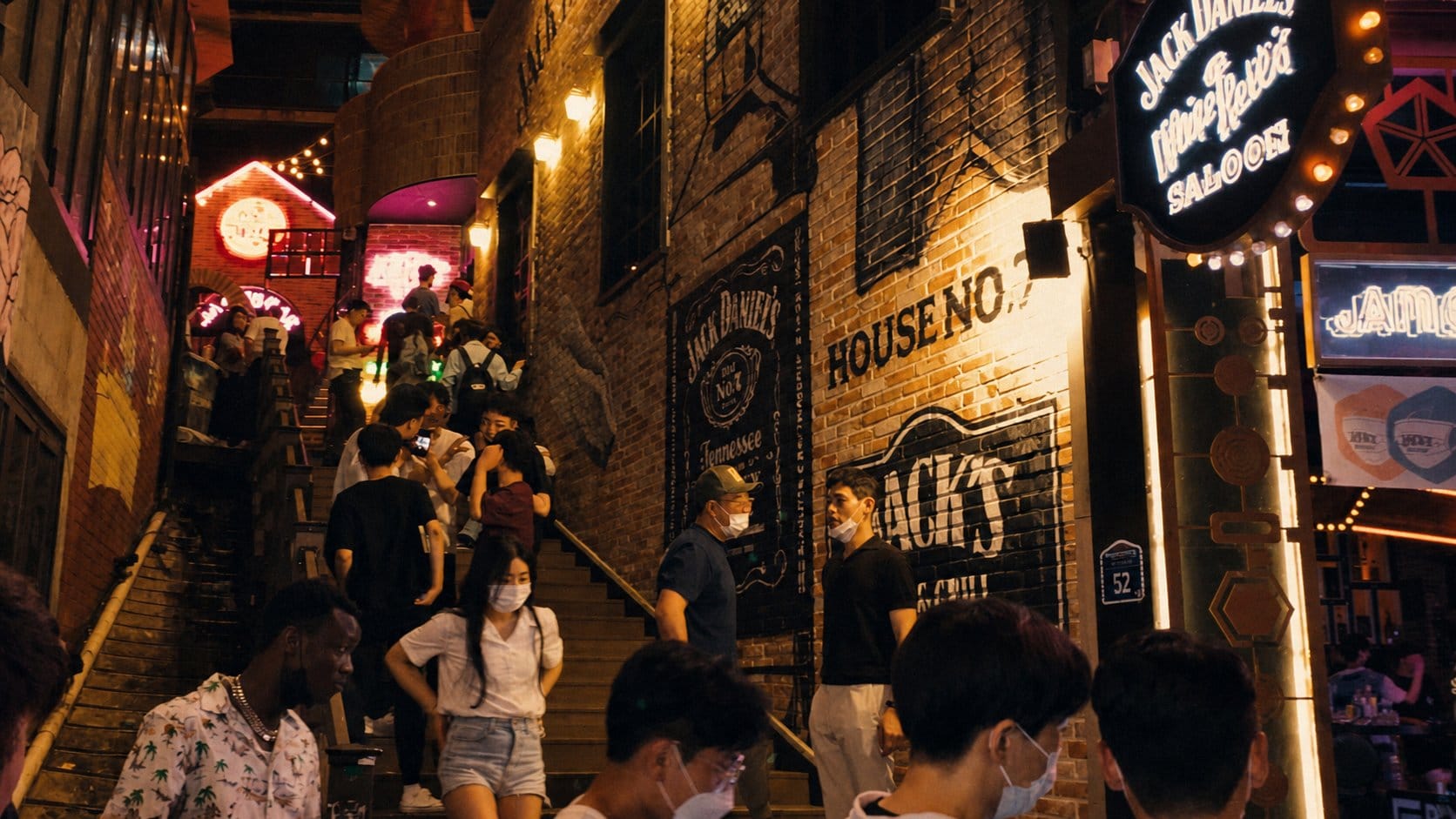
Itaewon is Seoul's most internationally diverse neighbourhood after dark — a district shaped by decades of international residents, diplomats, and its historical proximity to the Yongsan US military garrison. The main strip runs from Itaewon Station (Line 6) north and south into a grid of alleyways, where cocktail lounges, jazz venues, LGBTQ+-friendly bars, and late-night noodle stands operate side by side. The neighbourhood's round-the-clock character sets it apart from Hongdae's university-centred energy: Itaewon's bars lean toward the quieter, more intimate end of the spectrum, with rooftop terraces and hidden basement speakeasies forming a significant part of the offer. The resident and long-term visitor population maintains consistently high standards for cocktails and bar service, and the neighbourhood functions as something of a barometer for Seoul's evolving international drinking culture. Community documentation on Reddit's r/korea — particularly a widely circulated illustration series capturing Itaewon at night from 2016–18 — reflects the neighbourhood's alley bars, late-night noodle stands, and the quiet glow of neon on narrow streets.source
All That Jazz, a long-running live jazz venue near Itaewon Station, anchors the neighbourhood's music-focused nightlife. The venue hosts regular performer lineups and draws both long-term expat regulars and Korean jazz audiences. Unlike the high-volume club environments of Hongdae and Gangnam, All That Jazz rewards lingering — the kind of evening built around live performance and conversation rather than dancefloor energy.
📍 View All That Jazz on Google Maps
"The alley bars, the late-night noodle stands, the quiet glow of neon on narrow streets — Itaewon after midnight has an atmosphere you don't find elsewhere in Seoul." — Community observation documented in the r/korea series Itaewon at Night, Seoul 2016–18
Homo Hill — a concentrated cluster of LGBTQ+-friendly bars and venues on the slopes east of the main Itaewon strip — represents one of Seoul's most openly inclusive nocturnal pockets. The venues range from lively dance bars to quieter cocktail spots; the area draws an international crowd and operates with a notably relaxed atmosphere distinct from the rest of the city's nightlife geography. Combined with the rooftop bars visible from the ridge above the main street and speakeasy-style venues accessible through unmarked alley doorways, Itaewon rewards exploratory walking in a way that a more grid-structured district like Gangnam does not.
Late-night noodle stands and small Korean eateries keep Itaewon's side streets active well into the early morning. The combination of cocktail-forward bars, live jazz, alley food, and a diverse international crowd makes Itaewon a natural complement to Hongdae's club energy — well-suited as a second stop after Hongdae, or as a standalone evening for visitors who prefer drinks and atmosphere over dancefloors.
Gangnam After Dark: Upscale Clubs and Late-Night Dining
Gangnam's after-dark economy sits at the premium end of Seoul's nightlife spectrum. The district's flagship club venues — Octagon and Club Answer, both located in the Nonhyeon and Sinnonhyeon areas south of the Han River — regularly book international DJs and operate with production values that compare to major European club venues: high-specification sound systems, multi-floor layouts, LED-heavy stage design, and bottle-service culture that can add substantially to the base cost of entry. Standard entry runs 20,000–30,000 KRW at most Gangnam clubs, though last entry at major venues is typically around 1 AM, after which the crowd turns over slowly through the early hours. High-end late-night dining strips run parallel to the main club district in Sinnonhyeon and Apgujeong, offering Korean BBQ, Japanese cuisine, and late-night bar food for those arriving before the clubs open or cooling down between sets. The Gangnam tier is unambiguously the city's most polished and expensive nightlife tier — a considered choice rather than a default one.source
Octagon has maintained a consistent presence on global club rankings and draws international visitors specifically for its programming calendar. Club Answer operates in a similarly positioned bracket, with regular themed nights and international DJ residencies. Both venues are significantly louder, larger, and more expensively produced than their Hongdae equivalents — the trade-off for higher entry costs is a more polished production environment and an international-facing DJ lineup.
📍 View Club Answer on Google Maps
For high-floor city views as part of a Gangnam evening, the Lotte World Tower's champagne bar offers panoramic views from one of the tallest buildings in Asia. The tower is located in the Jamsil district, a short drive from the main Gangnam club corridor. N Seoul Tower on Namsan, accessible by cable car from Myeongdong or on foot from the Huam-dong side of the mountain, provides a different perspective — a 360-degree panorama of the Seoul basin from the ridge above central Seoul that pairs well with an earlier-evening dinner before heading further south for clubs.
📍 View Lotte World Tower on Google Maps
The Apgujeong and Cheongdam areas, accessible by short taxi from the main club corridor, host some of Seoul's highest-concentration late-night dining. Korean BBQ restaurants in this part of Gangnam typically operate until 2–3 AM, and the Garosu-gil streetfront adds quieter options for winding down. Gangnam rewards advance planning: knowing which venues accept late entry, and pre-booking transport home from an area where taxis at 2 AM carry a notable surge charge, makes the difference between a smooth evening and an expensive scramble.source
Jongno and Euljiro: Pojangmacha, Makgeolli Bars, and Nogari Alley
Jongno and Euljiro — the historic commercial districts north of the Han River, stretching between Gwanghwamun and the Dongdaemun area — offer Seoul's most authentically Korean late-night experience. Where Hongdae and Gangnam skew young and club-oriented and Itaewon draws an international bar-and-cocktail crowd, Jongno and Euljiro after midnight belong primarily to older Korean regulars, neighbourhood workers, and a growing contingent of curious visitors drawn to their low-key intimacy. Pojangmacha (covered street-food tents) serve soju, ramyeon, and tteokbokki throughout Jongno, with peak activity from 9 PM to well past midnight. Basement makgeolli (rice wine) bars cluster across both districts and typically stay open until 2–3 AM. The collective atmosphere of these two neighbourhoods rewards slow exploration on foot rather than a structured itinerary — the kind of evening where stumbling into a basement bar becomes the highlight.sourcesource
Euljiro Nogari Alley, located near Euljiro 4-ga Station, is among the most distinctive late-night settings in the city. The alley's formula is deceptively simple: rows of small stalls sell dried pollack (nogari) and cold beer at plastic tables under fluorescent lights — no frills, no music, no pretension. The combination of inexpensive snacks, shared tables, and a largely Korean-speaking regular clientele creates an environment that feels genuinely unhurried. The alley is most active from around 9 PM and has been a consistent fixture of Seoul's nocturnal geography for decades.source
📍 View Euljiro Nogari Alley on Google Maps
"Pojangmacha lights, empty Han River bridges, the particular stillness of Seoul's side streets at 3 AM — Seoul at night has a warmth that feels both alive and strangely intimate." — Recurring community sentiment documented in the r/korea thread That Late Night Feeling
The makgeolli bar scene in Jongno and Euljiro spans a wide range — from traditional basement spots serving earthenware bowls of cloudy rice wine to newer craft makgeolli bars introducing younger drinkers to regionally sourced varieties. Prices are typically lower than in Hongdae or Itaewon, and the format (shared dishes of Korean bar food, called anju, served alongside rice wine by the bowl) is one of the most characteristically Korean drinking experiences in the city. Most makgeolli bars in this corridor close between 2 and 3 AM.source
The neighbourhood also functions as a natural later-in-the-evening destination after earlier stops in Hongdae or Itaewon. Arriving between midnight and 1 AM — when pojangmacha tents are still fully active and the makgeolli bars have their widest selection open — allows visitors to close an evening in the distinctly Korean register of Jongno/Euljiro without planning a separate dedicated night. Near Euljiro 4-ga Station, kimchi jjigae spots and late-night Korean eateries extend the food options well past the tents' closing hours.sourcesource
Seoul Night Markets: Bamdokkaebi, Dongdaemun, and Cheonggyecheon
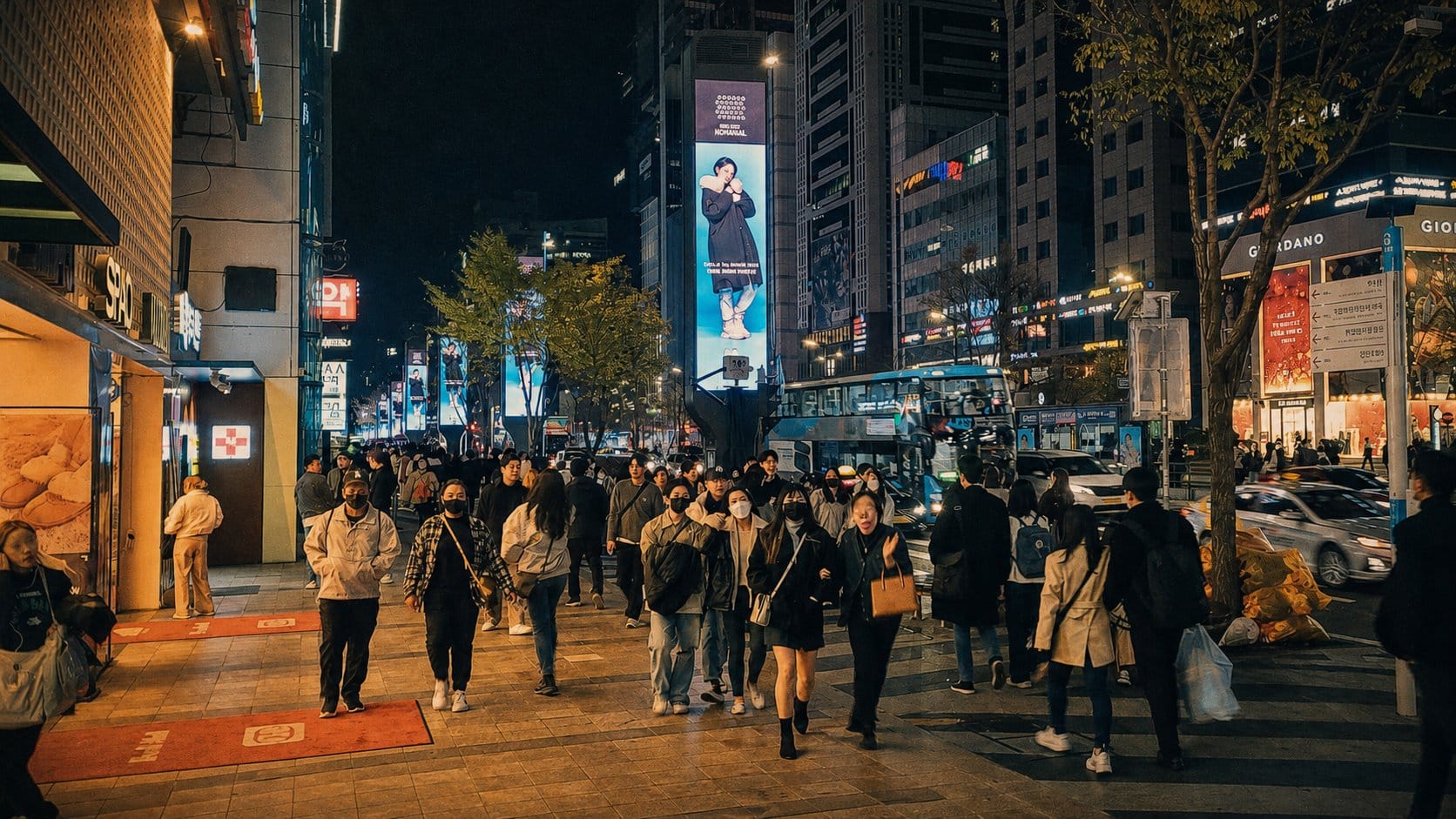
Seoul's night market landscape covers three distinct formats: the seasonal outdoor food-truck gathering at the Han River parks, the all-hours wholesale fashion and street-food concentration around Dongdaemun, and the weekend cultural market along Cheonggyecheon Stream. The Seoul Bamdokkaebi Night Market (밤도깨비야시장 — the name translates roughly as "night goblin market") runs Fridays and Saturdays from April through October, 6 PM to 11 PM, at rotating Han River park venues including Yeouido and Banpo. Entry is free; roughly 30 food trucks and around 1,000 vendor slots offer Korean street food, international dishes, and handcrafted goods. The setting — open parkland along the Han River with the city skyline reflected in the water — makes it one of Seoul's most pleasant warm-season evening experiences, well-suited to families, groups, and solo visitors spending a Friday or Saturday evening without a club itinerary in mind.sourcesource
Dongdaemun operates on an entirely different scale. The district's wholesale fashion complexes — Doota!, Hello apM, and Migliore — together with the surrounding street-food vendors are open until 5 AM, catering to domestic fashion buyers who work nocturnal hours and international tourists who come as much for the experience as for the shopping. The street-food concentration around the complexes — tteokbokki, hotteok, fish cake skewers, and grilled meats — is among the densest in the city at that hour, and the energy of Dongdaemun at 2 AM is genuinely distinct from anything available in the daytime.source
The Dongdaemun Design Plaza (DDP), adjacent to the fashion complexes, hosts seasonal LED light installations that illuminate its curvilinear exterior throughout the evening. The installations are free to view from the surrounding plaza and frequently serve as a backdrop for informal photography. The Cheonggyecheon Time Tour Night Market operates nearby on Saturdays 5 PM–10 PM and Sundays 4 PM–9 PM near Gwangtonggyo Bridge, combining cultural stalls and traditional crafts with the backdrop of the illuminated stream corridor.source
📍 View DDP Dongdaemun on Google Maps
📍 View Cheonggyecheon Stream on Google Maps
Seoul Night Markets and Late-Night Venues: Comparison
| Market / Venue | Location | Operating Days | Hours | Entry |
|---|---|---|---|---|
| Seoul Bamdokkaebi Night Market | Yeouido / Banpo Han River Parks (rotating) | Fri – Sat (April–October) | 6 PM – 11 PM | Free |
| Dongdaemun Wholesale Complexes | Doota!, Hello apM, Migliore | Daily | Until 5 AM | Free entry |
| Cheonggyecheon Time Tour Night Market | Near Gwangtonggyo Bridge, central Seoul | Sat – Sun | Sat 5–10 PM / Sun 4–9 PM | Free |
| DDP LED Light Installations | Dongdaemun Design Plaza | Seasonal (varies) | Evening onwards | Free (exterior) |
📍 8-3 Chungmuro 2(i)-ga, Jung District, Seoul
🕒 Daily 5:00 PM – 1:00 AM
⭐ 4.4 (6,629 reviews)
🔗 View on Google Maps
Scenic Seoul After Dark: Fountains, Streams, and City Views
Seoul's scenic after-dark attractions operate on a different rhythm from the bar and club districts — they are best approached in the earlier evening window between 7 PM and 10 PM, when timed fountain shows are running and the city's skyline is fully illuminated. The Banpo Bridge Moonlight Rainbow Fountain — certified by Guinness World Records as the world's longest bridge fountain — runs 20-minute shows between 19:30 and 21:00 during April–June and September–October, best viewed from Banpo Hangang Park on the south bank of the Han River. The fountain's coloured LED water arcs have become one of Seoul's most photographed evening spectacles, and the surrounding riverside park operates as an informal gathering space well beyond the fountain's operating hours. Cheonggyecheon Stream, lit by colour installations along nearly 11 km throughout the year, provides a calmer and more meditative late-evening walk through the heart of the city.source
📍 View Banpo Bridge Rainbow Fountain on Google Maps
N Seoul Tower on Namsan is the city's most iconic elevated viewpoint. The tower and surrounding observation deck offer 360-degree views of the Seoul basin and surrounding mountains; it is accessible by cable car from Myeongdong or by foot from the Huam-dong approach to Namsan. The cable car runs until 23:00 on most nights, with the observation deck and restaurants staying open until midnight on weekends during standard operating periods — confirm current seasonal hours before visiting. The padlock fence ringing the tower's exterior observation area, where couples attach locks as a romantic tradition, is among Seoul's most visited late-evening landmark details.source
📍 View N Seoul Tower on Google Maps
Seoullo 7017, the elevated walkway above Seoul Station converted from a highway overpass, stays pleasant and largely uncrowded during the late evening. The walkway offers a ground-level view of Seoul Station's illuminated concourse on one side and the cityscape spreading north and south on the other — a quiet counterpoint to the sensory density of Hongdae or Dongdaemun at the same hour.
📍 View Seoullo 7017 on Google Maps
Cheonggyecheon Stream, running from Cheonggye Plaza near City Hall eastward toward Dongdaemun, is lit by colour LEDs and hosts rotating lantern exhibitions throughout the year. Walking the stream from the plaza to Gwangtonggyo Bridge at night is one of the more serene options available in a city where most late-evening activity trends louder. The stream sits below street grade, creating a corridor insulated from traffic noise, and the lantern installations during autumn's Lantern Festival draw large, unhurried crowds to the promenade.
24-Hour Seoul: Jjimjilbang and Convenience Store Culture
Two distinctly Korean institutions define the city's 24-hour infrastructure for late-night visitors: the jjimjilbang and the convenience store. A jjimjilbang (찜질방) is a heated communal bathhouse-sauna where visitors bathe in gender-segregated facilities, then sleep overnight in shared rest areas — on floor mats in common rooms, after soaking in hot- and cold-water pools and sweating in clay or salt sauna rooms. Overnight stays typically cost 10,000–15,000 KRW, making jjimjilbang the standard budget option for visitors stranded after the Seoul Metro closes around midnight. They require no reservation, are open to all visitors including international travellers, and most have basic snack and food facilities operating through the night. The experience — sweating in a clay sauna room before sleeping on a heated floor — is a cultural fixture of Korean daily life and functions simultaneously as a recovery venue and a practical transit bridge.source
Convenience stores — GS25, CU, and 7-Eleven being the three dominant chains — function as de facto late-night social hubs in most Seoul neighbourhoods. Outdoor seating areas in front of convenience stores become informal gathering spots from around midnight onward, particularly around Hongdae and Sinchon, where post-club crowds buy 1,500–2,000 KRW bottles of soju, cup ramen, and fried snacks and sit for an hour or two before deciding on the next move. The social ritual of the convenience store sitting session is embedded in Seoul's late-night culture in a way that has no direct equivalent in most Western cities — it is simultaneously practical and genuinely social.source
PC bangs (24-hour gaming cafés) and norebang chains fill the gap between the subway's midnight closure and the first train at approximately 5:30 AM. Both formats are heavily concentrated around Hongdae and Sinchon, where student and late-night demand sustains enough density to offer real choice. PC bangs typically charge 1,000–2,000 KRW per hour and well-equipped facilities have gaming chairs, food-ordering terminals, and shower facilities — making them a practical overnight option for those who prefer screens to sleeping mats.source
The jjimjilbang's practical utility is particularly relevant for K-pop concert visitors. Major venues such as KSPO Dome and Seoul Olympic Park in the Jamsil area are not all easily walkable to late-night transit options once the last subway runs. A jjimjilbang within a short taxi ride allows concert-goers to wait out the transit gap comfortably rather than paying a full hotel rate for three or four hours. Many visitors also combine a jjimjilbang stay with an early-morning first-subway ride to Incheon or Gimpo Airport, making it a functional overlap between accommodation and departure logistics.
Getting Around Seoul at Night: Subway, Night Buses, and Timing
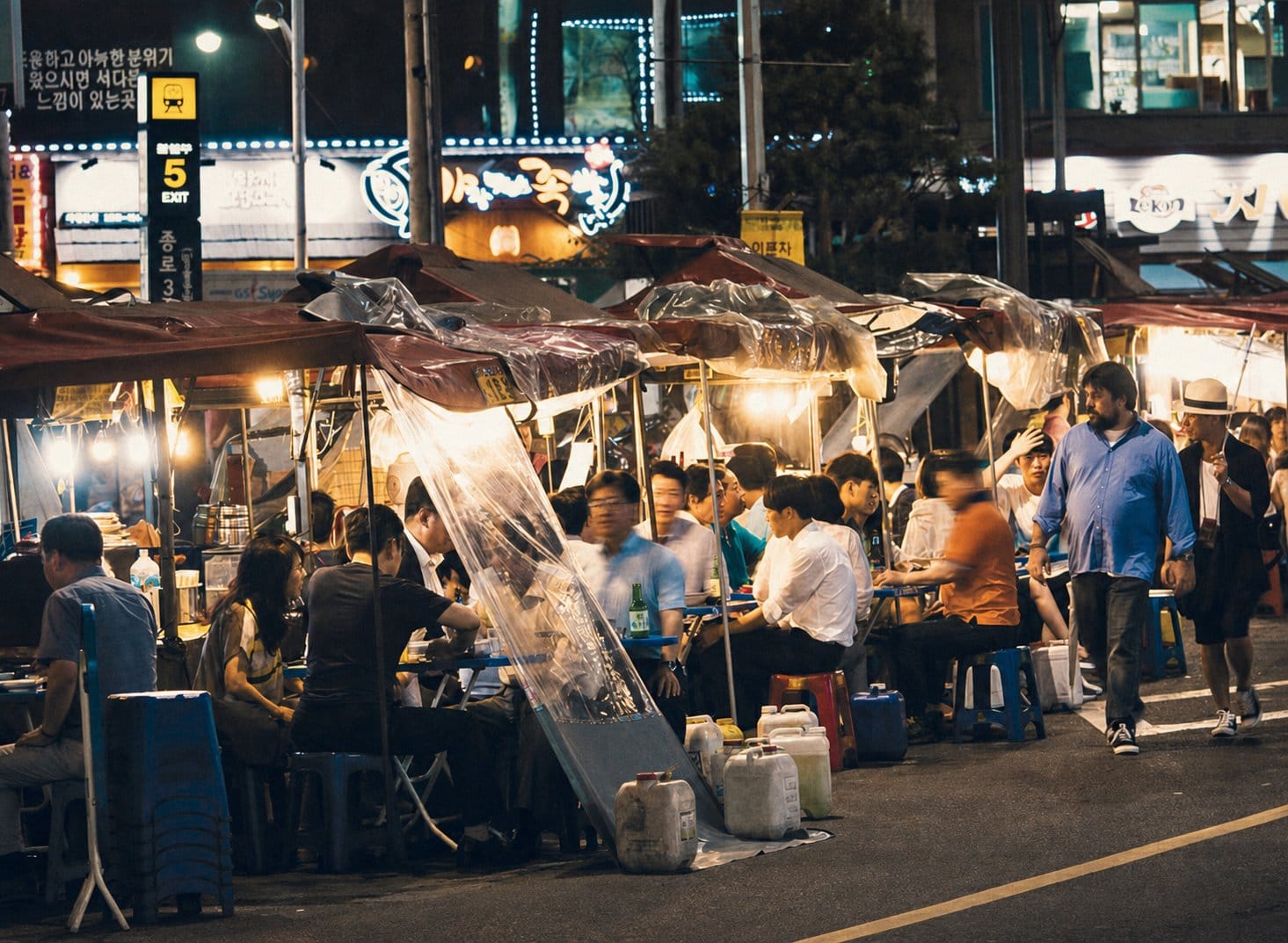
Seoul's Metro closes at approximately midnight on most lines on weekdays, with final trains running slightly earlier on some lines on weekends. From that point, the city's Night Owl bus network (N-series routes) takes over, running selected corridors from 00:00 to 05:30 for a flat fare of 2,400 KRW. The N-series routes are not a complete substitute for the Metro — coverage is selective and frequency is lower — but they connect the key corridors linking Hongdae, Itaewon, Gangnam, and central Seoul. Designated Night Owl bus stops in each of the main nightlife districts are marked; checking route numbers on the Seoul Transit app or Kakao Maps before heading out is strongly recommended to avoid a long walk to the nearest stop.source
Taxis and the Kakao T platform are the most flexible late-night transport options. Kakao T covers standard taxis and carpooled rides with real-time availability across the city. Surge pricing peaks between 1 and 3 AM on weekends, particularly from Hongdae and Gangnam where post-club demand concentrates. Street hailing is increasingly unreliable in these peak windows; using the app to book even 10 minutes ahead significantly improves the likelihood of securing a ride. Fares from Hongdae to Gangnam at 2 AM on a weekend night typically run 20,000–30,000 KRW depending on surge level.source
Concert-goers have a specific planning consideration that general visitors can overlook. The major venue corridors — KSPO Dome, Seoul Olympic Park, and Gocheok Sky Dome in Guro — each have different transit profiles after a show ends. KSPO Dome and Olympic Park outlets are served by the Jamsil taxi concentration; Gocheok Sky Dome is well-connected via Gocheok station on Line 1. Planning the post-show route before the final encore — knowing which bus number or taxi pickup zone to head for — avoids the scramble of thousands of concert-goers competing for the same cars in the 30 minutes after a show finishes. The Hongdae corridor is particularly convenient: its late-night scene stays active well after any major concert's final set, making it a natural onward destination for an evening that begins at a venue in western Seoul.
Frequently Asked Questions
What time do Seoul clubs and bars typically close?
Clubs in Hongdae and Gangnam commonly run until 5–6 AM on weekends, or until demand drops — there is no universal closing law enforcing a fixed hour. Bars in Hongdae, Itaewon, and Jongno/Euljiro typically close between 2 and 4 AM. The Seoul Metro closes around midnight on most lines, so Night Owl buses (N-series routes, running 00:00–05:30 for 2,400 KRW) or taxis booked via the Kakao T app are necessary for any travel after that point. The key timing decision for any late night in Seoul is whether to stay out until the 5:30 AM first train, bridge the gap in a jjimjilbang, or budget for a surge-priced taxi home around 2–3 AM.source
How much does a night out in Seoul cost?
Costs vary significantly by district and spending choices. In Hongdae, a full evening of dinner, bar crawl, club entry (10,000–20,000 KRW including one drink), and norebang averages 50,000–80,000 KRW per person. In Gangnam, club entry alone runs 20,000–30,000 KRW, and bottle service adds substantially to that. At the budget end, a jjimjilbang overnight costs 10,000–15,000 KRW, and a full convenience-store late night — soju at 1,500–2,000 KRW, cup ramen, snacks — comes in well under 10,000 KRW. The widest cost spread in the city exists between the Gangnam club tier, where a night for two with drinks can reach 200,000 KRW, and the Jongno/Euljiro pojangmacha tier, where the same amount would cover a generous evening for a group of four.source
When and where does the Bamdokkaebi Night Market run?
The Seoul Bamdokkaebi Night Market runs every Friday and Saturday from April through October, 6 PM to 11 PM, with free entry. Venue locations rotate between Han River park sites — primarily Yeouido Hangang Park and Banpo Hangang Park — each season, so checking the official Seoul Metropolitan Government schedule before visiting is necessary to confirm the current location. The market features roughly 30 food trucks alongside handcraft and cultural product vendors. It does not operate November through March.source
What is a jjimjilbang and can international visitors use one?
A jjimjilbang (찜질방) is a Korean public bathhouse-sauna combining bathing facilities (hot and cold pools, steam rooms, dry clay or salt saunas) with common sleeping areas where guests can stay overnight on heated floor mats. Entry costs 10,000–15,000 KRW for an overnight stay including access to all facilities. International visitors are welcome; some facilities near Hongdae and Myeongdong have English-language signage. The format is communal and gender-segregated for bathing areas, with a shared (mixed) rest area for sleeping and relaxing. Jjimjilbang are a practical post-concert or post-club option when the subway is closed and a full hotel room is unnecessary.source
Which Seoul nightlife district suits first-time visitors most?
Hongdae is the most approachable starting point. Cover charges are low (10,000–20,000 KRW including one drink), the area is compact and walkable, and the range of venue types — clubs, live-music bars, norebang, outdoor busking — means a group with mixed preferences can find something within a five-minute walk. English is widely used in most venues. Itaewon works well as an alternative for visitors who prefer cocktail bars and a more international atmosphere with less emphasis on clubs. Jongno/Euljiro is worth adding as a second stop for an authentically Korean drinking experience; it functions better as a complement to Hongdae or Itaewon than as a standalone first night for visitors unfamiliar with the neighbourhood layout.source
Planning Your Seoul After Dark
Seoul's after-dark geography rewards a layered approach rather than concentration in a single district. The city's nightlife is distributed across zones with distinct characters that suit different parts of an evening, different budgets, and different preferences. A workable framework for a first extended night out: begin in Hongdae for accessible club-and-norebang energy, move to Itaewon for cocktails or live jazz, close the night in Jongno/Euljiro for pojangmacha and makgeolli before the first subway at 5:30 AM — or bridge the transit gap with a jjimjilbang. Each district has enough internal depth that spending a full night in one alone is equally viable.source
For K-pop fans visiting Seoul around concert schedules, the post-show logistics matter as much as the night itself. The major venue corridors (KSPO Dome, Seoul Olympic Park, Gocheok Sky Dome) each have different transit profiles, and the most useful habit is confirming your onward route before the encore — not after the crowd empties onto the street. The Hongdae corridor is especially convenient for western Seoul venues: its late-night scene remains fully active well after any major concert's final set, making it a natural endpoint for an evening that began earlier and further out.
The scenic layer — Banpo Bridge's fountain shows, Cheonggyecheon's illuminated stream walk, N Seoul Tower's panoramic views — belongs in the 7–10 PM window before the club scene peaks, or as a quiet close to an evening that started early. These are not secondary attractions to be squeezed in; they represent a genuine and unhurried way to experience the scale and design of one of Asia's largest cities at a rhythm that the louder districts don't provide.source
Last updated: 2026-05-20. Pricing, operating hours, and seasonal schedules were reviewed against available sources as of May 2026. Venue hours and night market locations may vary seasonally — confirm details directly before visiting.source
This article was written using information collected and analyzed by NAMANE's in-house K-pop research AI engine. We use AI technology to bring you faster, broader coverage, and in the process some details may occasionally differ from the latest facts. For important information such as dates, venues, and prices, please double-check with official sources.


