
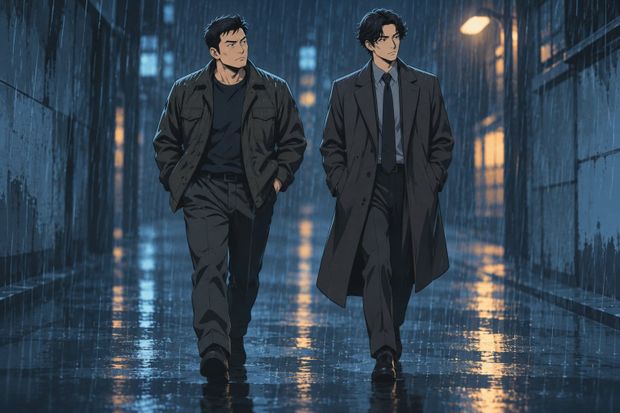
Netflix's Korea-Japan crime thriller The Blue Road came out on November 20, 2026. It reunites the director and lead actor of D.P., and early critics have scored it highly. Here is what they gave it, and what you are signing up for before you start episode one.
Is The Blue Road worth watching? What the critics scored
Yes, for viewers who like slow-burn procedural thrillers. The Blue Road is a Netflix original crime series made in Korea and Japan. Sarah Musnicky of But Why Tho gave it 9/10 in a review published on release day . She called it "incredibly compelling" and a must-watch for crime-drama fans. Two critics who saw it at the Busan International Film Festival also scored it in the 4-out-of-5 range.
Quick Answer: The Blue Road is worth watching if you like crime thrillers. But Why Tho scored it 9/10 on November 20, 2026, and praised the Son Suk-ku and Eita Nagayama pairing. Her one reservation is a last-minute callback in the final episode that she found "more sentimental than earned." All eight episodes are on Netflix now.
Most of Musnicky's praise goes to the two leads. She describes the bond between Son Suk-ku's Seoul detective and Eita Nagayama's Tokyo inspector as "an undeniable bond." She also singles out the well-choreographed action and the careful way the show handles historical wounds between Korea and Japan .
"Incredibly compelling," — Sarah Musnicky, reviewer at But Why Tho (source: But Why Tho)
The other published scores come from the festival screening. What's on Netflix gave the series 4/5 and K-waves and Beyond gave it 4.5/5. Both reviews followed the world premiere of the first three episodes at the 31st Busan International Film Festival in October 2026 (video: REVIEW MOVIE).
| Outlet | Score | When reviewed |
|---|---|---|
| But Why Tho (Sarah Musnicky) | 9/10 | November 20, 2026 (full series) |
| K-waves and Beyond | 4.5/5 | After the Busan screening, October 2026 |
| What's on Netflix | 4/5 | After the Busan screening, October 2026 |
Here is the format before you commit:
- Episodes: 8, all released on November 20, 2026 .
- Runtime: 35–57 minutes per episode. Netflix's episode list shows 48, 43, 49, 45, 47, 39, 35 and 57 minutes for episodes 1 to 8 .
- Rating: TV-MA limited series on Netflix . In Korea it is rated 19+ , so expect graphic crime scenes.
Netflix's listed runtimes add up to a little over six hours , which you can finish over one weekend. The one flaw the But Why Tho review names, a sentimental callback in the final episode, is covered later in this review.
What is The Blue Road about?
The Blue Road is a cross-border serial-killer thriller set in 2002, while South Korea and Japan co-hosted the FIFA World Cup . Two mirrored murders, one in Tokyo and one in Korea, force a detective from each country into a joint investigation. The case leads back to crimes from the 1980s and to old tensions between the two nations . This summary covers only the setup and gives away nothing about the ending.
The opening case is staged to provoke. As Top Star News describes it, police in Tokyo find a grotesquely contorted body with Korean letters written in blood beside it. Soon afterwards a similar body turns up in South Korea, this time surrounded by Japanese letters in blood . Each killing seems to point at the other country. Neither police force can treat it as a local case, so they are pushed into working together.
The basic structure looks like this:
- When: 2002, during the first World Cup co-hosted by two nations, which was widely presented as a symbol of Korea-Japan cooperation .
- Where: Seoul and Tokyo. The production also filmed in Hong Kong and Kazakhstan in 2025 .
- Who investigates: Kim Seok, a hard-boiled detective in the Seoul Metropolitan Police mobile investigation unit, and Inose Hiroshi of the Tokyo Metropolitan Police's First Investigation Division .
- What drives it: a trail that links the present-day murders to crimes committed in the 1980s .
The World Cup setting does more than set the period. The tournament fills the background with festivity and with official talk of friendship between the two countries. The murders cut against that mood by playing on grievances that never went away. According to But Why Tho (2026-11), those resentments reach back centuries, as far as the Imjin War, and the series gives enough explanation for viewers without background knowledge to see how deeply rooted they are .
The partnership itself is part of the story. Each lead speaks lines in the other's language, so the first episodes show the language gap and the clash between two policing styles . The YouTube reviewer @REVIEW MOVIE describes the early episodes as a procedural that slowly becomes a conspiracy story as the detectives follow the clues across the border (video: REVIEW MOVIE). Viewers who go in knowing only the premise get the full effect of how the 1980s connection comes out. This review keeps it that way.
Who stars in The Blue Road, and who made it?
The Blue Road stars Son Suk-ku as Kim Seok, a hard-boiled detective in the Seoul Metropolitan Police mobile investigation unit. Eita Nagayama plays Inose Hiroshi, a detective in the Tokyo Metropolitan Police's First Investigation Division, in his first Korean production . Han Jun-hee, the director of D.P., directed the series and co-wrote it with Cho Yu-jin . The series is built around the two leads, and most of its energy comes from how they play off each other.
Son plays a type of role his fans will recognise from A Killer Paradox, D.P. and The Roundup (source: Wikipedia) . Nagayama is known to Japanese audiences for the 2006 drama Nodame Cantabile and for playing Hori in the 2023 film Monster (source: Wikipedia) . Three supporting actors carry the political side of the story. Their roles are listed below.
| Actor | Character | Role in the story |
|---|---|---|
| Son Suk-ku | Kim Seok | Detective, Seoul Metropolitan Police mobile investigation unit |
| Eita Nagayama | Inose Hiroshi | Detective, Tokyo Metropolitan Police First Investigation Division |
| Kim Shin-rok | Ri Yoon-ok | Korean-Japanese businesswoman |
| Choi Sung-eun | Yoon Soo-kyung | National Intelligence Service agent |
| Jung Jae-young | Seo Hyun-tae | Underworld figure the series keeps deliberately mysterious |
Cast and roles as listed on Wikipedia .
Behind the camera, the series brings together Han Jun-hee and Son Suk-ku again after D.P., where Son played Captain Im Ji-seop. Shotcake produced the series and the composer is credited as Primary . Han and Cho wrote all eight episodes, adapting the 2002 manhwa by Keishi Edogawa and Kwon Kaya (video: REVIEW MOVIE).
Language is part of the casting idea. Each lead speaks some of his lines in the other's language: Son in Japanese and Nagayama in Korean. Son told Wikitree that he practised Japanese with Nagayama while staying in Japan, and that because Japanese is not his first language, he learned his lines by their rhythm, "like playing music," rather than simply memorising them . So the interrogation and stakeout scenes in the early episodes are not just written as two cultures meeting. You can hear the halting, half-understood exchanges.
Eita Nagayama said that as soon as he met Son Suk-ku, he felt Son was someone who shared his sensibility, and sensed they could communicate past the barriers of language and borders. (source: Wikitree, translated from Korean)
That sense of a shared sensibility shows on screen. Kim Seok is cool-headed and composed, and Inose is fiery and direct , but they come to trust each other at a believable pace. For K-drama viewers, the cast is a useful entry point to Nagayama's Japanese work. For J-drama fans, it is a natural route into Son's filmography.
What do critics praise most in The Blue Road?
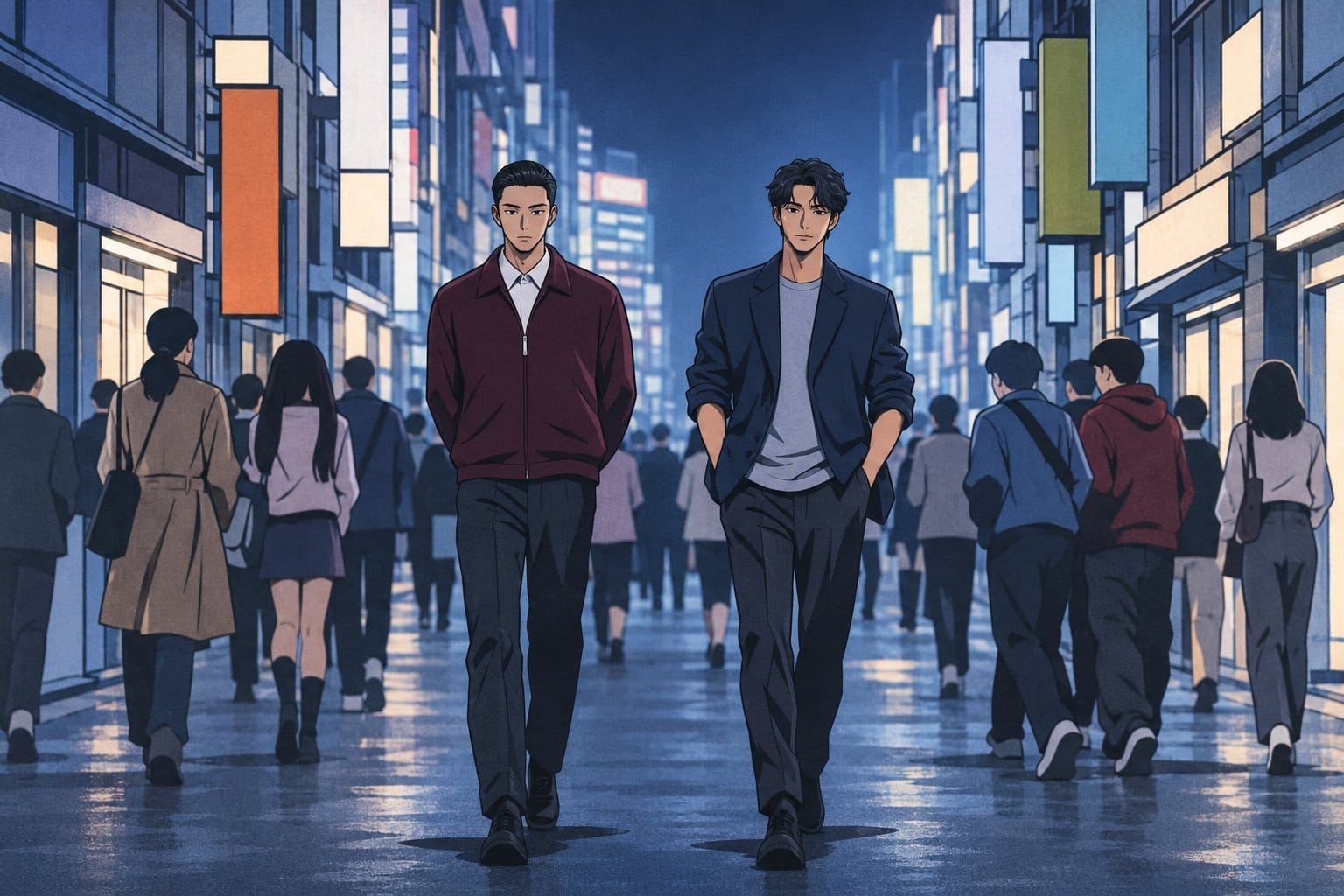
Critics praise three things most in The Blue Road: the chemistry between Son Suk-ku and Eita Nagayama, the well-staged action, and the care it takes with the history between Korea and Japan. Sarah Musnicky's review for But Why Tho, published November 20, 2026, calls the pairing "an undeniable bond" . The earliest reviews from the Busan festival screening made the same points about tone and pacing.
The Son and Nagayama pairing
Most reviews focus on the two leads. Kim Seok and Inose Hiroshi come from different police cultures and speak different first languages, and the series uses that friction for drama and for humour. Musnicky gives the pairing much of the credit for why the show works:
"An undeniable bond," — Sarah Musnicky, critic at But Why Tho, on the Son Suk-ku and Eita Nagayama partnership (source: But Why Tho, 2026-11)
Both leads act in Korean and Japanese. Nagayama told Wikitree that they worked well together because both prefer to react to each other on set rather than fix a performance in advance . That habit helps explain why the cross-language scenes feel lived-in rather than tacked on.
Action and historical weight
The other praise from But Why Tho falls into two areas:
- Action: the fight and chase scenes are described as well choreographed. That fits a director whose D.P. was known for raw, physical staging.
- History: the series deals with old wounds between Korea and Japan carefully. The killings are set against the 2002 World Cup that the two countries co-hosted, and the story never turns into one side blaming the other.
Musnicky also calls the series "incredibly compelling," which is high praise for a story that lingers on grotesque crime scenes .
The Busan premiere and the first reviews
The first reactions came before the Netflix launch. The first three episodes had their world premiere at the 31st Busan International Film Festival, held October 6–15, 2026 , where the series was selected for the festival's On Screen section for series . According to Wikipedia's summary of the coverage, the South China Morning Post's early review praised the "tonal shifts between gruesome crimes and barbed banter" and said the episodes left viewers "hooked" .
That mix of tones is the main thing a new viewer should expect. The Blue Road swings from crime-scene horror to the two detectives sniping at each other, often in the same episode. Reviewers who liked the series saw that swing as the point, not a lapse in tone. For fans who came to Son through D.P. or A Killer Paradox, it will feel familiar: dark material, with dry humour coming out of the characters.
What flaw do critics point to?
The one flaw named in Sarah Musnicky's 9/10 review for But Why Tho, published on November 20, 2026, is a last-minute callback in the final episode that she calls "more sentimental than earned" . It did not stop her from recommending the series. The Korea-Japan history in the second half, which some viewers might expect to be a hurdle, is something the same review praises rather than faults.
The final-episode callback. Musnicky writes that a callback in the last episode, which reaches back to an earlier moment in the series, works more as an emotional cue than as a payoff the story has built toward . In a thriller that mostly keeps its feelings dry, carried by banter and procedure, an obvious tug at the heartstrings stands out more than it would in a melodrama. Viewers who want to judge the ending scene by scene can use the episode recaps and ending explainer at The Review Geek, though those pages contain full spoilers.
The history: praised, not faulted. The first half follows the present-day serial killer. The second half follows Seok as he unravels a series of murders from the 1980s that directly inspired the new ones, and the resentments behind them reach back as far as the Imjin War . Musnicky writes that while some background knowledge helps, the series "provides enough explanation" for unfamiliar viewers, and that its "layers of history and depth" make the story "all the richer." She also calls its handling of these complexities admirable .
Our own read, not the critic's: the viewers most likely to mind are
- Those who want a straight procedural, with clues, suspects and arrests, and less about how two countries remember their past.
- Viewers new to Korea-Japan history who like to look up context as they go. The show explains enough to follow, but background knowledge adds to the later episodes.
- Viewers who prefer endings that stay cool and restrained over a closing scene built for emotional release.
This criticism comes from one written review, not from a wider critical consensus. What's on Netflix gave the series 4/5 after its Busan screening, and K-waves and Beyond gave it 4.5/5, but neither of those scores comes with a detailed list of complaints (video: REVIEW MOVIE) . Read the callback point as one critic's reservation about a series she still rated 9 out of 10.
How does the series differ from the 2002 manhwa?
The biggest change is the Korean lead. The series adapts Blue Road, a 2002 Korean-Japanese manhwa. It keeps the original Japanese inspector, Inose, but swaps the comic's Korean detective, Kang Cheong-do, for a new character named Kim Seok, played by Son Suk-ku . The premise survives the move to the screen: two detectives, one from each country, investigate bizarre murders that cross the border. What changes is the man on the Korean side of the case.
The source comic was a cross-border project in its own right. Japanese writer Keishi Edogawa wrote the story, Korean artist Kwon Kaya drew it, and Haksan Publishing released it in Korea (video: REVIEW MOVIE). A manhwa is a Korean comic, the Korean counterpart to Japanese manga. The Netflix version follows the same split: a Korean director and a Japanese co-star, with dialogue in both languages.
Here is how the two versions line up, according to Wikipedia's entry on the series:
- Korean lead: Kang Cheong-do in the comic; Kim Seok, a new detective in the Seoul Metropolitan Police mobile investigation unit, in the series.
- Japanese lead: Inose in both. On screen he becomes Inose Hiroshi of the Tokyo Metropolitan Police's First Investigation Division, played by Eita Nagayama.
- Setting: The series is set in 2002, the year the comic came out and the year Korea and Japan co-hosted the World Cup .
- Supporting cast: The series adds characters such as NIS agent Yoon Soo-kyung and the underworld figure Seo Hyun-tae, which widens the story beyond the two detectives.
The production went well beyond the two countries in the story. Netflix first approved the project under the working title Road, and principal photography took place in 2025 in South Korea, Japan, Hong Kong and Kazakhstan . Shotcake produced the series, and Han Jun-hee and Cho Yu-jin wrote the scripts. That gave the adaptation room to tie the case to the 1980s crimes and the historical tensions that But Why Tho describes in the second half .
If you read the comic first, expect the same basic setup with a different Korean partner. The new lead, Kim Seok, is also why the series feels close to D.P.: it pairs Son Suk-ku with director Han Jun-hee again, in a role written for this adaptation. For episode-by-episode detail on how the story plays out, The Review Geek has recaps and an ending explainer .
How is The Blue Road performing on Netflix charts?
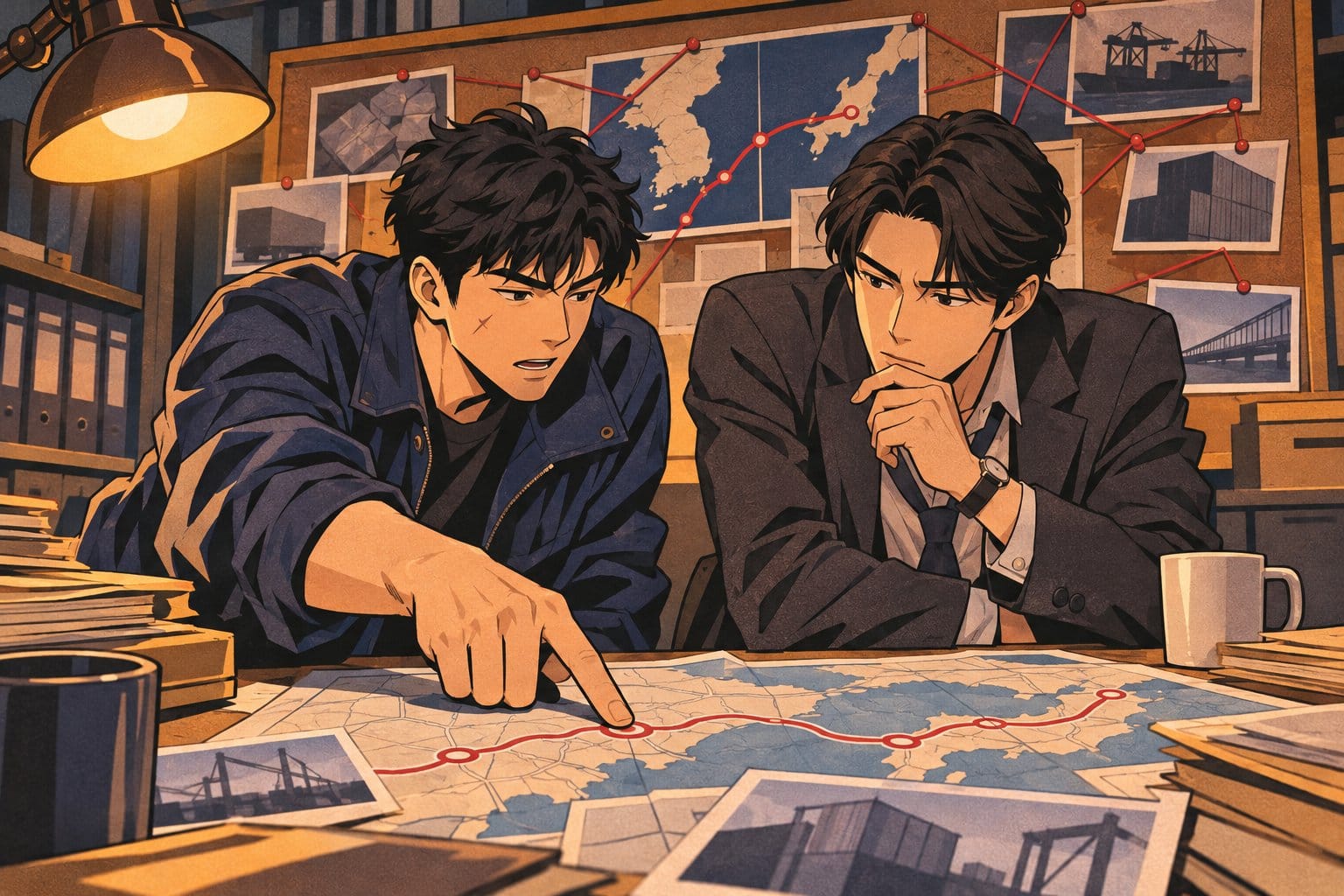
The Blue Road had a strong first week on Netflix. FlixPatrol rankings reported by Wikitree show it reached No. 1 on Netflix's TV chart in South Korea within three days of its November 20, 2026 release, overtaking the Jang Na-ra drama Good Partner 2 . Over the same period it entered the ten most-watched TV lists in 48 countries and ranked No. 6 on the worldwide Netflix TV chart .
These are third-party FlixPatrol figures. They reflect daily rank positions, not the hours viewed that Netflix publishes in its official weekly viewing charts .
The table below groups the reported positions by rank. The pattern is clear: the series did best in Southeast and East Asia, and also charted in the Middle East and parts of Europe.
| Rank (FlixPatrol TV chart) | Countries / regions |
|---|---|
| No. 1 | South Korea, Thailand, Singapore, Philippines, Malaysia, Indonesia, Hong Kong |
| No. 2 | Taiwan, Vietnam, UAE, Qatar, Kuwait, Pakistan |
| No. 3 | Japan, Saudi Arabia, Oman |
| No. 5 | Czech Republic |
| No. 6 | Hungary |
| No. 9 | Brazil, New Zealand |
| No. 10 | Germany |
| No. 6 (worldwide) | Global Netflix TV chart |
Source: FlixPatrol rankings as reported by Wikitree .
The No. 3 position in Japan is the number to watch. The series pairs Korean actor Son Suk-ku with Japanese actor Eita Nagayama , so its reception in both home markets matters more than for a typical K-drama. The second half also deals directly with Korea-Japan historical wounds, and Japanese viewers may react to that differently from viewers in Seoul. Netflix lists all eight episodes as a TV-MA limited series , so word of mouth can build fast. That makes week-two rankings a better test than week one of whether the story holds viewers.
The short version: The Blue Road has a 9/10 review from But Why Tho and a first-week chart run led by Asia. If you liked D.P. or enjoy procedurals set across borders, it is a reasonable weekend watch at 35–57 minutes per episode, according to Netflix's episode list . Expect one sentimental final callback, and a second half built on Korea-Japan history that the show explains as it goes.
Frequently asked questions
What score did The Blue Road get from critics?
The Blue Road has received strong scores from critics. But Why Tho gave it 9/10 in Sarah Musnicky's review, published on November 20, 2026 (source: But Why Tho, 2026-11) . Both What's on Netflix (4/5) and K-waves and Beyond (4.5/5) reviewed the first three episodes after their Busan International Film Festival screening (video: REVIEW MOVIE).
When did The Blue Road come out on Netflix and how many episodes are there?
The Blue Road premiered worldwide on Netflix on November 20, 2026, and all eight episodes came out at once (source: Wikipedia, 2026-11) . Episodes run 35–57 minutes each, according to Netflix's episode list . Netflix lists it as a TV-MA limited series (source: Netflix) .
Is The Blue Road based on a true story?
No, the plot is fiction. The series adapts 'Blue Road', a Korean-Japanese manhwa from 2002. Japanese writer Keishi Edogawa wrote it and Korean artist Kwon Kaya drew it (source: Wikipedia, 2026-11) . The murders and the detectives are invented. The backdrop is real: the 2002 FIFA World Cup, which South Korea and Japan co-hosted.
Do I need to know Korea-Japan history to follow it?
You don't need it to follow the series, but it helps in the later episodes. The first half plays as a straightforward cross-border murder investigation. The second half ties the case to murders from the 1980s and to resentments that reach back as far as the Imjin War. But Why Tho's review says some background knowledge helps, but the series "provides enough explanation" for unfamiliar viewers to see how deeply rooted those resentments are (source: But Why Tho, 2026-11) .
Is The Blue Road in Korean or Japanese?
It's in both languages. The story moves between Seoul and Tokyo, and Son Suk-ku and Eita Nagayama both act in Korean and Japanese. Son has said he practised Japanese with Nagayama while staying in Japan (source: Wikitree, 2026-11) .
Watch / Sources
Last updated: 2026-11-24.
Enjoyed this article? Subscribe to get new stories by email whenever they're published.
This article was written using information collected and analyzed by NAMANE's in-house K-pop research AI engine. We use AI technology to bring you faster, broader coverage, and in the process some details may occasionally differ from the latest facts. For important information such as dates, venues, and prices, please double-check with official sources.


