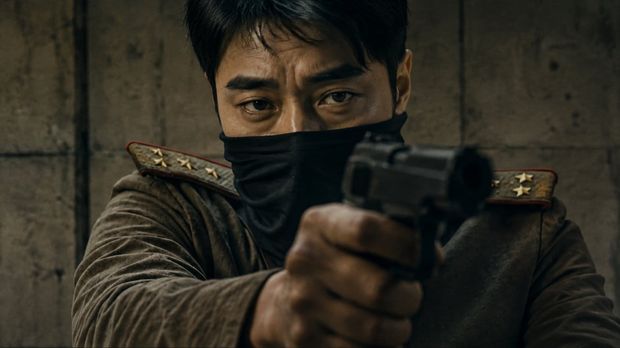
For three minutes in the opening episodes of SBS's summer hit "Agent Kim Reactivated," So Ji-sub carries a full action sequence without ever having stepped on set. Every frame — including the close-ups of his face — was generated by AI.
What Is the AI Scene in Agent Kim Reactivated?
The AI scene in "Agent Kim Reactivated" is a roughly three-minute flashback, split across episodes one and two, that contains zero physically filmed frames of lead actor So Ji-sub and is billed as the first fully AI-generated, story-critical sequence in a Korean live-action drama . The SBS Friday–Saturday series (Korean title 김부장) ran for 10 episodes from June 26 to July 25, 2026 .source
Quick Answer: A three-minute 2008 flashback in SBS's "Agent Kim Reactivated" (episodes 1–2) was generated entirely with AI by Korean studio Morpheus on its AICRON platform, including close-ups of So Ji-sub's face. From over 2,000 generated clips, 289 final cuts aired .
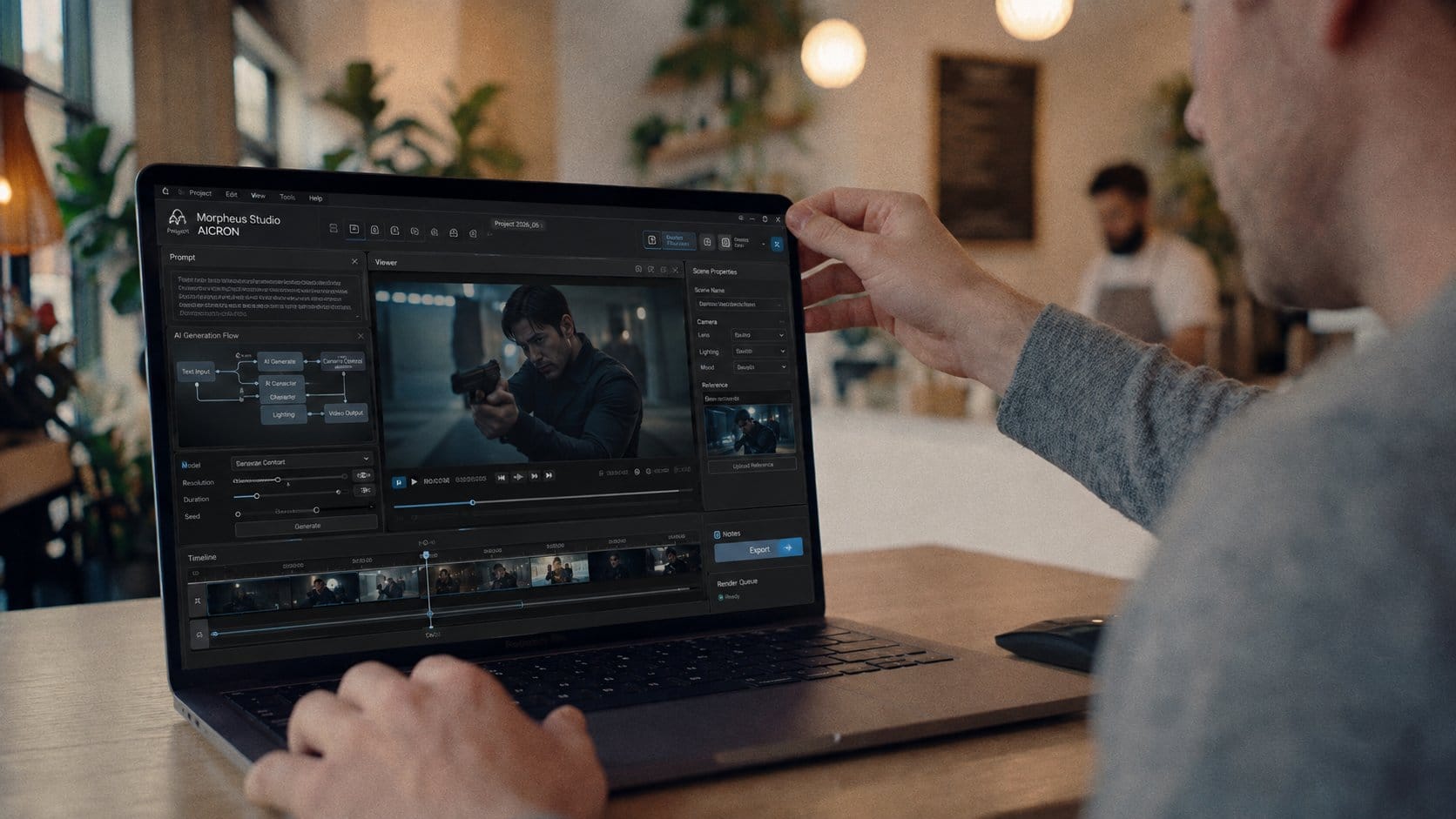
The sequence was built by Morpheus Studio, a Korean company founded by film and drama VFX veterans, using AICRON (에이크론) — its proprietary node-based AI content platform launched in February 2026 that folds more than 150 commercial AI models into a single canvas . The AI-generated close-ups matter because facial identity and expression consistency have been the weakest point of generative video.
Timing amplified the discussion. The show topped Netflix's global non-English TV chart for three consecutive weeks and peaked at 23.1% domestically on Nielsen Korea , after episode two jumped to 15.7% from a 9.5% premiere .
Inside the 2008 Flashback: What Actually Happens On Screen
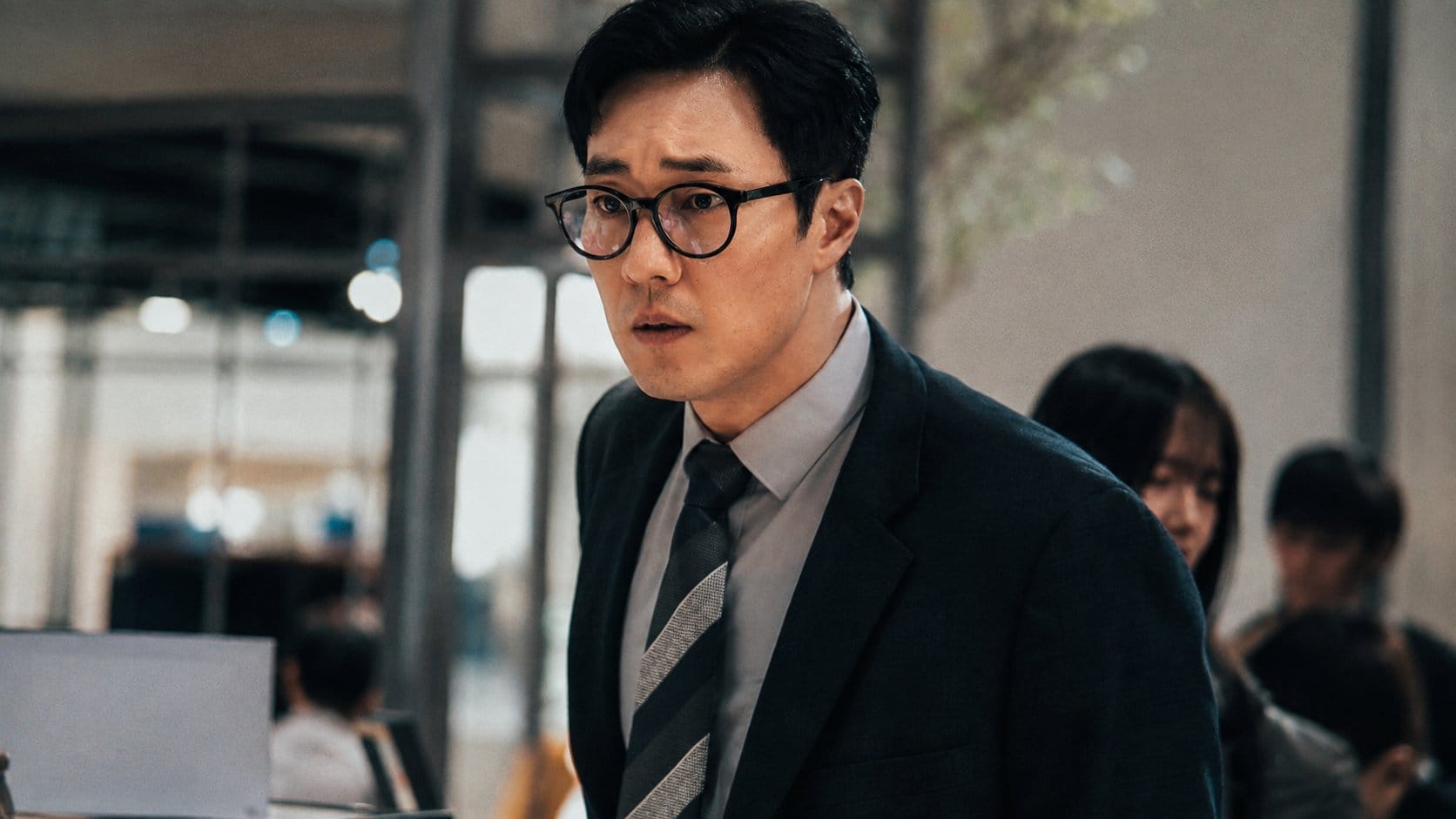
The AI sequence in "Agent Kim Reactivated" is a flashback set in 2008, split across episodes one and two, that shows Kim as a covert operative dispatched into North Korea to eliminate a hardline official . It runs roughly three minutes and carries the backstory that explains why an ordinary-looking salaryman has the reflexes he does. None of it was shot on a set, and So Ji-sub appears in no physically filmed frame within it .
The beats are conventional action-genre construction, which is part of why the sequence works as a test case — viewers know exactly what these shots are supposed to look like. In order, the flashback delivers:
- A building explosion that opens the operation
- A motorcycle-versus-car chase across snow-covered roads and through a tunnel
- A gunfight
- Hand-to-hand combat
- A vehicle rollover
- The car plunging off a bridge into a river, followed by a salvage shot pulling it out
Snow, tunnel lighting, water and metal deformation are each individually difficult for generative video, and stacking them inside one continuous narrative run is what separates this from a single inserted effects shot .
The detail that drew the most attention among production people is how So Ji-sub's face was built. No reference photographs of the actor were used. His likeness in the flashback, including close-ups, was produced through prompting alone . That method sidesteps the usual deepfake pipeline of feeding a target's images into a model, but it also means the resemblance emerged from what the underlying models already contained — a point that sits at the center of the rights debate around the project.
Production also had to work around the models themselves. Commercial generative video systems refuse violent content by default, so an action sequence involving gunfire and injury hit content filters repeatedly. The team prompted around them with substitutions, most memorably requesting blood as "tomato ketchup bursts" to get the visual it needed past the guardrail . Those improvisations are a reminder that the constraint on AI-generated drama footage right now is not only image quality but policy — what the tools will agree to render at all.
How Morpheus Studio Built It With AICRON
The sequence was produced by Morpheus Studio, a Korean company founded by film and drama VFX veterans, on AICRON (에이크론) — its proprietary AI content-creation platform launched in February 2026 . AICRON integrates more than 150 commercial AI models into a single node-based canvas, so a creator moves from text prompt to finished video inside one environment instead of exporting between tools . Morpheus has stated the work was completed "using Korean-developed technology alone" .
Overseeing it was Ryu Jae-hwan, Morpheus vice president and the production's AI supervising director, a VFX supervisor whose credits include the films 1947 Boston, Swing Kids and Flu . His account of the schedule breaks the roughly five-month effort into distinct blocks rather than one continuous render push, with the back half dominated not by generation but by broadcaster and platform sign-off.
| Stage | Duration | Output |
|---|---|---|
| Concept art | About 1 month | ~500 AI concept images (1,000+ images in total) |
| Generation to rough cut | About 2 months | More than 2,000 AI video clips |
| SBS and Netflix review and approval | About 2 further months | 289 final cuts broadcast |
| Reference: 1-minute test sequence | About 1 week | Pipeline validation before full production |
Those figures imply a selection ratio of fewer than one in six: more than 2,000 generated clips were narrowed to 289 cuts that aired, under the 300 mark . The single-minute test alone consumed about a week, which sets a realistic floor for anyone estimating AI sequence timelines from demo reels . One detail cuts against the assumption that likeness work requires a scanned or photographed reference: no reference photographs of So Ji-sub were used, and his on-screen likeness was produced through prompting alone .
Ryu draws the line between this pipeline and the VFX work he spent his career doing in one sentence:
"Unlike conventional VFX, which adds computer-generated imagery to filmed footage, AI goes directly from text to video," — Ryu Jae-hwan, vice president and AI supervising director at Morpheus Studio (source: Korea Times, 2026-07)
That distinction matters practically. Conventional VFX starts with a plate — a filmed frame with fixed camera, lighting and performance that later work must respect. Here there is no plate, so continuity between the 289 surviving cuts had to be re-established through prompting, curation and discard rather than inherited from a shoot. It also explains why review took as long as generation: with no filmed original to compare against, SBS and Netflix were approving a sequence that existed only as the output the team chose to keep.
Where and When to Watch the Scene
The AI sequence sits in the first two episodes of "Agent Kim Reactivated," an SBS Friday–Saturday drama that ran for 10 episodes from June 26 to July 25, 2026 . Viewers outside Korea can find it on Netflix, which handled global distribution and where the series topped Netflix's global non-English TV chart for three consecutive weeks . The flashback is split across episodes one and two rather than presented as a single unbroken block, so watching only the premiere gives you a partial view of the roughly three-minute set piece.
Where to look, in order:
- Episodes 1–2 — the 2008 North Korea flashback, the only fully AI-generated narrative footage in the series.
- SBS TV broadcast run — Friday and Saturday nights, June 26 to July 25, 2026, 10 episodes total .
- Netflix — global streaming, where episode availability is not tied to the original Korean broadcast schedule.
The broadcast numbers give some sense of how many people encountered the sequence live. The premiere drew 9.5% nationwide and episode two rose to 15.7% — reported as the first time since 2021 that a Korean miniseries cleared 15% within two episodes — with the series later peaking at 23.1%, per Nielsen Korea . In other words, the episode carrying the bulk of the AI footage was also the episode where the audience roughly doubled.
One thing viewers should not expect from this particular broadcast is a label. Studio S CEO Hong Sung-chang said at a June 25, 2026 media day that the company plans to apply AI more widely and to disclose its use to viewers through on-screen captions going forward . That commitment points at future productions; if you are watching episodes one and two to identify which frames were generated, you are working without an on-screen marker and relying on the sequence's own visual signature.
The Rights Problem: Whose Face Is This, Really?
The rights question in "Agent Kim Reactivated" is not about So Ji-sub's likeness — he consented as the show's lead — but about every other face the model produced. Morpheus Studio manually ran each generated character face through portal image search to check for accidental resemblance to real people, because a text prompt can reconstruct a living actor whose filmography sits inside the training data . That check was improvised, not mandated by any Korean statute.
Ryu Jae-hwan, Morpheus vice president and AI supervising director on the sequence, described one case where a recognizable Korean actor's face surfaced from a prompt the team had not tied to any real person.
"I felt chilled thinking we might not know which actor's face was generated," — Ryu Jae-hwan, vice president and AI supervising director at Morpheus Studio (source: PD Journal, 2026-07).
The scale of the search problem is worth stating plainly. More than 2,000 AI video clips were generated for the sequence, and 289 final cuts reached broadcast . Every face inside those cuts had to be cleared by eye and by image search, with no registry to query and no automated likeness-matching layer. So Ji-sub's own AI likeness, by contrast, was built without any reference photographs — through prompting alone , which is precisely what makes unintended resemblance hard to rule out anywhere else in the frame.
Korean reaction has run along two tracks. One is consent and compensation: performers' faces, voices and mannerisms become training data without a mechanism for permission or payment. The other is labor displacement across actors, voice actors and crew, sharpened by reporting on China, where AI-made short dramas have reached prime-time slots and background and extra work has reportedly thinned out . A sequence that credibly replaces a three-minute action shoot reads differently to a stunt team than it does to a studio balance sheet.
Media scholar Lee Seong-min of Korea National Open University offered a limiting case. AI's efficiency advantage narrows sharply outside action beats, where fine directorial adjustment — timing a glance, resetting an emotional register between takes — still requires a director working with a performer. On that reading, a fully AI-generated drama belongs closer to animation than to live action as a category, and should be labeled and judged accordingly . That reframing matters for rights as much as for craft: animation has established conventions for voice and likeness licensing that live-action production, confronted with text-to-video, has not yet written.
What Comes Next for AI in K-Drama Production
Studio S is treating the "Agent Kim Reactivated" sequence as a starting point rather than a one-off experiment. At a media day on June 25, 2026 , Studio S CEO Hong Sung-chang said the company would apply AI more widely in future productions and would disclose AI use to viewers through on-screen captions — a labeling commitment that arrives ahead of any Korean broadcast rule requiring it.
"Reducing production costs is certainly one advantage, but the greater significance lies in proving that it can be done," — Hong Sung-chang, CEO of Studio S (source: Korea Times, 2026-07)
Ryu Jae-hwan, Morpheus vice president and AI supervising director on the project, frames the precedent the same way. His argument is that the milestone is not adding a few seconds of generated imagery to filmed plates but completing "an entire story sequence essential to the narrative" with AI, and he expects "many producers will gain courage through this" . The disclosed workflow gives other studios a rough cost and calendar reference: about one month of concept art, roughly two months to a rough cut, then two more months of review with SBS and Netflix, yielding 289 broadcast cuts out of more than 2,000 generated clips .
The international context sets the range of outcomes. Netflix had already aired a generative-AI building-collapse shot in the Argentine series "The Eternaut," but that was a single effects shot rather than a narrative sequence . At the other end sits China, where AI-made short dramas have reached prime-time slots and background and extra work has reportedly dried up . Korean production sits between the two, and which way it moves will be decided less by model quality than by what broadcasters agree to label, license and pay for.
The concrete takeaway for viewers: watch for the on-screen AI caption. Studio S has said it will mark generated footage, and the "Agent Kim Reactivated" flashback — episodes one and two, streaming on Netflix — is the reference point against which the next Korean production to try this will be measured.
Frequently asked questions
Did So Ji-sub film any part of the AI action scene in Agent Kim Reactivated?
No. The roughly three-minute flashback contains no physically filmed footage of So Ji-sub, including its close-ups of his face . Morpheus Studio generated his likeness through prompting alone, without supplying reference photographs of the actor to the models . Identity-consistent close-ups have historically been the weakest point of generative video, which is why this detail drew most of the technical attention . So Ji-sub appears normally as the title character throughout the rest of the series.
What is AICRON, the AI tool used to make the scene?
AICRON (에이크론) is Morpheus Studio's proprietary AI content-creation platform, launched in February 2026 . It integrates more than 150 commercial AI models into a single node-based canvas, so one creator can move from a text prompt to a finished video clip inside one environment rather than exporting between separate tools . Morpheus was founded by film and drama VFX veterans, and Ryu Jae-hwan — vice president and AI supervising director, previously VFX supervisor on "1947 Boston," "Swing Kids" and "Flu" — oversaw the sequence .
Which episodes of Agent Kim Reactivated have the AI sequence?
The AI-generated material is a 2008-set flashback split across episodes one and two, showing Kim's earlier career as a covert operative sent into North Korea . "Agent Kim Reactivated" ran on SBS across 10 episodes from June 26 to July 25, 2026, produced by Studio S and Fantagio, with Netflix handling distribution outside Korea . Viewers outside Korea can watch both episodes on Netflix, where the series topped Netflix's global non-English TV chart for three consecutive weeks .
Will Agent Kim Reactivated label AI-generated scenes on screen?
Studio S CEO Hong Sung-chang said at a media day on June 25, 2026 that the company will apply AI more widely in future productions and will disclose that use to viewers through on-screen captions . He framed the flashback as a proof point rather than a cost exercise, saying that "reducing production costs is certainly one advantage, but the greater significance lies in proving that it can be done" . The commitment applies to what Studio S makes going forward, so labeling practice is worth checking on each new title rather than assumed.
Is this the first time AI has replaced an actor's performance in a Korean drama?
It is described as the first Korean live-action series to broadcast a complete, story-critical sequence generated entirely with AI . Generative AI had appeared in scripted drama before — Netflix used it for a building-collapse shot in the Argentine series "The Eternaut," but that was a single effects shot, not an entire narrative passage carrying a lead character . The distinction matters to the labor debate: replacing seconds of VFX is different from generating a performance, which is the concern raised by actors', voice actors' and crew groups .
Official Sources
Enjoyed this article? Subscribe to get new stories by email whenever they're published.
This article was written using information collected and analyzed by NAMANE's in-house K-pop research AI engine. We use AI technology to bring you faster, broader coverage, and in the process some details may occasionally differ from the latest facts. For important information such as dates, venues, and prices, please double-check with official sources.


