
Gangnam at a Glance: Geography, Population, and Origins
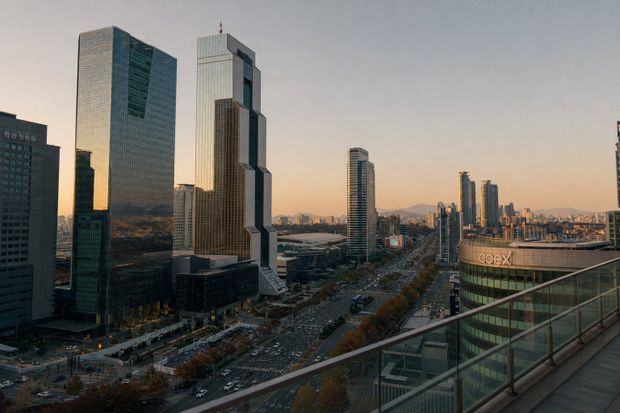
Gangnam-gu is one of Seoul's 25 administrative districts, occupying 39.5 km² on the south bank of the Han River. The name translates directly as "south of the river" (강남, where gang means river and nam means south) — a geographic label that has since become one of the most recognized urban place-names on the planet. According to Wikipedia's profile of Gangnam District, the resident population stood at approximately 556,492 as of July 2025, placing it in Seoul's mid-tier by population rather than among the most densely settled districts. What separates Gangnam from comparable urban districts is the sheer speed of its transformation: formally established as an independent administrative unit in 1975, the area was predominantly undeveloped agricultural land as recently as the early 1970s. Government-directed urbanization investment across the 1970s and 1980s converted riverside farmland and paddy fields into the high-rise financial and residential district that now defines Seoul's skyline south of the Han. Within a single generation, Gangnam moved from farmland to South Korea's wealthiest urban enclave.
Quick Answer: Gangnam is Seoul's wealthiest district — 39.5 km² on the south bank of the Han River, housing HYBE, SM Entertainment, and Korea's largest tech cluster. Apartments run 25–45 million won per square meter, two to three times Seoul's citywide median. The district is globally recognized through PSY's "Gangnam Style" (2012), YouTube's first video ever to reach 1 billion views.
The administrative history of Gangnam is inseparable from South Korea's broader economic story. Before the 1970s, the cultural and commercial center of Seoul was located north of the Han River, in the Gangbuk districts. The southern bank was considered peripheral. The government's decision to relocate major public institutions, construct expressway infrastructure, and subsidize large-scale apartment development on the southern bank triggered a demographic and capital shift of remarkable scale. Wealthy families followed state investment southward, and within two decades the area had become Korea's most exclusive residential address — a transformation with few parallels in postwar urban development globally.
Today, Gangnam-gu anchors what residents and analysts commonly call the "Gangnam Three" — Gangnam-gu, Seocho-gu, and Songpa-gu — three adjacent southern districts that together form Seoul's financial, legal, and entertainment spine. The district's 39.5 km² contain corporate headquarters, media production studios, luxury retail corridors, and one of Asia's most significant convention centers, all layered within practical proximity of one another. That density of function, all built within living memory on formerly agricultural land, remains the defining fact of Gangnam's existence.
K-Pop's Corporate Heart: HYBE, SM Entertainment, and Teheran Boulevard
Gangnam is where K-pop as a global industry is operationally organized. HYBE Corporation — the Seoul-based entertainment company managing BTS, TOMORROW X TOGETHER, and Seventeen — is headquartered in the district, as is SM Entertainment, the label behind EXO, aespa, NCT, and SHINee. Their co-location is not coincidental. According to Gangnam District's documented corporate profile, the area's concentration of entertainment infrastructure, capital markets, media production facilities, and trained creative workforce has made proximity to this corridor a structural requirement for any K-pop label with global ambitions. Decisions about artist training pipelines, comeback schedules, music video production, and international touring logistics are, to a substantial degree, made within a few kilometers of one another in southern Seoul. Gangnam is not merely where K-pop companies happen to be based — it is where the industry's production chain converges into a single operational geography.
Teheran Boulevard (테헤란로), named after Iran's capital as part of a 1977 diplomatic friendship exchange between Seoul and Tehran, runs through the heart of Gangnam and represents the district's technology and finance axis. The boulevard hosts Korean operations for Apple, Google, Oracle, and Qualcomm alongside hundreds of domestic venture capital firms, fintech companies, and corporate law practices. The density of global technology companies per block is rare by any international standard — Teheran-ro is regularly compared in deal flow and corporate concentration to stretches of Silicon Valley's core corridors.
Beyond entertainment and technology, Gangnam serves as a major operating base for South Korea's largest industrial conglomerates. Hyundai Motor Group, Samsung, GS Group, and Lotte Corporation all maintain significant Gangnam presences, giving the district a multi-sector economic weight that extends well beyond any single industry. For K-pop specifically, this broader corporate density matters: entertainment lawyers, advertising agencies, broadcast partners, and platform executives are all reachable within the same district, enabling the rapid iteration cycles that define Korean pop music's release and promotion calendar.
"The infrastructure that supports K-pop — training systems, production facilities, digital platforms, and global distribution — has been built and refined over decades in Seoul, and the geographic concentration that makes it all function is centered in Gangnam," — Bang Si-hyuk, HYBE Chairman, in public remarks on K-pop's industrial development (source: Gangnam District corporate history).
The geographic concentration of labels in Gangnam directly shapes how concert logistics operate. When HYBE or SM Entertainment plan a world tour, the coordination between legal, production, ticketing, and media teams happens locally before the infrastructure disperses to stages in Los Angeles, London, or Tokyo. Seoul's Gangnam functions, in this sense, as the command layer of a global entertainment operation — the place where the tour's structure is finalized before its execution moves internationally. That logistical reality is as central to understanding the district as any individual label's address.
Gangnam Style: How PSY's Song Became a Global Landmark
Released on July 15, 2012, PSY's "Gangnam Style" fundamentally altered the global visibility of both a K-pop artist and a Seoul district. The song became the first YouTube video ever to reach 1 billion views, a milestone documented on December 21, 2012 — just five months after upload. According to the song's detailed chart history on Wikipedia, "Gangnam Style" held the platform's record as the most-viewed video from November 2012 through July 2017, a span of nearly five years. As confirmed by Euronews' retrospective on the billion-view milestone, the achievement represented a structural shift in how YouTube's scale was understood by the global entertainment industry. The song's "horse-dance" choreography produced flash mobs on every inhabited continent, its hook became universally recognizable, and its arrival at #2 on the Billboard Hot 100 marked the highest chart position a South Korean artist had reached to that point. It topped charts in more than 30 countries, including the UK, Australia, Canada, France, Germany, Italy, and Spain.
The song's content was specifically satirical. PSY — Park Jae-sang — wrote "Gangnam Style" to mock the nouveau-riche culture of the district itself: the overpriced coffee, performative luxury fashion, and the horseback-riding leisure class that defined Gangnam's social theater. The "Gangnam Style" persona is a deliberate exaggeration of the district's upwardly mobile pretensions, delivered through deadpan humor and purposely absurdist visuals. International audiences frequently missed the satire but received the energy regardless, and the effect was to make "Gangnam" a globally understood shorthand for a very specific kind of aspirational South Korean wealth display — a meaning that has continued to shape how outsiders read the district more than a decade later.
"Gangnam Style is a force for world peace." — Ban Ki-moon, former UN Secretary-General, in remarks after PSY's performance at the United Nations, reflecting on the song's cross-cultural reach.
The song's institutional footprint extended well beyond streaming records. PSY received the MTV Europe Music Award for Best Video in 2012, broke three Guinness World Records within a year of release, and performed alongside Madonna at Madison Square Garden. US President Barack Obama publicly cited "Gangnam Style" as emblematic of the Korean Wave's global reach. The phrase "Oppan Gangnam Style" was entered into The Yale Book of Quotations as one of 2012's most notable expressions. Members of BTS have publicly credited PSY with "paving the way" for Korean artists on the global stage (source: Wikipedia, Gangnam Style), underscoring the song's role as a commercial proof-of-concept for K-pop's Western crossover.
In 2026, "Gangnam Style" remains the primary cultural anchor through which non-Korean audiences first understand what "Gangnam" signifies. Fourteen years after its release, the gap between how Seoul locals experience the district and how it reads internationally is still largely defined by PSY's video. For K-pop fans arriving in Seoul, the song's filming locations — including the horse-riding club in Apgujeong and the parking garage sequences — remain points of interest on self-guided tours of the district.
Luxury Culture: Apgujeong, Cheongdam, and the Beauty Corridor
Gangnam's commercial identity is built around two adjacent corridors that together represent the highest concentration of luxury retail in South Korea. Apgujeong Rodeo Street (압구정 로데오거리) and Cheongdam Luxury Street (청담 명품거리) host flagship boutiques from virtually every major international fashion label alongside premium domestic brands. The comparison to Paris's Avenue Montaigne or Tokyo's Omotesando is made frequently and with justification — Cheongdam-dong functions as Korea's equivalent of a global luxury district, with street-level storefronts cycling through Chanel, Dior, Cartier, and their counterparts. For K-pop fans, these streets are also relevant outside retail: idol-affiliated cafes, label pop-up stores, and fan event spaces cluster in Cheongdam-dong, particularly in the weeks surrounding major album comebacks. SM Entertainment, YG, and JYP have all activated pop-up spaces in the corridor during high-visibility periods.
📍 서울특별시 강남구 언주로172길 60 2층
🕒 월요일 휴무일 / 화요일–토요일 오전 10:00 ~ 오후 9:00 / 일요일 오전 10:00 ~ 오후 7:00
⭐ 5 (110 리뷰)
📞 02-6956-6234
🔗 Google Maps에서 보기
📍 View Cheongdam Luxury Street on Google Maps
Gangnam's cosmetic medicine industry has developed a parallel international profile. The cluster of clinics in the Apgujeong and Cheongdam area — widely described as the "Gangnam plastic surgery corridor" — draws significant medical tourism from across East and Southeast Asia. Korea's cosmetic surgery sector is highly competitive, tightly regulated, and internationally recognized for technical standards, and the Gangnam concentration is where many of the sector's most prominent clinics operate. This draws a distinct visitor category that overlaps only partially with K-pop tourism but contributes substantially to the district's hospitality and retail economy throughout the year.
Gangnam's cultural character is not confined to contemporary commerce. The district contains institutions that provide historical and artistic counterweight to its reputation for conspicuous consumption. The Seoul Arts Center (예술의전당) houses multiple performance halls, exhibition galleries, and rehearsal facilities, functioning as one of Korea's central venues for classical music, opera, and visual arts.
📍 View Seoul Arts Center on Google Maps
The National Library of Korea, located in the Seocho area of greater Gangnam, is the country's primary national archive and public research library. Most strikingly, Bongeunsa Temple (봉은사) — founded in 794 CE — sits directly adjacent to the COEX complex in Samseong-dong, its traditional architecture and pine-shaded grounds occupying land immediately alongside corporate towers that did not exist fifty years ago. According to the district's historical record, Bongeunsa's 1,200-year presence makes it one of Seoul's oldest surviving religious sites — a fact that sharpens the contrast with Gangnam's rapid modern development rather than softening it.
📍 View Bongeunsa Temple on Google Maps
Real Estate: Seoul's Most Expensive Market in 2026
Gangnam's property market in 2026 is defined by a price concentration with few global parallels relative to a city's total footprint. The three Gangnam sub-districts — Gangnam-gu, Seocho-gu, and Songpa-gu — collectively hold 744.7 trillion won ($548.7 billion USD) in total apartment value, representing approximately 43% of all Seoul apartment value against a city total of 1,732.5 trillion won, according to Korea Herald's June 2025 market analysis. This is the highest share recorded since January 2000. Those three districts house roughly 1.6 million residents — approximately 17% of Seoul's 9.3 million total population. The divergence between population share (17%) and property value share (43%) captures the market's structural character: Gangnam is not merely expensive, it is disproportionate to the rest of the city in a way that has compounded progressively since the 1980s.
| Metric | Gangnam Sub-districts (Gangnam-gu / Seocho-gu / Songpa-gu) | Seoul Citywide |
|---|---|---|
| Total apartment value | ₩744.7 trillion ($548.7B USD) | ₩1,732.5 trillion (~$1.28T USD) |
| Share of Seoul apartment value | 43% | 100% |
| YoY appreciation (June 2024–June 2025) | 17.7% | 13.1% |
| Typical apartment price range | ₩2.8B–₩8B ($1.9M–$5.5M USD) | est. ₩500M–₩2B ($360K–$1.5M USD) |
| Per-m² price | ₩25M–₩45M ($17K–$31K) | ~₩16M (~$11K) |
| Share of Seoul population | ~17% (~1.6M residents) | 100% (~9.3M residents) |
Year-over-year, Gangnam apartments appreciated 17.7% between June 2024 and June 2025, outpacing Seoul's citywide average of 13.1%, as reported by Korea Herald. Within Gangnam, Apgujeong-dong and Cheongdam-dong represent the market's upper tier — prime units in those neighborhoods reach 30–55 million won per square meter. Individual apartment transactions in these neighborhoods are measured in figures that place them in global conversation with central London or Manhattan pricing rather than with other Asian city averages.
"The Gangnam market is driving a rising domino effect across Seoul — as prices consolidate at record levels south of the river, adjacent northern districts begin to re-price in response," according to property analysts cited in Bamboo Routes' Seoul housing analysis for 2026.
Supply dynamics are constrained by geography and zoning. Gangnam is a mature urban district with negligible greenfield development remaining; price growth is driven by existing housing stock changing hands at escalating valuations rather than new supply entering the market. The 2026 forecast — that Gangnam's appreciation will spread northward as a "rising domino effect" into Gangbuk and greater metropolitan Seoul — reflects the wider Seoul market's sensitivity to Gangnam pricing signals. When the district's values shift, they function as a directional benchmark for the rest of the city. As noted in Capstone72's Seoul real estate analysis, the structural forces sustaining Gangnam's premium remain intact through 2026 with no clear reversal mechanism in sight.
COEX, Samseong-dong, and Gangnam's Events Scene
Samseong-dong, in the northeastern portion of Gangnam-gu, houses one of Asia's most consequential mixed-use entertainment and convention complexes. Starfield COEX Mall — recognized as Asia's largest underground shopping mall — spans multiple connected levels beneath the Samseong-dong precinct and links directly to the COEX Convention and Exhibition Center, making the complex both a year-round consumer destination and a major international MICE venue. With over 300 shops, multiple food halls, a cinema multiplex, an aquarium, and a dedicated library, Starfield COEX Mall operates at a scale that places it in a separate category from standard urban retail centers, according to MICE Travel Advisor's 2026 Seoul coverage. For K-pop fans specifically, the complex has dedicated infrastructure: the SM Town Museum and SM Entertainment's official merchandise store are both physically located inside COEX, making it one of the few places globally where visitors can walk into a purpose-built K-pop cultural institution as part of a larger retail and dining day.
📍 서울특별시 강남구 영동대로
⭐ 4.5 (74 리뷰)
🔗 Google Maps에서 보기
📍 View SM Town at COEX on Google Maps
| Venue / Event | Category | Details / Timing |
|---|---|---|
| Starfield COEX Mall | Shopping & Dining (300+ stores) | Year-round; directly connected to COEX Convention Center and Samseong Station |
| COEX Convention & Exhibition Center | MICE / International Conferences | Year-round; one of Asia's largest convention venues by floor area |
| SM Town Museum | K-pop Fan Destination | Year-round inside COEX; covers SM Entertainment's artist and label history |
| SM Official Merchandise Store | K-pop Retail | Year-round inside COEX; official albums, photobooks, and merchandise |
| Seoul International Travel Fair (SITF) 2026 | International Travel Exhibition | June 4–7, 2026 at COEX Convention Center |
The Seoul International Travel Fair (SITF) is scheduled at COEX from June 4 to June 7, 2026, reinforcing Samseong-dong's position as Asia's leading events address. As reported by MICE Travel Advisor, the fair draws tourism boards, hospitality brands, and international travel media from across the Asia-Pacific region. For Gangnam's visitor economy, events like SITF compound the district's overall draw: business travelers arriving for the convention center's programming move through the same retail, dining, and fan-destination infrastructure that K-pop tourists navigate throughout the year.
COEX also functions as a year-round platform for K-pop fan events that fall outside the major concert calendar. Label-organized showcase screenings, fan signing event queuing zones, pop-up product launches, and limited merchandise releases have all been hosted inside the complex. The combination of SM Town Museum, the official merchandise store, and the connected convention infrastructure makes COEX the most practical single first stop for international K-pop fans arriving in Seoul — a place to orient before heading to specific concerts or venue-based events elsewhere in the city.
Visiting Gangnam: Practical Notes for K-Pop Fans
Gangnam's subway connections give visitors direct, efficient access to all primary fan destinations within the district and to major concert venues beyond it. Three stations form the practical navigation axis for K-pop-focused visits: Gangnam Station (Line 2), which deposits visitors at the commercial core of the district near the Teheran-ro tech corridor; Apgujeong Rodeo Station (Bundang Line), the access point for the luxury retail streets and fan-oriented cafes of Apgujeong and Cheongdam; and Samseong Station (Line 2), which sits directly beneath Starfield COEX Mall and provides the most direct route to SM Town Museum and the SM merchandise store. According to Visit Gangnam's official English guide, the SM Town complex inside COEX is walkable from Samseong Station's underground concourse in under five minutes, with no street-level crossing required in most weather conditions.
SM Town at COEX and HYBE Insight are separate trips. HYBE Insight — HYBE's fan museum and interactive exhibition space — is located in Yongsan, accessible from Hannam Station on the Bundang Line or by taxi from anywhere in Gangnam in approximately 25–35 minutes depending on traffic. Fans planning a day that covers both SM-affiliated and HYBE-affiliated destinations should build in transit time; covering both in a single day is feasible but requires early departure and a defined routing plan.
📍 서울특별시 강남구 영동대로 513
🕒 매일 오전 11:00 ~ 오후 8:00
⭐ 5 (340 리뷰)
🔗 Google Maps에서 보기
The Cheongdam and Apgujeong fan cafe landscape changes frequently. Idol-affiliated spaces — operated by or associated with individual artists' fan communities — open for limited windows, often timed to a birthday, comeback, or tour announcement. Label-run pop-ups follow the same seasonal logic. No static directory remains accurate for long; checking label social accounts, fan community platforms, and Korean entertainment news aggregators in the week before a visit is the practical way to confirm which spaces are currently active.
KSPO Dome (올림픽체육관) at Olympic Park in Songpa-gu is one of Seoul's primary indoor concert venues, regularly used for solo K-pop tours. It is approximately 20 minutes from Gangnam by subway on Line 5 to Olympic Park Station. Jamsil Arena and Jamsil Indoor Stadium, also in Songpa-gu, sit within similar transit distance. For fans whose Seoul visit centers on a specific concert, staying in Gangnam places all three venues within practical reach and also keeps the district's fan-destination infrastructure — COEX, Cheongdam, Apgujeong — on the same day's itinerary.
📍 View KSPO Dome (Olympic Park) on Google Maps
Frequently Asked Questions
Why is Gangnam famous worldwide?
Gangnam is globally recognized for two reasons that reinforce each other. First, it is Seoul's wealthiest district — the administrative home of HYBE, SM Entertainment, and the Korean operations of Apple, Google, and major chaebols — with property values among the highest in Asia. Second, PSY's 2012 viral hit "Gangnam Style" made the district's name universally recognizable: the song became YouTube's first video to reach 1 billion views (December 21, 2012), topped charts in more than 30 countries, and introduced global audiences to Gangnam's identity as a symbol of aspirational South Korean wealth. The song's satire of the district's nouveau-riche culture — overpriced coffee, luxury fashion, performative leisure — made that identity legible internationally in a way that decades of economic reporting had not.
Which K-pop companies are headquartered in Gangnam?
SM Entertainment, the label behind EXO, aespa, NCT, and SHINee, is headquartered in the Samseong-dong area of Gangnam-gu. HYBE Corporation, which manages BTS, TOMORROW X TOGETHER, and Seventeen, operates its primary infrastructure in the broader Gangnam–Yongsan corridor. Multiple mid-sized agencies, including subsidiaries within JYP Entertainment's corporate network and numerous independent labels, also cluster in the Gangnam–Seocho corridor. The geographic density of K-pop labels, talent training facilities, and production infrastructure in this southern Seoul corridor makes Gangnam the industry's de facto operational hub — the place where artist pipelines, comeback scheduling, and global touring logistics are coordinated before deployment internationally.
How expensive are apartments in Gangnam in 2026?
As of 2026, individual apartments in Gangnam range from approximately 2.8 billion to 8 billion won ($1.9M–$5.5M USD), with per-square-meter pricing between 25 and 45 million won ($17,000–$31,000) — two to three times Seoul's citywide median of approximately 16 million won per square meter. The three Gangnam sub-districts (Gangnam-gu, Seocho-gu, Songpa-gu) collectively hold 744.7 trillion won in apartment value, representing 43% of all Seoul apartment value despite housing only about 17% of the city's population, according to Korea Herald. Year-over-year appreciation ran at 17.7% between June 2024 and June 2025, outpacing Seoul's citywide average of 13.1%. Prime neighborhoods — Apgujeong-dong and Cheongdam-dong — sit at the upper tier of these ranges.
What is COEX and why do K-pop fans go there?
COEX is a large-scale mixed-use complex in Samseong-dong, Gangnam, anchored by Starfield COEX Mall — recognized as Asia's largest underground shopping mall — and the COEX Convention and Exhibition Center. For K-pop fans, the specific draw is the SM Town Museum, a dedicated cultural institution covering SM Entertainment's artist and label history, and the official SM merchandise store, both located inside the mall. Year-round fan events, showcase screenings, and label pop-up activations also take place within the complex. Samseong Station (Line 2) provides direct underground access to the mall, making COEX one of Seoul's most straightforward fan destinations to reach without surface-level navigation.
Is Gangnam the right base for attending concerts in Seoul?
Gangnam is a practical base for concert-going in Seoul. KSPO Dome at Olympic Park (Songpa-gu) is approximately 20 minutes by subway, and Jamsil Arena and Jamsil Indoor Stadium are within similar transit distance. For fans who also want to visit label-adjacent destinations — SM Town at COEX, Cheongdam fan cafes, Apgujeong pop-ups — Gangnam keeps those within the same daily itinerary. HYBE Insight in Yongsan requires a separate 30–40 minute trip, which is workable as a day excursion. Accommodation options in Gangnam span mid-range business hotels near Gangnam Station to premium properties in the Cheongdam-Apgujeong corridor, covering a wide range of travel budgets while keeping major fan destinations on foot or a short ride away.
Gangnam in 2026: A District Still Defining Korean Modernity
Gangnam in 2026 is neither the speculative development project it was in 1975 nor a static monument to past economic success. The district's real estate market continues to set records and actively influences pricing trajectories across greater Seoul. Its K-pop institutional core — anchored by HYBE and SM Entertainment and supported by the full depth of Gangnam's legal, financial, and media infrastructure — feeds a global entertainment industry reaching hundreds of millions of fans across six continents. The COEX complex draws international business travel and K-pop fan tourism simultaneously, often in the same physical corridor. And Bongeunsa Temple, founded in 794 CE, continues to receive visitors in the shadow of glass towers that did not exist two generations ago.
For K-pop fans planning a Seoul visit, Gangnam represents not just a travel destination but the operational center of the music they follow. The labels are here. The fan infrastructure — from SM Town Museum to Cheongdam's rotating pop-ups — is here. The concert venues are within transit range. The cultural context that explains how K-pop became a global industry, from the deliberate corporate geography of Teheran Boulevard to the satirical legacy of PSY's 2012 song, is embedded in the district's built environment. Understanding Gangnam means understanding why K-pop functions as it does: as an industry constructed in one of the world's most purposefully developed urban districts, and distributed from there across the rest of the world.
The 2026 "rising domino effect" forecast — in which Gangnam's price appreciation spreads northward across the Han River — is a reminder that the district's influence on Seoul has never been purely cultural. The economic logic that assembled HYBE's offices, SM's training studios, PSY's satirical lyric, and Bongeunsa's ancient courtyard within the same district continues to compound, one cycle at a time. According to Bamboo Routes' 2026 Seoul housing analysis, the structural forces sustaining Gangnam's position at the top of Seoul's market show no sign of reversing in the near term.
Last updated: 2026-05-11. This article draws on research current to May 2026, including Korea Herald real estate data (June 2025 base period), Wikipedia's Gangnam District and Gangnam Style entries, Euronews' retrospective on the 1 billion-view milestone, MICE Travel Advisor's SITF 2026 coverage, and Seoul housing analysis from Bamboo Routes and Capstone72.


