
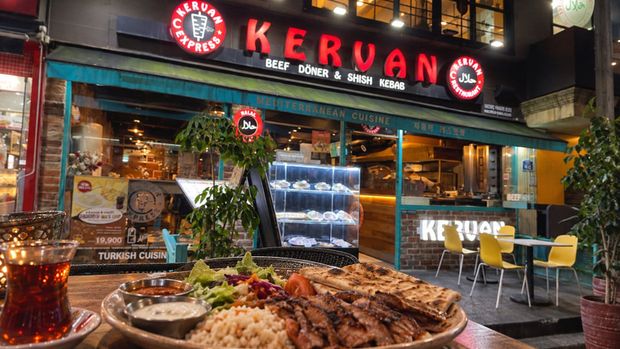
Seoul's halal dining map is smaller than most trip-planning blogs suggest. Strip away the "Muslim-friendly" label and count only restaurants audited by the Korea Muslim Federation, and the citywide total sits in single digits.
How Many Halal Restaurants Does Seoul Actually Have?
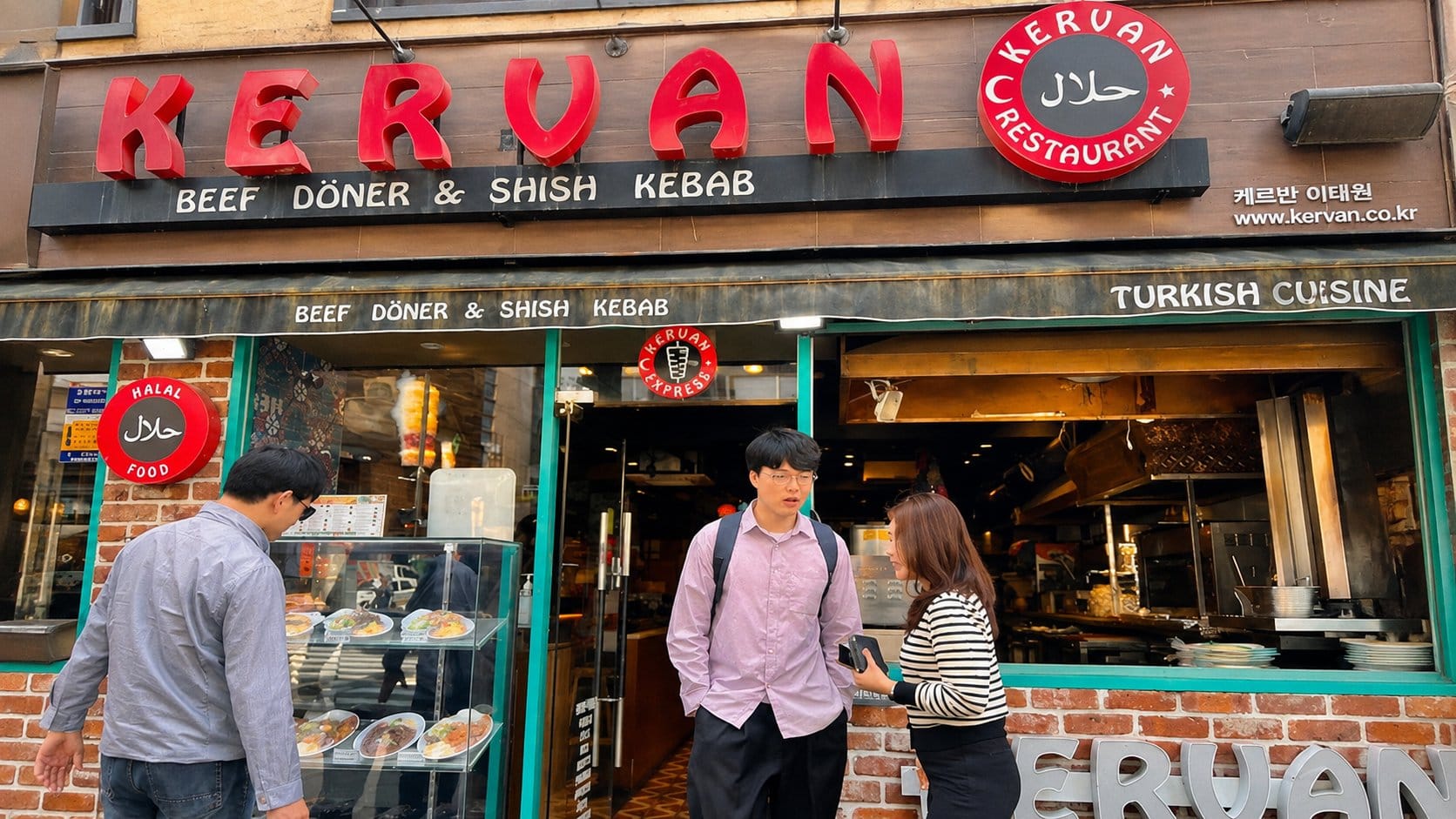
Seoul has nine KMF-certified restaurants, according to the official Muslim visitor guide published by Visit Seoul, the Seoul Tourism Organization's travel portal . The named venues are Pasha, Kervan (Itaewon and COEX branches), Kervan Express GFC, Mr. Kebab, Istanbul Delight, Makan, Eid, Salam and Jipbab Kimseonseang . That is the certified pool — everything else in the city sits in a looser category.
Quick Answer: Seoul has nine restaurants certified by the Korea Muslim Federation, per Visit Seoul's official Muslim visitor guide: Pasha, Kervan (Itaewon, COEX), Kervan Express GFC, Mr. Kebab, Istanbul Delight, Makan, Eid, Salam and Jipbab Kimseonseang. Hundreds more carry weaker "Muslim-friendly" or "pork-free" labels, which are not the same thing.
The gap between those labels is defined by the Korea Tourism Organization, which runs the country's only government-backed classification for Muslim dining on its Muslim-friendly travel portal. It uses four tiers :
- Halal Certified — audited by an accredited body such as KMF; all food on the menu is halal.
- Self Certified — the Muslim owner attests that all food meets halal standards, with no third-party audit.
- Muslim Friendly — some halal dishes are offered, and alcohol may still be sold.
- Pork Free — no halal menu at all, but no pork used; alcohol may be sold.
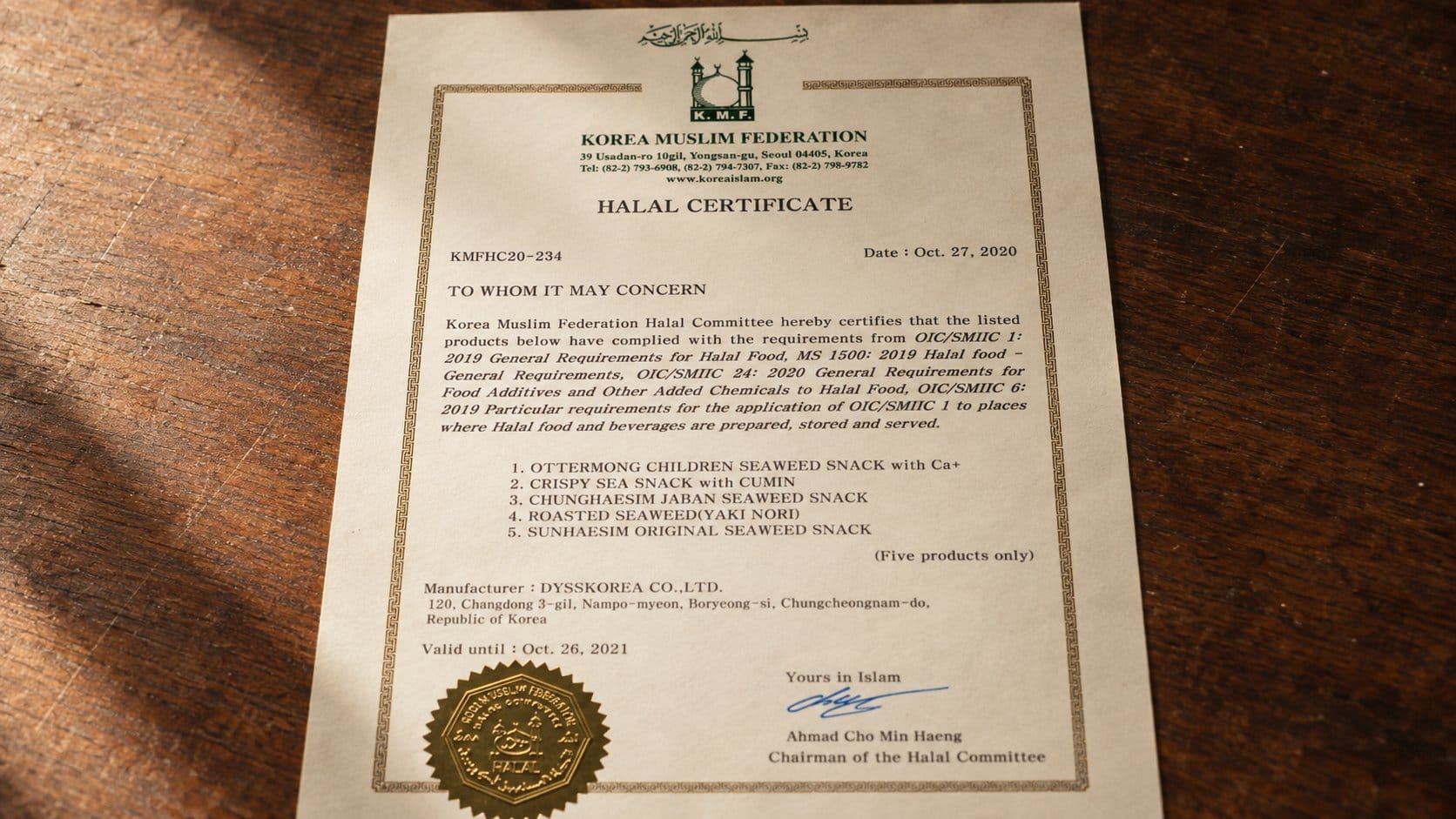
Only the top tier means every ingredient was checked by an outside auditor; the two tiers below it allow alcohol to still be sold on the premises even where pork is restricted or absent . KMF, the certifying body here, is the halal arm of the Korea Muslim Federation (한국이슬람교), registered in 1967 , and its halal committee holds mutual-recognition arrangements with agencies including Malaysia's JAKIM, Indonesia's BPJPH and Singapore's MUIS .
Nationally the picture is just as tight. An encyclopedic profile of the federation put the fully halal-certified count at just 14 restaurants nationwide as of January 2018 — a figure that shows how small the certified pool has historically been next to KTO's much larger self-certified, Muslim Friendly and Pork Free listings, none of which require an outside audit . Full KMF certification means an audited kitchen with no pork or alcohol anywhere on site, a bar most restaurants serving mostly domestic diners have little commercial reason to clear, which likely explains part of why the certified pool stays small in a country where pork and alcohol are dietary staples. Treat the 2018 count as directionally illustrative rather than a live official tally — no agency publishes an annually updated national number.
Demand moved in the opposite direction over the same stretch. The most recent year with a confirmed public figure, 2023, saw Muslim tourist arrivals to Korea reach about 985,000, roughly a third higher than the year before . A certified dining pool that has barely grown is absorbing a fast-rising share of that traffic, a likely reason arriving in Seoul without a shortlist tends to end in the same two or three Itaewon kebab houses. It also means static lists age quickly: Visit Seoul's own restaurant guide already marks Makan and Ilsik Dongkyung as closed . Check current status before you travel, and note the tier — not just the badge.
The Nine KMF-Certified Restaurants: Names, Locations, Hours
The nine restaurants Visit Seoul lists as KMF-certified are Pasha, Kervan (Itaewon and COEX branches), Kervan Express GFC, Mr. Kebab, Istanbul Delight, Makan, Eid, Salam and Jipbab Kimseonseang . Certification here means an accredited agency — in practice the Korea Muslim Federation — has audited the kitchen, so all food served is halal, as opposed to the self-certified, Muslim-friendly and pork-free tiers below it . Turkish and Middle Eastern kitchens dominate the list; Korean-menu options are the exception, not the rule.
KMF is worth understanding before you read a logo on a window. The Korea Muslim Federation (한국이슬람교) was registered in 1967 , and its halal committee holds mutual-recognition arrangements with agencies including Malaysia's JAKIM, Indonesia's BPJPH and Singapore's MUIS . That recognition is why KMF-marked Korean products can be exported to those markets, and it is a reasonable proxy for audit rigour if you already trust one of those three bodies at home.
| Restaurant | District / area | Cuisine | Signature dish |
|---|---|---|---|
| Kervan (COEX) | Gangnam-gu | Turkish | Shish kebab |
| Kervan (Itaewon) | Yongsan-gu | Turkish | Pide |
| Kervan Express GFC | Jongno-gu (Gwanghwamun) | Turkish, quick-service | Kebab wrap |
| Pasha | Yongsan-gu (Itaewon) | Turkish | Grilled lamb |
| Mr. Kebab | Yongsan-gu (Itaewon) | Turkish / kebab counter | Doner kebab |
| Istanbul Delight | Yongsan-gu (Itaewon) | Turkish | Turkish coffee and baklava |
| Eid | Yongsan-gu (Itaewon) | Middle Eastern / halal Korean | Halal bibimbap-style sets |
| Salam | Yongsan-gu (Itaewon) | Middle Eastern | Curry and rice plates |
| Makan | Yongsan-gu (Itaewon) | Malaysian | Nasi lemak |
| Jipbab Kimseonseang | Seoul (halal Korean home cooking) | Korean | Home-style Korean set meal |
Note the count: the table lists ten rows because Kervan's two branches — Itaewon and COEX — appear separately, though Visit Seoul counts Kervan once in its tally of nine certified restaurants.
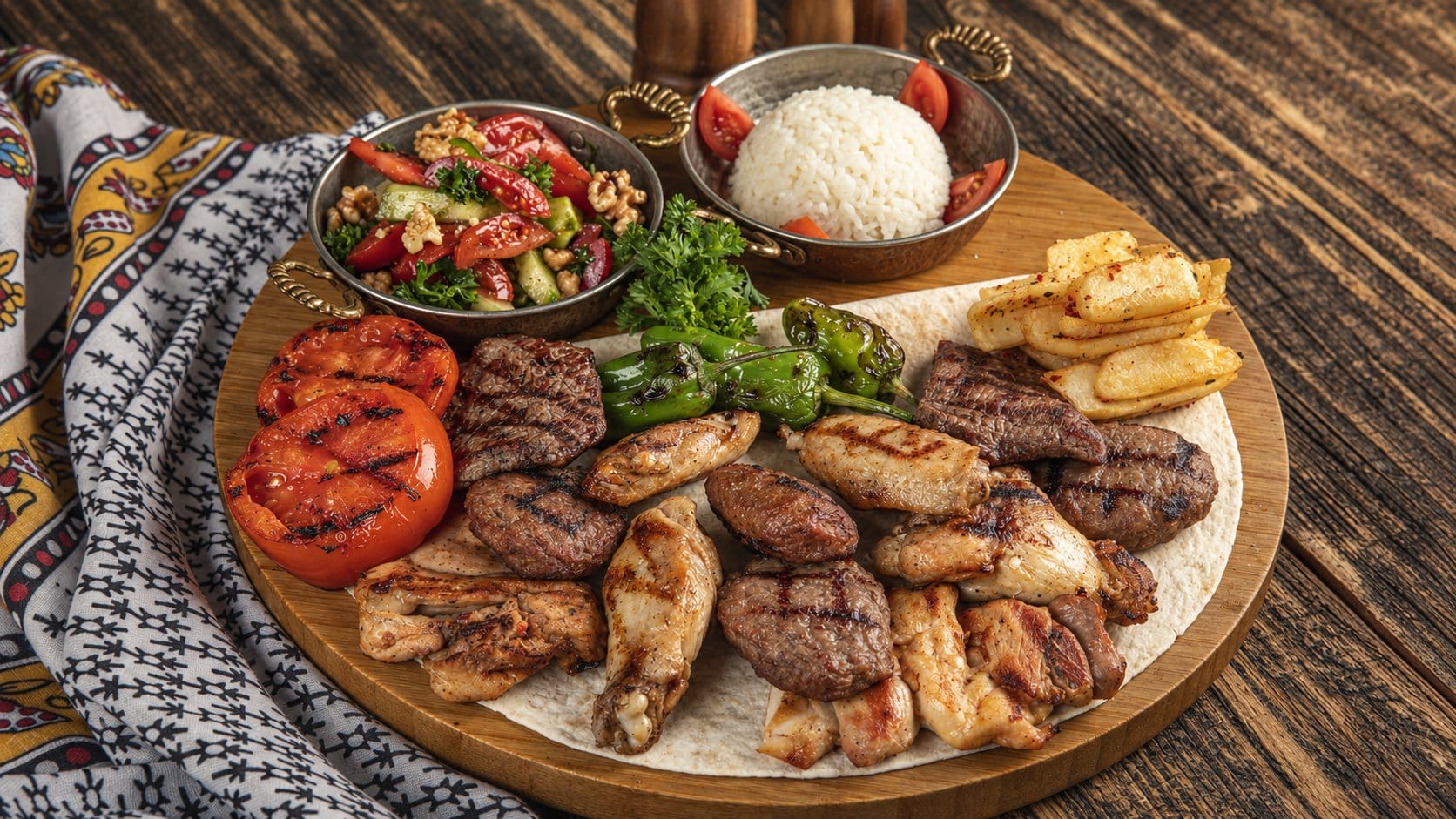
The most travel-friendly of the nine is Kervan at COEX Mall, the first Turkish restaurant in Korea to win halal certification. It sits at H105, B1 Coex Mall, 524 Bongeunsa-ro, Gangnam-gu, and opens weekdays 11:00–15:00 and 16:30–22:00, weekends 11:00–22:00, with weekday lunch sets served during the 11:00–15:00 window . The menu runs to shish kebab, pide and Turkish coffee, and the location matters as much as the food: COEX's prayer room sits by Conference Room E on the exhibition hall's third floor, so a meal and a prayer stop fit into one building (video: VisitSeoul TV).
📋 주소 · 영업시간 · 대표메뉴: H105, B1 Coex Mall, 524 Bongeunsa-ro, Gangnam-gu · +82-2-556-4767 · weekdays 11:00–15:00, 16:30–22:00 / weekends 11:00–22:00 · shish kebab, pide, Turkish coffee
💡 Go on a weekday between 11:00 and 15:00 for the lunch sets, and note the mid-afternoon 15:00–16:30 closure — arriving at 15:30 without checking is the most common way to miss this kitchen.
Treat the list of nine as a snapshot rather than a fixed roster. Visit Seoul's own restaurant guide already shows Makan as closed at its stated address, along with Ilsik Dongkyung . No agency actively re-audits the wider Muslim-friendly pool once a listing is published, so entries drift out of date without anyone correcting them. Phone the restaurant, or check its map listing for recent reviews, the week before you go.
Beyond Certification: Temple Food, Vegan Korean and Halal-Friendly Chains
Outside the certified nine, the practical options for Muslim travellers in Seoul fall into three groups: Buddhist temple cuisine, vegan Korean kitchens, and halal-friendly chains that use certified meat. Temple food is the closest thing to guaranteed-safe Korean food, because it contains no meat, seafood or animal products at all . None of these venues carry a KMF certificate, so read each one's terms before you order.
Balwoo Gongyang | 사찰음식
Balwoo Gongyang is a Michelin-recognised Buddhist temple-cuisine restaurant in Jongno-gu serving seasonal set courses built entirely from plants. Beyond excluding meat, seafood and animal products, it also leaves out the five pungent vegetables — green onion, garlic, chives, leek and wild chive — under monastic dietary rules . For travellers who want a Korean meal rather than a Turkish or Malaysian one, it is the standard fallback, and the courses read as genuine fine dining rather than a substitution menu.
📋 56 Ujeongguk-ro, Jongno-gu · +82-2-733-2081 · Mon–Sat 11:30–21:00, break 15:00–18:00, closed Sundays · seasonal temple-food courses
💡 The 15:00–18:00 break splits the day into two seatings — book the 11:30 lunch slot if you are pairing the meal with Jogyesa or Insadong on the same afternoon.
📍 71 Gyeonji-dong, Jongno District, Seoul
🕒 Monday–Saturday 11:30 AM – 3:00 PM, 6:00 – 9:30 PM / Sunday Closed
⭐ 4.2 (458 reviews)
📞 02-733-2081
🔗 View on Google Maps
Maji (마지) | 사찰음식
Maji is a temple-food restaurant near Gyeongbokgung set in a converted hanok, complete with a traditional jangdokdae of fermentation crocks in the yard (video: VisitSeoul TV). Signature plates include burdock japchae, shiitake tangsuyuk and lotus-leaf rice — recognisable Korean dishes rebuilt without meat . It is a useful stop between palace visits, and the hanok setting does a lot of work for a table that also needs to be plant-based.
📋 Near Gyeongbokgung, Jongno-gu · hanok setting with jangdokdae · burdock japchae, shiitake tangsuyuk, lotus-leaf rice
💡 Advance booking through its Google Maps listing is recommended rather than walking in (video: VisitSeoul TV).
📍 19 Jahamun-ro 5-gil, Jongno District, Seoul
🕒 Monday–Tuesday Closed / Wednesday–Saturday 11:30 AM – 3:00 PM, 5:30 – 8:00 PM / Sunday 12:00 – 3:00 PM
⭐ 4.4 (301 reviews)
📞 02-536-5228
🔗 View on Google Maps
Kampungku (캄풍쿠) | 할랄 맛집
Kampungku is a halal restaurant cooking Malaysian and Korean dishes with halal meat, which makes it one of the few places to eat bulgogi rice bowls, tteokbokki, gimbap, ban-gyetang and Korean corn dogs alongside nasi goreng and nasi lemak . Its third-floor prayer room is open to non-diners, so it doubles as prayer infrastructure in a city where such rooms are concentrated at COEX, Lotte World and K-Style Hub (video: VisitSeoul TV).
📋 Malaysian–Korean halal menu · nasi lemak, nasi goreng, bulgogi rice bowl, tteokbokki, gimbap · 3F prayer room open to non-diners
💡 Order the Korean side of the menu here — it is the realistic route to bulgogi and tteokbokki flavours with halal meat.
📍 16-4 Namsan-dong 2(i)-ga, Jung District, Seoul
🕒 Daily 11:00 AM – 9:00 PM
⭐ 4.7 (3,831 reviews)
📞 02-310-9249
🔗 View on Google Maps
The Halal Guys Seoul · Appa-ui Yangsikdang | 할랄 체인·양식
The New York chain The Halal Guys runs Korean outposts in Itaewon and Gangnam, serving platter-or-sandwich formats in chicken, gyro, combo or falafel, with hummus and the off-menu "secret fries" . Appa-ui Yangsikdang (아빠의 양식당) near Hapjeong Station grills halal-certified lamb over binchotan charcoal, with counter seating on floor 1 and private group rooms on floor 2 — the rare halal option that is neither Turkish nor Southeast Asian . For strictly plant-based meals, Osegyehyang by Ssamzigil in Insadong builds dubu-jang and gondeure bibimbap from soy "meat", while Vegan Kitchen near Myeongdong serves plant-based donkatsu and bulgogi .
📋 The Halal Guys — Itaewon and Gangnam branches · Appa-ui Yangsikdang — near Hapjeong Station, 1F counter / 2F private rooms, binchotan-grilled halal lamb
💡 At vegan venues, ask whether alcohol is used in seasoning — Korea Tourism Organization's own tier definitions note that Muslim-friendly and pork-free venues may still serve alcohol on the premises, since neither tier requires a third-party halal audit .
📍 26 Yanghwa-ro 16-gil, Mapo-gu, Seoul
🕒 Daily 11:00 AM – 10:00 PM
⭐ 4.5 (585 reviews)
📞 02-332-1802
🔗 View on Google Maps
Where the Certified Restaurants Cluster, and What They Cost
Seoul's halal and halal-friendly dining sits in four geographic pockets rather than spreading evenly across the city. Itaewon, around Seoul Central Masjid, holds the densest concentration — Pasha, Kervan's Itaewon branch, Mr. Kebab, Istanbul Delight and The Halal Guys all sit within walking distance of the mosque . The second cluster is COEX in Gangnam, where Kervan operates inside the mall at H105, B1, 524 Bongeunsa-ro . Insadong and Jongno form a third pocket built on temple cuisine and vegan Korean cooking, and a smaller fourth pocket runs from Hapjeong toward Hongdae .
Price bands follow the cuisine rather than the certification tier. Turkish and Malaysian kitchens — kebab plates, pide, nasi goreng, nasi lemak, rice bowls — land in the mid-range for Seoul dining, comparable to a standard sit-down Korean meal and well above the street-snack tier where Namdaemun Market's vegetable hotteok sells at ₩2,000 a piece (video: Angelica & Aileen Wanders). Temple-cuisine set courses sit at the premium end: Balwoo Gongyang is Michelin-recognised and serves seasonal multi-course menus, which prices it as an occasion meal rather than a daily option . Kervan's weekday lunch sets, served 11:00–15:00, are the cheaper way into a certified kitchen .
Cost is not the only variable that changes by cluster. The Korea Tourism Organization's classification distinguishes four tiers, and in Tier 3 (Muslim Friendly) and Tier 4 (Pork Free) venues alcohol may still be sold on the premises, since neither tier requires an outside halal audit the way Tier 1 does . A Turkish or Middle Eastern name on the door is not a substitute for checking which tier a venue actually holds.
Prayer facilities map onto the same clusters, which is the practical reason to plan meals by district:
- COEX (Gangnam) — gender-segregated prayer room, open 05:00–22:00, with ablution room, mats and a qibla compass; the room sits near Conference Room E on the exhibition hall's third floor, a short walk from Kervan .
- Lotte World — prayer room open 09:30–22:00 .
- K-Style Hub — gender-segregated, 09:00–22:00, close to the Jongno and Insadong dining pocket .
- Al-Falah Mosque — 5 Yeongsin-ro 19-gil, Yeongdeungpo-gu, the western alternative to Seoul Central Masjid .
- Incheon International Airport — prayer room open 24 hours, useful for late arrivals and early departures .
Kampungku adds one more option worth noting when routing a day: its third-floor prayer room is open to non-diners, so it functions as a stop even if you are not eating there (video: VisitSeoul TV). Seoul National University Hospital, Asan Medical Center and Seoul St. Mary's also maintain prayer rooms, which matters if your itinerary runs outside the four dining clusters .
Halal Convenience Store Picks When a Restaurant Isn't Nearby
Korean convenience stores are the practical fallback when the certified restaurants are an hour away by subway, and a small number of products carry halal certification outright. A 24-hour test of convenience-store-only eating found Gold Tingle stocked as a halal-certified Korean product, and Hello Veggie, a meatless ramyeon, sold as a workable option for Muslim travellers (video: YuNoor🇰🇷). Both are shelf items, not menu items, so availability varies by branch rather than by chain.
Around those two anchors, a meal assembles from priced staples that avoid meat entirely. Creatrip's convenience store price survey lists :
- Gamdongran seasoned soft-boiled eggs — ₩1,900 for two, the default ramen side
- Tuna-mayo samgak gimbap — ₩1,000, the cheapest filling item on the shelf
- Almond Pepero and Peanut Pepero — ₩1,500 each, both halal-certified
- Petitzel water jelly — ₩1,900, in grape, apple, grapefruit and peach
- Binggrae Banana Milk ₩1,300 · Chilsung Cider from ₩1,400 · Kkokkalcorn ₩1,500 · Dr. You energy bar ₩1,200 · yeonyanggang red-bean jelly ₩900
- Mat Bam roasted chestnuts and Mat Goguma dried sweet potato — ₩3,500 each
Stores near the Han River add a small ritual rather than a compromise. Their self-service ramen machines cook a cup of noodles at the press of a button, and eating ramyeon on the riverbank is a standard Korean outing in its own right — pair it with gamdong-ran and it reads as an evening plan, not a fallback (video: YuNoor🇰🇷).
Two cautions are worth carrying into the aisle. Seafood-flavoured Korean instant noodles frequently contain pork extract despite the name on the packet, so ingredient lists have to be read directly rather than inferred from the flavour. And the halal-certified export editions of Shin Ramyun and Buldak — the versions sold in Malaysia, Indonesia and the Gulf — are not reliably stocked on domestic Korean shelves; a domestic pack of the same brand is a different formulation. The Korea Tourism Organization's own guidance makes the same distinction at restaurant level, where Pork Free simply means no pork is used, not that the kitchen is halal . The phrase 'Dwaeji-gogi, ham, bacon ppaego juseyo' works at a convenience store counter too, though for packaged goods the label is the only reliable authority .
Ordering in Korean: Phrases and Pitfalls to Know Before You Sit Down
Three Korean phrases from Visit Seoul's official Muslim visitor guide cover most ordering situations: "Halal gogi eyo?" (Is the meat halal?), "Dwaeji-gogi, ham, bacon ppaego juseyo" (please remove pork, ham and bacon), and "Eumsige sul nochi maseyo" (no alcohol in the food) . The third matters more than travellers expect, because cooking wine and soju appear routinely in Korean braises and marinades even when nothing alcoholic reaches the table. A fourth, "Gidosil eodi eyo?" (Where is the prayer room?), is worth memorising near COEX and Lotte World, where staffed prayer rooms exist but are not signposted in English .
Read the pictograms, not the restaurant's name. The Korea Tourism Organization layers icons over its four-tier system flagging Muslim ownership or a Muslim chef, whether a halal menu exists at all, whether halal meals need advance reservation, alcohol-free status, and pork-free preparation . A venue can carry a Turkish or Middle Eastern name and still sit in Tier 3 or Tier 4, where alcohol may still be sold and no outside auditor has checked the kitchen the way one would for Tier 1 .
Confirm the restaurant is still open before crossing the city for it. Makan and Ilsik Dongkyung both appear as closed on Visit Seoul's own restaurant guide , and no agency re-audits the wider Muslim-friendly pool once a venue is listed, so published lists age faster than they look. A phone call — Kervan COEX is +82-2-556-4767, Balwoo Gongyang +82-2-733-2081 — settles hours and certification status in under a minute.
The concrete takeaway: book Turkish, Malaysian or Middle Eastern kitchens when you want certified halal meat, and route through temple cuisine or vegan Korean restaurants when you want bibimbap, japchae and jangdokdae-aged flavours instead. Kampungku is the rare venue that bridges both, with halal Korean dishes and a third-floor prayer room open to non-diners (video: VisitSeoul TV). Verify tier, hours and status the day before — not the week before.
Frequently asked questions
How many halal-certified restaurants are there in Seoul?
Nine, according to Visit Seoul's official Muslim visitor guide: Pasha, Kervan (Itaewon and COEX branches), Kervan Express GFC, Mr. Kebab, Istanbul Delight, Makan, Eid, Salam and Jipbab Kimseonseang . All nine hold certification from the Korea Muslim Federation (KMF), the Tier 1 "Halal Certified" level in the Korea Tourism Organization's four-tier system . Two listings on Visit Seoul's own restaurant guide — Makan and Ilsik Dongkyung — currently show as closed , so confirm the specific branch before you travel.
What is KMF certification and how is it different from "Muslim Friendly"?
KMF certification is a third-party audit by the Korea Muslim Federation confirming that everything a venue serves is halal — the Korea Tourism Organization's Tier 1 "Halal Certified" classification . "Muslim Friendly" is Tier 3: the kitchen offers some halal dishes, but alcohol may still be sold and no outside body has audited the kitchen . Between them sits Tier 2 "Self Certified," where a Muslim owner attests to halal standards without an outside audit, and below them Tier 4 "Pork Free," which means no pork is used but no halal menu exists. KMF (한국이슬람교) was registered in 1967 and its halal committee holds mutual-recognition arrangements with agencies including Malaysia's JAKIM, Indonesia's BPJPH and Singapore's MUIS .
Why does Korea still have so few halal-certified restaurants?
Full KMF certification means an audited kitchen with no pork or alcohol anywhere on the premises, not just off the menu — a bar most restaurants serving mostly domestic diners have little commercial reason to clear. An encyclopedic profile of the Korea Muslim Federation counted only 14 KMF-certified restaurants nationwide as of January 2018 , a fraction of KTO's much larger self-certified, Muslim Friendly and Pork Free listings, none of which require an outside audit . Demand moved the other way over the same period: the most recent year with a confirmed public figure, 2023, saw Muslim tourist arrivals to Korea reach about 985,000, roughly a third higher than the year before . The practical consequence for travellers is that static halal lists age quickly, so check current status directly.
Can I find halal-friendly food at Korean convenience stores?
Yes, but selectively. Gold Tingle is sold as a halal-certified Korean product in Korean convenience stores, and Hello Veggie is a meatless ramyeon suited to Muslim travellers (video: YuNoor🇰🇷). Halal-certified Almond and Peanut Pepero run ₩1,500 each, with other safe-to-scan items including tuna-mayo samgak gimbap at ₩1,000, Binggrae Banana Milk at ₩1,300, Petitzel water jelly at ₩1,900 and yeonyanggang red-bean jelly at ₩900 . Read every ingredient list yourself: seafood-flavoured Korean noodles frequently contain pork extract, and the export-market halal versions of Shin Ramyun or Buldak are not reliably stocked on domestic shelves.
Where can I pray near Seoul's halal restaurant clusters?
Visit Seoul lists Al-Falah Mosque at 5 Yeongsin-ro 19-gil, Yeongdeungpo-gu, plus prayer rooms at COEX (gender-segregated, 05:00–22:00, with ablution room, mats and qibla compass), Lotte World (09:30–22:00), K-Style Hub (09:00–22:00, gender-segregated) and Incheon International Airport (24 hours) . The COEX room sits near Conference Room E on the exhibition hall's third floor, a short walk from the Kervan branch in the mall (video: VisitSeoul TV). Seoul National University Hospital, Asan Medical Center and Seoul St. Mary's also maintain prayer rooms , and Kampungku keeps a third-floor prayer room open to non-diners (video: VisitSeoul TV).
Enjoyed this article? Subscribe to get new stories by email whenever they're published.
This article was written using information collected and analyzed by NAMANE's in-house K-pop research AI engine. We use AI technology to bring you faster, broader coverage, and in the process some details may occasionally differ from the latest facts. For important information such as dates, venues, and prices, please double-check with official sources.


