
2026 Entry Requirements: e-Arrival Card, K-ETA, and New Visa Options
South Korea's entry system underwent its most significant administrative update in decades when the paper arrival card was abolished on January 1, 2026. Every visitor — regardless of nationality — must now complete the mandatory digital e-Arrival Card at e-arrivalcard.go.kr within 72 hours before landing at Incheon or any other South Korean international airport. Skipping this step causes significant processing delays at Incheon International Airport — one of the busiest hubs in Asia — and passengers are directed to secondary processing lines until verification is complete. Separately, the K-ETA (Korea Electronic Travel Authorization) waiver remains active for citizens of 67 countries including the United States, United Kingdom, Japan, and Taiwan through December 31, 2026, meaning most fans arriving for K-POP events or short cultural visits will not need to apply for a separate visa. Two new longer-stay options have also launched in 2026: the Digital Nomad Visa (F-1-D) and the K-Culture Visa pilot program, each targeting different traveller profiles and stay durations.
Quick Answer: US and UK citizens visiting Seoul in 2026 do not need a visa for short stays — the K-ETA waiver covers 67 countries through December 31, 2026. However, every visitor must complete the mandatory digital e-Arrival Card at e-arrivalcard.go.kr within 72 hours before landing; the paper arrival card was abolished January 1, 2026, and skipping the digital form causes airport delays.
The e-Arrival Card process requires visitors to create an account on the official government portal, enter flight details (airline, flight number, scheduled arrival date), provide an accommodation address in South Korea for the first night of stay, complete the health declaration section, and submit the form to receive a digital confirmation number or QR code. This confirmation may be requested at the departure gate or at the Incheon arrival hall. The form takes approximately 10–15 minutes and should be completed after your flight is confirmed but no earlier than 72 hours before the scheduled landing time. Korean Air, Asiana, and most international carriers operating Seoul routes have begun briefing passengers at check-in, but travellers should not rely on airline reminders — completing the form independently before departure is the reliable approach. According to Korea Travel Post, passengers who arrive without the completed e-Arrival Card face secondary processing queues that add considerable time to the Incheon arrival experience.
The K-ETA waiver covers short stays — typically up to 90 days — for tourism and business purposes. Citizens of eligible countries should confirm their nationality is on the 67-country list before assuming automatic entry, as the list has not expanded significantly since 2024. The waiver is structured to run through December 31, 2026, after which South Korean authorities may review its continuation based on reciprocity agreements and inbound tourism policy. No online K-ETA application is required for eligible nationalities during the waiver period; the e-Arrival Card is the only pre-departure digital step required.
Two new visa tracks launched in 2026 give fans and longer-term visitors additional options beyond the standard tourist window. The Digital Nomad Visa (F-1-D) allows remote workers earning at least US$66,000 annually to stay in South Korea for up to two years — a practical route for fans who want an extended base in Seoul. The K-Culture Visa pilot targets those pursuing arts and education-focused stays, which is relevant for fans enrolled in Korean language programs, idol academy courses, or cultural immersion programs running longer than a standard short-stay period (source: Korea Travel Post). Both visa categories require documentation demonstrating the qualifying activity or income and must be applied for at a Korean consulate before departure.
| Entry Option | Eligible Travellers | Maximum Duration | Key Requirement |
|---|---|---|---|
| K-ETA Waiver (active through Dec 31, 2026) | Citizens of 67 countries (US, UK, Japan, Taiwan, and others) | Up to 90 days | Digital e-Arrival Card + valid passport |
| Tourist Visa (standard) | All other nationalities | Up to 90 days | Apply at Korean consulate; e-Arrival Card still required on arrival |
| Digital Nomad Visa (F-1-D) | Remote workers with min. US$66,000 annual income | Up to 2 years | Employment contract + income verification; consulate application |
| K-Culture Visa (2026 pilot) | Arts and education-focused long-term stays | Program-dependent | Enrollment in qualifying Korean cultural or educational program |
Seoul's K-Culture Neighbourhood Map: Where Fans Head First
Seoul's key neighbourhoods each offer a distinct entry point into Korean pop culture, and knowing which district matches your priorities significantly changes how a fan trip unfolds. Hongdae is Seoul's indie arts and live-music heartland — boutiques and experimental cafés define the daytime character, while the district transforms after dark into one of Asia's leading clubbing and live-performance areas, with dozens of small venues hosting emerging and established K-indie acts throughout the week. Seongsu-dong, nicknamed the 'Brooklyn of Seoul,' has emerged as the city's leading creative district, anchored by HAUS NOWHERE — Gentle Monster's 14-storey flagship opened in early 2025 — which operates as a contemporary art museum with immersive, frequently-rotating installations alongside TAMBURINS, NUDAKE, and ATiiSSU. Gangnam delivers a more polished experience: the COEX Starfield Library, proximity to major K-entertainment agency offices, and a dense restaurant corridor. Myeongdong remains the most visitor-accessible corridor for K-beauty flagships and street food. Knowing which of these districts anchors your trip gives each day considerably more focus.
"Seongsu-dong has become the most concentrated expression of what 'K-content' means in 2026 — fashion, food, music, and art intersecting in a walkable creative district that changes faster than almost anywhere else in the city," — Visit Seoul editorial team, Visit Seoul
Hongdae | 홍대
Hongdae's identity is built around Hongik University's arts faculty, and that creative foundation remains central in 2026. The neighbourhood hosts independent record shops, pop-up events tied to K-POP comebacks, and small live venues where artists who later sign major-label deals often play their first ticketed shows. The Hongdae walking street and surrounding lanes see consistent foot traffic from fans pursuing merch drops and pop-up fansite events. Evening hours bring a sharp shift in energy: clubs and live-music bars open, and the district becomes one of the most active nightlife corridors in East Asia (source: Real Korea Insider). For fans whose Seoul schedule is organised around live music rather than arena concerts, Hongdae is the natural base.
📍 347-20 Seogyo-dong, Mapo-gu, Seoul
⭐ 4.6 (9,193 reviews)
📞 02-336-7715
🔗 View on Google Maps
Seongsu-dong | 성수동
Seongsu-dong's transformation from an industrial district into a creative hub accelerated sharply in 2024–2025. HAUS NOWHERE — Gentle Monster's 14-storey flagship opened in early 2025 — anchors the district's cultural offering. The building functions as an immersive art museum while also housing TAMBURINS (beauty and fragrance), NUDAKE (gourmet desserts), and ATiiSSU. The building draws both K-POP fans seeking cultural experiences adjacent to the music industry and design audiences following Gentle Monster's art direction. According to KNYCX Journeying, Seongsu leads Seoul's new attraction openings for the 2025–2026 cycle, with the specialty café and artisan bakery scene — including Dalim Bread, Etre Bakehouse, and Standard Bread — adding further texture to a half-day or full-day visit.
📍 Seongsu-dong 2(i)-ga, Seongdong-gu, Seoul
🔗 View on Google Maps
Gangnam | 강남
Gangnam's relevance for K-POP fans extends beyond its commercial reputation. The COEX Starfield Library — a soaring library installation inside COEX Mall on the Yeongdong-daero corridor — is among Seoul's most photographed interior spaces. Bongeunsa Temple offers an unlikely counterpoint: a working Buddhist temple surrounded by corporate towers, open daily with a temple-stay program available for longer visitors. Several major K-entertainment agency offices are accessible by foot or short taxi ride from Gangnam Station, making neighbourhood walks a viable fan activity even without ticketed entry.
📍 Gangnam District, Seoul
🔗 View on Google Maps
Myeongdong | 명동
Myeongdong functions as an efficient one-stop corridor for fans combining K-beauty shopping with street food in a compact, pedestrian-accessible area. Flagship stores for COSRX, Innisfree, and major cosmetics brands line the pedestrian street, while stalls running through the district offer hotteok, Korean corn dogs, and tteokbokki at accessible price points. The area is straightforward to cover in two to three hours and is well-connected to Myeongdong Station on Line 4, making it easy to include as a half-day segment without disrupting a broader itinerary.
📍 Myeong-dong, Jung District, Seoul
🔗 View on Google Maps
K-POP and Korean Media Venues Open in Seoul in 2026
Seoul's dedicated K-culture venues expanded in the 2025–2026 period, giving fans a structured entry point into Hallyu beyond concert halls and agency neighbourhoods. HiKR GROUND is Seoul's flagship K-pop and Korean media art experience venue — purpose-built for visitors who want an immersive, curatorial encounter with Korean Wave culture rather than a commercial one. HAUS NOWHERE in Seongsu continues to operate as one of the city's most design-forward immersive environments, with Gentle Monster rotating installation themes throughout 2026. Hongdae's live-music clubs remain the foundation of the underground K-indie scene: small-capacity rooms where emerging artists perform ticketed sets and where the distance between fan and artist is considerably smaller than at arena shows. In Gangnam and Mapo-gu, agency neighbourhood walks — requiring no ticket or booking — remain one of the most practised fan activities in the city, combining geography and industry knowledge into a self-directed itinerary element.
"HiKR GROUND was conceived as a gateway, not just an attraction — the idea is that visitors leave with a clearer understanding of how Korean media culture works, not only a visual impression of it," — Korea Tourism Organization spokesperson, Visit Korea
HiKR GROUND | 하이커 그라운드
HiKR GROUND sits in central Seoul and is operated under the Korea Tourism Organization's cultural tourism infrastructure. The venue houses immersive K-media installations, a K-pop archive experience with concert footage and documented artist histories, and rotating exhibits tied to current cultural moments. Entry fees are modest and the venue is subway-accessible. It is most useful for fans who want historical context for Korean Wave artists, documentary-style access to the development of K-POP as a production and distribution industry, and media experiences that go beyond merchandise. Walk-in access is available on most operational days; some special exhibition periods require advance ticket booking through the KTO's booking channels (source: Visit Korea).
📍 40 Cheonggyecheon-ro, Jung District, Seoul
🕒 Monday Closed / Tuesday–Sunday 10:00 AM – 8:00 PM
⭐ 4.6 (998 reviews)
📞 02-729-9498
🔗 View on Google Maps
HAUS NOWHERE — Gentle Monster | 성수동
HAUS NOWHERE opened in early 2025 as Gentle Monster's most ambitious retail-art hybrid project. The 14-storey building in Seongsu operates with distinct floor concepts, each presenting a different immersive installation environment. TAMBURINS occupies dedicated floors with its fragrance and beauty edit. NUDAKE serves gourmet desserts in a gallery-like setting. ATiiSSU rounds out the tenant mix with its accessory concept. According to KNYCX Journeying, the venue continues to draw both domestic and international visitors through 2026, with Gentle Monster updating installation content seasonally. Entry to most floors is free; select areas require a purchase.
📍 South Korea, Seoul, HAUS NOWHERE Ttukseom-ro, 433 KR 서울특별시 성동구
🕒 Daily 11:00 AM – 9:00 PM
⭐ 4.8 (277 reviews)
📞 1644-5704
🔗 View on Google Maps
Hongdae Live Music Clubs | 홍대 클럽거리
Hongdae's live-music club circuit remains the most accessible entry point for fans interested in the underground and emerging K-indie scene. Venues range from 80-seat standing rooms to slightly larger theatres. Ticketed shows — typically priced between ₩15,000–₩30,000 — are listed on platforms including Melon Ticket and Interpark. The area also hosts free outdoor performances during warmer months. The high concentration of labels, recording studios, and rehearsal spaces in and around Hongdae means that artists at multiple career stages are often performing within a few blocks of each other on any given weekend evening.
📍 26 Wausan-ro 33-gil, Mapo-gu, Seoul
🕒 Daily 12:00 PM – 12:00 AM
⭐ 4.7 (301 reviews)
📞 070-4200-9251
🔗 View on Google Maps
Historic Seoul: Palaces, the Blue House, and Heritage Sites
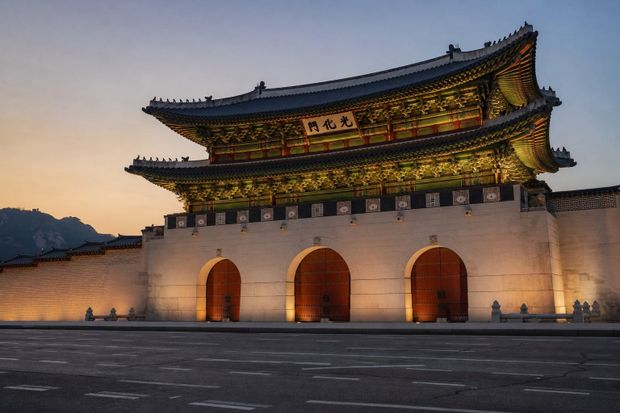
Seoul's heritage layer runs in parallel with its contemporary culture infrastructure, and for fans on longer itineraries, the city's palace and hanok districts provide a distinct experience that contextualises what Korean culture has produced across many centuries. Gyeongbokgung Palace is the largest of Seoul's five grand royal palaces; the Changing of the Guard ceremony runs multiple times daily, and hanbok rental from nearby shops grants free admission to the palace grounds. Cheong Wa Dae (the Blue House), South Korea's former presidential residence, has been open to the public since its 2022 conversion and functions as a cultural visitor site with trail access behind the complex. Deoksugung Palace added a fresh draw in 2026 with the reopening of the newly restored Dondeokjeon Hall. Bukchon Hanok Village — with more than 900 preserved traditional homes — is walkable from Gyeongbokgung and remains one of Seoul's most photographed residential districts, offering a clear visual reference for the architectural culture that K-drama productions draw on extensively.
Gyeongbokgung Palace | 경복궁
Gyeongbokgung was built in 1395 as the primary palace of the Joseon dynasty and remains Seoul's most-visited heritage site. The Changing of the Guard ceremony (수문장 교대의식) runs at 10 AM and 2 PM daily except Tuesdays. Hanbok rental from the shops lining the palace perimeter — typically ₩20,000–₩30,000 for two to three hours — includes complimentary admission to the palace grounds. The National Palace Museum of Korea and the National Folk Museum are both located within the palace complex and included without additional cost. According to Real Korea Insider, the palace is best experienced on weekday mornings before peak visitor volumes arrive mid-morning.
📍 161 Sajik-ro, Jongno District, Seoul
🕒 Monday 9:00 AM – 5:00 PM / Tuesday Closed / Wednesday–Sunday 9:00 AM – 5:00 PM
⭐ 4.6 (46,201 reviews)
📞 02-3700-3900
🔗 View on Google Maps
Cheong Wa Dae (Blue House) | 청와대
The former presidential residence operated as the Blue House for decades before its historic conversion to public access in 2022. Visitors can now walk the grounds, tour key buildings that were previously restricted, and access mountain trails behind the complex leading toward Bugaksan. Entry is free, but timed-entry reservations are recommended during peak spring and autumn periods. The site connects to trail networks that extend the visit into a half-day itinerary and offers a view of Gyeongbokgung from above that is not accessible from within the palace grounds (source: KNYCX Journeying).
📍 1 Cheongwadae-ro, Jongno District, Seoul
⭐ 4.3 (6,605 reviews)
🔗 View on Google Maps
Deoksugung Palace | 덕수궁
Deoksugung has long attracted visitors for its blend of Joseon-era architecture and early-20th-century Western-influenced structures within a single compact complex. The newly restored Dondeokjeon Hall, reopened in 2026, adds a significant piece of the palace's history back to the walkable circuit — the hall was a site of key events during the Korean Empire period (1897–1910) and its restoration was a multi-year project. Deoksugung sits adjacent to Seoul City Hall and is accessible without reservation. The adjacent Jeongdong-gil street connects the palace to the Seodaemun area through a walkable corridor of early-20th-century buildings.
📍 99 Sejong-daero, Jung District, Seoul
🕒 Monday Closed / Tuesday–Sunday 9:00 AM – 9:00 PM
⭐ 4.6 (20,192 reviews)
📞 02-771-9951
🔗 View on Google Maps
Bukchon Hanok Village | 북촌한옥마을
Bukchon is a functioning residential neighbourhood containing more than 900 preserved traditional hanok homes, not a recreated theme environment. Residents live in many of the properties, and visitors are expected to observe posted quiet-hours signs — particularly on upper residential lanes. The most frequently photographed viewpoints are on Gahoe-ro 11-gil. The village sits between Gyeongbokgung and Changdeokgung, making it a natural addition to any day covering both palaces on foot. Several hanok homes have been converted to small guesthouses and traditional craft workshops that offer hands-on experiences for visitors with more time (source: Real Korea Insider).
📍 Gyedong-gil, Jongno District, Seoul
🕒 Daily 10:00 AM – 5:00 PM
⭐ 4.4 (23,945 reviews)
📞 02-2133-1371
🔗 View on Google Maps
New Attractions and Notable Openings in 2026
Seoul's cultural infrastructure received several significant additions in the 2025–2026 period. Centre Pompidou Hanwha represents the most internationally notable announcement: the Paris-based institution is set to open a Seoul outpost at the iconic 63 Building in Yeouido — a landmark 1985 riverside tower — marking the first Centre Pompidou location outside of France. INSPIRE Entertainment Resort, the luxury complex near Incheon Airport, began full operations and provides fans a practical arrival-day or departure-day destination with live entertainment capacity. Seoul Sky Observatory on the 123rd floor of Lotte World Tower remains one of the world's highest observation decks at 555 meters, accessible from Jamsil. The Cheonggyecheon stream restoration corridor in central Seoul continues as a walkable greenway linking Jongno-area heritage sites to Dongdaemun. Each addition extends the viable itinerary range for visitors spending more than a few days in the city.
Centre Pompidou Hanwha | 63빌딩, 여의도
Centre Pompidou's Seoul outpost is the most significant fine arts institution opening in the city in years. The 63 Building — a gold-glass tower on the Han River's north bank in Yeouido — provides the venue address. As the first Centre Pompidou location outside France, the Seoul iteration is expected to draw from the Paris collection while offering programming calibrated for Korean and broader Asian audiences. The project is a partnership between the Centre Pompidou and Hanwha Group. The timeline for full opening has been communicated in phased announcements; travellers planning visits around this venue should verify current operational status closer to their travel dates. The 63 Building is accessible via Yeouinaru Station on Line 5 (source: KNYCX Journeying).
📍 Pje. del Dr. Carrillo Casaux, s/n, Distrito Centro, 29016 Málaga, Spain
🕒 Monday 9:30 AM – 8:00 PM / Tuesday Closed / Wednesday–Sunday 9:30 AM – 8:00 PM
⭐ 4.4 (18,077 reviews)
📞 951 92 62 00
🔗 View on Google Maps
INSPIRE Entertainment Resort | 인천
INSPIRE Entertainment Resort opened near Incheon International Airport as a luxury integrated complex combining five-star hotels, a live entertainment arena, retail, dining, and gaming. For fans arriving on tight schedules before a Seoul concert or departing late after a show that ends at midnight, INSPIRE offers a same-day or overnight option without requiring a full city-centre transfer. The resort's entertainment arena is large enough to host touring acts independently of the Seoul venue circuit — worth checking when planning around specific concert dates (source: KNYCX Journeying).
📍 South Korea, Incheon, Jung-gu, 공항문화로 127
🕒 Daily Open 24 hours
⭐ 4.4 (2,115 reviews)
📞 032-580-9000
🔗 View on Google Maps
Seoul Sky Observatory | 롯데월드타워, 잠실
Seoul Sky sits on the 123rd floor of Lotte World Tower at 555 meters, placing it among the highest observation decks globally. The tower is directly accessible from Jamsil Station (Lines 2 and 8). The observation deck includes both indoor viewing galleries and outdoor areas. Advance online ticket purchase is recommended to avoid queues, particularly on weekends and public holidays. The tower is visible from multiple points across Seoul and provides reliable orientation for first-time visitors mapping the city's geography.
📍 300 Olympic-ro, Songpa District, Seoul
🕒 Monday–Thursday 10:30 AM – 10:00 PM / Friday–Sunday 10:30 AM – 11:00 PM
⭐ 4.6 (6,226 reviews)
📞 02-3213-5000
🔗 View on Google Maps
Cheonggyecheon Stream Corridor | 청계천, 종로
The Cheonggyecheon restoration corridor runs approximately 10.9 kilometres through central Seoul, beginning near Gwanghwamun and running east through Jongno toward Dongdaemun. The stream-level walkway sits below street grade, providing a quieter and shaded transit route between heritage sites and contemporary commercial zones. The path connects Gwanghwamun Square, Jongno, and onward to Dongdaemun Design Plaza — a practical walking route for fans moving between the palace district and the eastern creative and fashion districts in a single afternoon.
📍 Jongno District, Seoul
🕒 Daily Open 24 hours
⭐ 4.5 (10,612 reviews)
📞 02-2290-7111
🔗 View on Google Maps
| Venue / Attraction | Location | Nearest Transit | Status (2026) |
|---|---|---|---|
| Centre Pompidou Hanwha | 63 Building, Yeouido | Yeouinaru Station (Line 5) | Opening phase — verify current dates before visit |
| INSPIRE Entertainment Resort | Near Incheon International Airport | Airport shuttle / taxi from T1 or T2 | Open; arena hosts ticketed live events |
| Seoul Sky Observatory | Lotte World Tower, Jamsil | Jamsil Station (Lines 2 & 8) | Open; advance tickets recommended |
| Cheonggyecheon Stream Corridor | Jongno (Gwanghwamun to Dongdaemun) | Multiple stations along the route | Open, free of charge year-round |
Seoul Street Food and Markets: What Fans Are Actually Eating
Seoul's street food and market scene is one of the most legible entry points into Korean culture beyond music, and the gap between tourist-facing markets and local daily food culture is large enough to make navigating both worthwhile. Gwangjang Market in Jongno is the city's most-photographed traditional street food destination: bindaetteok (mung bean pancakes) and mayak kimbap — bite-sized rice rolls nicknamed 'narcotic' for their reportedly addictive sesame-and-soy seasoning — are the dishes visitors return for. Mangwon Market, by contrast, sees considerably less international foot traffic and offers a broader variety of local produce and prepared foods at prices closer to what Seoul residents actually pay day-to-day. Myeongdong's stall corridor delivers convenience on busy tour days, with dense food options running parallel to K-beauty flagships. Seochon's independent café lanes offer a quieter alternative for fans who want to eat without the crowd pressure of the main market corridors. According to Visit Seoul, the 'Taste of Seoul' portal aggregates dining recommendations by neighbourhood for visitors who want to plan by district.
Gwangjang Market | 광장시장, 종로
Gwangjang Market has operated continuously since 1905, making it one of Seoul's oldest covered markets. The main food alley is lined with stall seating, and the bindaetteok (mung bean pancake) vendors have become a de facto landmark within the complex. Mayak kimbap — small, tightly rolled kimbap served with mustard and soy dipping sauce — costs roughly ₩3,000–₩5,000 per portion. The market also covers textiles, vintage clothing, and traditional fabric on upper floors. It is accessible via Jongno 5-ga Station (Lines 1 and 5), and the food hall runs from late morning through early evening. According to Real Korea Insider, arriving before noon on weekdays avoids peak visitor volumes in the central food corridor.
📍 88 Cheonggyecheon-ro, Jongno District, Seoul
🕒 Daily 9:00 AM – 10:30 PM
⭐ 4.2 (43,859 reviews)
📞 02-2267-0291
🔗 View on Google Maps
Mangwon Market | 망원시장
Mangwon Market sits in Mapo-gu within walking distance of the Han River parks and operates as a daily shopping destination for the surrounding residential neighbourhood rather than a tourist corridor. Prepared food stalls offer a broad range of Korean ready-to-eat dishes at local pricing — typically ₩2,000–₩6,000 per item. The market is practical for fans who want a more everyday Seoul food experience without the visual density of Gwangjang. Mapo-gu also places visitors within reasonable reach of the Hongdae live-music district for evening plans.
📍 27 Poeun-ro 6-gil, Mapo-gu, Seoul
🕒 Daily 9:00 AM – 9:00 PM
⭐ 4.3 (8,737 reviews)
📞 02-335-3591
🔗 View on Google Maps
Seochon Lanes | 서촌
Seochon — the neighbourhood immediately west of Gyeongbokgung — operates at a noticeably slower pace than Hongdae or Myeongdong. Independent cafés, small galleries, and local food spots occupy narrow lanes, many of them in renovated hanok structures. Visit Seoul's editorial team includes Seochon among its recommendations for visitors wanting a lower-traffic afternoon option within walking distance of the palace district (source: Visit Seoul). The area works well as a late-afternoon addition after a morning at Gyeongbokgung or the Blue House.
📍 28-1 Tongui-dong, Jongno District, Seoul
⭐ 4.3 (161 reviews)
🔗 View on Google Maps
Why Seoul Is Seeing Record Visitor Numbers in 2026
South Korea's inbound tourism numbers have reached historically high levels in the 2025–2026 cycle, with the Hallyu effect functioning as a structural demand driver that researchers and government planners have been tracking for over a decade. South Korea recorded 18.9 million international arrivals in 2025 — a 15.7% year-on-year increase — and Q1 2026 alone logged 4.76 million visitors, a 23% year-on-year increase over the same period in 2025 (source: Travel and Tour World). Growth is led by Chinese, Japanese, Taiwanese, and North American travellers. The South Korean government has designated 2026 the 'Year of Execution' — a strategic policy push targeting 30 million annual international arrivals by 2028. Seoul, alongside Busan and Jeju, absorbs the bulk of this inbound demand, and the Hallyu phenomenon — Korean music, drama, food, and beauty culture — is consistently cited as the primary motivator across visitor segments (source: Museum of Wander).
"The Korean Wave is no longer a trend — it is a structural driver of inbound tourism that is reshaping how Korea positions itself on the global stage," — Korea Tourism Organization spokesperson, cited in Travel and Tour World
The 23% Q1 2026 growth rate carries particular significance because January through March is not historically Seoul's peak travel season — cherry blossom travel (April) and autumn foliage (October–November) have traditionally driven higher absolute visitor numbers. The sustained off-peak growth suggests that Hallyu-motivated travel is less weather-dependent than earlier Korean tourism patterns, with fans and cultural visitors organising trips around comeback schedules, fan meetings, and event calendars rather than seasonal factors. This pattern is beginning to flatten Seoul's traditional visitor peaks and create a more year-round demand profile — an outcome that aligns with the government's infrastructure investment in cultural venues, transit capacity, and event programming (source: MICE Travel Advisor).
North American visitor growth is a notable shift within these overall numbers. While Chinese and Japanese visitors have historically dominated Korean inbound statistics, US and European fan communities have grown their share measurably since 2022. This reflects K-POP's expansion from a primarily East Asian cultural phenomenon to a genuinely global one — a distinction that now affects tour routing decisions by agencies, venue capacity planning in Seoul, and the mix of languages encountered in fan-heavy districts like Hongdae and Gangnam.
| Year / Period | International Arrivals | Year-on-Year Change | Primary Growth Driver |
|---|---|---|---|
| 2024 (full year) | ~16.3 million (estimated) | Post-pandemic recovery baseline | Regional travel resumption |
| 2025 (full year) | 18.9 million | +15.7% | Hallyu; expanded K-ETA waiver eligibility |
| Q1 2026 | 4.76 million | +23% (vs Q1 2025) | Chinese, Japanese, North American; concert tourism |
| 2028 government target | 30 million | Policy projection | 'Year of Execution' infrastructure and promotion investment |
Frequently Asked Questions
Do fans from the US or UK need a visa to visit Seoul in 2026?
No. The K-ETA (Korea Electronic Travel Authorization) waiver covers 67 countries — including the United States and the United Kingdom — through December 31, 2026. Citizens of these countries do not need to apply for a separate visa for short-stay tourism visits. However, the digital e-Arrival Card is a separate and mandatory requirement for all visitors regardless of nationality. The e-Arrival Card must be completed at e-arrivalcard.go.kr within 72 hours before the scheduled landing time. It is not a visa application — it is an arrival registration form that replaced the paper card abolished on January 1, 2026. According to Korea Travel Post, passengers who arrive at Incheon without a completed e-Arrival Card are directed to secondary processing lines, which can significantly delay arrival.
What is the digital e-Arrival Card and how do I fill it in before flying to Seoul?
The digital e-Arrival Card is the mandatory pre-arrival registration form that replaced the paper card South Korea abolished on January 1, 2026. All visitors — including those from K-ETA waiver countries — must complete it at the official portal: e-arrivalcard.go.kr. The process involves five steps: (1) Create an account using your email address and passport details; (2) Enter your flight information, including airline, flight number, and scheduled arrival date; (3) Provide your accommodation address in South Korea for the first night of your stay; (4) Complete the health declaration section; (5) Submit the form and save the confirmation number or QR code you receive. The confirmation may be requested at your departure gate or by Korean immigration officers at Incheon. The form takes approximately 10–15 minutes to complete and must be submitted within 72 hours before landing — not earlier. Completing it the evening before departure is the practical approach for most itineraries.
Which Seoul neighbourhood is the right base for a K-POP fan trip?
The answer depends on what your trip is primarily organised around. Hongdae is the natural base for fans whose schedule centres on live music, indie arts events, merch drops, and the club circuit — it has the highest concentration of small music venues in Seoul and is consistently active for emerging and established K-indie acts on weekends. Gangnam is better suited for fans whose itinerary focuses on major entertainment agency offices (SM Entertainment, YG Entertainment, HYBE are all in this general area), or for those attending ticketed events at KSPO Dome or Seoul Olympic Park Arena. Seongsu-dong is the right base for fans on cultural immersion itineraries who want creative district access, specialty food, and venues like HAUS NOWHERE as daily anchors. Myeongdong works efficiently as a first-stay base for visitors who want easy metro connections across the city alongside K-beauty and street food access in one compact area.
What is HiKR GROUND and is it worth adding to a Seoul itinerary?
HiKR GROUND is Seoul's dedicated K-pop and Korean media art venue, operated under the Korea Tourism Organization. Located in central Seoul, it focuses on immersive media experiences, a K-pop archive with concert footage and documented artist histories, and interactive installations covering the history and global spread of Korean Wave culture. Entry is low-cost and walk-in access is generally available outside special exhibition periods. The venue is most valuable for fans with a genuine interest in the structural history of K-POP — how labels, production and training systems, choreography culture, and global distribution networks developed over several decades — rather than fans seeking merchandise or photo opportunities. It pairs naturally with a Jongno or Gangnam itinerary day. Current hours and entry details are available through the Korea Tourism Organization's official portal at Visit Korea.
When is the Centre Pompidou Hanwha opening in Seoul and where is it located?
Centre Pompidou Hanwha is opening at the 63 Building in Yeouido, Seoul — a landmark 1985 gold-glass tower on the Han River's north bank, accessible from Yeouinaru Station on Line 5. The project is a partnership between the Centre Pompidou in Paris and South Korea's Hanwha Group, and it will be the first Centre Pompidou location outside France — a significant addition to Seoul's contemporary art infrastructure and a draw for both art audiences and cultural tourists. The opening has been communicated through phased announcements and the venue is in its opening phase as of 2026. Fans and art travellers planning a visit around this attraction should confirm the current operational status through KNYCX Journeying or official Hanwha cultural channels before finalising travel dates.
Planning Your Seoul Visit: What to Carry Forward
Seoul in 2026 is one of the most accessible and substantively rich destinations in East Asia for fans of Korean culture. The entry logistics — digital e-Arrival Card, K-ETA waiver status, and the new longer-stay visa options — are manageable once understood in advance, and the city's subway network reduces dependence on taxis or ride-hailing for almost any itinerary. The neighbourhood landscape rewards specificity: knowing whether your trip is organised around live music (Hongdae), creative culture (Seongsu), heritage (Jongno and Gyeongbokgung), or event-based access (Gangnam) gives each day considerably more coherence than a general neighbourhood-hopping approach. For navigation, use Naver Map or KakaoMap rather than Google Maps — both are available in English and provide accurate public transport routing within South Korea. The Climate Card tourist pass (approximately ₩5,000 per day for unlimited subway, bus, and public bike access up to ₩20,000 for seven days) is the cost-efficient transit option for fans covering multiple districts in a single day.
The scale of Seoul's visitor growth — 18.9 million arrivals in 2025 and Q1 2026 already tracking 23% above the prior year — has not yet produced the overcrowding that comparable growth has caused at other East Asian cultural destinations. Popular sites like Bukchon Hanok Village and Gyeongbokgung experience real peak-hour pressure, and the Gwangjang Market food alley is genuinely dense on weekends, but the city's infrastructure and neighbourhood diversity absorb demand effectively across the rest of the calendar. Checking event schedules for Seoul Festa, the Lotus Lantern Festival (Yeon Deung Hoe, around May 24), and major concert dates before finalising travel dates will help identify both the peak windows and the programming worth planning around. Seoul Metropolitan Government publishes a current events calendar at Seoul.go.kr and monthly cultural event listings updated throughout the year.
The combination of expanded entry options, a record inbound visitor base, and a pipeline of new cultural venues — from HiKR GROUND and HAUS NOWHERE to the Centre Pompidou Hanwha — means that Seoul's offer for K-culture-motivated travel in 2026 is broader than at any previous point. Itinerary planning that layers concert schedules, venue visits, food corridors, and neighbourhood walks produces a significantly more coherent trip than a generic sightseeing approach.
Last updated: 2026-05-12. Article reviewed against current South Korean government entry requirements, Korea Tourism Organization visitor statistics for 2025–2026, and published venue information. Entry policies and venue operational status may be updated after publication — readers are advised to verify directly at official government portals and venue websites before travel.


