
Why South Korea Tops 2026 Travel Lists
South Korea has become one of the defining travel destinations of 2026, drawing first-time visitors from Europe, Southeast Asia, and North America in growing numbers. National Geographic selected South Korea as a Best of the World 2026 destination, noting the country has "never been more popular" — a recognition grounded in the convergence of deep historical heritage, hypermodern cities, and the Korean Wave (hallyu) that has reshaped global pop culture. Two concrete forces are accelerating visitor numbers in 2026: the partially-opening Dongseo Trail, a 527-mile long-distance hiking route connecting Korea's east and west coasts through more than 20 national parks, and the Climate Card tourist transit pass, which offers unlimited subway and bus rides from approximately ₩5,000 per day up to ₩20,000 for a 7-day pass. For K-pop fans who already follow domestic tour schedules, Seoul and Busan are no longer aspirational destinations — they are the logical anchors for a multi-city trip built around both concerts and sightseeing.
Quick Answer: South Korea tops 2026 travel lists after National Geographic named it a Best of the World pick. A new 527-mile Dongseo Trail partially opens this year, and the Climate Card tourist transit pass covers unlimited subway and bus rides from ₩5,000/day — making multi-city trips between Seoul, Busan, and Gyeongju straightforward and affordable.
The hallyu momentum has structural effects on travel planning. K-pop fans now organize trips around concert dates at Seoul's Olympic Stadium and KSPO Dome, or Busan's BEXCO and Asiad Main Stadium, then layer in sightseeing around the tour calendar. The result is a visitor profile more geographically confident than the average first-timer of five years ago: travelers who already know which subway line reaches Hongdae versus Gangnam, and who are building 7–10 day itineraries rather than quick Seoul layovers.
"South Korea has never been more popular," — National Geographic, Best of the World 2026.
The Dongseo Trail, once fully open, will change the country's adventure-travel identity in the way long-distance routes have done elsewhere in Asia. The 2026 partial opening covers the most scenically varied segments, threading through Jirisan, Seoraksan, and several coastal national parks. Separately, the Climate Card — available at Incheon Airport and major Seoul subway stations — works on Seoul Metro lines and city buses, removing the per-ride calculation that slows down first-time arrivals. Visitors moving between three or more neighborhoods per day will typically recoup the pass cost within a few hours of use.
Busan: Beaches, Street Art & Coastal Food
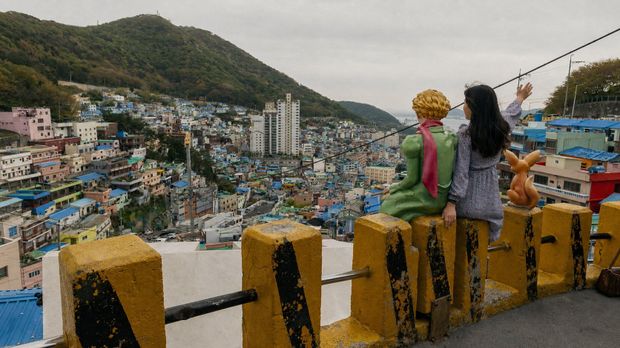
Busan is South Korea's second-largest city, with a population of approximately 3.3 million, and it occupies a different register from Seoul — coastal, sprawling, and organized around a string of beaches rather than a historic palace core. The city's best-known landmark is Haeundae Beach, a 1.5 km white sand shoreline that draws more than 10 million visitors annually. Adjacent to the beach, Haeundae Blueline Park adds a 4.8 km coastal rail experience with glass-enclosed Sky Capsule cars that follow the clifftop above the East Sea. Inland from the beach strip, Gamcheon Culture Village rises up a hillside in a dense maze of vividly painted houses and outdoor murals — the result of a community arts initiative that transformed a former resettlement neighborhood into a living gallery district. Haedong Yonggungsa Temple, built directly atop coastal cliffs in the Gijang area, provides a setting entirely distinct from any inland Buddhist site in the country. These four sites justify at least two full days in Busan.
Haeundae Beach
Haeundae's appeal extends beyond swimming season. The surrounding district is dense with restaurants, rooftop bars, and the BEXCO convention complex, which regularly hosts K-pop fan conventions and merchandise exhibitions. The Haeundae Blueline Park's Sky Capsule cars operate on a separate elevated track above the beach trail — each glass capsule holds 2–4 people and moves slowly enough to photograph the coastline below. During peak summer (July–August) the beach draws enormous crowds; a visit in late May or early October delivers the same coastal scenery with noticeably lower foot traffic.
📍 Haeundae Beach
⭐ 4.6 (2,705 reviews)
🔗 View on Google Maps
Gamcheon Culture Village
Gamcheon Culture Village is located in Saha-gu, about 20 minutes from Busan Station by taxi. The hillside layout rewards slow exploration — cafés, art installations, and small galleries are embedded into residential alleyways, and rooftop views over the harbor are among the best in the city. Arriving before 10 am allows you to walk the central paths before the midday crowds arrive. There is no neighborhood entry fee; individual exhibitions and galleries charge separately.
"Gamcheon Culture Village is a hillside labyrinth of brightly painted houses and murals created by local artists," — Creatrip, Busan Attractions Guide.
📍 203 Gamnae 2-ro, Saha-gu, Busan
🕒 Daily 9:00 AM – 6:00 PM
⭐ 4.4 (32,266 reviews)
📞 051-204-1444
🔗 View on Google Maps
Haedong Yonggungsa Temple
Haedong Yonggungsa Temple sits approximately 30 minutes northeast of central Busan by bus. Unlike most Korean Buddhist temples set into mountainous interiors, this one was constructed at the waterline — pagodas and prayer halls rise above rock formations directly above the sea. The visual contrast with standard hillside temples is stark, and the sound and presence of the ocean throughout the grounds gives the site a character unlike anywhere else in Busan. Morning visits before the day-trip coaches arrive offer a quieter experience with better light for the cliffside structures.
📍 86 Yonggung-gil, Gijang, Busan
🕒 Daily 4:00 AM – 8:00 PM
⭐ 4.5 (26,818 reviews)
📞 051-722-7744
🔗 View on Google Maps
Jagalchi Market
Jagalchi Market is Korea's largest seafood market, operating along the waterfront in Jung-gu. Ground-floor stalls hold live tanks of fish, crab, and shellfish; the upper floors offer prepared meals. Haemul pajeon (seafood pancake) and whole grilled fish are the defining Busan street-food experience, and the market environment — loud, fragrant, and entirely local in character — differs sharply from Seoul's more curated food halls. Jagalchi is straightforwardly combined with a Gamcheon visit on the same day, as both are in the western half of the city.
📍 52 Jagalchihaean-ro, Jung-gu, Busan
🕒 Daily 9:00 AM – 9:00 PM
⭐ 4 (26,846 reviews)
📞 051-245-2594
🔗 View on Google Maps
Gyeongju: Korea's Open-Air Archaeology Site
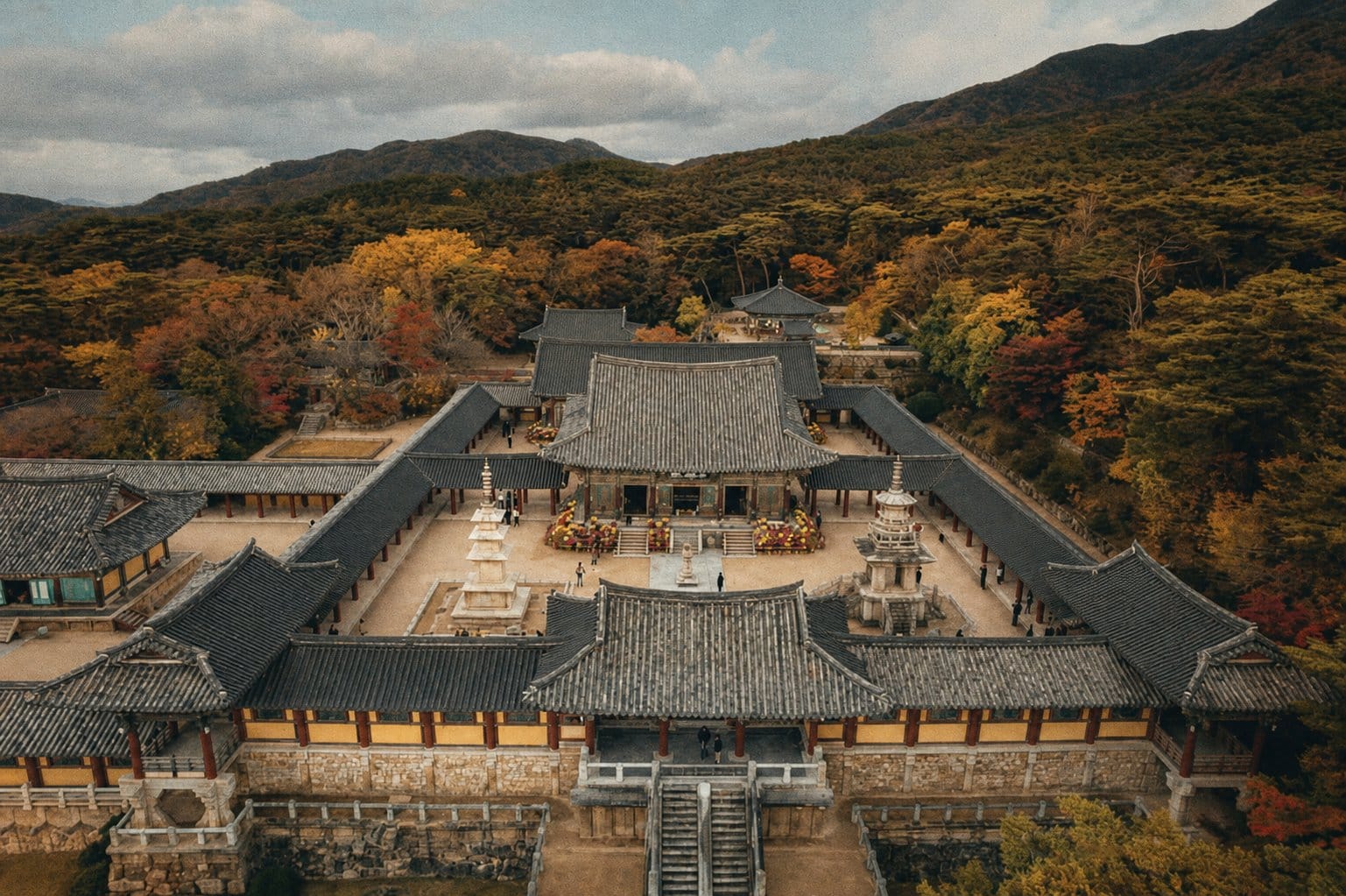
Gyeongju served as the capital of the Silla Kingdom for nearly a thousand years — from 57 BCE to 935 CE — and the density of archaeological material within the modern city is extraordinary. Royal burial mounds (tumuli) rise as grassy domes directly in the city center near Tumuli Park, visible from ordinary streets without entering any museum. Bulguksa Temple, constructed during the 8th century, holds two stone pagodas in near-original condition and carries UNESCO World Heritage Site status — located approximately 16 km from the city center, it is best reached by local bus or taxi from the city. Donggung Palace and Wolji Pond, a reconstructed Silla royal garden complex, is unremarkable during daylight but transforms after dark when illumination creates dramatic reflections across the water — one of the clearest arguments for staying at least one night rather than treating Gyeongju as a day trip. Singyeongju Station sits approximately 2 hours from Seoul by KTX, making the city a natural stop on the Seoul–Busan rail route.
Tumuli Park (also called Daereungwon Tomb Complex) contains 23 burial mounds within a single walled precinct. One mound — Cheonmachong — has been excavated and fitted with a viewing interior, allowing visitors to walk into the burial chamber and observe its original construction. The scale of the mounds is more visceral in person than photographs suggest; the largest rises over 20 meters high and spans a diameter measured in dozens of meters.
Bulguksa Temple
Bulguksa Temple is the most architecturally significant Buddhist site in Gyeongju. The complex is built on a series of elevated stone terraces connected by historic staircases, and the two main pagodas — Dabotap and Seokgatap — date to the 8th century and remain largely intact. The grounds are framed by mature pine forest that softens the light in the early morning. Combined with Seokguram Grotto — a UNESCO-listed stone Buddha chamber set into the hillside approximately 4 km above Bulguksa — the two sites together form one of the most concentrated UNESCO heritage experiences in East Asia.
📍 385 Bulguk-ro, Gyeongju, Gyeongsangbuk-do
🕒 Daily 9:00 AM – 6:00 PM
⭐ 4.6 (17,756 reviews)
📞 054-746-9913
🔗 View on Google Maps
Donggung Palace and Wolji Pond
Donggung Palace and Wolji Pond (formerly called Anapji) is located in central Gyeongju, approximately 1 km from Tumuli Park — a walkable distance along well-marked paths. After dark, the illumination system reflects pavilions and stone bridges across the pond surface with striking clarity. This night-viewing experience is widely regarded as among the finest in the city, and it is a strong practical reason to stay overnight rather than arriving and departing on the same day.
📍 102 Wonhwa-ro, Gyeongju, Gyeongsangbuk-do
🕒 Daily 9:00 AM – 10:00 PM
⭐ 4.5 (20,429 reviews)
📞 054-750-8655
🔗 View on Google Maps
Jeonju: Korea's Food Capital
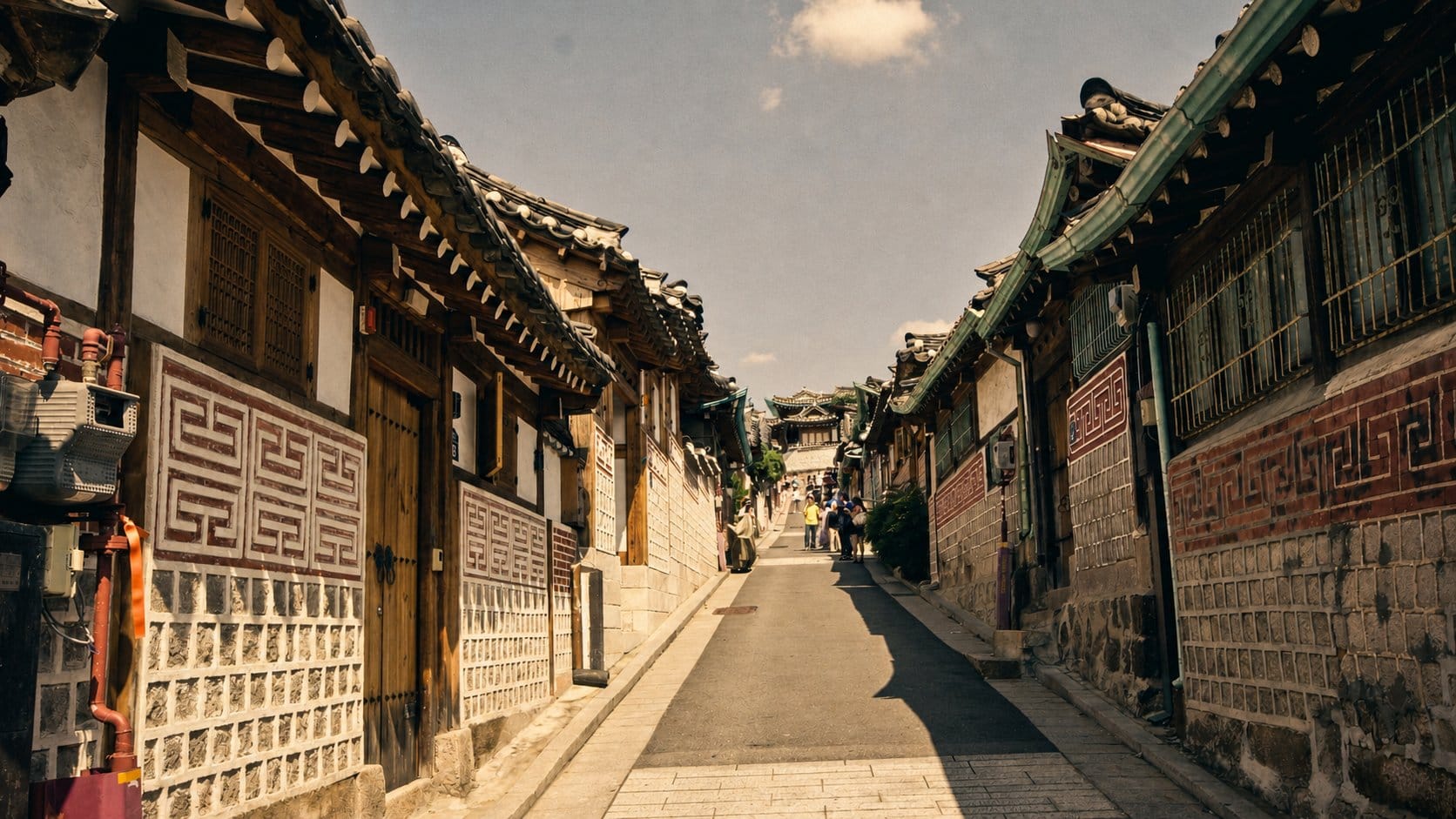
Jeonju holds UNESCO Creative City of Gastronomy status and is widely recognized as the origin city for dolsot bibimbap — rice and vegetables served in a heated stone bowl that continues cooking at the table. The city's historic Hanok Village contains 735 traditional wooden houses within a single walkable district, making it the largest intact hanok settlement in Korea. Unlike Gyeongju, which is primarily archaeological, Jeonju's historic area is actively inhabited — restaurants, makgeolli bars, and small guesthouses occupy the traditional structures. The recommended approach is at least one overnight stay: the neighborhood shifts noticeably after day-trippers depart in the late afternoon, and the morning food market is among the most rewarding food experiences on the entire peninsula. Jeonju is reachable from Seoul by KTX in approximately 1.5 hours on the Honam line, or by express bus from multiple Seoul terminals.
Jeonju Hanok Village (전주한옥마을)
The Hanok Village sits adjacent to Jeondong Catholic Cathedral, a French Gothic structure built in 1914 that provides an incongruous but visually striking contrast with the surrounding traditional rooflines. The central food street along Nambu Market offers jeon pancakes, sikhye (sweet fermented rice punch), and street snacks alongside full-service restaurants serving the traditional Jeonju hanjeongsik multi-course meal. Hanbok rental is available throughout the village for those who want to photograph themselves in traditional dress against the architectural backdrop — a ritual that is, in this context, genuinely embedded in the neighborhood's daily life rather than a tourist overlay.
📍 99 Girin-daero, Wansan-gu, Jeonju, Jeonbuk State
🕒 Daily Open 24 hours
⭐ 4.1 (29,124 reviews)
📞 063-282-1330
🔗 View on Google Maps
Makgeolli bars are a Jeonju institution distinct from Seoul's craft beer or cocktail culture. The typical format is a large earthen bowl of lightly fermented rice wine accompanied by multiple plates of savory jeon pancakes — pajeon, kimchijeon, hobakjeon (zucchini) — served in rounds for a fixed price. Bars are concentrated in the lanes running off the main hanok street and most open mid-afternoon, making an early evening arrival from Seoul or Busan a natural entry into the neighborhood's rhythm.
Getting Between Cities: KTX, AREX & Transit Cards
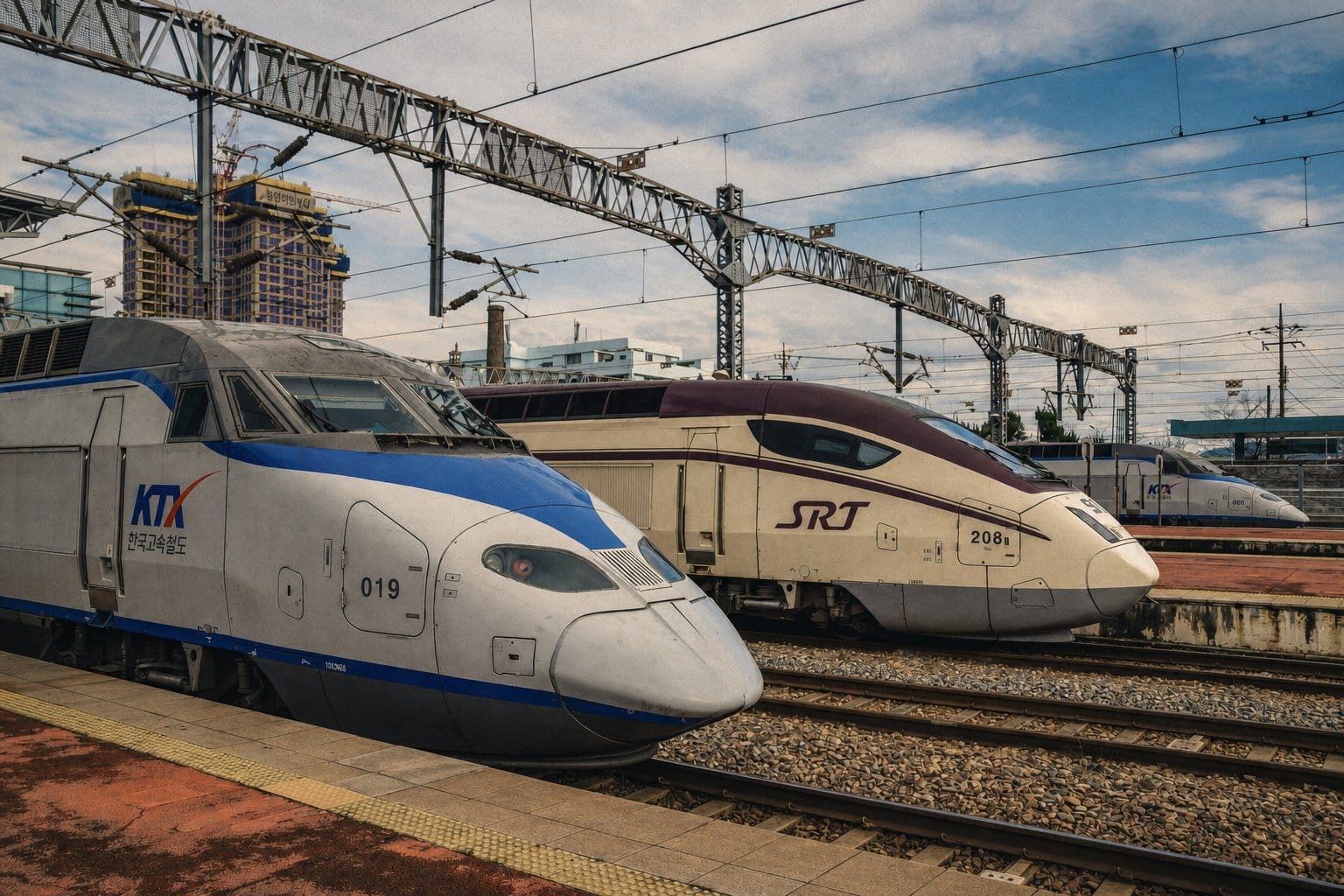
South Korea's intercity rail network is among the most practical in Asia for independent travelers. KTX high-speed trains connect Seoul Station and Busan Station in approximately 2 hours 30 minutes, with the newer KTX-Eum variant offering equivalent speed. Travelers departing from the Gangnam side of Seoul can use SRT trains from Suseo Station, which reach Busan in approximately 2 hours 10 minutes on a separate track. Gyeongju is served by Singyeongju Station on the same KTX Seoul–Busan line, adding roughly 20 minutes to the Seoul–Busan journey — making it a logical stop rather than a separate side trip. For airport access, the AREX Express train links Incheon International Airport directly to Seoul Station in 43 minutes for ₩9,500, with an intermediate stop at Hongik University Station serving the Hongdae hotel district. Urban transit — subways and buses — operates via the T-money contactless card, rechargeable at any convenience store and valid on transit networks nationwide.
| Route | Service | Journey Time | Approx. One-Way Cost | Departs From |
|---|---|---|---|---|
| Incheon Airport → Seoul Station | AREX Express | 43 min | ₩9,500 | Incheon T1 / T2 |
| Seoul → Busan | KTX / KTX-Eum | ~2h 30min | ₩59,000–₩67,000 (approx.) | Seoul Station |
| Seoul → Busan (Gangnam side) | SRT | ~2h 10min | ₩52,000–₩60,000 (approx.) | Suseo Station |
| Seoul → Singyeongju (Gyeongju) | KTX | ~2h | ₩43,000–₩56,000 (approx.) | Seoul Station |
| Seoul → Jeonju | KTX (Honam line) | ~1h 30min | ₩27,000–₩33,000 (approx.) | Seoul Station (Honam) |
| Urban transit (per ride) | T-money card (subway/bus) | Variable | ₩1,400–₩1,650 | Any subway/bus stop |
| Seoul Metro unlimited (tourist) | Climate Card | — | ₩5,000/day; ₩20,000/7 days | Incheon Airport / major stations |
The T-money card is purchased at airport GS25 or CU convenience stores immediately upon arrival at Incheon, or at subway station vending machines throughout Seoul. The card covers subways across Seoul, Busan, Daegu, and Gyeongju city buses, as well as most intercity taxis when tapped on the card reader. Loading ₩50,000 at the outset is sufficient for several days of urban transit without topping up. The Climate Card tourist pass — a separate product available in 1-, 2-, 3-, 5-, and 7-day tiers — is the more efficient option for heavy Seoul subway users; it covers unlimited rides on Seoul Metro and city buses within the designated validity period. Current fares and booking for KTX and SRT are available via the Klook platform or the official Korail website.
Regional Food Worth Traveling For
South Korea's regional food identity is sharper than most countries its size. Each city maintains dishes that do not meaningfully replicate elsewhere on the peninsula, and food travel — choosing an itinerary partly based on what you want to eat — is a legitimate and rewarding strategy. Busan's culinary identity is rooted in the ocean: dwaeji gukbap (pork bone soup served with rice on the side) is the city's signature morning meal, and milmyeon — cold wheat noodles in a tangy broth — is a dish unique to Busan with no direct equivalent in Seoul. Gyeongju contributes hwangnam-ppang — a walnut and red-bean pastry made by Gyeongju bakeries since the 1930s and sold nowhere else in Korea. Jeonju's food circuit extends well beyond bibimbap to include kongnamul gukbap (soybean sprout soup with rice) and sikhye (sweet fermented rice punch) as equally central parts of the city's food identity.
| City | Signature Dish | Description | Where to Find It |
|---|---|---|---|
| Busan | Dwaeji gukbap | Pork bone soup with rice — the Busan morning staple | Local restaurants near Seomyeon and Gukje Market |
| Busan | Milmyeon | Cold wheat noodles in tangy broth, unique to Busan | Milmyeon specialty restaurants citywide |
| Busan | Haemul pajeon + hoe | Seafood pancake and raw fish sashimi plates | Jagalchi Market, Gwangalli waterfront |
| Gyeongju | Hwangnam-ppang | Red-bean and walnut pastry, sold only in Gyeongju — a recipe dating to the 1930s | Hwangnam Bakery and its neighbors, central Gyeongju |
| Jeonju | Dolsot bibimbap | Rice and vegetables in a heated stone bowl — Jeonju's founding dish | Hanok Village restaurants |
| Jeonju | Kongnamul gukbap | Soybean sprout soup with rice — a Jeonju breakfast standard | Nambu Market and traditional market area |
| Jeju (if extending) | Heukdwaeji (black pork BBQ) | Jeju's indigenous black pork, richer and more marbled than mainland breeds | Black pork restaurants in Jeju City and Seogwipo |
| Jeju (if extending) | Jeonbokjuk | Abalone porridge — an island exclusive available at coastal restaurants | Coastal restaurants island-wide |
If the itinerary extends to Jeju Island — approximately 90 km off the southern coast, reachable by a 1-hour domestic flight or ferry from Busan — heukdwaeji black pork barbecue and jeonbokjuk abalone porridge are both island exclusives worth the detour. Jeju also holds UNESCO World Natural Heritage Site status for its volcanic landscape, including Mt. Hallasan at 1,950 m — South Korea's highest peak — and the Manjanggul Lava Tube system. The island's haenyeo female free-divers represent a living cultural tradition separately recognized by UNESCO.
When to Visit & Pre-Trip Logistics for 2026
Spring and autumn are the two windows when South Korea is most rewarding to visit. Spring (late March through early May) is peak cherry blossom season — blossoms typically peak in late March in Busan and in early April in Seoul — with temperatures ranging from approximately 7°C to 18°C and long daylight hours suitable for walking-heavy itineraries. Accommodation books out several months in advance during peak blossom weekends, particularly in Seoul's Yeouido district and Gyeongju's historic core. Bookings made less than 8–10 weeks ahead for late March or early April 2026 will face limited availability at preferred price points. Autumn (October–November) brings fall foliage, a string of cultural festivals, and clear skies with fewer crowds than spring — conditions that many experienced Korea travelers consider the country's most comfortable visiting window overall.
For entry logistics, most visa-exempt nationals — including US, UK, and EU passport holders — are required to obtain a K-ETA (Korea Electronic Travel Authorization) before arrival. The application is completed online, costs approximately USD 10, and should be submitted a minimum of 72 hours before departure. K-ETA authorizations are valid for 2 years and cover multiple entries. Some nationalities have received temporary exemptions during specific periods — verify the current requirement for your passport via the official Korean Ministry of Foreign Affairs (MOFA) portal before booking flights, as K-ETA status can change on short notice.
Connectivity is straightforward. The Incheon Airport arrivals hall at both T1 and T2 has eSIM kiosks and pocket Wi-Fi rental counters operating from early morning. Korean carrier eSIMs (KT, SKT, LG U+) can also be purchased before departure through travel tech platforms and activated on landing. For currency, Korean Won is the standard tender — credit cards are widely accepted at hotels, larger restaurants, and convenience stores, but smaller traditional market stalls and rural attractions typically prefer cash. ATMs at Incheon Airport accept most international cards without issues, and the GS25 and 7-Eleven machines in the arrivals hall are available around the clock.
Frequently Asked Questions
Do I need a K-ETA to visit South Korea in 2026?
Most visa-exempt nationals — including US, UK, and EU passport holders — are required to obtain a K-ETA (Korea Electronic Travel Authorization) before traveling to South Korea. The application is completed online, costs approximately USD 10, and must be submitted at least 72 hours before departure. Once approved, the K-ETA is valid for 2 years and permits multiple entries. Some nationalities have received temporary exemptions during specific periods, so verify the current requirement for your passport via the official Korean Ministry of Foreign Affairs (MOFA) portal before booking. Japanese passport holders and some other nationalities have historically had different treatment — do not assume conditions from a previous trip still apply.
How long does the KTX take from Seoul to Busan?
The KTX high-speed train from Seoul Station to Busan Station takes approximately 2 hours 15 minutes to 2 hours 30 minutes, depending on service type (KTX vs. the newer KTX-Eum). Travelers based on the Gangnam side of Seoul can use SRT trains from Suseo Station, which reach Busan in approximately 2 hours 10 minutes. Tickets can be booked via the official Korail website, the Korail mobile app, or travel platforms such as Klook. Same-day tickets are sometimes available, but advance booking is strongly recommended during spring cherry blossom season (late March–early April) and Korean public holidays.
Can I see Seoul, Busan, and Gyeongju in one week?
Yes — a realistic one-week itinerary is 3 nights in Seoul, 2 nights in Busan, and 1 night in Gyeongju, with KTX connecting all three cities. Gyeongju can alternatively be treated as a half-day stop between Busan and Seoul: disembark at Singyeongju Station, visit Bulguksa and the tumuli, then catch a later KTX onward. Adding Jeonju to the itinerary extends the trip to 9–10 days, or requires reducing Seoul time to 2 nights. All three cities are on the same KTX main line and require no flights or bus connections between them.
What is the T-money card and where can I buy one?
The T-money card is a rechargeable contactless IC transit card valid on subways, city buses, and most taxis across South Korea. It is the standard payment method for urban transit in Seoul, Busan, Daegu, and other major cities. Purchase one at airport GS25 or CU convenience stores immediately upon arrival at Incheon, or at subway station vending machines throughout Seoul. Top up the card at any convenience store nationwide by presenting it at the counter. The card itself costs approximately ₩2,500–₩4,000, and loading ₩30,000–₩50,000 is sufficient for several days of transit use without topping up again.
What is the best time of year to visit South Korea?
Spring (late March through early May) is the most popular season, driven by cherry blossoms and mild temperatures ranging from approximately 7°C to 18°C. Autumn (October–November) is frequently recommended for first-time visitors: fall foliage is visually comparable to spring blossoms, cultural festivals are active, crowds are smaller, and the weather is dry and cool. Summer (June–August) is hot and humid with a monsoon rainy season in July — outdoor sightseeing becomes less comfortable, though coastal destinations like Busan and Jeju remain popular. Winter (December–February) is cold and dry; ski resorts near Seoul (Yongpyong, Alpensia) are active, and crowds at heritage sites like Gyeongju and Jeonju are at their annual low.
Planning Your Korea Trip
South Korea in 2026 offers a travel infrastructure that rewards multi-city planning. The KTX rail spine connecting Seoul, Gyeongju, and Busan is fast enough that the country's major stops fit naturally into a week without feeling rushed, and the combination of K-pop event culture, food travel, and UNESCO-grade heritage creates itineraries that work for different traveler profiles simultaneously. A fan who builds their trip around a Seoul or Busan concert date will find that the same cities anchor strong standalone sightseeing and food itineraries — major concert venues are almost always within 30–40 minutes of the most-visited heritage districts and food markets.
The new Dongseo Trail adds a dimension that did not exist in earlier years: the possibility of a dedicated hiking-focused Korea trip, connecting coastal terrain to mountain wilderness through some of the country's most scenic national parks. For visitors who have already covered Seoul and Busan on a first trip, the Trail's 2026 partial opening provides a concrete reason to return with an entirely different itinerary frame. Meanwhile, for those planning a first visit, the combination of K-ETA (apply early), Climate Card transit pass, and advance spring accommodation bookings removes the logistical friction that once made multi-city Korea trips feel complicated. The UMe Travel Korea guide and Klook's two-week Korea itinerary are practical starting points for building out the full schedule once the core cities are confirmed.
Whatever the itinerary, the practical groundwork is consistent: obtain K-ETA well in advance, load a T-money card immediately at Incheon arrivals, book spring accommodation early, and verify concert or event dates if a specific show anchors the trip calendar. South Korea's tourism infrastructure is mature enough that once entry and transit basics are sorted, the logistics rarely create friction.
Last updated: 2026-05-18. Article reviewed against National Geographic 2026 destination coverage, official VisitBusan and Korea Tourism Organization sources, and Klook travel platform data current as of May 2026.
This article was written using information collected and analyzed by NAMANE's in-house K-pop research AI engine. We use AI technology to bring you faster, broader coverage, and in the process some details may occasionally differ from the latest facts. For important information such as dates, venues, and prices, please double-check with official sources.


