
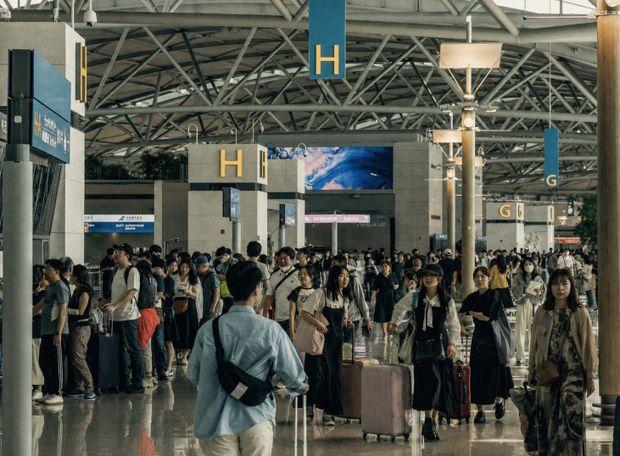
2026 Global Tourism Overview: 1.58 Billion Arrivals Forecast
Global tourism in 2026 is on track for its strongest performance since international travel fully resumed after the pandemic. UN Tourism (UNWTO) confirmed approximately 1.52 billion international arrivals in 2025 [1] — roughly 60 million more than 2024 [1] and the highest post-pandemic total on record. For 2026, the organization projects a further expansion of 3–4%, bringing international arrivals to approximately 1.58 billion — a figure that would surpass pre-pandemic 2019 levels by 5–7% [10]. Global tourism receipts are expected to reach $1.80 trillion in 2026, a new post-pandemic high [4]. Oxford Economics separately forecasts an 8% growth rate for international visitor numbers this year, arguing that travel demand will outpace GDP growth despite ongoing macroeconomic headwinds including currency volatility and elevated airfare costs [2]. Three regions — Europe, Asia-Pacific, and the Americas — are driving this momentum, each supported by structural recovery dynamics and specific event-based demand catalysts through the rest of the calendar year.
Quick Answer: UNWTO forecasts approximately 1.58 billion international tourist arrivals in 2026 — a 3–4% increase over 2025's record 1.52 billion. Oxford Economics projects an even stronger 8% growth rate. Global tourism receipts are expected to reach $1.80 trillion, surpassing all prior post-pandemic benchmarks.
The scale of the 2026 forecast becomes clearer in historical context. Global arrivals collapsed to under 400 million in 2020 and did not recover above one billion until 2023. The 1.52 billion figure recorded in 2025 represents not just a full recovery but a surpassing of the pre-pandemic ceiling. UNWTO's January 2026 World Tourism Barometer identifies leisure and cultural travel as the primary growth engine, noting that demand in high-income markets has remained durable even as business travel has undergone a structural shift toward hybrid formats [10]. Long-haul leisure bookings in particular have accelerated as travelers commit meaningful discretionary budgets to international experiences.
The Oxford Economics 2026 outlook links tourism growth directly to the event economy. Major sporting events, cultural festivals, and music tours are now recognized as genuine macroeconomic multipliers — not supplementary entertainment — with destinations hosting marquee events in 2026 showing advance booking rates well above baseline, compressing accommodation inventory and lifting average daily room rates [2]. This pattern holds across income brackets: both budget-conscious and premium travelers are demonstrating readiness to reorganize travel timelines around specific events rather than general destination appeal.
"Travel demand will outpace GDP growth in 2026, driven by pent-up desire for meaningful experiences and a structural reallocation of consumer discretionary spending toward travel and events." — Oxford Economics, Key Global Trends Defining Tourism in 2026
The $1.80 trillion receipts projection also signals a qualitative shift in travel spending patterns. Visitors are staying longer at destinations and concentrating expenditure on experiences — concerts, wellness programs, culinary immersion, and guided cultural itineraries — rather than on retail goods. This concentration of experience spending is creating divergent economic outcomes: destinations that can offer compelling programmatic calendars are capturing disproportionate value relative to their raw arrivals count. South Korea's trajectory in Q1 2026 offers the clearest current example of this dynamic.
Major Event Catalysts: FIFA World Cup 2026 and the Milan-Cortina Olympics
The FIFA World Cup 2026 is the single most consequential travel demand driver for North America this year. Co-hosted across Canada, Mexico, and the United States in an unprecedented tri-nation format [4], the tournament disperses visitor flows across three countries simultaneously — unlike any previous edition, where demand concentrated in one host nation. For Europe, the Milan-Cortina Winter Olympics provided a secondary inbound boost in the early months of 2026 [4]. Together, these two events underscore a structural shift that travel economists have been documenting: travelers now select destinations based primarily on what is scheduled to occur there, not on the destination's general appeal. Events have become the primary trip-selection driver, displacing traditional destination marketing as the dominant force shaping booking behavior.
The dispersed tri-nation format of the 2026 World Cup creates logistical conditions without recent precedent. Host cities span Vancouver and Toronto in Canada, Mexico City and Guadalajara in Mexico, and sixteen U.S. cities including New York, Los Angeles, Dallas, and Miami [4]. For North American hospitality and transport operators, peak demand will concentrate in June and July, placing sustained stress on accommodation inventory and domestic connectivity between host markets. Advance booking data already indicates hotel rate premiums in key host cities running substantially above typical summer levels, with inventory in some markets effectively sold out for match-week windows.
"Events are no longer the supplementary layer of a destination itinerary — they are increasingly the primary reason the itinerary exists. Destinations that anchor marquee events will structurally outperform on arrivals and receipts." — Oxford Economics, Key Global Trends Defining Tourism in 2026
The broader structural point extends beyond the two major sporting events. In Asia, K-pop concert tours and year-end award ceremonies are functioning as the regional equivalent of the World Cup for North America: converting sustained cultural enthusiasm into immediate, measurable inbound travel demand concentrated around specific dates. The economics of event-anchored tourism — advance booking compression, elevated per-visitor spend, multiplier effects through accommodation and retail — are now as well-documented in the music event context as in the sporting event context. For destination marketers and hospitality operators, the lesson is consistent: anchor events generate returns that diffuse destination branding cannot replicate.
Top Destinations by Arrivals and Tourism Revenue
Europe retains its global lead in international tourism, by both arrivals and the depth of established visitor infrastructure. France topped the 2024 arrivals table with 102 million international visitors [4], followed by Spain at 93.8 million [4] and the United States at 72.4 million [4]. On the revenue side, the United States led with $215 billion in tourism receipts, ahead of Spain at $106.5 billion and the United Kingdom at $84.5 billion [4]. Europe as a whole is projected to receive approximately 770 million international arrivals across 2026 [4] — a volume that continues to generate over-tourism policy debates in cities including Venice, Barcelona, and Amsterdam, and is a direct contributor to the secondary-destination behavioral shift discussed in the next section.
| Country / Region | 2024 Arrivals | Tourism Revenue | 2026 Context |
|---|---|---|---|
| France | 102 million [4] | — | Steady; World Cup spillover demand possible |
| Spain | 93.8 million [4] | $106.5B [4] | Continued growth; active over-tourism management |
| United States | 72.4 million [4] | $215B [4] | FIFA World Cup host; June–July demand spike |
| United Kingdom | — | $84.5B [4] | Stable; London cultural events calendar active |
| South Korea | 4.76M (Q1 2026 alone) [6] | ~$32.6B (~2.4% GDP) [8] | Historic Q1 record; K-pop driven momentum |
| Africa (region) | +12% YoY in 2025 [1] | — | Fastest-growing region globally; intra-Africa connectivity improving |
Africa posted the strongest regional growth in 2025, recording a 12% year-on-year increase in international arrivals — outpacing every other global region [1]. This is partly attributable to improved air connectivity on intra-African routes and between Africa and Gulf hub airports, and partly to rising interest in safari, heritage, and adventure tourism formats among travelers from Europe, North America, and the Middle East. Destinations including Kenya, Tanzania, and Rwanda have invested significantly in infrastructure and international marketing in recent years, and those investments are now generating measurable arrivals gains.
Asia-Pacific's recovery is advancing steadily but unevenly. China's outbound market — the world's largest source of tourism expenditure before 2020 — is reactivating following government economic stimulus and visa liberalization agreements with several key partner destinations [2]. Chinese visitor numbers to South Korea alone rose 29% year-on-year in Q1 2026 [7], providing a useful leading indicator for broader regional dynamics. Japan, Thailand, and Vietnam are also recording sustained arrivals growth, though Japan in particular faces capacity constraints that are intensifying its own over-tourism policy discussions.
Five Behavioral Trends Reshaping How People Travel in 2026
Travel behavior in 2026 is defined by five interrelated shifts that collectively represent a move away from mass-market, destination-first tourism toward individualized, purpose-driven trips. First, secondary destinations are gaining substantial market share: accommodation searches in Asia's secondary cities are growing more than 15% faster than in traditional hubs, according to Agoda data [3], driven by travelers seeking more authentic experiences away from overcrowded locations. Second, the 'no-think' holiday — full delegation of itinerary planning to a tour operator — is expanding rapidly among time-poor urban professionals [3]. Third, wellness travel is now a mainstream priority rather than a niche segment. Fourth, nostalgia functions as an increasingly decisive trip-planning trigger. Fifth, AI personalization is entering the hospitality stack, though adoption remains early-stage across the industry. Together, these five shifts signal that the 2026 traveler is more intentional, more specific, and harder to serve with a generic product than any prior cohort.
Secondary destinations and over-tourism fatigue. Agoda's data showing 15%+ faster accommodation searches in Asia's secondary cities is consistent with a broader global pattern: travelers in mature source markets are actively de-selecting cities they have already visited in favor of less-trafficked alternatives [3]. Within the Korea travel context, this is visible in the geographic spread of K-pop-motivated visitors: regional airports outside Seoul grew nearly 50% year-on-year in 2025–2026, with Busan, Gyeongju, and Jeju all posting strong visitor gains [9]. Fans who previously flew into Incheon and stayed in Seoul are now routing through regional gateways to access a broader geography of cultural and natural experiences.
Wellness and nostalgia as twin motivators. A Contiki survey cited in the Vietnam National Tourism Administration's 2026 trend analysis found that two-thirds of American travelers under 35 prioritize active holidays — including yoga-surf retreats, longevity programs, and mental health-focused escapes [3]. Simultaneously, nostalgia is operating as a separate and equally powerful motivator: approximately 80% of Americans under 35 have either revisited or plan to revisit childhood destinations, while a newly retiring Gen X cohort is channeling long-deferred adventure travel aspirations into extended international trips [3]. These two trends — physical wellness-seeking and emotional memory-seeking — are creating demand for very different products, yet both are growing simultaneously within the same traveler demographics.
"Fewer than 10 percent of travel and logistics companies currently have AI at full scaling phase — but adoption is accelerating fastest among younger travelers, and pre-arrival personalization is already shifting guest satisfaction benchmarks." — Oxford Economics, Key Global Trends Defining Tourism in 2026
AI personalization: early-stage, high-potential. Fewer than 10% of travel and logistics companies have deployed AI at full scaling phase [2], but the applications already in market are substantive and measurable. Hotels in several markets are using AI-driven systems to personalize room conditions before arrival — adjusting lighting, temperature, pillow preferences, and in-room equipment configurations based on guest profile data. Airlines are deploying AI for dynamic seat and meal personalization. The gap between current adoption rates and the technology's documented potential is large; Oxford Economics identifies AI personalization as the highest-upside revenue enabler for hospitality through the remainder of the decade, particularly for capturing the preferences of repeat international visitors.
South Korea Q1 2026: A Historic Tourism Record
South Korea recorded 4.76 million foreign tourist arrivals in the first quarter of 2026 [6] — the highest first-quarter total in South Korean history, representing a 23% year-on-year increase [7]. March 2026 alone saw 2.06 million visitors arrive in a single month [6], a figure directly catalyzed by BTS's comeback concert series at the Goyang Stadium complex. The economic impact of the Goyang concert series was estimated at approximately 1.2 trillion KRW — roughly $840 million — spanning tickets, merchandise, accommodation, dining, and retail spending [5]. Chinese visitors led Q1 arrivals with approximately 1.45 million, a 29% year-on-year increase [7], followed by Japanese and U.S. travelers. South Korea's tourism economy now contributes an estimated 2.4% of national GDP — approximately $32.6 billion annually — and supports around 1.2 million jobs [8].
| Metric | Q1 2026 Figure | YoY Change | Source |
|---|---|---|---|
| Total foreign arrivals (Q1 2026) | 4.76 million [6] | +23% | Travel and Tour World |
| March 2026 single-month arrivals | 2.06 million [6] | — | Travel and Tour World |
| Chinese visitor arrivals (Q1) | ~1.45 million [7] | +29% | Travel and Tour World |
| BTS Goyang concert economic impact | ~₩1.2 trillion (~$840M) [5] | — | Korea Times |
| Tourism share of Korea's GDP | ~2.4% (~$32.6B) [8] | — | Gitnux |
| Tourism-supported employment | ~1.2 million jobs [8] | — | Gitnux |
The Q1 2026 result is not an isolated spike — it reflects sustained structural acceleration that has been building since 2023. Regional airports outside Seoul grew by nearly 50% year-on-year as visitors spread beyond the capital to Busan, Gyeongju, and Jeju [7]. This geographic dispersal is significant: it suggests K-pop-motivated visitors are integrating broader cultural and culinary tourism into their itineraries rather than limiting trips to Seoul-centric activities. KCulture reports that secondary Korean cities are seeing measurable increases in foreign visitor dwell time, with travelers spending multiple nights outside the capital for the first time at scale [9].
"The BTS Goyang comeback concerts represented the highest single-event concentration of tourism economic impact recorded in South Korean history — drawing international visitors from across the globe and generating an estimated 1.2 trillion KRW in direct and indirect spending within a two-week window." — Korea Times, February 2026
The venue capacity constraint is now a serious policy discussion at the government level. A chronic shortage of large-scale concert infrastructure is limiting how much event-driven demand South Korea can practically accommodate. At major K-pop events, ticket scalpers frequently charge two or more times face value [5], forcing a portion of international fans to abandon Korea travel plans after failing to secure tickets at reasonable prices. Government investment in large-scale concert infrastructure is increasingly framed not as cultural expenditure but as economic infrastructure — given the multiplier effects that major K-pop events now demonstrably produce for the national economy.
K-Pop Concerts as Economic Engines: What the Research Shows
K-pop's influence on South Korea's inbound tourism has moved from anecdotal observation to quantified economic linkage. The share of foreign visitors citing K-content as a primary travel motivation rose from 32.1% in 2023 [5] to 41.8% by Q1 2025 [5] — a 9.7-percentage-point gain in under two years. Research from the Korea Institute of Public Finance has produced precise correlation coefficients: a 1% increase in Korea's broadcasting exports correlates with a 0.176% increase in inbound foreign tourist arrivals, while a 1% increase in K-pop album exports correlates with an additional 0.074% in visitor numbers [5]. These figures represent one of the clearest quantified links between cultural export volume and tourism inflows documented for any country to date.
The fan tourism model itself has evolved substantially in character. Visiting K-pop fans are no longer primarily sightseers who attend a concert as a secondary activity — many are building itineraries structured around active participation in Korean pop culture. Approximately 70% of beginner dance class enrollments at 1MILLION Dance Studio in Seoul are now foreign nationals [5], reflecting demand for skills-based cultural immersion. Foreign spending at noraebang (karaoke rooms) surged 54.8% year-on-year between January 2024 and June 2025 [5], indicating that K-culture participation extends well beyond ticketed concert events into everyday commercial and leisure activity across the city.
"K-content is no longer a soft power asset alone — it is a measurable economic driver with documented multiplier effects on tourism arrivals, hospitality revenue, and retail spending that now show up directly in national economic accounts." — Korea Times, citing Korea Institute of Public Finance research, February 2026
Geographically, fan tourism is also dispersing. Visitors are increasingly combining concert attendance with visits to artist-associated neighborhoods, studio districts, and filming locations across Seoul and beyond. This distributes economic benefit more broadly across commercial areas and directly contributes to the regional airport growth noted elsewhere. The Korea Tourism Organization has recognized this pattern and is investing in dedicated K-culture itinerary programming targeting Chinese, Japanese, and Southeast Asian source markets specifically, with multi-city routing packages gaining traction among younger independent travelers.
The commercialization tension within fan culture deserves acknowledgment. Discussion in international fan communities — including a widely circulated r/korea thread responding to a BBC report on K-pop aspirants — highlights the gap between the aspirational image of Korea as a K-pop destination and the complex, sometimes exclusionary realities on the ground [11]. Ticket scarcity, secondary-market price inflation, and language barriers outside Seoul create friction that aggregate arrival figures do not fully capture. The sector's growth trajectory depends meaningfully on whether infrastructure investment keeps pace with the demand curve.
H2 2026 Outlook: Sustained Growth or Slowdown?
The second half of 2026 presents a more complex picture than the record-setting first quarter. FIFA World Cup peak travel months — June and July — will place exceptional pressure on North American hospitality and transport infrastructure at a scale that has no direct historical parallel, given the tri-nation host format and the associated dispersion of demand across sixteen U.S. cities, multiple Canadian markets, and Mexican host cities simultaneously [4]. For K-pop tourism, the H2 2026 concert calendar — encompassing major summer world tours by several leading acts and the year-end award season in Korea — is positioned to sustain inbound visitor momentum from August through December [7]. The foundational structural drivers underpinning both sectors — China's continued outbound recovery, Asia-Pacific network expansion, and K-content's deepening role as a trip-selection motivator — remain intact and point toward a strong full-year result.
Key downside risks remain in play, however. Currency volatility — particularly dollar strength relative to Asian currencies — is already moderating outbound spending from several East Asian source markets. Airfare inflation, driven by jet fuel costs and persistent capacity undersupply on key Asia-Pacific corridors, adds a further cost headwind that could dampen growth below Oxford Economics' 8% projection [2]. UNWTO's base case of 3–4% growth is therefore the more conservative and arguably more realistic planning assumption for the year as a whole [10].
For Asia-Pacific specifically, the pace of China's outbound normalization remains the critical variable determining regional performance. Chinese outbound travel has not yet returned to its 2019 peak volume, and the recovery trajectory depends on domestic economic conditions, ongoing visa policy developments between China and key destination markets, and airline capacity restoration on international routes [2]. If outbound normalization accelerates in H2, South Korea, Japan, and Southeast Asian destinations stand to capture the largest incremental benefit. If it stalls, the region's full-year growth rate will fall short of earlier consensus forecasts.
The year-end award season — MAMA Awards, Melon Music Awards, and comparable large-scale events — historically generates concentrated inbound Korean tourism in November and December from Japanese, Chinese, and Southeast Asian fan bases. With 2026's H1 already established as a record, the award season represents a potential additional chapter in what may prove South Korea's highest-ever annual arrivals year. Whether the infrastructure — venue capacity, accommodation stock, and transport connectivity — can absorb that demand without degrading the visitor experience will be a defining policy and investment question through the remainder of 2026.
Frequently Asked Questions
How many international tourists are expected globally in 2026?
UNWTO forecasts approximately 1.58 billion international tourist arrivals in 2026 — a 3–4% increase from 2025's record 1.52 billion, which itself was roughly 60 million above 2024 totals [1]. The 2026 figure would surpass pre-pandemic 2019 levels by 5–7% on an arrivals basis. Oxford Economics projects a stronger 8% growth rate for international visitor arrivals this year, citing travel demand outpacing GDP growth despite macroeconomic headwinds [2]. Global tourism receipts are expected to reach $1.80 trillion in 2026 — a new post-pandemic high [10].
Why did South Korea set a tourism record in Q1 2026?
South Korea's Q1 2026 record of 4.76 million foreign arrivals — up 23% year-on-year — resulted from multiple forces converging simultaneously. BTS's comeback concert series in Goyang in March 2026 was a direct catalyst, generating an estimated 1.2 trillion KRW (~$840 million) in economic impact and drawing fans from across the globe [5]. Chinese outbound travel resumed at pace, with Chinese visitors to Korea rising 29% year-on-year to approximately 1.45 million in Q1 alone [7]. Structurally, K-content's growing role as a primary travel motivation — cited by 41.8% of Korea-bound visitors by Q1 2025 [5] — provided the underlying demand base that event catalysts then activated at scale.
How much economic impact do K-pop concerts generate for South Korea?
The BTS Goyang comeback concert series generated an estimated 1.2 trillion KRW (approximately $840 million) in economic impact across tickets, accommodation, merchandise, dining, and retail combined [5]. Beyond single-event impacts, research from the Korea Institute of Public Finance shows that a 1% rise in K-pop album exports correlates with an additional 0.074% in inbound tourist arrivals, while a 1% rise in broadcasting exports correlates with 0.176% more foreign visitors [5]. South Korea's tourism sector as a whole contributes approximately 2.4% of national GDP — around $32.6 billion — and supports an estimated 1.2 million jobs [8].
Which global events are driving the most travel in 2026?
The FIFA World Cup 2026, co-hosted across Canada, Mexico, and the United States, is the primary travel demand catalyst for North America this year, with peak demand concentrated in June and July [4]. The Milan-Cortina Winter Olympics in Italy provided a secondary European inbound boost during the first quarter of 2026 [4]. Both events reflect a confirmed structural shift: travelers now build trips around events rather than selecting destinations first. In Asia, BTS's Goyang comeback concerts functioned as the regional equivalent — a single series generating hundreds of millions of dollars in concentrated visitor spending within weeks of opening night.
What are the most prominent new travel behavior trends in 2026?
Five trends are reshaping how people travel in 2026. Secondary destinations are gaining market share as accommodation searches in Asia's secondary cities grow 15%+ faster than in traditional hubs, driven by over-tourism fatigue [3]. 'No-think' holidays — fully pre-curated packages with no planning required from the traveler — are expanding rapidly among time-poor urban professionals. Wellness travel is now mainstream: two-thirds of American travelers under 35 prioritize active holidays including yoga retreats, surf camps, and longevity programs [3]. Nostalgia is a significant motivator, with approximately 80% of Americans under 35 planning or having completed a revisit to childhood destinations [3]. And AI personalization is entering hospitality, though fewer than 10% of travel companies have scaled this fully [2].
What the 2026 Tourism Data Tells Us
The 2026 global tourism picture is shaped by two forces operating in parallel: record volume and accelerating specialization. At the macro level, 1.58 billion arrivals and $1.80 trillion in receipts represent milestones that would have seemed optimistic projections even two years ago. At the individual level, the traveler choosing their destination based on a concert calendar, or seeking out Gyeongju over Seoul because they want something beyond the familiar, represents something qualitatively different from the mass-market tourism model that defined the industry through the 2010s. Both things are simultaneously true, and the destinations capturing the most value in 2026 are those that can serve the volume game and the niche game at the same time.
South Korea's Q1 2026 result is the clearest single-country demonstration of this duality. The 4.76 million arrivals figure competes with global leaders in raw scale, while the underlying K-content motivation data — 41.8% of visitors citing K-content as a primary reason for the trip [5] — shows depth of cultural engagement that few destinations can replicate. The policy question now is infrastructure: whether concert venue capacity, regional transport links, and accommodation stock can scale at the pace that the demand trajectory requires. For international fans planning Korea visits in H2 2026, the data strongly suggests booking well in advance — supply is genuinely and demonstrably constrained relative to the size of the audience that wants to be there.
For the broader global market, the FIFA World Cup will be the defining event of the second half of 2026. Its resolution — whether North American infrastructure absorbs the demand smoothly or generates the logistical failures that make international headlines — will substantially shape how event-anchored travel is perceived and planned in 2027 and beyond. The structural trajectory heading into H2 is strong. The execution will determine whether the 1.58 billion arrivals forecast becomes the floor or the ceiling of 2026's final count.
Last updated: 2026-05-18. This article incorporates data from UNWTO, Oxford Economics, Korea Times, Travel and Tour World, and Gitnux published through May 2026. International arrival figures for 2025 and 2026 are subject to revision as official national statistics are finalized by reporting bodies.


