
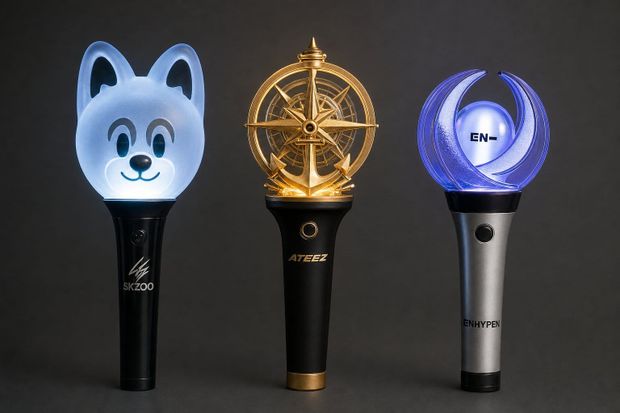
The short answer: Stray Kids build around self-produced trap-rap and EDM drops, ATEEZ deliver orchestral power anthems with cinematic staging, and ENHYPEN lean into moody synth-pop layered with dark narrative themes. All three debuted between 2018 and 2020, and each has charted on the Billboard 200 — but the listening experience is dramatically different.
If you're a newer K-POP listener trying to figure out which 4th-generation boy group fits your taste — or a longtime fan preparing to catch one of these acts live in Seoul — this guide breaks down what actually separates them. Not vague adjectives, but specific production choices, chart data, and live-venue logistics. The comparison matters more in 2026 than ever: all three groups are touring simultaneously, releasing new music within weeks of each other, and competing for the same Billboard and streaming real estate. Understanding their sonic DNA helps you decide which concert ticket to buy, which album to start with, and which rabbit hole to fall into first.
This guide draws on chart history, critical reception data, agency production philosophies, and verified 2025–2026 tour and release schedules to give you a grounded comparison rather than a popularity contest.
What Defines the 4th-Generation K-POP Sound?
Quick Answer: The 4th generation of K-POP (roughly 2018–present) is defined by genre-blending production, survival-show origin stories, and global-first release strategies. Stray Kids, ATEEZ, and ENHYPEN each represent a distinct branch of that generation — self-produced hip-hop, theatrical performance pop, and narrative-driven synth music, respectively.
4th-generation K-POP is the cohort of groups that debuted between approximately 2018 and 2021, following the global breakthrough era led by BTS and BLACKPINK. What distinguishes this generation is not just timing but approach: these groups entered an industry already oriented toward international audiences, streaming platforms, and fan-community apps like Weverse. Production styles grew more experimental, borrowing heavily from Western EDM, hip-hop, and alternative rock while maintaining K-POP's signature choreography-driven visual spectacle. According to Korea JoongAng Daily (2026-04), BTS's global success created the commercial infrastructure — from Billboard chart pathways to stadium-level touring circuits — that 4th-gen groups now navigate as standard practice.
Within this generation, Stray Kids (JYP Entertainment, debuted 2018), ATEEZ (KQ Entertainment, debuted 2018), and ENHYPEN (BELIFT LAB / HYBE, debuted 2020) emerged as three of the most commercially successful and sonically distinct acts. They share a generation label but almost nothing in terms of musical identity. That divergence is what makes comparing them useful: if you like one, you won't necessarily like the others, and knowing why saves you time and money — particularly if you're planning a trip to Korea around a specific concert.
The Korea JoongAng Daily's 2025 analysis of the cheongnyang (청량 / refreshing youthfulness) trend noted that 4th-gen groups increasingly split into two camps: high-intensity performance acts and mood-driven narrative groups (source: Korea JoongAng Daily, 2025-05). Stray Kids and ATEEZ sit firmly in the intensity camp; ENHYPEN straddles both.
How Does Stray Kids' Self-Produced Sound Stand Apart?
Stray Kids is an eight-member group under JYP Entertainment whose core musical identity revolves around 3RACHA — the internal production unit of members Bang Chan, Changbin, and Han. This self-production model is not a marketing gimmick; 3RACHA writes, composes, and arranges the majority of Stray Kids' discography, giving the group a raw, unpolished energy that distinguishes it from agency-driven production pipelines. Their signature sound layers aggressive trap beats with EDM drops, distorted synths, and intricate rap verses that often shift tempo mid-song. Stray Kids joined BTS as one of only two K-POP boy groups to achieve multiple No. 1 albums on the Billboard 200, a benchmark that underscores their commercial reach in Western markets (source: Wikipedia, K-pop Billboard chart history).
What sets Stray Kids apart from other high-energy 4th-gen groups is the sheer density of their arrangements. A typical title track might move through three or four distinct musical sections — a whispered spoken intro, a hard-hitting rap verse, a melodic pre-chorus, and a drop-heavy chorus — all within three and a half minutes. This structural complexity reflects Bang Chan's background as a trainee who spent seven years at JYP before debut, absorbing both Western and Korean production techniques. Songs like God's Menu, MANIAC, and S-Class function almost as genre sampler platters, pulling from trap, punk rock, and electronic music simultaneously.
For new listeners approaching Stray Kids, the production style can feel overwhelming on first listen. The group rewards repeated plays — details in the mix reveal themselves over time, and the rap line's wordplay (frequently switching between Korean and English) adds layers that non-Korean speakers might initially miss. If you prefer clean, minimalist pop, Stray Kids is probably not your entry point into 4th-gen K-POP. If you like Skrillex, Run the Jewels, or early Twenty One Pilots, you'll find familiar ground.
Key Albums to Start With
For a representative sample, begin with ODDINARY (2022), which balances accessibility with Stray Kids' experimental tendencies, then move to ★★★★★ (5-STAR) (2023) for their most confident, arena-scaled production. Their earlier work — GO LIVE (2020) and IN LIFE (2020) — shows the rawer, less polished version of the 3RACHA sound before the group's global breakthrough. Albums are available on Spotify, Apple Music, and in physical form at stores like Olive Young's flagship locations and HYBE Insight shop in Yongsan, Seoul (albums typically ₩18,000–₩25,000).
What Makes ATEEZ's Orchestral Power Unique?
ATEEZ is an eight-member group under KQ Entertainment whose sound is built on cinematic orchestral production, high-octane vocal delivery, and a theatrical performance philosophy that prioritizes spectacle. Unlike Stray Kids' member-driven production, ATEEZ's music is primarily shaped by KQ's external production team — notably the Edenary production crew — which gives their discography a more consistent, studio-polished quality. Their signature tracks layer sweeping string arrangements over hard-hitting EDM drops, creating a sound fans often describe as "pirate-themed" due to the group's nautical concept universe. ATEEZ is preparing to release GOLDEN HOUR: Part.3 on June 13, 2026, extending the series that produced their Billboard 200 No. 1 album GOLDEN HOUR: Part.2 in late 2024 (source: Korea Times, 2025-05).
The ATEEZ listening experience differs from Stray Kids most clearly in vocal emphasis. While Stray Kids foreground rap and rhythmic complexity, ATEEZ builds around powerful vocal lines — particularly from main vocalist Jongho, whose belt notes anchor the dramatic peaks of nearly every title track. Songs like Guerrilla, BOUNCY, and WORK use orchestral swells and chanted group harmonies to create a stadium-anthem quality that translates powerfully in live settings. The production is less structurally unpredictable than Stray Kids'; ATEEZ songs tend to follow more traditional verse-chorus-bridge structures, but the sheer sonic weight of the arrangements compensates.
ATEEZ's performance identity is also a differentiator. The group's choreography is widely considered among the most physically demanding in K-POP, with formations that emphasize synchronized power over individual flair. If Stray Kids concerts feel like rap-rock festivals, ATEEZ concerts feel like theatrical productions with a live-band energy. Their 2025 World Tour includes stops at Inspire Arena in Incheon on July 5–6, 2026, making it possible to experience this firsthand if you're visiting Korea during the summer months.
Key Albums to Start With
Begin with THE WORLD EP.1: MOVEMENT (2022) for a concentrated dose of ATEEZ's mature sound, then GOLDEN HOUR: Part.1 (2024) for their poppier, more accessible phase. Earlier albums like TREASURE EP.1: All to Zero (2018) show the group's rougher debut energy — solid but less refined than their 2022–2026 output. Physical albums run ₩17,000–₩24,000 at Korean retailers. When touring begins in 2026, merch bundles at concert venues typically start at ₩35,000.
Where Does ENHYPEN Fit in the 4th-Gen Landscape?
ENHYPEN is a seven-member group formed through the 2020 survival show I-LAND, operated under BELIFT LAB (a joint venture between HYBE and CJ ENM). Their musical identity is the most cohesive of the three groups discussed here, built around moody synth-pop, dark romance narratives, and a production style that HYBE's team has refined across multiple acts. ENHYPEN's sound sits at the intersection of mid-tempo R&B grooves and atmospheric synth work, with lyrical themes drawn from vampire lore, coming-of-age anxiety, and what Korean critics call cheongnyang (청량 / refreshing youthfulness) — a tonal quality that blends brightness with underlying melancholy (source: Korea JoongAng Daily, 2025-05). Critic aggregation from The Bias List rates ENHYPEN's top-rated tracks like Brought the Heat Back at an average of 8.88 out of 10, while lower entries like Knife still hold a 7.74 average (source: The Bias List, 2026-04).
ENHYPEN debuted two years after both Stray Kids and ATEEZ, which means their discography is smaller but more stylistically consistent. HYBE's production infrastructure — the same system that shaped BTS and TXT — gives ENHYPEN's music a polished, narrative-driven quality that connects albums into story arcs rather than treating each release as a standalone project. The BORDER, DIMENSION, and DARK BLOOD series each function as chapters in a larger fictional universe, with musical choices reinforcing plot themes. This approach appeals to fans who engage with K-POP as world-building entertainment, not just music.
For listeners coming from Western pop or indie-pop backgrounds, ENHYPEN is often the most immediately accessible of the three groups. Their production rarely overwhelms; the emphasis is on groove, atmosphere, and vocal tone rather than technical complexity or raw power. Tracks like Bite Me, Sweet Venom, and XO (Only If You Say Yes) could sit comfortably on a playlist alongside The Weeknd or Troye Sivan without tonal whiplash. Their Walk The Line Tour ran through October 2025, with 2026 engagements still being confirmed (source: Wikipedia, Enhypen live performances).
Key Albums to Start With
Start with DARK BLOOD (2023) for ENHYPEN's most complete artistic statement, then DIMENSION: DILEMMA (2021) for the cheongnyang synth-pop that defined their early identity. BORDER: DAY ONE (2020) is a strong debut mini-album but sonically narrower than later work. Physical copies are widely available at Korean music retailers and convenience store pop-up displays during comeback periods, typically ₩16,000–₩22,000.
How Do Their Discographies and Chart Records Compare?
Numbers alone don't capture musical quality, but they reveal market positioning — which groups reach which audiences, and where commercial momentum is headed. All three groups have placed albums on the Billboard 200, but their chart trajectories differ. Stray Kids established a pattern of multiple No. 1 debuts, a feat previously achieved only by BTS among K-POP boy groups (source: Wikipedia, K-pop Billboard chart history). ATEEZ reached No. 1 with THE WORLD EP.FIN: WILL and GOLDEN HOUR: Part.2 in 2024, with GOLDEN HOUR: Part.3 positioned to extend that streak in June 2026 (source: Korea Times, 2025-05). ENHYPEN's chart performance is solid but positions them as a tier below in pure sales volume, with stronger streaming numbers relative to physical sales.
| Category | Stray Kids | ATEEZ | ENHYPEN |
|---|---|---|---|
| Debut year | 2018 | 2018 | 2020 |
| Agency | JYP Entertainment | KQ Entertainment | BELIFT LAB (HYBE / CJ ENM) |
| Members | 8 | 8 | 7 |
| Signature genre blend | Trap-rap + EDM + punk | Orchestral EDM + pop-rock | Synth-pop + R&B + dark narrative |
| Self-production level | High (3RACHA) | Moderate (Edenary-led) | Low (HYBE production team) |
| Billboard 200 No. 1 albums | Multiple | 2 (as of late 2024) | 0 (Top 5 entries) |
| Fandom name | STAY | ATINY | ENGENE |
| Critic avg. (Bias List) | N/A | N/A | 7.74–8.88 |
The production philosophy column is particularly instructive. Stray Kids' self-production model means their sound evolves with the members' personal growth — when Bang Chan discovers a new genre influence, it shows up in the next album. ATEEZ's Edenary-driven approach allows for more consistent sonic branding but less track-to-track surprise. ENHYPEN's HYBE production pipeline delivers the highest polish but the least individual creative fingerprint from the members themselves. None of these approaches is objectively better; they serve different listener preferences.
Where Can You Experience These Sounds Live in Korea?
Hearing a 4th-gen group on headphones and hearing them in a Korean arena are fundamentally different experiences. The production choices that define each group — Stray Kids' layered beats, ATEEZ's orchestral swells, ENHYPEN's atmospheric synths — are designed to fill specific kinds of spaces. Korea's major concert venues each have acoustic characteristics that interact differently with these sounds. If you're planning a trip to Korea around a concert, choosing the right venue-group combination matters.
| Venue | Location | Capacity | Typical ticket price (₩) | Best for |
|---|---|---|---|---|
| Inspire Arena | 187 Yeongjonghaeannam-ro, Jung-gu, Incheon | 15,000+ | 150,000–350,000 (VIP 500,000+) | ATEEZ (Jul 5–6, 2026 confirmed) |
| KSPO Dome (Olympic Gymnastics Arena) | 424 Olympic-ro, Songpa-gu, Seoul | 15,000 | 130,000–300,000 | Stray Kids (frequent headliner) |
| Gocheok Sky Dome | 430 Mokdong-seo-ro, Guro-gu, Seoul | 25,000 | 120,000–280,000 | Multi-group festivals |
| KINTEX | 217-60 Kintex-ro, Ilsanseo-gu, Goyang-si | 10,000–20,000 | 120,000–250,000 | Award shows, year-end festivals |
| Korea University Hall | 145 Anam-ro, Seongbuk-gu, Seoul | 4,500 | 100,000–180,000 | Intimate shows (ENHYPEN award events) |
Getting Tickets as a Foreign Fan
Concert ticketing in Korea follows a consistent pattern regardless of the group: fanclub presale opens first (typically through Weverse), followed by a general sale on platforms like Interpark Global. For foreign fans, the key steps are: (1) join the group's Weverse community, (2) verify any paid fanclub membership if you want presale access, (3) set an alarm for the exact presale time in KST, and (4) have your payment method ready — Korean prepaid cards like NAMANE Card work on most domestic ticketing platforms and eliminate the foreign-card rejection issues that plague international credit cards on Korean sites.
Inspire Arena in Incheon is accessible via the AREX airport railroad from Seoul Station (roughly 40 minutes to Unseo Station, then a 5-minute shuttle). KINTEX in Goyang connects via Subway Line 3 to Daehwa Station with free event shuttles. Both venues have English-language signage at entry points, though box office staff may have limited English — having your ticket confirmation screenshot ready on your phone saves time. For detailed guidance on using Korea's transit system with a rechargeable card, the NAMANE Card service manual covers tap-in procedures and refill options at convenience stores.
Comparing the Live Experience
Stray Kids concerts prioritize audience participation — call-and-response rap sections, crowd-surfing energy (metaphorical, not literal), and extended freestyle segments where members improvise over backing tracks. ATEEZ shows are tightly choreographed spectacles with pyrotechnics, coordinated lightstick color changes, and theatrical transitions between song blocks. ENHYPEN performances lean into atmosphere — moody lighting, extended dance breaks, and VCR narrative segments that connect songs to the group's fictional universe. When BTS first sold out stadiums globally in 2017–2019, the concert infrastructure they built in Korea became the template these groups now use (source: Korea JoongAng Daily, 2026-04).
Which Group Should You Start With?
This depends less on which group is "best" and more on what kind of listener you are. After comparing production styles, chart positioning, and live experiences, here's a practical decision framework based on your existing music preferences and what you want from K-POP.
- Start with Stray Kids if: you already listen to hip-hop, EDM, or alternative rock; you value lyrical complexity and producer-as-artist authenticity; you want maximum energy per minute of music.
- Start with ATEEZ if: you respond to theatrical, cinematic music; you prioritize vocal power and performance spectacle; you enjoy dramatic builds and emotional payoffs in songs.
- Start with ENHYPEN if: you come from pop, R&B, or indie backgrounds; you prefer mood and atmosphere over intensity; you're drawn to narrative world-building and concept-driven artistry.
- See all three live if: you're visiting Korea during summer 2026, when ATEEZ's Inspire Arena dates (Jul 5–6) overlap with potential Stray Kids and ENHYPEN schedules. Budget ₩300,000–₩700,000 for two concerts including transport and merch.
- For physical albums and merch in Seoul: visit the Gangnam Olive Young flagship or HYBE Insight in Yongsan. Albums run ₩16,000–₩25,000. Lightsticks (essential for concerts) cost ₩35,000–₩45,000.
Frequently Asked Questions
Are Stray Kids, ATEEZ, and ENHYPEN rivals?
They compete for the same chart positions and award show trophies, but "rival" overstates the relationship. Each group occupies a distinct sonic niche within the 4th generation. Stray Kids' trap-rap production, ATEEZ's orchestral anthems, and ENHYPEN's synth-pop atmospheres appeal to overlapping but different listener bases. Many fans follow all three groups. The competitive framing comes primarily from award season voting, not from the artists themselves.
Which 4th-gen boy group has the most Billboard success?
Stray Kids leads with multiple Billboard 200 No. 1 albums, a record matched only by BTS among K-POP boy groups. ATEEZ follows with two No. 1 entries in 2024 and a third album (GOLDEN HOUR: Part.3) scheduled for June 2026. ENHYPEN has charted in the Billboard 200 Top 5 but has not yet reached No. 1. Chart positions reflect marketing strategies and physical-sales fandom mobilization as much as raw listenership.
Can I attend a 4th-gen K-POP concert in Korea as a foreigner?
Yes. Most major concerts sell tickets through Interpark Global, which has an English-language interface. Fanclub presales happen through Weverse. Foreign credit cards sometimes get rejected on Korean ticketing platforms — using a Korean-issued prepaid card like NAMANE Card solves this. Venues like KSPO Dome and Inspire Arena have English signage at gates. Arrive 2–3 hours early for merch lines.
What does cheongnyang (청량) mean in K-POP?
Cheongnyang (청량 / refreshing youthfulness) is a Korean music-industry term describing a bright, clean sonic and visual aesthetic associated with youthful energy. In the context of 4th-gen boy groups, it refers to synth-driven, uptempo tracks with positive or wistful emotional tones. ENHYPEN's earlier work leans heavily into cheongnyang, though the group has since incorporated darker elements. The term is also applied to groups like TXT and TREASURE.
How much does it cost to see a K-POP concert in Seoul?
Standard seated tickets for a solo concert at a major Seoul venue (KSPO Dome, Gocheok Sky Dome) range from ₩120,000 to ₩300,000 (roughly $90–$225 USD). VIP or front-section tickets run ₩350,000–₩500,000+. Festival tickets (multiple artists, such as year-end award shows at KINTEX) cost ₩120,000–₩250,000. Add ₩35,000–₩45,000 for an official lightstick and ₩20,000–₩60,000 for merch.
Do Stray Kids write their own music?
Yes. Stray Kids' internal production unit 3RACHA — consisting of members Bang Chan, Changbin, and Han — writes, composes, and arranges the majority of the group's discography. This level of self-production is unusual in K-POP and is a central part of the group's identity. ATEEZ and ENHYPEN have members who contribute to songwriting, but their primary production is handled by external teams (Edenary for ATEEZ, HYBE's in-house producers for ENHYPEN).
Where can I buy K-POP albums in Korea?
Physical K-POP albums are sold at major retailers including Olive Young flagship stores, HYBE Insight (Yongsan, Seoul), and dedicated music shops in Hongdae and Myeongdong. Albums cost ₩16,000–₩25,000. During comeback periods, convenience stores like GS25 and CU sometimes carry limited-edition versions. Online, Weverse Shop and YES24 handle both domestic and international orders. Paying with a reloadable Korean travel card at physical stores avoids foreign-card surcharges.
Bringing It All Together
The 4th generation of K-POP is not a monolith, and lumping Stray Kids, ATEEZ, and ENHYPEN together as "4th-gen boy groups" obscures what makes each one worth listening to. Stray Kids reward fans who want to hear artists pushing against genre boundaries in real time — their music is messy, maximalist, and personal in a way that polished pop rarely achieves. ATEEZ delivers the kind of spectacle that justifies buying a plane ticket to Korea specifically for their concert — the production quality of their live shows matches or exceeds their studio recordings. ENHYPEN offers the most narrative-driven listening experience, where albums function as chapters in a story you follow across years.
If you're visiting Korea in 2026, the timing is unusually good for experiencing all three. ATEEZ's confirmed Inspire Arena dates on July 5–6, combined with the likelihood of Stray Kids and ENHYPEN summer schedules, create a window where seeing multiple 4th-gen headliners in a single trip is realistic. Budget for at least two concerts, factor in transit to venues outside central Seoul (Inspire Arena requires the AREX train; KINTEX requires Line 3 to Goyang), and get your NAMANE Card loaded before you arrive — it works on transit, at convenience stores, and at most ticket counters, which simplifies the logistics of a multi-venue concert trip.
The question isn't which group is the best. It's which sound you want ringing in your ears on the subway ride home from the venue.
Last updated: 2026-04-25. This guide is reviewed and refreshed when official sources (KTO, Weverse, ticketing platforms) update their information.
This article was written using information collected and analyzed by NAMANE's in-house K-pop research AI engine. We use AI technology to bring you faster, broader coverage, and in the process some details may occasionally differ from the latest facts. For important information such as dates, venues, and prices, please double-check with official sources.


