
How much does a meal cost in South Korea in 2026?
Korea's restaurant prices have quietly drifted past the "cheap Asian food destination" reputation that still fills travel forums. The numbers below come from the government's own menu-price survey, not from estimates.
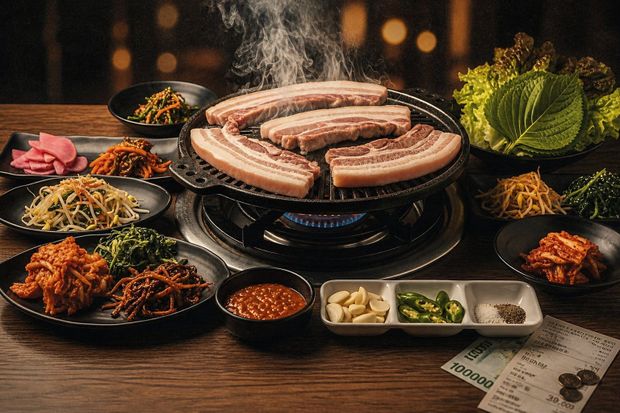
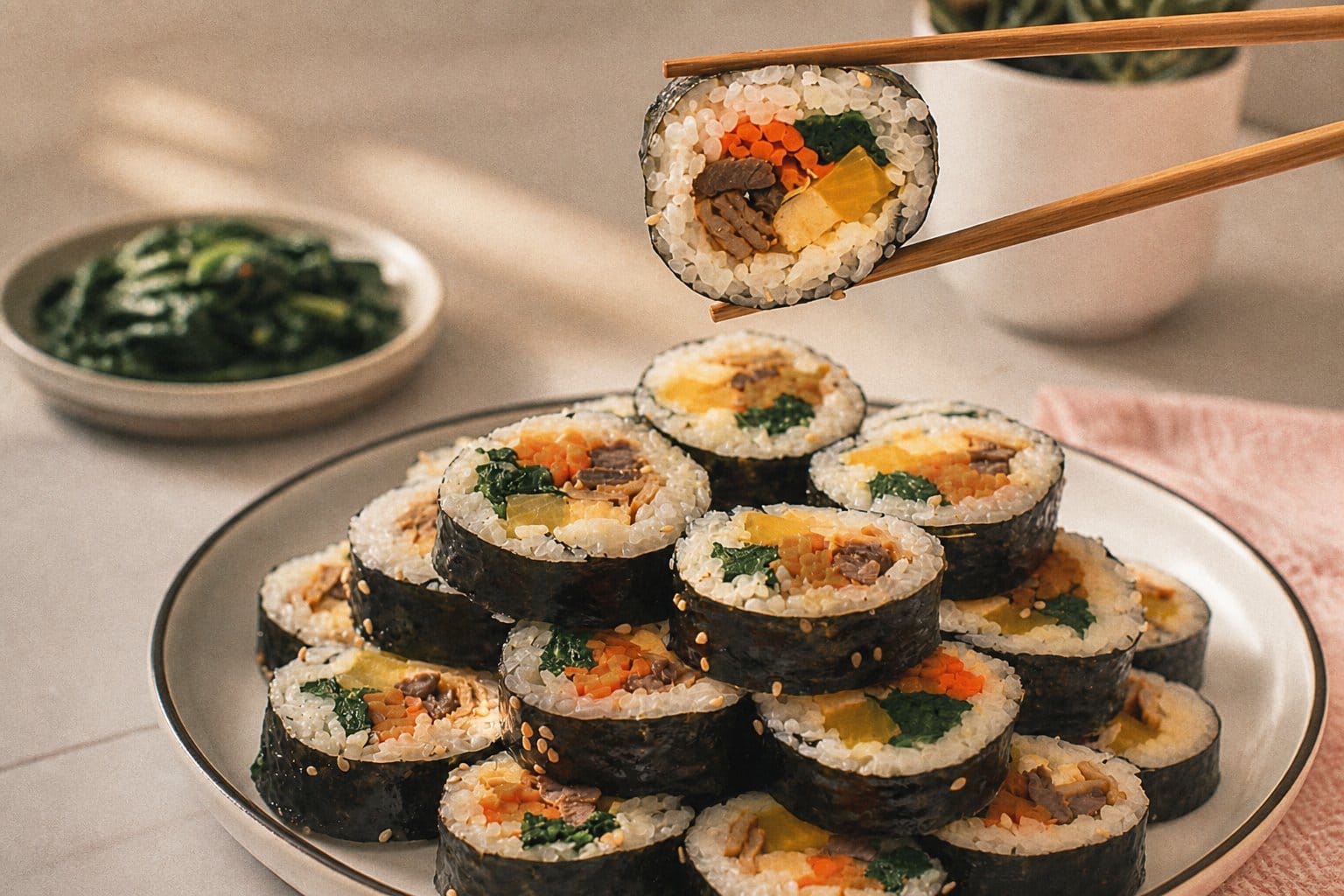
An ordinary sit-down Korean meal in South Korea costs ₩8,000–₩13,000 per person in 2026 — about $5.45–$8.86 — according to the Korea Consumer Agency's 참가격 dining-out survey . Samgyeopsal is the priciest tracked item at ₩21,321 per 200g ($14.54); kimbap is the cheapest at under ₩4,000 ($2.73) .source
All dollar figures here use the Ministry of Economy and Finance closing rate of ₩1,466.8 per USD from July 23, 2026 . Many English cost guides still convert at a stronger won and overstate dollar prices by 10–15%.source
The official 2026 price list: 8 dishes, won and dollars
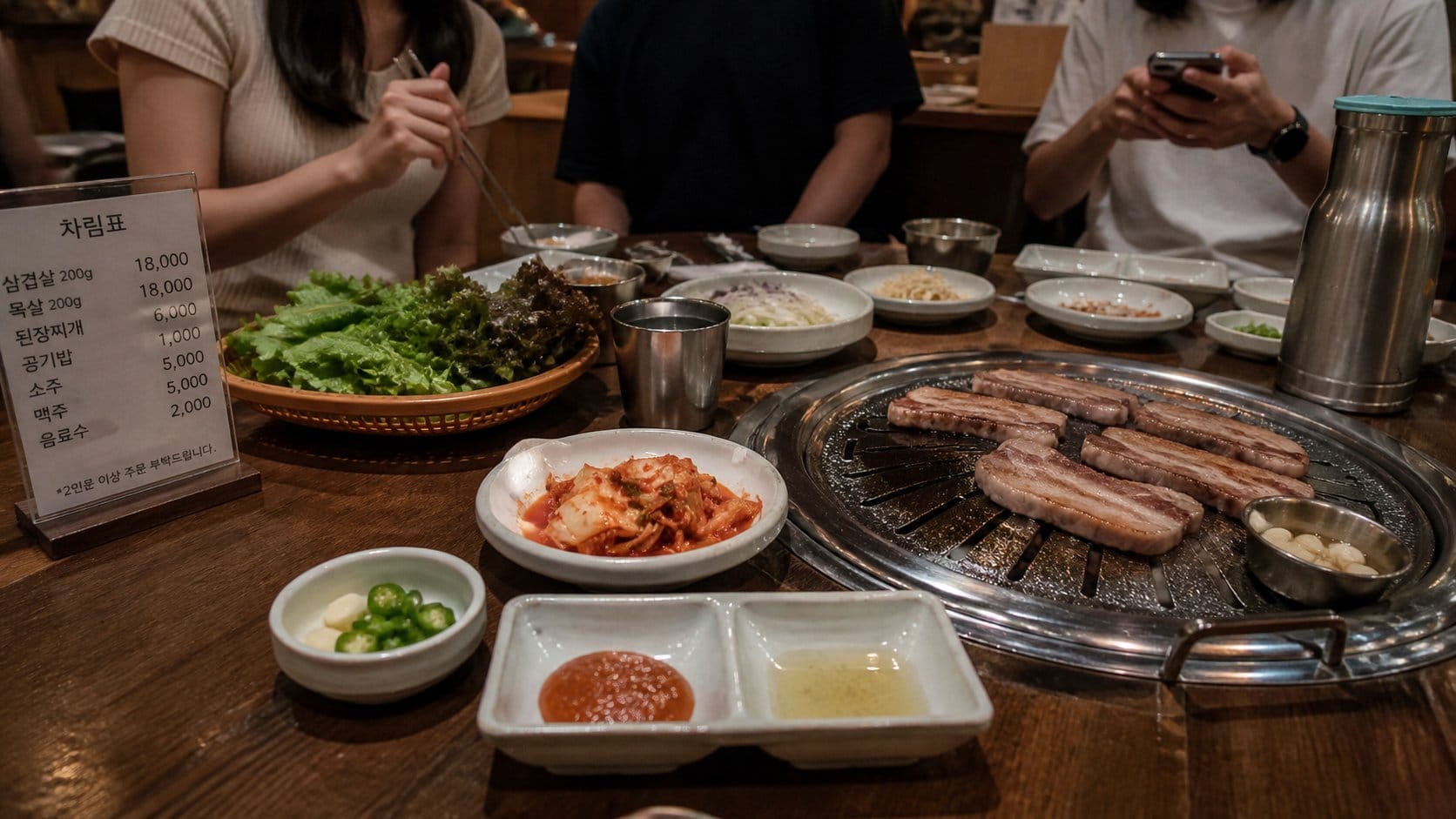
The 참가격 (True Price) portal run by the Korea Consumer Agency tracks eight representative dining-out dishes every month, and its Seoul table is the closest thing Korea has to an official menu-price benchmark . The Seoul spread runs from kimchi-jjigae baekban at ₩8,654 ($5.90) to samgyeopsal at ₩21,321 ($14.54) per 200g portion, a 2.5× gap between the cheapest and most expensive tracked items . Between those two poles sit the dishes most visitors actually order: kalguksu, bibimbap, naengmyeon and samgyetang.source
| Dish | Seoul average (KRW) | USD @ ₩1,466.8 | Year-on-year change |
|---|---|---|---|
| Kimbap (1 roll) | under ₩4,000 | ~$2.73 | — |
| Jjajangmyeon | mid-₩7,000s | ~$5.15 | +3.08% (from ₩7,500) |
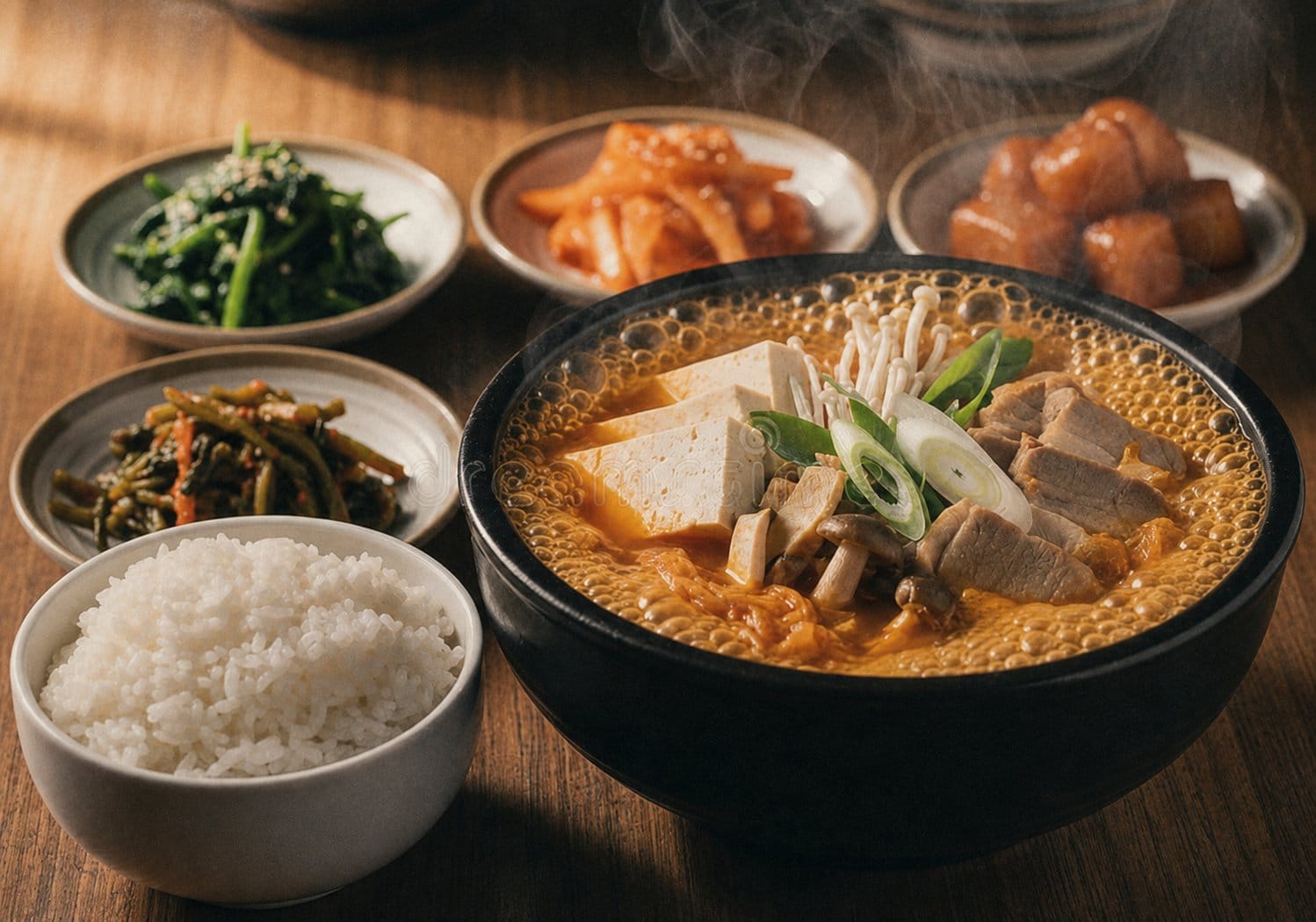
| Kimchi-jjigae baekban | ₩8,654 | $5.90 | +1.81% (from ₩8,500) |
| Kalguksu | ₩10,038 | $6.84 | +4.40% (from ₩9,615) |
| Bibimbap | just under ₩11,800 | ~$8.05 | — |
| Naengmyeon | ₩12,615 | $8.60 | +4.13% (from ₩12,115) |
| Samgyetang | ₩18,154 | $12.38 | +3.74% (from ₩17,500) |
| Samgyeopsal (200g) | ₩21,321 | $14.54 | +4.27% (from ₩20,447) |
Year-on-year, the tracked items moved in a narrow band of roughly 1.8% to 4.9% . Kimchi-jjigae baekban was the most stable at +1.81%, while kalguksu led at +4.40% — noodle dishes rose faster than rice-and-stew sets across the board. The full table is published monthly on the True Price dining-out portal, with a per-region breakdown available through the Korea Consumer Agency's regional list.
One line in that table is routinely misread. The ₩21,321 samgyeopsal figure is the price of a single 200g portion, not a meal . Korean barbecue restaurants take orders by the portion and generally require two or more per table, so the number that lands on a bill is a multiple of it before anyone adds soju, a bowl of naengmyeon to finish, or steamed egg. That structural detail is why the same dish can appear as "$14.54" in a price index and as a $40 dinner in practice.
Two further limits are worth carrying into any comparison. True Price itself flags restaurant data as provisional, since surveyed establishments close and menu items get discontinued, and it cautions that region-to-region comparison is imperfect because restaurant quality and menu composition are not identical across areas . The table also covers only selected Korean menus — it prices no coffee, no fried chicken, no Western food, no alcohol, no premium barbecue and no hotel or tourist-district restaurants . Read these as averages of ordinary neighborhood restaurants, which is exactly what makes them a useful floor for budgeting.
Why a samgyeopsal dinner actually runs $35–$55 for two
A samgyeopsal dinner for two in Seoul realistically costs ₩50,000–₩80,000, or roughly $34–$55, not the ₩21,321 that appears on the official price table . The gap exists because ₩21,321 buys a single 200g portion of pork belly, and Korean barbecue is ordered per person with a two-portion practical minimum, then padded with rice, stew, and drinks . Budget the table total, not the menu line.source
The mechanics are simple once the ordering convention is clear. Grill meat is priced by weight per serving, and most restaurants will not fire a grill for a single 200g order shared between two people. Two portions puts ₩42,642 on the bill before anything else arrives . From there the additions are near-automatic:source
- Second round of meat — one more 200g portion at ₩21,321 is common for two hungry diners .source
- Rice, cold noodles, or stew to close — a naengmyeon finisher averages ₩12,615 in Seoul .source
- Soju or beer — alcohol is not covered by the official dining-out table at all, so it lands entirely outside the ₩21,321 reference .source
Add those and ₩50,000–₩80,000 for two is the ordinary landing zone, which is why barbecue sits in the ₩20,000–₩40,000-plus per-person tier rather than the ₩8,000–₩13,000 tier of an everyday Korean lunch. Samgyeopsal also rose 4.27% year on year, from ₩20,447 to ₩21,321, so the base keeps drifting upward .source
For a reference point on where "moderate" dining stops, the Michelin Guide sets its Bib Gourmand threshold in Korea at a full meal under ₩45,000 per person — about $31 . The 2026 Korea selection lists 71 restaurants at that level, 51 in Seoul and 20 in Busan, including 8 new entries . In other words, a two-person barbecue dinner with drinks can cost about the same as two Bib Gourmand meals — and genuine fine dining begins far higher, around ₩150,000 per person .source
Seoul vs the rest of Korea: how big is the price gap?
Seoul is the most expensive dining market in South Korea on every item the Korea Consumer Agency tracks, and the gap is wide enough to change a travel budget. Naengmyeon averages ₩12,615 in Seoul against ₩9,556–₩9,667 in South Jeolla — a spread of more than ₩3,000, or roughly 30%, on the same dish . Between those two poles sit Incheon and Daegu at ₩11,750, Busan at ₩11,714, Daejeon at ₩11,200, and Gyeonggi at ₩10,862 . Eating the same meal outside the capital is one of the few reliable ways to cut a Korea food budget without changing what you order.source
| Region | Naengmyeon average | Difference vs Seoul |
|---|---|---|
| Seoul | ₩12,615 | — |
| Incheon / Daegu | ₩11,750 | −₩865 (−6.9%) |
| Busan | ₩11,714 | −₩901 (−7.1%) |
| Daejeon | ₩11,200 | −₩1,415 (−11.2%) |
| Gyeonggi | ₩10,862 | −₩1,753 (−13.9%) |
| South Jeolla (Jeonnam) | ₩9,556–₩9,667 | about −₩3,000 (−23%) |
The Ministry of Agriculture, Food and Rural Affairs quantified the Seoul premium directly using the same Consumer Agency survey in November 2025: kimbap ₩3,700 in Seoul against ₩3,398 nationwide, kalguksu ₩9,846 against ₩8,929, and bibimbap ₩11,577 against ₩10,072 . Seoul's year-on-year increases also outpaced the national figures on two of those three items — 5.7% versus 4.3% for kimbap and 4.9% versus 3.1% for kalguksu, while bibimbap rose 3.4% in Seoul against 4.0% nationwide . The capital is not only more expensive; on most dishes it is pulling away.source
Regional lows go further than the naengmyeon table suggests. Official survey data puts Jeonnam kimbap at ₩2,889, Gyeongbuk jjajangmyeon at ₩6,769, Daegu kalguksu at ₩7,583, and Gyeongnam bibimbap at ₩9,154 . Commercial cost-of-living tracking lands in the same place: casual Busan meals run ₩7,000–₩12,000 and Busan coffee ₩4,500–₩6,000, against ₩25,000–₩40,000 for a casual Seoul day of two meals plus coffee .source
Two rules of thumb follow from the data, and they matter more than any single average:
- Busan and regional cities run roughly 15–20% below Seoul on casual, everyday meals .
- Seoul tourist-corridor restaurants charge 30–50% above neighborhood prices — so the ₩12,615 city average is a floor, not a ceiling, in Myeongdong or Hongdae .source
- Stacking both effects, the same naengmyeon can plausibly cost under ₩10,000 in Jeonnam and near ₩18,000 in a tourist-corridor Seoul restaurant.source
One caveat applies to every figure here: the Korea Consumer Agency notes that region-to-region comparison is imperfect because restaurant quality and menu composition differ between areas, and that surveyed establishments change as businesses close or drop dishes . A ₩9,556 Jeonnam naengmyeon and a ₩12,615 Seoul one are not guaranteed to be the same bowl.source
Why restaurant prices keep rising
Restaurant menu prices in Korea rise because ingredients and labor together account for roughly 70% of what it costs to run a dining establishment, and both have climbed steadily since 2020. The Ministry of Agriculture, Food and Rural Affairs breaks restaurant operating costs down as 40.4% food ingredients, 29.4% labor, 8.7% rent, 5.6% taxes and utilities, and 7.0% other expenses . When two line items that big move at once, owners raise menu prices rather than absorb the gap.
The two mechanical drivers are wages and rent. Korea's minimum wage rose from ₩8,720 in 2021 to ₩10,030 in 2025, and small-store rent in Seoul went from ₩49,400 to ₩51,800 per square meter over the same period . Neither figure looks dramatic in isolation, but a small kitchen running three shifts feels a 15% wage increase in every plate it sells, and rent is the one cost a neighborhood restaurant cannot renegotiate downward.
Headline inflation has cooled without reversing. July 2026 consumer prices came in at 119.77 on the 2020=100 index, up 2.8% year on year — the first sub-3% reading in three months, down from 3.2% in June . Dining-out (외식) inflation ran 2.6% year on year, with the eating-out service index at 128.06 in June, up 0.2% month on month . Personal services ran 3.5%, and under the international COICOP classification, "restaurants and accommodation" actually widened from 2.7% in June to 2.8% in July . One naming note for anyone tracking the source data: from 2026 these statistics are published by 국가데이터처 (Ministry of Data and Statistics), successor to Statistics Korea.
Input costs are still running hotter than the headline. Livestock products were up 6.2% and grains 8.2% in June — which is why pork-based dishes like samgyeopsal and jjigae keep drifting upward even in months when the overall index behaves.
The multi-year arc explains the sticker shock better than any single month. Between 2020 and mid-2025, Korean restaurant prices rose roughly 24.6–24.8% overall, with the cheapest categories moving fastest: gimbap up 38%, hamburgers 37%, tteokbokki 35%, and jjajangmyeon 33% . Seoul naengmyeon is up about 40% since 2020 . Budget dishes compressed the least room to absorb costs, so they took the largest percentage hits — the ₩3,000 gimbap roll a visitor remembers from 2019 is structurally gone.
What that means practically: a returning traveler should assume roughly a quarter more for the same meal than a pre-2020 trip, and should not expect current single-digit dining-out inflation to walk prices back. Falling inflation slows the rate of increase; it does not lower the menu.
Where meals are still cheap in Seoul
Cheap eating in Seoul survives in specific channels rather than across the board: kimbap shops, workplace and campus cafeterias, convenience stores, and government-designated low-price restaurants. In practice that means ₩3,000–₩7,000 buys a real meal, against the ₩8,000–₩13,000 an ordinary sit-down Korean lunch now costs . Convenience stores anchor the floor — triangle gimbap runs ₩1,200–₩1,500 and in-store prepared ramyeon ₩1,500–₩2,000 . At the official closing rate of ₩1,466.8 per dollar (July 23, 2026), that is roughly $0.85 to $1.40 .
The most systematic tool is the Ministry of the Interior and Safety's 착한가격업소 (Good Price) program, a public database of businesses that commit to below-average pricing. It listed 12,738 registered businesses when checked, and the entries are searchable by district — examples include a Jongno banquet-noodle shop at ₩5,000 and set meals in the ₩11,000–₩15,000 band . The listings are in Korean, but the address and price fields translate cleanly, and Seoul also publishes its own district-level price monitoring for the same categories .
On-the-ground reporting matches those figures. Food channels documenting Seoul's budget end found a pork belly, spam and fried-egg rice plate at ₩3,000, a one-person budae-jjigae for roughly $7–10, and a university-district street-food strip where no item exceeded $5 (video: Strictly Dumpling) . Seoul's "Cup Bap Road" kiosks — rice bowls served in a cup, sold from window counters — carry 35-plus varieties, with the loaded 'Hwang-je' (King) version, layering mushroom, Vienna sausage, egg, cheese, bacon, fried kimchi, sesame and seaweed over rice, at about $7.50, and a fries-coated corn dog at about $2.50 (video: Best Ever Food Review Show) .
Chain toast counters occupy the same tier: the ESOP Toast chain prices most items between about $2 and under $4, with a Ham Special around $2.50 and a Pizza Toast around $3.50 . The pattern across all of these is the same: the cheap tier is defined by service model, not by neighborhood. Counter service, no table seating, no banchan spread, and fast turnover keep prices down, while the same street can host a ₩21,321-per-200g samgyeopsal table two doors away .
- Convenience store: triangle gimbap ₩1,200–₩1,500; prepared ramyeon ₩1,500–₩2,000
- Street and kiosk: corn dog ~$2.50; cup bap ~$7.50 loaded; university-district items under $5
- Toast chains: ESOP Toast $2–$4 per item
- Good Price shops: noodles from ₩5,000; set meals ₩11,000–₩15,000 across 12,738 listings
- Rice plates and one-person stews: ₩3,000 rice plate; budae-jjigae $7–10
What delivery, tipping, and banchan do to your real bill
Three Korean dining conventions move your actual spend away from the menu price — two of them downward. Delivery is the only meaningful surcharge: Statistics Korea's experimental delivery-fee index found ₩3,000 was the most common per-order restaurant delivery fee across CPI restaurant outlets surveyed from November 2022 to December 2023 . On a ₩10,000 single-person order that is a 30% markup before minimum-order padding, and the fee itself was still climbing — up 3.9% year on year in November 2023 and 4.3% in December 2023 .
Practically, delivery adds roughly 25–35% to a typical one-person order, and most platforms enforce a minimum order value that pushes you to add a side or a second dish. Eating the same ₩10,000 dish in the restaurant costs ₩10,000; having it brought to a guesthouse costs ₩13,000 or more. For a traveler comparing a ₩8,654 kimchi-jjigae baekban against delivered fried chicken, the gap is wider than the menu suggests .
Going the other way: Korea has no tipping culture and no restaurant service charge, so the printed price is what you pay. A ₩12,615 Seoul naengmyeon is ₩12,615 at the register — no 15–20% gratuity, no cover charge, no automatic party surcharge . Compared with a US bill on the same ₩12,615 base, that alone is a difference of roughly ₩2,000–₩2,500 per person, and leaving cash on the table is more likely to confuse staff than please them (video: Anna Lee).
Banchan — the small side dishes set out with the meal — are included in the price and usually refillable at no charge, and water is self-serve from a dispenser or a communal bottle on the table (video: Anna Lee). That is what makes the ₩8,654 baekban competitive with a convenience-store lunch: the stew arrives with rice, kimchi, and typically three to six additional sides, all covered by that single figure . Ask for a refill by flagging staff or pressing the table call button; you will not be charged.
One procedural habit trips up first-time visitors: in most casual Korean restaurants you carry the check to a counter near the entrance and pay there rather than waiting for a server to bring a card machine to the table (video: Anna Lee). Sitting and waiting after finishing can read as loitering during a busy lunch turn. Card acceptance is close to universal, including at small shops, so cash is optional except at street stalls and some traditional-market vendors.
Daily food budget for Seoul in 2026
A defensible daily food budget for one person in Seoul in 2026 is ₩20,000–₩50,000, or roughly $15–$35 at the Ministry of Economy and Finance closing rate of ₩1,466.8 per USD on July 23, 2026 . The low end assumes kimbap shops, cafeterias and convenience stores; the high end assumes one barbecue or drinking meal per day. Most visitors land near the middle at two ordinary meals plus a coffee.
The band is wide because a single decision — whether you sit down for grilled pork — moves the day more than everything else combined. A ₩8,654 kimchi-jjigae baekban and a ₩4,000-ish kimbap roll can carry an entire day under ₩20,000, while one 200g samgyeopsal portion alone averages ₩21,321 in Seoul before drinks .
| Meal tier | Won per person | USD (₩1,466.8/$) | Typical example |
|---|---|---|---|
| Very cheap meal | ₩5,000–₩8,000 | $3.40–$5.45 | Kimbap roll, cafeteria set, convenience-store meal |
| Ordinary Korean lunch | ₩8,000–₩13,000 | $5.45–$8.85 | Kimchi-jjigae baekban ₩8,654, kalguksu ₩10,038 |
| Fuller sit-down meal | ₩12,000–₩20,000 | $8.20–$13.65 | Naengmyeon ₩12,615, samgyetang ₩18,154 |
| Barbecue, drinks, delivery, premium areas | ₩20,000–₩40,000+ | $13.65–$27.30+ | Samgyeopsal ₩21,321/200g, two-person BBQ ₩50,000–₩80,000 |
| Bib Gourmand ceiling | up to ₩45,000 | ≈$31 | Michelin 2026 Korea selection: 71 restaurants, 51 in Seoul |
Those tier figures come from the Korea Consumer Agency's 참가격 survey , and the ₩45,000 ceiling is the Michelin Guide's own Bib Gourmand definition for its 2026 Korea selection of 71 restaurants, 51 of them in Seoul . Above that line, genuine fine dining starts near ₩150,000 per person.
Travelling outside the capital lowers the same day by 15–20%. A casual Busan day of two meals plus coffee runs against a Seoul equivalent of ₩25,000–₩40,000, with Busan casual meals at ₩7,000–₩12,000 and coffee at ₩4,500–₩6,000 . Regional gaps in the official survey point the same direction — naengmyeon averages ₩12,615 in Seoul against ₩9,556 in South Jeolla .
Concrete takeaway: budget ₩30,000 a day for a normal Seoul eating pattern, add ₩25,000 on each barbecue or drinking night, and subtract about ₩6,000 a day once you leave Seoul. Treat every figure here as a monthly-updated average — 참가격 itself flags restaurant data as provisional, since surveyed shops close and menus change .
Frequently asked questions
How much does an average meal cost in South Korea in 2026?
An ordinary sit-down Korean meal costs about ₩8,000–₩13,000, or roughly $5.90–$8.86 at the ₩1,466.8 per USD official rate . Korea Consumer Agency 참가격 data puts kimchi-jjigae baekban at ₩8,654 and kalguksu at ₩10,038 in Seoul . Cheaper channels — kimbap shops, cafeterias, convenience stores — run ₩3,000–₩7,000, while fuller Seoul dishes such as naengmyeon (₩12,615), samgyetang (₩18,154) and samgyeopsal (₩21,321) sit in the ₩12,000–₩21,000 band .
Why is samgyeopsal priced at $14.54 if it's a "cheap" Korean food?
Because ₩21,321 ($14.54) is the official average for a single 200g portion, not a meal . Korean barbecue is ordered by the portion and most tables order two or more per person, then add rice, jjigae, soju or beer. That is why a realistic two-person barbecue dinner lands at ₩50,000–₩80,000 rather than the ₩42,600 the headline number suggests . The item also rose 4.27% year on year, from ₩20,447 .
Is food more expensive in Seoul than the rest of South Korea?
Yes. Seoul is the highest-priced market on every item 참가격 tracks. Naengmyeon averages ₩12,615 in Seoul versus ₩11,714 in Busan, ₩10,862 in Gyeonggi and ₩9,556 in South Jeolla — a spread above ₩3,000 . A November 2025 MAFRA citation of the same data shows Seoul kimbap at ₩3,700 against ₩3,398 nationwide and bibimbap at ₩11,577 against ₩10,072 — a 5–10% gap on everyday dishes . Restaurants inside Seoul's tourist corridors add roughly another 30–50% over neighborhood prices .
How much should I budget per day for food in South Korea?
₩20,000–₩50,000 per person per day, or about $15–$35, covers a normal eating pattern in 2026 . That splits into ₩5,000–₩8,000 for a cheap meal, ₩8,000–₩13,000 for an ordinary Korean lunch and ₩12,000–₩20,000 for a fuller sit-down dinner . Barbecue, alcohol, delivery or premium districts push a single sitting to ₩20,000–₩40,000 and above; delivery alone adds roughly ₩3,000 per order, the most common fee in Statistics Korea's survey . Outside Seoul, subtract about 15–20% on casual meals.
Do I need to tip at restaurants in South Korea?
No. Korea has no tipping culture and restaurants do not add a service charge, so the price printed on the menu is the price you pay (video: Anna Lee). Banchan side dishes arrive free and are usually refillable, and water is self-serve — which is why a ₩8,654 kimchi-jjigae baekban is a complete meal rather than a base plate . In most everyday restaurants you also carry the check to a counter near the door instead of waiting for the server to bring it to your table.
Watch / Sources
- Best Ever Food Review Show — CHEAP KOREAN STREET FOOD! How to EAT BIG for little money in Seoul, South Korea!
- Anna Lee — Things foreigners should NOT do in Korea (from a Korean's perspective)
- Strictly Dumpling — 20 BEST Korean Cheap Eats in Seoul South Korea
Last updated: 2026-08-10. Prices verified against Korea Consumer Agency 참가격 monthly dining-out survey data and the Ministry of Economy and Finance closing rate of ₩1,466.8 per USD (July 23, 2026).
Enjoyed this article? Subscribe to get new stories by email whenever they're published.
This article was written using information collected and analyzed by NAMANE's in-house K-pop research AI engine. We use AI technology to bring you faster, broader coverage, and in the process some details may occasionally differ from the latest facts. For important information such as dates, venues, and prices, please double-check with official sources.


