

Refined Maximalism: How Korean Fashion Redefined Itself in 2026
Refined Maximalism is the defining aesthetic movement in Korean fashion in 2026 — a measured return to bold expression after several seasons of quiet luxury, where a single dramatic element anchors an otherwise pared-back look. Sculptural shoulders, statement accessories, or exaggerated volume now function as focal points rather than as total wardrobe approaches, giving the overall look intention rather than excess. According to Delivered Korea's 2026 brand review, Seoul's designers have pivoted decisively toward this approach, with gender-fluid construction and architectural silhouettes now standard across both independent labels and commercially distributed lines. The result is clothing that reads as confident and deliberate — a sophistication that separates 2026 Korean fashion from earlier boom cycles. This inflection point also marks the moment K-fashion fully transitioned from absorbing global cues to actively generating them, with Seoul's designers now being cited as primary references by stylists in Paris, Tokyo, and New York.
Quick Answer: Korean fashion in 2026 is defined by Refined Maximalism — one bold element (sculptural shoulders, statement accessories, oversized volume) paired with a pared-back look. Gender-fluid design is now a commercial standard. Seoul has shifted decisively from trend-follower to global trendsetter, with brands like Ader Error, Andersson Bell, and POST ARCHIVE FACTION influencing runways internationally.
The trajectory leading to this moment ran through the Acubi aesthetic — a Seoul-born movement drawing on early-2000s Y2K energy with oversized silhouettes, muted neutral layers, and mixed textures. Wide-leg trousers, soft layered knits, minimalist sneakers, and understated accessories in a low-contrast palette defined the look. Acubi set the visual baseline — a textural, layered neutrality — from which 2026's bolder departures now diverge. The Dolls & Charms accessories trend, for instance, extends the Acubi impulse into personalized keychains and plush bag charms, carrying its whimsical spirit forward while the broader silhouette conversation has moved on to architectural volume.
Gender-fluid design is the structural change beneath the aesthetic story. Male K-pop idols appear in lace, pearl jewelry, and cropped blazers on stage, at airports, and in brand campaigns; female performers lead in structured power suits and masculine silhouettes. What began as editorial provocation has become a commercial standard: retailers from Ader Error to Recto now build gender-neutral sizing into standard product lines rather than special collections. The shift is meaningful because it extends beyond aesthetics — it signals a structural change in how Korean fashion markets, manufactures, and sizes clothing.
"Korean designers have moved from referencing global fashion to being referenced by it. The 2026 collections from Seoul labels are showing up on international mood boards before they reach Seoul boutiques." — Editorial analysis, Korea Herald, 2026
Global supply chains, idol-driven media reach, and platform-enabled direct-to-consumer selling have compressed the distance between Seoul and international markets to near zero. Seoul designers like POST ARCHIVE FACTION and Wooyoungmi are not merely appearing on international runways — they are being cited by European and American stylists as primary references rather than regional curiosities. That shift is the defining story of Korean fashion in 2026.
10 Trends Defining Seoul Street Style in 2026
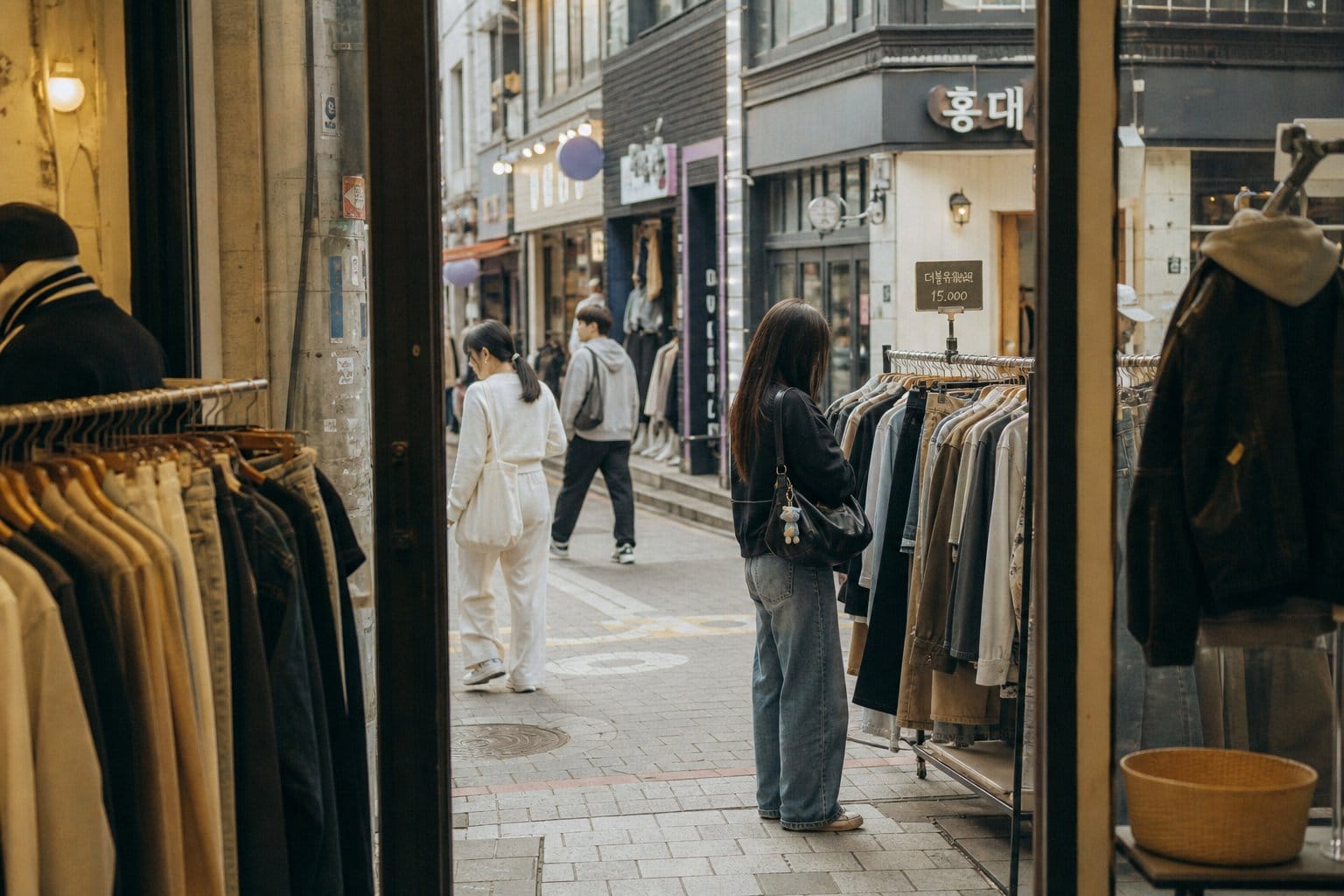
Seoul street style in 2026 is defined by ten intersecting macro-trends, each rooted in specific cultural signals rather than arbitrary seasonal shifts. The most dominant is Hybrid Gorpcore/Granola-Chic — the fusion of performance outerwear with elevated fabrics in earthy palettes — documented across Korean fashion media as the single most viral look of the year. Gore-Tex jackets layered over silk dresses, moss green technical vests over ochre linen, warm beige outerwear over structured knits — these combinations have saturated Seongsu-dong street photography and Musinsa editorial pages throughout 2026. The through-line across most trends this year is intentionality: each look has a conceptual anchor, whether sustainability (Upcycled Denim), futurity (Y3K), or cultural reclamation (Retro-Halmeoni).
Alongside Gorpcore, the Y3K Aesthetic has emerged as the second major conversation: holographic fabrics, chrome finishes, and asymmetrical cuts drawing from metaverse and AI cultural imagery. Where Y2K looked backward with nostalgia, Y3K is forward-facing and experimental — the fashion equivalent of speculative fiction rather than retro revival. This makes it distinct from the Acubi lineage even though both draw on early-2000s visual grammar.
The Idol Academy Style (Preppy 2.0) trend illustrates how K-pop idol styling directly shapes retail demand: loose ties over oversized shirts, pleated leather skirts, and chunky lug-sole loafers replicate idol campus looks at commercial scale across Seoul boutiques and Musinsa product listings. The table below summarizes all ten 2026 trends with aesthetic markers, key garments, and influence origins.
| Trend | Aesthetic Marker | Key Garments / Details | Primary Influence |
|---|---|---|---|
| Hybrid Gorpcore / Granola-Chic | Earthy tones, performance-meets-luxury | Gore-Tex over silk, moss green, ochre, warm beige | Idol street style, outdoor-luxury crossover |
| Y3K Aesthetic | Futuristic, chrome, holographic | Holographic fabrics, asymmetrical cuts, chrome finishes | Metaverse culture, AI imagery |
| Idol Academy Style (Preppy 2.0) | Campus-coded, structured casual | Loose ties, pleated leather skirts, lug-sole loafers | K-pop idol campus styling |
| Structured Oversize / Architectural Volume | Precision silhouette, 80s-influenced | XXL shoulder pads, cinched waists, utility belts | Refined Maximalism design direction |
| Retro-Halmeoni | Vintage-traditional fusion | Thrifted pieces, traditional craft references recontextualized | Cultural reclamation, sustainability |
| Upcycled Denim | Reconstructed, raw, geometric patterning | Dark rigid denim reconstructed from scraps, natural variation | Sustainability movement, Seoul indie workshops |
| Soft Tech-Wear | Utilitarian design in pastel palettes | Cargo pockets, adjustable straps in powder blue / matcha green | Gender-neutral functional fashion |
| Texture Maximalism | Mixed-material layering | Tulle over denim, bouclé with vegan leather, velvet under outerwear | Post-quiet-luxury expressionism |
| Organic Monochrome | Head-to-toe earthy tone dressing | Camel, taupe, cream in cashmere / silk / linen layers | Quiet luxury evolution, understated statement |
| Dolls & Charms Accessories | Playful personalization | Plush charms, keychains on designer bags or belt loops | Acubi aesthetic extended into accessories |
The breadth of these trends reflects the structural diversity of Seoul's fashion ecosystem: independent designer studios, idol-adjacent brand partnerships, wholesale fast-fashion, and luxury ateliers all feed the same street-level conversation simultaneously. No single aesthetic dominates — which is itself the defining characteristic of Korean fashion's current moment.
K-Pop Idols as Fashion Forecasters: Who's Wearing What in 2026
K-pop idols function as fashion forecasters in 2026 with an efficiency that no editorial calendar can replicate. When Red Velvet's Seulgi appeared in a grey high-neck fleece paired with plaid pants and chunky boots, the look spread across Korean street style photography and social platforms within days — a direct demonstration of how a single airport outfit can anchor a macro-trend. That gorpcore reference point became one of the most replicated looks of 2026 in Seoul, confirming what the city's styling community already understood: idol styling teams now operate as de-facto trend forecasters whose influence reaches retail floors faster than any traditional fashion week pipeline.
Brand endorsements follow a predictable commercial logic. BLACKPINK's Lisa and aespa's Giselle wearing Andersson Bell generates measurable traffic to the brand's webstore, often resulting in sellouts within 24–48 hours. BTS's J-Hope has become so closely associated with Ader Error that the brand's experimental aesthetic is frequently described through his airport and off-duty looks. These associations are not always formal sponsorships — organic sightings carry nearly equal commercial weight when the idol's platform reach is large enough. The brands most tightly connected to idol styling — Ader Error, Andersson Bell, LOW CLASSIC — consistently show traffic metric spikes following idol sightings, per pattern tracking by Trendxplore's 2026 Korean brand analysis.
"The speed at which idol looks translate to commercial product has no parallel in Western fashion markets. Stage and airport looks documented on a Tuesday are often in production by Thursday and available on Musinsa within the following week." — Industry analysis, The Apparel Factory, 2026
The gender-neutral styling revolution is the most commercially significant structural development. Male performers appearing in lace collars, pearl necklaces, and cropped blazers have normalized cross-gender fashion at the retail level in a way that editorial campaigns alone could not achieve. Brands like Andersson Bell and Ader Error have responded by expanding gender-neutral sizing and product lines as standard catalog offerings, not limited editions. The idol as fashion vector is not simply about what they wear — it's about making previously niche aesthetics feel accessible and desirable to mainstream buyers across global markets.
Korean Fashion Brands Worth Knowing in 2026
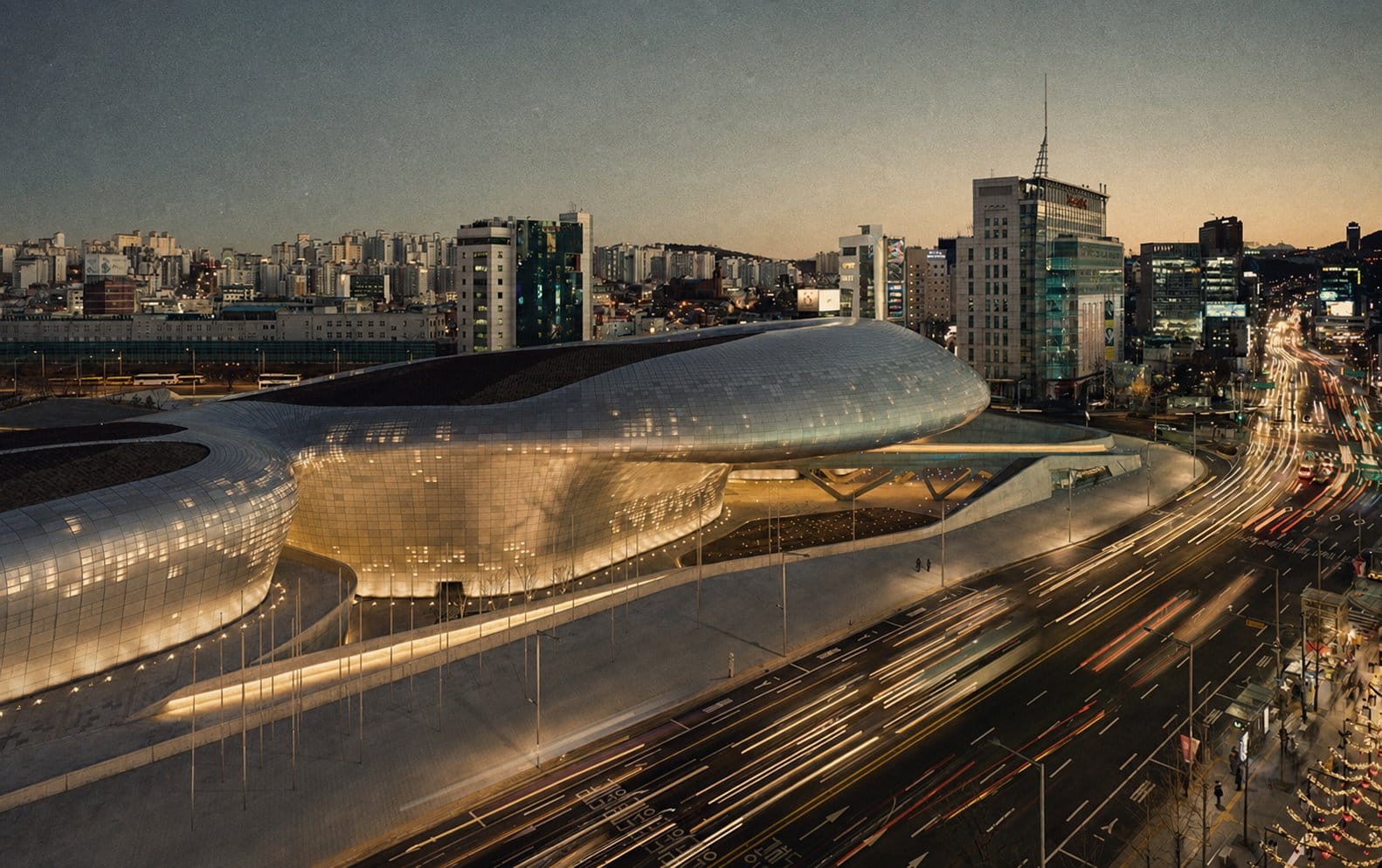
Korean fashion brands in 2026 span a clear range from globally distributed luxury exports to Seoul-cult indie labels, each occupying a distinct aesthetic and price position. The most internationally recognized are Ader Error, Andersson Bell, Gentle Monster, Wooyoungmi, thisisneverthat, and POST ARCHIVE FACTION (PAF) — all of which have achieved meaningful presence outside Korea through direct international shipping, wholesale partnerships, or runway appearances. Below this international tier sits a vibrant layer of Seoul cult favorites — LOW CLASSIC, Recto, Amomento, Hyein Seo — whose international reach is expanding as global fashion consumers grow more comfortable navigating Korean platforms directly.
Ader Error, founded in 2014, defines experimental streetwear with asymmetrical cuts, quirky graphics, and oversized silhouettes. J-Hope of BTS has been photographed in Ader Error across multiple seasons, and the brand's Seongsu-dong and Hongdae flagships are among Seoul's most-visited fashion destinations. International shipping is available via the brand's own webstore. Andersson Bell blends Scandinavian minimalism with Seoul streetwear through bold color blocks and clean structural lines. BLACKPINK's Lisa and aespa's Giselle were both documented wearing the brand in 2026, generating significant international webstore traffic spikes.
Wooyoungmi has been showing at Paris Fashion Week since 2002, making it Korea's longest-standing luxury menswear presence on the international stage — sharp tailoring and structured suits define its identity. thisisneverthat occupies a different tier: elevated basics, innovative fabrics, and graphic tees that travel well globally, with a flagship in Hongdae and a strong international online presence. POST ARCHIVE FACTION (PAF) is the rising avant-garde story of 2026: modular, deconstructed silhouettes receiving serious international press attention. Gentle Monster extends luxury eyewear into fashion accessories through futuristic designs and Seoul flagship experiences that function as art installations as much as retail spaces.
| Brand | Aesthetic | Price Range (KRW) | Idol Association | International Availability |
|---|---|---|---|---|
| Ader Error | Experimental streetwear, asymmetrical cuts | ₩80,000–₩400,000 | BTS J-Hope | Own webstore, international shipping |
| Andersson Bell | Scandinavian-Seoul fusion, color blocks | ₩100,000–₩500,000 | BLACKPINK Lisa, aespa Giselle | Own webstore, select global stockists |
| Wooyoungmi | Luxury menswear, sharp tailoring | ₩500,000–₩2,000,000+ | — | Paris flagship, international stockists |
| thisisneverthat | Elevated basics, graphic streetwear | ₩50,000–₩200,000 | — | Own webstore, Musinsa Global |
| POST ARCHIVE FACTION (PAF) | Avant-garde, modular, deconstructed | ₩300,000–₩1,200,000 | — | Select global concept stores |
| Gentle Monster | Luxury futurist eyewear and accessories | ₩150,000–₩600,000 | Multiple idol sightings | Own webstore, global flagship stores |
| LOW CLASSIC | Understated elevated basics | ₩100,000–₩400,000 | BLACKPINK Jennie | Musinsa Global, own webstore |
| Recto | Quiet luxury, structured tailoring | ₩150,000–₩600,000 | — | Musinsa Global, limited international |
Where to Shop in Seoul: Seongsu, Hongdae, and Dongdaemun
Seoul's shopping geography in 2026 reflects the city's fashion stratification clearly: Seongsu-dong for independent design and creative concepts, Hongdae for youth-driven streetwear and experimental brands, Dongdaemun for wholesale and high-volume trend pieces, and Garosu-gil and Insadong for mid-range designers and accessories respectively. Understanding which district matches your budget and intent saves both time and money. Each operates at a different price point and serves a different kind of fashion visitor, so treating them as interchangeable is a common mistake for first-time fashion shoppers in Seoul.
Seongsu-dong
Seongsu-dong has consolidated its position as Seoul's creative fashion nucleus in 2026. The neighborhood hosts independent concept boutiques, Ader Error's flagship store, and a growing cluster of vintage and upcycle shops that feed directly into the Upcycled Denim and Retro-Halmeoni trends. The district's industrial aesthetic — converted factories, exposed concrete, raw brick — has become as much part of the experience as the product itself. Brand pop-ups arrive and depart on short cycles, meaning Seongsu's inventory changes meaningfully week to week. It is the district for fashion discovery rather than targeted purchasing.
📍 Seongsu-dong 2(i)-ga, Seongdong-gu, Seoul
🔗 View on Google Maps
Ader Error Flagship — Seongsu-dong
Ader Error's Seongsu-dong flagship functions more like an art installation than a traditional retail store, with rotating interior concepts tied to seasonal collections. This is where the full Ader Error range is best experienced in person before purchasing, and the spatial design itself reflects the brand's experimental ethos. Visiting the store is worthwhile for anyone trying to understand where Korean fashion's retail experience is heading.
📍 82 Seongsui-ro, Seongdong-gu, Seoul
🕒 Daily 11:00 AM – 9:00 PM
⭐ 3.7 (180 reviews)
📞 02-468-2223
🔗 View on Google Maps
Hongdae
Hongdae's fashion scene is built on high foot traffic, experimental pricing, and a density of flagship stores including thisisneverthat, Covernat, and Gentle Monster. Weekend flea markets run Saturdays through Sundays from 2–6 PM, March through November, featuring local designers selling directly to consumers — one of the few places in Seoul to access emerging names before they reach platform retail. Rotating brand pop-ups add further unpredictability. Budget-wise, Hongdae spans affordable street stalls and mid-range flagship pricing in close proximity.
📍 347-20 Seogyo-dong, Mapo-gu, Seoul
⭐ 4.6 (9,193 reviews)
📞 02-336-7715
🔗 View on Google Maps
thisisneverthat Flagship — Hongdae
thisisneverthat's Hongdae flagship carries the full brand range and serves as a cultural anchor for the neighborhood's streetwear ecosystem. It is typically the first place new seasonal drops appear in person, and it draws both local regulars and international streetwear buyers looking to shop the brand before items reach resale markets.
📍 South Korea, Seoul, Mapo-gu, Jandari-ro, 32 1층 101호
🕒 Daily 11:00 AM – 9:00 PM
⭐ 4.2 (129 reviews)
📞 070-8817-0170
🔗 View on Google Maps
Dongdaemun
Dongdaemun remains Asia's largest fashion district with 26 malls and over 30,000 stores, open until 4–5 AM for wholesale buyers. The Dongdaemun Design Plaza (DDP) — Zaha Hadid's landmark curved structure — serves as the primary Seoul Fashion Week venue. Wholesale complexes like Pyeonghwa and New Pyeonghwa serve industry buyers; Doota and Migliore serve retail shoppers at accessible price points. Dongdaemun excels at fast-turnaround trend pieces and high-volume buying. It is not the right destination for flagship designer shopping, but for affordable trend-driven pieces it remains unmatched in Seoul.
📍 Dongdaemun District, Seoul
🔗 View on Google Maps
Garosu-gil and Insadong
Garosu-gil hosts mid-range Korean designer pieces in a tree-lined boulevard setting — a better destination for considered individual purchases rather than volume buying. The street's boutiques cover the space between accessible streetwear and emerging designer, making it a practical stop for those building a wardrobe rather than hunting trends. Insadong concentrates on accessories, crafted goods, and artisanal items that represent a distinct facet of Seoul's design culture outside the streetwear conversation.
📍 Dosan-daero, Gangnam District, Seoul
⭐ 4.2 (310 reviews)
🔗 View on Google Maps
📍 View Insadong on Google Maps
Shopping Korean Fashion Online: How to Access It from Abroad
Korean fashion is accessible internationally through a combination of brand direct websites and Korean platform global channels — and in 2026, the infrastructure for international buyers has matured substantially. Brands with reliable international shipping include Ader Error, Andersson Bell, thisisneverthat, and Gentle Monster, all offering fulfillment via their own webstores with international payment support. Korean platforms Musinsa Global and 29CM also offer international shipping with English-language navigation modes, making them viable for buyers who want access to a wider brand catalog including labels that don't maintain their own international storefronts. Musinsa opened its second physical store — MUSINSA Store Myeongdong — on January 30, 2026, spanning 992 sq m across B1F–B3F with over 110 brands — a signal of the platform's growing retail ambition alongside its online business.
📍 View MUSINSA Store Myeongdong on Google Maps
For online browsing, applying the "overseas shipping" filter on Musinsa Global narrows results to brands that will fulfill international orders. The platform's English mode is functional for filtering and checkout, though some brand-level detail pages remain in Korean. The platform Ably operates similarly and covers a slightly different brand tier — worth bookmarking alongside Musinsa for a more complete picture of what Korean fashion platforms carry.
Sizing is a practical concern that directly affects online purchasing decisions. Korean fashion typically runs 1–2 sizes smaller than US and EU equivalents. Free-size (프리사이즈) items generally fit US XS–S. This gap is less pronounced in intentionally oversized streetwear labels like thisisneverthat and Ader Error, but it's a meaningful consideration for structured pieces from Wooyoungmi or Recto where precise fit matters. Always consult brand-specific size charts rather than applying a generic Korean-to-US conversion, as sizing varies significantly between streetwear and luxury tiers.
Import duty thresholds vary by destination. US buyers benefit from a de minimis threshold of $800 per shipment before duties apply. EU buyers face a lower threshold of €150, while Japan's threshold is ¥16,666 per package. Splitting orders or shopping directly from brand websites can help manage import costs for buyers in stricter-threshold markets.
Building a Korean Fashion Wardrobe: Practical Starting Points
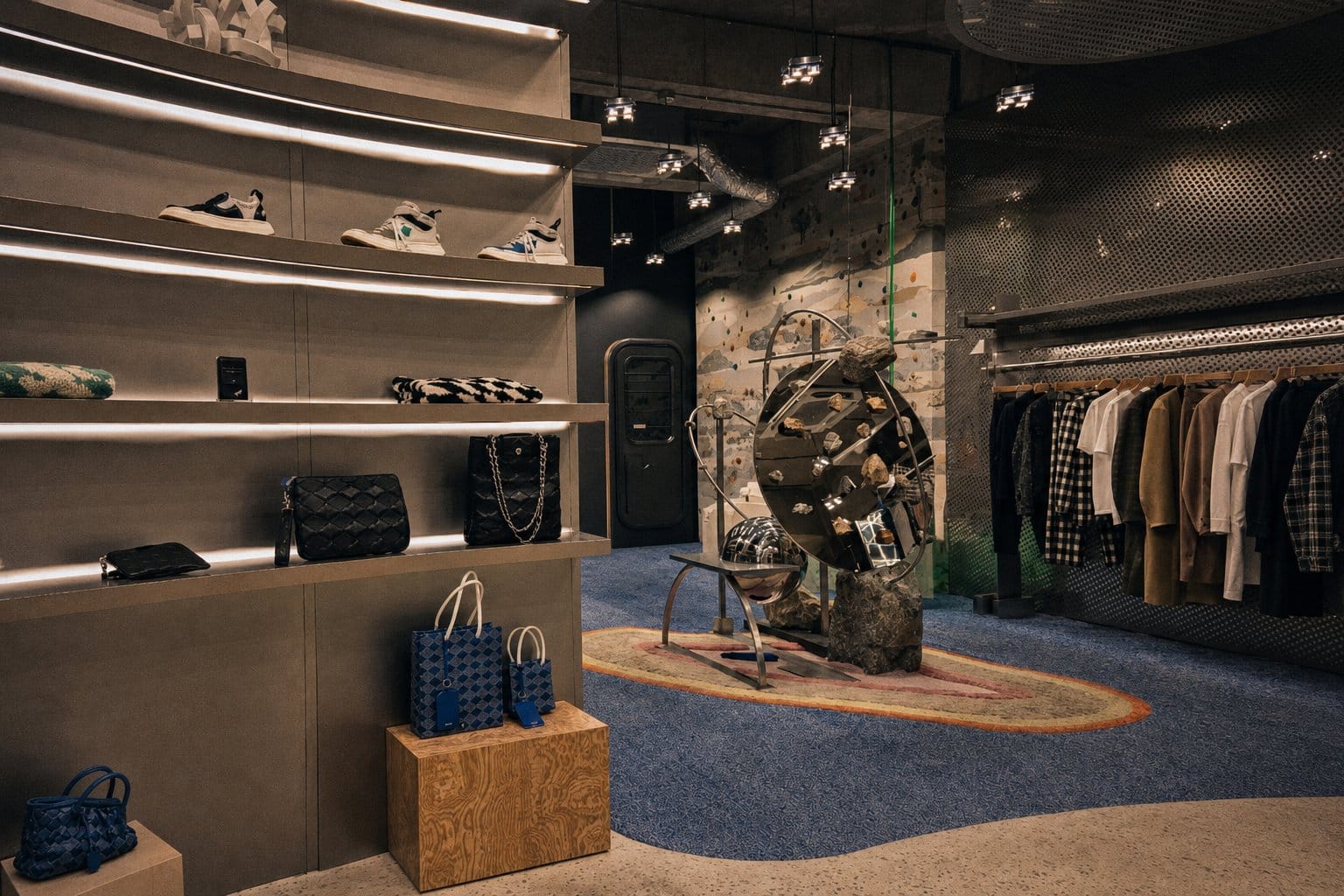
Building a Korean fashion wardrobe in 2026 is most effective when it starts with two or three anchor pieces rather than a wholesale aesthetic overhaul. For the Refined Maximalism look, a structured oversized blazer in a neutral or earthy tone is the single most versatile entry point: it anchors both the Organic Monochrome and Structured Volume trends simultaneously, works across casual and semi-formal contexts, and reads as distinctly Korean without requiring a full head-to-toe commitment. Add one earthy-tone technical outerwear layer — a Gore-Tex vest or structured light jacket in moss green or warm beige — and the Gorpcore/Granola-Chic direction is covered. These two pieces form a functional starting point that touches two of 2026's dominant trends at moderate cost.
An accessories-first strategy makes practical sense for international buyers uncertain about sizing or aesthetic fit. Gentle Monster eyewear or a bag charm from the Dolls & Charms category represents a lower-cost K-fashion entry point — typically in the ₩150,000–₩300,000 range — that delivers visible K-fashion signaling without the sizing risk inherent in garments. This approach also lets buyers evaluate brand quality and shipping reliability before committing to higher-ticket pieces.
Budget tiers in Seoul's fashion market break down clearly. Street market and Dongdaemun pieces run ₩20,000–₩80,000 and cover trend currency at low financial risk. Mid-range brand purchases from labels like thisisneverthat, MMLG, or Beanpole typically fall between ₩100,000–₩300,000 and represent the strongest quality-to-price ratio for signature pieces. The luxury tier — Wooyoungmi, PAF, and Gentle Monster flagship items — begins at ₩500,000 and rises significantly for tailored or limited-edition items.
The Seoul-versus-online question has a practical answer: buy in Seoul what requires fit confirmation or carries sizing risk — structured blazers, tailored pieces, footwear. Buy online what is either intentionally oversized (Ader Error basics, thisisneverthat graphic tees), accessories (Gentle Monster, bag charms), or available with clear return policies from Musinsa Global or 29CM. Online purchasing has become genuinely viable in 2026 for the majority of Korean fashion categories, with the in-person advantage concentrating on fit-sensitive or limited-edition items.
Frequently Asked Questions
What is the Acubi aesthetic and how can I recreate it?
The Acubi aesthetic is a Seoul-born style movement built on early-2000s Y2K-inspired visual grammar: oversized silhouettes, muted neutral layers, and mixed textures in a deliberately low-contrast palette. Key pieces include wide-leg trousers, soft layered knits, minimalist sneakers, and understated accessories like small crossbody bags or simple pearl jewelry. To recreate it, start with a neutral base in cream, taupe, or grey — add volume through oversized knitwear or wide-leg pants, and keep accessories understated. The Acubi look prioritizes textural layering over color contrast. Ader Error's basics range and Musinsa's house labels both approximate the aesthetic at accessible price points. The style is the direct predecessor of 2026's Refined Maximalism and remains a relevant baseline for anyone entering Korean fashion from scratch.
Which Korean fashion brands offer international shipping in 2026?
Ader Error, Andersson Bell, thisisneverthat, and Gentle Monster all ship internationally through their own webstores. Musinsa Global and 29CM also offer international shipping with English-language navigation, covering a broader catalog that includes LOW CLASSIC, Recto, Amomento, and hundreds of smaller indie labels. Shipping costs and delivery times vary by destination — US and EU buyers typically receive orders within 7–14 business days. The 29CM global site has improved its English-mode functionality in 2026 and supports most major international payment methods. For the widest selection of internationally shippable Korean fashion in one place, Musinsa Global remains the most comprehensive option.
How do Korean fashion sizes compare to US and EU sizing?
Korean fashion typically runs 1–2 sizes smaller than US and EU equivalents. A Korean free-size (프리사이즈) garment generally fits US XS–S or EU 34–36. Korean S corresponds roughly to US XS; Korean M to US XS–S; Korean L to US S–M. These conversions are approximate — streetwear brands that intentionally use oversized construction, such as Ader Error and thisisneverthat, run larger than the standard conversion suggests. For structured or fitted pieces from Wooyoungmi or Recto, always check the brand's own size chart and reference the specific measurement specifications (chest, shoulder width, body length) rather than relying on letter-size conversion tables alone.
Is Dongdaemun worth visiting for fashion shopping in 2026?
Yes, for specific purposes. Dongdaemun is the right destination for affordable trend pieces, fast-turnaround looks, and wholesale buying — with over 30,000 stores across 26 malls, it offers the broadest selection of budget-to-mid-range fashion in Seoul. The experience is best experienced late at night, from midnight through 5 AM, when wholesale floors open to both trade and retail buyers. It is not the right place to find flagship designer pieces, limited-edition drops, or the independent concept boutiques that define Seongsu-dong and Hongdae. Think of Dongdaemun and the designer districts as complementary rather than interchangeable: one for volume and trend currency, the others for brand and design discovery.
How quickly do K-pop idol styles become available in Seoul stores?
Quickly — often within 24–72 hours of a sighting being documented on social platforms. Idol airport and stage looks frequently appear in Seoul boutiques and on Musinsa within days of being photographed. Brands like Ader Error and Andersson Bell have documented traffic spikes and sellouts within 24–48 hours of idol sightings. The same speed applies internationally: a viral idol moment documented on a Tuesday can result in Musinsa Global sellouts by Wednesday. If a specific idol-worn piece is on your purchasing list, acting promptly after the sighting is documented is typically the only reliable approach — restocks are not guaranteed and often do not happen at all for limited-run items.
What Korean Fashion's 2026 Trajectory Means for Global Buyers
Korean fashion in 2026 has reached genuine international maturity. The Refined Maximalism aesthetic, gender-fluid commercial mainstreaming, and the idol-to-retail pipeline operating at near-real-time speed have created a fashion ecosystem that is simultaneously hyperlocal and globally accessible. For international buyers, the barriers — sizing uncertainty, platform navigation, import duties — are lower than they have ever been, and the reward for engaging directly with Korean platforms and brands rather than waiting for Western stockists is access to the full range of what Seoul is producing, not just the pieces that happen to make it into global wholesale channels.
The district-by-district reality of Seoul shopping and the growing list of brands with reliable international shipping mean that engaging with Korean fashion no longer requires a trip to Seoul — though a day in Seongsu-dong or Hongdae remains the fastest way to understand what the aesthetic actually feels like in its native context. The ten trends documented here will continue to evolve across the second half of 2026 as idol styling cycles advance and new label collaborations emerge. The core structural shifts — gender fluidity as commercial norm, Korea as global trend originator — look durable beyond any single season.
For K-pop fans traveling to Seoul for concerts and events, the overlap between idol fashion and what's available in the city's shopping districts is now direct enough that a post-concert shopping afternoon in Hongdae or Seongsu-dong is a coherent itinerary addition rather than a separate cultural detour. The brands your idols wear have flagships in the same neighborhoods as the venues.
Last updated: 2026-05-18. Article reviewed against brand availability, Seoul district opening data, platform accessibility, and 2026 trend documentation as of May 2026.
This article was written using information collected and analyzed by NAMANE's in-house K-pop research AI engine. We use AI technology to bring you faster, broader coverage, and in the process some details may occasionally differ from the latest facts. For important information such as dates, venues, and prices, please double-check with official sources.


