
What Makes Seongsu-dong Seoul's Creative District in 2026
Seongsu-dong (성수동) is Seoul's most talked-about creative neighbourhood — a former shoemaking and printing enclave in eastern Seoul, between the Han River and Seoul Forest, that has transformed over the past decade into the city's hub for specialty coffee, indie fashion, K-pop experiences, and rotating pop-up culture. Consistently nicknamed the "Brooklyn of Seoul", Seongsu stands apart from heritage-focused districts like Bukchon or Insadong: its identity is anchored in warehouse architecture, industrial aesthetics, and brand activations that rotate on two- to four-week cycles rather than monuments that endure for centuries. The district's momentum heading into 2026 is notable — new café openings along Yeonmujang-gil, SM Entertainment's KWANGYA flagship, and a steady stream of K-pop artist pop-ups confirm that Seongsu is still accelerating, not plateauing. Compact enough to cover in a half-day on foot, broad enough to absorb a full day when K-pop shopping and dining are factored in, it has become one of the most complete single-district experiences in the Korean capital.
Quick Answer: Seongsu-dong is Seoul's industrial-turned-creative district, nicknamed the "Brooklyn of Seoul," featuring SM Entertainment's KWANGYA K-pop flagship, the 200-container Common Ground mall, and a dense strip of warehouse cafés along Yeonmujang-gil — all walkable from Seongsu Station (Metro Line 2, Exit 3) in a half-day visit.
What distinguishes Seongsu from comparable creative districts is the layering of cultural functions within a genuinely compact footprint. Within a 20-minute walking radius of Seongsu Station Exit 3, visitors move between specialty coffee roasters in converted factories, AR-enabled K-pop merchandise spaces, multi-storey beauty flagships with dedicated fan zones, and rotating streetwear outlets — all within the same red-brick streetscape. The neighbourhood operates less as a static attraction and more as a living cultural programme: storefronts refresh their installations, limited-run pop-ups appear on two-week windows, and even permanent tenants like KWANGYA cycle artist merchandise with each new comeback release. That dynamism is precisely why the district draws repeat visits from both Seoul residents and international tourists, and why social media coverage of the area remains consistently high relative to its physical size.
The 2025–2026 cycle has added measurable new weight to Seongsu's creative infrastructure. Shake Shack's Seoul debut in an exhibition-integrated Seongsu space and the continued expansion of café concepts along Yeonmujang-gil — including Rain Report Croissant Café and Glow Seongsu — have extended the district's appeal beyond the K-pop core audience. For visiting fans, the K-pop infrastructure alone justifies the trip; for any traveller arriving in Seoul, Seongsu offers a concentrated sample of the creative-industrial aesthetic that defines contemporary Korean urban culture.
"Seongsu-dong's warehouse aesthetic and perpetual rotation of pop-ups have made it one of the most-visited single neighbourhoods in Seoul — the blend of K-pop retail, specialty coffee, and brand activations in an industrial setting is unlike anything else in the city," — editorial, Airial Travel Guide
Getting to Seongsu-dong: Metro Routes, Stations & Walking Logic
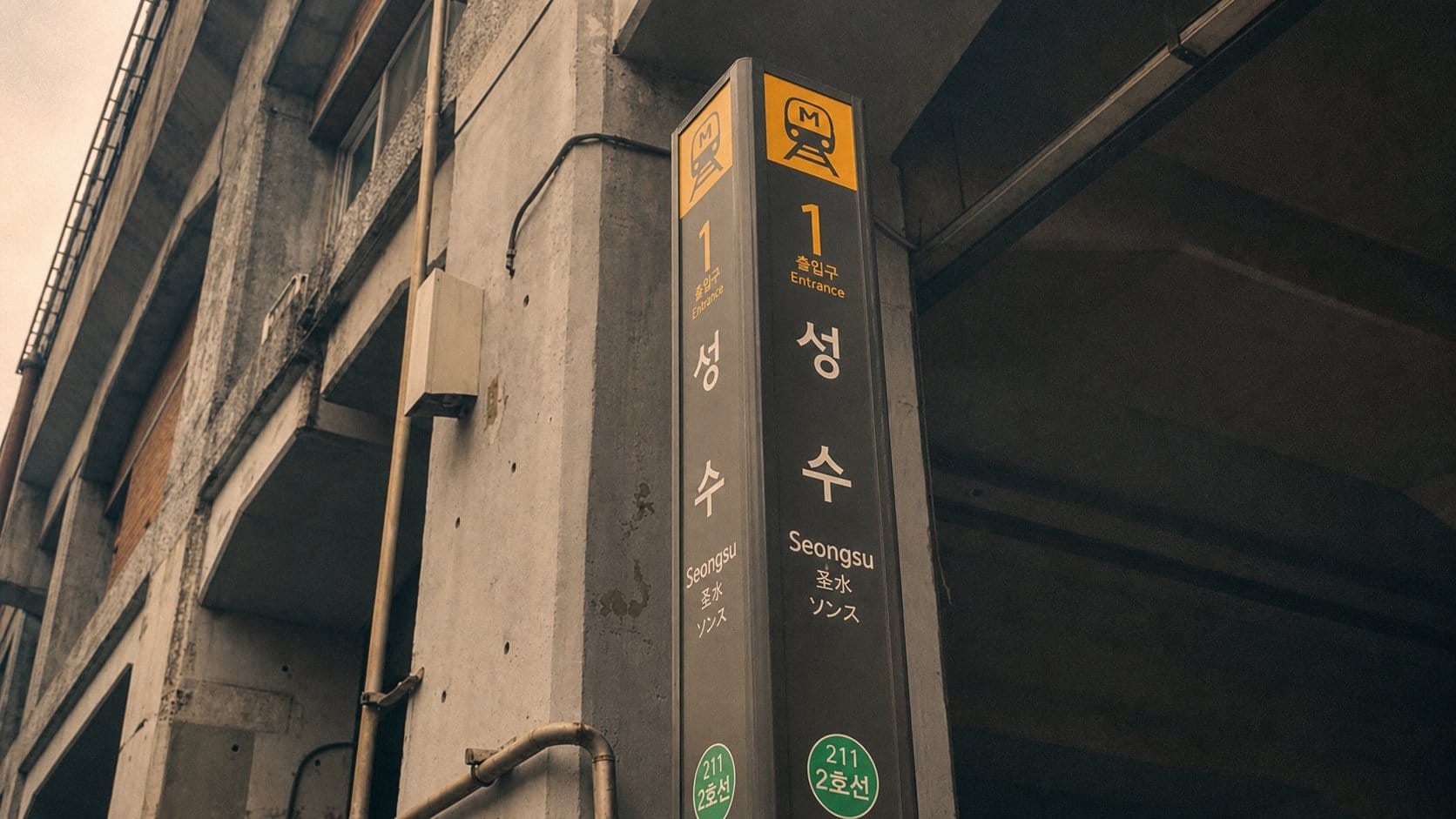
Seongsu-dong is served by two Seoul Metro stations that cover different sections of the district. Seoul Metro Line 2 (green line) to Seongsu Station, Exit 3, is the primary entry point and deposits visitors directly into the café and shopping core along Yeonmujang-gil. The journey takes approximately 15 minutes from Gangnam Station and around 20 minutes from City Hall Station. For visitors prioritising Seoul Forest Park and the lifestyle retail end of the district, Seoul Forest Station on the Bundang Line provides a more direct western entry. The two stations are connected by a straightforward 15-minute walk along the district's main artery, making an east-to-west itinerary that begins at one station and exits from the other a natural and efficient approach.
A T-Money card handles all metro access and is the only transit tool required for a single-district visit. Cards are available at every station convenience store and ticket vending machine. No special transport pass or day card is necessary. Once inside the district, the main artery Yeonmujang-gil connects the majority of key stops — KWANGYA, Olive Young N Seongsu, Common Ground, and the café strip — within a 20-minute walking loop from Exit 3. In-district taxis or ride-hails are rarely needed.
Parking for private vehicles is scarce throughout Seongsu, and public transit is strongly recommended over driving. Comfortable walking shoes are essential; the itinerary involves continuous movement between narrow side alleys and wider arterial roads. For K-pop fans arriving to queue at KWANGYA or Olive Young N Seongsu on weekends: Exit 3 deposits visitors onto the street closest to both venues, and the walk from exit to KWANGYA's entrance is under five minutes — making an early-opening slot easy to reach without wasted transit time.
KWANGYA @ Seoul: SM Entertainment's Flagship K-Pop Space
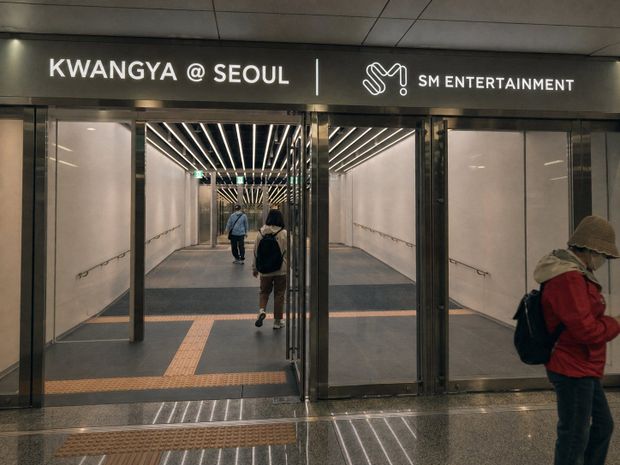
KWANGYA @ Seoul is SM Entertainment's flagship cultural space in Seongsu-dong — the physical anchor of the company's "KWANGYA" universe, which spans NCT, EXO, aespa, Red Velvet, and SHINee. The basement-level retail floor carries albums, official lightsticks, autograph merchandise, limited-edition collaboration goods, and artist-specific seasonal releases. What elevates it beyond a standard merchandise store is the integration of AR experience zones and large-format artist photo installations — visitors can interact with digital content tied to current SM artist narratives, not only browse products. Budget 45–60 minutes minimum for the full space; fan groups focused on detailed shopping and photo documentation routinely spend longer. Stock rotates with comeback cycles, so inventory on any given visit reflects which artists are currently active: checking KWANGYA's official social media before visiting is advisable for fans seeking specific limited items.
The KWANGYA experience rewards familiarity with SM's artist roster — photocard wall sections are organised by group, and seasonal comeback merchandise is displayed alongside back-catalogue items. For fans attending a Seoul concert by any SM artist, KWANGYA is the natural pre-show or post-show merch destination. The basement layout flows between the retail floor and the installation zones in a way that works for both focused shoppers and casual visitors who are primarily drawn by the AR components.
Steps away, Olive Young N Seongsu is the flagship five-storey location of Korea's largest health-and-beauty retailer, featuring a dedicated K-pop zone alongside skincare, makeup, and wellness sections. In-store makeup consultation services set it apart from standard Olive Young branches. On weekends, entrance queues can run 15–30 minutes; arriving before noon significantly reduces wait times.
Common Ground nearby hosts rotating K-pop merchandise retailers on its upper levels, providing a practical overflow option when KWANGYA queues run long. Checking the Common Ground Instagram page for the current tenancy map is the most reliable way to identify which artist-specific merchandise stalls are active during a given week.
"For K-pop fans visiting Seoul, the KWANGYA flagship in Seongsu represents the most complete official SM Entertainment retail and cultural experience currently available outside of concert venues — the AR zones make it a genuine destination, not just a shop," — editorial, Nol World
Pop-Up Stores in Seongsu: How the Rotating Retail Scene Works
Seongsu-dong operates as Seoul's most active district for pop-up store events by volume as of 2026 — fashion labels, K-beauty brands, and K-pop artist activations rotate through its warehouses and converted factory spaces on cycles that typically run one to four weeks. Major international and domestic brands that have staged limited-run activations in Seongsu include Chanel, Burberry, Kodak, Christian Dior, Mark Gonzales, and Musinsa. In May 2026, a Pokémon 30th Anniversary Party pop-up is running at Trendy Pot by Olive Young N Seongsu (Yeonmujang 7-gil 13) through 31 May 2026, illustrating how the district blends K-pop, global IP, and beauty brand activations simultaneously within the same walkable block.
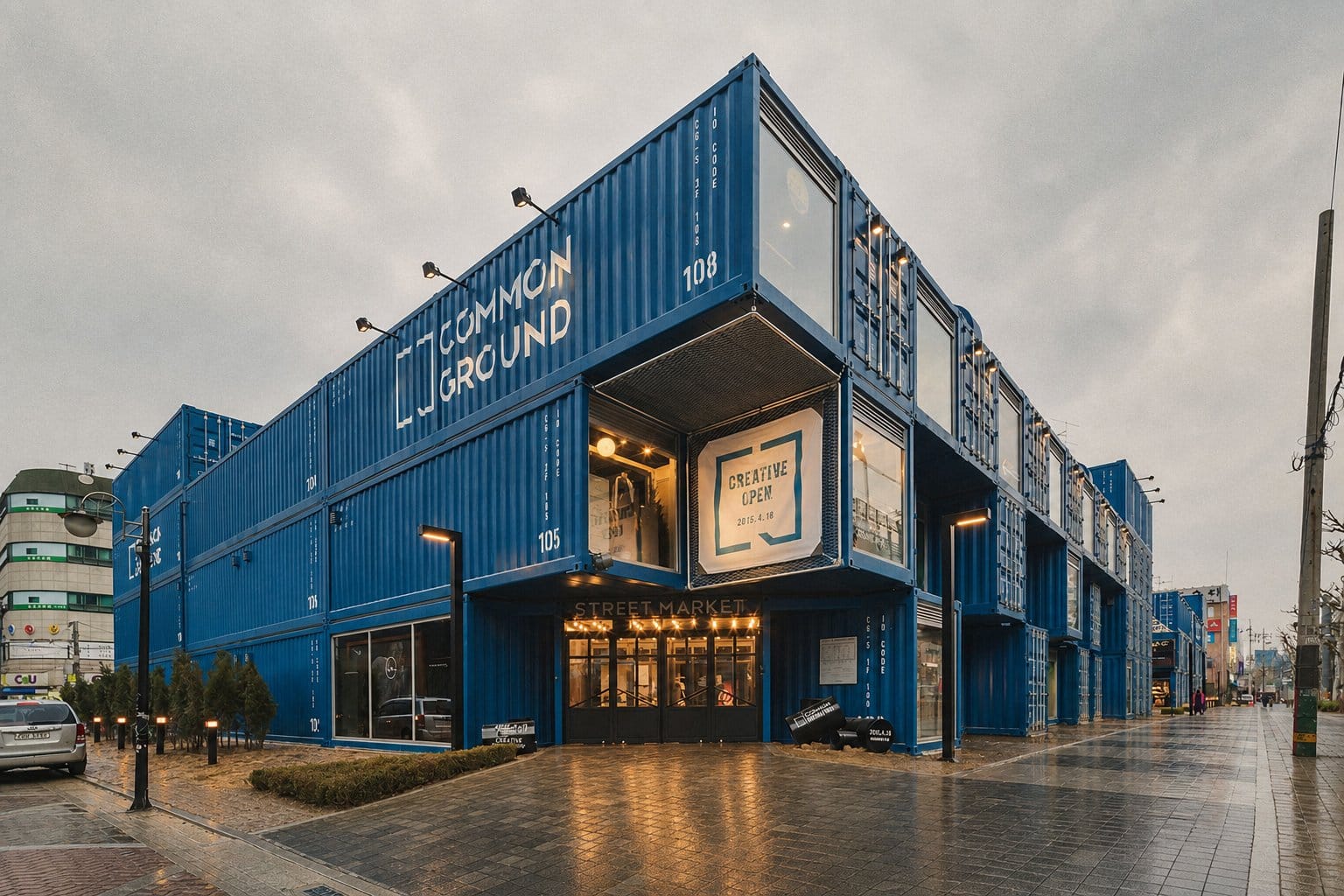
Common Ground is the most established piece of permanent infrastructure supporting this rotating ecosystem. Assembled from 200 repurposed blue shipping containers and opened in 2015, it operates daily 11 am–10 pm (select food outlets until 1 am) and provides a stable framework for tenants to rotate in and out without requiring dedicated warehouse leasing. Nike, Adidas, and Olive Young anchor permanent positions; upper-level gallery spaces cycle through art and brand installations on monthly schedules.
The Daelim Changgo warehouse complex — a converted printing factory — is the district's second major hub for retail and cultural activations. The Musinsa Store inside the complex offers what is billed as South Korea's longest sneaker wall alongside emerging Korean streetwear labels. The broader Daelim Changgo space hosts rotating gallery shows and event activations in its cavernous industrial interior.
| Pop-Up Hub | Type | Operating Hours | Notable Tenants / Focus |
|---|---|---|---|
| Common Ground | 200-container permanent mall | Daily 11 am–10 pm (food to 1 am) | Nike, Adidas, Olive Young; rotating K-pop merch & art galleries |
| Daelim Changgo | Converted factory warehouse | Varies by event; café daily | Musinsa Store (Korea's longest sneaker wall), Korean streetwear, rotating art + brand activations |
| Trendy Pot by Olive Young N | Brand activation space | Varies by pop-up | Beauty & IP pop-ups (e.g., Pokémon 30th Anniversary, through 31 May 2026 ) |
| Line Friends Square | Character brand permanent space | Daily noon–8 pm | BT21 and LINE character merchandise |
Tracking upcoming pop-ups requires active monitoring: brand and artist Instagram accounts are the most reliable signal, and schedules are rarely confirmed more than 2–3 weeks in advance. The dedicated aggregator site Seongsu-dong Gorilla and the Pops app publish monthly pop-up calendars that distinguish between reservation-required activations and walk-in access events — a critical distinction when planning a timed itinerary around specific openings.
Seongsu Café Walk: Warehouse Roasters & Concept Spaces on Yeonmujang-gil
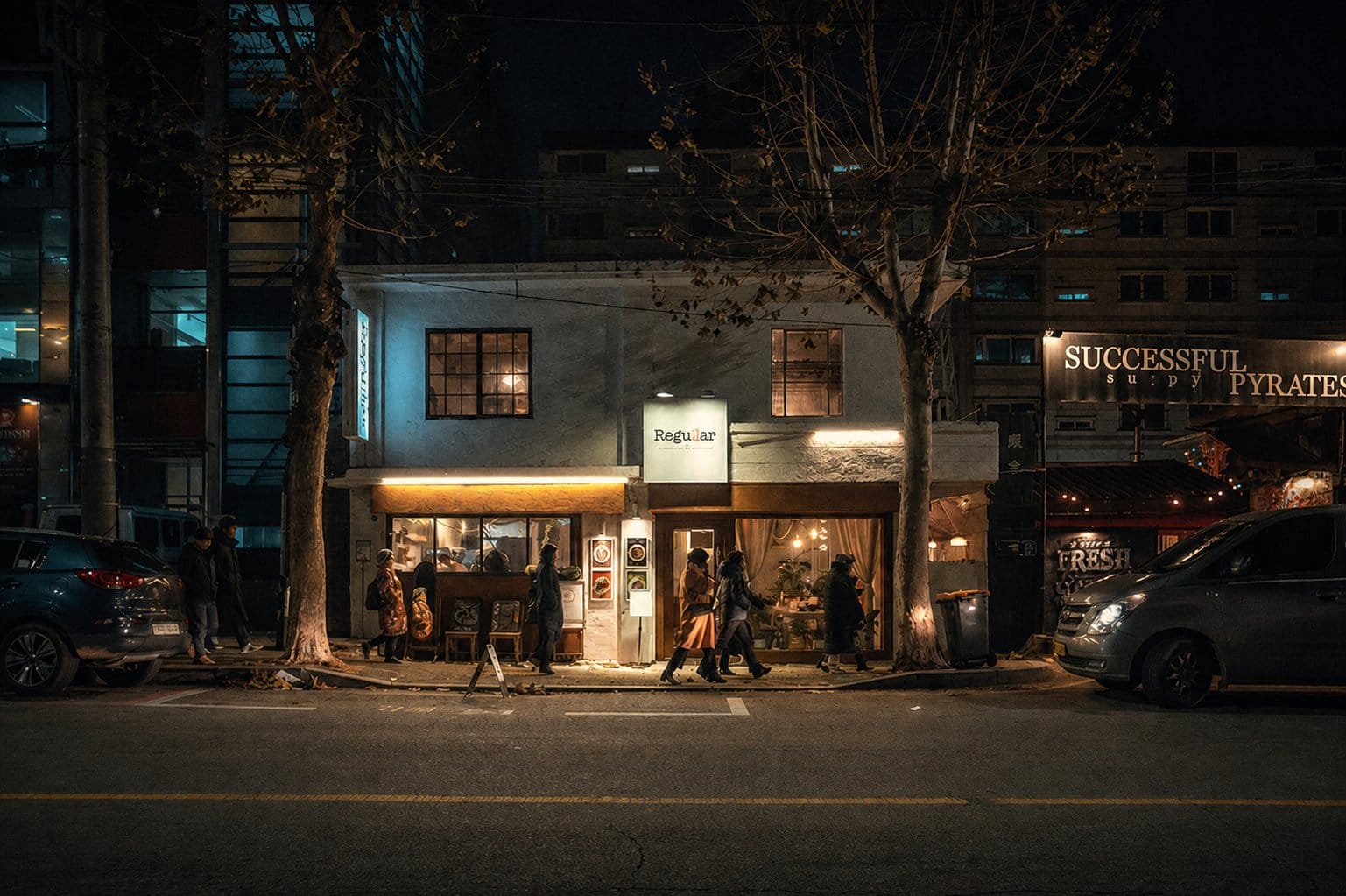
Yeonmujang-gil (연무장길) is the primary café corridor of Seongsu-dong — a stretch where most specialty roasters and concept cafés occupy red-brick warehouses or former factory shells, creating a consistent industrial aesthetic that has become the district's defining visual signature. Specialty coffee drinks run roughly 5,000–7,000 KRW, and the majority of venues operate on a standing or limited-seating model — securing a table on a weekday morning is straightforward, but weekend afternoons after 1 pm involve significant competition for seats. The café density along this corridor is high enough that walking the strip without a fixed destination in mind is a reasonable first-time strategy; the challenge is not finding a good café but choosing between several equally compelling options on the same block.
NUDAKE Seongsu
NUDAKE is a warehouse-style dessert café known for its signature brûlée and premium pastry menu. The Seongsu location is among the most-photographed café interiors in the district, drawing both domestic visitors and international tourists. Queues begin forming before opening on weekends; a weekday morning visit is significantly calmer.
📍 50 Apgujeong-ro 46-gil, Gangnam District, Seoul
🕒 Daily 11:00 AM – 9:00 PM
⭐ 4.2 (689 reviews)
📞 1660-1010
🔗 View on Google Maps
Rain Report Croissant Café
Rain Report occupies a two-floor space with large nature-themed projection screens that create an immersive atmospheric environment distinct from most café spaces in the district. The croissant menu rotates seasonally. Limited seating means morning visits are advisable for those wanting to sit; the ground floor standing area works well for a quick stop between other venues.
📍 32 Seongsui-ro 16-gil, Seongdong-gu, Seoul
⭐ 4.3 (211 reviews)
📞 070-4288-1269
🔗 View on Google Maps
Glow Seongsu
Glow Seongsu has drawn consistent attention for an interior aesthetic widely compared to the visual world of Studio Ghibli's Spirited Away — warm layered lighting, strongly curated decorative elements, and a spatial atmosphere that photographs distinctively. It is among the more requested stops on social-media-driven itineraries for the district.
📍 32 Seongsui-ro 16-gil, Seongdong-gu, Seoul
⭐ 4.4 (74 reviews)
📞 070-4288-1269
🔗 View on Google Maps
Bakeries: Perment Bake Shop & Standard Bread
Perment Bake Shop (Seoulsup 2-gil) bakes fresh bread daily, with a menu that shifts based on available seasonal ingredients. Standard Bread operates on a rustic farm theme and is among the more accessible options queue-wise. Salt bread, bagels, and Korean-fusion pastries — combinations of red bean, matcha, or black sesame with European pastry formats — dominate street-food offerings throughout the district and serve as practical between-venue snacks.
📍 37 Seoulsup 2-gil, Seongdong-gu, Seoul
🕒 Daily 9:00 AM – 7:00 PM
⭐ 4.4 (187 reviews)
📞 010-3911-0072
🔗 View on Google Maps
The Daelim Changgo café — inside the warehouse complex of the same name — rounds out the café circuit with artisan pastries served alongside a rotating art gallery programme. It is notably larger than most Seongsu venues, making it a reliable option for groups needing seated space without the competitive dynamics of the Yeonmujang-gil strip's smaller rooms.
Dining & Craft Beer in Seongsu-dong
Galbi Alley, located near Seongsu Station Exit 3, is the district's most accessible strip for traditional Korean dining — specifically galbi (소갈비, Korean beef short ribs) served with soju, beer, and the standard banchan accompaniments. Galbi for two with drinks typically runs 50,000–70,000 KRW. Weekend evenings see high demand, and reservations at the more popular restaurants are strongly recommended. The Alley is under five minutes on foot from the station exit, making it a natural end-of-day option after an afternoon of shopping and café visits.
The craft beer scene in Seongsu has matured substantially. Seoul Brewery Seongsu, opened April 2023, and Amazing Brewing Company — which operates over 30 taps and maintains an outdoor beer garden — are the two primary taproom destinations. Both draw a mix of local regulars and visiting tourists, and both offer food menus substantial enough to replace a separate dinner stop for visitors keeping the evening casual.
For lighter or Western options, Paper Plate serves New York-style pizza by the slice — a practical fast option between venue visits — and Shake Shack opened its Seongsu location in 2025 inside an exhibition-integrated space that functions more as a branded cultural installation than a standard quick-service outlet. Mid-range pricing for a full meal in Seongsu is typically 15,000–35,000 KRW per person.
Seoul Forest Park: Zones, Entry & When to Visit
Seoul Forest Park is a free-entry urban park anchoring the western edge of the Seongsu district, measuring approximately 500,000 square metres and ranking as Seoul's third-largest urban green space. The direct access point is Seoul Forest Station on the Bundang Line; the park entrance is under five minutes on foot from the station exit. Entry is free for all zones. The park divides into several functional areas: a deer corral, butterfly conservatory, aerial walkway, wetland ecological garden, insect house, and rose garden — each offering a distinct experience within the broader green circuit. A full perimeter loop takes 1.5–2 hours at a comfortable pace.
The most rewarding visiting windows are April–May, when cherry blossoms are in full bloom, and October–November, when autumn foliage transforms the park's tree-lined walkways. Both seasonal peaks coincide with higher outdoor pop-up activity in the surrounding district — brand activations timed to spring and autumn tourist traffic are common along the park perimeter streets. Visiting during these windows therefore maximises both the park experience and the likelihood of encountering an active street-level installation nearby.
A practical itinerary structure for a half-day visit: begin with an early café on Yeonmujang-gil (before 10 am on weekdays to avoid queues), proceed to KWANGYA or Common Ground for the shopping circuit mid-morning, then walk west to Seoul Forest for a late-morning or early-afternoon park loop. The walk between Seongsu Station's shopping core and Seoul Forest's eastern entrance is approximately 25 minutes on foot. For those who prefer not to backtrack, exiting from Seoul Forest Station on the Bundang Line at the end of the park loop closes the circuit cleanly.
Planning Your Seongsu-dong Visit: Budget, Timing & Seasonal Notes
A complete Seongsu itinerary covering cafés, KWANGYA, Common Ground, a Seoul Forest loop, and one dinner stop fits comfortably into a 4–6 hour visit. For K-pop fans with a specific purchase agenda at KWANGYA or a pop-up reservation to honour, building in additional buffer time is advisable. A daily budget of 40,000–80,000 KRW covers two café drinks, a light snack, and one dining stop, excluding K-pop merchandise purchases. Merchandise costs vary considerably depending on which artist's comeback is currently stocked and how many items are purchased; albums typically start from around 15,000 KRW, with official lightsticks running 50,000–80,000 KRW.
Peak congestion occurs on weekend afternoons between 1–5 pm, when café seating becomes competitive and KWANGYA and Olive Young N Seongsu queues lengthen noticeably. Arriving before noon on weekends dramatically improves the experience: café tables are accessible, the KWANGYA basement is navigable, and the Yeonmujang-gil street-walk is comfortable rather than crowded. Weekday mornings before 10 am are the calmest window across all venue types.
| Budget Item | Estimated Cost (KRW) | Notes |
|---|---|---|
| Specialty coffee (×2) | 10,000–14,000 | 5,000–7,000 KRW per drink at Yeonmujang-gil venues |
| Café pastry / street snack | 5,000–12,000 | Salt bread, bagels, brûlée; prices vary by venue |
| Lunch (mid-range, per person) | 15,000–35,000 | Pizza, noodles, or a lighter option; excludes galbi dinner |
| Galbi dinner (for two, with drinks) | 50,000–70,000 | Galbi Alley near Seongsu Station Exit 3; reservations recommended on weekends |
| Metro fares (round trip) | 2,800–4,000 | T-Money card; Line 2 from Gangnam or City Hall |
| Seoul Forest entry | Free | All zones; Bundang Line to Seoul Forest Station |
| K-pop merchandise (KWANGYA) | Variable | Albums from ~15,000 KRW; lightsticks 50,000–80,000 KRW; limited editions higher |
Season significantly shapes the outdoor experience. April–May and October–November offer the most comfortable weather for the street-walk and Seoul Forest visit, with pleasant temperatures and reduced humidity. Both periods also align with higher pop-up activity in the district, as brands time activations to tourist traffic peaks. July and August bring Seoul's hottest and most humid conditions, making rooftop and outdoor café spaces significantly less comfortable — visitors arriving in summer should plan an itinerary weighted toward indoor venues like KWANGYA, Common Ground, and the enclosed café interiors.
Frequently Asked Questions
How do I get to Seongsu-dong from central Seoul?
Take Seoul Metro Line 2 (green line) to Seongsu Station and use Exit 3 for the café and shopping core, including KWANGYA and Common Ground. The journey takes approximately 15 minutes from Gangnam Station and around 20 minutes from City Hall Station. If your priority is Seoul Forest Park rather than the shopping and café strip, Seoul Forest Station on the Bundang Line is the better entry point. A T-Money card covers all fares; no special day pass is needed for a single-district visit. Parking in the district is scarce, so public transit is strongly recommended over driving.
What K-pop experiences are available in Seongsu-dong?
KWANGYA @ Seoul — SM Entertainment's flagship cultural space — is the primary K-pop destination, stocking albums, lightsticks, autograph merchandise, and limited-edition goods for NCT, EXO, aespa, Red Velvet, and SHINee, alongside AR experience zones and artist photo installations. Plan 45–60 minutes minimum. Olive Young N Seongsu has a dedicated K-pop zone across its five floors, with in-store makeup consultation services. Common Ground's rotating upper-level tenants frequently include K-pop merchandise retailers — a practical overflow option when KWANGYA queues are long. Line Friends Square (noon–8 pm daily) covers BT21 and LINE character merchandise. Rotating artist-specific pop-up activations also appear in the district periodically; track these via artist Instagram accounts or the Seongsu-dong Gorilla aggregator site.
How do I find out which pop-up stores are open in Seongsu?
Follow the official Instagram accounts of brands and K-pop artists you're interested in — most pop-up activations are announced there first, typically no more than 2–3 weeks in advance. The aggregator site Seongsu-dong Gorilla and the Pops app both publish monthly pop-up calendars for the district, distinguishing between reservation-required events and walk-in access. Seoul tourism event calendars are also useful for major brand or K-pop activations that have registered with tourism authorities. Because schedules are rarely fixed far in advance, confirming the current programme within a few days of your visit is the most reliable approach.
Is Seongsu-dong worth visiting if I only have one day in Seoul?
For K-pop fans and visitors focused on café culture and contemporary Korean creative retail, yes — KWANGYA, Common Ground, and the Yeonmujang-gil café strip are tightly concentrated and walkable from a single metro exit, making it possible to cover the core circuit in a focused half-day. If it's your first Seoul visit and varied sightseeing (palaces, Bukchon, Hongdae) is the priority, pairing Seongsu with Gangnam or another adjacent district is a practical way to maximise a single day. For dedicated K-pop fans, Seongsu alone can absorb a full day when merchandise shopping and dining are included.
What is the best time of year to visit Seongsu-dong?
April–May (cherry blossoms in Seoul Forest) and October–November (autumn foliage) are the most comfortable and visually rewarding seasons — pleasant walking temperatures, photogenic outdoor spaces, and higher pop-up activity as brands time activations to tourist traffic peaks. Both windows work well for the Seoul Forest loop and outdoor café terraces. Avoid July and August if heat and humidity are a concern: Seoul's summer climate makes rooftop and outdoor café spaces significantly less comfortable, and the continuous street-walk between venues is more taxing in peak heat.
Seongsu-dong in 2026: Putting the Visit Together
Seongsu-dong in 2026 rewards preparation and delivers most of its value through the accumulation of small, well-timed stops rather than a single headline attraction. The foundational layer — KWANGYA, Common Ground, Olive Young N Seongsu, and the Yeonmujang-gil café strip — is stable, walkable, and concentrated enough to anchor a reliable itinerary regardless of what else is happening in the district that week. The rotating pop-up layer on top is what makes repeat visits worthwhile and what sustains the district's outsized social media presence: no two weekend visits to Seongsu look identical. For K-pop fans specifically, the combination of KWANGYA's artist-rotated inventory, Common Ground's shifting merchandise tenants, and the periodic artist-specific pop-up activations makes Seongsu the single highest-density K-pop retail and experience zone in Seoul outside of active concert weeks.
The practical calculus is clear. Check KWANGYA's social media for current comeback stock before visiting. Check Seongsu-dong Gorilla or Pops for any pop-up reservations worth booking in advance. Arrive before noon on weekends. Build in Seoul Forest if the visit falls in April–May or October–November. The district is compact, transit access is direct via Metro Line 2, and the café density means time between major stops is itself part of the itinerary rather than dead time.
For K-pop fans planning a Seoul concert trip in 2026, Seongsu-dong functions as both a pre-show merchandise destination and a standalone cultural half-day that sits entirely outside the concert venue itself — a morning in the district complements rather than competes with an evening at KSPO Dome, Jamsil Olympic Stadium, or COEX Artium, and adds a layer of Seoul experience that the venue itself cannot provide.
Last updated: 2026-05-18. Article reviewed against current venue information, pop-up event data, and transit details available through May 2026.
This article was written using information collected and analyzed by NAMANE's in-house K-pop research AI engine. We use AI technology to bring you faster, broader coverage, and in the process some details may occasionally differ from the latest facts. For important information such as dates, venues, and prices, please double-check with official sources.


