
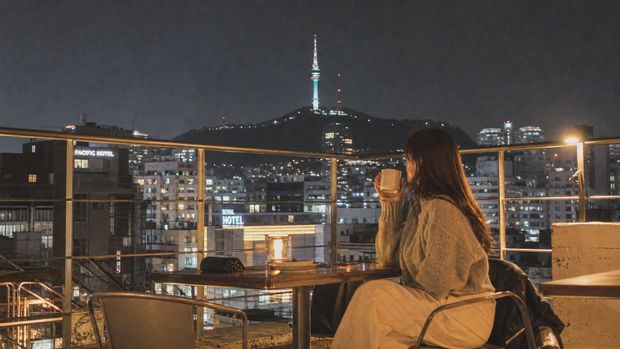
How to Choose a Seoul Cafe District: A Quick Decision Framework
Seoul's cafe scene spans five distinct urban neighborhoods, each with a different character suited to a different type of visit. Hongdae rewards spontaneous arrivals looking for interactive or concept-driven spaces — animal cafes, multi-floor themed buildings, and a creative street culture rooted in the adjacent fine arts university . Seongsu runs on a deliberate rhythm, with artisan bakeries operating fixed batch schedules that require timing your arrival — this is not a drop-in-whenever district . Myeongdong works best as a planned stop between shopping, where the most rewarding cafes sit on upper floors above the tourist strip, delivering city panoramas that street-level visitors miss entirely. Ikseon-dong and Yeonnam-dong support a slower, lower-intensity afternoon — crowd density is measurably lower than Hongdae or Seongsu on weekend afternoons, making them natural choices for visitors who want exploration without queue management.
Quick Answer: For first-time visitors, Hongdae (Exit 9, Line 2) covers concept cafes and animal cafes in one walkable zone. Seongsu suits those who plan around artisan bread batch windows. Myeongdong works as a layover between shopping stops, with rooftop cafes offering simultaneous cathedral and Namsan Tower sightlines. Ikseon-dong and Yeonnam-dong are lower-crowd afternoon alternatives, each under 10,000 KRW per drink.
The comparison table below covers the five neighborhoods reviewed in this guide. Spend estimates reflect one beverage plus one food item unless noted. Crowd peaks are consistently worst during Saturday–Sunday 12:00–16:00 in Seongsu and Hongdae; Yeonnam-dong is the quietest of the five across all days .
| District | Vibe Profile | Avg. Spend / Person (KRW) | Nearest Subway Station | Crowd Peak |
|---|---|---|---|---|
| Hongdae | Concept cafes, animal cafes, student creative energy | 8,000–12,000 (non-animal); +13,000 KRW Meerkat Cafe entry | Hongik University Stn (Line 2 / Airport Railroad), Exit 9 | Sat–Sun 12:00–16:00 |
| Myeongdong | Historic upper-floor cafes, rooftop panoramas, shopping-strip layover | 8,000–13,000 | Myeongdong Stn (Line 4), Exit 5 or 6 | Daily 13:00–18:00 at street level; upper-floor cafes quieter before noon |
| Seongsu | Industrial-chic, artisan bread, luxury brand popups | 12,000–15,000 (bread cafes); 18,000–30,000 per item at Dior Seongsu | Seongsu Stn (Line 2), Exit 3 | Sat–Sun 12:00–16:00 |
| Ikseon-dong | 1920s–1930s low-rise lanes, hanok conversions, slow exploration | 6,000–10,000 (drink only); 15,000–20,000 (drink + dessert) | Jongno 3-ga Stn (Lines 1/3/5) or Anguk Stn (Line 3) | Friday evening alley congestion; weekday mornings quietest |
| Yeonnam-dong | Indie specialty roasters, forest-path setting, local clientele | 6,000–10,000 | Hongik University Stn (Line 2 / Airport Railroad), Exit 3 | Quietest overall; weekday mornings near-empty |
The decision logic is straightforward: if you have a short Seoul stopover and want maximum variety in one area, Hongdae is the practical anchor. If you are travelling specifically for Seoul's artisan food culture and can schedule around batch windows, Seongsu is worth the extra planning. Myeongdong fits visitors already in the neighborhood for shopping who want a genuinely elevated — literally — cafe stop. For low-key afternoons, Ikseon-dong and Yeonnam-dong are largely interchangeable on price and crowd density; Ikseon-dong pairs better with Insadong, while Yeonnam-dong pairs with a Hongdae morning.
Hongdae: Animal Cafes and Multi-Floor Concept Spaces
Hongdae takes its name from Hongik University (홍익대학교), which specializes in fine arts; the neighborhood's creative identity developed from that campus culture through the 1990s and remains Seoul's most concentrated zone for concept-driven cafe experiences today . The starting point is Exit 9 of Hongik University Station, served by both Line 2 and the Airport Railroad — accessible directly from Incheon Airport without a transfer. Within a 15-minute walk, the range runs from supervised animal interaction to an eight-floor concept building and a hanok courtyard with a fire pit.
The Meerkat Cafe sits on the 3rd floor of a Hongdae building. Entry costs 13,000 KRW and covers approximately 10 minutes inside an enclosed space with meerkats, arctic foxes, and a baby kangaroo (video: MissMangoButt). The interaction is supervised and time-limited — this is a structured experience, not open-ended browsing. Drinks are ordered separately, so budget the 13,000 KRW entry on top of beverage costs. For visitors who want animal contact without entry fees, Thanks Nature Cafe near Hongik University campus charges no admission and keeps two resident sheep named Sugar and Honey on the grounds .
"The sheep are just out there by the campus fence — completely free, you only pay for whatever you order." — Retired Working For You, Seoul travel content creator (video: Retired Working For You)
📍 View Meerkat Cafe on Google Maps
📍 View Thanks Nature Cafe on Google Maps
The ㅎㄷ Cafe at 68 Eoulmadang-ro is Hongdae's most architecturally ambitious venue — eight themed floors including an LP record lounge, a desert oasis room, a K-pop performance space, and a rooftop terrace overlooking Yeouido Island . Hours are 11am–9pm daily . The vertical range means different floors suit different moods within a single visit — the LP lounge in particular draws visitors who connect cafe culture with music, and the K-pop performance floor is worth the climb for fans building a content day around the Hongdae area. According to The Soul of Seoul, the rooftop Yeouido sightline is one of the more underrated views in the district.
Perception at 16 Eoulmadang-ro 1-gil is more contained and design-forward: the interior features an undulating ceiling installation and an in-house caramel program that runs through the drink menu . Sin Lee Doga at 367-31 Seogyo-dong operates from a traditional structure with an industrial interior overlay and a courtyard fire pit available for marshmallow roasting, open 11am–10pm daily . These two work well as a pair for visitors who want craft coffee and architecture without the crowd volume of the ㅎㄷ Cafe building.
📍 View Perception on Google Maps
📍 View Sin Lee Doga on Google Maps
Myeongdong: Above-Street Rooftop Cafes With City Sightlines
Myeongdong is Seoul's most heavily trafficked tourist district at street level, but its most rewarding cafe experiences require an elevator or an internal staircase. The pattern repeats across the neighborhood: unremarkable building facades give way to floor 2 or 3 reveals that open onto views of Myeongdong Cathedral, Namsan Tower, or the Chinese Embassy garden — sightlines structurally unavailable from the pedestrian shopping strip below (video: Seoul Oppa K). None of the venues here require reservations, but arriving before noon on weekends significantly reduces wait times at elevator-access locations. According to the Seoul Oppa K cafe tour, navigating these upper-floor entries correctly — especially avoiding the wrong staircases — determines whether you reach the view terraces or end up on a service landing.
Cafe Pines sits directly in front of Myeongdong Cathedral and is accessed via an internal elevator to the 3rd floor — the exterior side staircase leads to a different entry and should not be used . The outdoor terrace is larger than the indoor seating area. From a single table, the view simultaneously frames the cathedral stone facade and the Namsan Tower skyline behind it — two of Seoul's most photographed structures from a vantage point unavailable at street level. This geometry is unusual for a central Seoul cafe and is the specific reason to visit this venue over the many alternatives on the same block.
📍 View Cafe Pines on Google Maps
Vienna Cafe has operated continuously for over 50 years across the 2nd through 4th floors of its building . The 4th floor specifically offers an overhead view into the Chinese Embassy's garden — a genuinely unusual urban vantage point in central Seoul with no equivalent elsewhere in Myeongdong. The multi-decade operating history means the interior has a different character from newer concept cafes: quieter, less optimized for photography, more functional in design. It suits visitors who want a proper seated break rather than a themed experience.
📍 View Vienna Cafe on Google Maps
Spark Fabulous occupies a building over 60 years old and runs a two-floor ordering system: food is ordered and collected on floor 1, then the order slip is carried upstairs to a second-floor barista for the coffee component . The process is intentional — it distributes dwell time across both floors and creates an ordering ritual that differs from a conventional counter. The building's visible age adds contrast with the polished interiors prevalent in newer Myeongdong openings.
📍 View Spark Fabulous on Google Maps
Cafe Meta brings a traditional-craft dimension: a Korean millstone (맷돌) grinds coffee beans and tea leaves in front of customers at the counter, and seating tables are constructed from traditional Korean storage chests (함) . This is the most distinct concept in Myeongdong for visitors interested in the intersection of Korean material culture and contemporary coffee. The space is small — peak-hour seating is limited — making morning visits the more practical option.
📍 View Cafe Meta on Google Maps
Seongsu: Artisan Bakers and Permanent Brand Popup Cafes
Seongsu (성수동) was Seoul's shoe-manufacturing hub through most of the 20th century. The exposed brick walls, raw concrete floors, and repurposed factory interiors that define its current aesthetic are not a designed intervention — they are the original industrial buildings, retained by a wave of cafe and brand operators who moved in as manufacturing tenants relocated . This creates a visual identity architecturally distinct from Hongdae's street-art aesthetic or Myeongdong's commercial verticality. The district sits on Line 2 (Seongsu Station, Exit 3), sharing a line with Hongdae — practical for a two-district day if batch timing is managed correctly.
Standard Bread at 37 Seongsui-ro 18-gil bakes fresh batches every 30 minutes between 9am and 9pm . The local strategy is to identify the next batch window and arrive 5–10 minutes before it — bread sells through quickly after each bake. Saltbread In Seaside runs a stricter schedule: batches at 9:00, 12:30, 14:00, 15:30, 17:00, and 18:30, priced at 12,000 KRW for four pieces, takeout only . Weekend mornings see early sell-outs across both venues — planning Seongsu as a standalone half-day start, rather than an afternoon add-on, is the practical approach for securing bread.
📍 View Standard Bread on Google Maps
📍 View Saltbread In Seaside on Google Maps
Dior Seongsu at 7 Yeonmujang 5-gil began as a luxury brand popup and has since become a permanent fixture . Daily hours are 11am–8pm, and menu items range from 18,000 to 30,000 KRW per item . The space functions partly as an ambient brand environment and partly as a genuine cafe — visitors pay for both the product and the architectural experience. For K-pop fans, Seongsu has become a consistent location for label and brand popup activations through 2024–2025, making it worth checking current event listings against your travel window.
📍 View Dior Seongsu on Google Maps
"The whole aesthetic works because they kept the original industrial bones — you're sitting in buildings that used to make shoes, and that history is exactly what makes Seongsu feel different from anywhere else in Seoul." — Editorial, Creatrip Seoul District Guide
Ikseon-dong: Boutique Cafes in a 1930s Residential Quarter
Ikseon-dong (익선동) was Seoul's first planned hanok residential development, constructed in the 1920s . The low-rise buildings lining its narrow alleys — largely completed through the late 1920s and 1930s — have since been converted into specialty cafes, small bars, and dessert shops, with over 50 venues now concentrated within a compact, walkable area . The draw is the urban fabric itself: wood-framed structures repurposed by independent operators rather than a single developer's aesthetic vision. Unlike Seongsu's cohesive industrial identity, Ikseon-dong's character comes from accumulated individual decisions across dozens of small businesses.
Most venues are walk-in and small — advance booking is not the norm, and the district rewards spontaneous exploration rather than a pre-planned itinerary. A typical visit covering one drink and one dessert item runs 15,000–20,000 KRW . The geographic position between Insadong and Jongno 3-ga means Ikseon-dong pairs naturally with an Insadong afternoon — both areas are navigable on foot without backtracking, and the combination suits visitors interested in traditional crafts alongside the cafe circuit.
📍 View Ikseon-dong on Google Maps
Social-media saturation in Ikseon-dong has remained lower than Seongsu through 2025–2026, and individual venue discovery without extensive pre-research is still possible . The Friday evening alley congestion is the one consistent crowd pressure point; weekday mornings are the lowest-traffic window by a significant margin. For itineraries built around an evening concert or fan meeting, an afternoon Ikseon-dong walk followed by Jongno 3-ga subway access provides clean connections toward most central Seoul venues.
Specific venues worth noting within the district: DongBaek is known for its bamboo garden courtyard and soufflé pancakes, with a typical 20-minute wait at peak hours — the venue is better visited at 9am opening or on weekday afternoons around 3pm. Nakwon Station serves a Coal Coffee and Peanut Latte each at 5,800 KRW from 11:30 daily , one of the lower price points in the district. More information on traditional-beverage hanok cafes near this area is available from Creatrip's Seoul hanok cafe guide.
📍 View DongBaek on Google Maps
Yeonnam-dong: The Neighborhood Specialty Roaster Scene
Yeonnam-dong (연남동) borders Hongdae to the north and runs parallel to the Gyeongui Line Forest Park, a linear greenway converted from a former railway corridor. The neighborhood uses this green corridor as a spatial spine — a number of cafes orient window seating or exterior terraces toward the park path, giving the district a materially different feel from Hongdae's enclosed street-art atmosphere . Access is from Hongik University Station Exit 3, or a 10-minute walk from Sinchon Station Exit 8 .
The cafe profile here is concentrated indie specialty roasters — fewer tourist-facing menus, a lower average price point than Hongdae concept cafes, and a primarily local clientele. Layered Yeonnam occupies a converted old house with exposed brick; ground-floor window seats are positioned directly facing the forest park path, making it one of the more considered coffee settings in the district . Perlen Haus Yeonnam opens at 8:30am, serves croissants at 5,000 KRW and Americanos at 5,500 KRW , and has an outdoor terrace facing the residential street. A full guide to the district's current roaster lineup is available from Let's Seoul's Yeonnam-dong guide.
📍 View Layered Yeonnam on Google Maps
📍 View Perlen Haus Yeonnam on Google Maps
Yeonnam-dong is at its best during April–May cherry blossom season and September–November for autumn color along the forest park corridor . Weekday mornings produce the lowest foot traffic of any district in this guide — side streets are genuinely uncrowded, and roaster cafes have available seating without queue pressure. For visitors who want quality specialty coffee without concept-cafe pricing or the structured time limits of animal interaction venues, Yeonnam-dong is the cleaner option. It integrates naturally into a Hongdae morning: start at Hongdae, move northwest along the forest park path into Yeonnam-dong for a mid-morning or early-afternoon coffee, and return to Hongdae for the evening's live music or fan event options.
Cost and Logistics Across All Five Districts
Across the five districts, the price range for a single cafe visit runs from around 5,500 KRW for a specialty Americano in Yeonnam-dong to 30,000 KRW per item at Dior Seongsu — a wide spread driven primarily by brand positioning rather than coffee quality differentials. For practical trip budgeting, the useful figure is total district spend: one beverage, one food item, any entry fee, and incidental costs. The table below organizes this by district, drawing on pricing reported by Creatrip and Let's Seoul.
| District | Typical Spend / Person (KRW) | Entry Fees | Metro Lines | Station / Exit | Crowd Peak |
|---|---|---|---|---|---|
| Yeonnam-dong | 6,000–10,000 | None | Line 2 / Airport RR | Hongik University, Exit 3 | Quietest overall |
| Ikseon-dong | 6,000–10,000 (drink only); 15,000–20,000 (drink + dessert) | None | Lines 1/3/5 or Line 3 | Jongno 3-ga or Anguk | Friday evening; weekday mornings quiet |
| Hongdae (non-animal) | 8,000–12,000 | None | Line 2 / Airport RR | Hongik University, Exit 9 | Sat–Sun 12:00–16:00 |
| Hongdae (Meerkat Cafe) | 8,000–12,000 + 13,000 entry fee | 13,000 KRW | Line 2 / Airport RR | Hongik University, Exit 9 | Sat–Sun 12:00–16:00 |
| Myeongdong | 8,000–13,000 | None | Line 4 | Myeongdong, Exit 5 or 6 | Daily 13:00–18:00 street level; upper-floor cafes quieter before noon |
| Seongsu (bread cafes) | 12,000–15,000 | None | Line 2 | Seongsu, Exit 3 | Sat–Sun 12:00–16:00 |
| Seongsu (Dior Seongsu) | 18,000–30,000 per item | None | Line 2 | Seongsu, Exit 3 | Sat–Sun 12:00–16:00 |
All five districts sit on the Seoul Metro, making multi-district days logistically clean. Seongsu and Hongdae share Line 2 — the same circular line — so transit between the two takes roughly 15–20 minutes without a transfer. Ikseon-dong's nearest stations are Jongno 3-ga (Lines 1, 3, 5) and Anguk (Line 3), both within a 5-minute walk of the main alley entrance . Hongdae and Yeonnam-dong share Hongik University Station, accessed via different exits (Exit 9 for Hongdae's main cluster, Exit 3 for the Yeonnam-dong direction).
The Meerkat Cafe entry fee adds 13,000 KRW on top of drink costs, making a Hongdae animal-cafe visit run 20,000–25,000 KRW in total . Bread batch visits to Seongsu can run longer than expected — factor an extra 30–45 minutes if you arrive before a batch window and plan to eat on the premises rather than taking out. For a full district day combining two areas, a realistic total budget sits in the 20,000–40,000 KRW range depending on whether Dior Seongsu or the Meerkat Cafe is on the itinerary.
Half-Day Routes for K-Pop Fans Visiting Seoul
K-pop fan visits to Seoul typically organize around concerts, fan meetings, or label-district exploration — cafe time fills the hours before doors open or after a morning event. Each combination below fits a 4-hour window and leaves evenings free for concerts or other scheduled events. The scheduling dependencies to confirm in advance are: bread batch times at Seongsu, animal interaction timing at Hongdae, and the elevator-only access at Myeongdong's Cafe Pines.
Hongdae + Yeonnam-dong (walkable, 3–4 hours): Start at Exit 9 with the Meerkat Cafe (allow 90 minutes including queue and interaction time), then walk to Thanks Nature Cafe for a no-entry-fee sheep encounter. From there, walk or take a short bus ride northwest toward Yeonnam-dong for a mid-afternoon roaster coffee along the forest park. The natural endpoint returns you near Hongdae's live music venue cluster — most fan meeting venues around Mapo-gu are accessible on foot or within a single subway stop from Hongik University Station.
Seongsu standalone (half-day, batch-timed): Check the Saltbread In Seaside batch schedule — 9:00, 12:30, 14:00, 15:30, 17:00, 18:30 — and build the visit around the first or second window . Arrive at Seongsu Station Exit 3 fifteen minutes before the target window. After bread, the industrial-aesthetic factory-conversion blocks are walkable in under an hour. The district is an active location for K-pop brand popup photography and label event activations — check current listings for anything scheduled during your travel window before committing to a different district on the same day.
Myeongdong + Ikseon-dong (afternoon into evening, one to two stops): Visit Cafe Pines first — take the internal elevator, not the exterior staircase — to use the outdoor terrace before the afternoon rush occupies it. From Myeongdong Station, it is one to two stops on Lines 3 or 4 to Jongno 3-ga for Ikseon-dong. The Ikseon-dong visit works as a slower evening wind-down after Myeongdong's higher foot traffic — the alley scale naturally slows the pace. Friday evenings see peak alley congestion in Ikseon-dong; a Thursday or weekday afternoon combination avoids this and leaves the evening open for any downtown Seoul concert venue.
Frequently Asked Questions
Which Seoul cafe district is least crowded?
Yeonnam-dong sees the lowest foot traffic of the five districts, particularly on weekday mornings when the side streets running off the Gyeongui Line Forest Park are largely empty. Ikseon-dong is also quiet on weekday mornings. Seongsu and Hongdae both peak on Saturday and Sunday between 12:00 and 16:00. The exception for Ikseon-dong is Friday evenings, when the narrow alleys fill significantly — if visiting on a Friday, arrive before 6pm or plan for congestion in the main lane.
How much should I budget for a cafe day in Seoul?
Specialty coffee in most districts runs 6,000–10,000 KRW per drink. Seongsu artisan bread packages cost 12,000–15,000 KRW. Entry to Meerkat Cafe in Hongdae adds 13,000 KRW on top of any drink order. Dior Seongsu items start at 18,000 KRW. For a half-day covering one district with one drink and one food item, budget 15,000–25,000 KRW. For a full day combining two districts — including one animal cafe visit — 25,000–40,000 KRW is a realistic range. Yeonnam-dong and Ikseon-dong are the most cost-efficient of the five districts.
Do Seoul themed cafes require advance reservations?
Most Hongdae concept cafes are walk-in with no reservation system. Saltbread In Seaside in Seongsu does not take reservations but runs on fixed batch times (9:00 / 12:30 / 14:00 / 15:30 / 17:00 / 18:30) — arriving 15 minutes before your target window is the practical approach. Popular Seongsu bread spots sell out by early afternoon on weekends, making morning visits the reliable strategy. DongBaek in Ikseon-dong typically sees 20-minute waits at peak hours; visiting at 9am opening or on a weekday afternoon around 3pm reduces this. No venues in this guide use an advance online reservation system for general visitors.
Which neighborhood is closest to K-pop fan landmarks?
Hongdae is walkable from Hapjeong indie music venues and is connected to studio and practice space districts around Mapo-gu. Seongsu is an active location for K-pop brand popup events and has seen consistent label activation through 2024–2025. For proximity to specific entertainment company buildings, note that major labels are distributed across Yongsan, Mapo-gu, and Gangnam-gu — verify current addresses before visiting, as offices and studio locations shift. None of the five cafe districts functions as a single centralized label district.
Can I realistically visit multiple Seoul cafe neighborhoods in one day?
Two districts in one day is realistic; all five in a single day is not recommended. The practical pairings are Hongdae + Yeonnam-dong (walkable from the same station, 3–4 hours total) and Myeongdong + Ikseon-dong (one to two subway stops, 3–4 hours). Seongsu works best as a standalone half-day because bread batch timing creates scheduling constraints that conflict with fitting in a second district cleanly. Attempting three or more districts in one day leaves insufficient time for any of them — two districts explored in depth is the better framework.
Watch / Sources
- MissMangoButt — Hidden Spots in SEOUL ft. MEERKAT & RACCOON CAFE
- Retired Working For You — 10 Things to Do in Seoul's Coolest Neighborhood
- Seoul Oppa K — Myeongdong Cafe Tour ☕: Finding 6 Hidden Gems in Seoul's Busiest District
Choosing Your Districts: Practical Next Steps
The five districts in this guide represent genuinely different versions of Seoul's cafe culture — the animal interaction of Hongdae, the timed artisan baking rhythm of Seongsu, the vertical city sightlines of Myeongdong, the 1920s–1930s hanok lanes of Ikseon-dong, and the forest-path roaster culture of Yeonnam-dong. No two share the same primary draw, and the most effective approach is choosing two that complement each other's pace and geography rather than attempting breadth at the cost of depth. The district comparison table in the first section of this guide provides the clearest single reference for matching visitor priorities to neighborhood character.
For K-pop fans specifically: Seongsu is the district most actively used for brand and label popup events, making it worth cross-referencing against any scheduled activations during your travel window. Hongdae connects most naturally to the live music and indie venue ecosystem if an evening fan event is already on the itinerary. Myeongdong and Ikseon-dong together offer a clean afternoon-before-concert structure — low-pressure, centrally located, and directly connected to the metro grid. The bread batch schedules at Seongsu, the elevator-only entry at Cafe Pines, and the 13,000 KRW entry fee at Meerkat Cafe are the three logistical facts to confirm against your schedule before committing to a route. Everything else in these districts is flexible and rewards the kind of unplanned, street-level exploration that Seoul's walkable urban fabric handles well.
Last updated: 2026-05-30. Venue hours, pricing, and batch schedules are subject to change — confirm current details directly with individual venues before visiting. Brand popup events in Seongsu are seasonal and should be verified against current local listings during your travel window.


