
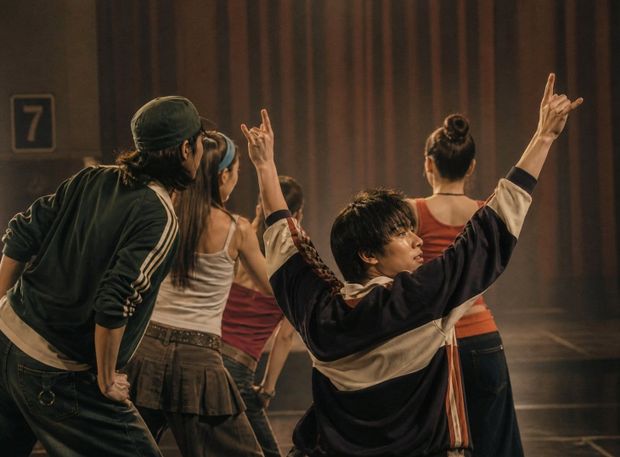
Is Wild Sing a K-Drama or a Movie?
If you searched for a Wild Sing episode list or a weekly K-drama schedule, there isn't one. The title belongs to a single Korean comedy feature built around a fictional early-2000s co-ed dance group.
Wild Sing (와일드 씽) is a 2026 South Korean comedy feature film, not a television series — Netflix, Cine21, Yonhap and the Korean and English Wikipedia entries all describe it identically as a one-sitting movie with a 107-minute runtime and a 12+ Korean rating. It opened in Korean theaters on 3 June 2026 and began streaming worldwide on Netflix on 31 July 2026 KST (30 July PT). There are no episodes, no season structure, and no weekly release schedule to follow.
Quick Answer: Wild Sing is a 107-minute South Korean comedy film, not a K-drama series. Directed by Son Jae-gon and led by Gang Dong-won, it opened in Korean theaters on 3 June 2026 and hit Netflix worldwide on 31 July 2026 KST, with subtitles in 32 languages.
Part of the confusion comes from the title itself. Director Son Jae-gon has said the ungrammatical English "Wild Sing" was chosen deliberately, because "sing" doubles as "thing" — the musical sense plus "wild guys, wild incidents" . The 1998 American thriller Wild Things was released in Korea under the same Korean title, 와일드 씽, and some English-language listings render this film as Wild Thing . Cine21 lists the official pairing as WILD SING / 와일드 씽 . One more correction worth making early: Kim Go-eun is not in this film. She appears on no cast list at Netflix, Wikipedia, or in Korean trade coverage, and the association appears to be a search artifact rather than a credit (video: eDuckBae).
Here is the production record in one place:
- Director: Son Jae-gon (손재곤), previously Secret Zoo (해치지않아)
- Screenplay: Kim Chae-woo
- Production: About Film (어바웃필름), the company behind Extreme Job; producers Kim Sung-hwan and Park Eun
- Distribution: Lotte Entertainment, opening on roughly 1,351 screens
- Craft credits: cinematography by Shin Tae-ho, editing by Shin Min-gyeong, music by Lee Jin-hee
- Global reach: subtitles in 32 languages and dubs in 15
For fans tracking Korean releases, that means one viewing commitment of under two hours rather than a multi-week watch. Yonhap characterizes the second half as road-movie-like, and the Netflix version carries the same cut that played Korean theaters in June.
Who's in Wild Sing? The Triangle Cast and Their Characters

Triangle is a fictional three-member co-ed dance group played by Gang Dong-won, Um Tae-goo and Park Ji-hyun, with Oh Jung-se as their old chart rival. Gang Dong-won stars as leader and dancer Hwang Hyun-woo, Um Tae-goo as rapper Gu Sang-gu, and Park Ji-hyun as center and main vocalist Byeon Do-mi . All four are principal cast on both the Netflix title page and Cine21's film listing, and each character is defined by what twenty years after the scandal did to them.
Gang Dong-won as Hwang Hyun-woo (황현우) is billed as the lead. Yonhap describes Hyun-woo as the good-looking but clumsy leader, and Korean coverage frames him as Triangle's "dance machine," a b-boy whose whole identity was built on the floor . Two decades on, he is scraping by as a survival-broadcast personality — the kind of D-list TV work that keeps a former idol technically employed and visibly diminished .
Um Tae-goo as Gu Sang-gu (구상구) is the group's rapper and, per Yonhap, its youngest member, tagged in Korean press as the "storm rapper" . His post-Triangle arc is a failed solo album and the debt that followed it — the character with the most direct financial motive for a reunion.
Park Ji-hyun as Byeon Do-mi (변도미) is the sole female member, billed by Netflix as center and main vocalist . Yonhap's read is that she was the group's actual leader behind the scenes, which lands differently now that she is a daughter-in-law married into a chaebol family, with Park Hae-mi playing her mother-in-law . The role was initially considered for Lim Ji-yeon, but scheduling conflicts sent it to Park Ji-hyun .
Oh Jung-se as Choi Seong-gon (최성곤) sits outside Triangle: he is the "Ballad Prince," the rival who spent the early 2000s permanently parked at No. 2 and is now written as buried in debt, re-encountered during the film's road-movie second half . His in-film ballad "니가 좋아 (I Like You)," performed in character, went viral and charted in Korea as a promotional track — arguably the film's breakout song .
| Actor | Character | Role in Triangle | Twenty years later |
|---|---|---|---|
| Gang Dong-won (강동원) | Hwang Hyun-woo (황현우) | Leader, dancer / b-boy | Survival-broadcast TV personality |
| Um Tae-goo (엄태구) | Gu Sang-gu (구상구) | Rapper, youngest member | In debt after a failed solo album |
| Park Ji-hyun (박지현) | Byeon Do-mi (변도미) | Center, main vocalist | Married into a chaebol family |
| Oh Jung-se (오정세) | Choi Seong-gon (최성곤) | Rival act, "Ballad Prince" | Debt-ridden; sings "니가 좋아" |
The casting logic reads as deliberate contrast: Gang Dong-won and Um Tae-goo are both better known for serious dramatic work than for comedy, and director Son Jae-gon — who previously made Secret Zoo (해치지않아) — puts them in wigs and Y2K stage costumes for a group that peaked around 2001 . Korean coverage of the 7 May 2026 press conference frames the ensemble the same way.
"It's make-or-break dance for 40-something K-pop idol hopefuls," — framing from the film's press conference coverage (source: Korea JoongAng Daily, 2026-05)
One naming note for anyone cross-checking cast lists: sources split on romanization — Gang or Kang Dong-won, Um or Uhm Tae-goo, Byeon or Byun Do-mi, Seong-gon or Sung-gon. These are transliteration variants, not different people. Netflix's own title page uses one set while English Wikipedia and Cine21 use others.
Who Else Is in the Cast? Supporting Roles and Cameos
Beyond Triangle's three members and their rival, Wild Sing fills out its world with a supporting bench of Korean character actors, several of them credited as special appearances rather than full supporting roles. The clearest names across sources are Shin Ha-kyun as Park Yong-gu, Kang Ki-young as Na Tae-poong, Park Hae-mi as Do-mi's mother-in-law, Kim Ki-cheon as a loan shark, and Gong Myung as a radio-program guest . Only some of these are confirmed by the studio-level sources, so it is worth separating what is officially documented from what comes from fan-maintained databases.
Shin Ha-kyun (신하균) plays Park Yong-gu, a figure tied to Triangle's former agency and record-company past — the thread that runs back to the group's collapse. Coverage splits on how large the part is: some Korean reporting frames it as a credited special appearance, while database listings treat it as a substantial supporting role. Notably, the role does not appear in Netflix's own announcement of the film's main cast , so treat the casting as reported and the screen time as unsettled until you have watched it.
Kang Ki-young (강기영) appears as Na Tae-poong (나태풍), confirmed by Cineplay as a special appearance. His character was a member of Megaton, the parallel dance group that ran alongside Triangle in the early 2000s, and who two decades later has become a variety-show fixture — a reversal of fortune that lands directly against Hwang Hyun-woo's stalled trajectory .
The rest of the credited ensemble, largely per AsianWiki's roster, includes:
- Park Hae-mi (박해미) — Byeon Do-mi's mother-in-law, a running comedic pressure point on Do-mi's domestic life.
- Kim Ki-cheon (김기천) — listed as Loan Shark Go, the money behind Gu Sang-gu's financial troubles.
- Gong Myung (공명) — a cameo as a guest on a radio program.
- Yang Hyun-min (양현민) — Police Officer Kang.
- Heo Joon-seok as PD Gong, Park Jung-won as Writer Yang, and Jung Soon-won as PD Oh — the broadcast-industry side of the story.
- Park Sung-hyun (truck driver), Choi Dong-goo (Min-sik), Ahn Hyun-ho (Police Officer Do), Kwon Hyung-seok (Secretary Kang), Kim Dong-yong (insurance customer) .
A word on sourcing: those last entries come from AsianWiki, not from Netflix, Cine21, Yonhap, or the film's press conference, so character names and role descriptions there carry less weight than the principal cast list. If a supporting name matters to you, cross-check it against the Cine21 film page rather than a database aggregate .
One casting note that circulated in Korean entertainment press: Lim Ji-yeon was initially considered for Byeon Do-mi, but scheduling conflicts ruled her out and the role went to Park Ji-hyun . The production context also explains the density of familiar faces — Wild Sing was produced by About Film (어바웃필름), the company behind Extreme Job, and distributed by Lotte Entertainment, and part of the ensemble overlaps with that earlier comedy's talent pool .
Sources cited above: Netflix Newsroom, Wikipedia: Wild Sing, Cine21, What's on Netflix, and Star News Korea.
What Is Wild Sing About? Triangle's Scandal and Reunion
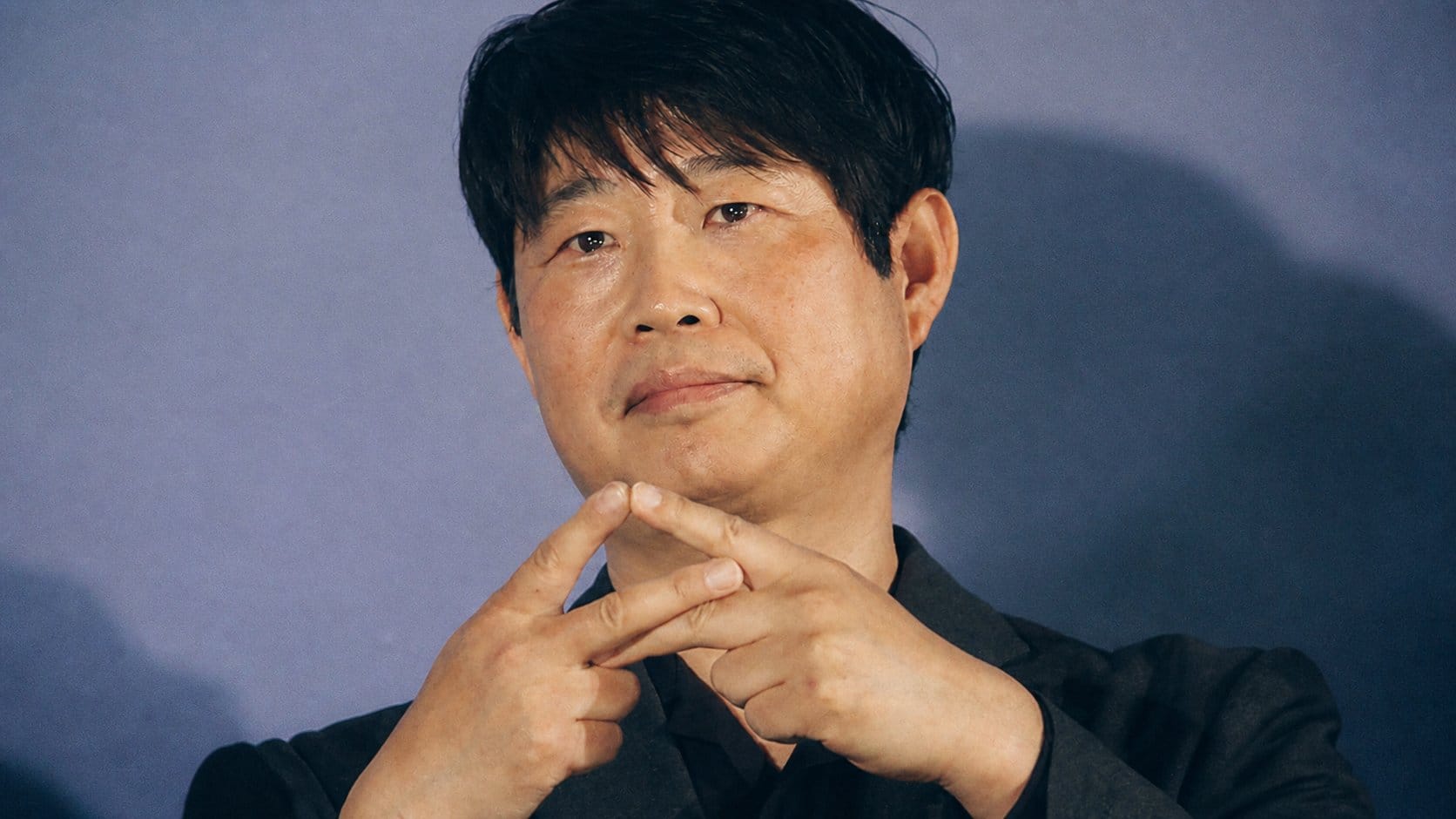
Wild Sing follows Triangle, a fictional three-member co-ed dance group that ruled the Korean charts in the early 2000s, disbanded overnight after a scandal, and reunites twenty years later for one comeback performance . The 107-minute comedy, rated 12+ in Korea, is directed by Son Jae-gon and written by Kim Chae-woo . The premise is a middle-aged second chance rather than a rise-to-fame story.
Korean coverage fills in the collapse. Triangle topped the charts around 2001, then fell apart amid a plagiarism scandal compounded by the disappearance of their producer — a double blow that ended the group's career in a matter of days rather than a slow fade . Two decades on, leader Hwang Hyun-woo (Gang Dong-won) goes looking for his former bandmates: rapper Gu Sang-gu (Um Tae-goo) and center vocalist Byeon Do-mi (Park Ji-hyun), who have each built ordinary, unglamorous lives in the interim .
The structure splits roughly in two. The first half assembles the group and revisits what broke it; Yonhap describes the second half as road-movie-like, as the three travel toward the comeback stage and run into figures from their past, including former rival Choi Seong-gon (Oh Jung-se), the "Ballad Prince" who spent his career stuck at No. 2 . The comeback attempt is framed as reckless rather than triumphant — the film keeps the outcome genuinely uncertain, which is where most of its comedy comes from.
Period texture does a lot of the work. The production recreates late-1990s and early-2000s Korean pop aesthetics, the era of co-ed and mixed-gender acts that shared the charts with first-generation idol groups such as H.O.T. and Shinhwa . That extends to the music itself: Triangle's fictional discography was built by real industry names, with songs shaped by Shim Eun-ji and KASS and choreography by Yang Wook of Nana Company .
Two in-universe tracks anchor the timeline. The debut single "Love is" was released ahead of the film as a retro music video and drew more than 2.8 million YouTube views before the theatrical opening . The second album's title track, "Shout It Out," is staged with cyber-warrior Y2K visuals, and a separate promotional song, "니가 좋아" ("I Like You"), performed in character by Oh Jung-se, charted in Korea on its own . For viewers who lived through that chart era, the songs function as period detail; for everyone else, they work as a compact primer on what Korean pop sounded and looked like before the modern idol system took its current shape.
Sources cited above: Netflix Newsroom, Cine21, Yonhap News, and Star News Korea.
Did the Cast Really Sing and Dance? How They Trained
Yes — the four leads performed Triangle's musical numbers themselves after roughly five months of training, rather than handing the choreography to body doubles . At the film's press conference on 7 May 2026, the cast described a preparation period that covered break-dancing, rap writing and vocal coaching, with each actor assigned a different early-2000s reference point to study .
Gang Dong-won carried the heaviest physical load. Hwang Hyun-woo is written as Triangle's dance machine, a b-boy whose credibility rests on floorwork, so the actor spent five months learning break-dancing and head-spinning in order to execute the moves on camera himself . Um Tae-goo, playing rapper Gu Sang-gu, trained with a coach from JYP Entertainment for a comparable stretch and co-wrote his character's verses with that trainer, which is why Sang-gu's cadence sits closer to turn-of-the-millennium Korean hip-hop than to contemporary idol rap .
Park Ji-hyun approached Byeon Do-mi as a research problem. She studied the co-ed and girl-group era directly — S.E.S. and Fin.K.L for group formation and stage manner, and Lee Hyo-ri in particular for the specific register of a late-1990s to early-2000s idol center . That work ran alongside standard vocal and dance coaching, since Do-mi is billed as the group's main vocalist and center .
"It's make-or-break dance for 40-something K-pop idol hopefuls," — framing from the film's 7 May 2026 press conference (source: Korea JoongAng Daily, 2026-05).
The music the cast performs was built by working K-pop professionals rather than assembled from library tracks. Triangle's fictional discography was shaped by Shim Eun-ji and KASS, and the choreography was handled by Yang Wook of Nana Company . That pedigree is the reason the numbers read as period-accurate rather than as parody: the routines are choreographed to be danced by people who trained for them, not mimed.
- Gang Dong-won (Hwang Hyun-woo): five months of break-dance and head-spin training, performed on camera
- Um Tae-goo (Gu Sang-gu): roughly five months of rap training with a JYP Entertainment coach; co-wrote his character's verses
- Park Ji-hyun (Byeon Do-mi): studied S.E.S., Fin.K.L and Lee Hyo-ri alongside vocal and dance coaching
- Music and choreography: songs by Shim Eun-ji and KASS; choreography by Yang Wook of Nana Company
The clearest public evidence that the training landed came before the film opened. The retro-styled music video for Triangle's debut single "Love is" was released ahead of the theatrical run and passed 2.8 million YouTube views prior to release, with viewers reacting to it as a recovered artifact from 2001 rather than a promotional clip . For a comedy whose premise depends on the audience believing Triangle was once a real chart act, that reception did more setup work than any trailer.
Sources cited above: Korea JoongAng Daily, Star News Korea, Netflix, and Wikipedia: Wild Sing.
When and Where Can You Watch Wild Sing?
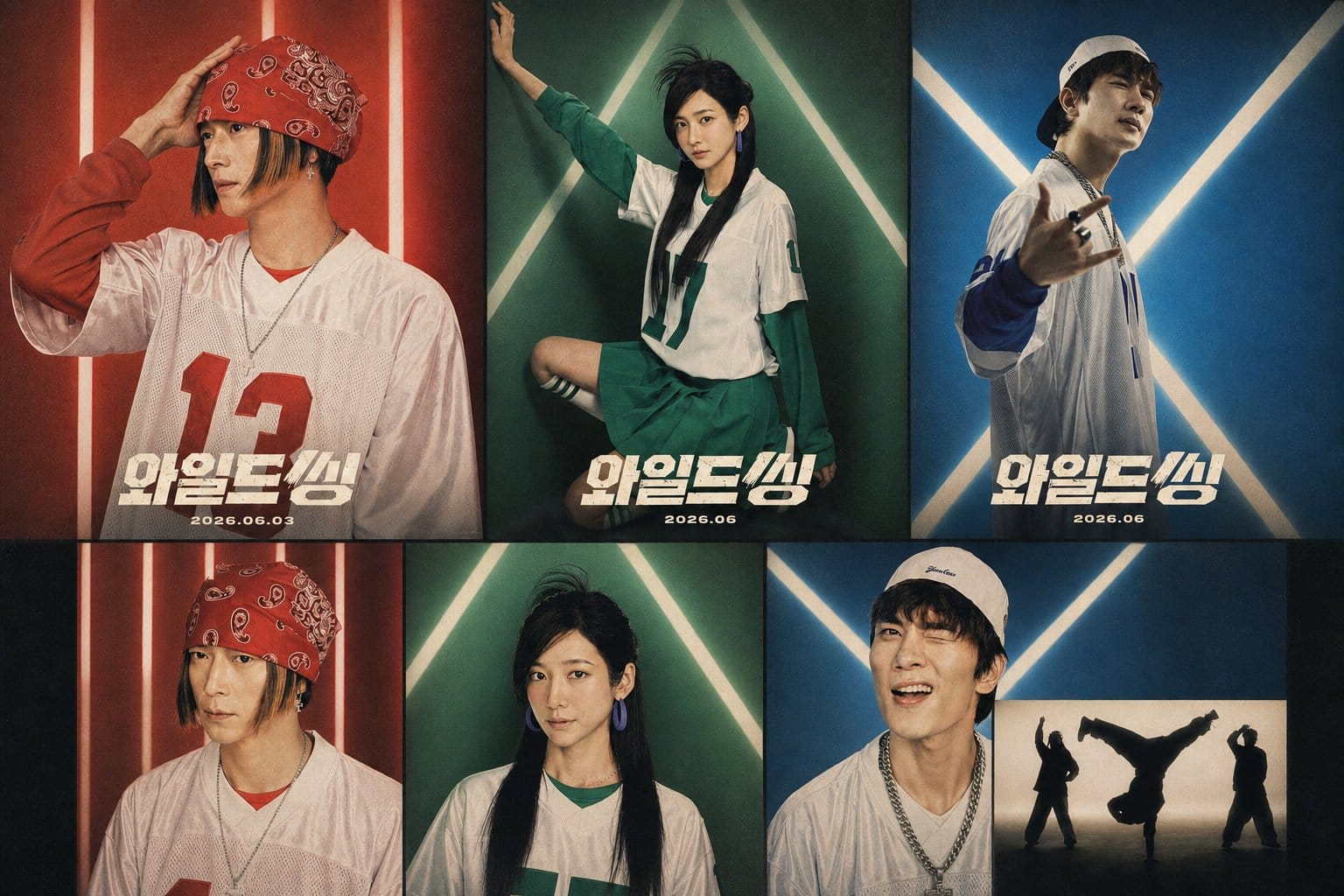
Wild Sing is available worldwide on Netflix, where it landed on 31 July 2026 KST (30 July PT) after a Korean theatrical run that began on 3 June 2026 . That gap is roughly two months — short by Korean standards, where theatrical-to-streaming windows often run longer. The film opened on about 1,351 screens in Korea and carries a 12+ domestic rating with a 107-minute runtime .
For international viewers, the practical answer is simple: there is no separate regional rollout to wait for. Netflix added the title globally on the same date, with subtitles in 32 languages and dubbed audio tracks in 15 . That dubbing count is on the higher end for a Korean comedy feature, and it reflects a distribution bet that the retro K-pop premise travels beyond subtitle-reading audiences.
| Release channel | Date | Territory | Details |
|---|---|---|---|
| Theatrical (Lotte Entertainment) | 3 June 2026 | South Korea | ~1,351 screens; 12+ rating; 107 min |
| Netflix streaming | 31 July 2026 KST (30 July PT) | Worldwide | 32 subtitle languages, 15 dub languages |
Two search notes worth keeping straight before you go looking. First, the film is listed under the English title WILD SING, but some English-language coverage renders it as Wild Thing, and the 1998 American film Wild Things was released in Korea under the identical Korean title 와일드 씽 . If a search returns a 1998 thriller, that is the collision. Second, the Korean-language listing 와일드 씽 (2026년 영화) is the reliable identifier for the 2026 feature .
Korean theatrical showings had largely wound down by the time the Netflix date arrived, so streaming is now the only reliable way to see it outside of festival or repertory programming .
How Did Wild Sing Perform at the Box Office and on Netflix?
Wild Sing finished its Korean theatrical run as a well-reviewed film that did not recover its budget, then found a second audience on Netflix. It crossed 1 million admissions on 20 June 2026, its 18th day in release , and had grossed roughly US$8.3–8.6 million from 1,308,421 admissions as of 6 July 2026 per KOBIS data . Against a reported production budget of 8 billion won, that fell short of the roughly 2 million admissions needed to break even .
The gap between reception and returns is the clearest way to read the run. Korean audience scoring stayed high through the theatrical window — a Naver audience score of 8.44 out of 10 and a CGV EggIndex of 93% — while the final theatrical tally settled near 1.33 million admissions . A film that opened on roughly 1,351 screens and drew more than 160,000 admissions on day one converted word of mouth into steady mid-run attendance, but not into the scale a mid-budget comedy needs in the current Korean market .
- Opening day: about 160,000 admissions, on roughly 1,351 screens
- 1 million admissions: reached 20 June 2026, day 18
- As of 6 July 2026: 1,308,421 admissions, about US$8.3–8.6 million
- Final theatrical tally: near 1.33 million, versus a break-even point around 2 million
The Netflix window changed the picture. After the global release on 31 July 2026 KST, the film reached No. 1 on Netflix Korea's daily Top 10 Movies list, and the platform carried it with 32 subtitle languages and 15 dubbing languages . That localization spread matters more than the domestic chart position: a retro K-pop comedy built on early-2000s references now reaches audiences who never had a theatrical option. Signals were visible before launch too — the in-character retro music video for Triangle's debut single "Love is" passed 2.8 million YouTube views ahead of release .
The concrete takeaway: judge Wild Sing by its second life, not its box office. The theatrical numbers say a mid-budget Korean comedy missed break-even; the audience scores, the multi-language rollout, and the Netflix Korea chart run say the film found the viewers it was made for once distance and price stopped being the barrier. If you are deciding whether to watch, the streaming release — not the June ticket sales — is the relevant data point .
Frequently asked questions
Is Wild Sing a Netflix original series?
No. Wild Sing (와일드 씽) is a licensed South Korean theatrical feature film that Netflix picked up for streaming, not a Netflix original series or K-drama. It runs 107 minutes as a single film with a 12+ Korean rating, was directed by Son Jae-gon and distributed theatrically in Korea by Lotte Entertainment . Netflix streams it globally with 32 subtitle languages and 15 dubbing languages . There are no episodes, no weekly release schedule, and no announced sequel or series spin-off. Wikipedia and Cine21 both list it under film, not television.
Who are the main actors in Wild Sing?
Four actors carry the film. Gang Dong-won plays Hwang Hyun-woo, the good-looking but clumsy leader and the group's b-boy dancer; Um Tae-goo plays Gu Sang-gu, Triangle's rapper and youngest member; Park Ji-hyun plays Byeon Do-mi, the sole female member billed as center and main vocalist, and the one actually holding the group together; and Oh Jung-se plays Choi Seong-gon, a rival "Ballad Prince" figure who never got past No. 2 . Reporting from Yonhap News Agency confirms the same four-role structure. Kim Go-eun is not in the cast — that name circulates through search conflation and appears on no official cast list .
When does Wild Sing come out on Netflix?
Wild Sing began streaming worldwide on Netflix on 31 July 2026 KST, which is 30 July 2026 Pacific Time . That is roughly two months after its Korean theatrical opening on 3 June 2026, when it launched on about 1,351 screens . The streaming version is available in every Netflix region with 32 subtitle tracks and 15 dubs, so no regional staggering applies. The title page is at Netflix, and release timing is confirmed by What's on Netflix.
Is Wild Sing based on a real K-pop group?
No. Triangle is a fictional three-member co-ed dance group invented for the film — a act that topped Korean charts around 2001, disbanded overnight after a plagiarism scandal and the disappearance of its producer, then reunites twenty years later . The period styling draws on late-1990s and early-2000s idol aesthetics generally rather than any single group's history. The music, however, was built by working professionals: Shim Eun-ji and KASS wrote Triangle's songs and Yang Wook of Nana Company handled choreography, and the retro music video for the fictional debut single "Love is" passed 2.8 million YouTube views before release .
Did the actors do their own singing and dancing in Wild Sing?
Yes. At the 7 May 2026 press conference, the cast described roughly five months of preparation: Gang Dong-won trained in break-dancing and head-spinning to perform the moves himself, Um Tae-goo trained with a JYP Entertainment rap coach and co-wrote his character's verses, and Park Ji-hyun studied 2000s girl groups including S.E.S. and Fin.K.L, plus Lee Hyo-ri's stage register, to build her performance . The commitment extended past the main numbers — a promotional track, "니가 좋아" ("I Like You"), performed in character by Oh Jung-se, charted in Korea after release . Coverage of the press day is available via Korea JoongAng Daily.
Enjoyed this article? Subscribe to get new stories by email whenever they're published.
This article was written using information collected and analyzed by NAMANE's in-house K-pop research AI engine. We use AI technology to bring you faster, broader coverage, and in the process some details may occasionally differ from the latest facts. For important information such as dates, venues, and prices, please double-check with official sources.


