
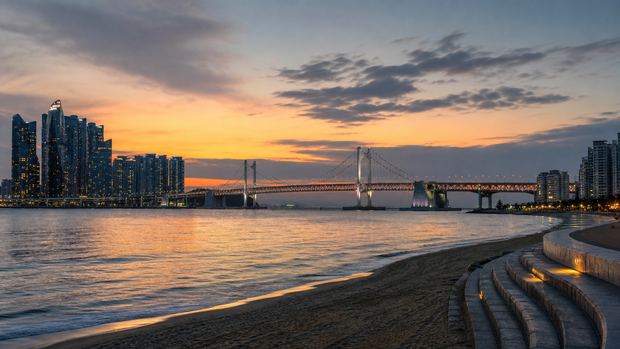
Busan's Tourism Boom: Q1 2026 by the Numbers
Busan recorded 1.02 million foreign tourist arrivals in the first quarter of 2026 — the fastest pace since the city began systematic tracking in 2014, surpassing the previous year's comparable milestone by a full month. Tourism revenue for that single quarter reached ₩235.5 billion (approximately $160 million USD), a 26.4% increase compared to Q1 2023, according to Outlook India. The leading source markets were Taiwan (~209,000 arrivals), China (~198,000), Japan (~130,000), and the United States (~81,000), with accelerating contributions from Vietnam, Indonesia, and the Philippines rounding out the picture. The Visit Busan Pass — the city's bundled transport-and-attractions card — recorded 65% growth in uptake and expanded pickup to Incheon and Gimpo International Airports, adding Line Pay and Alipay payment compatibility to serve the shifting visitor base. These figures mark a structural inflection point for a city that has long been overshadowed by Seoul in international tourism rankings.
Quick Answer: Busan hit 1.02 million foreign arrivals in Q1 2026 — its fastest tourism pace since tracking began in 2014. Revenue for the quarter reached ₩235.5 billion (~$160M USD), up 26.4% versus Q1 2023. Taiwan, China, Japan, and the United States led arrivals, with Southeast Asian markets growing rapidly alongside established sources.
Revenue growth is outpacing arrival growth, suggesting visitors are spending more per trip — a shift that city planners have been engineering through premium pass products and targeted marketing in high-spending markets like Taiwan and Japan. The quarterly figure of 1.02 million visitors becomes particularly significant when measured against the city's long-term ambition: 5 million annual foreign visitors by 2028. At Q1's pace, annualized arrivals would approach 4 million in 2026 alone, placing that target within credible reach two years ahead of schedule.
The Visit Busan Pass expansion to Incheon and Gimpo airports is a distribution play with clear strategic logic. Most international travelers to Korea enter through these two hubs, and offering point-of-entry pickup reduces the friction that has historically discouraged first-time Busan visitors from committing to dedicated travel packages. The addition of Line Pay and Alipay compatibility directly targets the Taiwanese and Chinese visitor segments — the two largest source markets by volume. According to Busan Metropolitan City's official press release, the integration is part of a broader effort to modernize the tourism onboarding experience and reduce drop-off between visitor intent and actual arrival.
Regional diversification is one of the more significant structural shifts in Busan's visitor profile. While Taiwan, China, Japan, and the United States continue to rank as the top four markets, the combined growth from Vietnam, Indonesia, and the Philippines signals a broadening of the city's appeal across Southeast Asia — a trend that aligns with both K-culture's regional momentum and the expansion of direct air connections from ASEAN cities to Gimhae International Airport in recent years.
| Source Market | Q1 2026 Arrivals (est.) | Notes |
|---|---|---|
| Taiwan | ~209,000 | Largest single market; K-culture and geographic proximity |
| China | ~198,000 | Strong recovery; cruise arrivals a major component |
| Japan | ~130,000 | Consistent arrivals; ferry and air links from Fukuoka and Osaka |
| United States | ~81,000 | Growing; BTS fandom and K-drama tourism cited as factors |
| Vietnam / Indonesia / Philippines | Growing (combined) | Fastest-growing cluster; Southeast Asian K-culture wave |
K-Culture Pilgrimages: Why Fans Are Choosing Busan
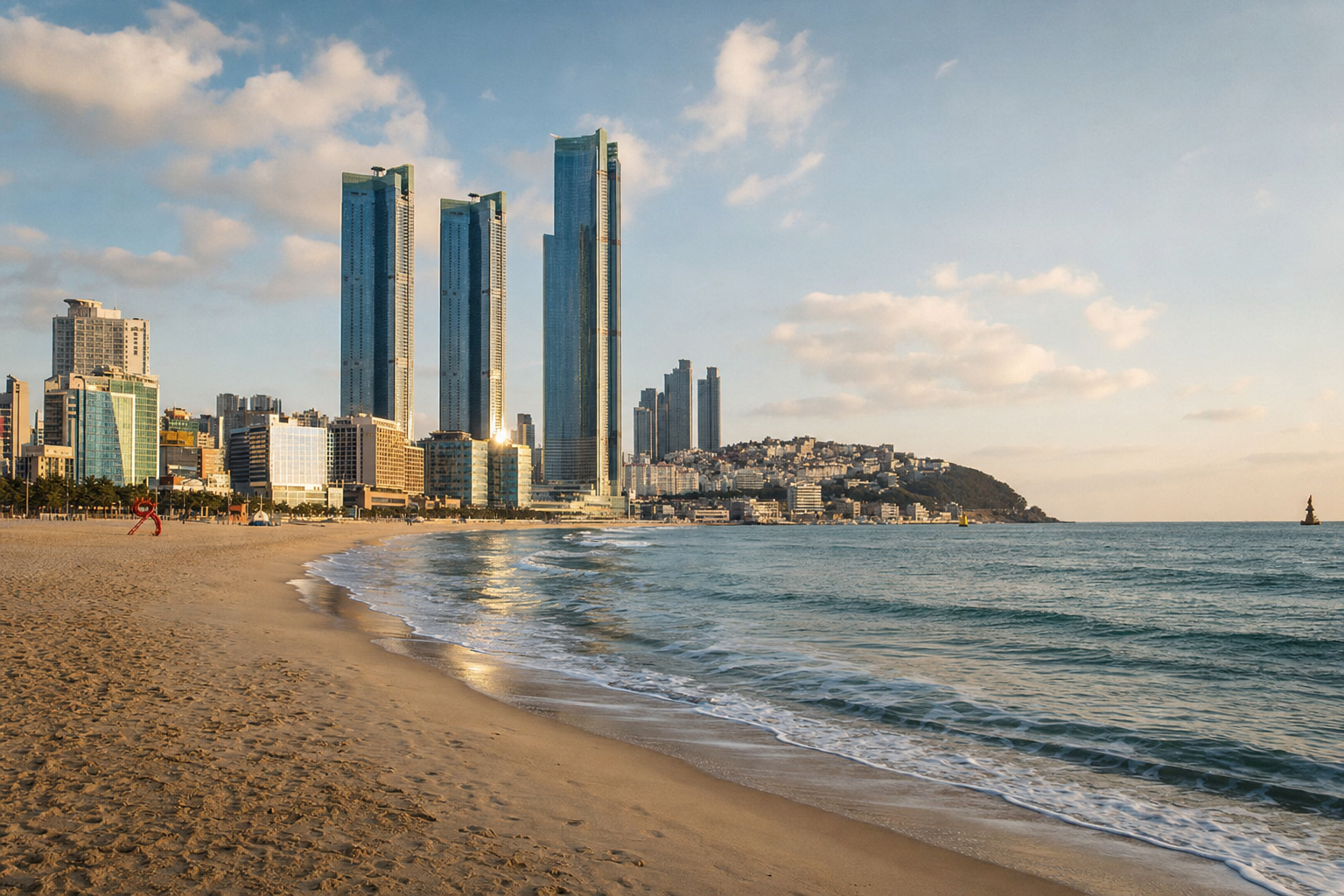
Busan's standing as a K-culture pilgrimage destination rests on a specific, well-documented foundation: BTS members Jimin and Jin were both born and raised in the city, making Busan a primary stop for fans tracing the group's origins. This connection is not incidental tourism — it has generated mapped landmark routes, dedicated fan itineraries, and a measurable impact on arrivals from markets where BTS commands the deepest following, particularly the United States, Taiwan, and across Southeast Asia. According to Travel and Tour World, BTS-linked fan pilgrimages to Busan are cited among the direct drivers of the Taiwan and Southeast Asian visitor surges recorded in Q1 2026, with the effect expected to sustain through the remainder of the year. The convergence of personal geography — birthplace — concert legacy, and an expanding local cultural infrastructure is what separates Busan's K-culture draw from generic Korean tourism appeal. Fans are not simply visiting Korea and adding Busan; many are traveling specifically for Busan.
The legacy of the 'BTS: Yet To Come in Busan' concert — held in October 2022 as a free outdoor event — continues to shape fan visitor behavior in 2026. The concert drew enormous crowds to the city's coastal and stadium districts, and the atmosphere it created has crystallized specific locations in the collective imagination of the global ARMY fanbase. This is a recognizable pattern in fan tourism: a single large-scale event anchors a city's identity for years beyond the event itself, creating durable pilgrimage pull that does not require ongoing programming to maintain.
Haeundae Beach | 해운대 해수욕장
Haeundae Beach is Busan's most recognizable coastal landmark and a focal point of the 2022 BTS concert experience. For fans visiting in 2026, the area around Haeundae functions as both a scenic destination and a cultural reference point — the stretch of waterfront that appeared in concert footage and pre-event fan gathering coverage. The surrounding Haeundae district concentrates a significant share of Busan's luxury hotel capacity and beachfront dining, making it a natural base for international visitors building pilgrimage itineraries around the coastal zone.
📍 Haeundae Beach
⭐ 4.6 (2,705 reviews)
🔗 View on Google Maps
Busan Asiad Main Stadium | 부산아시아드주경기장
Busan Asiad Main Stadium served as the primary venue for the 2022 'Yet To Come in Busan' concert. Built for the 2002 Asian Games and designed for large-scale outdoor events, the stadium has the capacity and configuration that made it appropriate for a major free public concert. Fans arriving in 2026 regularly include the stadium on pilgrimage itineraries as a direct connection to that event, independent of any scheduled programming during their visit.
📍 344 World cup-daero, Yeonje-gu, Busan
⭐ 4.2 (878 reviews)
📞 051-500-2111
🔗 View on Google Maps
"Busan's transformation into a K-culture pilgrimage hub is no accident — BTS members' hometown connection has turned the city into a living extension of ARMY fandom geography, with fans mapping personal landmarks that extend well beyond any single concert or event." — Travel and Tour World, 2026 analysis on BTS tourism across Korea
Beyond the BTS connection, Busan's filming location landscape has widened its fan tourism base considerably. K-drama and variety show productions distributed across multiple city districts — from Gamcheon Culture Village's terraced hillside alleys to the commercial streets of Seomyeon and the harbor-adjacent alleys of Nampo-dong — have generated dedicated filming-location itineraries that circulate actively through fan communities online. This multi-layered K-content geography means visitors arriving primarily for one cultural reference point often discover additional destinations within the same trip, increasing both dwell time and per-visitor spend without the city needing to engineer the outcome directly.
New Cultural Venues and Events Opening in 2026
Busan is actively expanding its cultural infrastructure in 2026, with new venue openings, major event programming, and renovation projects running in parallel. The Busan Opera House — a landmark performing arts facility in active construction as of this year — represents the city's most visible long-term investment in cultural identity, positioned to anchor the performing arts scene once complete. The Nakdong Art Center is opening in 2026 as a dedicated performance and exhibition hub serving both local audiences and cultural visitors. The Busan Museum of Art is preparing a special reopening exhibition following a period of renovation, adding to a concentrated burst of cultural programming across the city, according to HAPS Korea. For fans whose itineraries extend beyond K-pop concerts into the broader K-culture sphere, 2026 offers more venue options and programming in Busan than any prior year.
"Busan is leveling up its cultural scene in 2026 with new venues and major renovations — from the Nakdong Art Center opening to the Busan Museum of Art's special reopening exhibition and a slate of new festival programming that positions the city as more than a film and gaming destination." — HAPS Korea, 2026
Busan Opera House | 부산오페라하우스
The Busan Opera House is under active construction in 2026 and represents a defining project for the city's performing arts identity. When complete, it will serve as a flagship venue for classical performance, opera, and large-scale theatrical productions, distinguishing Busan's cultural offer from the pop and cinema events that currently dominate its international event profile. No confirmed opening date has been announced as of mid-2026, but the North Port Opera Gala Concert — a related programming initiative scheduled for 2026 — functions as an early preview of the city's classical music ambitions within the North Port development zone.
📍 354-7번지 Myeongjang-dong, Dongnae-gu, Busan
🔗 View on Google Maps
Nakdong Art Center | 낙동아트센터
The Nakdong Art Center is opening in 2026 as a dedicated performance and exhibition space, extending Busan's cultural geography into a district that has historically been less prominent on visitor itineraries. The center is positioned as a hub for both resident artists and visiting audiences, with programming expected to include visual art exhibitions alongside live performance events — a combination that places it on the radar for fans whose interests span K-culture broadly rather than just concert attendance.
📍 130 Deoksugung-gil, Jeong-dong, Jung District, Seoul
🕒 Monday–Friday 9:00 AM – 7:00 PM / Saturday–Sunday 10:00 AM – 7:00 PM
⭐ 4.6 (508 reviews)
📞 02-722-1928
🔗 View on Google Maps
Busan Museum of Art | 부산시립미술관
The Busan Museum of Art is presenting a special reopening exhibition in 2026, marking a milestone in the museum's programming calendar after a period of preparation and renovation work. Located in the Haeundae district, the museum is a natural addition to itineraries that already anchor on the coastal zone — visitors combining the beach area with Haeundae's hotel concentration can include the museum without significant additional travel time.
📍 58 APEC-ro, Haeundae, Busan
⭐ 4.3 (2,611 reviews)
📞 051-744-2602
🔗 View on Google Maps
BEXCO: BIFF and G-STAR
BEXCO — Busan's major convention and exhibition complex — remains the anchor venue for two of Asia's most significant annual events. The Busan International Film Festival (BIFF) is consistently ranked among Asia's foremost cinema events and typically runs in October, with screenings across BEXCO and nearby Haeundae-area venues including the Busan Cinema Center. G-STAR, one of the world's top gaming expositions, is typically held at BEXCO in November. Both events draw international professional and fan audiences and represent confirmed annual programming anchors on Busan's event calendar. Exact 2026 dates for BIFF and G-STAR are to be confirmed via official event channels. The Classic Busan Festival rounds out the 2026 schedule, bringing orchestral and classical music programming to the city and complementing the North Port Opera Gala Concert as part of the city's expanding performing arts calendar.
📍 55 APEC-ro, Haeundae, Busan
⭐ 4.3 (8,831 reviews)
📞 051-740-7300
🔗 View on Google Maps
Cruise Tourism Surge and the Evolving Visitor Mix
Cruise tourism has emerged as one of the most dramatic growth stories in Busan's 2026 data. Chinese cruise port calls jumped from 31 to 89 in Q1 2026 alone — nearly tripling in a single quarter — while cruise passenger numbers more than tripled to 180,388 over the same period, according to Outlook India. The city is projecting 800,000 total cruise arrivals for the full year 2026, a figure that would represent a structural transformation in how international visitors reach Busan. Cruise passengers arrive without pre-booked accommodation, spending directly in port-adjacent retail, dining, and attraction markets — a visitor profile quite different from the independent traveler or package tour group, and one with distinct implications for which commercial ecosystems benefit most from tourism growth.
The explosion in Chinese cruise traffic is particularly notable given the diplomatic and commercial context of China-Korea tourism flows in recent years. The scale of the increase — from 31 to 89 port calls in a single quarter — suggests that Chinese cruise operators have substantially re-routed itineraries to include Busan as a primary call rather than a secondary stop, a reconfiguration that signals longer-term commitment to the corridor rather than opportunistic recovery.
Beyond the cruise segment, the broader visitor mix is diversifying in ways that city planners have described as a strategic opportunity. Vietnam, Indonesia, and the Philippines are growing as source markets alongside the established Northeast Asian base. Southeast Asian travelers tend to skew younger, are more strongly influenced by K-culture content, and are more likely to organize itineraries around specific fan destinations — a profile that aligns closely with what Busan is investing in culturally and the type of visitor the Visit Busan Pass is designed to convert into repeat travelers.
Shopping tourism restructuring is one of the more operationally specific responses to the changing visitor mix. According to Seoul Economic Daily, the city is actively redirecting visitor spending away from large shopping malls toward local markets, with Gukje Market and Jagalchi Market identified as priority destinations in this effort — a move designed to spread economic benefit across a wider network of small vendors rather than concentrating it in large-format retail.
Gukje Market | 국제시장
Gukje Market (International Market) is one of Busan's oldest and largest traditional markets, located in the Jung-gu district near Bupyeong. The city's shopping tourism restructuring initiative identifies markets like Gukje as more economically distributed alternatives to large shopping centers, channeling visitor spending into a broader network of local vendors and small businesses that give the city its distinctive commercial character.
📍 55 Gukjesijang 2-gil, Jung-gu, Busan
🕒 Daily 9:00 AM – 6:00 PM
⭐ 4.1 (12,911 reviews)
📞 051-245-7389
🔗 View on Google Maps
Jagalchi Market | 자갈치시장
Jagalchi Market is Busan's iconic seafood market on the southern waterfront — a longstanding visitor landmark and an authentic local experience that the shopping tourism reorientation program explicitly promotes as an alternative to centralized mall retail. The market anchors the Nampo-dong commercial district, and increased visitor footfall benefits a dense surrounding neighborhood of restaurants, small shops, and street vendors.
📍 52 Jagalchihaean-ro, Jung-gu, Busan
🕒 Daily 9:00 AM – 9:00 PM
⭐ 4 (26,846 reviews)
📞 051-245-2594
🔗 View on Google Maps
Infrastructure in Motion: Airport, Metro, and North Port
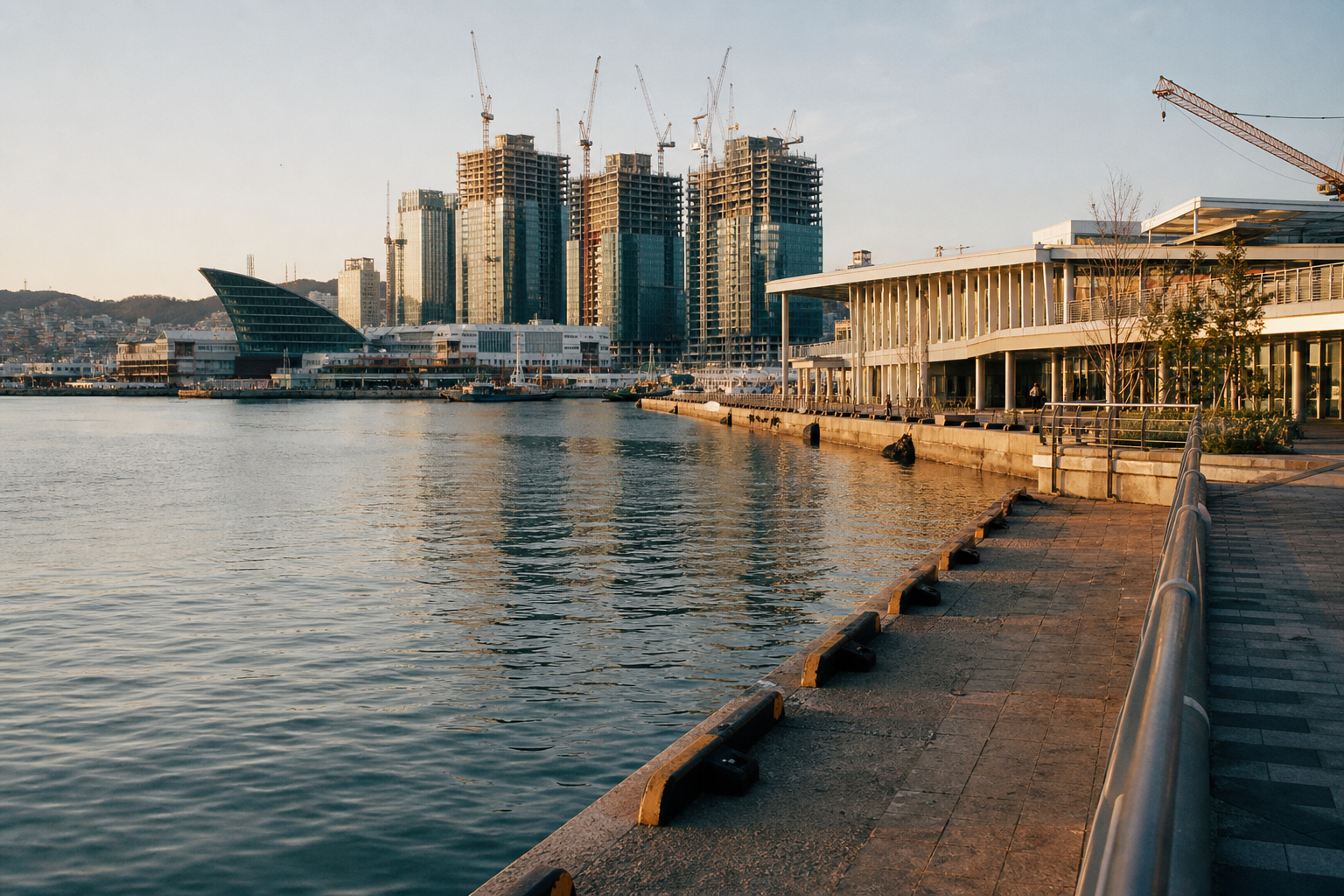
Busan's infrastructure development pipeline in 2026 centers on three interlocking projects collectively aimed at transforming how people enter, move through, and settle in the city: the Gadeokdo New Airport, two metro line extensions, and the North Port redevelopment. Gadeokdo New Airport is a nationally significant undertaking — it would give Busan a dedicated international gateway, reducing dependency on Gimhae International Airport and decoupling the city's international access from the Seoul-centric air corridor. As of 2026, the project is in active development with no confirmed opening date, but it functions as the long-term infrastructure anchor of the city's 5 million visitor strategy, as outlined in Busan Metropolitan City's infrastructure planning release. The combination of new airport capacity, expanded metro connectivity, and a revitalized port district represents the infrastructure preconditions for sustainable tourism growth at scale — each project reinforcing the others.
The two planned metro line extensions — Sasang–Hadan and Hadan–Noksan — would expand Busan's rapid transit network into the city's southern districts, improving connectivity for residents and visitors traveling between port areas, accommodation zones, and the broader urban grid. Metro access is a determinant of visitor experience in Korean cities: the rail network sets the practical ceiling on which neighborhoods are accessible to international travelers without private transport. Extending the network into currently underserved southern districts opens new residential and commercial zones to visitor itineraries that presently concentrate in Haeundae and the central business district.
North Port Redevelopment | 북항
The North Port (Bukang) redevelopment project is converting a historically industrial waterfront into a mixed-use urban district combining residential, commercial, hospitality, and cultural uses. The project has direct implications for Busan's visitor accommodation capacity: as the waterfront develops, new hotels and commercial spaces will emerge in an area currently defined by port logistics infrastructure. City planners are monitoring the North Port timeline closely, as its delivery schedule will influence whether Busan has the hospitality inventory to support the projected 5 million annual visitors by 2028. According to HAPS Korea, the North Port development is expected to reshape Busan's urban geography significantly, creating visitor districts that do not currently appear on tourist maps.
📍 South Korea, 부산광역시 동구 초량제3동
⭐ 3.6 (8 reviews)
📞 051-609-6390
🔗 View on Google Maps
Near-term mobility improvements are running in parallel with the longer-horizon infrastructure projects. Rush-hour toll waivers at Garak Tollgate reduce congestion costs for commuters and visitors driving into central areas. The K-Pass senior transit reimbursement has been raised from 20% to 30%, improving effective transit access for older visitors and residents and narrowing the cost differential between public transport and private car use. These adjustments reflect an acknowledgment that infrastructure projects on the scale of Gadeokdo Airport and North Port operate on timelines measured in years, while the city needs to improve actual mobility conditions now.
Record ₩17.9 Trillion Budget: Where the Money Goes
Busan Metropolitan City approved a 17.933 trillion KRW budget for 2026 — the largest in the city's recorded history, representing a 7.5% increase (₩1.25 trillion) over the 2025 budget, as published in the Busan Metropolitan City official budget announcement. The budget architecture reflects dual priorities: delivering direct welfare and quality-of-life improvements for residents while simultaneously investing in the cultural and economic infrastructure that attracts international visitors and business. Citizen Happiness — the umbrella category covering welfare, health, and social services — receives ₩8.6 trillion, roughly half the total. Culture and Tourism receives ₩587.9 billion, while Digital and New Industries receives ₩502.5 billion, signaling investment across both the visitor economy and technology sector simultaneously. For international travelers, the culture budget directly funds the events, venues, and public programming that Busan is expanding as year-round attractions.
Two citizen-facing cultural initiatives stand out for their potential to shape the creative environment visitors encounter. The city is funding 300 young artists (under age 40) with monthly stipends of ₩1 million each for nine months — a direct investment in the local creative population whose work contributes to Busan's cultural atmosphere in exhibitions, performances, and public spaces. Annual Culture Voucher allocations per resident have been raised to ₩150,000, enabling broader civilian participation in cultural events. These are compounding investments: a more active local arts scene makes the city more interesting for visitors while building a self-sustaining creative ecosystem that outlasts any single programmatic event.
The Dongbaekjeon local currency — Busan's city-issued alternative tender — will circulate ₩1.2 trillion in 2026 to stimulate neighborhood-level commerce. The mechanism directs spending toward local small businesses and away from large chains, preserving the commercial ecology of traditional markets and neighborhood districts that form the backbone of the shopping tourism restructuring initiative.
| Budget Category | 2026 Allocation | Context |
|---|---|---|
| Total Budget | ₩17.933 trillion | City's largest on record; +7.5% over 2025 |
| Citizen Happiness | ₩8.6 trillion | Welfare, health, and social services |
| Future-Oriented Attractiveness | ₩1.49 trillion | Infrastructure and long-term economic positioning |
| Culture & Tourism | ₩587.9 billion | Events, venues, and tourism product development |
| Digital & New Industries | ₩502.5 billion | Technology sector and digital economy |
| Dongbaekjeon Local Currency | ₩1.2 trillion issuance | Neighborhood commerce stimulation across local markets |
| Young Artist Stipends | ₩1M/month × 300 artists × 9 months | Under-40 creative workforce development |
Youth, Employment, and the 'Your Home' Policy Push
Busan's 2026 civic program — titled "Busan, Your Home for Today and Beyond" — encompasses 48 new and revised policy measures across five priority fields, representing one of the most comprehensive domestic policy packages the city has introduced in a single year. The initiative's framing as a "home" program is deliberate: Busan has faced population outflow to Seoul in recent decades, and the program is explicitly designed to improve conditions for residents weighing whether to remain in the city. According to the official policy announcement by Busan Metropolitan City, the five priority fields are Economy and Employment; Childbirth and Early Care; Health, Welfare, and Environment; Urban Planning and Transportation; and Culture, Sports, and Tourism. For an international audience, domestic policy detail matters because it shapes the urban environment — a city investing seriously in resident welfare and small business viability is building the livable, commercially varied fabric that makes it an interesting destination.
In the economy and employment field, the SME development fund ceiling has been raised to ₩1.8 billion per establishment, with interest support increased by 0.5 percentage points. Business closure subsidies have been raised to ₩4.5 million — a practical measure that softens the risk calculus for small business operators, including the independent retailers and market vendors who form the backbone of the local market tourism ecosystem the city is actively promoting to international visitors. Foreign resident families have been included in the expanded meal allowance and childcare support programs, extending the welfare framework to Busan's international residential community.
In health and welfare, flu vaccination coverage has been extended to children under 14, and the Busan Care Service has been expanded as part of the social safety net infrastructure. The urban planning and transportation measures include the Garak Tollgate rush-hour waiver and the K-Pass senior reimbursement increase noted in the infrastructure section. The young artist stipends and Culture Voucher increases connect back to the budget allocations — they are simultaneously fiscal line items and 'Your Home' program commitments, reinforcing each other across policy frameworks.
The breadth of the 48 measures reflects a city attempting to address multiple simultaneously pressing challenges: youth retention, small business resilience, family formation incentives, and cultural investment. Whether these measures collectively shift Busan's demographic trajectory will take years to determine, but the program represents a clear statement of municipal priority at a moment when the city's external profile is also rising sharply — an alignment of internal ambition and external attention that does not occur frequently.
Busan's 2028 Vision: The Road to 5 Million Annual Visitors
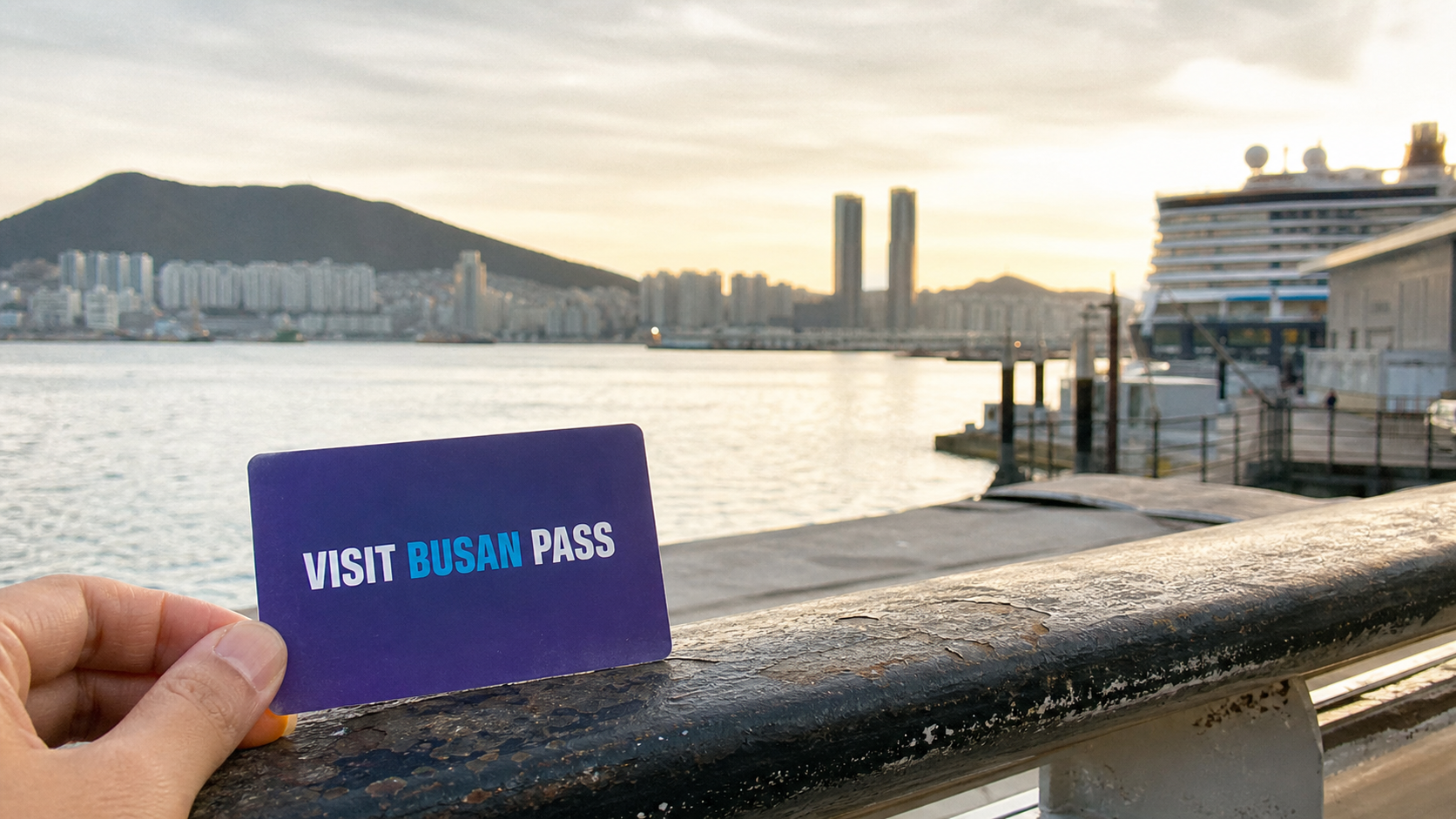
Busan's official target of 5 million foreign arrivals per year by 2028 represents approximately five times the city's pre-pandemic 2019 baseline — an ambition that implies structural changes in accommodation capacity, transport infrastructure, and cultural programming well beyond what the city currently has in place. The Gadeokdo New Airport is the long-term infrastructure anchor: a dedicated international gateway that would decouple Busan's air access from the Seoul-centric corridor and allow direct international routing that currently requires a Seoul connection. In the near term, the Visit Busan Pass expansion and payment integrations function as the practical onboarding tools for the visitor volumes already materializing in 2026, as reported by Travel and Tour World. At Q1 2026's pace, annualized arrivals would approach 4 million — a strong trajectory toward the 2028 target with two years remaining.
"Busan is no longer simply South Korea's second city — it is actively building the infrastructure, event calendar, and cultural identity of a global destination, with a 5 million visitor target anchoring every major policy decision from airport construction to cultural venue investment and cruise corridor development." — Travel and Tour World, April 2026
The multi-segment positioning is one of Busan's structural advantages in pursuing the 2028 target. BIFF draws film industry professionals and cinema audiences. G-STAR draws gaming communities. K-culture fan tourism draws BTS-connected visitors from the United States, Taiwan, and Southeast Asia. The cruise corridor draws large volumes of Chinese package travelers. Each segment operates on a different calendar, through different distribution channels, and appeals to different audience motivations — reducing the city's dependence on any single market or format and providing resilience against disruptions that might affect one segment without touching others.
North Port redevelopment is the most closely watched variable in whether the 2028 target is achievable at the infrastructure level. City planners and analysts are monitoring whether the redevelopment timeline delivers meaningful hospitality capacity — hotels, dining, retail — before 2028, or whether the new waterfront district remains primarily aspirational at the time the target year arrives. According to HAPS Korea, the North Port project's delivery pace is widely regarded as the key indicator of whether Busan's physical infrastructure can keep pace with its visitor ambitions over the next two years.
Frequently Asked Questions
Is Busan worth visiting for K-POP fans in 2026?
Yes — Busan has a specific and direct K-pop connection through BTS members Jimin and Jin, both of whom were born and raised in the city. This makes Busan a primary fan pilgrimage destination with organized landmark routes tracing the members' Busan backgrounds. Haeundae Beach and Busan Asiad Main Stadium remain active pilgrimage sites as the locations most associated with the October 2022 'Yet To Come in Busan' free concert. Beyond the BTS connection, K-drama and variety show filming locations are distributed across multiple Busan districts, and 2026 sees new cultural venues opening — including the Nakdong Art Center and the Busan Museum of Art's special reopening exhibition — adding to the city's appeal for fans whose interests span the broader K-culture spectrum. The Visit Busan Pass, now available at Incheon and Gimpo airports, simplifies getting around on arrival.
What is the Visit Busan Pass and how do I get one?
The Visit Busan Pass is a bundled transport and attractions card covering public transit access and discounted or free entry to a range of Busan's tourist sites. In 2026, the pass recorded 65% growth in usage and expanded pickup availability to Incheon International Airport and Gimpo International Airport, meaning travelers can collect the card immediately on arrival in Korea before boarding a KTX or flight to Busan. Payment now supports Line Pay and Alipay in addition to existing options, making the card accessible to travelers from Taiwan, China, and Southeast Asia without requiring a Korean payment method. The airport pickup expansion is specifically designed to reduce friction for first-time Busan visitors who might otherwise skip the pass in the unfamiliarity of a new city.
How do I travel from Seoul to Busan?
The standard route from Seoul to Busan is the KTX high-speed rail service, running from Seoul Station to Busan Station in approximately 2.5 hours. KTX trains depart frequently throughout the day and seats can be booked via the Korail website or app in advance — advance booking is recommended during peak travel periods. Domestic flights (Gimpo Airport to Gimhae International Airport) are also available, though city-center-to-city-center total travel time including airport transit is comparable to KTX for most travelers. Gadeokdo New Airport is currently under development as a dedicated international gateway for Busan, but no opening date has been confirmed as of 2026.
When does the Busan International Film Festival (BIFF) take place in 2026?
BIFF typically runs in October each year, with screenings and events distributed across BEXCO, the Busan Cinema Center, and Haeundae-area venues. Exact 2026 dates are to be confirmed via the official BIFF website, and popular screenings and evening events sell out quickly once ticketing opens. G-STAR, the gaming exposition that also uses BEXCO as its primary venue, is typically held in November. Both events draw significant international audiences — travelers planning around either event should monitor official channels for date announcements and register early. The Classic Busan Festival and North Port Opera Gala Concert are also on the 2026 calendar, extending the city's annual events range across multiple audience types.
When will Gadeokdo New Airport open?
As of 2026, the Gadeokdo New Airport project is in active development with no confirmed opening date publicly announced. The airport is designated as a long-term national infrastructure priority — intended to give Busan a dedicated international gateway independent of Seoul-area hubs — but large-scale airport projects operate on multi-year construction and regulatory timelines. For the most current official information, the Busan Metropolitan City website and the Ministry of Land, Infrastructure and Transport of Korea are the authoritative sources. The airport is a central pillar of Busan's 2028 visitor target strategy, meaning progress updates are tracked closely by both city planners and the regional tourism and aviation industries.
Busan in 2026: A City Mid-Transformation
What emerges from Busan's 2026 data is not a single headline but a convergence of reinforcing trends. The tourism numbers — 1.02 million foreign arrivals in a single quarter, ₩235.5 billion in revenue, cruise traffic nearly tripling — reflect demand that was building before this year's policy investments could fully take effect. The record ₩17.9 trillion budget, the 48-measure civic program, the cultural venue openings, and the infrastructure pipeline are collectively the city's answer to whether it can absorb and sustain the visitor levels it is already attracting. The K-culture connection — Jimin and Jin's birthplace, the 2022 concert legacy, the ongoing fan pilgrimage economy — gives Busan something Seoul cannot replicate: a specific, personal, and deeply felt fan geography rooted in a global fanbase's emotional attachment to place.
For K-POP fans planning travel in 2026, the practical picture is more favorable than in any prior year. The Visit Busan Pass is easier to obtain at the airport entry point. BIFF and G-STAR provide fall event anchors. The Nakdong Art Center, the Busan Museum of Art's reopening, and the Classic Busan Festival add cultural programming beyond the pilgrimage circuit. North Port is developing toward becoming a new hospitality district, and metro extensions will improve cross-city mobility in the years ahead. The 2028 target of 5 million annual visitors is ambitious, but the investment trajectory suggests the city is building toward it with serious intent — not simply announcing a number.
Travelers who arrive in Busan in 2026 find a city established enough in its fan tourism identity to offer clear, mapped experiences, and early enough in its infrastructure transformation that the city still has the texture of a place in the process of becoming. That is a reasonable — and relatively uncommon — moment to visit.
Last updated: 2026-05-11. This article reflects publicly available data from Busan Metropolitan City official press releases, tourism authority reports, and media coverage through May 2026.


