
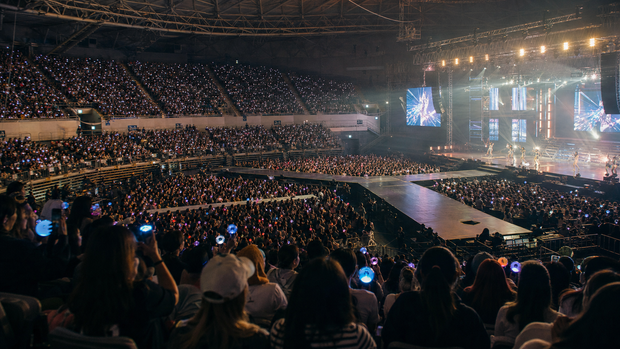
The short answer: K-POP concert etiquette in Korea revolves around three pillars — respect the queue, follow venue restrictions to the letter, and match the energy of Korean fans without crossing boundaries. International fans who understand these unwritten rules have a radically different concert experience than those who show up cold.
This guide is built for international fans who already have tickets (or are about to buy them) and want to know exactly how to behave before, during, and after a K-POP concert in Korea. Whether you're headed to KSPO Dome for a standing zone or Jamsil Indoor Stadium for seated comfort, the etiquette expectations are specific, occasionally surprising, and absolutely worth learning before you land. Korea's concert culture has its own rhythm — and has brought tighter security, new anti-scalping enforcement, and evolving fan norms that older guides don't cover.
If you're combining your concert trip with broader Korea travel, a NAMANE Card simplifies transit payments across subway, bus, and convenience stores — one less thing to juggle on concert day.
What Does K-POP Concert Etiquette Actually Mean for Foreign Fans?
Quick Answer: K-POP concert etiquette in Korea covers queue behavior, prohibited items, lightstick synchronization, noise discipline, and orderly exits. Foreign fans face additional ID verification steps and sometimes separate entrance lines. Violating venue rules — especially recording bans — can result in ejection and device confiscation.
K-POP concert etiquette is the set of behavioral norms — both official venue rules and unwritten fan conventions — that govern how audiences behave before, during, and after performances in Korea. Unlike Western concert culture, where general admission often means a free-for-all rush, Korean concert queuing follows a numbered system tied to your ticket. Standing zone entrance numbers dictate your proximity to the stage, meaning your position is earned through the ticketing lottery, not through physical aggression at the gates (source: KoreaTravelEasy,). Korean fans have internalized these systems over years; international fans often haven't.
The stakes are real. Korea's 2025 anti-resale legislation introduced fines up to 5,000% of ticket face value for scalping, and venues have responded with stricter ID verification at gates (source: Columbia Law and Arts, 2025). BTS's V publicly asked fans on Weverse to maintain orderly behavior at airports and venues, calling them "public spaces used by everyone" — a statement that resonated across Korean fan culture and set a new tone concert seasons (source: Korea JoongAng Daily, 2025-08).
When BTS held their free comeback concert "The Comeback Live: Arirang" at Gwanghwamun Plaza in March, organizers deployed 31 entry gates, metal detectors, random ID checks, and a crowd density limit of 2 people per square meter. That level of infrastructure reflects how seriously Korea takes concert safety — and how prepared you need to be (source: Korea JoongAng Daily, -03).
How Do You Get Through the Door? Ticket Verification and Entry Protocol
Ticket verification at Korean K-POP concerts is a multi-step identity check that begins well before you reach the gate. Most major concerts require a mobile QR code displayed through the official ticketing app — Interpark Global or Weverse — paired with your passport or Korean ID card. Some venues have introduced facepass registration, where you upload a photo to the app in advance for automated scanning at entry, eliminating the need for a physical document check at the gate itself (source: Lemon8, 2025). For international fans, the passport is non-negotiable — leave it at the hotel and you're not getting in.
The step-by-step process for Interpark Global, the most common platform for venues like Jamsil Indoor Stadium (25 Olympic-ro, Songpa-gu, Seoul), looks like this:
- Register your artist membership on Weverse and create a verified Interpark Global account.
- Link your membership to Interpark during the presale window — this is time-sensitive and often closes hours before the sale opens.
- At sale time, log in with a single browser tab (multiple tabs trigger fraud detection), refresh once, and wait through the queue. A white screen is normal and does not mean the site crashed.
- Complete payment and download your ticket QR through the Interpark Global app. Screenshot backups are not accepted at most venues.
A common mistake international fans make: assuming that a confirmation email equals entry. It doesn't. You need the live QR code rendered in-app, a charged phone battery, and your passport. If your phone dies in the queue, you're in trouble — which is why a portable charger ranks as the single most important non-ticket item to bring.
For standing zones, your entrance number — printed on the ticket — determines when you enter and how close to the stage you can position yourself. Arriving 3-4 hours before gates open is standard practice for securing a favorable spot in the pre-entry queue (source: KoreaTravelEasy,). Some concerts — notably Seventeen's Carat Zone — have dedicated foreigner queues managed by staff, which simplifies the process but still requires early arrival.
What Should You Bring (and What Gets Confiscated at the Gate)?
Venue restrictions at Korean K-POP concerts are stricter than what most international fans expect from Western events. The general rule: pack as if you're going through airport security with a carry-on size limit. Bags larger than A3 size (roughly 30cm × 42cm) are denied entry at most venues. Cameras with detachable lenses, selfie sticks, recording devices, poles, banners, balloons, political signage, and laptops are all confiscated or result in denied entry (source: Korea JoongAng Daily, -03). Phone recording is technically prohibited at most shows, though enforcement varies by artist — some agencies allow fancams during the final song.
The Essentials Packing List
Every item below earns its place through practical necessity, not optional comfort:
- Passport: required for ID verification at entry. No exceptions for international fans.
- Portable charger: your phone is your ticket, your map, your translator, and your payment method. A dead battery is a genuine emergency at a Korean concert.
- Official light stick / 응원봉 (eungwonbong): the group-specific LED stick that syncs via Bluetooth to the concert's lighting system. Available at venue merch booths or K-POP shops for ₩50,000-₩100,000. Using an unofficial or wrong-group lightstick is a social faux pas.
- Small water bottle: under 500ml, typically ₩1,500 at convenience stores. Some venues restrict even this — check specific rules.
- Mini handheld fan: essential for summer concerts. Available at Olive Young locations across Seoul for approximately ₩10,000.
- Cash and a transit card: a reloadable Korean prepaid card covers subway fare home when the concert ends late and taxi surge pricing kicks in.
What Gets Confiscated: The Full Prohibited List
| Item | Status | Why | What Happens |
|---|---|---|---|
| DSLR / mirrorless camera | Prohibited | Recording rights | Confiscated at gate, returned after show |
| Selfie stick / tripod | Prohibited | Obstruction + safety | Confiscated or denied entry |
| Bag larger than A3 | Prohibited | Space + security | Must use venue storage (if available) |
| Banner / slogan board | Depends on event | Obstruction risk | Check artist-specific rules |
| Laptop / tablet | Prohibited | Recording capability | Denied entry or must store off-site |
| Balloons / confetti | Prohibited | Cleanup + fire hazard | Confiscated at security |
| Unofficial lightstick | Allowed but frowned upon | Bluetooth interference | No confiscation, but social judgment |
| Phone (for fancams) | Gray area | Varies by agency policy | Staff may ask you to stop recording |
How Should You Behave Inside the Venue? Standing vs. Seated Etiquette
In-venue behavior at K-POP concerts splits sharply between standing and seated sections, and understanding the difference prevents the most common etiquette violations international fans commit. Standing zones demand physical endurance — you will be on your feet for the entire show, often after 3-4 hours of pre-entry queuing, with no option to sit. Seated sections offer more flexibility but come with their own norms around when to stand, when to sit, and how to manage your lightstick without blocking sightlines (source: KoreaTravelEasy,).
| Factor | Standing Zone | Seated Section |
|---|---|---|
| Typical price range | ₩150,000-₩200,000+ | ₩80,000-₩150,000 |
| Queue arrival time | 3-5 hours before gates | 1-2 hours before gates |
| Physical demand | High — standing 4-6 hours total | Moderate — can alternate sitting/standing |
| Proximity to stage | Determined by entrance number | Fixed by ticket assignment |
| Best for | High-energy immersion, fancam angles | Relaxed viewing, first-time attendees |
| Common venues | KSPO Dome floor, Olympic Park | Jamsil Indoor Stadium, all seated venues |
| Lightstick etiquette | Hold at chest-to-eye level | Keep below head height to avoid blocking |
The Unwritten Rules Korean Fans Follow
Korean concert audiences operate on a set of conventions that aren't posted on any venue website but are universally understood:
- Fan chants (응원법 / eungwonbeop): pre-choreographed call-and-response patterns specific to each song. Korean fans memorize these. International fans who learn them — even partially — earn visible respect. Chant guides are typically posted by fan accounts on X (formerly Twitter) 1-2 weeks before concert dates.
- Lightstick synchronization: official lightsticks connect via Bluetooth to the venue's control system, creating coordinated color waves. If your lightstick isn't synced (check the app before entry), it displays the wrong color at the wrong time — visually jarring for everyone around you.
- No pushing forward: in standing zones, your position is set by your entrance number. Attempting to push closer to the stage after entry is the fastest way to draw staff intervention and peer hostility.
- Quiet during ments: "ment" (멘트) refers to the talking segments between songs where artists address the audience. Korean fans go near-silent during ments. Screaming over an artist's speech is considered deeply disrespectful.
- Organized fan projects: coordinated actions like holding up colored paper, displaying phone flashlights in patterns, or switching lightstick colors during specific songs. These are organized by official fan clubs and announced in advance. Follow along if you can; don't improvise your own project.
What Gets You Ejected
Venue security at Korean concerts has tightened significantly since 2024. At the BTS Gwanghwamun Plaza event, organizers deployed metal detectors at all 31 gates and enforced a strict crowd density cap of 2 people per square meter (source: Korea JoongAng Daily, -03). Behaviors that result in ejection include:
- Recording with a dedicated camera device (phone recording enforcement varies)
- Refusing to show ID during random checks inside the venue
- Obstructing aisles, emergency exits, or designated pathways
- Physical altercations or aggressive pushing in standing zones
- Using a ticket purchased through unauthorized resale — the anti-scalping law allows venues to void tickets on the spot (source: Columbia Law and Arts, 2025)
How Has K-POP Concert Culture Shifted in Recent Years?
K-POP concert culture in Korea has undergone a structural transformation between 2023 and, driven by three forces: tighter government regulation, growing international attendance, and artists themselves setting new behavioral standards. The shift is measurable. When Korea's anti-ticket-scalping legislation passed in 2025, it didn't just add fines — it changed how ticketing platforms verify identity, how venues process entry, and how fan communities police their own members. The 5,000% fine ceiling on resale profits made Korea's enforcement among the strictest globally (source: Columbia Law and Arts, 2025).
The international fan influx has been dramatic. K-tourism bookings rose 31.4% in 2025 via platforms like Klook, driven heavily by concert travel (source: Korea Times, -02). Fan spending patterns reflect deeper cultural immersion: noraebang (karaoke room / 노래방) spending surged 54.8% year-over-year between January 2024 and June 2025, driven by international fans using pre-concert group singing as a social bonding ritual. This isn't passive tourism — fans are actively participating in Korean leisure culture around concerts.
When BTS returned to Gwanghwamun Plaza in March for their free comeback event, the security infrastructure looked nothing like fan events from even two years prior: 31 controlled gates, staggered entry from noon with an 8 PM show time, wristband distribution, and real-time crowd density monitoring. Compare this to the relatively informal crowd management at outdoor K-POP festivals in 2022-2023, and the evolution is stark. Korea is building concert infrastructure that matches its global music export ambitions — and the etiquette expectations for fans have scaled up alongside it.
Venue capacity constraints remain a pressure point. Korea's shortage of large-scale indoor concert venues has pushed demand into outdoor and non-traditional spaces, which require different crowd management approaches and different etiquette norms. Fans who planned for an indoor dome experience sometimes find themselves at an open-air plaza event with very different rules around movement, entry timing, and permitted items.
What Should You Do After the Concert Ends?
Post-concert etiquette is where many international fans drop their guard — and where small mistakes create outsized frustration for both fellow fans and local residents. The single most important post-show rule: exit orderly. Korean venues are designed for controlled egress, with staff directing crowd flow through specific exits based on your section. Cutting across sections or pushing toward a different exit disrupts the system and creates bottleneck risks in venues that hold 15,000-20,000 people.
Getting Home After a Late Show
Most K-POP concerts end between 9:30 PM and 10:30 PM. Seoul's subway system runs until approximately midnight, which gives you a window — but not a generous one if you factor in the 20-40 minute exit process from large venues. Key transport considerations:
- Subway: The closest stations to major venues (Jamsil Station for Jamsil Indoor Stadium, Sports Complex Station for KSPO Dome) get extremely crowded post-concert. Expect 15-20 minute platform waits. Having a preloaded transit card lets you skip the ticket machine queue entirely.
- Taxi: Surge pricing and long waits are standard after major concerts. Use KakaoMap or Naver Map to find pickup points away from the immediate venue exit — walking 5-10 minutes in any direction dramatically reduces wait time.
- Bus: Night buses (올빼미버스 / ollbbaemi bus) operate select routes after midnight. Routes vary — check Naver Map the morning of the concert for options from your venue.
Post-Concert Fan Culture
Korean concert culture doesn't end at the venue exit. After shows, fans often gather at nearby cafes to trade photocards, share fancam footage, and decompress. Areas around Olympic Park and Jamsil have well-known post-concert gathering spots. The etiquette here mirrors general Korean social norms: keep your voice at a reasonable level, don't monopolize shared spaces, and clean up after yourself. Some fans pair their concert trip with K-POP-adjacent experiences like dance classes — studios like AZIT Dance Studio in Seoul offer sessions for around ₩50,000 where you can learn choreography from the concert you just attended (source: AZIT Dance Studio,).
Frequently Asked Questions
Can I use my phone to record during a K-POP concert in Korea?
Official policy at most Korean K-POP concerts prohibits all recording. In practice, enforcement varies by artist and agency. Some groups — particularly those under HYBE and SM Entertainment — allow phone filming during specific songs (typically the encore). Others enforce a strict no-recording policy throughout. Dedicated cameras (DSLR, mirrorless, action cameras) are confiscated at security regardless of the artist. The safest approach: assume recording is not allowed unless the fan community confirms otherwise for your specific concert.
Do I need to learn fan chants before attending?
You don't need to, but you should. Fan chants (응원법 / eungwonbeop) are a core part of the K-POP concert experience in Korea. Korean fans memorize them for every song. Not participating is fine — no one will confront you. But learning even the chorus-level chants for 3-4 title tracks meaningfully changes your experience and signals respect to the fans around you. Official fan accounts post chant guides on X and YouTube 1-2 weeks before concert dates.
How early should I arrive for a K-POP concert in Korea?
For standing zones, plan to arrive 3-5 hours before gates open — not before the show, before the gates. If gates open at 5 PM for a 7 PM show, that means arriving between noon and 2 PM. For seated sections, 1-2 hours before gates is sufficient. Merch booths and photo zones typically open before the gates, so early arrival also gives you access to limited-edition goods that sell out fast.
What happens if my phone dies and I can't show my QR ticket?
This is a genuine emergency at Korean concerts where mobile-only ticketing is standard. Most venues have a customer service desk that can verify your identity and ticket purchase using your passport and booking confirmation number — but the process takes 20-40 minutes and may cause you to miss the opening. Prevention is the only reliable strategy: bring a fully charged portable charger, keep your phone in low-power mode while queuing, and download your QR code for offline access in the ticketing app before leaving your hotel.
Is it okay to attend a K-POP concert alone as a foreign fan?
Completely normal and increasingly common. Solo concertgoers are a recognized part of Korean fan culture, and many venues' seating assignments mean you'll be surrounded by strangers regardless. Some fan communities organize "seat neighbor" matching on social media before concerts, pairing solo attendees in adjacent seats. The practical advantage of solo attendance: faster navigation through queues, easier last-minute ticket purchases for single seats, and the freedom to arrive and leave on your own schedule.
Are there separate entrance lines for international fans?
At some concerts, yes. Seventeen's concerts, for example, have a dedicated "Carat Zone" entrance process for international ticket holders. BTS's Gwanghwamun event had specific foreigner queue management at gates. However, this is not universal — many concerts route all attendees through the same entry process. Check the specific concert's announcement (usually posted on Weverse or the ticketing platform 1-2 days before the event) for foreigner-specific instructions.
Can I bring a gift for the artist to a Korean concert?
Most agencies have shifted to discouraging or banning individual fan gifts at concerts, redirecting fans toward organized donation projects in the artist's name. Even where gift collection boxes exist at venues, items go through security screening and may not reach the artist directly. Food gifts are almost universally rejected due to safety concerns. If you want to contribute, look for the official fan club's charitable donation project for the concert — these are organized before every major show and carry more impact than a physical gift.
Bringing It All Together
K-POP concert etiquette in Korea isn't a set of arbitrary rules — it's a system built through years of fan culture evolution, venue safety learning, and the unique relationship between Korean artists and their audiences. International fans who invest an hour learning the queue system, the fan chants, and the prohibited items list walk into the venue as participants rather than spectators. The difference shows — in the quality of your experience, in the reactions of fans around you, and in the smoothness of your entire concert day from entry to exit.
The practical preparation matters as much as the cultural awareness. A charged phone with a downloaded QR code, an official lightstick synced to Bluetooth, a passport in your pocket, and a NAMANE Card loaded with transit fare for the ride home — these aren't nice-to-haves. They're the baseline that separates a seamless concert experience from a stressful one. Korea's concert infrastructure is getting more sophisticated every season, and the fans who match that sophistication with preparation are the ones who come back.
If this is your first K-POP concert in Korea, start with a seated section. Learn the rhythms. Watch how Korean fans navigate the space. Then, when you're ready for the standing zone — you'll already know the etiquette cold.
Last updated: 2026-04-30. This guide is reviewed and refreshed when official sources (KTO, Visit Seoul, ticketing platforms) update their information.
Related Articles
- How to Buy K-POP Concert Tickets in Korea as a Foreigner
- 【Until 3/13 (Fri)!】 Free K-POP×Taekwondo performance at Dongdaemun DDP! Korean cultural experience recommended for family trips with children
This article was written using information collected and analyzed by NAMANE's in-house K-pop research AI engine. We use AI technology to bring you faster, broader coverage, and in the process some details may occasionally differ from the latest facts. For important information such as dates, venues, and prices, please double-check with official sources.


