
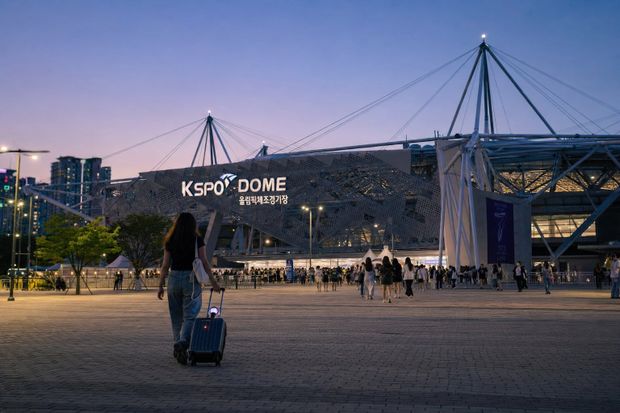
The short answer: Korea's three major K-POP concert venues — KSPO Dome, Incheon Inspire Arena, and Gocheok Sky Dome — each anchor a distinct 2-day travel route that pairs concert night with walkable neighborhoods, food districts, and fan culture spots within 30 minutes by subway. Building your itinerary around the venue rather than a generic Seoul plan saves transit time and lets you experience the district the way local concertgoers do.
If you've secured tickets to a K-POP concert in Korea, you already have the hardest part done. The next question — what to do with the rest of your trip — is where most foreign fans default to a generic Myeongdong-Hongdae-Gyeongbokgung loop that ignores the geography of where they'll actually be. This guide builds three venue-anchored itineraries that treat the concert as the centerpiece, not an afterthought, routing you through neighborhoods that are genuinely close to the arena rather than forcing cross-city backtracking. Each route includes specific subway exits, meal price ranges, and timing windows drawn from real venue logistics.
Whether you're attending a RIIZE finale at KSPO Dome, an awards ceremony at Inspire Arena, or a multi-night run at Gocheok, these itineraries are designed for fans who want to make the most of a tight 48-hour window without spending half of it on the subway.
Why Should You Plan Your Itinerary Around the Concert Venue?
Quick Answer: Seoul's three major K-POP venues sit in different districts 15–60 km apart. Planning your sightseeing, meals, and accommodation around the venue eliminates 40–90 minutes of unnecessary transit each way and keeps you in neighborhoods with distinct character worth exploring on their own.
A venue-anchored itinerary is a travel plan structured around the concert location rather than a centralized hotel or tourist district. The logic is straightforward: KSPO Dome sits in Songpa-gu in southeastern Seoul, Gocheok Sky Dome occupies the western Guro district, and Incheon Inspire Arena is on Yeongjong Island near the airport — a 90-minute express train from central Seoul. Treating these as interchangeable pins on a map leads to the single biggest time drain foreign fans report: spending concert day stuck on trains instead of exploring (source: Go With Guide,).
The touring cycle reinforces this. ENHYPEN, TWICE, and RIIZE all scheduled multi-night runs at single venues, meaning fans attending consecutive shows benefit even more from staying local. RIIZE's world tour finale at KSPO Dome in early drew thousands of international fans, many of whom reported on fan forums that Songpa-gu hotels were fully booked within 48 hours of the concert announcement (source: Korea JoongAng Daily, -03). Booking accommodation within two subway stops of the venue is not a luxury — it is the difference between a relaxed morning and a frantic dash.
When the BTS comeback performance was announced for March, the Cultural Heritage Administration issued specific crowd-management guidelines for the venue area, underscoring just how much foot traffic a single K-POP event generates in the surrounding district (source: Korea JoongAng Daily, -03). Planning ahead is not optional — it's a prerequisite for enjoying the experience.
Route 1: KSPO Dome → Olympic Park → Gangnam Agency District
KSPO Dome is Korea's most frequently used indoor concert venue for mid-to-large K-POP tours, located at 25 Olympic-ro, Songpa-gu, Seoul. It hosts 6,000–10,000+ capacity events depending on stage configuration, and recent headliners include RIIZE, Stray Kids, and aespa. The venue sits inside Olympic Park, a 430,000 m² green complex built for the 1988 Seoul Olympics — which means your pre-concert hours don't need to happen in a cramped waiting area. In 1988, the park hosted 159,000 visitors on its busiest single day during the Games; today, a sold-out KSPO Dome concert draws 8,000–10,000, but the park absorbs the crowd comfortably because the infrastructure was designed for an order of magnitude more.
Day 1: Concert Day — Olympic Park and Songpa-gu
Morning–Afternoon (10:00–16:00): Start inside Olympic Park itself. Enter through Mongchon Gate (closest to Mongchontoseong Station, Line 8, Exit 1). Walk the lakeside path to the World Peace Gate — the park's iconic 24-meter archway — then loop past the Seoul Olympic Museum (₩3,000 adult entry). The full circuit takes 90 minutes at a comfortable pace. For lunch, exit the park on the Songpa-gu side and walk to Garakdong, the residential neighborhood one block south. Budget ₩9,000–₩15,000 for a proper Korean lunch at one of the local restaurants — jokbal (braised pig's feet) is the Songpa signature dish.
Pre-Concert (16:00–18:00): Return to KSPO Dome. Merchandise booths typically open 3–4 hours before the concert, and queues for limited items can stretch to 90 minutes. The foreigner ticket pickup booth is on the right side of Gate 1 — the sign is small and in Korean only, so look for the cluster of international fans with passports in hand. Arrive at least 60–90 minutes before showtime (source: ENHYPEN Tour,).
Evening (18:30–21:00+): Concert. Typical runtime is 2–2.5 hours including encores. Post-concert, the subway (Mongchontoseong or Olympic Park Station) will be packed for 30–40 minutes; consider waiting in the park or grabbing a late-night snack at the 24-hour convenience stores along Olympic-ro before heading to your hotel.
Day 2: Gangnam Agency Cluster + Apgujeong
Morning (09:30–12:00): Take Line 2 from Jamsil to Gangnam Station (15 minutes). The Gangnam agency cluster concentrates K-POP company headquarters and training centers in the blocks between Samsung Station and Apgujeong. Access is exterior-only — corporate interiors are strictly off-limits — but the Samsung Station billboard zone rotates high-production idol advertisements that are photogenic backdrops (source: Go With Guide,). Walk the Apgujeong Rodeo Street strip for café stops and K-beauty flagship stores. Budget ₩6,000–₩10,000 for brunch at the area's café-bakeries.
Afternoon (12:30–17:00): Cross to Sinsa-dong Garosu-gil, a tree-lined street running south from Sinsa Station (Line 3, Exit 8). This 700-meter stretch is Seoul's most walkable boutique and café zone, with design shops, independent Korean fashion labels, and concept stores. End the afternoon at Bongeunsa Temple (Samseong Station, Exit 6), a 1,200-year-old Jogye Order temple tucked behind the COEX complex — a jarring but effective contrast to the glass-tower skyline. Entry is free. If you're carrying a NAMANE Card or other Korean transit card, tap in and out at the subway with zero hassle between these stops.
| Day 1 Stop | Time | Subway Station | Cost (₩) |
|---|---|---|---|
| Olympic Park lakeside walk | 10:00–11:30 | Mongchontoseong (Line 8, Exit 1) | Free |
| Seoul Olympic Museum | 11:30–12:30 | Inside Olympic Park | 3,000 |
| Garakdong lunch (jokbal street) | 12:30–13:30 | Walk from park south gate | 9,000–15,000 |
| KSPO Dome merch queue | 16:00–18:00 | Olympic Park (Line 5/9) | Varies |
| Concert | 18:30–21:00+ | — | Ticket price |
Route 2: Incheon Inspire Arena → Yeongjong Island → Chinatown
Incheon Inspire Arena is Korea's newest large-scale concert facility, located at 127 Gonghang Munhwa-ro, Jung-gu, Incheon, inside the International Airport Culture Zone on Yeongjong Island. It serves as the primary venue for major awards ceremonies, including the Seoul Music Awards and KGMA, and draws multi-artist lineups that can run over 5 hours. The venue's proximity to Incheon International Airport makes it the natural first or last stop for fans flying in specifically for a show — and the island itself, while often dismissed as "just the airport," has a concentrated 2-day itinerary of its own.
When the 2025 KGMA awards announced an Inspire Arena show, ticket packages bundled shuttle transportation from Seoul and hotel stays near the venue, with gate opening 60–90 minutes before the concert start time and coordinated post-show shuttle returns (source: KKday,). This bundling reflects the logistical reality: Inspire Arena is approximately 60 km from central Seoul, and independent transit requires planning.
Day 1: Concert Day — Airport Zone and Inspire Arena
Afternoon (13:00–17:00): If arriving at Incheon Airport the same day, clear immigration and head to the Inspire Entertainment Resort complex, a 5-minute shuttle from Terminal 1. Drop bags at your hotel (several mid-range options within the Inspire complex, ₩120,000–₩250,000/night), then explore the resort's retail and dining floor. For fans arriving from Seoul, the Airport Railroad Express (AREX) runs from Seoul Station to Airport Station in 43 minutes (₩9,500 express / ₩4,750 all-stop). A reloadable Korean travel card works on AREX all-stop trains and eliminates the single-journey ticket surcharge.
Pre-Concert (17:00–18:30): The arena's floor level (Floor 1) is standing, Floors 3–4 are tiered seating, and Floor 2 is typically not in use (source: Korea Travel Easy,). Arrive early — popular K-POP events see fans arriving 3+ hours ahead for floor positioning. Security screening is thorough; no professional cameras, no selfie sticks extending past 30 cm.
Evening (18:30–22:00+): Awards-style concerts at Inspire can run 5+ hours. Post-show, coordinated shuttles return to Seoul, but if you're staying on the island, the walk back to the resort complex is under 10 minutes.
Day 2: Yeongjong Seaside + Incheon Chinatown
Morning (09:00–12:00): Yeongjong Island's Eurwangni Beach is a 15-minute taxi from the Inspire complex (approximately ₩8,000). The beach is a wide sandy stretch facing the Yellow Sea, and early morning is the best window — fewer crowds, soft light. Walk the coastal boardwalk north toward Wangsan Beach (1.5 km, 25 minutes). Budget ₩8,000–₩12,000 for a seafood breakfast at the small restaurants lining the Eurwangni strip.
Afternoon (12:30–17:00): Take a bus or taxi to Incheon Station (40 minutes by car, or AREX to Incheon Station transfer). Incheon Chinatown (Jungguk-ga / 중국가) is Korea's only official Chinatown, a compact grid of about 12 blocks centered on Incheon Station Exit 1. It dates to 1884 when the port opened to Chinese merchants — making it 142 years old and visually distinct from anything in Seoul. Walk the Jayu (Freedom) Park staircase for a panoramic harbor view, then eat jajangmyeon (black bean noodles) at one of the legacy restaurants — ₩7,000–₩9,000 per bowl. The neighboring Open Port district has converted Japanese colonial-era bank buildings into galleries and cafés.
Route 3: Gocheok Sky Dome → Hongdae → Mapo District
Gocheok Sky Dome is Korea's only domed stadium, located in Guro-gu, western Seoul. Originally built as a baseball stadium, it hosts the largest K-POP concerts that exceed KSPO Dome's capacity — BTS has used it for stadium-scale shows, and multi-artist year-end festivals like MBC Gayo Daejejeon and SBS Gayo Daejeon frequently book it. Capacity reaches 20,000+ for concert configurations. The dome is 20 minutes by subway from Hongdae, Seoul's most energetic nightlife and fan-culture district, which makes this the natural pairing for fans who want the full Seoul-after-dark experience.
The 2018 BTS Love Yourself world tour used Gocheok Sky Dome for two consecutive nights, drawing a combined 40,000+ fans and effectively shutting down the surrounding Guro Digital Complex area for both evenings. Today, venue logistics have improved — dedicated concert exits and expanded subway scheduling are standard for large events — but the core lesson holds: staying in the Mapo–Hongdae corridor west of the Han River keeps you within a single subway line of the venue.
Day 1: Concert Day — Guro + Yeouido
Morning–Afternoon (10:00–15:00): Start at Yeouido, Seoul's financial island on the Han River (Yeouido Station, Line 5/9). The Yeouido Hangang Park riverfront path is a 6 km loop popular with joggers and cyclists. In April, the Yeouido Cherry Blossom Festival draws over a million visitors during peak bloom week, but outside that window, the park is a quiet riverside walk. Budget ₩5,000–₩8,000 for lunch at the food stalls lining the park's eastern edge.
Pre-Concert (15:30–18:00): Take Line 1 or 7 to Gocheok Sky Dome (Gocheok Sky Dome Station, Line 7, Exit 1). Merch booths open 3–4 hours pre-show for stadium-scale events. The venue's domed roof means rain is not a concern, but interior temperatures can run warm — dress in layers.
Evening (18:00–22:00+): Concert. Post-show, avoid the Line 7 crush by walking 10 minutes south to Sindorim Station (Lines 1/2), which offers more platform space and direct connections west to Hongdae.
Day 2: Hongdae + Mapo Hidden Corners
Morning (10:00–13:00): Hongdae-ipgu Station (Line 2, Exit 9) drops you into the heart of Hongdae (홍대), Seoul's most concentrated independent culture district. The area radiates from Hongik University and packs live music venues, vintage shops, street art walls, and saengil cafes / 생일카페 / idol birthday cafes into a walkable 500-meter radius. Weekend mornings are the best time to explore before the afternoon crowds hit. Check the alleys between the main drag and Wausan-ro for rotating fan-run birthday café pop-ups — these typically operate Friday through Sunday and are announced on fan community boards 1–2 weeks in advance.
Afternoon (13:00–17:00): Walk north from Hongdae to Yeonnam-dong (10 minutes on foot), a former residential neighborhood that has converted into Seoul's densest café corridor. Follow Gyeongui Line Forest Park, a 6.3 km linear park built on a decommissioned railway — the Yeonnam-dong section is the most photogenic 1 km stretch, lined with plant shops and outdoor seating. Continue north to Mangwon Market (Mangwon Station, Line 6, Exit 2), a covered market where locals shop for produce, tteok (rice cakes), and street food. Budget ₩4,000–₩8,000 for a full market snack circuit. For transit between all these stops, a Korean prepaid card for foreigners lets you tap through turnstiles without fumbling for cash at ticket machines.
| Venue | District | Capacity | Best Paired Neighborhood | Subway Time to Neighborhood |
|---|---|---|---|---|
| KSPO Dome | Songpa-gu (SE Seoul) | 6,000–10,000 | Gangnam / Apgujeong | 15 min (Line 2) |
| Incheon Inspire Arena | Yeongjong Island (Incheon) | 10,000+ | Incheon Chinatown / Eurwangni Beach | 40 min (bus/taxi) |
| Gocheok Sky Dome | Guro-gu (W Seoul) | 20,000+ | Hongdae / Yeonnam-dong | 20 min (Line 2/7) |
How Do You Handle Transit and Payments Across These Routes?
Transit logistics are the make-or-break factor for a concert weekend in Korea. Seoul's subway system operates 23 lines covering 340+ stations, and all three venue routes in this guide stay within the metropolitan subway network except for the AREX express to Incheon. Standard single-journey subway tokens cost ₩1,400 (basic distance) plus ₩100–₩200 per additional zone, but purchasing individual tokens for every ride adds up in both cost and time — the ticket machines have English interfaces but still require 2–3 minutes per transaction during busy periods.
A reloadable transit card eliminates this friction entirely. NAMANE Card works across all Seoul and Incheon subway lines, city buses, and AREX all-stop trains. Load ₩30,000–₩50,000 at any convenience store (GS25, CU, 7-Eleven) and tap through turnstiles in under a second. For refill and refund procedures, NAMANE's service manual walks through the process step by step — refunds are available at convenience stores with a ₩500 processing fee.
Transit Timing Between Key Points
- KSPO Dome → Gangnam Station: 15 minutes via Line 2 (Jamsil → Gangnam direction). Avoid the 18:00–19:00 rush-hour window on concert days.
- Seoul Station → Incheon Airport (Inspire Arena): 43 minutes via AREX Express (₩9,500) or 58 minutes via AREX All-Stop (₩4,750). The all-stop train accepts transit cards; the express requires a separate ticket.
- Gocheok Sky Dome → Hongdae: 20 minutes via Line 7 to Line 2 transfer at Daerim or walk to Sindorim and take Line 2 direct.
- Hongdae → Incheon Chinatown: 55 minutes via Line 2 to AREX transfer at Hongik University Station, then AREX to Incheon Station.
- Post-concert subway extension: On major concert nights, Seoul Metro occasionally extends last-train times by 30 minutes. Check the Seoul Metro app (available in English) on concert day for schedule updates.
What Should You Budget for a 2-Day Concert Trip?
A 2-day concert trip budget in Korea varies significantly depending on the venue location and your accommodation tier, but foreign fans attending a single concert can expect to spend ₩250,000–₩500,000 (approximately $180–$360 USD) excluding the concert ticket itself. The largest variable is accommodation — Songpa-gu hotels near KSPO Dome run ₩80,000–₩180,000/night for mid-range options, while Yeongjong Island hotels near Inspire Arena can reach ₩120,000–₩250,000/night due to limited supply. Hongdae-area guesthouses and boutique hotels offer the most competitive rates at ₩60,000–₩120,000/night.
Food costs in Korea remain remarkably affordable for international visitors. A full Korean meal at a local restaurant costs ₩8,000–₩15,000 ($6–$11 USD), and convenience-store meals (kimbap, triangle gimbap, cup ramyeon) run ₩2,000–₩5,000. Concert merchandise is the budget wildcard — official lightsticks cost ₩40,000–₩65,000, photocard sets ₩15,000–₩30,000, and limited-edition items can exceed ₩100,000.
| Expense | KSPO Dome Route (₩) | Inspire Arena Route (₩) | Gocheok Route (₩) |
|---|---|---|---|
| Accommodation (1 night) | 80,000–180,000 | 120,000–250,000 | 60,000–120,000 |
| Meals (2 days) | 30,000–50,000 | 35,000–60,000 | 25,000–45,000 |
| Transit (subway + bus) | 8,000–15,000 | 20,000–30,000 | 8,000–15,000 |
| Attractions / cafés | 10,000–25,000 | 10,000–20,000 | 10,000–20,000 |
| Concert merch (optional) | 40,000–100,000 | 40,000–100,000 | 40,000–100,000 |
| Total (excl. ticket) | 168,000–370,000 | 225,000–460,000 | 143,000–300,000 |
Frequently Asked Questions
Can I visit two different concert venues in a single weekend?
Technically yes, but it's rarely worth the transit time. KSPO Dome to Gocheok Sky Dome is a 50-minute subway ride, and either venue to Inspire Arena adds 60–90 minutes via AREX. If you have concerts at two venues on consecutive nights, book accommodation midway — the Yongsan–Itaewon corridor offers reasonable access to both Seoul venues — and accept that your sightseeing will compress. Attempting all three venues in one weekend is not practical.
How early should I arrive at a K-POP concert venue in Korea?
For general admission (standing floor), 3–4 hours early is standard for popular acts. For reserved seating, 60–90 minutes is sufficient for merch browsing and settling in. The foreigner ticket pickup window at KSPO Dome opens when the general gates do — bring your passport and the booking confirmation. At Inspire Arena, international fan pickup is handled at a separate booth near the main entrance.
Is the Incheon Inspire Arena route doable as a day trip from Seoul?
Yes, if the concert starts at 18:00 or later. Leave Seoul Station by 14:00 on the AREX Express (43 minutes), arrive by 15:00, and you have 3 hours before showtime. Post-concert shuttles return to Seoul until approximately midnight. However, if the show runs past 22:30 — common for awards ceremonies — the last AREX train may have already departed, and a taxi back to Seoul will cost ₩80,000–₩120,000. Staying one night on Yeongjong Island is the safer bet for evening events.
What's the best way to pay for transit and food during a concert trip?
A reloadable transit card is essential. NAMANE Card works on all Seoul and Incheon public transit and can be reloaded at any convenience store in increments of ₩1,000. For restaurants and shops, most accept card payments (Visa/Mastercard), but market stalls and smaller street-food vendors are still cash-heavy. Carry ₩30,000–₩50,000 in cash as backup, especially in traditional market areas like Mangwon Market or Incheon Chinatown.
Are there fan-specific spots near these venues worth visiting?
Near KSPO Dome, the Gangnam agency exterior cluster and Samsung Station billboard zone are the main fan-activity spots. Near Gocheok Sky Dome, Hongdae's rotating birthday café pop-ups run on weekends during comeback and tour seasons. Near Inspire Arena, fan activity is concentrated inside the resort complex itself — dedicated fan zones and trading areas are set up for major awards shows.
What should I do if my concert gets rescheduled or cancelled?
Korean consumer protection law requires full refunds for cancelled events, processed through the original ticketing platform (Interpark, Yes24, Melon Ticket) within 7–14 business days. If the concert is rescheduled, your original ticket typically transfers to the new date automatically — check the platform's announcement page. Non-refundable costs (hotels, flights) are your responsibility, so consider travel insurance that covers event cancellation if you're flying internationally for a single show.
Do these routes work for solo travelers?
All three routes are designed to be walkable and subway-accessible for solo travelers. Korea's subway system has English signage at every station, and the KakaoMap app provides English-language directions including real-time subway arrival times. Solo dining is completely normal in Korea — many restaurants have single-seat counters, and convenience stores offer hot meals 24/7. The only area where solo travel requires extra planning is Inspire Arena post-concert transit: coordinated group shuttles are cheaper and more reliable than solo taxis late at night.
Bringing It All Together
The difference between a K-POP concert trip that feels rushed and one that feels immersive usually comes down to a single decision: whether you planned your sightseeing around the venue or tried to force the venue into a generic tourist itinerary. Each of these three routes — the KSPO Dome southeastern corridor, the Inspire Arena island circuit, and the Gocheok-to-Hongdae western loop — treats the concert as a geographic anchor and radiates outward into neighborhoods that are genuinely worth your time, not just convenient backfill.
The practical edge matters too. Staying within 2–3 subway stops of your venue means you can sleep in on concert day, walk to the arena at a relaxed pace, and get back to your hotel without competing for the last train. Load your NAMANE Card with ₩50,000, download KakaoMap, and let the subway do the work. The routes above prioritize what actually makes a 48-hour window in Korea feel full — not a checklist of attractions, but a sequence that flows naturally from one neighborhood to the next with the concert at its center.
Korea's concert calendar for late is already stacking up. Whichever venue your tickets land at, build your trip around the arena first and let the city fill in around it.
Last updated: 2026-04-30. This guide is reviewed and refreshed when official sources (KTO, Visit Seoul, ticketing platforms) update their information.
Related Articles
- Don't worry even after the show ends! Introducing late-night Korean restaurants with NAVER MAP links ~ How to order delivery, something you must try at least once
- 【Permanent Collection】 No Fear of Visiting Local Areas for the First Time! 10 Hidden Cafes Frequented by Seoul Natives
- 【Recommended Korean Souvenirs by a Japanese Resident in Korea】 From sharing gifts to men's items and K-POP idol favorites, we introduce them all
- Right next to Gyeongbokgung Palace. Introducing 'Seochon,' where tradition meets modern!
- The latest news on Dubai Jjondeu, the trending 'Dubai Jjonku' in Korea!
This article was written using information collected and analyzed by NAMANE's in-house K-pop research AI engine. We use AI technology to bring you faster, broader coverage, and in the process some details may occasionally differ from the latest facts. For important information such as dates, venues, and prices, please double-check with official sources.


