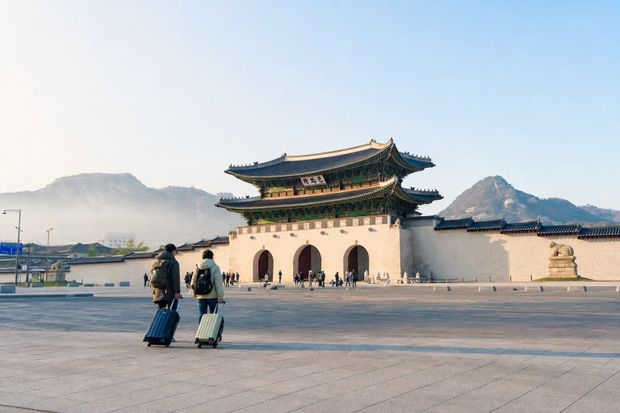
Seoul 1 Night 2 Days Itinerary Overview: Key Spots and Route at a Glance
The Seoul 1 night 2 days itinerary is a route designed to let you experience the city's two faces — from Joseon dynasty palaces and traditional hanok villages to modern shopping streets and night views — in just a day and a half. Day 1 follows the path of Gyeongbokgung Palace (Line 3, Gyeongbokgung Station) → Bukchon Hanok Village (10 min on foot) → Insadong Culture Street (15 min on foot, Anguk Station, Line 3) → Namsan N Seoul Tower (cable car or on foot), while Day 2 wraps up with Gwangjang Market (Line 1 Jongno 5-ga Station or Line 2 Euljiro 4-ga Station) → Changdeokgung Palace (Line 3 Anguk Station) → Cheonggyecheon Stream stroll → Myeongdong (Line 4 Myeongdong Station) → Hongdae (Line 2 Hongik University Station). According to the Trip.com Seoul Travel Itinerary Guide, this route minimizes the number of Seoul subway transfers while evenly incorporating cultural, culinary, and shopping experiences. This itinerary is ideal for first-time visitors to Seoul because most major attractions are within 500 m of a subway station — keeping transit stress low — and the combined admission fees total just KRW 6,000–10,000, making it highly budget-efficient.
Quick Answer: The Seoul 1 night 2 days itinerary consists of Day 1 — Gyeongbokgung Palace, Bukchon Hanok Village, Insadong, and Namsan N Seoul Tower — followed by Day 2 — Gwangjang Market, Changdeokgung Palace, Cheonggyecheon Stream, Myeongdong, and Hongdae. The entire route is accessible with a T-money card, and the total per-person budget (excluding accommodation) is approximately KRW 70,000–150,000.
There are three reasons why this route suits first-time visitors. First, Line 3 alone connects Gyeongbokgung Station, Anguk Station, and Chungmuro Station directly, reducing the burden of transfers. Second, the combined admission fees for both Gyeongbokgung and Changdeokgung palaces is just KRW 6,000, and wearing a hanbok (traditional Korean dress) grants free entry to Gyeongbokgung, lowering costs even further. Third, the contrast between the morning Joseon dynasty heritage (palaces and hanok villages) and the afternoon modern culture (Insadong, Myeongdong, and Hongdae) allows visitors to naturally experience Seoul's unique duality. Korea Tour Tip rates this itinerary as "the most well-balanced Seoul first-timer's route in terms of accessibility and cultural density."
The table below summarizes the mode of transport and estimated travel time for each major leg of this itinerary.
| Leg | Mode of Transport | Subway Line | Estimated Time |
|---|---|---|---|
| Gyeongbokgung Station → Bukchon Hanok Village | On foot | Line 3, Gyeongbokgung Station | approx. 10 min |
| Bukchon Hanok Village → Insadong | On foot | Near Line 3, Anguk Station | approx. 15 min |
| Insadong → Namsan N Seoul Tower | Bus (No. 402 or 05) or taxi | — | approx. 20–30 min |
| Accommodation → Gwangjang Market | Subway | Line 1 Jongno 5-ga Station / Line 2 Euljiro 4-ga Station | approx. 10–20 min |
| Gwangjang Market → Changdeokgung Palace | On foot or subway | Line 3, Anguk Station | approx. 15–25 min |
| Changdeokgung Palace → Cheonggyecheon Stream · Myeongdong | On foot + subway | Line 4, Myeongdong Station | approx. 20–30 min |
| Myeongdong → Hongik University (Hongdae) | Subway | Line 2 (transfer at Chungmuro) | approx. 35–40 min |
Day 1 Morning: Gyeongbokgung Palace and Bukchon Hanok Village — Traces of the Joseon Dynasty
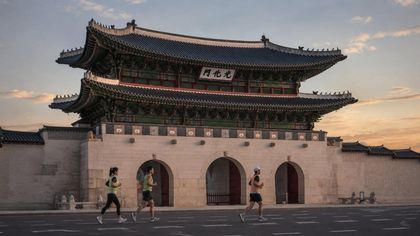
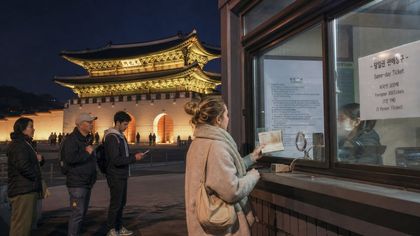
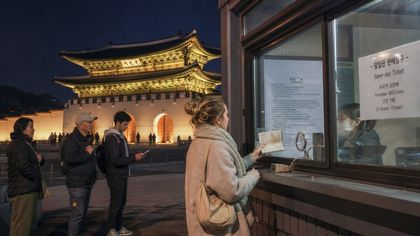
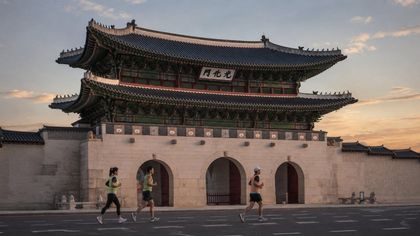
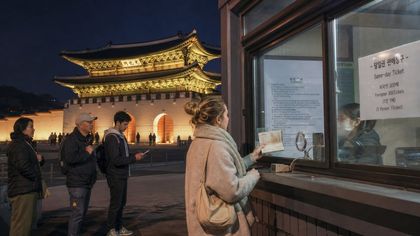
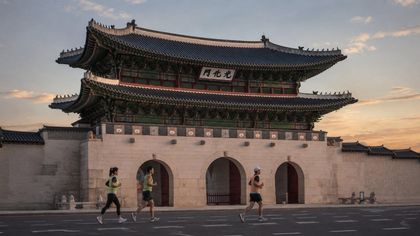
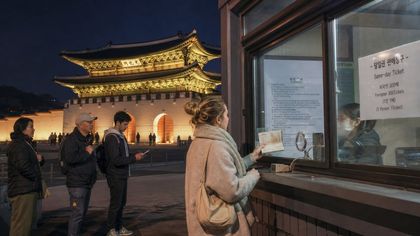
Gyeongbokgung Palace (景福宮), built in 1395 at the founding of the Joseon dynasty, is Seoul's largest palace and is located at 161 Sajik-ro, Jongno-gu. Opening hours are 09:00–18:00 (last entry 17:00), with regular closures every Tuesday. Adult admission is KRW 3,000. Several hanbok rental shops are clustered around exits 4 and 5 of Gyeongbokgung Station, and wearing a hanbok grants free entry to the palace. Rental fees vary by shop but generally range from KRW 10,000–20,000, with same-day return required. According to Korea Tour Tip, the free-entry-with-hanbok benefit applies not only to Gyeongbokgung but also to most major Seoul palaces including Changdeokgung, Deoksugung, and Gyeonghuigung. Visiting the main halls inside Gyeongbokgung in order — Geunjeongjeon (National Treasure No. 223), Gyeonghoeru Pavilion, and Hyangwonjeong Pavilion — takes approximately 1.5 to 2 hours.
"Combining Bukchon Hanok Village and Gyeongbokgung Palace into a single morning visit puts hundreds of years of Seoul history within a 10-minute walk. Wearing a hanbok also leads to far more natural interactions with locals." — Petra, travel writer, Polyglot Petra
About a 10-minute walk north of Gyeongbokgung lies Bukchon Hanok Village (北村韓屋마을). This neighborhood, which has been home to royalty and government officials since the Joseon era, currently preserves more than 600 hanok homes and exists as a coexistence of residential and tourist space. Among Bukchon's Eight Scenic Spots, the most famous photo locations are "Spot No. 2 (the stairway alley on Bukchon-ro 11-gil)" and "the No. 31 alley (Bukchon-ro 11na-gil)." Visiting early in the morning (09:00–10:00) means fewer tourists and a chance to enjoy the quiet alley atmosphere, though it is important to observe noise etiquette and be considerate when taking photographs, as this is an active residential area. Polyglot Petra notes that "the deeper you venture into the alleyways, the fewer tourists you encounter, and the more authentically you experience real Seoul residential culture."
Inside Gyeongbokgung, free multilingual guided tours are offered in English, Korean, Chinese, and Japanese. The English tour departs near Gwanghwamun Plaza at 11:00 AM and 1:30 PM with no additional charge. The National Folk Museum of Korea, located within the palace grounds, is also free to enter and makes a great addition for anyone who wants to explore traditional Korean everyday culture. When walking from Gyeongbokgung to Bukchon, taking the route through Samcheong-dong Café Street offers a uniquely Seoul scene where decorative dancheong patterns and modern cafés sit side by side.
Day 1 Afternoon: Exploring Traditional Crafts and Snacks along Insadong Culture Street
Insadong (仁寺洞) is a traditional culture street 15 minutes on foot from Bukchon Hanok Village, or directly accessible from Exit 6 of Line 3 Anguk Station. Along approximately 700 m of pedestrian road, traditional craft shops, antique galleries, traditional teahouses, and hanji (Korean paper) workshops line both sides. Ssamziegil, Insadong's signature shopping complex, is a four-story spiral space that sells handcrafted goods by Korean artists, including ceramics, mother-of-pearl lacquerware, hanji products, and traditional pattern accessories. According to Polyglot Petra, Insadong offers the most authentic traditional Korean cultural shopping experience in Seoul, with prices ranging from KRW 3,000 trinkets to ceramics costing hundreds of thousands of won. Under a Seoul city ordinance, all shop signs along Insadong Street must be written in Hangeul — even foreign franchises like Starbucks use Korean signage, creating a distinctive streetscape.
When choosing souvenirs, it is practical to prioritize items that can only be found in Korea. Hanji (dak paper) postcards and notebooks, hand-painted folk art reproductions, and mugs or tote bags featuring traditional patterns are hard to find abroad and are priced in the manageable range of KRW 5,000–30,000. Beyond Ssamziegil, street stalls mid-alley offer traditional hangwa (Korean confections) and taffy-pulling experiences for as little as KRW 3,000–5,000. Traditional teahouses near the Ssamziegil entrance serve omija (five-flavor berry) tea and jujube tea for KRW 5,000–8,000, making them a great spot for a short rest.
There are two main lunch options. Tosokchon Samgyetang (5 Jahamun-ro 5-gil, Jongno-gu), a ginseng chicken soup restaurant that has been open since 1983, offers an authentic bowl of samgyetang for KRW 18,000–20,000. As waits tend to be long, visiting right after touring Gyeongbokgung around 11:30 AM–12:00 PM is most efficient. Inside Insadong's alleys, there are also several Korean restaurants specializing in bibimbap, doenjang jjigae (soybean paste stew), and ssambap (lettuce wrap rice) in the KRW 8,000–15,000 range, allowing you to choose based on your budget. The Trip.com Seoul Itinerary Guide recommends budgeting KRW 10,000–20,000 per person for lunch in Insadong.
After shopping in Insadong and before heading to Namsan, if time allows, you can make a brief detour to Ikseon-dong (益善洞), tucked into the alleys just north of Insadong. Ikseon-dong is a trendy lane packed with cafés and restaurants housed in renovated 1920s–1930s hanok, and unlike Insadong's traditional atmosphere, it showcases a more contemporary and stylish use of space. It is a 10-minute walk away, and the Insadong → Ikseon-dong → Namsan route connects naturally.
Day 1 Evening: Namsan N Seoul Tower Night View and Accommodation Area Selection Guide
Namsan N Seoul Tower (105 Namsanpark-gil, Yongsan-gu) is Seoul's iconic landmark situated at the summit of Namsan at 479 m above sea level, offering a 360° panoramic view of all of Seoul from the observation deck at a height of 236 m. There are two ways to reach Namsan. The Namsan Cable Car departs from the entrance to Namsan Park and costs KRW 10,500 round-trip (KRW 7,500 one-way, as of 2025), operating from 10:00 to 23:00. The walking trail — Namsan Dullegil — starts from the Insadong direction and takes about 30–40 minutes; the well-maintained path is safe to use even in the evening. The optimal time to enjoy the night view is 30 minutes before and after sunset (approximately 7:30–8:30 PM in May), when the city's building lights flicker on one by one, revealing a cityscape completely unlike the daytime view. Ilse on the Go describes the Namsan night view as "one of the most impressive urban panoramas you can experience in Seoul."
"The hour around sunset from Namsan becomes the highlight of a Seoul trip. Riding the cable car up, you can take in Seoul's topography from Bukhansan Mountain all the way to the Han River, and the nighttime cityscape is far more dramatic than the daytime view." — Adventure to Every Country blogger, Adventure to Every Country
Near the outer wall of the observation deck is the "Love Locks" fence, a tradition where couples engrave their names on padlocks and attach them — the wall covered in tens of thousands of locks has itself become a photo spot. Admission to the N Seoul Tower observation deck is KRW 21,000 for adults; the outdoor park area below the tower is free to enter, so if you want to save money, enjoying the night view from outside is also an option.
Choosing your accommodation area is closely tied to the next day's route, so it deserves careful thought. The table below compares the characteristics of three major accommodation zones.
| Accommodation Zone | Main Subway Lines | Advantages | Disadvantages | Budget (hostel basis) |
|---|---|---|---|---|
| Myeongdong | Line 4, Myeongdong Station | Direct access to K-beauty shopping, late-night convenience stores and restaurants | Relatively higher accommodation costs, noise from the busy area | KRW 35,000–70,000/night |
| Insadong · Chungmuro | Transfers available on Lines 1, 2, 3, and 4 | Central Seoul subway hub; Gyeongbokgung, Gwangjang Market, and Changdeokgung all within 20 min | Fewer late-night commercial facilities compared to busy districts | KRW 30,000–60,000/night |
| Hongdae | Line 2 + Airport Railroad (AREX) direct | Convenient access to Incheon Airport, center of busking and nightlife | Distance from palace area increases travel time | KRW 25,000–55,000/night |
For first-time visitors to Seoul, the Insadong–Chungmuro zone offers the most balanced travel distances across the entire 1 night 2 days itinerary. Myeongdong is a good fit if you plan to concentrate your duty-free shopping and VAT refunds on the day before departure, while Hongdae suits those with an early-morning flight from Incheon Airport or an itinerary centered on K-pop performances and nightlife.
Day 2 Morning: Gwangjang Market Street Food and Changdeokgung UNESCO World Heritage Site
Gwangjang Market (廣藏市場), opened in 1905, is Korea's oldest permanent traditional market, located at 88 Changgyeonggung-ro, Jongno-gu. It is a 5-minute walk from Jongno 5-ga Station on Line 1 or Euljiro 4-ga Station on Line 2, and the market houses approximately 5,000 stalls. After being featured as a primary filming location in Netflix's original documentary series Street Food: Asia (Season 1, Seoul episode), the number of foreign visitors has grown significantly. Ilse on the Go describes Gwangjang Market as "a real market in Seoul equally enjoyed by locals and tourists alike" and recommends visiting early in the morning. Most food stalls inside the market are cash-only, so it is advisable to prepare KRW 20,000–30,000 in cash before your visit.
"A plate of bindaetteok and a glass of makgeolli at Gwangjang Market is the most concentrated expression of Seoul's food culture. Simply walking between the stalls, you can feel the energy of the market that has carried on since its opening in 1905." — Ilse, travel blogger, Ilse on the Go
There are three must-try dishes at Gwangjang Market. Bindaetteok (mung bean pancakes) costs KRW 5,000–8,000 per plate — crispy fried mung bean pancakes that pair perfectly with makgeolli. Mayak gimbap ("drug" gimbap) are small, addictively seasoned rice rolls, with 10 pieces costing KRW 3,000–5,000. Yukhoe bibimbap is a dish of fresh beef tartare mixed with vegetables and rice, priced at around KRW 10,000–15,000. Even ordering all three, one person can eat comfortably for around KRW 20,000, and a total market food budget of KRW 10,000–20,000 is more than enough.
From Gwangjang Market, you can reach Changdeokgung Palace (昌德宮) by walking or taking the subway toward Anguk Station on Line 3. Changdeokgung is Seoul's only palace designated as a UNESCO World Heritage Site (inscribed in 1997) and is the best-preserved secondary palace of the Joseon dynasty. The general admission fee is KRW 3,000, with an additional KRW 5,000 for the Secret Garden (後苑, also known as Biwon) at the rear of the palace. The Secret Garden operates on a reservation-only basis with limited entry per session, and during cherry blossom season (April–May) and autumn foliage season (October–November), on-site tickets often sell out by mid-morning. Online advance reservations at least 1–2 weeks ahead are strongly recommended via the Korea Tourism Organization official website. Secret Garden tours are conducted as guided tours, with separate time slots for Korean, English, Chinese, and Japanese.
Day 2 Afternoon: Cheonggyecheon Stream Walk, Myeongdong K-Beauty Shopping, and Hongdae Finale
Cheonggyecheon (淸溪川) is a 10.9 km urban stream restored in 2005 that runs east to west through central Seoul. Originally covered by an elevated highway in the 1960s, it was reopened through a restoration project from 2003 to 2005 and has since become one of Seoul's most popular downtown walking paths. Coming from Changdeokgung, you can head toward Cheonggyecheon and descend to the streamside walkway near Gwanggyo Bridge or Mojeon Bridge, with about a 30–40-minute walk toward Myeongdong. The low height difference between the water surface and the walkway lets you hear the stream up close, and the scenery changes with the seasons — cherry blossoms in spring, lush greenery in summer, and light installations in winter. According to Korea Tour Tip, the nighttime scenery along Cheonggyecheon is particularly beautiful after 7 p.m. when the reflections on the water surface make it a popular evening stroll.
From Cheonggyecheon, heading toward Myeongdong Station on Line 4 brings you to Myeongdong, Seoul's premier K-beauty shopping district. The main street is lined with flagship stores of major K-beauty brands including Olive Young (CJ), Innisfree (AmorePacific), and Etude (AmorePacific). Foreign tourists can apply for an immediate tax refund on purchases of KRW 30,000 or more, with a refund rate of approximately 9–10% of the purchase amount. Simply present your passport at the Tax Refund counter inside the store, and you can collect the final refund at the refund counter at Incheon Airport upon departure. Street food snacks along Myeongdong's main street — tornado potatoes, Korean corn dogs, and skewered chicken — are available for KRW 2,000–5,000, making them easy, affordable bites.
You can wrap up Day 2 in Myeongdong, or head to Hongdae (弘大) as a final stop before your flight home. From Myeongdong to Hongik University Station takes about 35–40 minutes by subway via a transfer at Chungmuro. The streets around Hongdae — rooted in the art and design culture of Hongik University — are packed with indie boutiques, independent concept stores, galleries, and live music venues. The Hongdae Walking Street and the area around Sangsangmadang host busking performances every weekend evening, making it a place to experience Seoul's contemporary youth culture firsthand. Since the AREX (Airport Railroad) runs directly from Hongik University Station to Incheon Airport, finishing your trip in Hongdae the night before your flight makes for a very convenient early-morning airport transfer the next day.
Seoul 2-Day Trip Practical Info: T-money Card, Subway Lines, and Total Budget
The key to getting around Seoul is the T-money card. T-money cards can be purchased for KRW 3,000–4,000 at all Seoul subway stations and convenience stores such as GS25, CU, and 7-Eleven; load a minimum of KRW 5,000–10,000 and you're ready to go. Using a T-money card gives you transfer discounts between subway and bus lines — transfers within 30 minutes are charged only one base fare. The base subway fare is KRW 1,400 (within 10 km), with KRW 100 added for every additional 5 km beyond that. If you travel entirely by subway for this 2-day itinerary, daily transportation costs run about KRW 5,000–8,000, and KRW 10,000–15,000 combined over two days is more than sufficient. According to the Korea Tourism Organization, Seoul's subway network consists of 9 major lines that densely connect the entire city.
The main subway lines used in this itinerary are as follows. Line 3 directly connects Gyeongbokgung Station, Anguk Station, and Chungmuro Station, making it the backbone of this route. Lines 1 and 2 are used for travel toward Gwangjang Market and Euljiro. Line 4's Myeongdong Station serves Myeongdong shopping and travel toward Namsan, while Line 2's Hongik University Station connects directly to the Airport Railroad (AREX). If the subway system feels overwhelming, the Seoul City Tour Bus is a good alternative. Departing from in front of Dongwha Duty Free in Gwanghwamun from 9:30 a.m. at 30-minute intervals, it operates 4 circular routes. A one-day pass costs around KRW 20,000, and you can reach them at 02-777-6090. Trip.com's Seoul Attractions Guide also provides stop information by route.
The total budget for 2 days and 1 night (excluding accommodation, per person) can be broken down into two tiers depending on your travel style. Budget travel (KRW 70,000–100,000) applies when you eat convenience store breakfasts, market and street food for lunch and dinner, travel by subway, and focus on free outdoor attractions. Mid-range (KRW 150,000–200,000) applies when you add Korean restaurant meals, the N Seoul Tower Observatory (KRW 21,000), hanbok rental (KRW 10,000–20,000), and Myeongdong K-beauty shopping. Item by item: admission fees total KRW 6,000 (Gyeongbokgung KRW 3,000 + Changdeokgung KRW 3,000, plus KRW 5,000 more if including the Secret Garden); food runs KRW 30,000–50,000/day; and transportation KRW 10,000–15,000 (combined over 2 days). Adventure to Every Country emphasizes that a 2-day Seoul trip offers some of the best budget efficiency among major Asian cities.
Frequently Asked Questions
How much should I budget for a 2-day, 1-night trip to Seoul?
Per person excluding accommodation, KRW 70,000–150,000 is a solid baseline. Breaking it down by category: admission fees (Gyeongbokgung KRW 3,000 + Changdeokgung KRW 3,000 = KRW 6,000), food (KRW 30,000–50,000/day × 2 days = KRW 60,000–100,000), and T-money transportation KRW 10,000–15,000 (combined over 2 days). Renting a hanbok (KRW 10,000–20,000) saves you the KRW 3,000 Gyeongbokgung admission fee. Adding the N Seoul Tower Observatory (KRW 21,000) or Myeongdong K-beauty shopping can push the total to KRW 150,000–200,000.
Which neighborhood is most convenient for accommodation on a 2-day, 1-night Seoul trip?
Three neighborhoods stand out as the main options. Myeongdong (Line 4, Myeongdong Station) offers direct access to K-beauty shopping and convenience stores and restaurants open late into the night, but accommodation tends to be pricier. Insadong/Chungmuro (with transfers available on Lines 1, 2, 3, and 4) is centrally located in the Seoul subway network, with travel times of under 20 minutes to all key sites including Gyeongbokgung, Gwangjang Market, and Changdeokgung — making it the most balanced option. Hongdae (Line 2 + direct AREX connection) is ideal for an easy airport transfer the next morning and great for busking and nightlife, but is farther from the palace district. For first-time visitors, the Insadong/Chungmuro area is the top recommendation given its balanced proximity to all major sites.
Where can I rent a hanbok, and is there a free admission benefit?
Hanbok rental shops are most concentrated near exits 4 and 5 of Gyeongbokgung Station and around the entrance to Bukchon Hanok Village. Rental fees typically range from KRW 10,000–20,000, with an additional KRW 5,000–10,000 for hair styling. Wearing a hanbok grants free admission to most of Seoul's major palaces, including Gyeongbokgung, Changdeokgung, Deoksugung, and Gyeonghuigung, saving you the KRW 3,000 entry fee for both Gyeongbokgung and Changdeokgung at once. Rentals must be returned the same day, before the shop closes (most close at 7–8 p.m.). Demand is high on spring and autumn weekends, so it's worth checking in advance whether online reservations are available.
Do I really need to bring cash to Gwangjang Market?
The vast majority of food stalls and street vendors inside Gwangjang Market are cash-only. It is best to prepare KRW 20,000–30,000 in cash before your visit. There are ATMs inside the market or at nearby convenience stores, and Woori Bank and Kookmin Bank ATMs accept foreign cards for cash withdrawals (with a withdrawal fee of KRW 2,000–5,000 per transaction). Some clothing and goods shops may accept card payments, but for the food area specifically, carrying cash is the safe approach.
Does Changdeokgung's Secret Garden (Biwon) require a separate reservation?
Changdeokgung's Secret Garden (Biwon) operates on a reservation-only basis, and in addition to the general Changdeokgung admission ticket (KRW 3,000), a separate Secret Garden entry fee of KRW 5,000 must be paid. Reservations can be made through the Cultural Heritage Administration's integrated palace reservation system (online) or at the on-site ticket office. During peak seasons — spring blossoms (April–May) or autumn foliage (October–November) — on-site tickets often sell out by mid-morning, so if you plan to visit the Secret Garden during these periods, online advance reservations at least 1–2 weeks ahead are strongly recommended. Secret Garden tours are conducted in a guided tour format, with separate time slots for Korean, English, Chinese, and Japanese.
Wrapping Up Your 2-Day Seoul Trip: A Perspective for Your Next Visit
A 2-day, 1-night Seoul itinerary is more than just a tour of landmarks — it is an experience of walking through 600 years of a city's timeline, from Joseon-era royal architecture to the 2005 urban renewal of Cheonggyecheon, and on to Hongdae, the epicenter of K-pop fan culture. The contrast of looking out at N Seoul Tower from the tiled rooftops of Gyeongbokgung and Bukchon, then discovering the tranquil ponds of Changdeokgung's UNESCO-listed Secret Garden in alleyways still fragrant with bindaetteok from the 1905-founded Gwangjang Market — that contrast is the essence of traveling in this city. Once you have internalized this route on your first visit, you will naturally find yourself ready to explore another side of Seoul on your second trip: Ikseon-dong, Seongsu-dong, Yeonnam-dong, Garosu-gil, and beyond.
On a practical level, this itinerary is accessible to travelers across a range of budgets. By renting a hanbok to save on palace admission, and keeping meal costs to KRW 10,000–20,000 per meal with Gwangjang Market and Myeongdong street food, the total trip cost excluding accommodation can be managed at around KRW 70,000. The convenience of covering all of Seoul's public transportation with a single T-money card also goes a long way in giving first-time visitors the impression that Seoul is not a difficult city to navigate. This efficiency and density is precisely why Flash Parker called a 2-day Seoul itinerary "the almost perfect itinerary."
Last updated: 2026-05-04. Practical information such as admission fees and transportation fares is subject to change based on local conditions; please check the latest information on the relevant official websites before your visit.
This article was written using information collected and analyzed by NAMANE's in-house K-pop research AI engine. We use AI technology to bring you faster, broader coverage, and in the process some details may occasionally differ from the latest facts. For important information such as dates, venues, and prices, please double-check with official sources.