
What Is Hanbok? A 2,000-Year Korean Tradition Explained
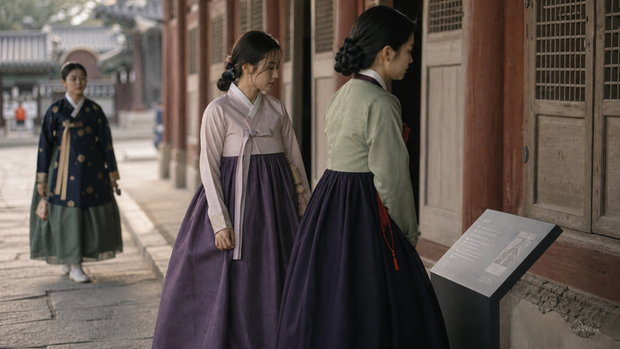
Hanbok (한복) is the traditional clothing of the Korean people — a term that literally translates as "Korean clothes." Worn across more than 2,000 years of continuous cultural history, hanbok encompasses four core garments: the jeogori (short upper jacket, worn by both men and women), the chima (full-length skirt worn by women), the baji (loose-fitting wide-legged trousers worn by men), and the durumagi (a long outer coat used by both genders for formal occasions). The foundational structure of these four garments has persisted since the Three Kingdoms period with changes in proportion rather than character. The word "hanbok" itself was not formally codified until the late 19th century, first appearing in an 1881 official document as a deliberate marker of indigenous Korean identity — a way of distinguishing native dress from the Japanese and Western styles entering the peninsula at that time. By 2021, the term had been formally added to the Oxford English Dictionary, a measure of how far Korean cultural exports have embedded themselves in global consciousness.
Quick Answer: Hanbok is Korea's traditional dress, in continuous use for over 2,000 years. It centers on four garments — jeogori, chima, baji, and durumagi — whose structure dates to the Three Kingdoms period. Added to the Oxford English Dictionary in 2021, hanbok reaches global audiences today through K-pop Chuseok specials, traditional-concept music videos, and Seoul palace experiences.
For K-pop fans, hanbok is a recurring visual and cultural reference encountered well before any trip to Korea. Chuseok — the Korean Harvest Festival — anchors the most visible appearances: major groups perform in hanbok or fusion hanbok during the holiday broadcast specials that are a fixture of the Korean entertainment calendar. Beyond live stages, traditional-concept music videos and idol photoshoot aesthetics draw directly on hanbok silhouettes, color pairings, and embroidery detail, making the garment part of K-pop's visual vocabulary for international audiences who may never have encountered it in a historical context.
Each of the four core garments carries specific functions and historical weight. The jeogori underwent the most dramatic proportional transformation over time — particularly during the Joseon Dynasty, when it shrank from a long torso-covering jacket to a cropped garment barely reaching the chest. The chima expanded in volume as the jeogori shrank, developing the wide A-line silhouette now iconic in imagery of Korean traditional dress. The baji, with its wide, comfortable cut, was suited to an active lifestyle. The durumagi served as a formal ceremonial outer layer and remains in use today at weddings, ancestral rites, and national cultural events.
What distinguishes hanbok from many other folk dress traditions is the documented continuity of its structural logic. The garment framework visible in Goguryeo tomb murals painted more than 1,500 years ago is immediately recognizable in hanbok worn at contemporary Korean palaces, weddings, and cultural festivals. That continuity — maintained through centuries of foreign contact, political transformation, and colonial suppression — is central to understanding why hanbok carries such significant symbolic weight in Korean national identity and why it recurs so deliberately in K-pop's cultural storytelling.
Ancient Origins: Goguryeo Murals and the Three Kingdoms Period (57 BC–668 AD)
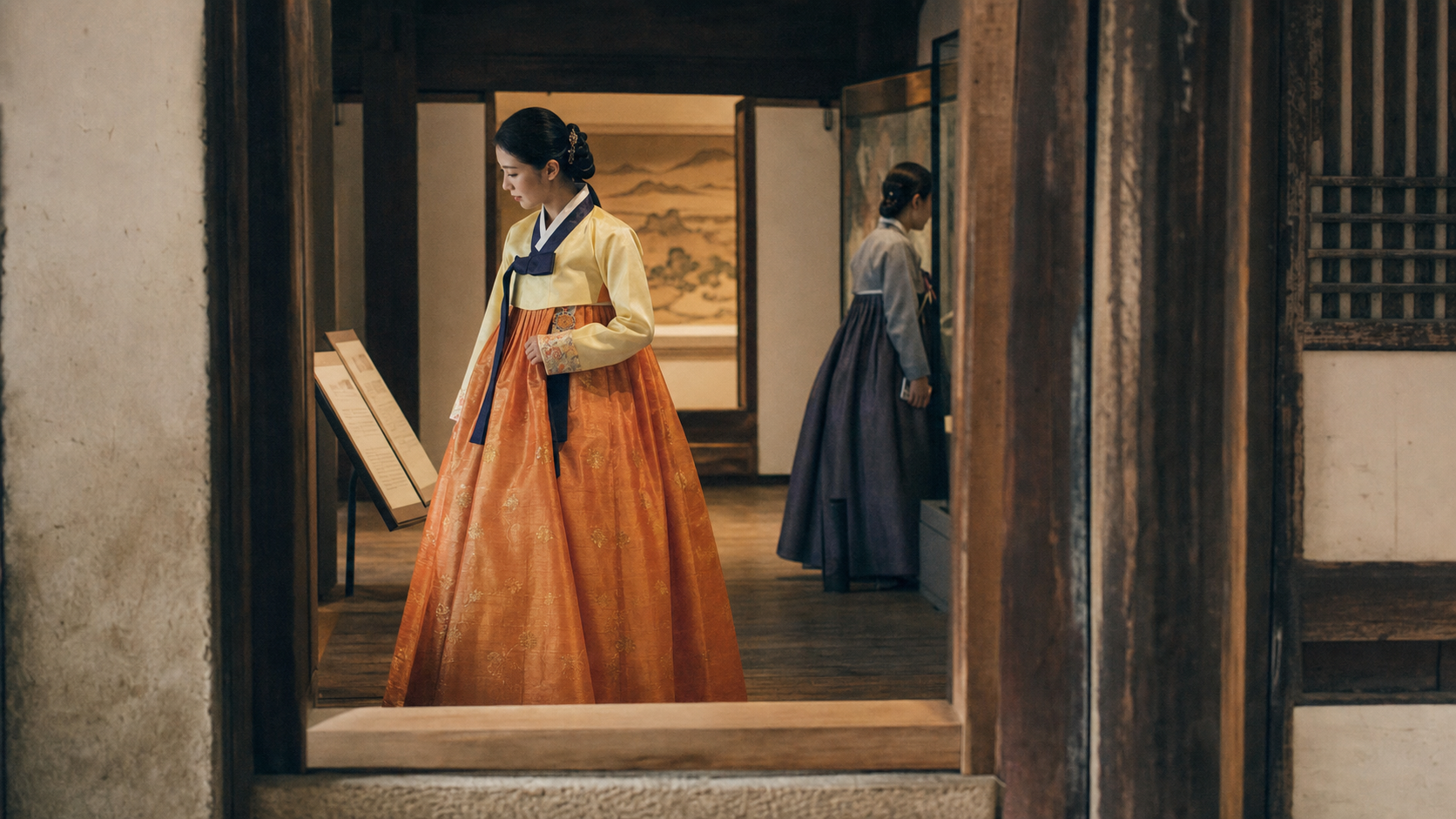
The earliest documented visual evidence of hanbok comes from Goguryeo tomb murals painted between the 4th and 6th centuries CE — among the most detailed surviving records of ancient East Asian clothing. These murals, preserved in the burial chambers of Goguryeo nobility across what is now North Korea and the Jilin Province of northeastern China, depict figures dressed in all four foundational hanbok garments: the jeogori, baji, chima, and durumagi. According to the Korea Tourism Organization, the pants-and-jacket combination for men and the skirt-and-jacket combination for women established during the Three Kingdoms period (57 BC–668 AD) has persisted as hanbok's fundamental structural framework across nearly 2,000 years of dynastic change, occupation, and cultural transformation. That structural continuity across sixteen centuries places hanbok among the most durable garment traditions in documented textile history.
"The Goguryeo murals are not merely art historical documents — they are the foundational visual record of a clothing tradition that survived in recognizable form for sixteen centuries. The structural logic of hanbok was fully formed by the time these murals were painted." — Victoria and Albert Museum, Hanbok: Traditional Korean Dress
Historians trace the aesthetic origins of early hanbok to the nomadic clothing traditions of the Eurasian Steppes, with documented parallels to Iranian Scythian dress. This connection reflects the ancient nomadic and shamanistic roots of Korean culture that predated the consolidation of the Three Kingdoms states. The crossover is visible in early hanbok's practical, layered construction: fitted jackets suited to active wear, trousers designed for mobility, and wrapping closures that evolved independently as Korean society shifted from nomadic to agrarian over subsequent centuries.
The Baekje kingdom (18 BC–660 AD), controlling the southwestern Korean peninsula, produced some of the earliest recorded descriptions of Korean court dress. Historical sources documented Baekje royal attire including "wide-sleeved violet garments with blue silk trousers and white leather belts," as recorded by the Korean Cultural Centre UK. This description confirms that color, textile quality, and silhouette were already functioning as deliberate markers of royal status and cultural identity in the earliest recorded Korean garment traditions — the social coding of dress that would reach its most elaborate expression during the Joseon Dynasty more than a millennium later.
One structural detail from this formative period has proven exceptionally durable: the left-to-right frontal fold, standardized during the 6th century, became a defining feature of all hanbok. This collar overlap — called the git — distinguishes hanbok from garments of neighboring cultures and has persisted through every subsequent design transformation, from Mongol-era modifications to Joseon minimalism to contemporary fusion styles. It is one of the few technical characteristics traceable in a continuous line from Three Kingdoms tomb murals to hanbok worn at Seoul palace rentals today.
Goryeo Dynasty: Mongol Influence and the First Major Design Shift (918–1392)
The Goryeo Dynasty (918–1392) witnessed the first major external transformation in hanbok's design history, and the cause was political: Mongol dominance over Korea from 1259 to 1356 brought direct and sustained contact with Central Asian court fashion at the highest levels of Korean society. During this period, hanbok underwent structural changes more significant than any it had experienced in the preceding thousand years. Skirts shortened considerably. The jeogori was elevated above the natural waistline and secured at the chest with ribbon closures — a fastening method that became a defining characteristic of Korean dress for centuries beyond the end of Mongol political control. Sleeves began to develop the curved silhouette that would become an enduring aesthetic signature of hanbok. According to the V&A Museum, these modifications were absorbed into the existing Korean garment framework rather than replacing it — a pattern of cultural integration that characterizes hanbok's relationship with foreign influence throughout its history.
"The Mongol period illustrates how hanbok evolved through contact rather than displacement — foreign design elements were absorbed into an existing Korean garment logic that remained structurally intact even as its proportions shifted considerably." — Korean Cultural Centre UK, History of Hanbok
What makes the Goryeo transformation historically significant is not simply that it occurred, but that its effects outlasted the political relationship that caused it. Mongol rule formally ended in the mid-14th century, yet the elevated jeogori and curved sleeve remained prominent features of Korean dress well into the Joseon period that followed. This persistence suggests that these design elements had been genuinely adopted into Korean aesthetic sensibility rather than merely imposed — they had become, through a generation of cultural contact, recognized as Korean features rather than foreign impositions.
The Goryeo era also introduced new textile materials and techniques through the trade networks that Mongol continental reach made accessible. Silk varieties, dye technologies, and decorative methods from across Central and East Asia entered Korean craft traditions through the cosmopolitan Goryeo court. These technical enrichments provided the foundation for the more elaborate textile culture that developed under the Joseon Dynasty. The Goryeo example establishes a recurring pattern in hanbok history: external contact generates proportional and decorative change, but the underlying structural framework — jeogori, chima, baji, durumagi — absorbs those changes without dissolving.
Joseon Dynasty: Color Codes, Social Hierarchy, and the Golden Age of Hanbok (1392–1910)
The Joseon Dynasty (1392–1910) is the most consequential period in hanbok's development — the era when the garment evolved from practical traditional dress into a sophisticated system of social communication. Neo-Confucian ideology, which shaped virtually every aspect of Joseon governance and daily life, enforced modesty through multi-layered dressing while making color, silhouette, and embroidery into precise signals of rank, marital status, age, and social position. The most dramatic physical change of this period was the radical shortening of the jeogori: from approximately 65 cm in the 16th century — a length that covered the torso comfortably — to as little as 14.5 cm by the 19th century, barely clearing the chest. As the jeogori shrank, the chima expanded simultaneously into the wide A-line silhouette now iconic in imagery of traditional Korean dress. According to documented historical records, this inverse relationship between jacket length and skirt volume defined the visual language of Joseon women's dress across three centuries of the dynasty's span.
"Joseon hanbok was not merely clothing — it was a legible social text. Every element of color, layering, and embroidery communicated the wearer's position within a precisely ordered Confucian hierarchy, making garment choice both a cultural practice and a social obligation." — Victoria and Albert Museum, Hanbok: Traditional Korean Dress
The Joseon color system — regulated by sumptuary laws — functioned as a visible social index readable by any observer. White, associated with purity and everyday accessibility, was the prescribed everyday color for commoners. Specific color combinations marked life stages and social conditions for women: yellow jeogori with red chima identified unmarried women; navy signified a mother of sons; violet was reserved for married women whose husbands were still living. The table below summarizes the primary color conventions documented in Joseon dress regulation:
| Color / Combination | Social Meaning | Wearer |
|---|---|---|
| White | Purity; everyday identity | Commoners (prescribed) |
| Yellow jeogori + Red chima | Youth and unmarried status | Unmarried women |
| Navy | Honored motherhood | Mothers of sons |
| Violet | Marital continuity | Married women with living husbands |
| Gold — five-clawed dragon embroidery | Supreme royal authority | King |
| Gold — four-clawed dragon embroidery | Royal succession | Crown Prince |
| Gold — phoenix embroidery | Royal feminine sovereignty | Queen |
Court dress reached its highest level of technical and symbolic elaboration during the Joseon period. Rank badges — called hyungbae — were embroidered onto the chest and back of official robes, with animal motifs indicating whether a wearer held civil or military rank. At the royal level, dragon embroidery in gold thread marked the royal family precisely: five claws identified the king, four the crown prince. Phoenixes embroidered in gold thread identified the queen. These were not decorative choices but codified legal regulations enforced through the court's strict dress protocol, and violation carried social consequences.
For K-pop fans, the visual grammar of Joseon hanbok — high-contrast color oppositions, dramatic skirt volume, the curved sweep of the jeogori sleeve — is the aesthetic most frequently referenced in historical drama productions and traditional-concept idol shoots. Art directors working in K-pop's visual content draw on Joseon conventions deliberately, making familiarity with the color codes a meaningful layer of appreciation for much of the traditional-referencing content produced by major groups.
White Hanbok: National Identity and Colonial Resistance
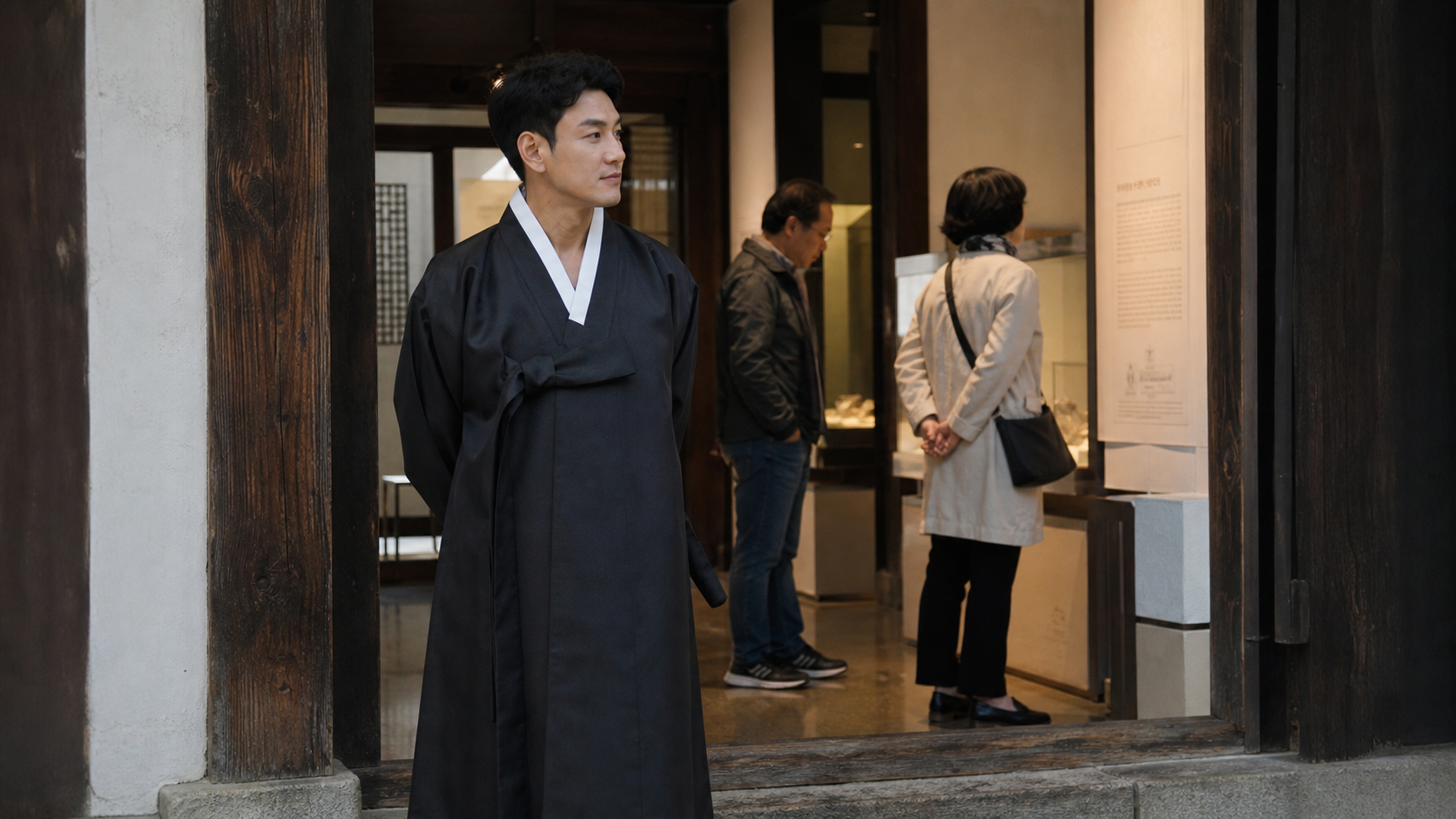
Among all the color conventions associated with hanbok, white carries the most complex and historically layered meaning. White hanbok was not the default of economic constraint — it was a conscious cultural choice representing purity, mourning, and collective national identity. Korean cultural tradition had long associated white with spiritual cleanliness and ancestral respect, and the prevalence of white dress became one of the most visible markers of Korean cultural identity to external observers across centuries. Korea was historically described by neighboring cultures as the "white-clad people" (백의민족, baengui minjok). According to the Korean Cultural Centre UK, white hanbok carried deep social meaning as a chosen cultural identity long before it became politically contested during the colonial period, embedded in everyday life at every level of Korean society.
"The prohibition of white clothing during the Japanese colonial period was not incidental policy — it was a direct attempt to sever Korean cultural self-expression at one of its most publicly visible points. For Koreans who continued to wear white hanbok, the garment became a form of daily resistance." — Korean Cultural Centre UK, History of Hanbok
The Japanese colonial administration (1910–1945) explicitly targeted white clothing as part of a broader campaign of cultural suppression. Colonial authorities pushed Korean civilians toward darker-colored or Western-style clothing — both as a practical erasure of visible Korean cultural identity and as a symbolic break from traditional practices. Under these conditions, continuing to wear white hanbok was a documented act of cultural defiance. The garment itself became politically legible: its presence asserted an identity the colonial administration was formally attempting to erase.
The post-liberation significance of white hanbok extends well beyond historical memory into contemporary practice. White remains the dominant color in ceremonial and ancestral ritual dress in Korea today. National commemorations, Chuseok rites, and ancestral memorial services (jesa) continue to feature white as the appropriate color, connecting present-day participants to both the cultural tradition predating colonization and the resistance identity that sustained it during occupation. For the Korean diaspora and for K-pop's international audience, white hanbok in performance and ceremonial contexts carries this layered meaning — purity, mourning, and cultural continuity woven together — whether or not every viewer is aware of the specific history it represents.
Fabrics, Craftsmanship, and Textile Traditions Behind Hanbok
Hanbok's visual impact is inseparable from its textile heritage. Korean sericulture — the cultivation of silkworms for silk production — traces to the Neolithic period, approximately 10,000–4,500 BC, placing it among the oldest documented textile traditions in East Asia. The four traditional fibers used in hanbok manufacture — silk, hemp, ramie, and cotton — each carry distinct properties suited to different seasons, social contexts, and occasions. Silk provided the luminous surface sheen and saturated color depth that made formal and royal hanbok visually distinctive. Hemp and ramie offered the breathability required for summer garments. Cotton, which became more widely available from the mid-Joseon period, served as the accessible everyday fiber for commoners. According to the Victoria and Albert Museum, these fibers were embedded in a broader textile culture extending from royal ceremony to everyday domestic craft, with production methods that are themselves considered intangible cultural heritage.
Decoration methods applied to hanbok fabrics reflect a sophisticated and varied craft tradition. Painting directly onto woven fabric created pictorial surface designs with fine detail. Block printing transferred repeated geometric and floral patterns efficiently at scale. Tie-dyeing (홀치기염) produced gradient and resist-dyed surface effects. The most prestigious decorative technique was geumbak — the application of gold leaf to the fabric surface using adhesive stencils, creating metallic designs that caught light against silk ground cloth. Geumbak was associated primarily with court and aristocratic dress and remains a distinguishing mark of high-quality traditional hanbok today.
| Fiber | Korean Term | Primary Season / Use | Social Context |
|---|---|---|---|
| Silk | 비단 (bidan) | Formal; all-season | Royal, aristocratic, ceremonial |
| Hemp | 삼베 (sambe) | Summer; mourning rites | Common use; ritual mourning garments |
| Ramie | 모시 (mosi) | Summer formal | Aristocratic; prized for fine, light weave |
| Cotton | 무명 (mumeong) | Everyday; winter layers | Commoner; widespread from mid-Joseon |
Hanbok's flat-cutting construction method minimized fabric waste in a systematic and culturally productive way. Unlike the curved seam-cutting techniques common in Western tailoring, flat-cut hanbok uses straight fabric sections assembled with minimal off-cuts. The scraps that did result were repurposed deliberately: narrow strips of fabric in multiple colors were sewn into saekdong — the vividly striped sleeves traditionally worn by young children — while larger remnants were pieced into jogakbo, the Korean patchwork wrapping cloths whose geometric color compositions have been recognized internationally as a distinctive textile art form in their own right.
Royal involvement in textile production adds a dimension unique to Korean court culture. During the Joseon Dynasty, queens personally participated in the cheen-jam ceremony — a ritual silk-farming observance in which the queen symbolically tended silkworms and processed raw silk. This ceremony served both practical and ideological purposes: it demonstrated royal participation in the productive work of the kingdom while elevating textile craft to the level of royal cultural practice. The ritual reinforced the centrality of textile production to Korean identity at every level of society, from the queen's ceremonial silk to a commoner's everyday hemp.
Modern Hanbok Revival: Government Policy, Designers, and K-Pop
The contemporary revival of hanbok as a living garment tradition rather than a preserved artifact is the result of deliberate government policy, designer innovation, and the amplifying power of Hallyu. South Korea formally established Hanbok Day on October 21, 1996 — an annual government-backed promotion that has expanded into a broader cultural policy framework over the decades since. The Korean government subsequently designated hanbok saengwal — the integrated practice of making, wearing, and enjoying hanbok — as a National Intangible Cultural Heritage, signaling institutional commitment to its continuation as a living practice. According to documented records, the Korean Ministry of Culture, Sports and Tourism sponsored the 2022 Hanbok Wave event, featuring ten contemporary designers whose work demonstrated the full range of modern hanbok interpretation, from faithful historical recreation to radical fusion design.
"Contemporary hanbok design is not about replication — it is about demonstrating that a 2,000-year garment tradition has the structural and aesthetic flexibility to remain genuinely relevant in the twenty-first century." — Victoria and Albert Museum, Hallyu! The Korean Wave Exhibition
Contemporary designers have approached hanbok revival through distinct and complementary strategies. Lee Young-hee, widely credited as the pioneer of global hanbok promotion, presented traditional Korean dress on international runways through the 1990s and 2000s, establishing hanbok as a recognized aesthetic vocabulary in international fashion. Young Jin (Tchai) Kim and Park Seon-ok (Guiroe) have each developed approaches that break down the gender and class distinctions encoded in Joseon-era dress, making hanbok-derived garments accessible to everyday contemporary wear. The influence of hanbok on global fashion has also been documented in major Western design: Karl Lagerfeld drew on hanbok aesthetics for Chanel's 2015/16 Cruise collection, bringing its silhouettes and construction principles to a global luxury fashion audience.
For K-pop specifically, hanbok functions as a recurring and deliberate visual reference point. Chuseok broadcast specials regularly feature major groups performing in traditional or fusion hanbok, connecting contemporary idol culture to historical aesthetics for both domestic and international viewers. Traditional-concept album shoots and music videos use hanbok color language, silhouette, and embroidery detail as intentional choices. The V&A Museum's "Hallyu! The Korean Wave" exhibition (September 2022–June 2023) showcased historical and modern hanbok together as part of its documentation of K-pop's cultural footprint — placing traditional dress directly within the narrative of the Hallyu phenomenon.
The Hallyu wave has created substantial international demand for hanbok engagement beyond passive viewing. Fan communities worldwide produce hanbok styling tutorials, Korean drama costume analysis content, and fusion design commentary. Korean Cultural Centers in major cities across Europe, the Americas, and Southeast Asia offer hanbok workshops and dress experiences. International rental kits ship hanbok sets for fan photoshoots, themed events, and cultural community gatherings. What began as a government-sponsored cultural preservation initiative has evolved, through K-pop's reach, into a genuinely global cultural practice with active participants on every continent.
Wearing Hanbok in Seoul: Palace Rentals and Fan Experiences
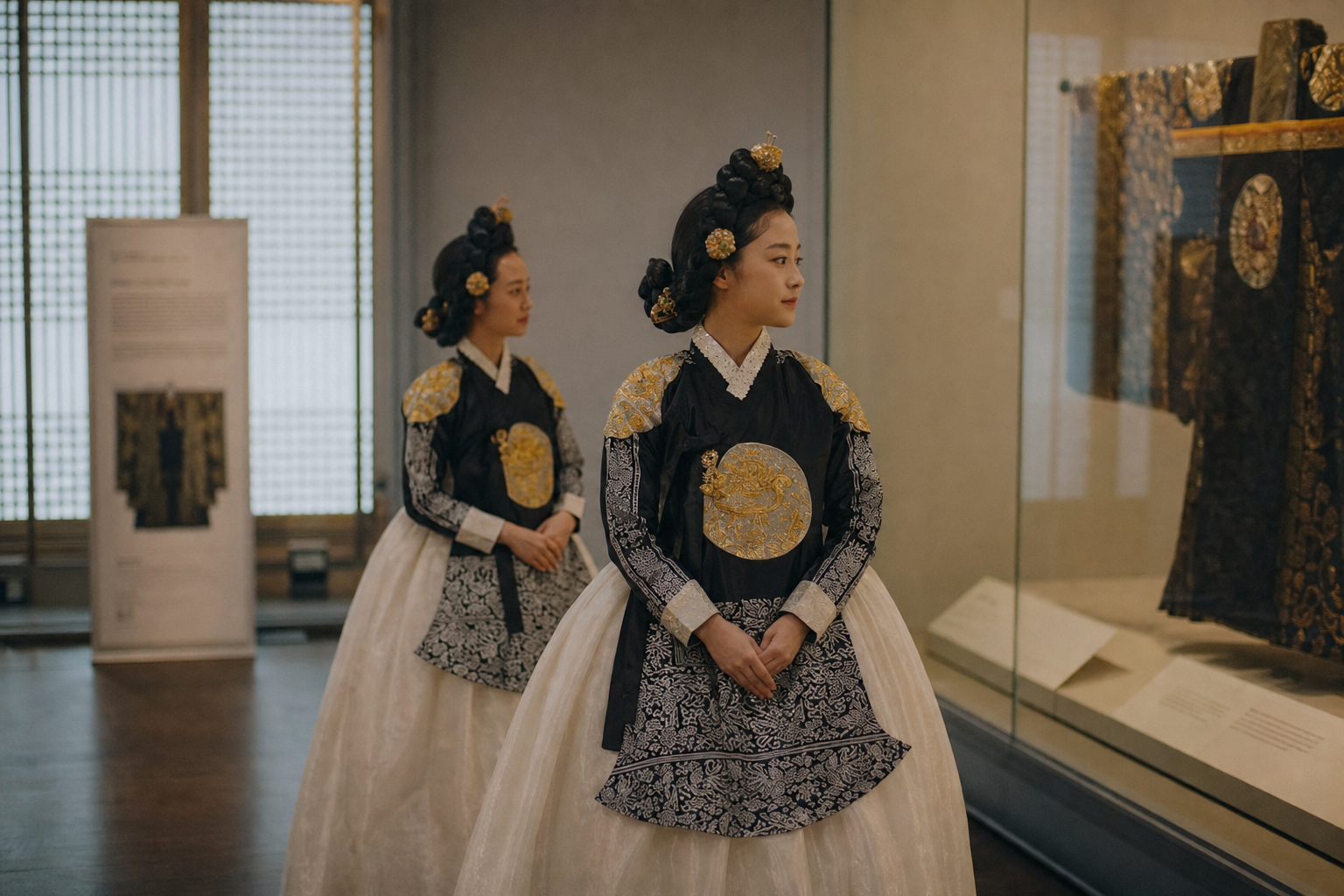
One of Seoul's most accessible cultural experiences for K-pop fans visiting Korea is renting hanbok and walking through the city's historic palace district. All five of Seoul's royal palaces — Gyeongbokgung, Changdeokgung (a UNESCO World Heritage Site), Changgyeonggung, Deoksugung, and Gyeonghuigung — waive admission fees for visitors who arrive dressed in hanbok, including on national holidays. This policy is documented by both Visit Seoul and the Korea Tourism Organization, making hanbok rental an economically logical choice for visitors planning a full palace day. Standard four-hour rental packages near Gyeongbokgung run 13,000–15,000 KRW and typically include hair accessories and a handbag; optional fur vests add 2,000–5,000 KRW depending on the shop.
Gyeongbokgung Palace, the primary Joseon royal palace and the most visited historic site in Seoul, anchors the palace district at the city's northern end. Dozens of rental shops cluster within walking distance of its main gate, Gwanghwamun, offering full hanbok packages for men, women, and children at competitive rates throughout the year.
📍 서울특별시 종로구 적선동 27
🕒 매일 오전 9:00 ~ 오후 5:00
⭐ 5 (1,701 리뷰)
📞 02-734-2567
🔗 Google Maps에서 보기
Changdeokgung Palace, inscribed as a UNESCO World Heritage Site, is a quieter alternative to Gyeongbokgung. Known for its preserved Secret Garden (Huwon), the palace's forested grounds and traditional architecture make it a visually striking backdrop for hanbok photography, particularly during spring cherry blossom season and autumn foliage.
📍 View Changdeokgung Palace on Google Maps
Deoksugung Palace, located in central Seoul near City Hall, offers a free hanbok wearing experience at its Daehanmun Gate every Sunday between 10:30 and 15:30. This makes it an entry-level option for visitors who want a palace experience without planning a full rental, and its central location makes it easy to combine with other Seoul itinerary stops.
📍 View Deoksugung Palace on Google Maps
Bukchon Hanok Village, situated between Gyeongbokgung and Changdeokgung along a hillside of preserved Joseon-era traditional houses, pairs naturally with hanbok rental as part of a single-day traditional Seoul itinerary. Its narrow alleys, tiled rooftops, and residential hanok architecture provide an architectural context that makes hanbok feel continuous with its historical environment rather than performative. K-pop fan groups increasingly schedule hanbok days as a structured part of Seoul concert trip itineraries — combining palace visits and Bukchon walks with nearby venue check-ins on the same day.
📍 View Bukchon Hanok Village on Google Maps
Additional hanbok experiences extend beyond the main palace district. The Seoul Insa-dong PR Center offers a 20-minute dress experience for 3,000 KRW — suitable for visitors with limited time or a tight budget. The Korean Folk Village in Yongin, approximately 40 minutes from central Seoul, provides a more immersive full-day option: a 36,000 KRW package covers park admission plus a three-hour rental, alongside traditional craft demonstrations, performances, and a reconstructed village environment. For those departing the country, Incheon Airport Terminals 1 and 2 both offer free hanbok experiences for passengers with boarding passes — making it possible to wear hanbok on the final morning of a Seoul trip without any advance planning. Seoul Hanbok Culture Week, held each May and October, adds free hanbok booths, community parades, and traditional performances at Seoul Plaza.
Frequently Asked Questions
What are the main garments that make up a traditional hanbok?
A traditional hanbok consists of four core garments. The jeogori is the short upper jacket worn by both men and women, and it is the element most subject to proportional change across different periods. The chima is the full-length skirt worn by women — its volume expanded significantly during the Joseon Dynasty as the jeogori shortened. The baji is the loose-fitting, wide-legged trouser worn by men. The durumagi is a long outer coat worn by both genders, primarily for formal or ceremonial occasions. This four-garment structure has been the foundational framework of Korean dress since the Three Kingdoms period (57 BC–668 AD), with the structural relationship between the garments remaining constant even as proportions, colors, and textile choices evolved across dynasties. The left-to-right frontal fold of the jeogori collar, standardized in the 6th century, is a consistent structural detail present in all hanbok across all periods.
What do hanbok colors traditionally represent?
Hanbok colors operated as a codified social language during the Joseon Dynasty (1392–1910), regulated by sumptuary laws that specified what each social group could and could not wear. White was prescribed for commoners in everyday settings, carrying associations of purity and national identity — so prevalent that Korea was historically called the "white-clad people." Unmarried women wore a yellow jeogori paired with a red chima; navy indicated a woman who had given birth to sons; violet identified married women with living husbands. At the royal court, embroidered rank badges made hierarchy legible in specific detail: five-clawed dragons embroidered in gold thread identified the king, four-clawed dragons marked the crown prince, and phoenixes embroidered in gold were reserved for the queen. Bright, saturated colors across the spectrum generally signaled elevated social status, as quality dyes were costly and commoners were formally restricted from wearing them.
How did Joseon Dynasty hanbok differ from earlier Korean dress?
The most dramatic transformation introduced during the Joseon Dynasty (1392–1910) was the radical shortening of the jeogori — the upper jacket — over three centuries of gradual change. In the 16th century, the jeogori measured approximately 65 cm, covering the torso fully. By the 19th century, it had shortened to as little as 14.5 cm, barely clearing the chest. Simultaneously, the chima expanded in volume and developed the wide A-line silhouette now most associated with traditional Korean dress in popular imagery. Both changes were connected to Neo-Confucian social ideology: the resulting silhouette — a dramatically shortened jacket over a voluminous, floor-length skirt — communicated femininity, modesty, and social position within the Confucian order simultaneously. Earlier Korean dress, as documented in Goguryeo tomb murals and Goryeo Dynasty records, featured longer jackets and less extreme skirt volume, though the fundamental four-garment structure remained consistent throughout every period.
Where can I wear hanbok during a visit to Korean palaces?
All five of Seoul's royal palaces grant free admission to visitors wearing hanbok: Gyeongbokgung, Changdeokgung (UNESCO World Heritage Site), Changgyeonggung, Deoksugung, and Gyeonghuigung. This policy applies on national holidays as well as regular days. Rental shops cluster near palace entrances — particularly around Gyeongbokgung's Gwanghwamun Gate — with standard four-hour packages running 13,000–15,000 KRW including hair accessories. Deoksugung offers an additional free Sunday experience at its Daehanmun Gate between 10:30 and 15:30 for visitors who prefer not to rent. Pairing a Gyeongbokgung visit with a walk through Bukchon Hanok Village, located between Gyeongbokgung and Changdeokgung, creates a cohesive traditional itinerary in a single afternoon. The Korean Folk Village in Yongin (36,000 KRW, admission plus three-hour rental) is a day-trip option that includes traditional performances and craft demonstrations alongside the dress experience.
How does hanbok appear in K-pop today?
Hanbok appears in K-pop through several recurring and deliberate contexts. Chuseok television broadcast specials — the major holiday programming that is a fixture of the Korean entertainment calendar — regularly feature groups performing in traditional or fusion hanbok, connecting contemporary idol culture to historical aesthetics for both domestic and international viewers. Traditional-concept album shoots and music videos use hanbok silhouettes, color pairings, and embroidery detail as intentional visual choices, often referencing Joseon court dress specifically. Fusion hanbok — designs combining traditional garment structure with contemporary fabrics and modified proportions — appears in concept photoshoots and occasionally at awards ceremonies. Beyond direct performance, the Hallyu wave has driven substantial international fan engagement: communities worldwide produce hanbok styling tutorials, K-drama costume analysis content, and design commentary. Korean Cultural Centers globally offer hanbok workshops, and the V&A Museum's 2022–2023 "Hallyu! The Korean Wave" exhibition formally documented hanbok's role in K-pop's international cultural impact.
Hanbok's Continuity: From Goguryeo Murals to Global Stages
Hanbok's 2,000-year arc — from the nomadic-influenced garments documented in Goguryeo tomb murals to the fusion designs appearing in K-pop concept shoots and international museum exhibitions — illustrates a pattern of cultural resilience that few garment traditions can match. The dress absorbed Central Asian design innovations during the Goryeo period, developed into a sophisticated social signaling system under Joseon Neo-Confucianism, survived explicit colonial suppression as an act of identity, and reemerged in the 21st century as both a government-designated intangible cultural heritage and a global aesthetic reference point. At each stage, the four-garment framework — jeogori, chima, baji, durumagi — remained the constant around which change occurred, rather than what was changed.
For K-pop fans, understanding hanbok adds meaningful depth to a significant volume of traditional-referencing content that the industry produces. The Joseon color codes visible in a Chuseok performance, the Goguryeo visual lineage invoked in a historical-concept shoot, the colonial significance embedded in a white hanbok moment — these are layers of cultural meaning that transform aesthetic appreciation into cultural engagement. And for fans making the trip to Seoul, wearing hanbok at Gyeongbokgung or walking Bukchon Hanok Village in traditional dress connects the spectacle of contemporary K-pop — which draws so deliberately on this visual heritage — back to the specific places, practices, and historical experiences that shaped it.
The trajectory from government-sponsored preservation on Hanbok Day 1996 to Karl Lagerfeld referencing its silhouettes at Chanel, to K-pop groups staging Chuseok performances that reach audiences across every continent, represents one of the more remarkable cultural journeys of recent decades. Hanbok remains, in all its iterations, one of the most coherent expressions of Korean cultural continuity — a garment that has outlasted every dynasty that shaped it.
Last updated: 2026-05-14. This article was compiled using published sources from the Korea Tourism Organization, the Korean Cultural Centre UK, the Victoria and Albert Museum, and Visit Seoul. Rental prices and admission policies are subject to change; verify current rates with individual venues before visiting.


