
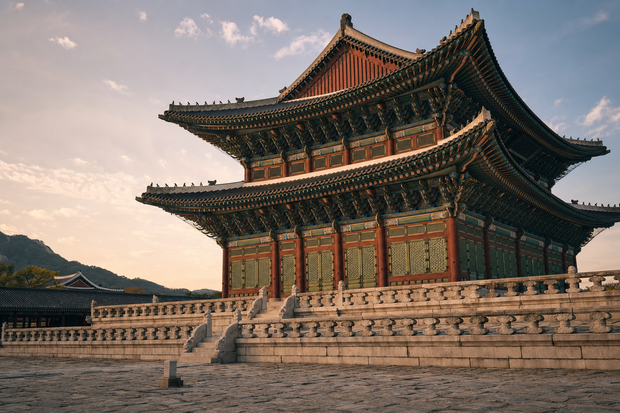
5,000 Years of Korean History: From Ancient Kingdoms to Modern Nation
Korean civilization is one of the oldest continuous cultures in the world, with agricultural roots traced to the Mumun pottery period around 1500 BCE — a time when rice, millet, barley, and legumes were first cultivated on the peninsula and the foundations of Korea's food-centric identity were established, according to the documented history of Korean cuisine. The Three Kingdoms era (57 BCE–668 CE) — Goguryeo in the north, Baekje in the southwest, and Silla in the southeast — established distinct regional cultural identities across the peninsula. Baekje in particular developed early fermented foods including proto-kimchi, planting a culinary tradition that would define Korean cooking for millennia. The Goryeo period (918–1392 CE) expanded this culinary range considerably when 13th-century Mongol contact introduced dumplings known as mandu, grilled meats, noodles, and black pepper. Each successive era built on these foundations in language, food, and social organization, producing a civilization with remarkable continuity across very different political contexts.
Quick Answer: Korean civilization spans over 5,000 years, from Mumun agricultural settlements around 1500 BCE through the Three Kingdoms, the Joseon Dynasty (which produced Hangul in 1443), and a rapid 20th-century transformation in which per-capita meat consumption rose from 3.6 kg in 1961 to 40 kg by 1997 — one of the most dramatic dietary shifts in modern history.
The Joseon Dynasty (1392–1897) was the most formative period for Korean cultural identity as it is understood today. In 1429, King Sejong the Great commissioned landmark agricultural reform texts to stabilize food production across the kingdom. Fourteen years later, in 1443, he oversaw one of the most deliberate acts of cultural engineering in recorded history: the creation of Hangul, Korea's phonetic alphabet, specifically designed so that ordinary people — not just scholars trained in classical Chinese — could achieve literacy within days. The 16th and 17th centuries brought another pivotal shift: trade routes via Japan and China introduced New World chili peppers, which became the defining flavor agent in modern Korean cooking, most visibly in kimchi and gochujang, according to Korean cuisine historical records.
The 20th century delivered disruption and then astonishing recovery. Japanese colonial rule from 1910 to 1945 suppressed Korean language, culture, and economic autonomy. The Korean War (1950–1953) devastated infrastructure and separated millions of families across the 38th parallel. Yet under President Park Chung Hee's industrialization drive beginning in the 1960s, South Korea transformed at a pace few nations have matched. One metric captures the scale: per-capita meat consumption climbed from 3.6 kg in 1961 to 40 kg by 1997, reflecting not only rising incomes but a wholesale transformation in diet, agriculture, and daily life. That same era of economic growth created the cultural conditions for the Hallyu wave that now places Korean content in living rooms across more than 190 countries.
| Period | Dates | Key Development |
|---|---|---|
| Mumun Agricultural Era | c. 1500 BCE | Rice, millet, barley, and legumes first cultivated; foundation of food-centric cultural identity |
| Three Kingdoms | 57 BCE–668 CE | Goguryeo, Baekje, Silla establish distinct regional identities; Baekje develops proto-kimchi |
| Goryeo Dynasty | 918–1392 CE | Mongol contact introduces mandu (dumplings), grilled meats, noodles, and black pepper |
| Joseon Dynasty | 1392–1897 | Hangul created (1443); agricultural reform texts commissioned (1429); chili peppers introduced via trade |
| Japanese Colonial Period | 1910–1945 | Language and cultural suppression; sustained economic and social disruption |
| Korean War & Reconstruction | 1950–1953+ | Peninsula divided; per-capita meat consumption just 3.6 kg by 1961 |
| Industrialization Era | 1960s–1990s | Per-capita meat consumption rises to 40 kg by 1997; GDP transformation |
| Hallyu Modern Era | 1990s–present | Korean cultural exports reach $12.3 billion (2019); 18.94 million tourists in 2025 |
Hangul: The Writing System King Sejong Built for Everyone
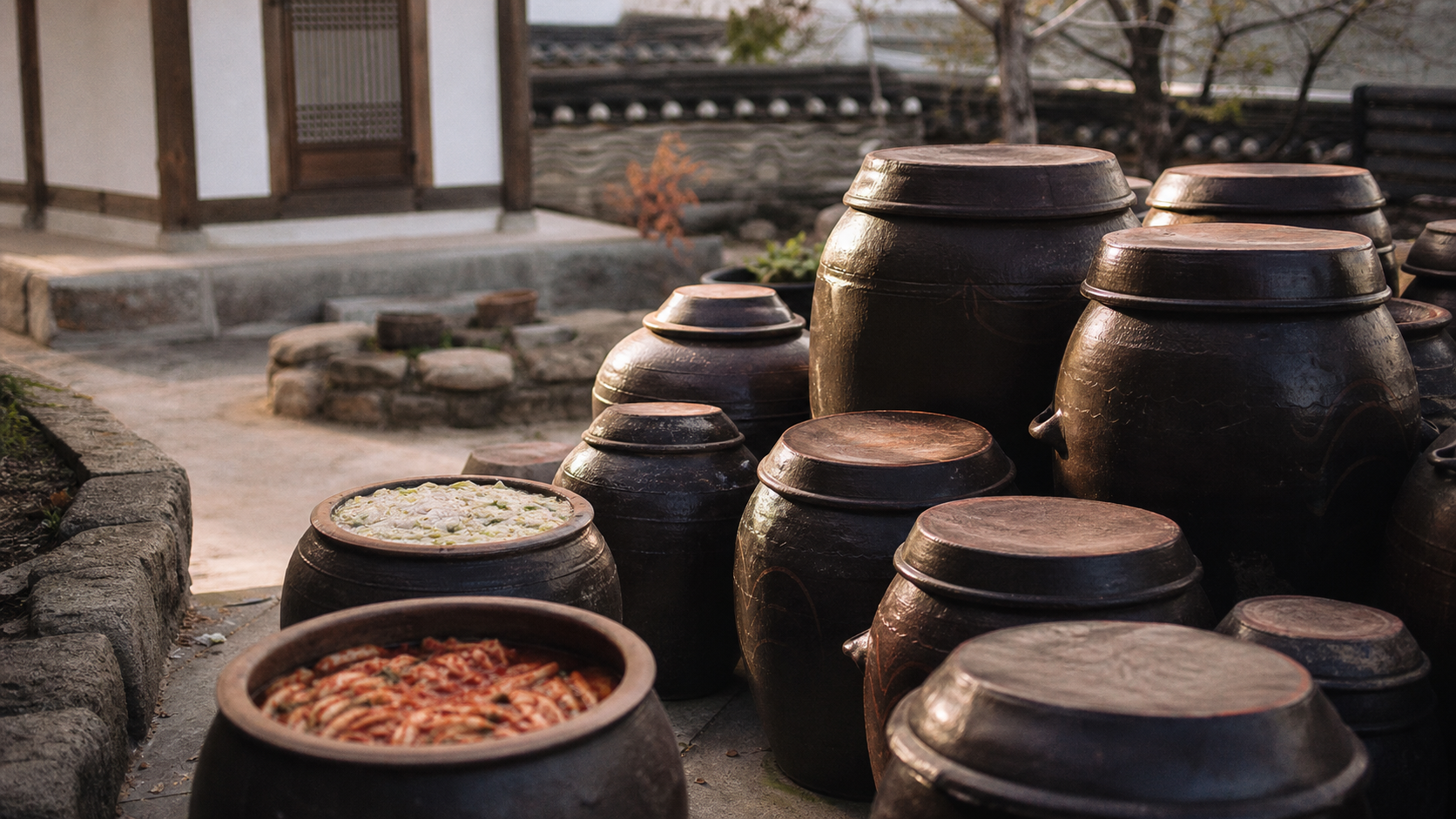
Hangul (한글) is the official writing system of both South and North Korea, consisting of 24 letters — 14 consonants and 10 vowels — arranged into syllable blocks that form complete phonetic units. What distinguishes Hangul from virtually every other writing system in the world is its documented origin: it was deliberately created in 1443 by King Sejong the Great with an explicit democratic purpose, so that commoners who had no access to Chinese classical education could achieve literacy within days rather than years. According to 90 Day Korean's cultural overview, each consonant shape visually echoes the position of the tongue, lips, or throat during pronunciation — an engineering logic that makes the script intuitive in ways that Latin or Chinese characters are not. Korean is spoken by approximately 77 million people worldwide and belongs to the Altaic language family, bearing structural similarities to Japanese and Mongolian, as documented by Babbel's language research.
"The surge in Korean language learning is directly linked to Hallyu cultural interest — fans start learning Hangul to access song lyrics and fan chants, and many progress to conversational fluency driven by that same motivation." — Language on the Move, Applied Linguistics Research
The evidence for this motivation is visible in app-level data. Duolingo has repeatedly ranked Korean among its fastest-growing languages globally, a trend that correlates directly with K-pop and K-drama consumption cycles rather than traditional migration or business-driven language demand. Fans learning Hangul to read fan chant cards at concerts, follow official lyrics, or navigate in-venue signage in Seoul and Busan represent a distinct category of language learner: culturally motivated, self-directed, and often beginning as young as their mid-teens. Research from Language on the Move confirms this Hallyu-driven interest has measurably expanded the global reach of Korean as a living second language.
Korean encodes social concepts that have no direct translation in English and that illuminate how Korean society is structured. 정 (jeong) describes a deep affective bond that develops between people over time — not at first meeting, but gradually through accumulated shared experience. 눈치 (nunchi) is the social intelligence of reading unspoken group dynamics and emotional undercurrents in a room without anyone stating them directly. Even the greeting 식사 하셨어요? — "Have you eaten?" — signals that food and shared nourishment are more central to Korean social life than abstract pleasantries. These culturally encoded concepts, documented by 90 Day Korean, appear consistently in K-drama scripts and K-pop lyrics — and understanding them deepens how a fan engages with the content they follow.
Korean Food Culture: Kimchi, Banchan, and the Communal Table
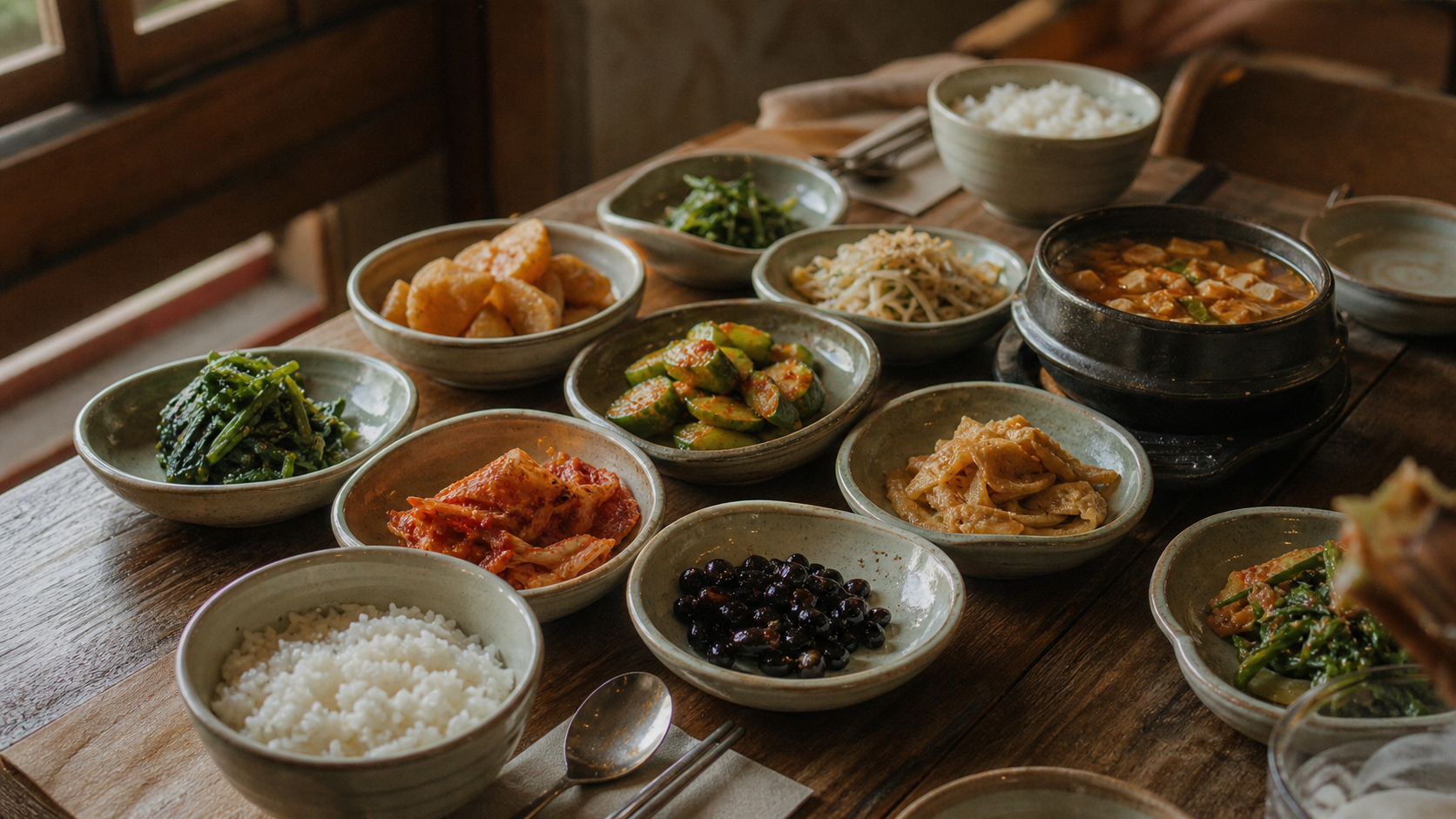
Korean food culture is built on over 5,000 years of agricultural tradition, and its organizing principle is not the individual plate but the shared table. The traditional meal format, known as Han Sang Charim, places rice and soup at the center of the table and surrounds them with kimchi — present at every meal regardless of season, occasion, or household — and multiple banchan, the small side dishes that rotate based on season, regional tradition, and family custom. According to Visit Korea's official cultural overview, this meal structure has remained fundamentally unchanged for centuries, encoding a philosophy that eating is a communal act rather than a solo transaction. The fermented condiment triad — gochujang (red chili paste), doenjang (soybean paste), and ganjang (soy sauce) — underpins virtually every dish and represents centuries of accumulated fermentation knowledge passed across generations.
The chili pepper's arrival in Korea is one of the most consequential culinary events in Asian food history. Introduced through 16th and 17th-century trade routes from the New World via Japan and China, red chilies were rapidly integrated into Korean fermentation practices and became the defining flavor of the peninsula, as documented in the history of Korean cuisine. Today it is difficult to imagine Korean food without gochugaru or gochujang — yet both are less than 400 years old. This absorption and transformation of outside influences into something distinctly Korean is itself a cultural pattern that recurs throughout Korean history, from the Mongol-introduced mandu to 21st-century K-pop's synthesis of American hip-hop and Korean performance traditions.
Kimjang — the communal practice of making kimchi in large quantities, traditionally in late autumn before winter — has been recognized by UNESCO as an Intangible Cultural Heritage. The practice involves entire neighborhoods, extended families, and communities working together over several days, with kimchi shared across households afterward. Beyond the fermented cabbage itself, kimjang is a social institution: it embodies the Korean values of collective labor, mutual aid, and food as social glue. In 2009, the South Korean government formalized this recognition of food as cultural power by investing $77 million in a "Korean Cuisine to the World" program, treating culinary identity as a soft-power export vehicle alongside music and drama — a policy that has since contributed to the 60% of inbound tourists who now cite food as a primary motivation for their visit to Korea, according to Go With Guide's 2025 tourism statistics.
The ssam custom — eating grilled meat wrapped in fresh perilla or lettuce leaves with a dab of ssamjang paste — and the gogi-jip ritual of tableside samgyeopsal (pork belly) grilling both illustrate the culture of mixing and sharing that runs through Korean dining. At a Korean barbecue table, food is not plated individually; it is grilled communally, assembled by hand, and consumed simultaneously. This is not merely a dining style — it reflects the collectivist orientation at the heart of Korean social life, the same orientation that shapes concert crowd behavior, fan community organization, and the group dynamics that K-pop groups perform so deliberately on stage.
| Fermented Condiment | Korean Name | Base Ingredients | Primary Culinary Use |
|---|---|---|---|
| Red Chili Paste | 고추장 (Gochujang) | Fermented chili, glutinous rice, soybeans, salt | Bibimbap, tteokbokki, marinades, dipping sauces |
| Soybean Paste | 된장 (Doenjang) | Fermented soybeans, salt | Doenjang-jjigae (stew), ssamjang blend, dipping |
| Soy Sauce | 간장 (Ganjang) | Fermented soybeans, water, salt | Seasoning, braising liquids, namul vegetable dishes |
| Fermented Cabbage | 김치 (Kimchi) | Napa cabbage, gochugaru, garlic, ginger, salted shrimp | Present at every meal; banchan, kimchi-jjigae, fried rice |
The Hallyu Wave: How K-Pop and K-Dramas Went Global
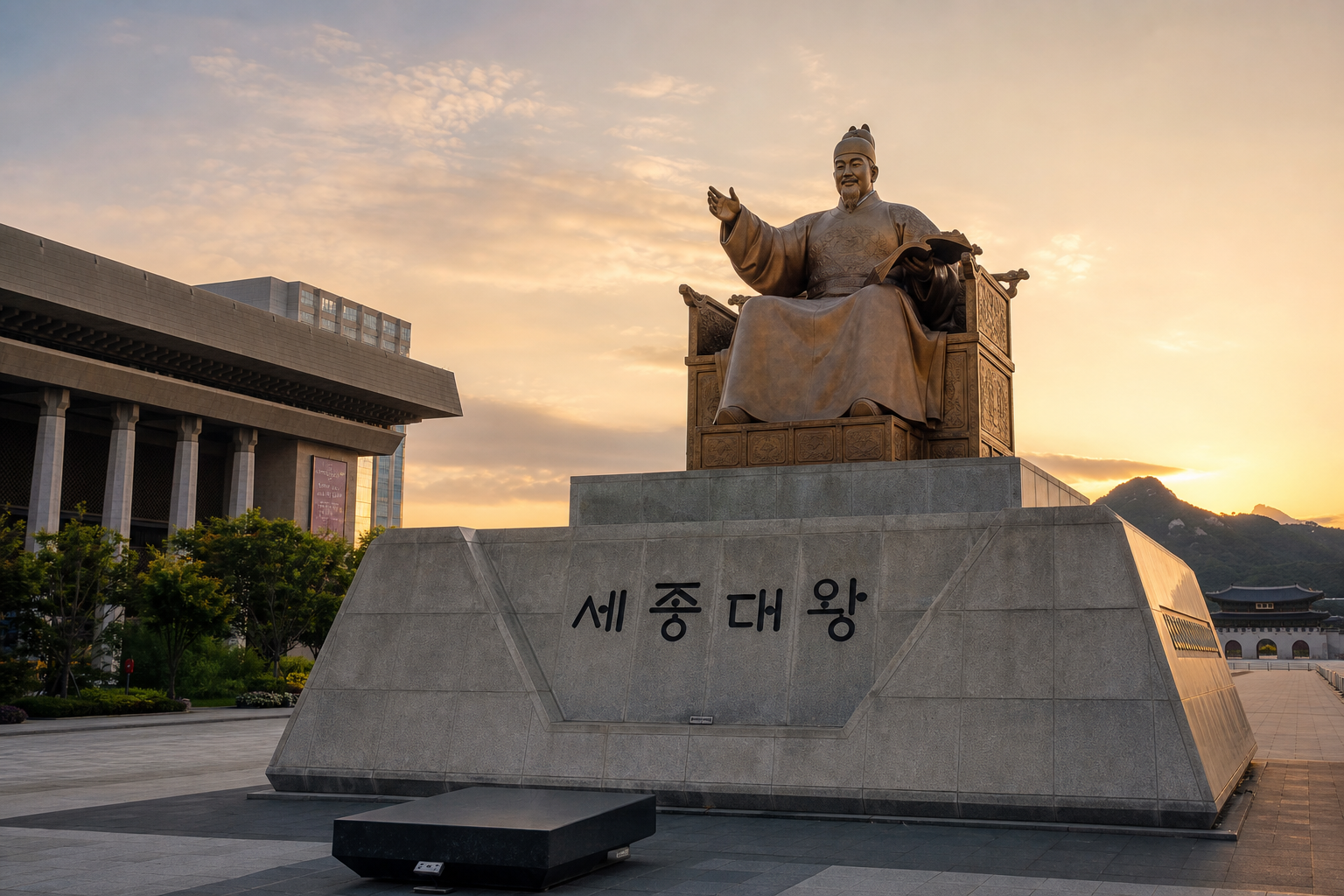
Hallyu (한류), literally "Korean Wave," is the term Chinese media observers coined in the late 1990s to describe the rapid spread of Korean cultural products across Asia. The wave began not with music but with drama: the 1991 series What is Love? attracted unexpectedly large audiences in China and parts of Southeast Asia, signaling that Korean narrative content could travel beyond its home market. From that point, K-dramas built consistent regional audiences throughout the 2000s, laying the infrastructure — streaming distribution deals, fan communities, dubbed and subtitled content pipelines — that K-pop would later exploit at global scale. According to Mister Korean's comprehensive Hallyu analysis, Korean cultural exports tied to the wave reached $12.3 billion in 2019, with Hallyu-specific tourism alone generating $1.1 billion in that same year.
"Hallyu has transformed Korean cultural exports from a regional phenomenon into a genuinely global movement — K-pop, K-drama, K-beauty, and K-food now form an interconnected ecosystem of soft power that is actively supported by the South Korean government through sustained institutional investment." — Mister Korean
BTS, BLACKPINK, and Girls' Generation each achieved worldwide chart dominance in the 2010s and early 2020s, moving K-pop from a regional genre with dedicated international niche audiences into mainstream global entertainment. BTS became the first Korean act to top the Billboard Hot 100 in 2020, and their concert tours consistently sell out arenas in North America, Europe, and Southeast Asia within hours of tickets going on sale. BLACKPINK's Coachella headline slot in 2023 marked a cultural inflection point — a Korean group headlining one of the world's most-watched music festivals. These achievements reflect years of systematic industry development combining performance training, multilingual content strategy, and fan engagement infrastructure that Western labels are still studying and adapting.
K-dramas made a parallel leap to global mainstream status. Squid Game (2021) reached audiences in over 190 countries through Netflix and broke platform viewership records that had never previously been registered at that scale. Crash Landing on You generated similar international momentum, introducing audiences across Japan, Southeast Asia, and the West to contemporary Korean social settings and daily life. The South Korean government's $77 million investment in the "Korean Cuisine to the World" program in 2009 — referenced in Korean cuisine historical documentation — illustrates how the state has treated cultural soft power as policy rather than merely an entertainment industry byproduct. Food, music, drama, and beauty products now reinforce one another as parallel, mutually amplifying channels of Korean cultural presence worldwide.
Social Values at the Heart of Korean Culture
Korean society is organized around relational values that do not map directly onto Western social frameworks, and understanding them reframes how an outside observer reads everything from K-drama plot structures to the collective behavior of fans at concerts. The two most important are jeong (정) and nunchi (눈치). Jeong is a deep affective bond that forms between people — or between a person and a place, community, or creative figure — not instantaneously but through accumulated time and shared experience. It differs from Western concepts of "friendship" or "love" because it can form even between people who did not seek connection, and it creates a felt obligation of mutual care that is difficult to sever unilaterally. Nunchi is the social skill of reading the unspoken emotional state of a group or individual — the Korean term for reading the room, but directed specifically at group harmony and the unsaid. According to 90 Day Korean's cultural analysis, both concepts govern Korean workplace dynamics, family behavior, and social navigation in ways that regularly surprise newcomers from outside the culture.
"Jeong and nunchi are not just vocabulary items — they are lenses through which Korean social life is organized. Understanding them transforms how an outsider reads Korean media, relationships, and collective behavior at concerts and fan events." — 90 Day Korean
For K-pop fans specifically, jeong explains dimensions of the fan-artist relationship that might otherwise seem disproportionate. A fan who has followed a specific artist for three or four years — watched their reality content, attended multiple concerts, participated in organized fan projects — has accumulated the kind of sustained shared experience that jeong describes. The emotional intensity is not irrational within this cultural framework; it is exactly what the concept predicts and validates. Similarly, the organized collective behavior of K-pop fan communities — synchronized fan chants, coordinated fan support projects, group purchases of billboard space at concert venues — reflects the collectivist orientation running through Korean social life, from communal kimchi-making to the group dining rituals of samgyeopsal nights.
The greeting 식사 하셨어요? — "Have you eaten?" — is more than a linguistic curiosity. It signals that in Korean social life, whether someone has been fed, nourished, and cared for is a more fundamental social question than abstract small talk. This food-first social vocabulary connects the meal table directly to the concert hall: both are spaces where collective presence and shared participation define the quality of the experience rather than individual enjoyment in isolation.
Korean Food and Tourism: Why Cuisine Brings Fans to Korea
South Korea's inbound tourism has recovered from pandemic disruption and is now setting records. According to Go With Guide's 2025 South Korea tourism statistics, 16.37 million foreign visitors arrived in 2024 — a 48.4% year-over-year increase and 94% of the 2019 pre-pandemic benchmark. In 2025, arrivals reached an all-time record of approximately 18.94 million, surpassing the prior 2019 peak by 8.2%, according to Seoul Economic Daily. Q1 2026 accelerated further with 4.76 million arrivals, and March 2026 registered a single-month record of 2.06 million — a figure that Travel and Tour World partly attributes to a BTS comeback concert driving a surge in inbound bookings. Across all these arrivals, 60% of inbound tourists identify food and gourmet experiences as a primary motivation for their visit.
Gwangjang Market in central Seoul — a covered market with origins in 1905 — is one of the most visited food destinations in the country. It draws both domestic shoppers and international visitors for its bindaetteok (mung bean pancakes), mayak gimbap (small sesame-seeded rice rolls), and raw beef yukhoe. The market gained substantial international exposure through Netflix's Street Food Asia and has since become a reference point in global food media, frequently appearing on fan travel itineraries organized around Seoul concert dates.
📍 서울특별시 중구 명동8나길 9 3층
🕒 매일 오전 11:30 ~ 오전 2:00
⭐ 4.9 (4,474 리뷰)
📞 02-318-2688
🔗 Google Maps에서 보기
Myeongdong's street food corridor, running parallel to the cosmetics and fashion shopping district, offers tteokbokki (spicy rice cakes), hotteok (sweet filled pancakes), and seasonal skewer dishes in an outdoor format that photographs naturally and moves at a pace suited to pre-concert evenings. The corridor overlaps with K-pop idol-trail routes — fan-organized walking itineraries that map filming locations from music videos and drama scenes — creating a combined food-and-fandom experience that has become one of Seoul's defining visitor patterns.
📍 View Myeongdong on Google Maps
Bibimbap, ssam, and samgyeopsal have moved well beyond local recognition into global food media and social content. Korean barbecue restaurants now operate in major cities across North America, Europe, and Southeast Asia, carrying the communal dining format — tableside grills, shared banchan, hand-assembled ssam — into markets that had no prior exposure to it. For fans planning travel around concert schedules, Korean food content on social platforms frequently serves as the first research touchpoint: watching idols eat specific dishes on variety shows creates direct curiosity that converts into restaurant bookings and market visits during tour trips.
Korean Culture as Context for K-Pop Fans
For a K-pop fan, Korean cultural literacy is not background noise — it is the operating system beneath the content. Understanding jeong explains why fan-artist relationships feel meaningful across years and across language barriers: the bond is not imagined, it is a documented cultural phenomenon with a name and a social logic. Understanding nunchi explains why K-pop groups operate with such attentive awareness of group dynamics, why on-stage interactions follow specific emotional cadences, and why lyrics so often address the unspoken rather than the explicit. Hangul literacy — achievable in days given its systematic phonetic design — unlocks song lyrics, fan chant phonetics, in-venue digital signage in Seoul and Busan, and the ability to communicate directly on fan café platforms and Weverse in Korean, without waiting for translation. Many international fans self-study Hangul using apps specifically motivated by concert preparation, and continue into broader language study as ongoing engagement with K-dramas and variety content sustains that motivation.
K-drama storylines, food scenes, and social codes directly reflect the historical and cultural roots covered throughout this article. A plot about a character's sense of obligation to someone they have grown close to over years is a drama about jeong. A scene where a character reads a tense room without anyone speaking is a scene about nunchi. A drama centered on family food traditions — and there are many — traces directly back to the Han Sang Charim meal format and the agricultural history of the Mumun and Joseon periods. These are not academic connections; they are the lived cultural logic already embedded in content fans follow daily.
For concert-goers traveling to Korea, pairing arena shows with historical landmarks adds depth to the overall visit. Gyeongbokgung Palace in central Seoul — the primary royal palace of the Joseon Dynasty, completed in 1395 — connects directly to the era when Hangul was created and Korean cultural identity was most consciously shaped by King Sejong's reforms.
📍 서울특별시 서대문구 연세로7안길 10 3층
🕒 월요일 휴무일 / 화요일 오후 7:00~8:00 / 수요일–토요일 휴무일 / 일요일 오후 7:00~8:00
⭐ 4.1 (7 리뷰)
📞 010-4736-9161
🔗 Google Maps에서 보기
Bukchon Hanok Village, northeast of Gyeongbokgung, preserves the architecture of the Joseon merchant class — narrow alleys, tiled roofs, and courtyard homes — in a form that makes the historical setting of period K-dramas immediately tangible for fans who arrive already familiar with the visual language of Korean costume drama.
📍 View Bukchon Hanok Village on Google Maps
Incheon's traditional markets, accessible from Seoul's international airport, offer street-level food culture — fish markets, rice cake shops, and pojangmacha-style stalls — that connects the modern tourist experience to centuries of Korean commercial food tradition and provides an immediate cultural landing point for fans arriving for concerts.
📍 View Incheon Traditional Markets on Google Maps
Frequently Asked Questions
What is the Hallyu wave and why does it matter?
Hallyu (한류), meaning "Korean Wave," is the term coined by Chinese media observers in the late 1990s to describe the international spread of Korean cultural products. It began with K-dramas — notably What is Love? in 1991 — and expanded through the 2010s and 2020s into K-pop, K-beauty, K-food, and Korean cinema. By 2019, Korean cultural exports linked to Hallyu reached $12.3 billion in value, with Hallyu-specific tourism generating $1.1 billion in the same year. K-dramas such as Squid Game and Crash Landing on You have reached audiences in over 190 countries via streaming platforms. Hallyu matters because it has made South Korea one of the world's foremost soft-power exporters — converting cultural interest into tourism arrivals, trade relationships, language learning trends, and diplomatic goodwill at a scale few countries have achieved through entertainment content alone. According to Mister Korean's Hallyu analysis, the wave now encompasses music, drama, beauty, food, gaming, and webtoons as parallel, mutually reinforcing channels.
How hard is Korean to learn for English speakers?
Hangul, the Korean alphabet, is genuinely learnable in a matter of days. It consists of 24 letters — 14 consonants and 10 vowels — arranged into syllable blocks, and each consonant was designed to reflect the position of the mouth and tongue during pronunciation. A motivated adult can typically read Korean phonetically within a few hours of focused study, even before understanding any vocabulary. Grammar is a different challenge: Korean sentence structure (subject-object-verb, with extensive use of particles and honorific registers) differs substantially from English, and mastering it requires sustained practice. That said, many K-pop fans start specifically with Hangul — to read lyrics and fan chant cards — using music as study material. Research from Language on the Move confirms this is one of the most common entry points into Korean language learning globally, and Duolingo data consistently ranks Korean among its fastest-growing languages worldwide.
What is kimchi and why is it central to Korean culture?
Kimchi is a fermented vegetable dish — most commonly made from napa cabbage combined with gochugaru (dried red chili flakes), garlic, ginger, salted shrimp or fish sauce, and salt — that is present at every Korean meal regardless of occasion, season, or setting. Its roots trace back to Baekje Kingdom fermented foods (57 BCE–668 CE), with chili peppers added only after the 16th century via New World trade routes. Kimchi's cultural centrality goes beyond flavor: the communal practice of making it in large quantities, known as Kimjang, is recognized by UNESCO as an Intangible Cultural Heritage. Kimjang involves entire neighborhoods working together over several days in late autumn to prepare kimchi for sharing across households — a practice that embodies the communal and collective values central to Korean social life. Today, according to Go With Guide's tourism research, 60% of inbound tourists to South Korea identify food — including kimchi experiences — as a primary motivation for visiting.
What do jeong and nunchi mean in Korean culture?
Jeong (정) is a deep emotional bond that forms between people over time through accumulated shared experience — distinct from Western concepts of love or friendship because it develops gradually, often without conscious effort, and creates felt obligations of mutual care that are difficult to sever. It explains the emotional intensity of long-term fan-artist relationships and the loyalty dynamics within K-pop groups and their fandoms: from within the cultural framework, these bonds are not disproportionate — they are exactly what jeong describes. Nunchi (눈치) is the social intelligence of reading unspoken feelings, group dynamics, and emotional undercurrents — a skill that Korean social navigation prioritizes in workplaces, families, and social settings. Someone with strong nunchi reads the mood of a room and adjusts their behavior before a problem becomes explicit. Both concepts are encoded in everyday Korean language, appear consistently in K-drama scripts and K-pop lyrics, and shape the collective behavior of fan communities in ways that become much more legible once you know the vocabulary.
Why do K-pop fans travel to South Korea?
Concert tours — large-scale arena and stadium shows in Seoul and Busan — are the primary draw for international K-pop fans traveling to Korea. Beyond specific concert dates, fans build combined itineraries that include idol-trail filming locations from music videos and dramas, food markets such as Gwangjang Market and Myeongdong's street food corridor, and historical sites including Gyeongbokgung Palace and Bukchon Hanok Village. According to Go With Guide's 2025 tourism statistics, 60% of inbound tourists identify food as a key motivation alongside their primary reason for visiting — reflecting how food culture and fan culture overlap in the Korean travel experience. South Korea received a record 18.94 million international visitors in 2025, and March 2026 registered a single-month record of 2.06 million arrivals, a figure partly linked to a BTS comeback concert generating a direct surge in inbound bookings from fan travel.
What Connects Korean Culture, Food, Language, and K-Pop
The thread running through 5,000 years of Korean history — from Mumun rice cultivation to Joseon meal table formats to the communal samgyeopsal dinner before a Seoul concert — is the primacy of shared experience over individual transaction. Korean culture is built on the idea that bonds form through time spent together, food prepared and consumed together, and collective emotional participation in something larger than the individual. This is not abstract: it is what makes fan chants at a concert feel different from applause at a Western rock show, what makes Kimjang meaningful beyond its agricultural function, and what makes the greeting "Have you eaten?" carry weight that a generic pleasantry does not.
Understanding this context does not require fluency in Korean or formal academic study. It requires paying attention to the cultural logic that K-pop, K-drama, and Korean food are already transmitting — and recognizing that the emotional intensity these formats generate in global audiences is not accidental. It is the output of a civilization that has spent millennia refining the art of collective belonging, from communal fermentation practices in late-autumn neighborhoods to synchronized light-stick waves filling a 50,000-seat stadium.
South Korea's record-breaking tourism figures in 2025 and the continuing acceleration into 2026 reflect exactly this recognition: audiences who arrived for the concerts are returning for the culture, the food, and the bonds that form in the spaces between performances. The historical foundations, the writing system, the fermented condiments, and the fan chants are not separate stories — they are one story, told across different formats and different centuries.
Last updated: 2026-05-10. This article incorporates inbound tourism data through Q1 2026 and historical research sourced from Korean cultural institutions, Wikipedia's Korean cuisine documentation, Visit Korea's official cultural overview, and applied linguistics research on Hallyu-driven language learning trends.
Related Articles
- 7-Day South Korea Itinerary 2026: Seoul to Busan for Visiting Fans
- Seoul's Historical Soul: Palaces, Hanok, and Creative Districts
- Seoul Street Food Markets & Neighborhood Eats: 2026 Guide
- Korea-UAE K-Pop: Every Major Festival and Concert 2025-2026
- Korean Dramas Starring K-Pop Idol Actors: The 2018 Class
This article was written using information collected and analyzed by NAMANE's in-house K-pop research AI engine. We use AI technology to bring you faster, broader coverage, and in the process some details may occasionally differ from the latest facts. For important information such as dates, venues, and prices, please double-check with official sources.


