
What Korean Street Food Looks Like in 2026
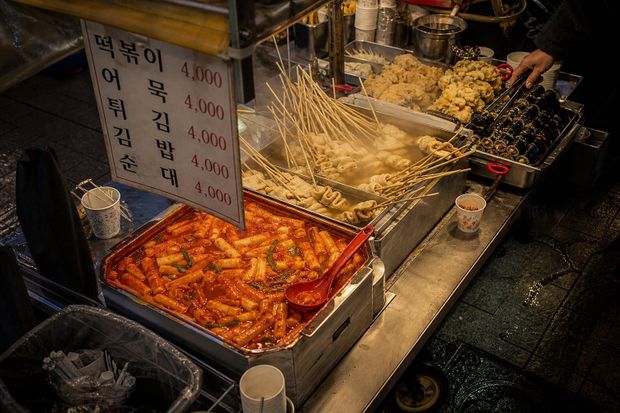
Korean street food in 2026 is defined by the concept of bunsik (분식) — a term that translates roughly as "flour-based snack food" but has evolved to cover a broad culture of quick, affordable eating served from market stalls, outdoor carts, and dedicated food alleys across the country. The range within bunsik culture is wide: entry-level snacks like eomuk (fish cake skewers) start at 1,500 KRW per skewer at a roadside cart [1], while premium grilled items such as lobster in Myeongdong reach 18,000 KRW from the same corridor of vendors [2]. According to Hidden Korea Guide, a full tasting session across five or six different dishes in Seoul's major food zones typically stays under 20,000 KRW per person — making Korean street food one of the most accessible culinary traditions for international visitors. Card payment acceptance is growing at fixed stalls in Myeongdong and Gwangjang, though outdoor cart vendors in those same areas still lean on cash.
Quick Answer: Korean street food (bunsik) ranges from 1,500 KRW fish cake skewers to 18,000 KRW premium grilled items, with a typical 4–5 item day costing 15,000–20,000 KRW. Card payment is expanding at fixed Myeongdong and Gwangjang stalls, but carrying cash remains essential for outdoor cart vendors.
The defining trend entering 2026 is the mainstream arrival of Rose Tteokbokki — a variant of Korea's most iconic rice cake dish that blends gochujang (red chili paste) with cream to produce a milder, richer sauce. This carbonara-style adaptation gained traction through 2025 as a visitor-friendly option for those who find standard tteokbokki heat too intense, and it now appears consistently alongside the original at street stalls in Myeongdong and Sindang-dong. Tornado potato (회오리감자, hoeori gamja) — a spiral-cut whole potato deep-fried on a skewer — has similarly shifted from novelty to fixture at international food corridors, favoured for its visual appeal and broadly accessible flavour profile.
The payment infrastructure at Seoul's traditional markets is also adapting. Card terminals are now standard at many Gwangjang Market indoor stalls and Myeongdong fixed kiosks, reflecting South Korea's broader transition toward a cashless economy, according to Creatrip. Traditional outdoor cart vendors — the pojangmacha (포장마차) style operators found at late-night alleys and seasonal markets — still operate on a cash basis, meaning visitors planning to graze across multiple vendors benefit from carrying 10,000–20,000 KRW in small bills alongside any card.
Tteokbokki and Sindang-dong: Korea's Most Iconic Street Snack
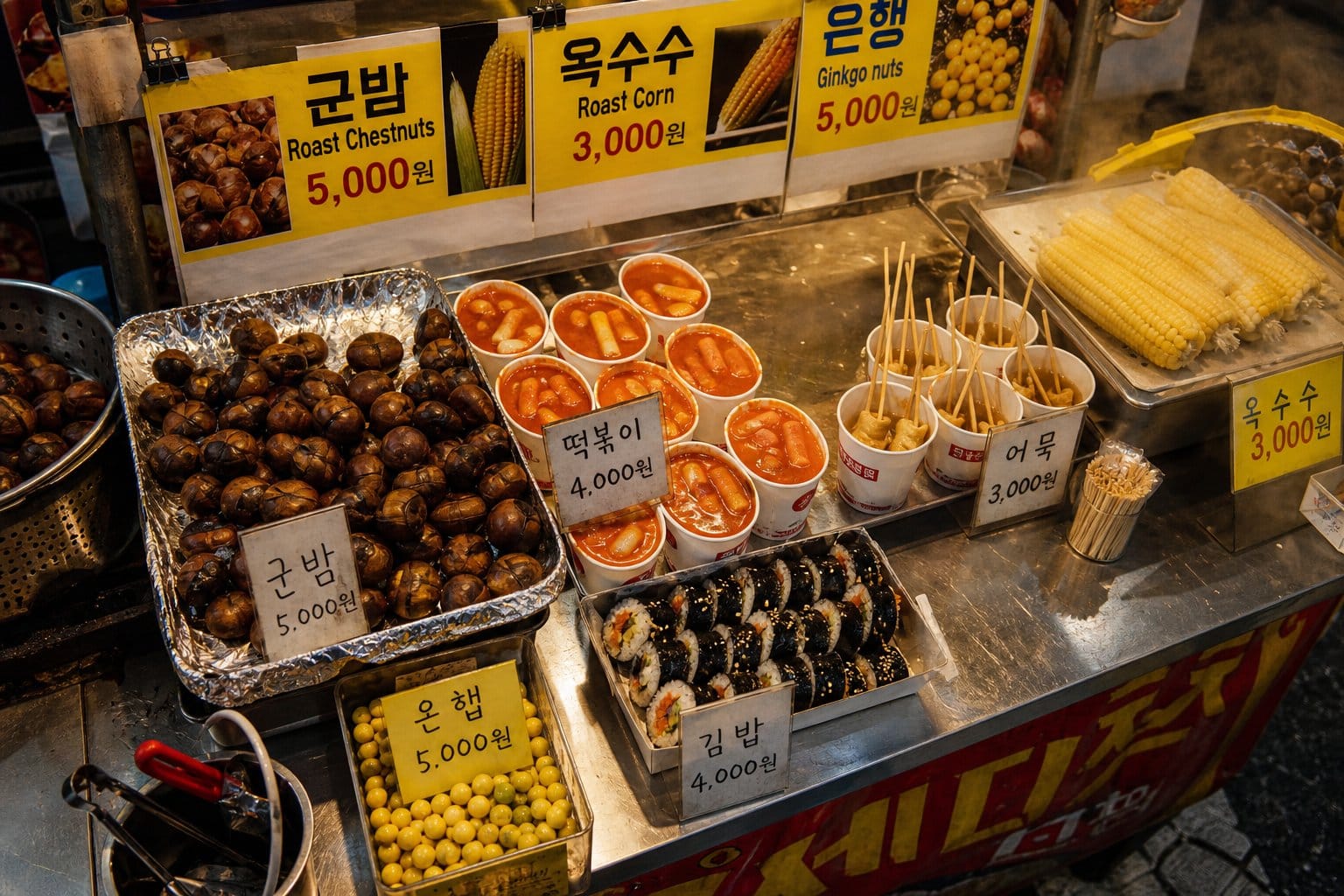
Tteokbokki (떡볶이) is Korea's single most widely recognised street food — chewy cylindrical rice cakes cooked in a gochujang (red chili paste) sauce and typically garnished with fish cakes, boiled eggs, and sliced scallions. Portions at street carts run 3,000–5,000 KRW (approximately USD 2.20–3.70) [3] and the dish appears at virtually every major food alley in Seoul. The undisputed historical home is Sindang-dong Tteokbokki Town (신당동 떡볶이 골목), located at 5 Dasan-ro 35-gil, Jung-gu [4], where the dish in its table-cooked form was first served in 1953 [5] by Grandma Ma Bok-rim. Her innovation — jeukseoktteokbokki, rice cakes cooked at the customer's table in individual pots — is the format the restaurants lining that alley continue to this day.
The signature Sindang-dong experience is a bubbling pot of rice cakes, fish cakes, scallions, and gochujang sauce arriving on a small burner at the table, allowing the sauce to thicken and caramelise as you eat. This preparation distinguishes the alley from the pre-cooked portions sold at street carts and is the reason visitors make the specific trip to Jung-gu rather than stopping at a closer option. The cooking itself is part of the experience — the portion is interactive, not just a to-go snack.
Over the decades, Sindang-dong stalls have expanded the menu beyond the original recipe. Seafood variants incorporate clams and prawns into the gochujang base; jjajang (black bean sauce) tteokbokki offers a completely different flavour profile referencing Chinese-Korean fusion cooking; and dakbal (닭발, spicy chicken feet) appears as a side accompaniment at several stalls, according to Visit Seoul. Rose Tteokbokki — the cream-gochujang blend — has also made inroads here, appearing on menus specifically as a concession to visitors who prefer a milder experience.
"Sindang-dong Tteokbokki Town preserves the origin story of tteokbokki as a table-cooked dish. Grandma Ma Bok-rim's 1953 innovation — serving rice cakes in individual pots directly at each table — remains the format her successors practice today, making the alley a direct living link to the dish's early history." — Visit Seoul, official Seoul city tourism portal
Rose Tteokbokki merits particular attention for K-pop fans visiting Korea who are less accustomed to high-spice Korean cooking. The cream component reduces the gochujang heat noticeably — the spice level shifts from intense to moderate — while preserving the chewy rice cake texture and the sauce's depth. It gained mainstream visibility through 2025–2026 [6] and is now reliably available at food corridors across Seoul, making it a practical entry point for first-time visitors to Korean street food culture.
📍 서울특별시 중구 신당동 퇴계로76길 50
🕒 매일 24시간 영업
⭐ 3.7 (261 리뷰)
📞 02-2233-1559
🔗 Google Maps에서 보기
Gwangjang Market: Seoul's Oldest Traditional Food Alley
Gwangjang Market (광장시장) is one of Seoul's oldest continuously operating traditional markets, located at 88 Changgyeonggung-ro, Jongno-gu [7]. The nearest subway stop is Jongno 5-ga Station, Exit 8, on Line 1 [8]. The food alley within the market stays open daily from 9 AM to 11 PM year-round [9], while the main fabric-and-goods market operates 9 AM to 6 PM and is closed on Sundays. For food visitors, this distinction is practical: the market is fully accessible for evening eating even on a Sunday when the main trading floors are shut. Peak food hours run from around 6 PM onward, when the indoor alleys fill with office workers and tourists seated at shared benches.
The signature dish at Gwangjang is bindaetteok (빈대떡) — thick mung-bean pancakes loaded with kimchi and pork, fried to a crispy exterior with a dense, savoury interior. Portions cost 5,000–7,000 KRW [10] and are cooked to order on the spot, producing a short wait during peak evening hours. The sound and smell of bindaetteok hitting a hot oil surface is the sensory marker of the market, and it draws food-focused visitors who have specifically researched Gwangjang before arriving.
| Dish | Korean Name | Price Range (KRW) | Notes |
|---|---|---|---|
| Mung-bean pancake | 빈대떡 (Bindaetteok) | 5,000–7,000 | Cooked to order; crispy exterior, kimchi-pork filling; short wait at peak hours |
| Mini seaweed rice rolls | 마약 김밥 (Mayak Gimbap) | 3,000–5,000 | Served with soy dipping sauce; bite-sized portions; nickname translates as "addictive" |
| Beef tartare | 육회 (Yukhoe) | 10,000–15,000 | Seasoned with sesame oil, Asian pear, and chili; served raw — a market specialty |
| Blood sausage | 순대 (Sundae) | 5,000–8,000 | Glass noodle and pork filling; served with gochujang or doenjang dipping sauce |
| Rice cake dish | 떡볶이 (Tteokbokki) | 3,000–5,000 | Available alongside bindaetteok stalls; standard and Rose variants in 2026 |
Beyond bindaetteok, Gwangjang's food alley contains a full range of Korean market classics. Mayak gimbap are typically served with a soy dipping sauce; yukhoe (fresh beef tartare) is considered a house specialty of the market and is worth trying for visitors comfortable with raw preparations; sundae (순대, Korean blood sausage made with glass noodles and pork) rounds out the heavier end of the menu, according to Visit Seoul. Arriving by 6 PM on a weekday gives you the best chance of finding open bench seating without a wait. On weekend evenings, popular bindaetteok stalls can reach full capacity by 7 PM. Fixed indoor stalls generally accept card payment; small-denomination cash speeds up add-on orders and beverage purchases.
📍 서울특별시 종로구 청계천로 88
🕒 매일 오전 9:00 ~ 오후 10:30
⭐ 4.2 (43,864 리뷰)
📞 02-2267-0291
🔗 Google Maps에서 보기
Myeongdong: The International Street Food Corridor
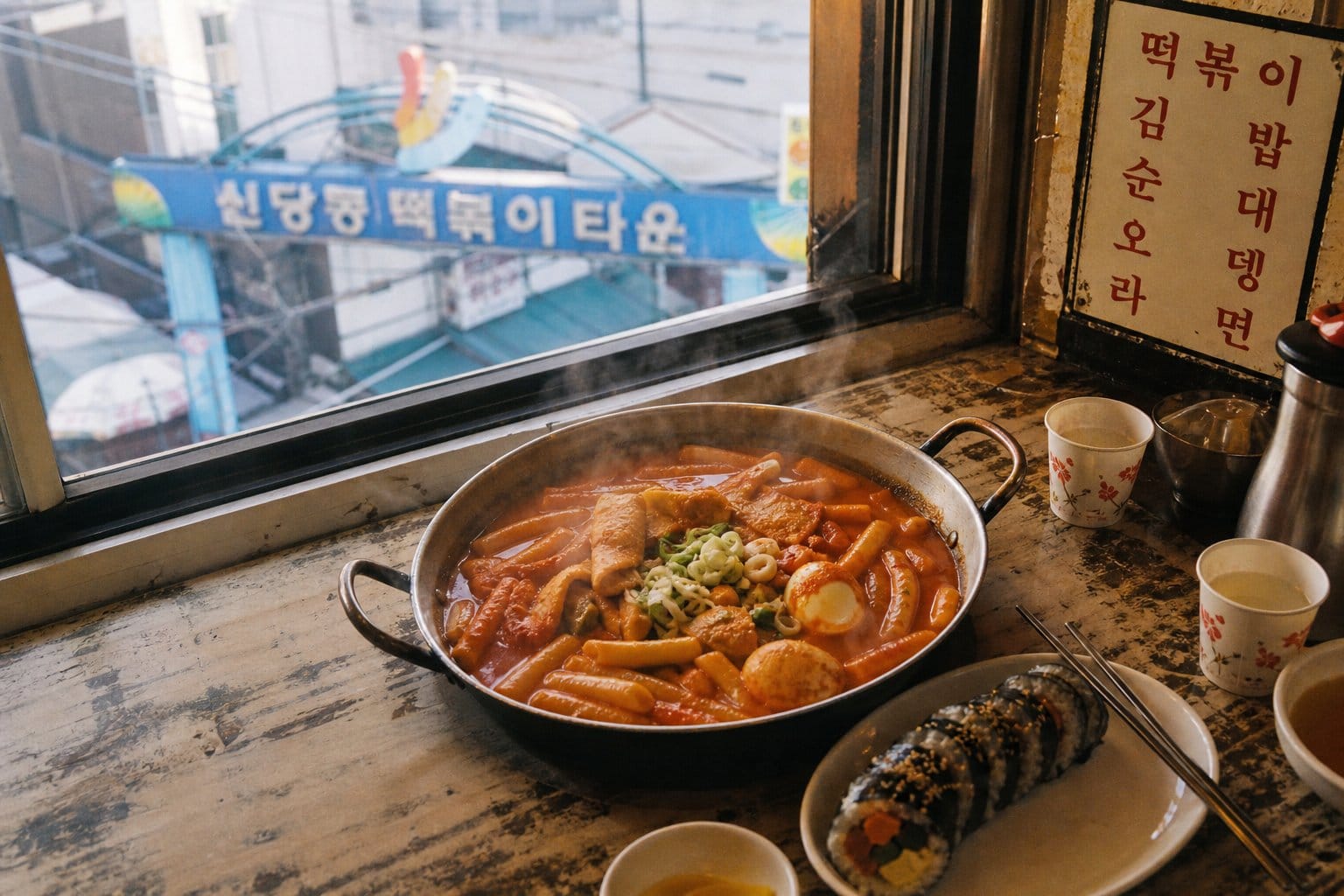
Myeongdong (명동) is Seoul's most internationally recognised street food zone, accessible via Subway Line 4 at Myeongdong Station exits 5 through 8 [11]. Vendors begin setting up in the late afternoon and continue operating through midnight on most evenings [12], forming a continuous corridor of stalls lining both sides of the main pedestrian shopping street. The price range is wider here than at traditional market settings: classic snacks start at around 2,000 KRW while premium items such as grilled cheese lobster reach 15,000–18,000 KRW per serving [13]. This coexistence of budget and premium options in the same physical space makes Myeongdong adaptable for visitors across a range of spending preferences.
Two snacks draw particular attention at Myeongdong specifically because of their visual appeal. Gyeran-ppang (계란빵, egg bread) is a fluffy hot roll baked around a whole egg, costing 2,000–3,000 KRW [14] — golden-surfaced, protein-rich, and approachable for first-time visitors to Korean street food. Tornado potato (회오리감자) — a whole potato spiral-cut onto a skewer, deep-fried, and dusted with seasoning or Parmesan — runs 3,000–4,000 KRW [15] and draws consistent queues from international visitors. Both items have moved from novelty status to regular fixture at Myeongdong stalls.
For practical scheduling, weekday evenings from 6 PM to 9 PM offer shorter queues and broader vendor availability than weekend peak hours. Myeongdong draws substantial international tourist foot traffic on weekends, and queues at the most popular stalls — especially vendors with lobster or novelty items — can extend 10–15 minutes. A Tuesday or Wednesday evening gives the most comfortable grazing experience if your priority is variety rather than specific vendors. According to Creatrip, card payment acceptance has expanded across the Myeongdong vendor corridor, though cash remains the faster option at busy stalls during peak hours.
📍 서울특별시 중구 명동2가
⭐ 4.4 (26,078 리뷰)
🔗 Google Maps에서 보기
Seasonal Snacks: What's Available and When
Korean street food follows a clear seasonal rhythm — some items are year-round staples while others appear only during specific months, and knowing this calendar shapes realistic expectations for any visit. The most season-dependent item is bungeo-ppang (붕어빵) — fish-shaped pastry shells filled with sweet red bean paste (or cream, chocolate, matcha, or sweet potato in modern variants) that appear exclusively from October through February at outdoor cart vendors [16]. Two or three pieces cost 1,000–2,000 KRW [17]. Bungeo-ppang is not available in summer months — those cart spots are occupied by bingsu (shaved ice) stalls running through the warmer season. Visitors arriving between March and September should not expect to find it.
Hotteok (호떡) occupies a similar seasonal arc with one important distinction: it is sold year-round at busy tourist corridors but peaks noticeably from October through February, when its caramelised brown sugar, cinnamon, and nut filling is most appealing against cold weather. Prices run 2,000–3,000 KRW [18]. A practical and consistently repeated warning: the filling inside a fresh hotteok retains heat well beyond what the outer dough suggests. Waiting roughly 90 seconds before biting in is the standard advice from vendors and travel guides including Creatrip.
Summer street food in Seoul shifts toward cold and refreshing formats. Bingsu (빙수) — shaved ice topped with sweetened red bean, condensed milk, fruit, or matcha — replaces cold-weather pastry vendors at many outdoor stalls from around June. Cold naengmyeon (냉면, buckwheat noodles in an icy broth) stalls appear in market corridors through the June–August window. Both categories are well-represented at Gwangjang and Myeongdong during peak summer months, and the seasonal transition at outdoor carts is generally visible by the first week of June.
Mandu (만두, dumplings) filled with pork, kimchi, glass noodles, or tofu remain available year-round at both market stalls and convenience stores, making them one of the most reliably accessible items regardless of travel timing. Steamed versions (jjinmandu) are particularly common at winter markets; pan-fried versions (gunmandu) appear year-round at food stalls across Seoul.
Street Food Prices: A Realistic Daily Budget
Korean street food operates in an informal tiered economy, and understanding the price bands helps visitors plan before they arrive. At the entry level, eomuk (어묵, fish cake skewers) costs 1,500–3,000 KRW per skewer [19], and a longstanding custom at traditional vendors is that the clear fish cake broth is served free with any food purchase — making it an impromptu warming drink at no additional cost, according to Creatrip. This tradition remains intact at most traditional market vendors though it is less common at modern-format stalls. A practical daily benchmark: 15,000–20,000 KRW covers a satisfying graze across 4–5 varied items at Seoul's major food zones [20].
| Price Tier | Items | Price Range (KRW) | USD Approx. |
|---|---|---|---|
| Entry-level | Eomuk (fish cake skewer); Bungeo-ppang 2–3 pcs (Oct–Feb only) | 1,000–3,000 | ~$0.75–$2.20 |
| Mid-range | Tteokbokki; Gyeran-ppang; Tornado potato; Hotteok; Mayak gimbap | 2,000–5,000 | ~$1.50–$3.70 |
| Substantial | Bindaetteok; Korean fried chicken small portion; Sundae (blood sausage) | 5,000–8,000 | ~$3.70–$5.90 |
| Premium | Yukhoe / beef tartare (Gwangjang); Grilled cheese lobster (Myeongdong) | 10,000–18,000 | ~$7.30–$13.20 |
| Practical day total (4–5 items) | Mixed session across entry, mid-range, and one substantial item | 15,000–20,000 | ~$11–$15 |
The 15,000–20,000 KRW daily benchmark assumes a mix of two or three mid-range items and one substantial item, skipping premium options. Visitors who include yukhoe at Gwangjang or a grilled lobster item at Myeongdong will push that figure to 25,000–35,000 KRW for the session. Korean fried chicken sold in small street-side portions costs 5,000–8,000 KRW [21] and is distinct from the full restaurant fried chicken experience — street-side portions are smaller (typically 3–5 pieces) and are intended as snacks rather than meals.
Practical Tips: Cash, Timing, and Neighbourhoods Beyond Myeongdong
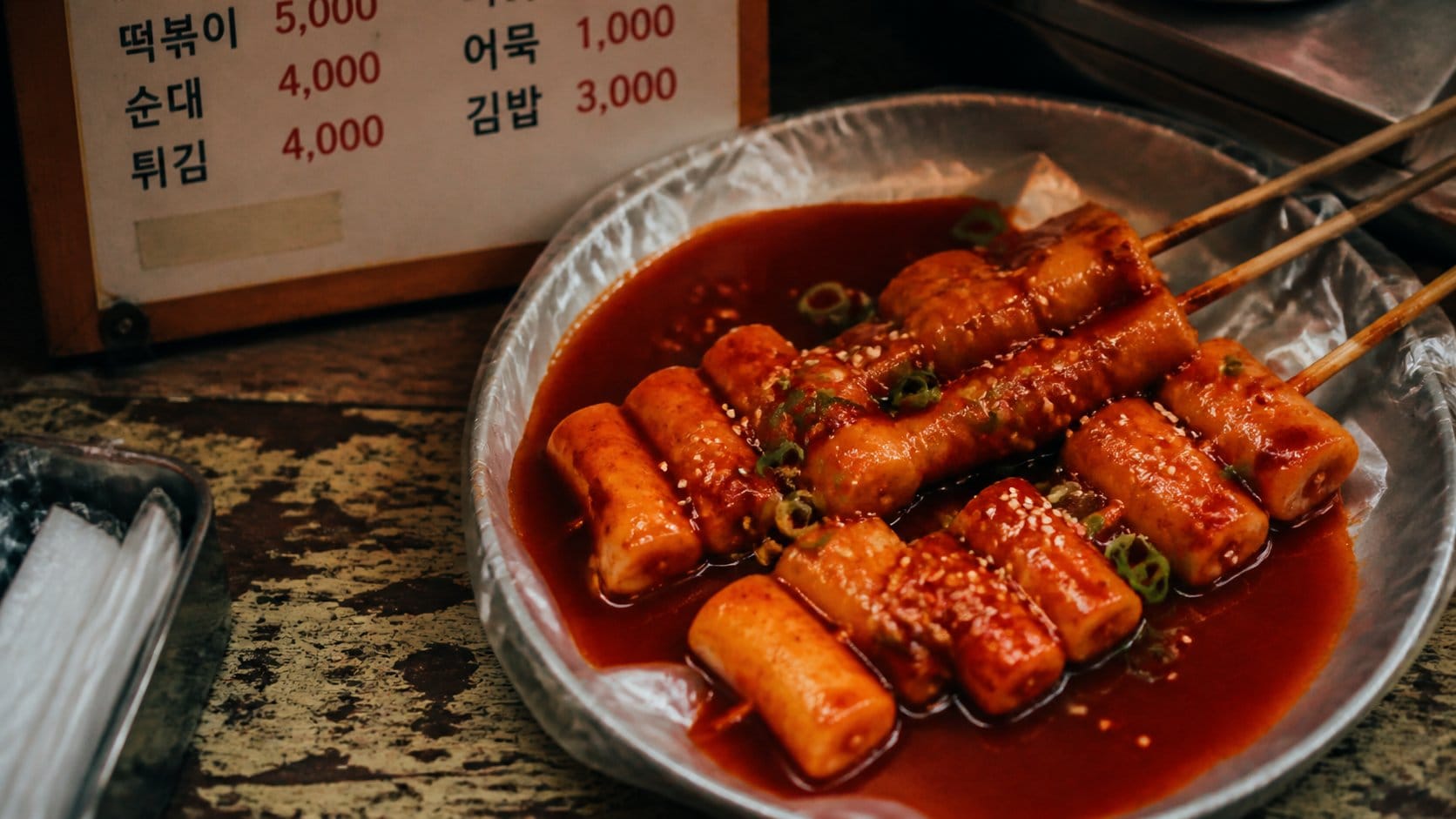
The most consistent practical recommendation from Seoul street food resources is to carry 10,000–20,000 KRW in small-denomination bills before heading into any traditional market or outdoor cart zone [22]. Card payment has expanded significantly at Myeongdong and Gwangjang's fixed indoor stalls, but single-operator outdoor carts — even in tourist-dense areas — frequently remain cash-only. Presenting a 50,000 KRW note at a busy cart can slow the transaction or result in a declined sale when vendors have limited change during peak hours. Withdrawing cash from a GS25 or CU convenience store ATM (both widespread in Seoul, with international card support) before heading into an evening food session is a straightforward preparation step.
"Even in tourist-heavy Myeongdong, where card readers are increasingly common, having cash on hand remains the most reliable way to move quickly between vendors without delays — most outdoor cart operators still work cash-only, and small-denomination bills remove friction across the full range of stalls you will encounter in an evening." — Hidden Korea Guide, Korean street food travel reference
For timing, both Sindang-dong Tteokbokki Town and Gwangjang Market are evening destinations, reaching their best atmosphere and fullest stall availability from around 6 PM. Arriving by 6 PM on weekdays is the practical recommendation for Gwangjang to secure bench seating at popular stalls before they fill to capacity. Sindang-dong operates at a lower tourist density than Myeongdong and does not face the same weekend crowd spikes. Both are sit-down experiences rather than walking snacks — budget 45–60 minutes minimum for a proper session at either location.
Visitors looking for lower crowd density than Myeongdong have practical alternatives across Seoul. Cheongnyangni Tongdak Alley, located near Cheongnyangni Station Exit 1, serves a traditional style of fried chicken cooked in iron pots with chili peppers and sweet potatoes, finished with a signature soy-chili sauce [23]. The alley sits within a large market complex and operates at a fraction of Myeongdong's foot traffic. Visit Seoul also highlights Hoegi Station Pajeon Alley (near Hoegi Station Exit 1, established in the 1970s [24]) as a quieter option for thick Korean pancakes paired with makgeolli (rice wine).
Food allergy awareness is a practical concern at Korean street food stalls. Gochujang — the base sauce in tteokbokki and many other dishes — contains fermented soybean paste (doenjang) alongside chili, meaning it contains soy. Most bindaetteok, mandu, and gyeran-ppang contain wheat flour. Many dishes include pork or egg. Vendors at fixed market stalls can answer direct questions about ingredients; at outdoor carts, the phrase "알레르기가 있어요" (al-le-reu-gi-ga i-sseo-yo, "I have an allergy") paired with pointing at an ingredient is a functional approach at most stalls even where English is limited.
📍 서울특별시 중구 충무로2가 8-3
🕒 매일 오후 5:00 ~ 오전 1:00
⭐ 4.4 (6,623 리뷰)
🔗 Google Maps에서 보기
Frequently Asked Questions
What is the cheapest Korean street food option in Seoul?
Eomuk (어묵, fish cake skewers) at 1,500–3,000 KRW per skewer is consistently the most affordable item at Seoul street food stalls year-round, and most traditional vendors serve the clear fish cake broth for free alongside any food purchase. Bungeo-ppang (붕어빵, fish-shaped pastry with red bean or cream filling) is the other entry-level option at 1,000–2,000 KRW for two or three pieces — but this item is only available from October through February at outdoor cart vendors. For visits between March and September, eomuk skewers remain the most accessible budget option across all major food zones including Myeongdong, Gwangjang, and Sindang-dong.
What is Rose Tteokbokki and how spicy is it?
Rose Tteokbokki is a variant of Korea's signature rice cake dish that blends gochujang (red chili paste) with cream or milk to produce a milder, richer sauce — described in style as a carbonara-influenced adaptation of the original. The cream component reduces the heat noticeably compared to standard tteokbokki: visitors who typically avoid spicy food find it manageable, while regular Korean food eaters describe it as a two-alarm rather than four-alarm heat level. The dish gained mainstream visibility through 2025–2026 as a visitor-friendly option and is now widely available at street stalls and food alleys in Myeongdong, Sindang-dong, and Gwangjang. The rice cake texture is identical to the original; only the sauce profile changes.
When is Gwangjang Market open for food?
Gwangjang Market's food alley is open daily from 9 AM to 11 PM year-round, including Sundays. The main fabric-and-goods market section closes on Sundays and operates 9 AM to 6 PM on weekdays and Saturdays, but food stalls follow an independent schedule and are unaffected by the main market closure. Evening visits from around 6 PM onward offer the full range of dishes and the liveliest atmosphere, with bindaetteok (mung-bean pancakes) freshly fried to order on the spot. Arriving by 6 PM on weekdays gives the best chance of securing bench seating at popular stalls before they fill to capacity during peak evening hours, typically from 7 PM onward.
Do street food vendors in Seoul accept credit cards?
Card payment acceptance has grown at Myeongdong's vendor stalls and at fixed indoor counters throughout Gwangjang Market, and many of these stalls now accept both domestic and international credit cards. However, outdoor cart vendors — even in tourist-dense areas — frequently remain cash-only in 2026. The practical approach is to carry 10,000–20,000 KRW in small bills alongside a card: use cash for outdoor carts and card at fixed stalls where it is available. GS25 and CU convenience stores are widespread across Seoul and have ATMs that accept international cards, making them a reliable option for withdrawing cash before entering a market zone.
How much should I budget per day for Korean street food?
A realistic daily budget for Korean street food in Seoul is 15,000–20,000 KRW (approximately USD 11–15), which covers 4–5 varied items across different price tiers — for example, an eomuk skewer, a portion of tteokbokki, a tornado potato, a gyeran-ppang, and a bindaetteok at Gwangjang. This benchmark assumes standard market pricing and excludes premium items. Adding one premium option such as grilled cheese lobster (15,000–18,000 KRW each) in Myeongdong or yukhoe (beef tartare, 10,000–15,000 KRW) at Gwangjang will push the daily total to 30,000–38,000 KRW. The standard food alley experience is achievable on the lower figure without sacrificing variety.
Planning Your Seoul Street Food Day
Korean street food in 2026 remains one of the most cost-effective and flavour-diverse food experiences available to international visitors in Asia. The landscape spans centuries-old market alleys — Gwangjang and Sindang-dong, where specific dishes were invented and refined over decades — through to the contemporary international corridor of Myeongdong, where vendor variety and tourist volume coexist in a single pedestrian street. Understanding the geography of these zones and their operating hours removes the largest practical friction points. Knowing that Gwangjang's food alley stays open until 11 PM daily, that Sindang-dong is better approached as a sit-down table-cooked meal than a walking snack stop, and that Myeongdong is most comfortable on a weekday evening turns a general interest in Korean food into a workable itinerary — particularly useful for visitors whose primary trip purpose is a concert or K-pop event in Seoul.
The trend lines entering 2026 — Rose Tteokbokki's mainstream arrival, tornado potato as a permanent fixture, and gradually expanding card payment at fixed stalls — reflect a food culture that adapts without abandoning its foundations. The same alleys that have served bindaetteok and tteokbokki for generations are now also serving cream-gochujang variants and accepting contactless payment. The seasonal calendar (bungeo-ppang October–February; bingsu June–August; hotteok and eomuk year-round) adds a practical dimension to trip planning that rewards visitors who check before they arrive.
The cash and timing habits covered across this guide — carrying small bills, arriving at market destinations by 6 PM, accounting for seasonal availability — are the operational details that determine whether a street food session runs smoothly or involves unnecessary friction. Korean street food culture is accessible to newcomers; the primary input required is preparation.
Last updated: 2026-05-15. Article reviewed against Visit Seoul, Creatrip, and Hidden Korea Guide sources. Prices and venue hours reflect 2025–2026 availability; individual vendor pricing may vary by season and location.


