
Knowing how to use public transportation in Korea is essential information for foreign travelers. In Korea, local apps are used instead of Google Maps, and you can conveniently ride the subway, bus, and taxi with just one transit card. This guide covers everything from recommended navigation apps and subway tips to transit card types and payment methods—so you can ride public transportation like a local.
Why Google Maps Doesn't Work Well in Korea
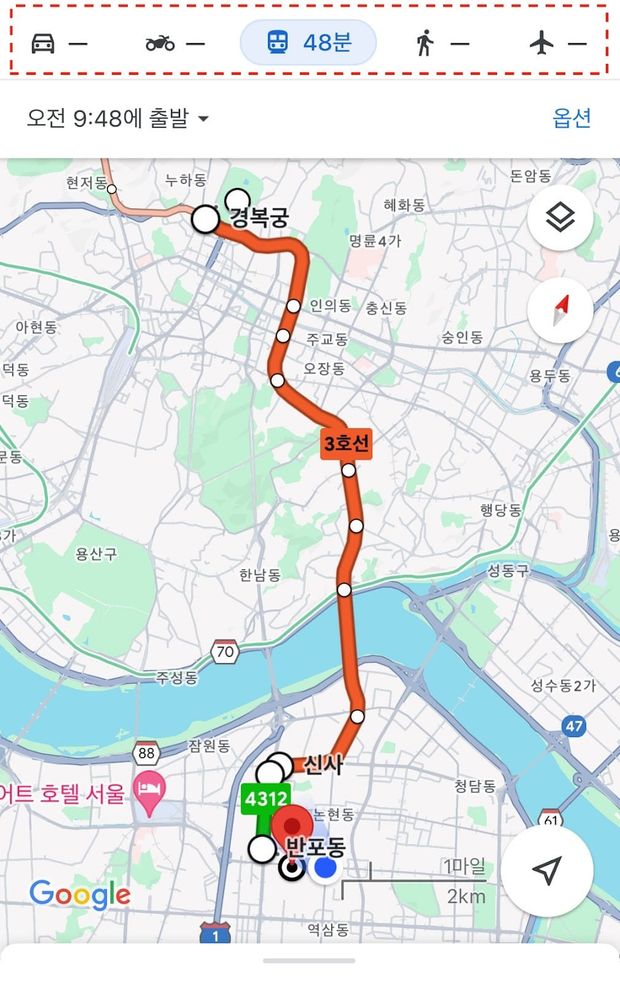
Due to legal restrictions in Korea, Google Maps does not display subway line colors accurately, and route directions are often unreliable. Many shops and restaurants are also not registered, making it difficult to find your way.
Recommended Navigation Apps: Naver Map & Konest
- Naver Map: The most widely used map app in Korea. Supports Japanese and English display, provides accurate walking routes, and offers subway and bus transfer directions
- Konest Subway App: A dedicated Seoul subway route map app. Allows you to check transfer information, fare calculations, and travel times at a glance
If you want to learn about more useful apps for traveling in Korea, check out our Essential Apps Guide for Korea Travel.
Seoul Subway Tips
The Seoul subway system is a world-class public transportation network with 23 lines and approximately 700+ stations. Knowing a few tips will make your experience much more convenient.
Train Intervals and Peak Hours
- Some lines have train intervals of up to 20 minutes during off-peak hours, so be sure to check the schedule in advance
- The Gangnam area between 6–7 PM gets extremely crowded. Avoid this time if possible
- Re-boarding within 15 minutes counts as a transfer, so no additional fare is charged
Single-Use Tickets vs. Transit Cards
You can purchase single-use tickets with cash at unmanned ticket machines in subway stations, but using a transit card gives you a 100 KRW discount and transfer discounts. Discounts apply not only for subway-to-subway transfers but also for subway-to-bus transfers, so using a transit card is highly recommended. For a detailed comparison of transit card types, check out our Complete Transit Card Guide.
Transit Card Types and Payment Methods
Major Transit Card Comparison
- T-money Card: The most popular transit card in Korea. Card costs 3,000–6,000 KRW. Can be used for subway, bus, taxi, and convenience store payments
- NAMANE Card: A multi-function card combining transit IC and prepaid credit card features. Card costs 7,000 KRW. No foreign transaction fees for shopping payments
- Climate Card (기후동행카드): An unlimited-use card limited to Seoul. Starting from 5,000 KRW for a 1-day pass. However, it cannot be used for Incheon Airport or Shinbundang Line
- NAMANE PASS: Unlimited use on subways, buses, and airport railroad nationwide. 4-day pass for 35,000 KRW, 6-day pass for 50,000 KRW
Credit Card and Smartphone Payments
In most cases, foreign credit cards cannot be used to pass through transit gates in Korea. Kakao Pay and Samsung Pay require a Korean phone number, and T-money's iPhone integration has limited reload locations. Having a physical transit card is the safest option.
How to Reload
- Convenience stores: Ask the cashier at the counter to reload your card
- Subway station ticket machines: Japanese and English language options available
- NAMANE kiosks: Located at major tourist spots, supporting cash and credit card reloads
- NAMANE app: Easy reloading via credit card in the app
Why We Recommend the NAMANE Card
The NAMANE Card is a multi-function card designed for foreigners that handles both transit and shopping payments in one card. When using foreign credit cards such as Japan-issued VISA cards, fees of 1.6–3% are charged, but the NAMANE Card's prepaid system helps you save on fees. You can also customize the card design with your own photo, making it a memorable souvenir of your trip.
To learn more about the NAMANE Card, visit our NAMANE Card Introduction Page. For purchase and benefit details, check out our Benefits Page.
Frequently Asked Questions (FAQ)
Q1. Can't I use Google Maps in Korea?
Google Maps has limited route guidance functionality in Korea. Due to legal restrictions, the map data is incomplete—subway line colors are not displayed, and walking directions are inaccurate. Download Naver Map for accurate route guidance with Japanese and English language support.
Q2. Can I ride the subway without a transit card?
Yes, you can purchase single-use tickets with cash at unmanned ticket machines in subway stations. However, since transit cards offer a 100 KRW discount and transfer discounts between subway and bus, purchasing a transit card is more economical if you plan to use public transportation more than twice.
Q3. Is there an unlimited transit pass?
Yes, there are the Climate Card (Seoul only) and NAMANE PASS (nationwide). The Climate Card starts at 5,000 KRW for a 1-day pass but cannot be used from Incheon Airport. The NAMANE PASS offers unlimited use of subways, buses, and airport railroad nationwide for 35,000 KRW for a 4-day pass, making it more convenient for travelers. For a detailed comparison, check out our Unlimited Transit Pass Guide.
This article was written using information collected and analyzed by NAMANE's in-house K-pop research AI engine. We use AI technology to bring you faster, broader coverage, and in the process some details may occasionally differ from the latest facts. For important information such as dates, venues, and prices, please double-check with official sources.


