
Seoul at a Glance: Size, Structure & Geography
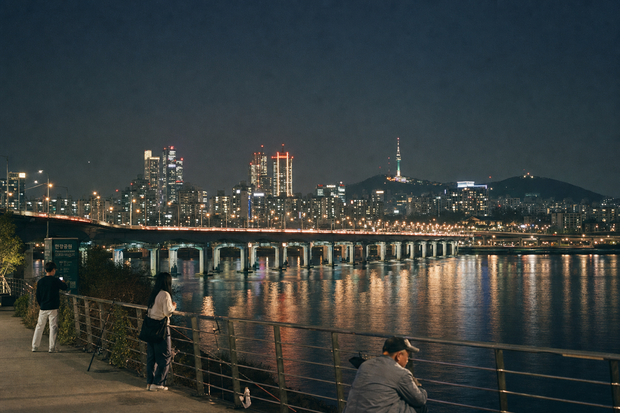
Seoul is the capital and largest city of South Korea — officially the Seoul Special Metropolitan City (서울특별시) — home to approximately 9.6 million residents as of 2024, a figure that has edged down from a peak above 10 million in the mid-2000s as suburbanisation draws residents into the surrounding Gyeonggi Province. Covering 605.21 square kilometres across the northwestern Korean Peninsula, the city sits roughly 60 kilometres inland from the Yellow Sea, with the Han River bisecting its urban core from east to west. When the wider agglomeration encompassing Gyeonggi Province and the port city of Incheon is included, the Seoul Capital Area holds approximately 26 million people, placing it among the most populous metropolitan regions on the planet, according to Wikipedia's Seoul city profile. Seoul carries 'Special City' (teukbyeolsi) status — South Korea's highest local-government tier, effectively granting the city constitutional standing equivalent to a province. It is divided into 25 autonomous districts (gu) and 522 sub-districts (dong), with Mayor Oh Se-hoon currently leading the Seoul Metropolitan Government.
Quick Answer: Seoul is South Korea's capital, with approximately 9.6 million city residents (2024) and around 26 million people across the greater metro area. Covering 605 km² along the Han River, it holds Special City (teukbyeolsi) status — the country's highest local-government tier — and is divided into 25 autonomous districts (gu). Mayor Oh Se-hoon currently governs the city.
The Han River is more than a geographic feature — it functions as a social and economic dividing line separating the older, traditionally settled northern districts from the newer, wealthier southern districts, most famously Gangnam. Both banks support extensive riverside parks, cycling paths, and ferry piers that draw millions of residents and visitors across every season. The river's breadth and the mountain ridgelines encircling the city — Bukhansan to the north, Gwanaksan to the south — define Seoul's visual character as much as its towering glass-and-steel skyline.
Seoul's teukbyeolsi designation dates to 1949 and was designed to reflect the city's disproportionate role in national governance, finance, media, and culture. That concentration of resources has sustained internal migration from other Korean regions for decades, even as the city's absolute population stabilises. For K-pop fans and international visitors, this centralisation has a direct practical benefit: the label offices, concert arenas, fan-experience venues, and cultural institutions that matter most are all located within a single well-connected urban area, accessible on one transit card.
| Metric | Data (2024–2026) |
|---|---|
| City population | ~9.6 million |
| Greater metro area population | ~26 million (Seoul + Gyeonggi Province + Incheon) |
| Total city area | 605.21 km² |
| Administrative districts (gu) | 25 autonomous gu |
| Sub-districts (dong) | 522 dong |
| Government designation | Special City (teukbyeolsi) — highest local-government tier in South Korea |
| Current mayor | Oh Se-hoon |
| Distance from Yellow Sea | ~60 km inland |
| Global Power City Index rank | 7th |
A Brief History: From Baekje Settlement to Global City
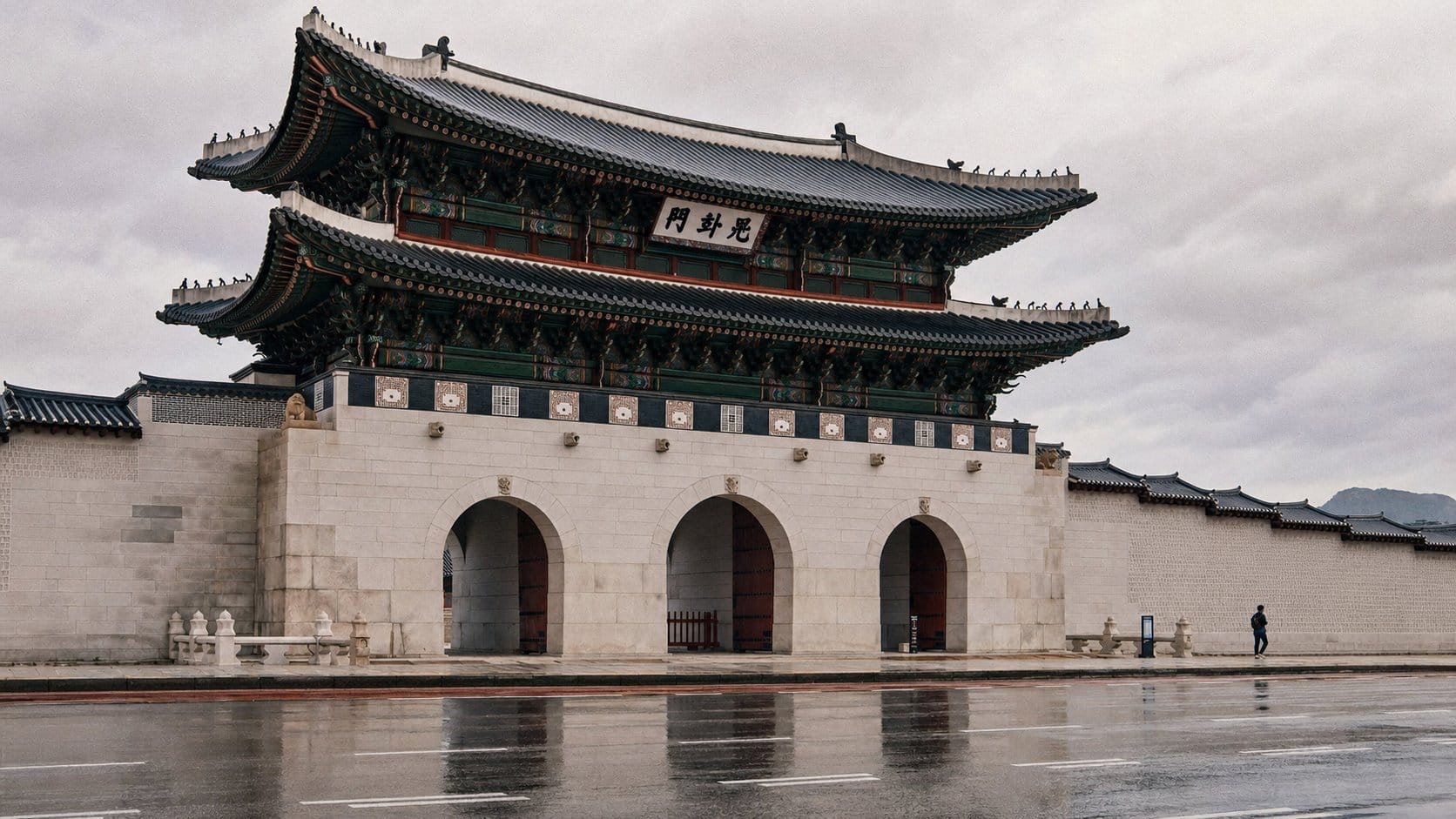
Seoul's origins stretch back to 18 BC, when the Baekje kingdom established a settlement on the Han River at a site known as Wiryeseong. The city's identity as a capital, however, was firmly set in 1394 when General Yi Seong-gye — the founder of the Joseon dynasty — designated it Korea's seat of power under the name Hanyang, a role it has fulfilled almost without interruption ever since, as documented by Encyclopædia Britannica. The Joseon era shaped the city's enduring architectural heritage: the five grand palaces, the fortress walls, Jongmyo Shrine, and the administrative road network whose lines still partially underlie modern Seoul avenues. Japanese annexation (1910–1945) restructured the urban fabric, renaming the city Gyeongseong and constructing colonial-era buildings, several of which remain visible in central Seoul today. The Korean War (1950–53) was the most traumatic episode in the city's modern history: Seoul changed hands four times between United Nations and South Korean forces on one side, and North Korean and Chinese forces on the other, leaving the city in near-total ruin by the 1953 ceasefire.
"Seoul has served as Korea's political and cultural heart for more than 600 years — its capacity to rebuild after each historical trauma, and to reassert its capital role, distinguishes it from virtually every other city in East Asia." — Encyclopædia Britannica, Seoul city entry.
Reconstruction after the Korean War was one of the defining urban stories of the twentieth century. Within a single generation, Seoul grew from a shattered city of roughly one million inhabitants into a megalopolis of ten million, fuelled by South Korea's export-led industrialisation strategy. The 1986 Asian Games and the 1988 Summer Olympics were the moments Seoul announced its global arrival: both events required substantial infrastructure investment — new transit lines, stadia, motorway extensions — and introduced the city to international audiences who had previously associated Korea primarily with the preceding conflict.
The 2002 FIFA World Cup, co-hosted with Japan, reinforced that global profile. South Korea's run to the semi-finals — one of the competition's most celebrated underdog stories — was watched on giant screens in Seoul Plaza and Gwanghwamun Square by hundreds of thousands of people, a moment of collective public identity that still resonates. Each of these global milestones left concrete legacies: Seoul World Cup Stadium in Mapo-gu, built for the 2002 tournament, now regularly stages large-scale K-pop concerts and international sporting events, connecting the city's historical ambition to its contemporary entertainment economy.
Seoul's Economy: Headquarters of South Korea's Corporate Power
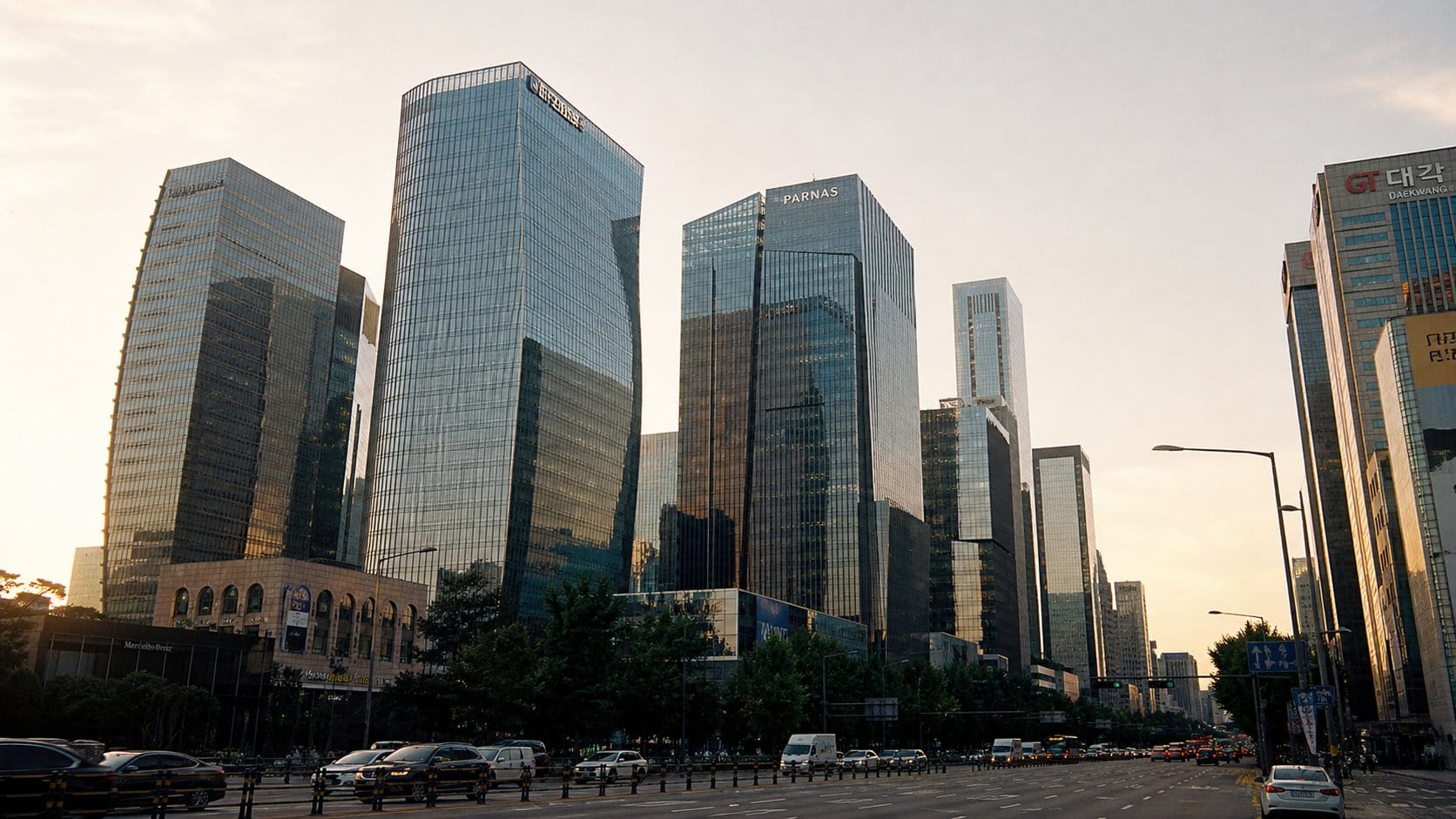
Seoul is the undisputed economic engine of South Korea. The city's gross domestic product reached $421.6 billion in 2024, and the broader Seoul metropolitan economy — encompassing Gyeonggi Province and Incheon — stood at $991.2 billion, ranking sixth in the world among metropolitan economies, according to data compiled by Wikipedia's Seoul entry. Fifteen Fortune Global 500 companies maintain headquarters here, including Samsung Electronics, Hyundai Motor Group, LG Corporation, SK Holdings, and POSCO — a roster spanning semiconductors, automobiles, consumer electronics, energy, and steel. This concentration of corporate power in a single metropolitan area reflects South Korea's historically centralised development model, in which talent, capital, government institutions, and private enterprise have converged on one city for the better part of seven decades. Foreign visitors alone inject more than 26.7 trillion Korean won into the Seoul economy annually, illustrating how deeply tourism is embedded in the city's financial fabric, according to World Population Review.
"Seoul's global economic standing reflects not only the scale of its corporate base but the density of its talent ecosystem — a city where design studios, technology start-ups, K-pop entertainment labels, and chaebol headquarters all operate within a few kilometres of each other, generating a creative-industrial density that is difficult to replicate anywhere else." — Visit Seoul, official city tourism overview.
Gangnam, the affluent district south of the Han River, exemplifies Seoul's economic range. Developed from agricultural land in the 1970s as a planned residential and commercial extension, Gangnam today anchors high-end fashion, technology start-ups, luxury hospitality, and the K-pop industry's most powerful institutional presence. HYBE — the label group behind BTS and multiple other global acts — maintains its headquarters here, as do SM Entertainment, YG Entertainment, and JYP Entertainment, all within or immediately adjacent to the district. The proximity of these labels to luxury retail corridors, international hotel clusters, and the COEX convention complex gives Gangnam a dual identity: corporate capital by day, fan-destination by evening.
| Company | Sector | Note |
|---|---|---|
| Samsung Electronics | Semiconductors & Consumer Electronics | South Korea's largest company by revenue |
| Hyundai Motor Group | Automotive | Includes Kia; global top-5 auto group |
| LG Corporation | Electronics & Appliances | Parent of LG Electronics, LG Chem |
| SK Holdings | Energy, Telecom & Semiconductors | Parent of SK Hynix, SK Telecom |
| POSCO | Steel Manufacturing | One of the world's largest steel producers |
| 10 additional Seoul-HQ firms | Finance, Retail, Logistics, Insurance | Includes KB Financial Group, Lotte, CJ, Hanwha |
The tourism economy and the entertainment economy increasingly function as a single system in Seoul. K-pop labels generate revenue through concerts, fan meetings, and merchandise events that are almost always staged in Seoul before any international touring begins. International fans travel to Seoul for those events and spend broadly across the city's hospitality, retail, and food sectors. The 2026 visitor infrastructure — expanded arena capacities, new fan-experience venues, and real-time event listing tools — reflects a city that has actively adapted its tourism offering to this concert-driven demand.
Key Neighborhoods: Where Visitors Actually Spend Their Time
Seoul's 25 gu contain dozens of distinct neighbourhood identities, but most first-time international visitors — and a substantial proportion of returning K-pop fans — concentrate their time in a handful of well-defined areas. Each has a different character, price point, and cultural profile. Understanding those distinctions makes it far easier to plan an itinerary around specific interests, whether that's retail, live music, traditional architecture, or proximity to label fan sites and agency buildings.
Myeongdong
Myeongdong, in Jung-gu, is Seoul's highest-footfall shopping corridor — a dense grid of streets lined with cosmetics chains, fast-fashion retailers, street-food stalls, and department stores. The street-food scene alone draws persistent queues: tteokbokki (spicy rice cakes), hotteok (sweet filled pancakes), and freshly skewered fruit are fixtures on every block. Myeongdong Cathedral, one of Korea's oldest Catholic churches, stands at the neighbourhood's northern edge and provides a moment of quiet amid the commercial energy. For K-pop fans, Myeongdong is a practical starting point for idol-branded cosmetics collaborations and limited-edition merchandise sold through the flagship beauty retail chains that line the main pedestrian street. English menus and multilingual staff are standard throughout.
📍 Myeong-dong, Jung District, Seoul
🔗 View on Google Maps
Seongsu-dong
Seongsu-dong, in Seongdong-gu on the north bank of the Han River, earned the nickname "the Brooklyn of Seoul" over the past decade as artists, designers, and independent café owners converted the district's old shoe factories and warehouses into studios, galleries, and concept stores. The area has become a favoured location for idol-adjacent pop-up events and brand collaborations: fashion labels, cosmetics companies, and entertainment agencies regularly occupy converted industrial spaces for fan-facing activations, particularly around album releases. The café culture is dense and competitive — many venues are designed for social-media photography — and weekend footfall reflects Seongsu-dong's rapid rise as a destination rather than just a neighbourhood. It is also within easy walking distance of Seoul Forest, the venue for the 2026 Seoul International Garden Show.
📍 Seongsu-dong 2(i)-ga, Seongdong-gu, Seoul
🔗 View on Google Maps
Bukchon Hanok Village
Bukchon Hanok Village, on the hillside between Gyeongbokgung and Changdeokgung palaces in Jongno-gu, is a preserved residential neighbourhood of traditional Korean houses (hanok) built primarily during the Joseon period and the early modern era. Unlike outdoor museum reconstructions, Bukchon is a functioning residential area — many hanok are privately occupied — and the Seoul Metropolitan Government has introduced visitor management protocols including quiet zones to protect residents. Walking the stone-paved alleys at dawn offers an uncluttered view of Seoul's pre-modern urban fabric. Hanbok rental shops on the perimeter allow visitors to dress in traditional attire; entry into Gyeongbokgung Palace is free when wearing hanbok.
📍 Gyedong-gil, Jongno District, Seoul
🕒 Daily 10:00 AM – 5:00 PM
⭐ 4.4 (23,945 reviews)
📞 02-2133-1371
🔗 View on Google Maps
Gangnam
Gangnam-gu, south of the Han River, is Seoul's wealthiest residential and commercial district — and the one that Psy's 2012 international hit made recognisable worldwide. The real Gangnam is a layered environment: high-end retail along Apgujeong Rodeo Street and Cheongdam-dong, the COEX convention centre and underground mall, luxury hotel clusters, and the dense concentration of K-pop entertainment industry offices that make it an essential destination for industry-aware fans. HYBE's headquarters, SM Entertainment's SM Town COEX artium (a multi-floor fan-experience retail and exhibition space), and the offices of YG and JYP are all within the gu or its immediate neighbours. During concert periods, the Gangnam area absorbs a significant share of Seoul's international fan visitors.
📍 Gangnam District, Seoul
🔗 View on Google Maps
Hongdae
Hongdae — shorthand for the area around Hongik University in Mapo-gu — is Seoul's university-adjacent live-music and indie-culture corridor. The neighbourhood's identity was built on small live venues, busking culture, and an independent music scene that predates K-pop's global moment; many artists who went on to sign with major labels performed here in the early stages of their careers. Today Hongdae balances those roots with mainstream fan culture: K-pop merchandise stores, webtoon theme cafés, and dance academies operate alongside original record shops and underground performance spaces. JYP Entertainment's headquarters is located in neighbouring Mapo-gu, adding to the district's industry presence. The pedestrian zones stay active into the early hours on weekends.
📍 347-20 Seogyo-dong, Mapo-gu, Seoul
⭐ 4.6 (9,193 reviews)
📞 02-336-7715
🔗 View on Google Maps
Top Landmarks and Cultural Sites
Seoul contains five UNESCO World Heritage Sites and a broad range of nationally protected landmarks that document more than two thousand years of Korean history, according to Wikipedia's Seoul entry. The UNESCO-listed properties include Changdeokgung Palace Complex, Jongmyo Shrine, the Joseon Royal Tombs (spread across Seoul and the surrounding region), and other heritage designations that collectively reflect the city's long role as a dynastic capital. Alongside this historical depth, Seoul now hosts dedicated K-pop and Hallyu culture institutions that serve the city's growing fan-tourism segment — making it a city where a Joseon-era royal palace and an immersive media-art hub built for idol fans are reachable on the same afternoon itinerary. The Visit Seoul official portal maintains updated visitor information for all major sites, including current entrance fees and seasonal access restrictions.
"Seoul is a city where a Joseon-era royal palace sits within walking distance of a K-pop immersive experience centre — that compression of historical depth and contemporary cultural energy is what makes it unlike any other destination in Asia." — Visit Seoul, official city tourism overview.
Gyeongbokgung Palace
Gyeongbokgung (경복궁), the principal palace of the Joseon dynasty, was constructed in 1395 at the northern end of Sejongno, with Bugaksan mountain framing it from behind. The complex covers roughly 410,000 square metres and includes the Geunjeongjeon throne hall, the Gyeonghoeru floating pavilion on its lotus pond, and the National Folk Museum of Korea within its grounds. The changing-of-the-guard ceremony at Gwanghwamun Gate runs multiple times daily and is free to observe. Spring cherry blossom season (late March to mid-April) and autumn foliage (October–November) are peak visiting periods with correspondingly long entrance queues. Wearing traditional hanbok grants free admission.
📍 161 Sajik-ro, Jongno District, Seoul
🕒 Monday 9:00 AM – 5:00 PM / Tuesday Closed / Wednesday–Sunday 9:00 AM – 5:00 PM
⭐ 4.6 (46,201 reviews)
📞 02-3700-3900
🔗 View on Google Maps
Changdeokgung Palace and Huwon (Secret Garden)
Changdeokgung (창덕궁), a UNESCO World Heritage Site, is prized above all for its Huwon — the rear garden known in English as the Secret Garden — a 78-acre landscaped woodland of pavilions, lotus ponds, and centuries-old trees that once served as the private retreat of Joseon royalty. Access to Huwon is managed through timed tickets and guided tours, with visitor numbers capped to protect the grounds. The palace served as the primary royal residence for much of the Joseon period after Gyeongbokgung was damaged during the Imjin War (1592–98) and is considered the best-preserved of Seoul's five grand palaces in terms of architectural authenticity.
📍 South Korea, Seoul, Jongno District, 율곡로 99번지
🕒 Monday Closed / Tuesday–Sunday 10:00 AM – 4:00 PM
⭐ 4.7 (1,972 reviews)
📞 02-3668-2300
🔗 View on Google Maps
Jogyesa Temple
Jogyesa Temple (조계사), established in 1910 in the Jongno district, is the head temple of the Jogye Order of Korean Buddhism and the most prominent Buddhist site in central Seoul. Unlike most major religious institutions, Jogyesa is accessible 24 hours a day, meaning visitors can experience it at dawn before the city wakes, during evening prayer chanting, or under the glow of the lotus lanterns installed for Buddha's Birthday celebrations (typically held in May). Directly adjacent to the temple is Balwoo Gongyang, a Michelin-starred restaurant specialising in Korean Buddhist temple cuisine — seasonal vegetables, fermented condiments, no meat, garlic, or onion — which offers a meditative dining experience linked directly to the monastic tradition of the adjoining temple, as noted by Visit Seoul.
📍 55 Ujeongguk-ro, Jongno District, Seoul
🕒 Daily 4:00 AM – 11:00 PM
⭐ 4.5 (7,950 reviews)
📞 02-768-8600
🔗 View on Google Maps
N Seoul Tower (Namsan Tower)
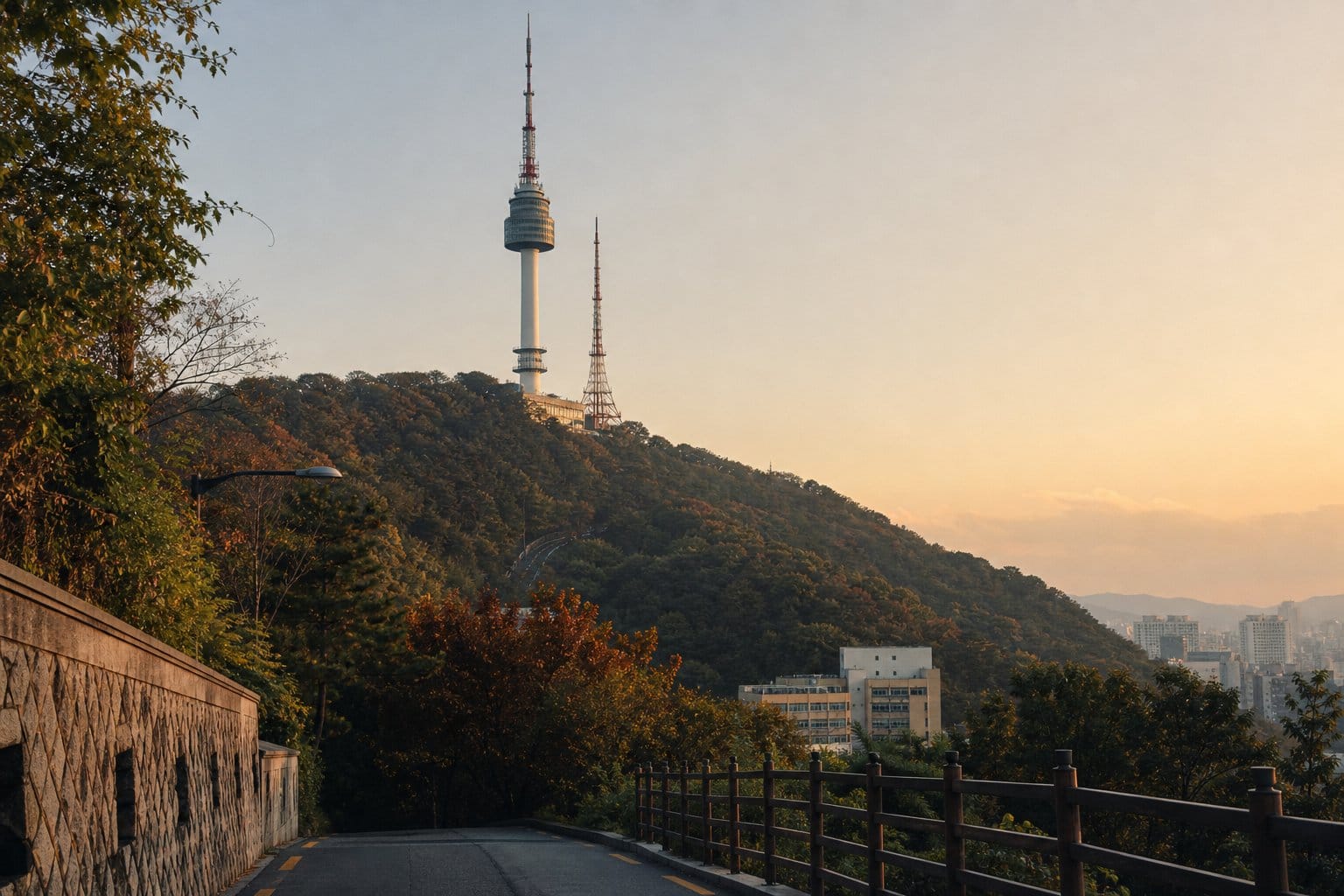
N Seoul Tower rises 236 metres above sea level — approximately 480 metres when measured from the city floor — and provides the most accessible panoramic view of central Seoul from Namsan mountain. The tower is reachable by cable car from Myeongdong or by a 20-minute walk up Namsan's hiking trails. From the observation deck, the city extends in all directions; on clear days, visibility reaches 60 kilometres, taking in Gyeonggi Province's mountain ranges beyond the urban boundary. Evening visits are particularly well-suited to the view, with the city lights activating across both banks of the Han River as dusk falls. The lock fence at the tower base has become a widely photographed social landmark in its own right.
📍 105 Namsangongwon-gil, Yongsan District, Seoul
🕒 Monday–Friday 10:30 AM – 10:30 PM / Saturday–Sunday 10:00 AM – 11:00 PM
⭐ 4.5 (66,822 reviews)
📞 02-3455-9277
🔗 View on Google Maps
HiKR GROUND
HiKR GROUND, which opened in July 2022 in Jongno-gu in central Seoul, is an immersive K-pop culture and media-art hub developed in partnership with the Korea Tourism Organization. Spread across several floors, the venue uses projection mapping, augmented reality, and interactive installations to bring K-pop's visual language into physical space: dance challenge rooms, holographic artist content, and rotating exhibitions tied to current idol group releases are all part of the programming. For fans travelling to Seoul with K-pop as a primary motivation, HiKR GROUND functions as a well-curated starting point that contextualises the Hallyu phenomenon across its music, fashion, and media dimensions. Entry is modestly priced, and the exhibition content updates in line with active album and tour cycles.
📍 40 Cheonggyecheon-ro, Jung District, Seoul
🕒 Monday Closed / Tuesday–Sunday 10:00 AM – 8:00 PM
⭐ 4.6 (998 reviews)
📞 02-729-9498
🔗 View on Google Maps
2026 Events Calendar: What's Running in Seoul This Year
Seoul's 2026 public events programme covers a wide range of formats — environmental art, traditional crafts, open-air libraries, and riverside drone spectacles — spread across the spring, summer, and autumn months. The current calendar, maintained by the Visit Seoul events portal, lists flagship programmes with confirmed venues and fixed dates alongside rolling updates that accumulate through the year. K-pop concerts and fan events are tracked separately on label and ticketing platforms, but the city's institutional calendar provides the infrastructure context — parkland venues, public squares, and riverside embankments — that many concert-adjacent fan activities make use of during a Seoul trip. The table below summarises the major confirmed events running through 2026.
| Event | Dates | Venue | Theme / Format |
|---|---|---|---|
| Seoul International Garden Show | 1 May – 27 Oct 2026 | Seoul Forest, Seongdong-gu | 'Seoul, Green Culture' — international garden design showcase |
| Namsangol Traditional Experience – Artist's Time | 3 Apr – 25 Oct 2026 | Namsangol Hanok Village, Jung-gu | Hands-on Korean traditional arts programming |
| Seoul Outdoor Library | 23 Apr – 1 Nov 2026 | City-wide parks and public spaces | Open-air reading spaces across Seoul's park network |
| Hangang Drone Light Show | 10 Apr – 5 Jun 2026 | Han River waterfront | Nightly illuminated drone formations above the river |
The Seoul International Garden Show at Seoul Forest is the centrepiece of the 2026 outdoor programme. Running from May 1 to October 27 under the theme 'Seoul, Green Culture,' the six-month showcase brings together international and Korean landscape designers to transform Seoul Forest's grounds — 1.16 million square metres of riverside parkland in Seongdong-gu — into a structured garden art exhibition. The venue's proximity to Seongsu-dong makes it a natural addition to any itinerary that includes the neighbourhood's café and pop-up culture.
The Namsangol Traditional Experience – Artist's Time programme runs at Namsangol Hanok Village in Jung-gu from April 3 through October 25. Namsangol is a reconstructed hanok complex at the foot of Namsan mountain that delivers cultural education through direct participation: the 2026 programme focuses on ceramic painting, hanji (Korean paper) craft, and traditional music performance. This event carries particular relevance for K-pop fans who follow the traditional Korean aesthetics — court music, folk dress, ceramics — that numerous idol acts reference in their visual concepts and album art directions.
Tourism Rebound: Visitor Numbers and the Hallyu Factor
South Korea's international tourism reached a historic peak in 2025, logging 18.5 million arrivals across the full year — surpassing the 2019 pre-pandemic record and marking the country's strongest inbound performance ever, according to Korea.net reporting on Korea Tourism Organization data. Seoul was the primary beneficiary: the city logged approximately 900,000 international visitors in January 2025 alone, reaching 102% of pre-COVID levels, as confirmed by the Seoul Metropolitan Government. Momentum has carried into 2026: South Korea recorded 1.265 million arrivals in January 2026 and 1.431 million in February 2026, per CEIC Data — a trajectory that suggests 2026 is on track to match or exceed 2025's record total. Among younger tourists, 32% cite Hallyu — the Korean Wave encompassing K-pop, K-dramas, and Korean cinema — as their primary motivation for visiting South Korea, according to GoWithGuide's 2025 Korea tourism statistics.
"The sustained record-breaking visitor numbers confirm that South Korea's Hallyu-driven tourism strategy is delivering measurable results — the Korean Wave is no longer a soft cultural export but a quantifiable economic driver, with visitor arrivals consistently running ahead of forecasts." — Korea.net, reporting on the Korea Tourism Organization's 2025 full-year data.
The Hallyu factor is most visible in the shifting demographic profile of arriving visitors. Japanese, Chinese, and Southeast Asian travellers have long dominated Korea's inbound statistics, but a measurable increase in visitors from Western Europe, North America, and Latin America — drawn primarily by K-pop and K-drama content they consume digitally before ever booking a flight — has been recorded since 2022. This diversification has direct implications for Seoul's tourism offer: the city now hosts dedicated fan-tourism routes, label-run museum experiences, and concert-calendar planning tools that barely existed five years ago.
For fans planning around a specific event, the practical consequence of Seoul's rebound is straightforward: popular concert venues sell out rapidly, hotels near major arenas price at a premium on event nights, and fan-meeting tickets often require applications months in advance. Booking accommodation early — particularly in Gangnam and Mapo-gu, the two gu closest to most major concert infrastructure — and monitoring the Visit Seoul events calendar for real-time additions are the two most reliable planning steps.
Practical Basics: Getting Oriented Before You Arrive
Seoul is served internationally by Incheon International Airport (ICN), located approximately 60 kilometres west of the city centre on Yeongjong Island in the Yellow Sea. Consistently rated among the world's leading airports for transit efficiency and passenger services, ICN connects to central Seoul in 43–70 minutes depending on transport mode: the AREX Airport Railroad Express runs non-stop to Seoul Station, while limousine buses and metered taxis cover all 25 gu. South Korea's currency is the Korean Won (KRW). ATMs accepting international cards are available throughout the airport, subway stations, and the convenience store chains (GS25, CU, 7-Eleven) that operate on virtually every city block. Currency exchange counters with competitive rates are found inside both terminals at ICN and at major subway interchanges including Seoul Station and Myeongdong.
Seoul's public transit network is among the world's most comprehensive urban systems. The Seoul Metro operates 23 lines serving all 25 gu and extending into Gyeonggi Province, carrying approximately 7 million daily passengers. The T-money card — available at any convenience store or metro ticket booth for a small deposit — functions as a stored-value card accepted on the metro, city buses, airport rail, and many taxis. For visitors making multiple daily journeys, the 2026 Tourist Climate Card offers unlimited subway and bus travel for ₩5,000 per day (approximately $3.60 USD), stackable up to 7 days at a maximum of ₩20,000 — a substantial saving over individual fare purchases for high-mobility itineraries.
Entry requirements are an important planning variable. Many nationalities enjoy visa-free access to South Korea for stays up to 90 days, but most visa-exempt passport holders must obtain a K-ETA (Korea Electronic Travel Authorization) before departure. K-ETA is applied for online through the official government portal, typically costs around 10,000 KRW, and is usually issued within 72 hours. Requirements can change; visitors should verify their specific passport eligibility through the HiKorea portal or their nearest Korean embassy at least four weeks before travel. The Visit Seoul official portal links through to the relevant government entry-requirements checker and maintains real-time event listings, district maps, and transit guides in English, Japanese, Chinese (Simplified and Traditional), and Korean.
Frequently Asked Questions
What is Seoul's current population in 2026?
Seoul's city population stands at approximately 9.6 million as of 2024 — the most recently confirmed figure — down from a peak above 10 million in the mid-2000s. The decline reflects suburbanisation into the surrounding Gyeonggi Province rather than regional depopulation. The greater Seoul Capital Area, which encompasses Gyeonggi Province and the port city of Incheon, holds approximately 26 million people, placing it among the world's largest urban agglomerations by total metropolitan population. A 2026-specific updated census figure had not been published at the time of this article's last review.
Is Seoul safe for solo travelers visiting in 2026?
Seoul is consistently ranked among Asia's safest major cities, characterised by low rates of violent crime and a well-lit, extensively monitored public environment. The Seoul Metro runs until after midnight and provides a safe, accessible transit option for solo travellers returning from evening events or late-night neighbourhood exploration. English-language signage is comprehensive across Myeongdong, Gangnam, Hongdae, Insadong, and all major tourist districts. Standard urban precautions apply in crowded spaces — keep an eye on belongings in busy street-food markets, avoid leaving bags unattended in cafés — but Seoul does not present elevated safety risks for international solo visitors relative to other major world capitals. Emergency services can be reached via 112 (police) or 119 (fire and ambulance); English-language assistance is available on both lines.
What major events are happening in Seoul in 2026?
Several large-scale events are confirmed across 2026. The Seoul International Garden Show runs at Seoul Forest from May 1 through October 27 under the theme 'Seoul, Green Culture,' bringing international garden design to a 1.16-million-square-metre riverside park. The Seoul Outdoor Library places open-air reading spaces across city parks from April 23 to November 1. The Namsangol Traditional Experience – Artist's Time programme offers hands-on Korean traditional arts at Namsangol Hanok Village from April 3 to October 25. The Hangang Drone Light Show provides nightly riverside entertainment through June 5. For K-pop concerts, fan meetings, and cultural event additions announced throughout the year, the Visit Seoul events portal maintains a real-time listing updated as bookings are confirmed.
Which Seoul neighborhoods are closest to K-pop agency buildings and fan sites?
Gangnam-gu is the primary hub. HYBE headquarters, SM Entertainment's SM Town COEX artium (a multi-floor fan-retail and exhibition space inside the COEX mall), and the broader Cheongdam-dong and Apgujeong fan district are all within the gu. JYP Entertainment and a number of YG facilities are in adjacent Mapo-gu, making the Hongdae area a secondary industry zone. Seongsu-dong (Seongdong-gu) has become a growing focus of K-pop fan culture through idol-adjacent pop-up events, limited-edition café collaborations, and brand activations in its converted industrial spaces. For a curated introductory experience, HiKR GROUND in Jongno-gu offers an immersive K-pop cultural hub accessible by metro on Line 1 or Line 5.
Do I need a visa or special permit to visit South Korea in 2026?
Many nationalities — including citizens of the United States, United Kingdom, EU member states, Australia, Canada, and Japan — are currently exempt from a South Korean entry visa for short stays of up to 90 days. However, most visa-exempt nationalities must obtain a K-ETA (Korea Electronic Travel Authorization) before boarding their international flight to Korea. K-ETA is applied for through the official government portal, costs approximately 10,000 KRW (roughly $7 USD), and is typically approved within 72 hours of application. Entry rules vary by passport and can change with limited notice. The authoritative sources for your specific situation are the Korean embassy or consulate for your country of residence, or the HiKorea government portal. Verify eligibility and apply for K-ETA at least four weeks before your intended departure date.
Connected Resources for Deeper Reading
Planning a Seoul trip involves more detail than any single overview can cover. The two guides below go deeper on the questions that matter most to first-time and returning visitors — read them before you finalise your itinerary.
- Seoul Fan Travel Guide 2026: K-pop Districts, Visa Requirements & Practical Entry Essentials — If navigating K-pop districts and understanding current visa requirements are your top priorities, this guide covers both in detail: which neighbourhoods to base yourself in, how to move between label offices and fan sites, and a step-by-step walkthrough of the K-ETA and visa process for the most common passport types.
- Gangnam Deep-Dive 2026: K-pop Culture, Label Offices & the District Behind the Hype — A focused Gangnam deep-dive covering everything from the HYBE and SM Entertainment buildings to Cheongdam-dong's fan-facing retail strips, the COEX underground complex, and the neighbourhood's evolving role as both a K-pop industry hub and one of Seoul's most distinctive urban environments.
Seoul in 2026: A City Worth Planning Around
Seoul in 2026 is operating at full momentum on every indicator that matters to culturally motivated international travel. Visitor arrivals are tracking above 2025's all-time record pace, the events calendar runs from spring through late autumn without a significant gap, and the K-pop industry generates a continuous flow of concerts, fan meetings, and branded activations that give fans from every continent a specific reason — and a specific date — to book travel. That combination of historical depth, urban infrastructure, and globally dominant contemporary culture is what distinguishes Seoul from comparable destinations.
For practical planning, the sequencing is straightforward: anchor the itinerary to a confirmed concert or event date, select accommodation in the gu closest to the primary venue (Gangnam for large arenas and label offices, Mapo for Hongdae-area venues, Jung-gu for central cultural sites), confirm K-ETA status early, and use the Seoul Metro's T-money card to move between neighbourhoods without friction. The 605 km² city footprint is large on paper but compact in transit terms — Bukchon Hanok Village, Myeongdong, HiKR GROUND, and Gangnam are all within 20 minutes of each other by subway.
The city's 2026 cultural programming — from the garden showcase at Seoul Forest to the traditional arts workshops at Namsangol — runs in parallel with, not in competition to, the concert economy. A well-planned week can hold a large arena show, a morning walk through Bukchon's stone alleys, an evening at HiKR GROUND's interactive exhibitions, and a riverside sunset watching the Hangang Drone Light Show, all without doubling back or overscheduling. That breadth of experience, available within one connected urban system, is the most compelling reason Seoul's visitor numbers keep rising.
Last updated: 2026-05-14. This article draws on official Visit Seoul event listings, Korea Tourism Organization arrival data published by Korea.net and CEIC Data, Seoul Metropolitan Government tourism reports, and reference data from Encyclopædia Britannica and Wikipedia current as of May 2026. Event dates and entry requirements should be verified with official sources before travel.
Related Articles
- 7-Day South Korea Itinerary 2026: Seoul to Busan for Visiting Fans
- Seoul's Historical Soul: Palaces, Hanok, and Creative Districts
- Seoul Street Food Markets & Neighborhood Eats: 2026 Guide
- Korea-UAE K-Pop: Every Major Festival and Concert 2025-2026
- Korean Dramas Starring K-Pop Idol Actors: The 2018 Class
This article was written using information collected and analyzed by NAMANE's in-house K-pop research AI engine. We use AI technology to bring you faster, broader coverage, and in the process some details may occasionally differ from the latest facts. For important information such as dates, venues, and prices, please double-check with official sources.


