
How Many Days for a 5-Day Seoul Fan Trip
Five days is the working sweet spot for a first Seoul trip that combines tourist staples with K-pop fan interests. It gives enough time to clear the major palaces, walk a hanok village, eat through one traditional market, see N Seoul Tower at dusk, find at least one company-store or themed café in Gangnam, and end with a Hongdae night out — without the schedule turning into a forced march. Four days drops one of the south-of-the-river days; six days adds either a DMZ tour or a Yeonnam-dong / Mangwon café afternoon. The itinerary below is built around a Myeongdong base hotel for nights 1–3 (close to the airport rail terminus and a short metro ride to the palaces) and an optional Gangnam or Hongdae base for nights 4–5 (closer to the K-pop districts and the Hongdae nightlife).
Day 1: Arrival via Incheon Airport and Settling into Myeongdong
Most international visitors land at Incheon International Airport (ICN), about 50 km west of central Seoul. The fastest public option into the city is the AREX Express Train, which runs non-stop between ICN Terminal 1 and Seoul Station in roughly 43 minutes for ₩11,000 (~$8). The cheaper All-Stop Train covers the same route in 60–70 minutes for ₩4,750. From Seoul Station, Line 4 of the metro reaches Myeongdong Station in two stops, and most Myeongdong hotels are within a 10-minute walk of either Myeongdong Station (Line 4) or Euljiro 1-ga Station (Line 2). Travelers arriving late at night should buy a T-money transit card at the airport convenience store and top it up with ₩20,000 to cover the first two days of metro and bus rides.
Myeongdong is one of the densest hotel clusters in Seoul, anchored by mid-range chains like Lotte City Hotel, Solaria Nishitetsu, and Tmark Grand Hotel — typically ₩120,000–220,000 per night depending on season. The neighborhood functions as a beginner-friendly base because it is central to the airport rail, the palace-area metro lines, and a long pedestrian shopping street that fills with street food carts every evening from around 17:00. First-night dinner is best handled on the street: tornado potatoes, hotteok, egg bread (gyeran-ppang), tteokbokki, and the famous lobster cheese skewers all sell for ₩4,000–9,000 each. Stay light on the first night — jet lag will catch up by 21:00.
For travelers who want a faster onboarding, the Seoul Tourist Card (₩50,000 / 3-day) bundles unlimited metro and bus rides with discounted entry to N Seoul Tower, the palaces, and the DMZ tour. It is available at the airport tourist information desk and at most Myeongdong convenience stores (source: Visit Seoul).
Day 2: Gyeongbokgung Palace, Bukchon Hanok Village, and Insadong
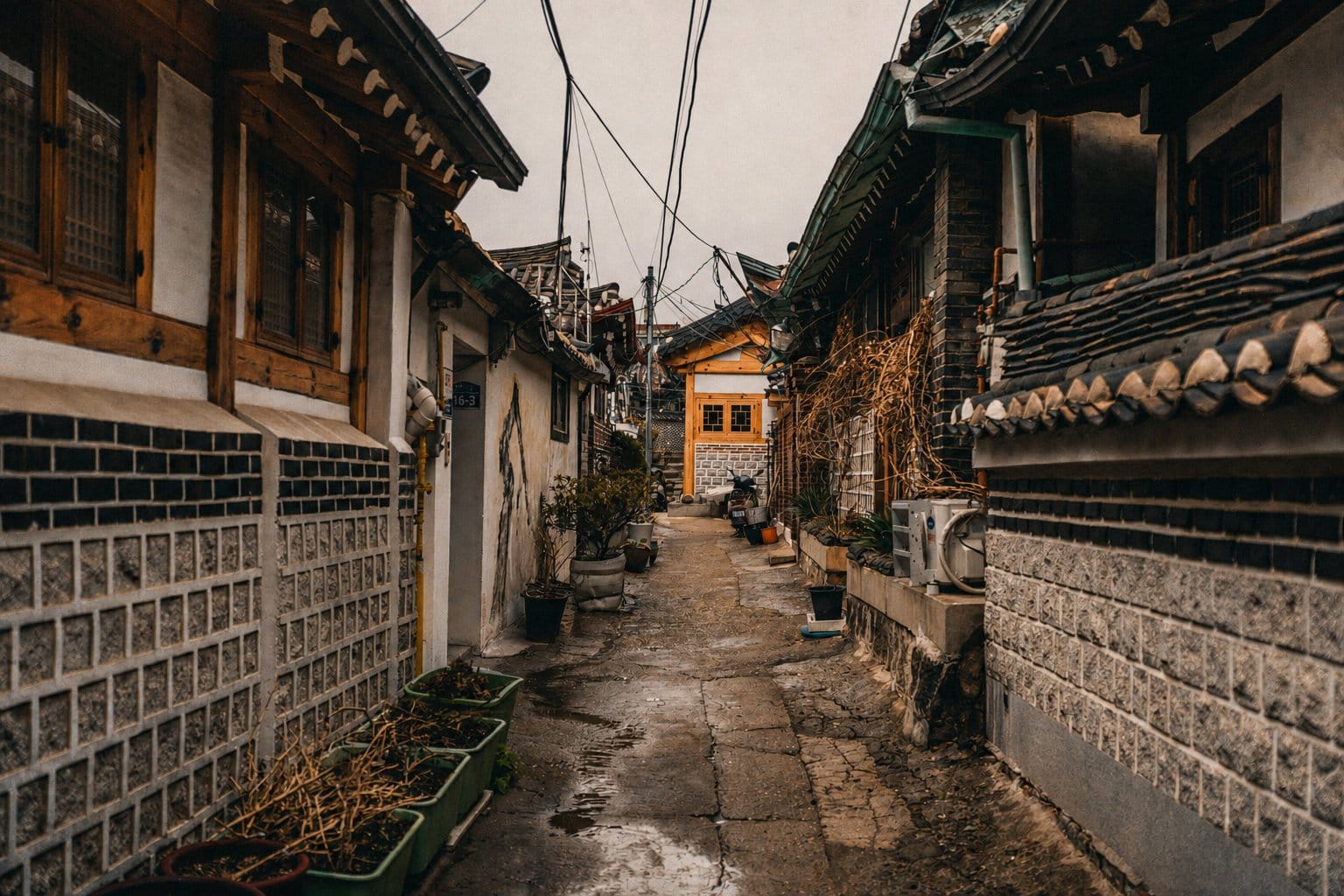
Day two covers the historic core of Seoul — the Joseon-era palaces and the surrounding hanok neighborhoods — all walkable from Anguk Station on Line 3. Start at Gyeongbokgung Palace, the largest of the five royal palaces. Admission is ₩3,000, free if you arrive wearing rented hanbok (₩15,000–25,000 for 4 hours from a Bukchon rental shop, the standard tourist add-on). The changing of the royal guard ceremony takes place daily at 10:00 and 14:00 at Gwanghwamun Gate; the morning slot is less crowded and better lit for photos. Allow 90–120 minutes to walk the full palace grounds, including the National Folk Museum on the east side (free, English signage throughout).
📍 서울특별시 종로구 계동길
🕒 매일 오전 10:00 ~ 오후 5:00
⭐ 4.4 (23,946 리뷰)
📞 02-2133-1371
🔗 Google Maps에서 보기
From the eastern gate of Gyeongbokgung, walk 10 minutes uphill into Bukchon Hanok Village, a residential neighborhood of around 900 preserved Joseon-era tile-roofed houses. The viewing spots concentrated on Bukchon-ro 11-gil are marked on Naver Map and Kakao Map as "Bukchon Eight Views" — the most photographed angle is the Samcheong-dong direction looking south toward the modern downtown skyline. Bukchon is still a lived-in neighborhood, so signs ask visitors to keep voices down before 17:00. A handful of houses are open as small museums and traditional craft workshops, including the Bukchon Traditional Culture Center (free) and several knot-tying and tea-ceremony studios charging ₩10,000–20,000 for short hands-on sessions.
Walking south from Bukchon, Insadong-gil leads into the Insadong art district — eight blocks of galleries, antique shops, traditional tea houses, and the Ssamzigil shopping complex. The street is pedestrian-only on weekends, when traditional performance troupes set up impromptu shows along the central walkway. Lunch is most easily handled at a hanjeongsik (traditional set-menu) restaurant; expect ₩15,000–25,000 per person for a 5–7 banchan spread plus a stew. Sanchon (산촌) is the long-running temple-cuisine option at ₩35,000 for the lunch course, while Tobang (토방) and Min's Club (민가다헌) work as mid-range alternatives.
The afternoon block belongs to either Changdeokgung Palace (the second royal palace, with the UNESCO-listed Secret Garden — ₩8,000 including the timed garden tour, reserved in advance on the official Cultural Heritage Administration site) or Gwangjang Market, depending on appetite. Gwangjang is Seoul's oldest covered market, opened in 1905, and the bindae-tteok (mung-bean pancakes), mayak-gimbap (mini seaweed rolls), and yukhoe (Korean steak tartare) stalls along the north aisle are the standard order. Bring cash — a few of the older stalls still do not accept cards, though most now have Toss or Kakao Pay QR codes.
Evening brings the route back to Myeongdong for K-pop fans who want a first look at the street-level merchandise scene. The Myeongdong shopping main street and adjacent Euljiro 2-ga blocks host several K-pop merch and album shops — most carry SM, JYP, HYBE, YG, and Starship releases plus current photocard inventory. The Line Friends flagship near Myeongdong Cathedral and the Aladdin secondhand bookstore on the south end double as photo spots. The street food cart cluster on Myeongdong-gil — fish-shaped bungeoppang, candied strawberries (tang-hu-lu), tornado potatoes, hotteok — runs 30–50% more expensive than equivalent stalls in Hongdae or Sinchon. K-pop merchandise stores and music-themed dessert shops cluster throughout the district and into adjacent Euljiro. SM Artium, the official SM Entertainment merchandise store located near COEX in Gangnam, carries current and archive items for SM artists; it fits naturally into the following day's Gangnam visit (source: Tunex Travels).
Day 3–4: Namsan Tower, Han River, Gangnam, and Seongsu-dong
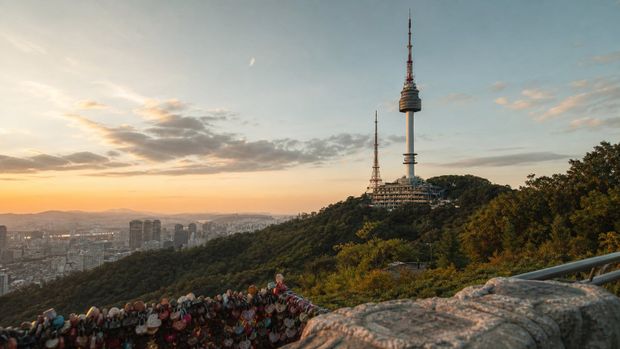
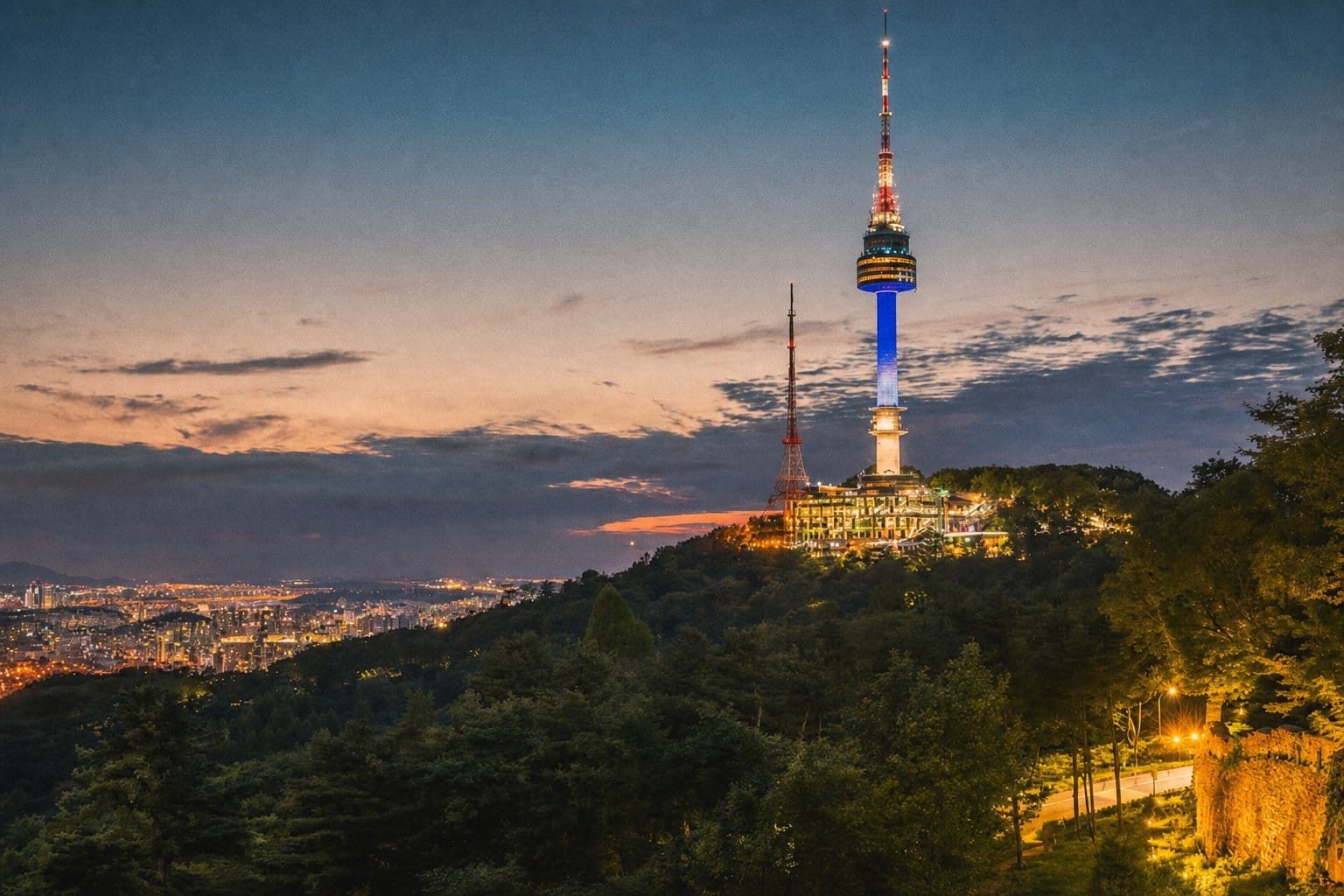
Days three and four move from Seoul's most recognizable skyline landmark down to the Han River parks, then south of the river into Gangnam and the creatively energetic Seongsu district. N Seoul Tower — officially Namsan Seoul Tower — sits at 479 meters above sea level on Namsan Mountain and has served as one of the city's defining viewpoints since 1980. The Namsan Cable Car runs from the base station on the Myeongdong side up to the tower terrace. The outdoor viewing platform on the mountain is free to access. The full observation deck inside the tower costs ₩16,000 (~$12) and provides 360-degree views across the Han River basin and the mountain ranges that ring the city. The "locks of love" installation on the surrounding fence — tens of thousands of engraved padlocks — is a recognizable element from Korean dramas that draws deliberate visitor interest among international fans (source: Tunex Travels).
📍 서울특별시 용산구 남산공원길 105
🕒 월요일–금요일 오전 10:30 ~ 오후 10:30 / 토요일–일요일 오전 10:00 ~ 오후 11:00
⭐ 4.5 (66,752 리뷰)
📞 02-3455-9277
🔗 Google Maps에서 보기
Yeouido Han River Park, on the north bank of the Han River, is the most active of Seoul's twelve riverside parks. The practice of ordering chicken and beer (chimaek) via delivery app — sitting on a rented mat at dusk with the water in view — is a genuine local social ritual rather than a staged tourist activity. Delivery apps Baemin and Coupang Eats work for visitors with a Korean SIM card; riverside convenience stores also stock beer and snacks directly on-site. Bike rental runs ₩3,000–5,000 per hour along the riverside path. The park has no fixed closing time and stays active well into the evening.
"Seongsu-dong is the city's most compelling neighborhood story in 2026 — a former industrial zone where converted factory spaces now host independent galleries, specialty roasters, and rotating pop-up boutiques that feel genuinely unplanned," — Real Korea Insider, 2026 Seoul Itinerary Guide.
Bongeunsa Temple, founded in 794 AD and located directly adjacent to the COEX mall complex in Gangnam, provides one of Seoul's most effective cultural contrasts for a first-time visitor. Entry is free and the grounds are open during daylight hours. The main courtyard, the large standing stone Buddha, and the wooden ceremonial halls sit within clear sightlines of surrounding Gangnam skyscrapers — an arrangement that feels specific to Seoul rather than generically "old meets new." Weekday mornings are quietest; weekend afternoons bring more foot traffic (source: Talia's Bucket List).
COEX Mall, directly beside Bongeunsa, stays open until midnight and contains the Starfield Library — a multi-story architectural installation with floor-to-ceiling bookshelves and open communal seating, free to enter. SM Artium, the official SM Entertainment merchandise store within the COEX complex, carries current and legacy items for artists including aespa, EXO, NCT, and SHINee.
Seongsu-dong, consistently described as "The Brooklyn of Seoul" in 2026 travel coverage, is a former industrial district east of the Han River across the Seongsu Bridge. The streets around Seongsu Station (Line 2) are the densest cluster for specialty coffee roasters, design studios, and independent galleries operating out of converted factory buildings. Unlike Hongdae, which has grown considerably more commercially standardized over the past decade, Seongsu maintains a lower-key creative energy with a higher proportion of rotating pop-up spaces. Two to three hours on foot in the afternoon is enough to cover the main blocks (source: Real Korea Insider).
Day 5: Mangwon Market, Hongdae, K-Pop Fan Sites, and Airport Departure
The fifth day runs a west-to-east arc that concludes at the airport express train. Mangwon Market, in the Mapo-gu neighborhood near the Han River's north bank, operates primarily as a local residential market rather than a visitor destination. Full breakfast or lunch meals — kimbap sets, sundubu jjigae (soft tofu soup), doenjang jjigae, and grilled fish — run ₩8,000–12,000 (~$6–9), noticeably lower than comparable dishes at Gwangjang. The fresh produce and banchan (side dish) sections are most active in the early morning hours. Mangwon is a 10-minute walk from Mangwon Station (Line 6) and is rarely crowded before 9am, making it a low-pressure final morning stop before the day's energy builds. According to Tunex Travels, Mangwon functions as one of the more practical market alternatives for visitors who want the atmosphere without the tourist volume of the larger covered markets.
📍 서울특별시 마포구 포은로6길 27
🕒 매일 오전 9:00 ~ 오후 9:00
⭐ 4.3 (8,736 리뷰)
📞 02-335-3591
🔗 Google Maps에서 보기
Hongdae — short for Hongik University area — is Seoul's primary zone for street performance, independent music, and youth-oriented shopping. The streets are busiest after noon and stay active well past midnight. The pedestrian strip along Wausan-ro and the adjacent Yeonnam-dong cafe strip — a former railroad right-of-way converted into a narrow linear park — form a walkable afternoon circuit of independent record shops, vintage clothing, design stores, and art market stalls. Street buskers perform without a fixed schedule throughout the afternoon; variety and audience engagement are generally stronger here than in comparable performance zones elsewhere in the city.
HYBE Insight, near Hangang Park in Yongsan, is the HYBE corporation's interactive museum and exhibition space dedicated to its artist roster. Advance tickets are required (₩22,000, ~$16) and no same-day walk-in tickets are available. The permanent exhibition covers BTS career archives, interactive music production stations, a concert memorabilia collection, and rotating displays tied to current HYBE artists. Booking is only available through the official HYBE Insight website. Weekend slots sell out significantly faster during active comeback periods or around BTS anniversary dates — book as far ahead as possible if your trip coincides with either (source: Real Korea Insider).
The AREX express train from Seoul Station to Incheon International Airport takes 43 minutes and costs ₩9,500–11,000. Allow at least three hours before international departure — Incheon's immigration and security queues lengthen considerably during peak travel periods. T-Money works on AREX. From Hongdae, Line 2 to Hongik University Station takes about two minutes, with a direct AREX connection from the same station complex.
Getting Around Seoul: T-Money Card, Subway Lines, and Airport Trains
Seoul's subway network covers virtually every major tourist destination across the city — nine interconnected lines with consistent frequency and a 5:30am-to-midnight daily operating schedule. The T-Money card is the standard fare payment method: purchase one at any CU, GS25, or 7-Eleven convenience store for a ₩2,500 card fee, then top up at subway kiosks or convenience stores throughout the city. Each subway ride costs ₩1,400–1,800 depending on distance, with transfers between lines built into the flat distance-based fare. The Climate Card provides unlimited transit access for a flat daily fee and is cost-effective on high-movement sightseeing days when you cross multiple districts. For navigation, Naver Map is the practical standard for Seoul transit — it handles real-time subway schedules, platform numbers, and English-language transfer instructions reliably. According to Real Korea Insider, Google Maps works for walking routes but has limited real-time Seoul subway data and is less reliable for transfer timing.
| Route / Method | Duration | Cost | Notes |
|---|---|---|---|
| AREX Express (Incheon Airport → Seoul Station) | 43 minutes | ₩9,500–11,000 | Non-stop; T-Money accepted |
| AREX All-Stop (Incheon Airport → Seoul Station) | 66 minutes | ~₩3,000 less than express | Stops include Gimpo Airport and Digital Media City |
| Seoul Metro (within city) | Varies by route | ₩1,400–1,800/ride | 5:30am–midnight; T-Money required |
| Climate Card (unlimited daily) | All day | Flat daily fee | Best value on high-movement sightseeing days |
| Standard Taxi | Traffic-dependent | From ₩4,800 base | 20% surcharge after 10pm; avoid 7:30–9am and 5:30–7:30pm |
Taxis are metered and generally reliable. The base fare of ₩4,800 (~$3.50) covers the initial distance, with a 20% surcharge applied automatically after 10pm. Weekday rush hours — 7:30–9am and 5:30–7:30pm — add substantial journey time across the city. The Kakao T app is the standard taxi-hailing platform in Seoul and supports English-language booking for most routes.
Pre-Trip Checklist: Entry Requirements, Budget, and What to Book Ahead
Entry into South Korea requires two separate online processes completed before departure. The e-Arrival Card is mandatory for all visitors regardless of nationality — it captures flight details, accommodation address, and a health declaration, and must be submitted online before boarding. No paper version is available at the airport; arriving without a completed e-Arrival Card creates immigration delays. The K-ETA (Korea Electronic Travel Authorization) is a separate requirement that applies to many nationalities but not all — eligibility is passport-specific. Check the Korea Immigration Service website for the current list before purchasing flights, as eligibility is updated periodically. If your nationality requires a K-ETA, apply through the official government portal directly; third-party facilitation services are not necessary. For K-pop fans building the trip around a specific concert or event date, completing both documents early removes a straightforward but time-sensitive step from the final pre-departure checklist (source: Real Korea Insider).
Daily budget estimates vary significantly by accommodation type. Budget travelers staying in hostels (₩20,000–35,000/night) and eating primarily at markets and convenience stores can manage on ₩80,000–130,000 (~$60–95) per day including transit. Mid-range travelers in standard hotels or guesthouses, eating at sit-down restaurants and visiting paid attractions, typically spend ₩160,000–240,000 (~$120–175) per day including accommodation. These figures reflect 2026 Seoul pricing compiled by Tunex Travels.
Book these before arriving: DMZ tours ($40–80), HYBE Insight tickets (₩22,000 — no walk-in available), K-pop music show recording tickets (free but lottery-based — apply weeks in advance through official broadcast fan portals for KBS Music Bank, MBC Show! Music Core, and SBS Inkigayo), and cooking classes ($35–60). For language navigation: Google Translate's camera mode handles Korean menu text reliably. Papago, Naver's translation app, handles conversational Korean more naturally and is the preference among longer-stay visitors.
Frequently Asked Questions
How many days should I spend in Seoul on a first visit?
Five days covers Gyeongbokgung Palace, key traditional markets including Gwangjang and Mangwon, major neighborhoods such as Gangnam and Hongdae, and the Han River parks without feeling rushed. Seven days adds day-trip options — the DMZ ($40–80) and Nami Island ($40–65) are the two most visited. If you're traveling primarily for a concert or fan event, let the event dates anchor the overall trip length and build sightseeing around them.
What is the best season to visit Seoul?
Spring (late March through May) and autumn (September through November) are the most popular seasons — cherry blossoms in April and fall foliage in October, with mild temperatures across both windows. Both are peak-price periods: hotels cost more and fill earlier. Winter (December–February) and summer (July–August) are 15–25% cheaper, but Seoul winters can fall to -10°C and summers bring high humidity and a July rainy season. Summer also hosts outdoor music festivals that may align well with K-pop fan trip planning.
Do I need a visa or entry documents to visit South Korea?
All visitors must complete the mandatory e-Arrival Card online before boarding — no exceptions. Whether you also need a K-ETA (Korea Electronic Travel Authorization) depends on your passport nationality. Many nationalities require it; some are exempt. The Korea Immigration Service website maintains the current eligibility list. Confirm your specific requirements before purchasing flights. Both documents are completed online — no paper alternatives exist at the airport.
Can I visit K-pop entertainment company buildings in Seoul?
HYBE Insight near Hangang Park in Yongsan is a ticketed interactive museum (₩22,000) that requires advance booking — no walk-in access is available. It covers BTS career archives, interactive music production stations, and rotating HYBE artist exhibitions. SM Artium at the COEX complex in Gangnam sells official SM Entertainment merchandise and is open to the public without tickets. YG Entertainment and JYP Entertainment headquarters are not open for public visits. Some agencies maintain merchandise retail on the ground floor of their buildings; check each agency's official channels for current policies.
What is the most affordable way to travel from Incheon Airport to central Seoul?
The all-stop AREX service is the cheapest airport train option — 66 minutes to Seoul Station, roughly ₩3,000 less than the express fare. The AREX express runs 43 minutes and costs ₩9,500–11,000. Both services accept the T-Money card. For groups of three or more, a standard metered taxi from the airport can be competitive per person for central Seoul destinations, though highway traffic conditions affect journey time significantly on that route.
Planning Your Seoul Visit
Seoul is a straightforward city to navigate for a first-time visitor with a daily structure in place. The subway network covers every destination in this itinerary without requiring taxis for standard transit. The cost floor is genuinely low — a full day of palace grounds, market meals, and Han River time can come in under ₩50,000 (~$37) on admission and food, excluding accommodation. The ceiling scales with hotel grade and paid attractions like HYBE Insight or DMZ excursions.
For K-pop fans specifically, the most common planning error is leaving event-specific logistics to the final week before departure. Music show recording tickets — KBS Music Bank, MBC Show! Music Core, SBS Inkigayo — are lottery-based and typically require applications submitted weeks in advance through official broadcast fan portals. HYBE Insight weekend slots sell out a month ahead during comeback periods. Treating the concert or event date as the fixed anchor, booking flights and accommodation around it, then layering sightseeing days before and after, is the practical approach for any event-driven Seoul trip.
Ikseon-dong, one of Seoul's oldest surviving hanok neighborhoods and now home to modern cafes and wine bars within its preserved lane structure, sits a short walk from Insadong and works as an add-on to the Day 1 itinerary for visitors who want more time in the historic north. The 2026 Seoul International Garden Show at Nodeul Island (May 1–October 27) is a free seasonal outdoor attraction accessible by subway for spring and summer visitors (source: Visit Seoul).
📍 서울특별시 종로구 청계천로 85
🕒 매일 오전 9:00 ~ 오후 6:00
⭐ 4.1 (37 리뷰)
📞 1644-1060
🔗 Google Maps에서 보기
Last updated: 2026-05-09. This article reflects travel information current as of May 2026, including admission pricing, transit fares, and entry documentation requirements. Entry requirements can change — verify current conditions with the Korea Immigration Service website before booking travel.
This article was written using information collected and analyzed by NAMANE's in-house K-pop research AI engine. We use AI technology to bring you faster, broader coverage, and in the process some details may occasionally differ from the latest facts. For important information such as dates, venues, and prices, please double-check with official sources.


