
How Many Days Do You Need in Seoul
Seoul is the kind of city where four days feels rushed and ten still leaves you wanting more. For first-time visitors, a stay of 4 to 6 days is the widely recommended window — enough to move between the historic north and the modern south without feeling like you're working through a checklist. A 5-day stay, the framework this article follows, covers the major palaces, food markets, contemporary neighborhoods, and a riverside evening. Extending to 7 days opens the door to a DMZ day trip and slower afternoons in neighborhoods like Yeonnam-dong. Geographically, Seoul divides intuitively: the historic districts — Gyeongbokgung, Bukchon, Insadong, and Gwangjang Market — cluster north of the Han River, while Gangnam, Seongsu-dong, and the modern commercial core sit to the south. According to Visit Seoul, the city's 25 administrative districts each carry a distinct character, which makes grouping neighborhoods by geography one of the more efficient ways to structure a first visit.
Quick Answer: Most first-time visitors need 4 to 6 days in Seoul to cover the city's main draws without rushing. A 5-day stay fits palaces, food markets, contemporary neighborhoods, and river time. Budget travelers can manage the full trip for around $250; a comfortable mid-range experience runs $600–$935 over five days.
The north–south divide is a useful mental shortcut. North of the Han River (Gangbuk), Gyeongbokgung Palace, Bukchon Hanok Village, Insadong's gallery district, and Gwangjang Market sit within easy walking or short metro distance of each other. South of the river (Gangnam), the city shifts to glass towers, luxury shopping, and the quietly striking Bongeunsa Temple set between skyscrapers. Seongsu-dong, technically on the north bank but closer in spirit to the modern south, bridges both worlds as a former industrial zone now recognized as one of Seoul's leading creative neighborhoods.
If you can manage 6 days, use the extra time for Yeonnam-dong's café alleys or a day trip to Nami Island. If 3 days is all you have, concentrate on Gyeongbokgung, Gwangjang Market, and Seongsu-dong — three stops that efficiently capture the ancient, the traditional, and the contemporary within a short trip. The 5-day framework in this article is designed so each day's stops cluster geographically, reducing metro transit time and leaving room for the unplanned detours that tend to become the most memorable parts of any Seoul visit (source: Real Korea Insider, 2026).
Historic Seoul: Palaces, Hanok Villages & Old Markets
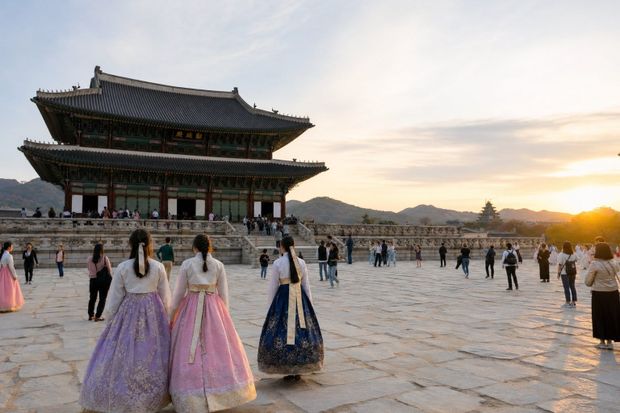
Seoul's historic core — bounded roughly by Gyeongbokgung to the north and Gwangjang Market to the southeast — contains more than 600 years of Korean urban history in a stretch that takes under an hour to walk end to end. Gyeongbokgung Palace (경복궁), founded in 1395 as the Joseon Dynasty's primary royal residence, covers nearly 60 acres in central Seoul and remains the city's most visited heritage site. Admission is ₩3,000 (~$2.20), though visitors who rent hanbok from nearby shops receive free entry — a practical arrangement that also produces some of the most photographed moments in the city. The changing of the guard at the main Gwanghwamun gate occurs twice daily at 10am and 2pm and is free to watch. According to Bon Traveler, the palace grounds are expansive enough that first-time visitors consistently underestimate their time there — plan at minimum two hours.
📍 서울특별시 종로구 계동길
🕒 매일 오전 10:00 ~ 오후 5:00
⭐ 4.4 (23,924 리뷰)
📞 02-2133-1371
🔗 Google Maps에서 보기
A short distance east, Changdeokgung Palace (창덕궁), constructed in 1405, offers a more intimate alternative. Its principal draw is Huwon — the UNESCO-listed Secret Garden — a 78-acre landscape garden of pavilions, lotus ponds, and woodland trails shaped by natural topography rather than geometric formality. Huwon is accessible only by guided tour, with sessions running throughout the day; English-language tours are available and advance booking via the official ticketing site is strongly advisable during spring and autumn. The combination of Changdeokgung and its garden warrants a half-day on its own.
📍 View Changdeokgung Palace on Google Maps
Bukchon Hanok Village (북촌한옥마을), set on a hillside between the two palaces, preserves hundreds of traditional hanok homes along a network of narrow alleyways. Weekday mornings are the least crowded window; the area's official visitor-friendly hours run 10am to 5pm, and residents have asked that visitors keep noise levels down in the residential lanes. The village rewards slow exploration — the appeal lies in the textures of clay-tiled roofs, carved wooden gates, and glimpsed inner courtyards rather than any single landmark.
"Bukchon is genuinely best experienced on a weekday morning — before the tour groups arrive and the alleyways regain the quiet that makes them worth the walk in the first place." — Bon Traveler
📍 View Bukchon Hanok Village on Google Maps
Just below Bukchon, Ikseon-dong (익선동) is Seoul's oldest preserved hanok neighborhood, now lined with boutique cafes, vintage clothing shops, and small bars occupying buildings that retain their 1930s street-level scale. The contrast with the surrounding modern city is immediate. Ikseon-dong works well as a late-afternoon addition to Bukchon — the cafes fill up by early evening, and the atmosphere is most characterful once the daytime crowds have moved on.
📍 View Ikseon-dong on Google Maps
Modern Seoul: Neighborhoods Worth a Half-Day Each
Modern Seoul is not a single neighborhood but a collection of distinct districts, each with its own energy and visitor draw. The city's contemporary character is most legible in four areas: Seongsu-dong, Hongdae, Gangnam, and the Itaewon–Hannam strip — each worth at minimum a half-day. Seongsu-dong (성수동), on the north bank of the Han River east of downtown, is often called the Brooklyn of Seoul: a former leather-goods manufacturing district that has become, over the past five years, one of the most-visited creative neighborhoods in East Asia. Independent cafes occupy old factory floors, concept stores run rotating pop-up installations, and murals fill the loading bays of repurposed industrial buildings. It is, as Real Korea Insider notes in its 2026 guide, one of the neighborhoods that most consistently surprises first-time visitors who arrive expecting something more polished and leave wishing they had budgeted more time.
"Seongsu-dong has evolved from a leather-goods district into arguably Seoul's most interesting creative neighborhood — a place where a converted factory sits next to a third-wave coffee bar and a gallery showing emerging Korean artists." — Real Korea Insider, 2026
📍 서울특별시 마포구 서교동 365-9
🕒 매일 오전 11:00 ~ 오후 9:00
⭐ 4.3 (10,070 리뷰)
🔗 Google Maps에서 보기
Hongdae (홍대), the area around Hongik University in the northwest, runs on a different frequency. Indie music venues, weekend street performers, and independent cafes cluster here in a density that makes choosing one feel like a genuine decision. The energy is younger and louder than most other Seoul districts — and that is precisely the appeal. Hongdae is the neighborhood most likely to turn an afternoon visit into an unplanned evening.
Gangnam, south of the river, contains two stops worth a specific visit beyond the district's commercial surface. Bongeunsa Temple (봉은사), founded in 794 CE, sits directly across from the COEX convention complex — a working Buddhist temple with stone lanterns and century-old trees set against a backdrop of glass office towers. The COEX Starfield Library, inside the adjacent COEX Mall, is a towering two-storey open-stack library with floor-to-ceiling bookshelves that has become one of Seoul's most photographed interior spaces (source: Tunex Travels). Entry to the library is free.
📍 View Bongeunsa Temple on Google Maps
📍 View COEX Starfield Library on Google Maps
The Itaewon–Hannam strip, running along the southern slope of Namsan Mountain, is Seoul's most internationally diverse dining corridor. Upscale Japanese, Italian, and modern Korean restaurants line the Hannam-daero in a stretch that is walkable from N Seoul Tower and works well as a dinner destination after an afternoon on Namsan.
📍 View Itaewon–Hannam on Google Maps
Seoul Food Guide: Markets, Street Stalls & Local Restaurants
Seoul's food scene operates across a wide range of settings — from century-old market stalls to contemporary restaurant dining rooms — and remains one of the most affordable in any major Asian city. Gwangjang Market (광장시장), founded in 1905 and now Seoul's oldest continuously operating traditional market, is the essential food stop for a first visit. The covered market's inner food hall specializes in bindaetteok (mung bean pancakes cooked fresh on cast-iron griddles), mayak kimbap (small rice rolls nicknamed "narcotic kimbap" for their addictive simplicity), and tteok in various preparations. Individual plates cost ₩3,000–5,000 (~$2.20–$3.60), making a self-assembled market breakfast or lunch one of the most economical meals in the city (source: Tunex Travels). Arriving before 11am on weekdays avoids the busiest period.
📍 서울특별시 중구 남대문시장길 17-4
🕒 매일 오전 11:00 ~ 오후 9:00
⭐ 4.2 (595 리뷰)
🔗 Google Maps에서 보기
| Food Setting | Typical Items | Price per Item / Meal (KRW) | Approx. USD |
|---|---|---|---|
| Gwangjang Market stalls | Bindaetteok, mayak kimbap, tteok | ₩3,000–5,000 | ~$2.20–$3.60 |
| City-wide street food stalls | Tteokbokki, hotteok, corn dogs, sundae | ₩1,000–5,000 | ~$0.75–$3.60 |
| Local sit-down restaurant | Bibimbap, samgyetang, jjigae, galbi | ₩8,000–15,000 | ~$5.80–$10.90 |
| Myeongdong street stalls | Lobster tails, cheese dogs, egg bread | 30–50% above Hongdae equivalent | Tourist-area premium applies |
| Lunch special (점심 특선) | Same core menu as dinner | ₩6,000–10,000 | ~$4.40–$7.25 |
Street food city-wide runs ₩1,000–5,000 per item — a plate of tteokbokki or a freshly made hotteok costs under $2 in most neighborhoods. Myeongdong, Seoul's busiest tourist shopping street, runs its street stalls at prices 30–50% above what you'd pay for equivalent items in Hongdae or at a local neighborhood market. This isn't a reason to avoid Myeongdong — it remains the most concentrated K-beauty retail zone in the city — but it is worth calibrating expectations before you arrive. Insadong, which draws a similar visitor density, tends to price its street snacks in a similar range.
📍 View Myeongdong on Google Maps
For sit-down meals, one reliable approach is to seek out the lunch special (점심 특선). Many local restaurants — from Korean BBQ spots to jjigae houses — offer the same core menu at noticeably lower prices at lunch than at dinner, typically ₩6,000–10,000 for a meal that costs ₩12,000–15,000 in the evening. Combination rice-and-soup sets (백반) at small neighborhood restaurants remain among the most consistent value meals in the city, often including several banchan (small side dishes) at no additional charge.
5-Day Seoul Itinerary: A Day-by-Day Framework
A 5-day Seoul itinerary works best when each day's stops cluster by geography — this minimizes metro transit time and keeps the pace comfortable rather than hurried. The framework below follows that logic: Days 1 and 2 anchor in the historic north; Day 3 links Namsan Mountain to the Han River; Day 4 covers modern south Seoul; and Day 5 wraps in the Hongdae area before the airport run. The routing approach is informed by frameworks outlined by Tunex Travels and Real Korea Insider for the 2025–2026 travel season. Every stop in this framework is reachable by metro; no organized tours or taxis are required unless you prefer them.
| Day | Theme | Key Stops | Notable Cost |
|---|---|---|---|
| Day 1 | Historic North | Gyeongbokgung Palace → Bukchon Hanok Village → Insadong | ₩3,000 palace entry (free with hanbok rental) |
| Day 2 | Markets & Streams | Gwangjang Market → Cheonggyecheon Stream → Myeongdong | Market plates ₩3,000–5,000 each |
| Day 3 | Views & Parks | Namsan Cable Car → N Seoul Tower → Itaewon/Hannam → Yeouido Han River Park | ₩16,000 cable car (round-trip) |
| Day 4 | Modern Seoul | Gangnam → Bongeunsa Temple → Seongsu-dong → COEX Starfield Library | Most stops free entry |
| Day 5 | Neighborhoods & Departure | Mangwon Market → Hongdae → AREX to Incheon Airport | ₩9,500–11,000 AREX express |
Day 1 — Historic North: Arrive at Gyeongbokgung Palace in time for the 10am guard-changing ceremony at Gwanghwamun gate (the 2pm ceremony is an alternative if you prefer a slower morning). After the palace grounds (allow 2–2.5 hours), walk north to Bukchon Hanok Village and explore the alleyways at your own pace. The afternoon works well in Insadong, where art galleries, traditional teahouses, and small craft shops cluster along the main pedestrian street and its side alleys. This is also the logical day to rent hanbok if you plan to use it for palace re-entry the next morning.
Day 2 — Markets & Streams: Gwangjang Market opens early and is well suited to a late-morning breakfast. From there, Cheonggyecheon Stream — a 10.9km urban waterway restored in 2005 from a former covered highway — is a short walk south and free to access at any point along its length. The stream walk passes through the center of downtown Seoul. The afternoon and early evening belong to Myeongdong: K-beauty flagships, street food stalls, and a concentration of cosmetics retailers that makes it the most efficient area for skincare shopping in the city.
📍 View Cheonggyecheon Stream on Google Maps
Day 3 — Views & Parks: The Namsan Cable Car runs ₩16,000 round-trip and deposits riders near N Seoul Tower, where the panorama extends on clear days across the Han River to Gangnam. Late-afternoon and evening visits offer the most dramatic light. Dinner in the Itaewon–Hannam strip follows naturally before an evening walk or picnic at Yeouido Han River Park, accessible by metro on Line 5 or 9.
📍 View N Seoul Tower on Google Maps
📍 View Yeouido Han River Park on Google Maps
Day 4 — Modern Seoul: Cross the river to Gangnam and begin at Bongeunsa Temple, a working Buddhist complex founded in 794 CE, before walking to the COEX Starfield Library for a mid-morning coffee break. The afternoon moves northeast to Seongsu-dong's galleries and independent stores. Aim to be in Seongsu-dong by 2–3pm when the creative spaces are most active.
Day 5 — Neighborhoods & Departure: Mangwon Market, in the Mapo district adjacent to Hongdae, offers a local alternative to tourist-oriented markets — vendors sell fresh produce, fish, and prepared foods at prices that reflect a neighborhood market rather than a visitor attraction, with a full meal running ₩8,000–12,000. From Mangwon, Hongdae is a 20-minute walk or one metro stop for a final round of street art and cafes before the airport run. The AREX express train from Seoul Station reaches Incheon Airport in 43 minutes (₩9,500–11,000) and is the most reliable option for predictable check-in timing (source: Tunex Travels).
📍 View Mangwon Market on Google Maps
Getting Around Seoul: Metro, T-Money Card & Airport Access
Seoul's subway system is the practical foundation of any first visit. The network spans 23 colour-coded lines with English signage at every station, platform announcements in English and Chinese alongside Korean, and a route map that is straightforward to navigate even without Korean-language ability. The base fare is ₩1,400 (~$1.00) per ride when using a T-Money card. The T-Money card itself costs ₩2,500 and is available at convenience stores (GS25, CU, 7-Eleven) and station vending machines throughout the city — it works on buses and can be used to pay some taxi fares. Metro hours run approximately 5:30am to midnight; rush hours between 7:30–9:00am and 5:30–7:30pm are worth avoiding on Line 2, Seoul's main circular line, which carries particularly heavy loads during those windows (source: Tunex Travels).
For navigation, Naver Map is the standard tool used by residents and is significantly more accurate than Google Maps for Seoul transit routing. Download it before arrival and enable location access — it handles walking, metro, bus, and taxi routing with precise transfer instructions in English. For ride-hailing, the Kakao T app supports English and covers most of Seoul's taxi demand. Metered taxis start at a base fare of ₩4,800, with a 20% surcharge applied after 10pm; they are practical for short hops in areas with limited direct metro access.
Airport access from Incheon is handled most efficiently by the AREX express train: Seoul Station to Incheon Airport Terminal 1 in 43 minutes, Terminal 2 in approximately 51 minutes, at ₩9,500–11,000 depending on destination. The all-stop AREX service takes roughly 66 minutes but is cheaper and stops at Hongik University (Hongdae) and Digital Media City — useful depending on where your accommodation is located. Limousine bus services cover hotel zones that the metro does not serve directly, though journey times are subject to traffic. According to Visit Seoul, the Discover Seoul Pass bundles multiple attractions with unlimited transit access and is worth evaluating if you plan to use public transport extensively across five or more days.
Seoul Travel Budget: Daily Costs by Travel Style
Seoul is significantly more affordable than Tokyo, Hong Kong, or most major European capitals while still offering the full range of accommodation, dining, and experience options expected from a world-class city. Budget travelers who stay in guesthouses, eat at street stalls and markets, and rely on the metro can manage an all-in daily spend of approximately $50, covering accommodation, food, transport, and entry fees. Mid-range travelers who prefer private hotel rooms, sit-down restaurant meals, and occasional taxis or cable car rides should plan for $120–$187 per day. At the luxury tier — high-design hotels, tasting-menu restaurants, and private tours — daily costs run $320–$635. A 5-day mid-range solo trip totals approximately $600–$935 (source: Tunex Travels). Accommodation is the single largest variable across all budget tiers.
| Travel Style | Daily Budget (USD) | 5-Day Estimated Total (USD) | Typical Accommodation |
|---|---|---|---|
| Budget | ~$50 | ~$250 | Guesthouses, hostels (~$15–$25/night) |
| Mid-range | $120–$187 | $600–$935 | Boutique or business hotels ($80–$120/night) |
| Luxury | $320–$635 | $1,600–$3,175 | Design hotels and flagship properties ($250–$500+/night) |
Several of Seoul's standout experiences carry no admission cost at all: Cheonggyecheon Stream, the Gwanghwamun guard ceremony, and the Bukchon Hanok Village walk are all free. The COEX Starfield Library is free to enter. Even Gyeongbokgung Palace is effectively free for anyone who rents a hanbok outfit — the rental cost (typically ₩15,000–20,000 for two to four hours) covers palace entry. These zero-cost highlights mean a budget day in Seoul can feel substantially richer than the spend level suggests, and mid-range travelers can redirect savings toward dining experiences, day trips, or a cultural activity without adjusting their overall trip cost significantly (source: Visit Seoul).
If You Have More Time: DMZ, Day Trips & Extra Neighborhoods
A 6th or 7th day in Seoul is best spent either extending beyond the city to one of its accessible day-trip destinations or going deeper into neighborhoods that a 5-day schedule passes through quickly. The DMZ (Demilitarized Zone), the 4km-wide buffer separating South and North Korea, is the most historically significant day trip available from Seoul. Half-day and full-day organized tours depart from central Seoul — typically near Hongik University Station or City Hall — and cover Panmunjom, the Third Tunnel of Aggression, and Dora Observatory. Advance booking is required; the DMZ cannot be visited independently. During spring and autumn peak seasons, tours fill several weeks ahead (source: Real Korea Insider).
Yeonnam-dong (연남동), directly adjacent to Hongdae, offers a calmer atmosphere than its louder neighbor. The neighborhood's tree-lined café alleys developed along the former rail corridor of Gyeongui Line Forest Park, giving it an elongated, walkable character quite different from most Seoul districts. It is an ideal relaxed half-day addition for anyone who enjoyed Hongdae but wants a quieter version of the same independent-café culture.
📍 서울특별시 종로구 인사동 194-4 하나로빌딩 507호
🕒 매일 24시간 영업
⭐ 5 (1,485 리뷰)
📞 010-8736-2140
🔗 Google Maps에서 보기
Bukhansan National Park, reachable by metro from central Seoul, offers hiking trails with city panoramas and is a genuinely accessible urban nature escape — trails range from paved easy routes to demanding ridge paths with views over the city skyline. For a full day outside Seoul, Suwon's Hwaseong Fortress (a UNESCO World Heritage Site, about 30 minutes from Seoul Station by metro) or Nami Island (a tree-lined river island accessible via a short ferry, popular in all seasons) both make for satisfying excursions that give the city a day to breathe.
📍 View Bukhansan National Park on Google Maps
Frequently Asked Questions
Do first-time visitors need a visa to enter South Korea?
Entry requirements depend on your nationality. Many countries that enjoy visa-free access to South Korea are still required to complete a K-ETA (Korea Electronic Travel Authorization) before departure — a pre-travel electronic authorization that costs approximately $10 USD and is valid for two years and multiple entries. Some passports have full visa-free entry without K-ETA, while others require a traditional visa application. Because requirements change periodically and differ by passport type, the most reliable source is the official Visit Seoul portal or the HiKorea website (www.hikorea.go.kr). Apply for K-ETA well before your departure date — standard processing takes approximately 72 hours, but peak travel periods can extend that timeline. South Korea also requires an e-Arrival Card, which can be completed online before boarding.
What is the best time of year to visit Seoul?
Spring (late March through May) and autumn (September through November) are the most popular and broadly comfortable seasons for a Seoul visit. Spring brings cherry blossoms from approximately late March, particularly striking at Yeouido and around Gyeongbokgung Palace. Autumn delivers clear skies and red-gold foliage across the city's parks and palace grounds. Both seasons attract peak visitor numbers, so accommodations and organized tours — especially DMZ tours, cooking classes, and Nami Island trips — should be reserved well in advance. Summer (June through August) is hot and humid, with a rainy season (jangma) typically running from June to mid-July. Winter (December through February) is cold but dry and clear, with festive light installations at major shopping districts and fewer tourist crowds than peak season.
Is Seoul expensive for tourists?
Seoul is relatively affordable compared to Tokyo, Singapore, or most major European cities. Street food items cost under ₩5,000 (~$3.60), metro rides run approximately ₩1,400 (~$1.00) each, and a centrally located mid-range hotel averages $80–$120 per night. A daily budget of $50 is achievable for travelers staying in guesthouses and eating at markets and neighborhood restaurants. A comfortable mid-range experience — private hotel room, sit-down meals, and standard attractions — runs $120–$187 per day, or approximately $600–$935 for a 5-day trip (source: Tunex Travels). Several of Seoul's most notable experiences — the Gwanghwamun guard ceremony, Cheonggyecheon Stream walk, and Bukchon alleyways — are free, which meaningfully extends how far a modest daily budget goes.
How do I get from Incheon Airport to central Seoul?
The AREX express train is the fastest and most predictable option: Incheon Airport Terminal 1 to Seoul Station takes 43 minutes (₩9,500–11,000); Terminal 2 adds approximately 8 minutes. The all-stop AREX service is slower (about 66 minutes) but cheaper and stops at Hongik University Station (for Hongdae) and Digital Media City, which can be convenient depending on where you're staying. Limousine bus services cover a broader range of hotel drop-off zones and are worth considering if your accommodation is not near a direct metro connection — though journey times are subject to traffic, particularly during morning and evening rush hours. Metered taxis are available at all terminals but are more expensive and should be treated as a time-sensitive or luggage-heavy option rather than a standard transfer.
Can I navigate Seoul without speaking Korean?
Yes — Seoul is one of the more accessible major Asian cities for English-speaking visitors without Korean. All metro stations have full English signage, and platform announcements are made in four languages. Restaurant menus in tourist areas are commonly bilingual or picture-based. In major visitor areas — Insadong, Myeongdong, Hongdae — English-speaking staff are common. For navigation, Naver Map handles public transit routing more accurately than Google Maps in South Korea and operates in English. The Papago translation app, also by Naver, manages Korean text, speech, and camera-based translation effectively, covering menus and signage. The Korea Tourism Organization operates a 24/7 multilingual 1330 Hotline for visitor assistance that covers transport questions, attraction hours, and emergency information (source: Visit Seoul).
Putting It Together: What to Prioritize for a First Seoul Trip
Seoul rewards the kind of trip that leaves room for the unplanned. The city's metro is reliable enough that spontaneous detours — an extra hour at Gwangjang Market, a late-afternoon coffee shop discovered while walking Ikseon-dong — don't carry the logistical cost they would in a less well-connected city. The 5-day framework here is a starting point, not a rigid schedule: adjust it freely based on whether you're drawn more toward the historic north's palaces and market culture or the modern south's creative energy and contemporary dining. Both sides of the Han River repay unhurried time well. Seongsu-dong and Ikseon-dong, in particular, tend to grow on visitors who allow themselves an extra hour rather than moving on to the next stop.
A few practical notes worth keeping in mind before you go: purchase a T-Money card on arrival at Incheon Airport, download Naver Map and Papago before boarding your flight, and confirm your K-ETA or visa status well in advance of your departure date. If you're visiting during spring cherry-blossom season or autumn foliage peak, book accommodation and any organized tours — DMZ, cooking classes, Nami Island ferry — 4 to 8 weeks ahead. According to Visit Seoul, the Korea Tourism Organization's 1330 Hotline operates 24/7 in multiple languages and can assist with everything from transport directions to attraction hours. Seoul's combination of navigability, affordability, and culinary depth makes it one of the more forgiving first-time destinations in the region — and a city most visitors find themselves planning to return to before the first trip has ended (source: Museum of Wander).
Last updated: 2026-05-07. Prices, transport fares, and attraction hours were verified against current sources as of May 2026. Costs are subject to change; confirm current details via official venue sites or Visit Seoul before travel.


