
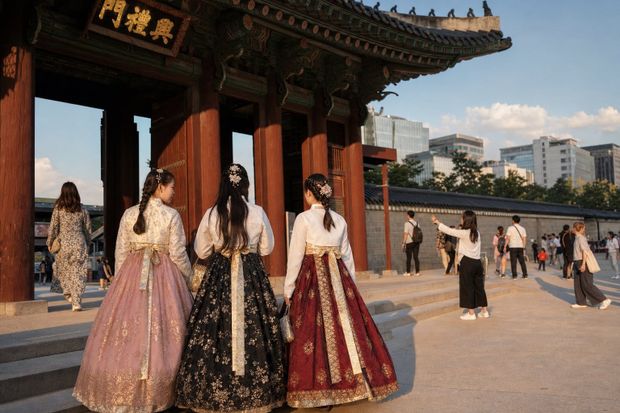
What Is the K-Royal Culture Festival?
The K-Royal Culture Festival (궁중문화축전) is Seoul's flagship annual heritage event that simultaneously activates all five of the city's surviving royal palaces—Gyeongbokgung, Changdeokgung, Changgyeonggung, Deoksugung, and Gyeonghuigung—alongside Jongmyo Shrine, the UNESCO World Heritage site that served as the Joseon royal ancestral memorial. Organized by the Cultural Heritage Administration of Korea, the festival typically runs for approximately ten days between late April and early May, transforming these historic palace grounds into a coordinated program of Joseon court arts, ritual music, and participatory cultural experiences. The 2026 edition ran April 24–May 3 under the theme "Palaces, Awakening the Arts – Hyper Palace," layering authenticated Joseon court performance traditions with contemporary production elements: media projections cast across centuries-old palace stone and gugak musical compositions remixed with electronic music. According to letseoul.com, international tickets opened through Creatrip on March 16, 2026, with most programs requiring advance reservation due to strict daily capacity limits.
Quick Answer: The K-Royal Culture Festival runs for roughly ten days across all five of Seoul's royal palaces and Jongmyo Shrine in late April–early May. The 2026 edition (April 24–May 3) featured the "Hyper Palace" theme, blending Joseon court arts with media projections and gugak EDM remixes. Most programs require advance reservation and sell out quickly.
The "Hyper Palace" concept reflects an evolving approach to heritage programming—one that frames Joseon court culture as a living encounter rather than a static museum exhibit. The juxtaposition of ceremonial court dance performed in a UNESCO-listed garden with electronic music layered over gugak instrumentation is deliberate: the festival is designed for audiences who are culturally curious but not necessarily trained in Korean classical arts. Programs span a wide spectrum, from free public ritual performances at Jongmyo Shrine to intimate ticketed experiences capped at just 20 or 40 participants per session, making it unusual in both its accessibility and its exclusivity within the same ten-day window.
The five palaces each carry distinct histories within the Joseon Dynasty (1392–1897). Gyeongbokgung served as the primary seat of royal government; Changdeokgung and its Secret Garden are inscribed as a UNESCO World Heritage Site; Changgyeonggung was closely associated with the royal family's private life; Deoksugung was where Korea's last imperial-era ruler, Emperor Gojong, resided under Japanese-era political pressure; and Gyeonghuigung, though largely reconstructed, offers a quieter counterpoint to the more-visited sites. The K-Royal Culture Festival treats all five as equal stages within one ten-day program—an organizational scale that distinguishes it from single-venue heritage events found in most other cities.
Palace-by-Palace Program Guide: What's on Where
The 2026 K-Royal Culture Festival distributed its programs unevenly across the five palace sites, with Changdeokgung and Deoksugung hosting the two highest-demand ticketed experiences. "Dance of Crown Prince Hyomyeong and the Moon" at Changdeokgung ran April 28–30, priced at ₩10,000 per person with a strict daily cap of 40 participants—making advance reservation a practical necessity rather than a precaution. At Deoksugung, "The Emperor's Dining Table" offered a royal court cuisine experience for just 20 guests per session at ₩15,000, scheduled May 1–3. Spanning all participating venues, the "Awakening the Morning Palace" program granted pre-opening access to palace grounds at ₩10,000 per person, typically one hour before standard admission times. According to the official event listing on letseoul.com, Jongmyo Shrine hosted free live performances of Jongmyo Jeryeak on April 28–30, open to the public without reservation.
Crown Prince Hyomyeong (1809–1830) was the son of King Sunjo and is documented in historical records as having played a meaningful role in reviving Joseon court arts during his lifetime—contributing to court music arrangements and the choreography of several dance forms. The festival performance named in his honor situates the court dance within Changdeokgung's Huwon (the Secret Garden area), where Joseon royalty historically held private ceremonies. This pairing of historical figure, authenticated performance tradition, and original architectural setting is representative of how the festival programs are conceived: each is designed to anchor a specific cultural element in a specific physical context.
| Palace / Venue | Featured Program | Price per Person | Daily Capacity | Primary Appeal |
|---|---|---|---|---|
| Changdeokgung | Dance of Crown Prince Hyomyeong and the Moon (Apr 28–30) | ₩10,000 | 40 participants | Joseon court dance in a UNESCO World Heritage palace garden |
| Deoksugung | The Emperor's Dining Table (May 1–3) | ₩15,000 | 20 guests per session | Royal court banquet cuisine recreation in intimate format |
| All Participating Palaces | Awakening the Morning Palace (pre-opening access) | ₩10,000 | Limited, varies by site | Dawn access for atmosphere and photography before crowds arrive |
| Gyeongbokgung | Cultural performances and royal guard ceremony | Free | Open | Grand ceremonial grounds; changing of the guard reenactment |
| Changgyeonggung | Seasonal cultural programs | Free–₩10,000 | Varies | Spring garden setting; less crowded than primary palace sites |
| Gyeonghuigung | Cultural programs | Free | Varies | Reconstructed palace; quieter visitor environment |
| Jongmyo Shrine | Jongmyo Jeryeak ritual music performance (Apr 28–30) | Free | Unreserved seating | UNESCO Intangible Cultural Heritage; live ancestral ritual music |
The price structure across festival programs reflects their format and relative scarcity. The ₩10,000 entry point for the Crown Prince Hyomyeong dance and the morning palace tours is low by the standards of comparable heritage experiences elsewhere, but the strict capacity limits effectively make them premium events. The Deoksugung dining experience at ₩15,000 is similarly modest in price, yet with just 20 guests per session across a three-day run, the total number of participants for the entire 2026 program was capped at 60. Visitors planning around these programs should treat the booking process as the primary logistical challenge of the trip, not a secondary detail.
Jongmyo Jeryeak: UNESCO Royal Ancestral Ritual Music
Jongmyo Jeryeak is the ritual music and dance performed at Jongmyo Shrine during state ceremonies honoring deceased Joseon kings and queens—a tradition the shrine itself has maintained since its founding in 1394. Jongmyo Shrine holds separate UNESCO recognition as a World Heritage Site, while Jongmyo Jeryeak itself is inscribed as a UNESCO Intangible Cultural Heritage of Humanity, placing this tradition among the world's most formally protected living performance arts. What distinguishes it from staged traditional music concerts is its transmission: the musicians and dancers who perform Jongmyo Jeryeak are trained through direct generational lineage—learning from masters who were themselves trained the same way in an unbroken chain extending through the Joseon era. According to the official 2026 festival program documented on letseoul.com, Jongmyo Shrine performances during the K-Royal Culture Festival ran April 28–30, 2026, free and open to the public without reservation.
"The transmission of Jongmyo Jeryeak has never depended on textual or recorded reconstruction alone—practitioners learn through direct, embodied continuity with their predecessors. This is what separates living heritage from heritage that has been revived." — Cultural Heritage Administration of Korea, 2026 K-Royal Culture Festival program documentation
The biannual Jongmyo Jerye rite takes place each May and November, with Jeryeak performed throughout the ceremony. The festival format creates a distinct context: the April performances during the K-Royal Culture Festival are staged for public audiences rather than conducted as live ancestral rites, making the experience accessible to first-time visitors in a way the formal biannual ceremonies are not. Both formats take place at the same UNESCO-recognized site, but their purposes and protocols differ. Understanding that difference sets accurate expectations before arrival.
Seating for the festival performances at Jongmyo is unreserved and physically limited by the shrine grounds. Unlike the ticketed palace programs where capacity is managed through the booking system, there is no mechanism to guarantee a place at the Jongmyo performances in advance. Arriving 30–45 minutes early is the practical approach for visitors who want a clear sightline. The performances are also distinct in character from the gugak EDM remixes featured elsewhere in the "Hyper Palace" programming—Jongmyo Jeryeak is presented in its traditional form at the festival, maintaining the ceremonial solemnity that defines its UNESCO status.
For visitors encountering Korean traditional music for the first time, Jongmyo Jeryeak is an unusual entry point. It is slower and more ceremonial than a standard gugak concert, structured around ritual function rather than audience entertainment. The ensemble typically includes large bronze bells (pyeonjong), stone chimes (pyeongyeong), barrel drums, and a range of wind and string instruments—producing a sound texture that has few direct parallels in Western or other East Asian classical music traditions. The visual dimension of the performance, with musicians and dancers in full court attire moving through precisely prescribed sequences, is as significant as the music itself.
Court Dining and Dawn Palace Access: High-Demand Reserved Slots
"The Emperor's Dining Table" (수라상 체험) at Deoksugung Palace recreates Joseon royal banquet cuisine for a maximum of 20 guests per session, scheduled across May 1–3 during the 2026 K-Royal Culture Festival. Royal court food in the Joseon tradition, known as surasang, was defined by its formal structure: multiple courses of carefully prepared dishes served in specific lacquerware and bronze vessels, following protocols that varied by occasion and the rank of the meal. Historical palace records document the Joseon royal table as featuring dozens of distinct dishes per formal meal, sourced from tribute provisions across the peninsula and prepared by a hierarchy of specialized palace cooks organized into separate departments by food type. The Deoksugung program draws on this tradition to create a structured dining experience that functions simultaneously as a cultural lesson and a meal, priced at ₩15,000—a fraction of what comparable heritage dining experiences cost at luxury hanok restaurants in Seoul. According to letseoul.com, this program required advance reservation and reached capacity shortly after tickets opened.
With only 20 seats per session and three days of programming, the total number of participants across the entire 2026 Emperor's Dining Table program was capped at 60—across all sessions combined. This is by design: an intimate group preserves the character of the experience and keeps the setting manageable within a functioning historic palace that also hosts regular visitors. For international travelers, the logistical requirement is booking at the earliest opportunity when tickets open. Both Creatrip and letseoul.com serve as booking access points, with Creatrip providing English-language support and direct ticketing for non-Korean speakers.
The "Awakening the Morning Palace" program occupies a different category of appeal. At ₩10,000, it grants pre-opening entry to palace grounds, typically one hour before standard admission times begin. Gyeongbokgung, in particular, receives substantial visitor numbers during the April–May spring season, and arriving before the main queue changes the character of the visit considerably. The main throne hall (Geunjeongjeon), the stone-paved courtyards, and the mountain backdrop of Bugaksan are all more visible and accessible in that early-morning window before crowds fill the grounds.
For photographers, the morning access program represents a structural advantage that is unavailable during standard visiting hours: favorable early light, unobstructed backgrounds, and clear sightlines to the architectural details—the painted dancheong bracket systems, carved stone balustrades, and courtyard proportions—that define Joseon palace design. Both the Dining Table and the Morning Palace programs require booking through Creatrip or letseoul.com as soon as ticket windows open. Based on the 2026 release pattern, international tickets opened approximately five to six weeks before the festival. Waiting until the week of the event is likely to result in sold-out notices for both programs.
Bukchon Hanok Village: Tea Ceremonies, Crafts & Hanbok Workshops
Bukchon Hanok Village (북촌한옥마을) is a residential and cultural district in Seoul's Jongno-gu that preserves approximately 860 traditional Korean houses (hanok) dating to the Joseon Dynasty, positioned between Gyeongbokgung and Changdeokgung palaces. The name translates literally to "north village"—a reference to its position north of Cheonggyecheon Stream and Jongno—which historically placed it within the enclave of Joseon-era aristocracy (yangban) and government officials. Today, according to Trazy's Bukchon visitor guide, the area operates as a living cultural district where galleries, guesthouses, tea houses, and artisan studios occupy original or faithfully restored hanok structures. The winding alleys offer widely photographed views of curved tile rooftops framed against Seoul's contemporary skyline. Since November 1, 2024, residential side streets within the village have been restricted to 10:00 AM–5:00 PM visitor access to protect the privacy of the households still living in the village year-round—a practical constraint that concentrates visiting hours and should factor into any afternoon itinerary planning.
"The tea ceremony at Rakkojae Seoul follows the documented customs of the Joseon yangban class—a structured sequence drawn from historical records of aristocratic ritual practice, from the selection of tea ware to the prescribed pouring method, as practiced by court-adjacent households during the Joseon period." — Rakkojae Seoul, program documentation (source: koreatraveleasy.com)
The Rakkojae Seoul Hanbok Traditional Tea Ceremony is the most formally structured cultural experience available in the Bukchon area. Held daily at 10:00 AM, 1:00 PM, and 3:00 PM at a Seoul-certified hanok one minute from the village entrance, the 90-minute program begins with participants dressing in premium hanbok before being guided through the etiquette and sequence of a traditional Korean tea ceremony. According to the program listing on koreatraveleasy.com, three seasonal Korean teas are served alongside handmade traditional snacks. An optional 60-minute live gayageum performance is available as a group add-on, priced at approximately $183 per group. The standard ceremony is priced at approximately $150 per person (discounted from $165) and requires a minimum of 2 participants aged 8 or older, with a 3-day advance reservation minimum.
The gayageum is a 12-string zither with a documented history extending to at least the Goryeo period (918–1392), and its sound anchors a significant portion of the Korean musical heritage that predates and overlaps with the Joseon court music performed at the festival's palace venues. Adding a live gayageum session to the tea ceremony creates a thematic connection between the artisan character of Bukchon and the royal musical traditions of the adjacent palaces—an optional coherence for visitors building an itinerary around both cultural strands.
Craft workshops available in and near Bukchon extend the hands-on programming across a range of traditional practices. Options documented by Trazy include traditional Korean knot ornament (maedeup) crafting, mother-of-pearl accessory making, kimchi preparation classes, and Korean cooking classes covering dishes such as bibimbap and japchae, held in renovated hanok kitchens. These workshops are independently bookable and are not packaged with any general Bukchon admission—the village alleys are free to walk and require no booking. Visitors who want to combine a morning workshop with the 1:00 PM or 3:00 PM tea ceremony session will find the timing manageable within a single day anchored at Anguk Station.
Gugak at Namsan Madang Festa and Year-Round Venues
Gugak (국악) is the broad category of traditional Korean music encompassing court music, folk music, ritual music, and contemporary reinterpretations developed from these roots. The Namsan Madang Festa is an annual free outdoor gugak event held at Seoul Namsan Traditional Theater, scheduled for May 1–3, 2026, featuring young Korean artists performing and reimagining traditional music for public audiences. According to the Seoul Metropolitan Government's English events calendar, the 2026 Namsan Madang Festa was free to attend and open to all visitors without reservation. This format—outdoor, free, and centered on emerging rather than established performers—positions the Namsan event differently from the prestige programming at the royal palace sites. It functions more as a civic cultural event than a heritage spectacle, and offers a contemporary perspective on how gugak is being practiced and actively evolved by Korea's current generation of traditional musicians.
Seoul Namsan Traditional Theater (sgtt.kr) hosts year-round programming in gugak, traditional dance, and related performing arts outside the festival window. The theater's regular season offers a reliable option for visitors whose travel dates fall outside the late April–early May festival window, or for anyone who wants to engage with traditional Korean performing arts in a conventional venue setting—seated audience, performers on stage, scheduled show times—rather than within a palace or outdoor context.
The Korea Tourism Organization's official activity portal at english.visitkorea.or.kr lists a broader range of certified cultural programs available throughout the year, including Templestay overnight meditation retreats at working Buddhist temples, taekwondo training sessions, traditional medicine (hanbang) tours, and ceramic-making classes in Icheon—historically Korea's primary ceramic production center and a day trip from central Seoul. For visitors whose cultural interests extend beyond the festival dates, this portal functions as a standing reference for year-round certified programming. Seoul's annual cultural calendar, detailed on the Seoul Metropolitan Government's official events portal, shows that traditional arts programming continues through major national holidays: Seollal in February, Buddha's Birthday in May, Chuseok in September, and the November Seoul Lantern Festival along Cheonggyecheon Stream.
Planning Your Visit: Tickets, Timing & Getting Around
Anguk subway station (Line 3) is the central access point for the K-Royal Culture Festival's primary cluster of venues—within walking distance of Gyeongbokgung Palace, Changdeokgung Palace, Jongmyo Shrine, and Bukchon Hanok Village, making it possible to cover multiple programs within a single day without additional transit. Ticket booking for festival programs divides into two systems by visitor origin: international travelers access reservations primarily through Creatrip, which opened international listings on March 16, 2026 for the current year's edition; the letseoul.com portal, operated by the Seoul Metropolitan Government, also provides English-language program information and some direct ticketing access. The Rakkojae tea ceremony operates on its own booking system and requires a 3-day minimum advance reservation regardless of nationality. For the highest-demand programs—the Emperor's Dining Table and the Crown Prince Hyomyeong dance—tickets for the 2026 festival sold within days of the international booking window opening, establishing five to six weeks of lead time as the practical minimum for future editions.
A practical day sequence for K-Royal Culture Festival visitors combines the timing constraints of each program. The "Awakening the Morning Palace" access begins before standard palace opening times, making it a natural starting point. From Gyeongbokgung, a walk through Bukchon Hanok Village covers the 20-minute route to Changdeokgung—passing the panoramic viewpoint at Gahoe-dong along the way. A craft workshop in the late morning fits before a 1:00 PM or 3:00 PM tea ceremony session at Rakkojae. Jongmyo Shrine, which requires no reservation for festival performances, is a five-minute walk from Anguk station and can be incorporated at any point in the day the performances are scheduled.
| Activity | Cost per Person | Booking Method | Recommended Lead Time | Daily Capacity |
|---|---|---|---|---|
| Jongmyo Jeryeak (festival performance) | Free | No reservation | Arrive 30–45 min early | Unreserved, physically limited |
| Namsan Madang Festa | Free | No reservation | Day-of attendance | Open outdoor venue |
| Bukchon Hanok Village alleys | Free | No reservation | Visit 10 AM–5 PM | Open; residential alleys restricted to hours listed |
| Awakening the Morning Palace | ₩10,000 | Creatrip / letseoul.com | 5–6 weeks recommended | Limited per palace site |
| Dance of Crown Prince Hyomyeong (Changdeokgung) | ₩10,000 | Creatrip / letseoul.com | 5–6 weeks (sells out rapidly) | 40 per day |
| The Emperor's Dining Table (Deoksugung) | ₩15,000 | Creatrip / letseoul.com | 5–6 weeks (sells out rapidly) | 20 per session |
| Rakkojae Hanbok Tea Ceremony | ~$150 / ~₩200,000 | koreatraveleasy.com or direct | 3-day minimum | 3 sessions daily (10 AM, 1 PM, 3 PM) |
| Bukchon craft workshops | Varies by operator | Individual operators | 1–3 days recommended | Small group format |
Gyeongbokgung Station (Line 3) sits one stop west of Anguk on the same line and also serves the area. Both stations connect to Jongno-3-ga (Lines 1, 3, and 5) for onward travel. Deoksugung is the one major festival palace that sits outside the Anguk walking cluster—it is located near City Hall Station (Lines 1 and 2), adding approximately 15–20 minutes of transit from the Bukchon area. Visitors with a Deoksugung dining reservation on May 1–3 may find it efficient to sequence that as a standalone afternoon program rather than combining it with the Gyeongbokgung–Bukchon corridor in a single continuous walk.
Frequently Asked Questions
When does the K-Royal Culture Festival take place each year?
The K-Royal Culture Festival typically runs for approximately ten days between late April and early May. The 2026 edition was scheduled from April 24 to May 3. Exact dates vary from year to year and are usually announced in February or March via the official letseoul.com portal or Creatrip's festival listings. Checking these sources in late February is the most reliable way to confirm confirmed dates and program details for future editions before international booking windows open.
Is the Jongmyo Jeryeak performance at the festival free?
Yes—Jongmyo Jeryeak performances during the K-Royal Culture Festival are free and open to the public. Unlike the ticketed palace programs, no advance reservation is required or available. However, seating at Jongmyo Shrine is unreserved and physically limited by the shrine grounds. Arriving 30–45 minutes before the performance start time is advisable to secure a clear sightline. In 2026, the festival performances were scheduled April 28–30. The format differs from the formal biannual Jongmyo Jerye rites held in May and November—the festival version is staged for public audiences rather than conducted as a live ancestral ceremony.
How far in advance should I book K-Royal Culture Festival experiences?
For high-demand ticketed programs—the Emperor's Dining Table at Deoksugung and the Dance of Crown Prince Hyomyeong at Changdeokgung—booking at the earliest opportunity is the realistic approach, not a precaution. In 2026, international tickets opened through Creatrip on March 16, approximately five to six weeks before the April 24 festival start, and both high-demand programs sold out within days of opening. The Rakkojae tea ceremony operates on a separate system and requires at least 3 days' advance reservation minimum. Free programs—Jongmyo Jeryeak and the Namsan Madang Festa—require no reservation but benefit from early arrival for seating.
What is Jongmyo Jeryeak and why is it significant?
Jongmyo Jeryeak is the ritual music and choreography performed during the Joseon royal ancestral memorial ceremonies at Jongmyo Shrine in Seoul, honoring deceased kings and queens of the Joseon Dynasty. It holds UNESCO recognition as an Intangible Cultural Heritage of Humanity. What makes it unusual within the broader category of traditional music is its transmission method: practitioners are trained through direct generational lineage—master to student, in an unbroken chain extending back through the Joseon era. The tradition was not reconstructed from written scores or recordings alone; it has been passed from person to person continuously. Jongmyo Shrine, where the music is performed, is itself a UNESCO World Heritage Site, giving this tradition a dual layer of international recognition at a single location.
Can I visit Bukchon Hanok Village without joining a paid activity?
Yes—the main alleys, the panoramic viewpoint over Seoul's skyline at Gahoe-dong, and the general character of the village are freely accessible without any entry fee or booking requirement. The primary practical constraint is timing: residential side streets within the village are restricted to 10:00 AM–5:00 PM visitor access as of November 1, 2024, to protect the privacy of residents still living in the neighborhood. This applies to all visitors equally and is not a paid-access restriction. Paid workshops, the Rakkojae tea ceremony, and craft experiences in the area are independent add-ons available for those who want a structured activity, not a condition of visiting Bukchon Hanok Village itself.
What to Take Away: Seoul's Living Joseon Heritage
The K-Royal Culture Festival represents the most concentrated window in Seoul's annual calendar for engaging with Joseon court culture across multiple sites simultaneously. The combination of free public performances—Jongmyo Jeryeak at the shrine, Namsan Madang Festa at the outdoor theater—and intimate paid experiences—court dining, dawn palace access, the Crown Prince Hyomyeong dance—creates a layered visit structure that accommodates both carefully pre-planned itineraries and more flexible exploration. For any visitor whose Seoul trip overlaps with the late April–early May window, orienting at least one day around the festival's programming is a straightforward way to engage with a dimension of Korean culture that is not available through standard palace admission at other times of year.
What distinguishes Seoul's approach to heritage in this context is the co-presence of the living and the historical. Bukchon Hanok Village is a functioning residential neighborhood. Jongmyo Shrine hosts biannual rites that predate the festival by more than six centuries. The gugak musicians at Namsan Madang Festa are practicing artists developing their craft in real time, not performers in period costume. Engaging with any of these programs means contact with cultural practices that are maintained because the people who carry them have chosen to continue—not because they have been reconstructed for tourism.
For international visitors building a spring Seoul itinerary, the festival window (late April–early May) also coincides with cherry blossom season in the palace gardens, making it the most visually layered time to visit the area. Booking the highest-demand programs immediately when Creatrip's international window opens—typically five to six weeks before the festival start—remains the single most consequential logistical step for anyone who wants access to the full program range rather than only the free events.
Last updated: 2026-05-07. Program details, pricing, and scheduling reflect the 2026 K-Royal Culture Festival as documented on letseoul.com and Creatrip at time of publication. Dates, prices, and availability for future festival editions should be confirmed on official channels before booking.


