
Why K-Pop Fans Are Choosing Seoul as Their Next Destination
Seoul has become one of Asia's most deliberately targeted travel destinations, and the Korean Wave — Hallyu — is a measurable engine behind that shift. South Korea welcomed 16.37 million foreign visitors in 2024, reaching 94% of its pre-pandemic peak and marking a 48.4% year-over-year increase, according to GoWithGuide's 2025 Korea Tourism Statistics. Approximately 32% of younger international visitors cite the Korean Wave as their primary motivation for travel to South Korea — a share that reflects the sustained global reach of K-pop, K-drama, and K-beauty content across fan communities. The top four visitor source markets in 2024 were China (4.6 million), Japan (3.2 million), Taiwan (1.5 million), and the United States (1.32 million). Tourism revenue is projected to reach US$14.37 billion by 2025. First-time visitors planning a Seoul-focused itinerary are generally advised to allow 5–7 days, while the average international stay across all South Korea destinations extends to 7.8 days — enough time to combine concert and fan-site visits with palace tours, neighborhood walks, and the city's celebrated food culture.
Quick Answer: Seoul drew 16.37 million international visitors in 2024 — 94% of pre-pandemic levels — with 32% of younger travelers citing the Korean Wave as their primary reason for visiting. A 5–7 day trip covers palaces, K-pop districts, and food markets at a comfortable pace.
The Korean Wave's influence on travel behavior is measurable and growing. According to GoWithGuide, 60% of all international tourists to South Korea cite food and gourmet experiences as a primary motivator alongside cultural immersion, while the youth demographic shows a pronounced Hallyu-driven travel intent that has reshaped Seoul's tourism infrastructure. The Seoul Metropolitan Government has developed dedicated Hallyu itineraries, fan-facing exhibition spaces, and agency district tours in direct response to this audience — the city's planning is oriented around the fanbase, not the other way around.
For fans organizing a trip around a specific concert or event, timing matters significantly. Major stadium shows at Jamsil Olympic Stadium or KSPO Dome typically trigger hotel price surges in surrounding neighborhoods 4–8 weeks before the event date. Booking accommodation as soon as concert dates are confirmed — not when tickets go on sale — is a consistent practical recommendation from the fan travel community. The table below summarizes 2024 visitor arrivals by top source market, per data reported by GoWithGuide.
| Source Market | 2024 Visitors | Reported Primary Motivators |
|---|---|---|
| China | 4.6 million | Shopping, food, Hallyu content |
| Japan | 3.2 million | K-pop, K-drama, beauty tourism |
| Taiwan | 1.5 million | K-pop fandom, food culture |
| United States | 1.32 million | K-pop concerts, heritage tourism |
Seoul's Royal Palaces and Joseon Heritage
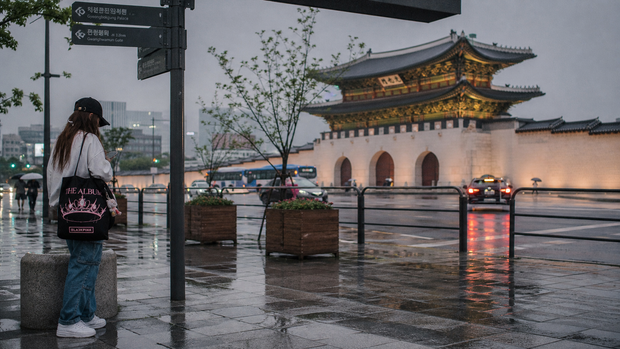
Seoul's royal palaces form the architectural backbone of the city's identity, built during the Joseon Dynasty (1392–1897) and representing one of the most concentrated arrays of dynastic architecture surviving in East Asia. The five grand royal palaces — Gyeongbokgung, Changdeokgung, Deoksugung, Gyeonghuigung, and Changgyeonggung — are clustered within the historic city center, making multi-palace visits practical within a single day. Gyeongbokgung, completed in 1395, is the largest and most visited; early-morning entry (gates open at 9am) is strongly advised to secure unobstructed views of the central throne hall, Geunjeongjeon, and to avoid midday tour groups, as noted by BonTraveler. Admission is 3,000 KRW (approximately US$2.20). A practical cost-saver for multi-palace days: visitors wearing rented hanbok (traditional Korean dress) from nearby rental shops receive free entry to all five royal palaces. Rental shops along Gyeongbokgung-ro typically charge ₩10,000–20,000 for a multi-hour costume rental.
Changdeokgung Palace (built 1405) carries UNESCO World Heritage designation and is widely regarded as the most harmoniously designed of Seoul's royal complexes, owing to its deliberate integration with the natural terrain. Its rear garden, Huwon — referenced in older tourism literature as the Secret Garden — spans 78 acres of forested pavilions, lotus ponds, and centuries-old trees. A separate guided tour is required for Huwon access, with group sizes capped per session; tickets sell out routinely during spring cherry blossom season (April–May) and autumn foliage (October–November). Advance booking through the official Changdeokgung ticket site is the reliable approach, according to Visit Seoul.
"Changdeokgung and its Huwon garden represent one of the finest examples of Far Eastern royal palace architecture, where buildings were carefully positioned within and around a natural setting with its hills, valleys, and streams." — UNESCO World Heritage Committee citation, as cited by Visit Seoul
Jongmyo Shrine, also a UNESCO World Heritage Site, stands apart from the palace complexes as the oldest surviving Confucian royal shrine in the world — dedicated to the kings and queens of the Joseon Dynasty and recognized separately on UNESCO's Intangible Cultural Heritage list for its annual ritual ceremony, Jongmyo Jerye. Deoksugung Palace, situated near Seoul City Hall, offers a notable architectural contrast: Joseon-era ceremonial halls stand alongside neoclassical stone buildings constructed during the late 19th-century modernization period, a visual record of Korea's transition into the modern era that feels distinct from the other four palaces.
Gyeongbokgung Palace (경복궁)
Seoul's largest Joseon-era palace, built 1395, housing the National Folk Museum of Korea on its grounds. The Changing of the Royal Guard ceremony takes place daily at 10am and 2pm at Heungnyemun Gate. Admission ₩3,000; free with hanbok rental from nearby shops. Early morning entry recommended to avoid tour groups.
📍 161 Sajik-ro, Jongno District, Seoul
🕒 Monday 9:00 AM – 5:00 PM / Tuesday Closed / Wednesday–Sunday 9:00 AM – 5:00 PM
⭐ 4.6 (46,200 reviews)
📞 02-3700-3900
🔗 View on Google Maps
Changdeokgung Palace and Huwon (창덕궁)
A UNESCO World Heritage Site (1405) recognized for its integration with the natural landscape. The Huwon rear garden requires a separate guided tour ticket with capped visitor numbers. Tours available in English, Korean, Chinese, and Japanese. Book in advance for spring and autumn visits.
📍 South Korea, Seoul, Jongno District, 율곡로 99번지
🕒 Monday Closed / Tuesday–Sunday 10:00 AM – 4:00 PM
⭐ 4.7 (1,967 reviews)
📞 02-3668-2300
🔗 View on Google Maps
Jongmyo Shrine (종묘)
The world's oldest surviving Confucian royal shrine, dedicated to Joseon Dynasty monarchs. UNESCO World Heritage Site. Open Tuesday through Sunday; free entry on the first Sunday of each month. The annual Jongmyo Jerye ceremony typically takes place in May.
📍 South Korea, Seoul, Jongno District, Jong-ro, 157 종묘관리소
🕒 Monday 9:00 AM – 4:40 PM / Tuesday Closed / Wednesday–Friday 9:00 AM – 4:40 PM / Saturday–Sunday 9:00 AM – 5:30 PM
⭐ 4.5 (1,269 reviews)
📞 02-765-0195
🔗 View on Google Maps
Deoksugung Palace (덕수궁)
Adjacent to Seoul City Hall, this compact palace blends Joseon hall architecture with neoclassical stone buildings from the late 19th century. The stone-paved perimeter path — Deoksugung Doldam-gil — is a popular walking route, especially in autumn when the overhanging trees turn.
📍 99 Sejong-daero, Jung District, Seoul
🕒 Monday Closed / Tuesday–Sunday 9:00 AM – 9:00 PM
⭐ 4.6 (20,191 reviews)
📞 02-771-9951
🔗 View on Google Maps
K-Pop Hotspots: Hongdae, Gangnam, and the Agency District
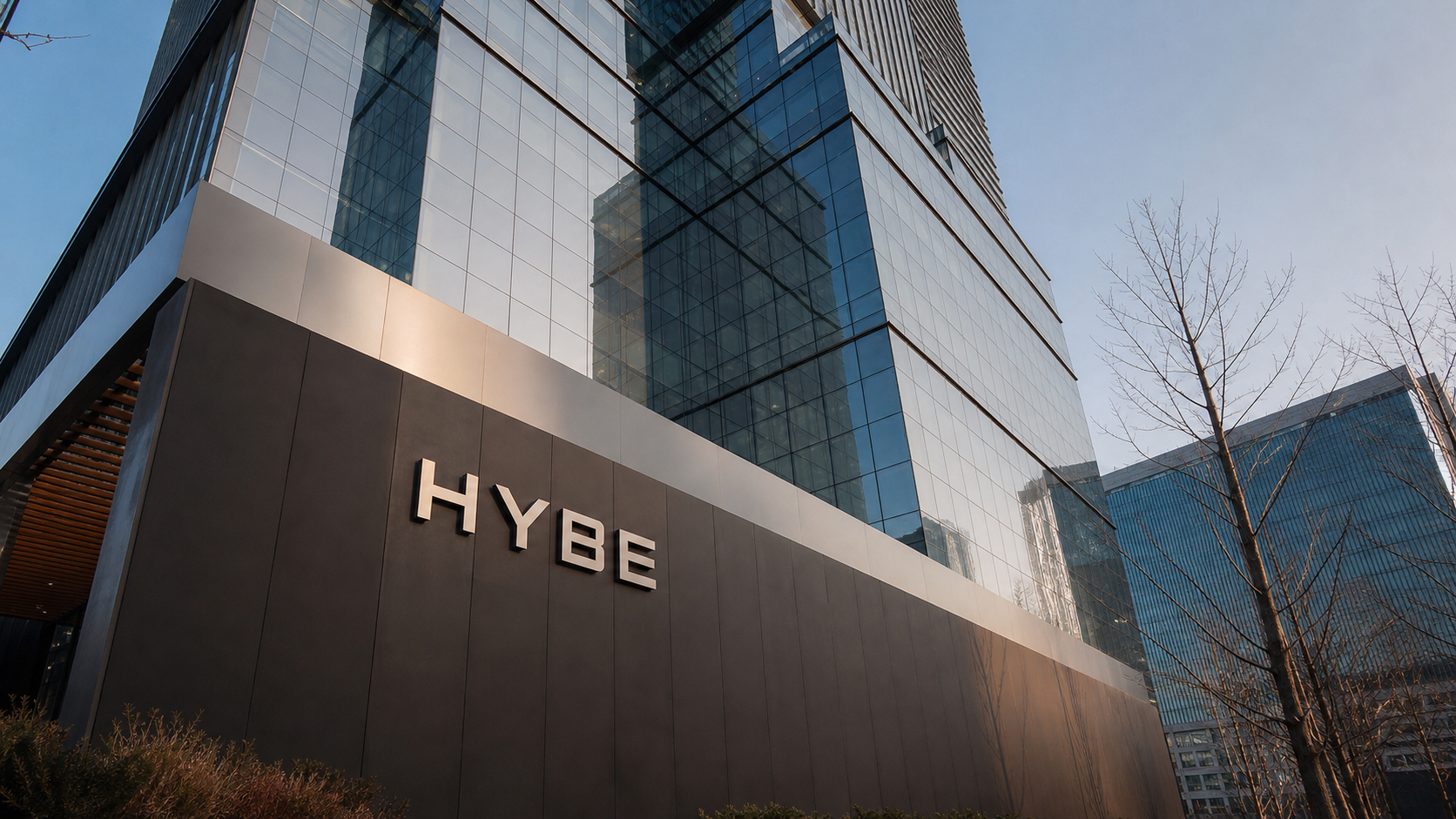
Seoul's K-pop geography is concentrated in a handful of districts that function simultaneously as fan destinations, commercial hubs, and production environments. Hongdae — the neighborhood centered on Hongik University in western Seoul — is the city's most energetic hub for youth culture: indie music venues, weekend street performances, K-pop merchandise shops, and a nightlife district that operates until the early hours. On weekends, the pedestrian area near Hongik University Station (Line 2, Airport Railroad, Gyeongui-Jungang Line) regularly features impromptu dance performances and buskers covering idol choreography. Gangnam, south of the Han River, is the upscale commercial district where most of South Korea's major entertainment conglomerates maintain offices — HYBE, SM Entertainment, JYP Entertainment, and YG Entertainment are all located within accessible distance of one another, making the area a coherent destination for agency district sightseeing. The Seoul Metropolitan Government's Hallyu Tourism Program offers free, English-language event itineraries and guided fan routes through these areas, registerable through the Visit Seoul Hallyu portal.
"Seoul is now the global headquarters of Hallyu — not just a location where K-pop happens, but an active, planned hub for fan engagement. The city has built infrastructure specifically to meet international fans where they are." — Seoul Metropolitan Government, Official Seoul City Portal
HYBE Insight, located in Yongsan, is HYBE's official fan museum and experience center. It offers ticketed exhibitions with interactive installations and archive displays centered on BTS and other HYBE artist rosters. SM TOWN COEX Artium in Gangnam is SM Entertainment's fan-facing complex within COEX Mall, featuring artist merchandise, a café concept, and rotating exhibitions. Both venues require advance ticket purchase during peak seasons; walk-in availability is limited on weekends and during active comeback promotion periods. Neither venue is free — entry fees vary by exhibition cycle, so checking current pricing before arrival is advisable.
The Seoul Metropolitan Government's Hallyu Tourism Program, documented on the official Seoul city portal, offers free registered experiences for international visitors including K-pop dance classes at Ktown4u (COEX) and SM Universe, K-beauty sessions at Espoir in Hongdae and the Amorepacific flagship in Seongsu, K-food cooking at CJ The Kitchen in Chungmuro, kimchi-making at Museum Kimchikan in Insadong, and traditional rice-wine brewing at The Sool Gallery in Anguk. Availability is limited and registration through the Visit Seoul portal fills quickly during spring and autumn seasons.
Hongdae (홍대)
The neighborhood surrounding Hongik University is Seoul's hub for indie music, street K-pop performances, merchandise shops, and late-night culture. Exit 9 from Hongik University Station (Line 2) reaches the main pedestrian zone. Weekends see the highest street performance activity; most shops open by noon and stay open past midnight.
📍 347-20 Seogyo-dong, Mapo-gu, Seoul
⭐ 4.6 (9,189 reviews)
📞 02-336-7715
🔗 View on Google Maps
HYBE Insight (용산)
HYBE's official fan experience museum in Yongsan, offering ticketed exhibitions and interactive displays covering the label's artist roster. Located near Itaewon Station (Line 6) or a short taxi from Seoul Station. Advance tickets strongly recommended, especially during active tour or comeback periods.
📍 42 Hangang-daero, Yongsan District, Seoul
🕒 Monday–Friday 9:00 AM – 6:00 PM / Saturday–Sunday Closed
⭐ 4.7 (1,523 reviews)
📞 02-3444-0105
🔗 View on Google Maps
SM TOWN COEX Artium (강남)
SM Entertainment's fan complex inside COEX Mall, Gangnam, with merchandise, rotating artist exhibitions, and café concepts. Accessible via Samseong Station (Line 2). Walk-in availability is limited during SM comeback campaigns and weekend afternoon hours.
📍 South Korea, Seoul, Gangnam District, Yeongdong-daero, 513 코엑스아티움
⭐ 4.4 (278 reviews)
📞 1661-5628
🔗 View on Google Maps
Bukchon, Seongsu-dong, and Seoul's Neighborhood Culture
Beyond the palace district and the Hallyu venue circuit, Seoul's neighborhood culture offers a distinct register of the city — one defined by preserved alleyways, repurposed industrial architecture, and a design economy that forms the visual backdrop for much of the K-content produced here. Bukchon Hanok Village, situated between Gyeongbokgung and Changdeokgung palaces, preserves hundreds of Joseon-era hanok houses across hillside streets, reflecting over 600 years of Seoul's residential urban history, according to Visit Seoul. Visiting hours are 10am–5pm; the village remains a working residential neighborhood, so noise guidelines and photography etiquette notices are posted at entry points. Ikseon-dong, just south of Bukchon, is Seoul's oldest surviving hanok alleyway neighborhood — the Joseon-era lane structure intact and now lined with artisan cafes, independent boutiques, and small galleries that draw a steady mix of domestic and international visitors throughout the week.
Seongsu-dong, east of the Han River in Seongdong-gu, is one of Seoul's most referenced creative districts — a former industrial zone of leather workshops and printing factories now occupied by design studios, specialty coffee roasters, and brand flagship stores. The Amorepacific experience center here functions as both retail and cultural space for Korea's leading beauty conglomerate, and the neighborhood regularly hosts pop-up activations tied to K-beauty and K-pop brands that rotate with comeback and product launch calendars. The area's industrial aesthetic — exposed brick, high ceilings, original factory signage preserved as design elements — has made it a consistent visual reference in fashion campaigns and music video production over the past decade.
Dongdaemun Design Plaza (DDP), designed by the late architect Zaha Hadid and completed in 2014, anchors the eastern edge of central Seoul with its undulating aluminum facade. The complex operates 24 hours and hosts year-round exhibitions, pop-up retail, fashion week events, and cultural programming. Notably, the site sits atop excavated Joseon-era city wall ruins visible on the lower levels — a juxtaposition of 600-year-old fortification and contemporary design that captures something of Seoul's wider architectural character.
Bukchon Hanok Village (북촌한옥마을)
A preserved residential neighborhood of Joseon-era hanok houses between Gyeongbokgung and Changdeokgung palaces. Visiting hours 10am–5pm. Noise and photography guidelines are posted at entry points; this is an active residential area, not a theme park. Nearest station: Anguk (Line 3).
📍 Gyedong-gil, Jongno District, Seoul
🕒 Daily 10:00 AM – 5:00 PM
⭐ 4.4 (23,936 reviews)
📞 02-2133-1371
🔗 View on Google Maps
Ikseon-dong (익선동)
Seoul's oldest surviving hanok alleyway neighborhood, now lined with artisan cafes and independent boutiques within the preserved Joseon-era lane structure. Located near Jongno 3-ga Station (Lines 1, 3, 5). Most cafes operate 11am–10pm.
📍 Ikseon-dong, Jongno District, Seoul
🔗 View on Google Maps
Seongsu-dong (성수동)
Seoul's repurposed industrial design district east of the Han River, home to the Amorepacific experience center, specialty coffee roasters, and frequent K-pop and K-beauty brand pop-up events. Accessible via Seongsu Station (Line 2). Peak activation periods typically align with brand launch and comeback cycles.
📍 Seongsu-dong 2(i)-ga, Seongdong-gu, Seoul
🔗 View on Google Maps
Dongdaemun Design Plaza (DDP, 동대문디자인플라자)
Zaha Hadid's 2014 cultural complex operating 24 hours. Year-round exhibitions, pop-up retail, and fashion events. Located at Dongdaemun History & Culture Park Station (Lines 2, 4, 5). Joseon-era city wall ruins are viewable on the lower levels of the complex.
📍 281 Eulji-ro, Jung District, Seoul
🕒 Daily 10:00 AM – 8:00 PM
⭐ 4.4 (31,515 reviews)
📞 02-2153-0000
🔗 View on Google Maps
What to Eat in Seoul: Markets, Street Food, and Local Flavors
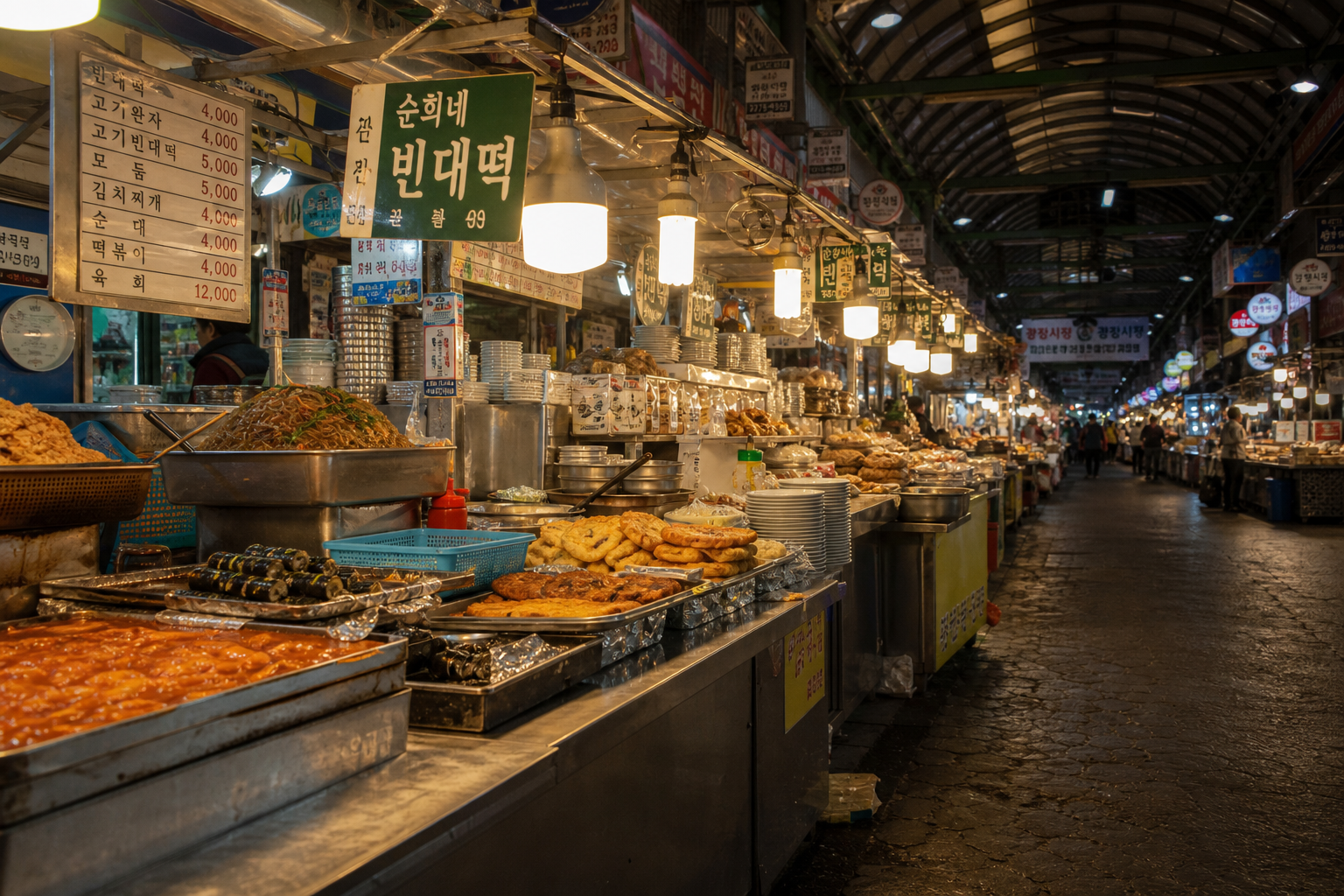
Food is not an afterthought in Seoul travel planning — it is a primary reason to be there. According to GoWithGuide's 2025 tourism data, 60% of all international tourists to South Korea cite food and gourmet experiences as a primary travel motivator. Seoul's food geography spans centuries-old traditional markets, Michelin-starred tasting menus, and a late-night street food culture that runs conveniently parallel to post-concert hours. Gwangjang Market, founded in 1905, is one of Seoul's oldest traditional markets and a consistent recommendation for first-time visitors; the main indoor food hall is known for bindaetteok (mung bean pancakes) and yukhoe (raw seasoned beef), alongside kimbap stalls and pajeon (green onion pancakes). The market is accessible via Jongno 5-ga Station (Line 1), and most food vendors operate from mid-morning through late evening.
Myeongdong and Insadong streets offer concentrated street food experiences that are particularly accessible for international visitors making their first trip — both neighborhoods feature English-language signage at food stalls, with vendors often calling out descriptions in multiple languages. Staples include tteokbokki (spicy rice cakes), odeng (fish cake skewers), hotteok (filled sweet pancakes), and roasted chestnuts in season. For a more specialist experience, Noryangjin Fish Market operates as Seoul's main wholesale seafood hub where the public can observe live auctions and purchase seafood directly from vendors, with adjacent restaurants available to prepare purchases on site — a detail that distinguishes it from the standard market visit.
For post-concert late-night meals, food delivery apps Coupang Eats and Baemin both accept foreign-issued credit cards and operate with English-language interfaces, making them practical tools for ordering after a stadium show when nearby restaurants are at full capacity. Korean BBQ (galbi, samgyeopsal), budae-jjigae (Army stew), and cold naengmyeon noodles are reliable late-night options available across central Seoul neighborhoods through both delivery and walk-in dining well past midnight.
Gwangjang Market (광장시장)
One of Seoul's oldest traditional markets, founded in 1905. The indoor food hall is most widely known for bindaetteok and yukhoe. Located near Jongno 5-ga Station (Line 1). Food vendors typically operate 9am–10pm; the wider market opens earlier for textile and fabric vendors.
📍 88 Cheonggyecheon-ro, Jongno District, Seoul
🕒 Daily 9:00 AM – 10:30 PM
⭐ 4.2 (43,857 reviews)
📞 02-2267-0291
🔗 View on Google Maps
Noryangjin Fish Market (노량진수산시장)
Seoul's main wholesale seafood market in Dongjak-gu, accessible via Noryangjin Station (Lines 1 and 9). Public observation of live auctions is permitted; purchased seafood can be taken to adjacent preparation restaurants on site. The market operates 24 hours.
📍 674 Nodeul-ro, Dongjak District, Seoul
🕒 Daily Open 24 hours
⭐ 3.9 (30,280 reviews)
📞 02-2254-8000
🔗 View on Google Maps
Practical Logistics: Transport, K-ETA, and Concert Planning
Getting to and around Seoul is straightforward by the standards of major international cities, but a few logistical details have a significant impact specifically on concert-trip planning. The AREX (Airport Railroad Express) connects Incheon International Airport to Seoul Station in 42 minutes for ₩9,500 (approximately US$7) on the direct express service; the all-stop service takes around 51 minutes at a lower fare and is the better option if your destination is one of the intermediate stations, per BonTraveler. From Seoul Station, the standard subway network — nine lines and over 300 stations — reaches most fan destinations in central and southern Seoul efficiently. A rechargeable T-money card covers all subway and bus lines and can be topped up at any convenience store. For navigation, Naver Maps is more reliable than Google Maps for Seoul transit routing, particularly for real-time bus connections. Regarding entry requirements: most visa-waiver nationals — including US, EU, UK, Japanese, and Australian passport holders — can enter South Korea visa-free for 30–90 days, but the K-ETA (Korean Electronic Travel Authorization) is required for most and must be applied for online at least 72 hours before departure. Chinese nationals require a standard visa.
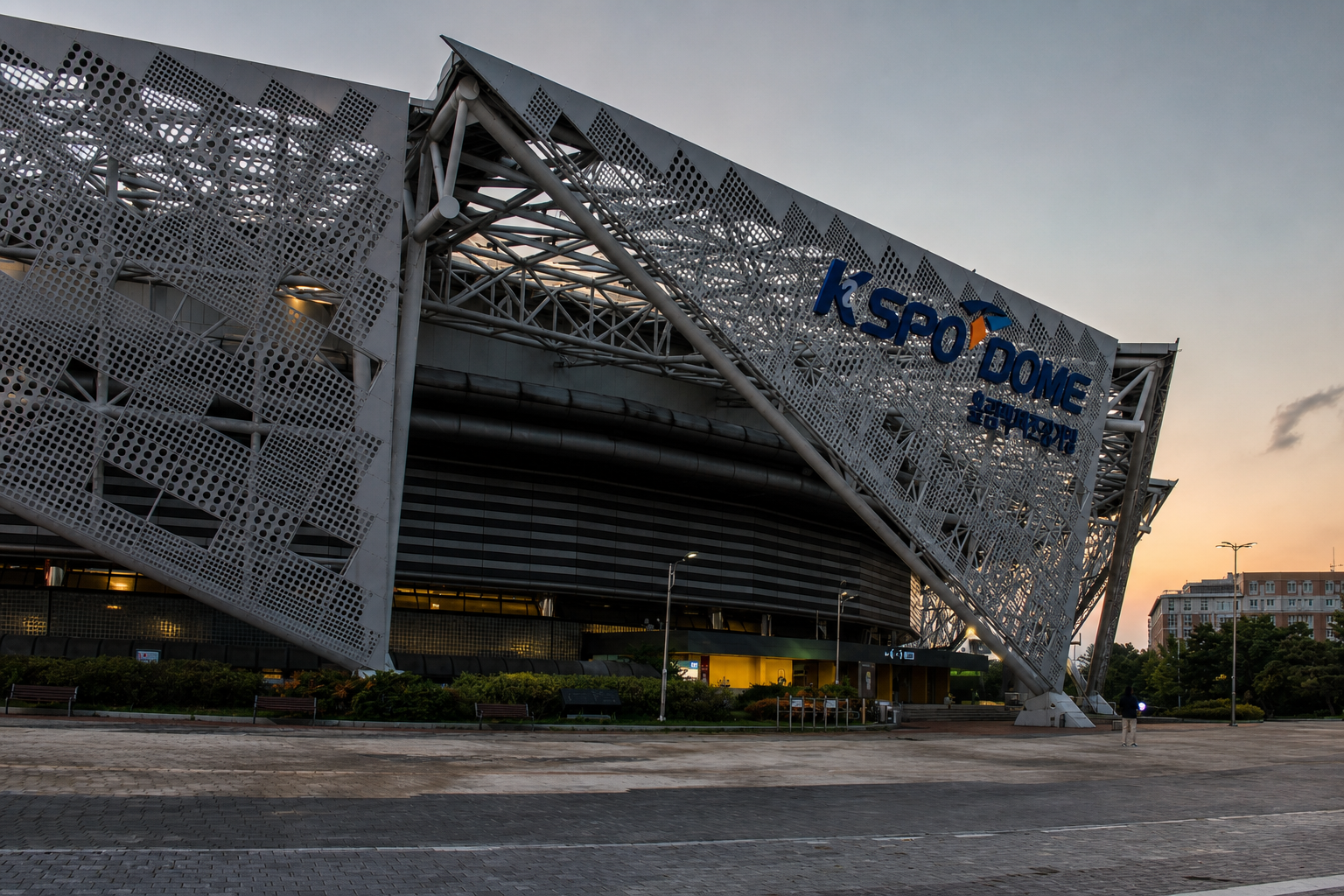
Concert venue selection in Seoul directly determines the optimal accommodation zone. Jamsil Olympic Stadium (capacity 70,000+) and KSPO Dome (approximately 15,000) are both located in southeastern Seoul near Jamsil Station (Lines 2 and 8); staying in Jamsil or nearby Gangnam minimizes transport time on event days, when subway cars are consistently at standing-room capacity after shows. Inspire Arena, which opened in 2023 adjacent to Incheon International Airport as South Korea's largest purpose-built indoor arena, is served by a shuttle from the AREX terminal; its proximity to the airport and the Paradise City resort complex makes it a logistically practical option for fans arriving internationally for a single-night show. The table below summarizes the primary concert venues used for major K-pop events in the Seoul and Incheon metro area.
| Venue | Location | Capacity | Nearest Station | Notes |
|---|---|---|---|---|
| Jamsil Olympic Stadium | Jamsil, Seoul | 70,000+ | Sports Complex (Line 2/8) | Outdoor; primary venue for large-scale K-pop stadium tours |
| KSPO Dome | Olympic Park, Seoul | ~15,000 | Olympic Park (Line 5) / Mongchontoseong (Line 8) | Indoor; frequent venue for mid-size tours and fanmeets |
| SK Olympic Handball Gymnasium | Olympic Park, Seoul | ~5,000 | Olympic Park (Line 5) | Smaller showcases, acoustic sets, and solo artist events |
| Inspire Arena | Incheon (near airport) | ~15,000–20,000 | Incheon Airport T1 (AREX) + shuttle | Opened 2023; largest indoor arena in South Korea |
| COEX Auditorium | Gangnam, Seoul | ~3,000 | Samseong (Line 2) | Convention venue used for showcases and press events |
Hotel availability near Jamsil and COEX drops sharply 4–8 weeks before major stadium concert announcements go public. The practical guidance from frequent concert travelers is consistent: book accommodation as soon as official show dates are confirmed rather than waiting for the ticket on-sale date. During peak K-pop concert weekends, central Seoul hotels in Gangnam and Jamsil can sell out entirely within hours of a tour announcement. Spring (April–May) and autumn (September–November) combine pleasant weather with the most concentrated concert and festival activity, making both factors relevant to overall trip timing.
Jamsil Olympic Stadium (잠실 올림픽 주경기장)
Seoul's primary outdoor stadium for large-scale K-pop tours, with a capacity exceeding 70,000. Located in Jamsil, Songpa-gu. Nearest stations: Sports Complex (Lines 2 and 8). Multiple exit gates and designated fan zone areas surround the venue on event days.
📍 25 Olympic-ro, Songpa District, Seoul
⭐ 4.3 (2,489 reviews)
📞 02-2240-8800
🔗 View on Google Maps
KSPO Dome (KSPO 돔)
A 15,000-capacity indoor arena within Olympic Park, used frequently for mid-size K-pop tours, fanmeets, and showcase events. Nearest stations: Olympic Park (Line 5) and Mongchontoseong (Line 8).
📍 424 Olympic-ro, Songpa District, Seoul
🕒 Daily 9:00 AM – 10:00 PM
⭐ 4.4 (1,476 reviews)
📞 02-2180-3516
🔗 View on Google Maps
Inspire Arena (인스파이어 아레나)
South Korea's largest purpose-built indoor arena, opened in 2023, adjacent to Incheon International Airport and the Paradise City resort. Shuttle service connects to the AREX terminal at Incheon Airport T1. A practical base option for fans flying in specifically for single-night shows without needing to transit to central Seoul.
📍 South Korea, Incheon, Jung-gu, 공항문화로 127
⭐ 4.5 (1,688 reviews)
📞 032-580-9000
🔗 View on Google Maps
Frequently Asked Questions
Do I need a visa to visit Seoul as a K-pop fan?
Most nationals from the United States, European Union, United Kingdom, Japan, and Australia can enter South Korea visa-free for stays of 30–90 days depending on the bilateral agreement in place. However, the majority of visa-waiver nationals are still required to obtain a K-ETA (Korean Electronic Travel Authorization) before departure. The K-ETA is applied for online and must be submitted at least 72 hours before the scheduled arrival date. Chinese nationals are not covered by current visa-waiver arrangements and require a standard South Korean visa. Entry conditions are subject to change; confirming current K-ETA requirements on the official government portal before finalizing travel plans is advisable.
How many days should I plan for a Seoul trip?
A 5–7 day itinerary covers Seoul's main palace district (Gyeongbokgung, Changdeokgung), at least two or three K-pop neighborhoods (Hongdae, Gangnam, HYBE/SM fan venues), one or two traditional market visits, and a neighborhood walk through Bukchon or Seongsu-dong at a comfortable pace. A 3-day itinerary is workable for a concert-focused visit — one day for arrival and orientation, one day for the show, one day for a fan-site visit and departure prep — but leaves limited time for heritage sites. Travelers planning to add a DMZ day tour or a trip to Busan should budget at least 8–10 days total.
Which neighborhood in Seoul is best for K-pop fans to stay in?
The practical answer depends on what you are primarily attending. Hongdae is the strongest base for fans focused on merchandise shopping, street culture, and nightlife — it has the widest spread of budget and mid-range accommodation and the most concentrated K-pop retail. Gangnam is more useful for fans visiting agency buildings, the SM TOWN COEX Artium, or K-drama filming locations in that area. If the trip centers on a stadium concert at Jamsil Olympic Stadium or KSPO Dome, staying in Jamsil or nearby Gangnam significantly reduces transport stress on event days, when post-show subway and taxi queues extend wait times substantially.
Can fans visit K-pop agency buildings in Seoul?
HYBE Insight in Yongsan and SM TOWN COEX Artium in Gangnam are the two primary fan-accessible venues, both offering ticketed exhibitions and interactive experiences. Advance booking is recommended, particularly during active comeback and tour promotion periods. Other major agency headquarters — JYP Entertainment and YG Entertainment included — are private office buildings with no public interior access. The surrounding streets and neighborhoods are publicly accessible, but entry into the buildings is not available for general visitors. Exterior visits to agency headquarters are common among fans, but interior access is limited to authorized staff, artists, and official event participants.
What is the Huwon Secret Garden at Changdeokgung Palace?
Huwon is the rear garden of Changdeokgung Palace, a UNESCO World Heritage Site covering approximately 78 acres of forested pavilions, lotus ponds, and centuries-old trees. Unlike the main palace grounds, Huwon access requires a separate guided tour ticket, with visitor numbers capped per session to protect the environment. Tours are available in English, Korean, Chinese, and Japanese. Demand consistently exceeds supply during spring (April–May, cherry blossom and new foliage) and autumn (October–November, peak foliage) — advance booking through the official Changdeokgung ticketing site is the reliable approach during these seasons.
What to Keep in Mind Before You Book
Seoul's appeal for K-pop fans rests on something more concrete than general cultural interest: the city has built specific, functional infrastructure oriented toward this audience. The Joseon palace district, the agency fan venues in Yongsan and Gangnam, the Hallyu Tourism Program's free registered experiences, and the transit connectivity between concert venues and central neighborhoods all reflect a city that has planned around the fanbase rather than simply accommodating it. That infrastructure makes Seoul navigable for first-time international visitors in a way that is not accidental.
For fans organizing travel around a specific concert, the sequence matters: confirm show dates, book accommodation immediately (particularly for Jamsil-area hotels, which move first), then apply for K-ETA at least 72 hours before departure. Load a T-money card at the airport on arrival — it covers the AREX, all subway lines, and buses, and eliminates the need for cash on most journeys. Spring and autumn remain the most practical windows for combining live events with heritage visits, though Seoul's indoor venues operate year-round regardless of season.
For broader context on Seoul's visitor data and tourism program details, the Visit Seoul portal maintains current English-language information on admission prices, Hallyu experience registration, and seasonal event schedules. The Seoul Metropolitan Government's Hallyu hub page covers the free activity registration in detail, including current participating venues and available languages.
Last updated: 2026-05-10. This article draws on 2024–2025 visitor statistics from GoWithGuide, Visit Seoul, and the Seoul Metropolitan Government's official tourism portals.
Related Articles
- 7-Day South Korea Itinerary 2026: Seoul to Busan for Visiting Fans
- Seoul's Historical Soul: Palaces, Hanok, and Creative Districts
- Seoul Street Food Markets & Neighborhood Eats: 2026 Guide
- Korea-UAE K-Pop: Every Major Festival and Concert 2025-2026
- Korean Dramas Starring K-Pop Idol Actors: The 2018 Class
This article was written using information collected and analyzed by NAMANE's in-house K-pop research AI engine. We use AI technology to bring you faster, broader coverage, and in the process some details may occasionally differ from the latest facts. For important information such as dates, venues, and prices, please double-check with official sources.


