
How Seoul Divides: Gangbuk vs. Gangnam for K-POP Visitors
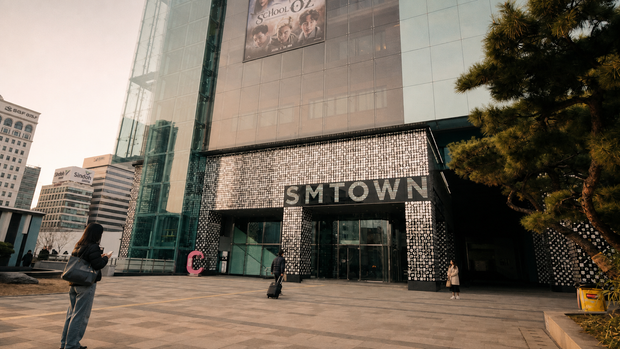
Seoul is a city of ten million people split by a single geographic fact that shapes every travel decision: the Han River runs east to west, dividing the capital into historic Gangbuk to the north and modern Gangnam to the south. For K-POP fans specifically, this divide maps directly onto where agencies operate, where fan gathering points cluster, and which accommodation tier makes sense for a given itinerary. Northern Gangbuk holds centuries-old palaces and traditional craft markets alongside the live-music clubs of Hongdae, the cultural streets of Insadong, and the creative workshops of Seongsu-dong. Southern Gangnam concentrates SM Town COEX Artium, the headquarters of SM Entertainment and JYP Entertainment, and the upscale café culture of Garosu-gil. According to Fora Travel, Gangnam anchors South Korea's entertainment and luxury commerce industries, while northern neighborhoods carry stronger cultural identity for most international visitors making their first trip to the city.
Quick Answer: Seoul splits across the Han River into Gangbuk (north: Hongdae, Myeongdong, Insadong) and Gangnam (south: Samseong, Cheongdam, Apgujeong). Subway Line 2's green loop keeps most K-POP fan destinations within 3–4 stops of each other. For SM Town and agency access, base in Gangnam; for AREX airport speed and live music, Hongdae is the stronger logistical choice.
The practical link between north and south is Subway Line 2, Seoul's green circular loop line. It passes through Hongik University Station (Hongdae), Seongsu, Samseong (for COEX), Gangnam Station, and back north — meaning a fan can cover both sides of the river in a single afternoon without a taxi or line transfer. According to neighborhood analysis from City Unscripted, most fan-relevant destinations sit within 3–4 stops of a Line 2 station, a logistical advantage that heavily influences where experienced visitors choose to base themselves.
Understanding this geographic structure before booking accommodation saves meaningful time and money. A fan attending a concert at KSPO Dome (Olympic Park, Jamsil) will find Gangnam-side hotels more convenient; a fan planning early-morning AREX departure after a Hongdae live-music night will find northern basing clearly superior. The table below ranks the six core neighborhoods covered in this guide by fan activity density, accommodation price tier, and transit convenience.
| Neighborhood | Fan Activity Density | Accommodation Price | Transit Convenience | Best For |
|---|---|---|---|---|
| Hongdae | High | Budget – mid-range | Excellent (AREX direct to Incheon) | Live music, airport access, nightlife |
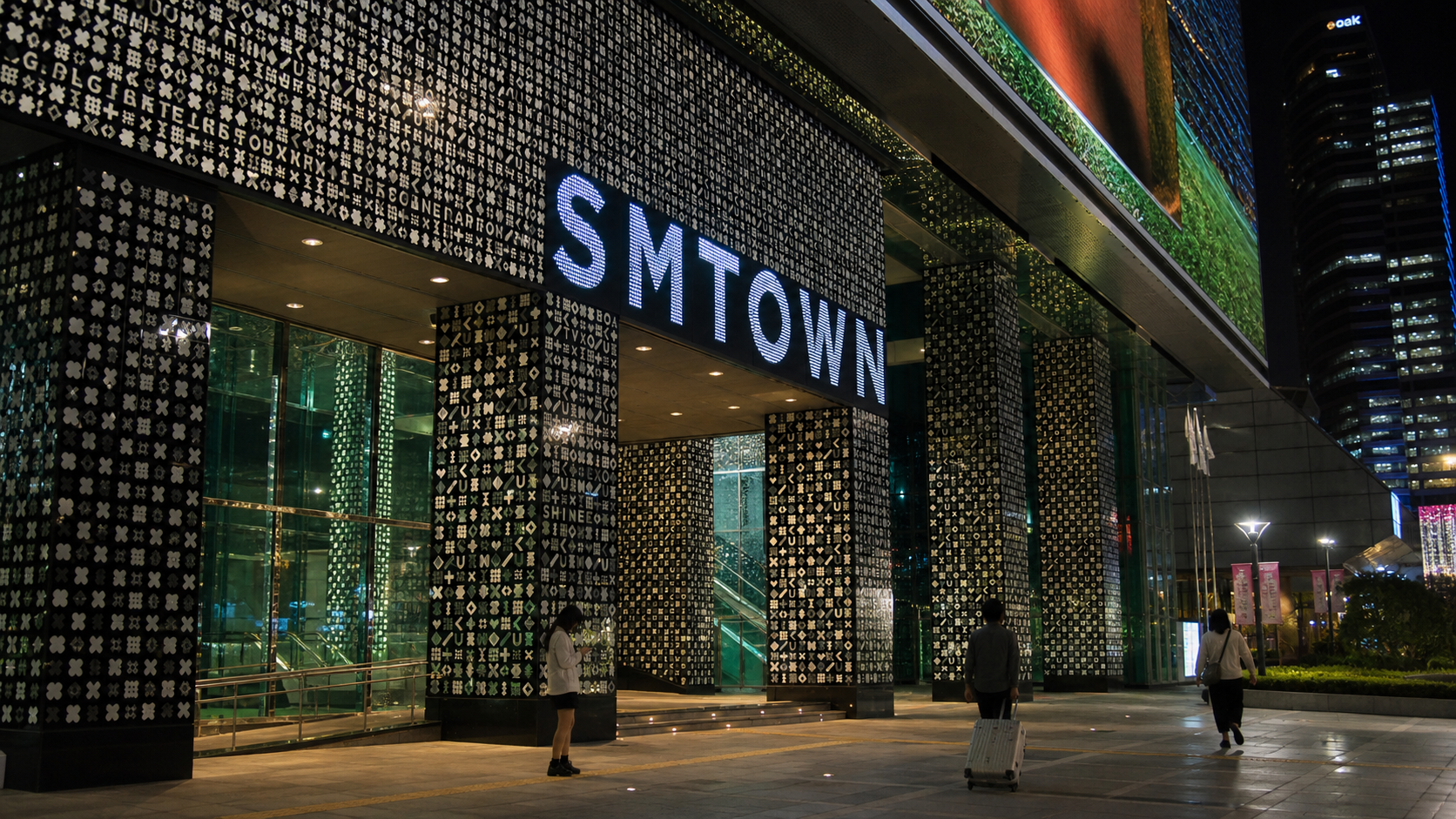
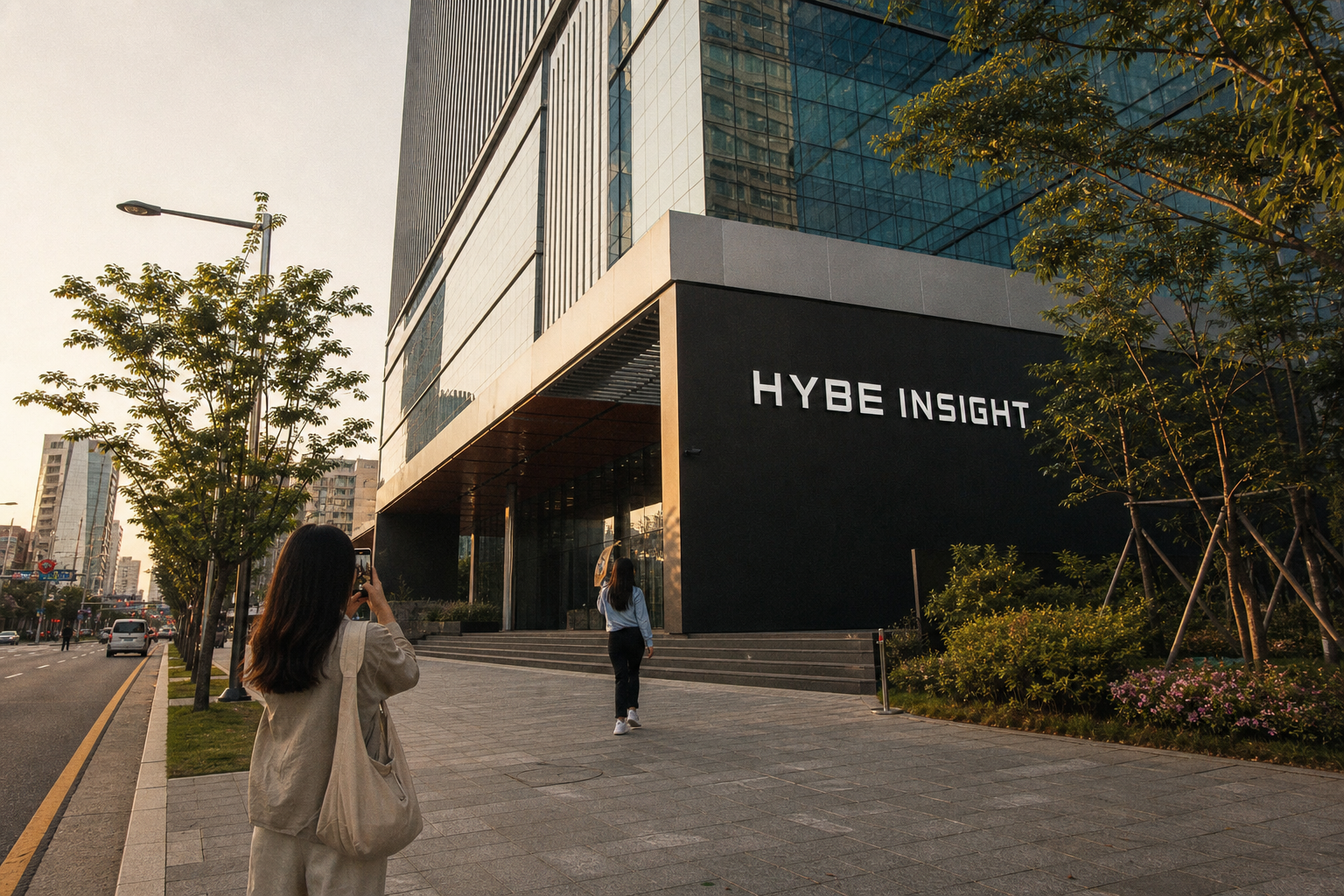
| Gangnam (Samseong / Cheongdam) | High | Mid-range – luxury | Good (Line 2, Line 9) | Agency HQs, SM Town COEX, HYBE Insight |
| Myeongdong | Medium-High | Mid-range – high | Excellent (multiple lines) | Arrival-day orientation, K-beauty shopping |
| Seongsu-dong | Medium-High | Mid-range | Good (Line 2, Seongsu Station) | Pop-up fan events, creative cafés |
| Insadong / Bukchon | Medium | Mid-range | Good (Lines 3, 5) | Hanbok content, K-drama backdrops |
| Jongno / Euljiro | Low-Medium | Budget – mid-range | Good (Lines 1, 2, 3, 5) | Authentic local Seoul, food culture |
Hongdae: Live Music, Fan Culture, and the Fastest Route from Incheon
Hongdae — the shorthand for the area surrounding Hongik University in western Seoul — is the neighborhood most K-POP fans instinctively gravitate toward, and the instinct is well-founded. This district hosts the city's densest concentration of indie live music venues, late-night cafés, street art installations, and budget-friendly accommodation, all compressed into a walkable grid that stays active well past midnight. The logistics argument is equally concrete: Hongik University Station connects directly to Incheon International Airport via the AREX express rail in approximately 43 minutes with no transfers, making it the only central Seoul neighborhood with genuine airport-to-doorstep speed for fans arriving on tight schedules or catching early departures. According to City Unscripted, Hongdae is Seoul's top choice for younger international travelers who prioritize affordability and nightlife access in equal measure — and for K-POP fans specifically, the proximity to multiple live music venues adds a layer of value that no other budget neighborhood in the city replicates.
"Hongdae is Seoul's undisputed youth culture hub — and the AREX connection to Incheon Airport makes it the most logistically sensible base for fans arriving or departing by air. No other central neighborhood matches that combination of nightlife density and airport transit speed." — ZenKimchi, Seoul Neighborhood Guide
The live music infrastructure here is substantial. Club FF, V Hall, and Playground are among the regular K-indie performance venues in the area, hosting emerging acts and established indie artists across genres that overlap frequently with the K-POP ecosystem. The weekend busking culture on Hongdae's main pedestrian plaza — where performers range from solo guitarists to fully choreographed dance crews — mirrors the trainee performance style that defines K-POP development, and it functions as a spontaneous fan discovery zone with no ticket or reservation required. Streets in the area noticeably intensify after 8 PM on Fridays and Saturdays, when students, local residents, and international visitors fill the outdoor spaces simultaneously.
Budget guesthouses, capsule hotels, and hostel-style accommodation concentrate within a 10-minute walk of Hongik University Station, keeping nightly costs significantly below the Gangnam average. The 24-hour café culture means fans returning from late concerts or catching early AREX trains can find food and coffee at any hour. For the AREX express service, travelers need either a T-money card — a reloadable transit card available at airport convenience stores and vending machines — or a dedicated AREX ticket purchased at airport terminal ticket counters. The express service is separate from the AREX commuter service, which makes additional stops and takes considerably longer.
📍 서울특별시 마포구 와우산로33길 26
🕒 매일 오후 12:00 ~ 오전 12:00
⭐ 4.7 (301 리뷰)
📞 070-4200-9251
🔗 Google Maps에서 보기
📍 View Playground Hongdae on Google Maps
Myeongdong: K-Beauty Flagship Stores and Fan Merchandise Strip
Myeongdong occupies Seoul's geographic center and functions as the city's default orientation point for first-time international visitors. For K-POP fans specifically, the neighborhood delivers a concentrated package of K-beauty flagship stores and idol merchandise in a single pedestrian-accessible corridor — practical for a focused shopping pass on arrival day, and less suited as a multi-night base. The Olive Young flagship, Innisfree, and Etude House locations sit within approximately 500 meters of each other, allowing an efficient K-beauty run in a single outing without navigating across the city. English is spoken widely throughout the area, and signage is multilingual — a genuine accessibility advantage for fans arriving directly from Incheon who need to orient quickly. As Visit Seoul notes, Myeongdong remains the first neighborhood recommended to overseas visitors precisely because its infrastructure is designed around international legibility.
Fan merchandise activity extends beyond the official store level. Unofficial idol merch vendors and photo card traders operate in Myeongdong's surrounding side streets, particularly in the evening hours when foot traffic peaks. These informal markets are well-established within the fan community; items range from printed photo cards and acrylic stands to unofficial lightstick accessories and fan-made goods. Negotiation is common, and cash in Korean won is often preferred at smaller stalls. The density of options in a concentrated area makes it viable to cover multiple fan shopping priorities in a single afternoon without public transit.
The tradeoffs are worth naming clearly. Prices carry a measurable tourist premium across both food and accommodation. Dining quality ranks below the Seoul average despite the sheer volume of options, and the streets reach congestion levels that exhaust visitors beyond a half-day. According to ZenKimchi, Myeongdong functions most effectively as an orientation and shopping base, not a long-term fan hub. Most fans relocate after the first night to neighborhoods with better price-to-experience ratios and a cultural identity that Myeongdong largely lacks. The practical approach: schedule Myeongdong as a deliberate half-day stop for K-beauty and merch, then move on to a neighborhood better calibrated to a multi-day stay.
📍 서울특별시 중구 명동8길 20
🕒 매일 오전 9:00 ~ 오전 12:00
⭐ 3.5 (20 리뷰)
📞 010-2128-9989
🔗 Google Maps에서 보기
Insadong and Bukchon Hanok Village: Hanbok, Temples, and Fan Photo Backdrops
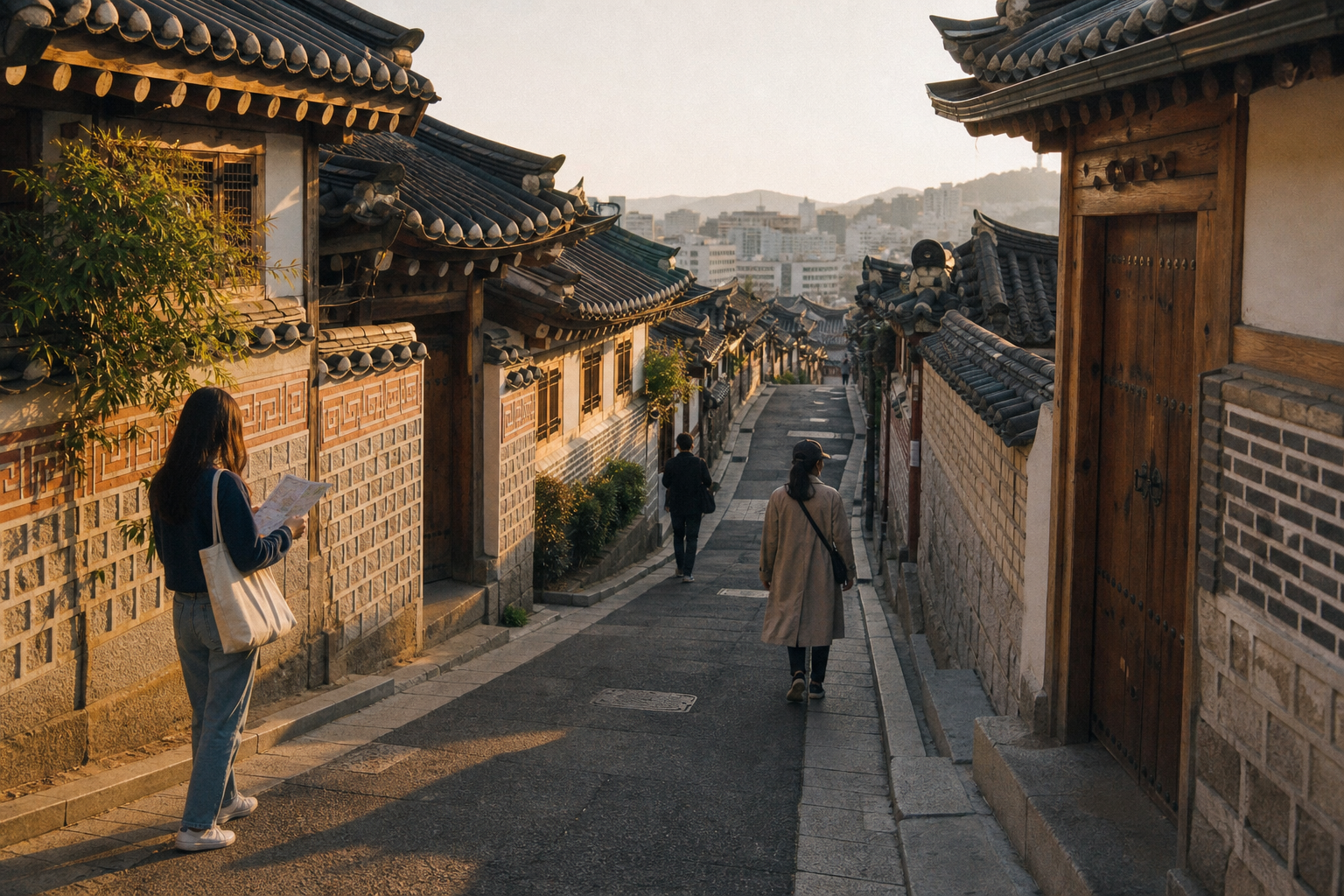
Insadong and Bukchon Hanok Village occupy adjacent territory in northern Seoul and together form the city's most coherent cultural corridor — the district where traditional architecture, Buddhist practice, craft markets, and fan content creation intersect in ways that no other neighborhood replicates. Insadong's pedestrian-only main street runs through a network of traditional craft shops, antique dealers, Buddhist prayer bead vendors, and tea houses that carry an atmosphere distinctly removed from the commercial intensity of Myeongdong. A short walk north leads into Bukchon, where 600-plus preserved hanok houses climb the hillside between Gyeongbokgung and Changdeokgung palaces — one of Seoul's most photographed urban landscapes and a location with a documented history of K-drama production and K-POP music video filming. According to City Unscripted, Bukchon's Gahoe-dong 31 alley ranks among Seoul's most photographed streets, particularly popular with international visitors and content creators working with a traditional Korean visual aesthetic.
"Insadong is the top recommendation for first-time visitors who want something more authentic than Myeongdong without sacrificing convenience. The cultural density here — a major temple, a royal palace, a hanok village, and a craft market all within walking distance — has no equivalent in central Seoul." — ZenKimchi, Seoul Travel Guide
For fan content creators, Bukchon's hanbok rental studios are a practical draw with a clear output. Multiple studios throughout the village offer full traditional attire — jeogori, chima, baji — for rental periods of two to four hours, enabling visitors to photograph the preserved hanok lanes in traditional dress. The resulting visual content strongly echoes the aesthetic used in K-drama and K-POP production design, which is why this stop appears consistently in fan content itineraries. The logistics detail that matters most: arrive before 9 AM. The Gahoe-dong 31 alley experiences significant crowd pressure from mid-morning onward, especially on weekends. Quiet hours are enforced by local authorities and noise guidelines are posted at the village entrance — Bukchon is a functioning residential area, not a heritage park, and the 900-plus residents who live in the hanok houses are protected by local ordinance.
Jogyesa Temple — Seoul's principal Buddhist temple — sits within walking distance of Insadong's main street and operates as a place of active religious practice rather than a museum-style heritage site. It has appeared in several prominent K-drama productions. Gyeongbokgung Palace, the largest of Seoul's five Joseon-era royal palaces, is minutes further north and similarly well-documented as a K-POP and K-drama filming location. Both sites function as practical itinerary anchors for a full cultural day in this corridor, and both are free or low-cost to enter.
📍 서울특별시 종로구 북촌로 35-4
🕒 매일 오전 9:00 ~ 오후 6:00
⭐ 5 (582 리뷰)
📞 010-7277-8507
🔗 Google Maps에서 보기
📍 View Gyeongbokgung Palace on Google Maps
📍 View Bukchon Hanok Village on Google Maps
Seongsu-dong: Creative Cafés, Indie K-Fashion, and Fan Pop-Up Events
Seongsu-dong sits on the northern bank of the Han River, reachable via Subway Line 2 at Seongsu Station Exit 3, and has undergone one of the most documented neighborhood transformations in recent Seoul history — converting from a shoe-factory and leather-workshop district into the city's most fashion-forward creative neighborhood over the past decade. According to Unnies Picking, the area now draws K-fashion labels, photographers, indie pop-up organizers, and café-culture visitors who treat it as Seoul's creative equivalent of Brooklyn or Shoreditch. For K-POP fans specifically, the neighborhood's pop-up event infrastructure — which regularly hosts fan-oriented activations including photo card exchange meets, limited-edition merchandise drops, and concept café installations tied to comebacks and anniversaries — makes it a high-value stop between concert dates, particularly when artists from Korean indie labels are launching new campaigns.
Three café destinations in Seongsu-dong have developed reputations that extend well beyond the neighborhood. Café Onion occupies a converted industrial space and operates as a bakery with a substantial following; arrive before 11 AM on weekends to avoid queues that regularly extend outside the building. Grandpa's Factory is built around a whimsical treehouse aesthetic inside a former factory shell, and draws visitors specifically for the visual design of the interior. Vinyl Seongsu pairs specialty coffee with vinyl listening rooms — a format that resonates with the record-culture community adjacent to K-POP fandom. Korean indie fashion labels Reike Nen and Flat Apartment operate pop-ups and boutiques in converted shipping containers and metalworking workshops throughout the district, alongside rotating independent brands that change seasonally.
Seoul Forest, directly adjacent to the neighborhood, adds accessible outdoor space for fan meetup photography. The deer park, butterfly pavilion, and riverside cycling paths provide natural-light settings well-suited to fan content creation. Most cafés in Seongsu-dong carry English menus, and the area's international profile has grown steadily as global fan communities began organizing neighborhood visits around comeback-timed pop-up events from approximately 2022 onward.
📍 서울특별시 금천구 독산로108길 93
🕒 매일 오전 10:00 ~ 오후 10:00
⭐ 4 (395 리뷰)
📞 02-836-7775
🔗 Google Maps에서 보기
📍 View Seoul Forest on Google Maps
Gangnam: Agency Headquarters, HYBE Insight, and SM Town COEX
Gangnam — literally "south of the river" — consolidates the largest share of South Korea's entertainment industry infrastructure into the highest density of publicly accessible fan destinations anywhere in the city. SM Town COEX Artium in Samseong is the most accessible agency fan destination in Seoul: it houses multiple floors of K-POP museum content, an official SM retail store, and a hologram theater, all open to the public and located directly within the COEX Mall complex, which connects to Samseong Station on Subway Line 2. HYBE Insight, located in Yongsan adjacent to the broader Gangnam cultural zone, offers immersive BTS and HYBE artist exhibitions across multiple floors with dedicated merchandise retail space. Both destinations operate fixed opening hours and occasionally require advance ticket reservations during high-demand periods such as major comeback windows or anniversary dates. According to Fora Travel, COEX Mall's underground Starfield Library and SM Town Artium have established Gangnam as a reference point for K-pop culture tourism that fans across Asia and beyond actively plan travel around.
"SM Town COEX Artium and HYBE Insight together represent the most concentrated public-access K-pop fan experience in Seoul. There is no comparable destination anywhere in the world where agency retail, permanent exhibition content, and hologram performance exist within the same district and on the same public transit line." — Fora Travel, Seoul Guide
YG Entertainment headquarters in Hapjeong and JYP Entertainment headquarters in Cheongdam are both closed to the public and do not offer visitor programs or tours. They function as recognized fan gathering points where small groups regularly congregate, particularly during comeback periods or when an artist is known to be working at the building. If visiting these locations, arrive early, maintain minimal noise, and follow any crowd-management guidance from building security. Both agencies have historically been tolerant of fans gathering in public areas immediately outside their buildings, but that tolerance depends directly on behavior and group size.
Beyond the agency destinations, Garosu-gil — a tree-lined boutique boulevard running through Apgujeong — and the broader Cheongdam-dong area add upscale K-fashion and café culture to the Gangnam fan itinerary. Several idol-owned or idol-affiliated restaurants and cafés have operated in Cheongdam over the years; these locations change frequently as ownership evolves, so checking current status through fan community forums before visiting is recommended to avoid outdated information. Accommodation in Gangnam runs noticeably higher than Hongdae or Jongno, but positioning here removes transit pressure on concert days at nearby venues and reduces commute time to SM Town on non-concert days.
📍 서울특별시 용산구 한강대로 42
🕒 월요일–금요일 오전 9:00 ~ 오후 6:00 / 토요일–일요일 휴무일
⭐ 4.7 (1,522 리뷰)
📞 02-3444-0105
🔗 Google Maps에서 보기
📍 View HYBE Insight on Google Maps
Jongno and Euljiro: Local Seoul That Visiting Fans Often Overlook
Jongno and Euljiro occupy the historic core of Seoul immediately north of the Han River, and they represent the version of the city that long-term residents consistently recommend as the most authentic base for visitors willing to look beyond the neighborhoods built around international tourism. These are working districts with active BBQ alleyways, naengmyeon cold noodle institutions with decades of continuous operation, roasted eel restaurants, and pojangmacha tent bars that stay open into the early hours. Euljiro, formerly Seoul's print-shop district, has developed a distinct industrial-chic bar and café scene in converted metalworking workshops — a scene that has found a dedicated following among photographers, artists, and underground culture communities, according to City Unscripted. For K-POP fans, the appeal is less about proximity to agencies and more about experiencing a Seoul that exists independently of the fan-tourism infrastructure.
The evening walk along Cheonggyecheon Stream — the restored urban waterway running east-west through the district — connects Jongno and Euljiro to the broader center of Seoul in a low-key, pedestrian-friendly way that contrasts with the busy surface streets above. Bosingak Bell Pavilion, the traditional bronze bell structure at the heart of Jongno, provides an orientation landmark and a photography subject with genuine historical depth. Neither site is a K-POP-specific attraction, but both contribute to a sense of the city that many fans find complements, rather than competes with, the concert-and-agency itinerary available in other neighborhoods.
For fans deciding between Jongno/Euljiro and Hongdae as a base, the key variables are nightlife type, transit priorities, and crowd composition. The table below maps the comparison across the factors that matter most for a visitor building a trip around concert dates.
| Factor | Jongno / Euljiro | Hongdae |
|---|---|---|
| Accommodation Price | Budget – mid-range | Budget – mid-range |
| Nightlife Type | BBQ alleys, pojangmacha, industrial bars | Clubs, live music venues, 24-hr cafés |
| Airport Transit (Incheon) | 60–75 min via subway + transfer | ~43 min via AREX express (no transfer) |
| Lines Available | Lines 1, 2, 3, 5 (broad central coverage) | Line 2 + AREX + Line 6 (Hapjeong) |
| Crowd Demographics | Local-heavy, ages 25–45 | Tourist and student mix, ages 18–30 |
| Fan Activity Density | Low | High |
| Authenticity Level | High — working local district | Medium — commercialized youth culture |
📍 서울특별시 중구 을지로3가 을지로13길 15
⭐ 4 (424 리뷰)
🔗 Google Maps에서 보기
📍 View Bosingak Bell Pavilion on Google Maps
Frequently Asked Questions
Which Seoul neighborhood is best for K-POP fans staying near concert venues?
The answer depends on the specific venue. KSPO Dome and Olympic Park in Jamsil are most conveniently reached from the Jamsil or Songpa area, or from Gangnam via Subway Line 2. KBS Hall in Yeouido is accessible from central Seoul in 20–30 minutes by subway. Gocheok Sky Dome in Guro is best approached from Sindorim or Guro on Line 1 or Line 2. For fans who want airport access on either side of the concert — arriving from Incheon or departing shortly after the show — Hongdae's AREX connection remains the most flexible logistics base regardless of venue, particularly for one- or two-night trips structured around a single performance date.
How long does it take to get from Incheon Airport to Hongdae?
The AREX express train from Incheon International Airport (Terminal 1 or Terminal 2) to Hongik University Station takes approximately 43 minutes with no transfers. This is the fastest transit route into central Seoul and the primary logistical reason many K-POP fans choose Hongdae as their base. The AREX runs from approximately 5:20 AM to 11:40 PM daily. Travelers need either a T-money card — a reloadable transit card available at airport convenience stores and vending machines — or a dedicated AREX express ticket purchased at the airport terminal ticket counters. The express service is a separate product from the AREX commuter service, which makes additional stops and takes significantly longer.
Where are the major K-POP agency buildings located in Seoul?
HYBE — home to BTS, TOMORROW X TOGETHER, SEVENTEEN, and other artists — is located in Yongsan. SM Entertainment and JYP Entertainment headquarters are both in the Cheongdam area of Gangnam-gu. YG Entertainment is in Hapjeong in western Seoul. Of these four major agencies, only SM Town COEX Artium in Samseong is open to the public and offers an official visitor experience, including retail, exhibition content, and a hologram theater. The agency headquarters buildings themselves are closed to the public and do not offer tours, organized fan visits, or public access programs.
Is Myeongdong worth staying in for K-POP fans?
Myeongdong is practical for a first night or an arrival-day orientation. The K-beauty flagship stores — Olive Young, Innisfree, Etude House — are concentrated within a short walk of each other, unofficial idol merchandise is available in surrounding side streets, and English signage and service are reliable throughout the area. However, accommodation prices carry a tourist premium, food quality ranks below the Seoul average for the price point, and the streets are congested at most hours. Most fans relocate to Hongdae or Gangnam after one night. Myeongdong works best as a scheduled half-day shopping stop rather than a residential base for a full multi-day visit.
When is the best time to visit Bukchon Hanok Village without crowds?
Weekdays before 9 AM provide the quietest windows at Bukchon Hanok Village. Weekend afternoons — particularly Saturday and Sunday between noon and 4 PM — are the most congested periods, with the Gahoe-dong 31 alley reaching foot traffic levels that make both photography and movement difficult. Bukchon is a functioning residential area, not a heritage park: approximately 900 residents live in the preserved hanok houses. Noise guidelines are posted at the entrance and enforced by local authorities; groups are asked to maintain minimal sound levels throughout the village. Plan the visit as a dedicated morning activity rather than folding it into a longer afternoon itinerary that would push arrival time into peak hours.
Planning Your Seoul Neighborhoods: Putting the Pieces Together
Seoul's neighborhoods for K-POP fans are not interchangeable — each carries a specific combination of concert infrastructure access, cultural experience, accommodation economics, and transit connectivity that makes it the right choice for a particular type of trip. Hongdae handles airport logistics and late-night live music better than any other option in the city. Gangnam concentrates the official fan experience infrastructure — SM Town COEX Artium, HYBE Insight, agency headquarters — in a walkable zone served by Subway Line 2. Myeongdong provides a low-friction arrival day with K-beauty and merch access but little reason to extend the stay. Insadong and Bukchon add the cultural and visual dimension that makes Seoul's background distinctly different from other K-POP cities. Seongsu-dong and Jongno provide the creative and local-authentic layers that give a Seoul trip depth beyond the concert itinerary.
The most practical approach for a multi-day visit is to base in Hongdae or Gangnam depending on which concert venue is the primary destination, then allocate specific days to the neighborhoods that serve distinct functions. A morning in Insadong and Bukchon, an afternoon in Seongsu-dong, and an evening in Jongno's BBQ alleyways will provide a more complete picture of the city than staying in a single district. Seoul's Subway Line 2 and the T-money card system make this kind of neighborhood movement genuinely low-friction once the basic north-south Han River framework organizing the city is understood.
Upcoming concerts and tours from artists across SM, HYBE, JYP, and YG continue to draw substantial international audiences to Seoul in 2026, with Olympic Park, KSPO Dome, and COEX-adjacent venues remaining the primary infrastructure for large-scale domestic performances. Check current tour announcements and venue confirmations before finalizing accommodation bookings — proximity to the concert venue on performance nights can meaningfully reduce logistical pressure on a trip built around a specific show date.
Last updated: 2026-05-09. This article was reviewed against current neighborhood guides from Visit Seoul, ZenKimchi, City Unscripted, Fora Travel, and Unnies Picking, and reflects conditions as reported in sources published through early 2026.
Related Articles
- 7-Day South Korea Itinerary 2026: Seoul to Busan for Visiting Fans
- Seoul's Historical Soul: Palaces, Hanok, and Creative Districts
- Seoul Street Food Markets & Neighborhood Eats: 2026 Guide
- Korea-UAE K-Pop: Every Major Festival and Concert 2025-2026
- Korean Dramas Starring K-Pop Idol Actors: The 2018 Class
This article was written using information collected and analyzed by NAMANE's in-house K-pop research AI engine. We use AI technology to bring you faster, broader coverage, and in the process some details may occasionally differ from the latest facts. For important information such as dates, venues, and prices, please double-check with official sources.


