
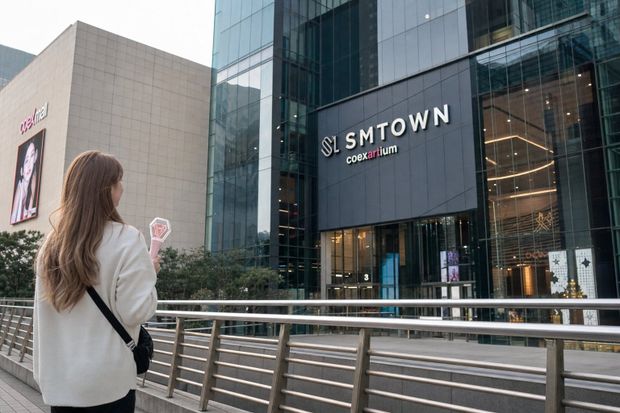
The short answer: SMTOWN COEX Artium permanently closed in June 2020 after five years of operation. SM Entertainment fans visiting Seoul now head to the SM Entertainment Communication Center, COEX Mall's Starfield Library, K-pop goods shops in Gangnam and Myeongdong, and a growing network of saengil cafes (생일카페 / idol birthday cafes) that keep the pilgrimage scene alive.
If you're an international fan planning a trip to Seoul with SM Entertainment on your itinerary, there's a strong chance your research has turned up the SMTOWN COEX Artium — a multi-floor complex in Gangnam that once housed a hologram theater, recording studio experience, photo zones, and the official SM goods shop. Between 2015 and 2020, it was arguably the single most-visited K-pop fan destination in the city. But the Artium closed its doors for good in mid-2020, and much of the English-language content online still references it as if it's open. This guide exists to save you a wasted trip to COEX's sixth floor and redirect you to the spots where SM fans actually spend their time and money.
Whether you're a longtime ELF, ReVeluv, MeU, or a newer fan of aespa and RIIZE, Seoul still has plenty to offer. The pilgrimage has just changed shape — it's more distributed, more fan-driven, and in many ways more interesting than a single corporate showroom ever was.
What Happened to SMTOWN COEX Artium?
Quick Answer: SMTOWN COEX Artium, the multi-floor K-pop fan experience inside COEX Mall in Gangnam, permanently closed in June 2020 after operating since 2015. SM Entertainment has not opened a direct replacement at the same location. The SM Entertainment Communication Center near Seongsu is now the closest equivalent for fans.
SMTOWN COEX Artium was a fan experience center operated by SM Entertainment on the upper floors of COEX Mall in Seoul's Gangnam district. It opened in January 2015 and featured a hologram theater, a café themed around SM artists, a recording studio booth, photo zones with life-size cutouts, and a flagship merchandise shop carrying official goods for groups including EXO, Super Junior, Red Velvet, NCT, SHINee, and Girls' Generation. At its peak, it attracted both Korean and international visitors as a one-stop SM fan destination (source: Wikipedia — SM Entertainment, -04).
The closure came during the COVID-19 pandemic in June 2020. SM Entertainment did not cite a single reason publicly, but the combination of collapsed foot traffic at COEX Mall, travel restrictions that cut off the international fan base, and shifting corporate priorities under SM's broader restructuring all contributed. The Artium's physical space at COEX has since been repurposed for other retail tenants.
For fans who visited between 2015 and 2020, the Artium occupies an almost mythic place in K-pop pilgrimage culture. TripAdvisor reviews from that era describe the experience as a highlight of Seoul trips, particularly for fans who bought lightsticks, recorded themselves in a mock practice room, and picked up albums unavailable outside Korea (source: TripAdvisor — SMTOWN coexartium Reviews, -04).
The key point for anyone planning a trip: the Artium is gone. If your hotel concierge or a dated blog post sends you to COEX's upper floors expecting SM goods, you will find generic retail space. The good news is that SM's fan footprint in Seoul has actually expanded — it's just no longer concentrated in one building.
Where Do SM Entertainment Fans Go in Seoul Now?
SM Entertainment Communication Center is the closest direct successor to the COEX Artium experience. Located near Seongsu-dong, it functions as SM's current public-facing space where fans can purchase official merchandise, view exhibitions related to SM artists, and engage with interactive displays. TripAdvisor lists it as a recommended stop for K-pop fans visiting Seoul alongside other major entertainment company locations in the Gangnam area (source: TripAdvisor — SM Entertainment Communication Center, -04). Unlike the Artium, which was embedded inside a massive shopping complex, the Communication Center operates as a standalone branded space.
Beyond the Communication Center, SM fans distribute their time across several types of destinations. The ecosystem breaks down roughly like this:
| Destination Type | What You'll Find | Best For | Typical Time Needed |
|---|---|---|---|
| SM Communication Center | Official goods, exhibitions, interactive displays | Merchandise shopping, photo ops | 1–2 hours |
| Saengil cafes (생일카페) | Fan-organized birthday/comeback cafes with cup sleeves, photo cards, themed drinks | Deep fan community experience, free collectibles | 30–60 minutes per cafe |
| K-pop goods shops (Myeongdong, Hongdae) | Third-party stores selling photocards, albums, lightsticks, unofficial merch | Photocard trading, bargain hunting | 1–3 hours |
| COEX Mall & Starfield Library | The original Artium building, now general retail; Starfield Library for iconic photos | Nostalgia visit, Instagram content | 1–2 hours |
| Entertainment company buildings | SM, HYBE, JYP, YG headquarters exteriors | Photos outside the building, occasional idol sightings | 30 minutes each |
| MV filming locations | Locations from SM group music videos across Seoul | Recreation photos, fan content creation | Varies |
The distributed nature of K-pop pilgrimage means you'll cover more ground than the old Artium-only itinerary required. A transit card makes this significantly easier — a reloadable Korean travel card like NAMANE lets you tap in and out of the subway without fumbling for cash or single-journey tickets between stops in Gangnam, Seongsu, Myeongdong, and Hongdae.
SM Entertainment Communication Center: What to Expect
The Communication Center is purpose-built as a brand space, not a traditional store. Expect curated displays that rotate around SM's current promotional cycle — if aespa has a comeback happening during your visit, the center will likely feature themed installations. The merchandise selection focuses on official SM goods: albums, lightsticks, photo cards, and seasonal items. Prices are standard SM retail (albums typically ₩15,000–₩22,000, lightsticks ₩35,000–₩55,000). The center also occasionally hosts small-scale fan events or pop-up exhibitions tied to specific groups.
Unlike the COEX Artium, which charged separate admission for its hologram theater and recording experience, the Communication Center's exhibition areas are generally accessible without a ticket. However, special temporary exhibitions may carry a fee. Check SM's official social media channels before visiting, as operating hours and exhibition schedules shift with corporate events and artist schedules.
COEX Mall and Starfield Library: The Nostalgia Stop
Even though the Artium is gone, COEX Mall itself remains one of Seoul's largest underground shopping complexes and is still worth a visit — especially if you're already in Gangnam. The Starfield Library on the B1 level is free to enter and has become one of Seoul's most photographed indoor spaces, with towering bookshelves reaching roughly 13 meters high. It won't satisfy your SM fan itch specifically, but it's a strong content opportunity for your trip (source: TripPlanKorea — Seoul K-POP Tour Sites, -04).
COEX is accessible via Samseong Station (Line 2), which connects directly to the mall's underground level, or Bongeunsa Station (Line 9, Exit 7) for the eastern entrance. If you're combining COEX with other Gangnam fan spots, Line 2 is your workhorse — it runs a loop through many of Seoul's key districts.
How to Plan a Full-Day SM Fan Pilgrimage in Seoul
A full-day SM Entertainment pilgrimage looks different from the Artium era, when fans could spend an entire afternoon in one building. Today's itinerary is a multi-stop route across Seoul, best organized by subway line to minimize backtracking. The following route assumes you're starting from central Seoul (Myeongdong or Hongdae area) and working eastward toward Gangnam and Seongsu, but you can reverse it depending on your hotel location.
Suggested Route: SM Fan Day Trip
Morning (10:00–12:00) — Myeongdong K-pop goods shops. Start with the cluster of K-pop merchandise shops near Myeongdong Station (Line 4, Exit 6). These third-party stores carry photocards, albums, posters, and fan-made goods for all major groups including SM artists. Prices vary — official albums run ₩13,000–₩20,000, while rare photocards can fetch ₩5,000–₩50,000+ depending on the member and edition. This is also where you'll find the best photocard trading culture; bring duplicates if you have them.
Midday (12:30–14:00) — Lunch in Gangnam + SM building exterior. Take Line 2 from Euljiro 1-ga (transfer from Line 4) to Gangnam Station. SM Entertainment's headquarters building is in the Seongsu/Cheongdam area — fans visit the exterior for photos, though you cannot enter. Grab lunch at one of the many restaurants near Cheongdam, where prices range from ₩8,000 for a gukbap (rice soup) set to ₩15,000+ for a Korean BBQ lunch set.
Afternoon (14:30–16:30) — SM Communication Center. Head to the Communication Center for the main fan experience of the day. Browse merchandise, check current exhibitions, and take photos at any available installations. Budget 1.5–2 hours here.
Late afternoon (17:00–18:00) — COEX Mall + Starfield Library. If energy permits, loop back to COEX via subway for the Starfield Library photo op and any remaining shopping at COEX's retail level.
Evening (18:30+) — Saengil cafe if available. Check fan community platforms (Twitter/X, Weverse, or Korean fan accounts on Instagram) for any active birthday or comeback cafes running during your visit dates. These are temporary pop-ups, so availability depends entirely on timing.
For this kind of multi-stop day, you'll tap your transit card roughly 6–8 times. A prepaid card with easy top-up keeps things frictionless — the Seoul Metro base fare is ₩1,400, so a full day of subway travel typically costs ₩8,000–₩12,000.
Saengil Cafes and Fan-Run Spaces: The Real Pilgrimage
Saengil cafes (생일카페, literally "birthday cafes") are temporary pop-up events organized by fan clubs to celebrate an idol's birthday, comeback, or anniversary. They have become arguably the most authentic K-pop pilgrimage experience in Seoul — more so than any corporate venue. A typical saengil cafe takes over a regular Seoul café for 2–5 days, decorates it with custom banners, photo displays, and flower arrangements, and offers themed drinks with custom cup sleeves featuring the celebrated idol. Most provide free photo cards, stickers, or small gifts to visitors who order a drink.
For SM groups, saengil cafes are particularly active around member birthdays for NCT (all units), aespa, EXO, Red Velvet, SHINee, and RIIZE. The NCT fandom alone generates dozens of saengil cafes per year across Seoul, given the group's 23-member roster. Seongsu-dong and Hongdae are the two most common neighborhoods for these events, though they appear citywide.
When EXO's Baekhyun returned from military service in 2024, fan-organized events across Gangnam drew hundreds of international visitors over a single weekend — a scale of fan mobilization that would have been confined to the COEX Artium in earlier years but now spreads across multiple neighborhoods simultaneously.
How to Find Active Saengil Cafes During Your Trip
- Twitter/X search: Search "[group name] 생일카페" or "[member name] birthday cafe" — Korean fan accounts post locations, dates, and hours in both Korean and English.
- Instagram: Search the same terms; many cafes create dedicated Instagram accounts with address, operating hours, and menu details.
- Naver Map / KakaoMap: Once you have a cafe name, search it on Korean map apps for exact navigation. Google Maps is less reliable for temporary pop-ups in Seoul.
- Weverse: Fan community posts sometimes announce upcoming saengil events, though official platforms are less common than social media for this.
- Timing: Saengil cafes typically open 1–3 days before the actual birthday date and run through the day after. Plan your Seoul dates around your bias's birthday if this is a priority.
Saengil Cafe Etiquette for Foreign Visitors
Most saengil cafes are free to enter, but you're expected to order at least one drink from the host café (usually ₩4,500–₩7,000). The custom cup sleeve and any freebies come with your order. Don't take extra cup sleeves or photo cards beyond what's offered — these are produced in limited quantities at the organizing fan club's expense. Photography is almost always welcome, but ask before filming video, particularly if other fans are present. Visiting a saengil cafe is one of the few K-pop experiences where you'll interact directly with Korean fans, and basic courtesy goes a long way.
K-POP Museums and Permanent Fan Attractions Still Open
The closure of SMTOWN COEX Artium left a gap in Seoul's permanent K-pop attraction landscape, but several venues have since filled that space. These are not SM-exclusive, but they serve the broader K-pop pilgrimage audience and are relevant for any fan visiting Seoul. The K-pop museum and experience venue market in Seoul has grown significantly since 2020, responding to the post-pandemic surge in international K-pop tourism (source: Wonderful Museums — K-POP Museum, -04).
| Venue | Location / Nearest Subway | Focus | Typical Admission |
|---|---|---|---|
| SM Entertainment Communication Center | Seongsu area | SM artists: NCT, aespa, EXO, Red Velvet, RIIZE | Free (exhibitions may vary) |
| HYBE Insight | Yongsan Station (Line 1/KTX) | HYBE artists: BTS, SEVENTEEN, TXT, LE SSERAFIM | ₩22,000 |
| Star Avenue (Lotte Young Plaza, Myeongdong) | Myeongdong Station (Line 4) | Multi-agency K-pop goods and handprint displays | Free |
| K-pop goods shops (Hongdae cluster) | Hongik Univ. Station (Line 2, Exit 9) | Third-party albums, photocards, lightsticks for all groups | Free entry (purchase-based) |
| COEX Starfield Library | Samseong Station (Line 2) | Iconic photo spot, adjacent to former Artium location | Free |
| Saengil cafes (rotating locations) | Seongsu, Hongdae, Gangnam — varies by event | Fan-organized birthday/comeback celebrations | Cost of one drink (₩4,500–₩7,000) |
The comparison with 2015 is striking. When SMTOWN COEX Artium opened, it was essentially the only permanent, corporate-backed K-pop experience center in Seoul. A decade later, multiple entertainment companies operate their own spaces, and the fan-driven ecosystem of saengil cafes, pop-up shops, and photocard trading hubs has grown into an informal but vibrant pilgrimage network spread across the city (source: Wonderful Museums — K-POP Museum Overview, -04).
For SM fans specifically, the Communication Center is the anchor, but the real depth of the experience comes from combining it with fan-run events. A visitor who spends a full day on the SM pilgrimage circuit will likely interact with more genuine fan culture than someone who spent the same time inside the Artium in 2018 — the trade-off is that it requires more planning and transit.
Practical Tips for K-POP Pilgrimage in Seoul as a Foreign Visitor
- Get a transit card before leaving the airport. Seoul's K-pop spots are spread across multiple subway lines. A NAMANE Card or similar prepaid transit card is essential — you can reload it at any convenience store or subway station kiosk. Single-journey tokens work but cost ₩100 more per ride and require queuing at machines each time.
- Download KakaoMap, not just Google Maps. Korean addresses, especially for temporary pop-ups and smaller shops, render more accurately on KakaoMap (available in English). Naver Map is also reliable but its English interface is less polished.
- Bring cash for photocard trading. While most shops accept cards, person-to-person photocard trades and purchases at fan events are cash-only. ATMs at convenience stores (CU, GS25, 7-Eleven) accept international Visa/Mastercard for withdrawals; fees typically run ₩3,000–₩4,000 per transaction.
- Check fan social media 2 weeks before your trip. Saengil cafes, pop-up shops, and special exhibitions are announced with 1–3 weeks' notice. Set Twitter/X alerts for your favorite groups + "서울" (Seoul) or "카페" (cafe).
- Weekday mornings are less crowded. SM Communication Center and K-pop goods shops in Myeongdong and Hongdae get significantly busier on weekends and after 2:00 PM on weekdays. If you want to browse without competing for shelf space, arrive when doors open.
- Pack light for a pilgrimage day. You'll be walking and riding the subway for 6–8 hours. A crossbody bag with your phone, transit card, cash, and a portable battery is the veteran fan loadout. Leave the rolling suitcase at the hotel — you can always return to shops later for bulk purchases.
- Tax refund eligibility starts at ₩15,000 per merchant. If you're buying albums or lightsticks at official shops, ask for a tax refund receipt. Foreign visitors can claim the 10% VAT back at the airport. The threshold is per single purchase at one store, not cumulative across the day. Check the NAMANE service manual for details on managing your spending across transit and shopping.
Frequently Asked Questions
Is SMTOWN COEX Artium still open?
No. SMTOWN COEX Artium permanently closed in June 2020. The space inside COEX Mall has been repurposed for other retail tenants. SM Entertainment has not announced plans to reopen a similar venue at the COEX location. The SM Entertainment Communication Center is the current primary fan destination for SM groups.
Where can I buy official SM Entertainment merchandise in Seoul?
The SM Entertainment Communication Center carries official goods including albums, lightsticks, photo cards, and seasonal merchandise. Lotte Department Store branches in Myeongdong also stock official K-pop merchandise. For a wider but less curated selection, third-party K-pop goods shops in Myeongdong and Hongdae carry SM artist products alongside other agencies' items.
What replaced SMTOWN COEX Artium?
There is no single direct replacement. SM's fan-facing presence in Seoul has shifted to the SM Entertainment Communication Center and to a distributed network of temporary fan events, pop-up shops, and saengil cafes organized by fan clubs. The overall fan experience in Seoul is arguably richer than the Artium era, but it requires more planning and travel between locations.
How do I get to COEX Mall from Incheon Airport?
Take the Airport Railroad Express (AREX) from Incheon Airport to Seoul Station (43 minutes express, ~₩9,500), then transfer to Line 2 (green line) eastbound toward Samseong Station. Alternatively, take the AREX all-stop service to Hongik University Station and transfer to Line 2 there. Total travel time is approximately 80–100 minutes depending on connections. COEX Mall connects directly to Samseong Station underground.
Are saengil cafes open every day?
No. Saengil cafes are temporary events that typically run for 2–5 days around a specific idol's birthday or comeback date. They are organized by fan clubs, not by entertainment companies, so their schedules depend entirely on fan initiative. During peak birthday months for popular SM groups (particularly NCT and aespa members), multiple cafes may operate simultaneously across different Seoul neighborhoods.
Can I visit SM Entertainment's headquarters building?
You can visit the exterior of SM Entertainment's building and take photos outside, which is a common fan activity. However, the building is a working office and is not open to the public. Security may ask you to move along if you block entrances or sidewalks. The SM Communication Center is the designated public-facing space for fans.
Do I need to speak Korean to enjoy K-pop pilgrimage spots in Seoul?
English signage is available at most major venues including the SM Communication Center, COEX Mall, and HYBE Insight. K-pop goods shops in tourist areas like Myeongdong typically have staff who speak basic English. Saengil cafes are more variable — the organizers are Korean fans and signage may be Korean-only, but the process (order a drink, receive cup sleeve and freebies) is straightforward enough to navigate with minimal language. Having a translation app like Papago on your phone helps with menus and signs.
Bringing It All Together
The closure of SMTOWN COEX Artium marked the end of an era for SM fans visiting Seoul, but the pilgrimage hasn't disappeared — it's decentralized. Where fans once spent a half-day inside a single building, the version of an SM fan trip takes you across multiple neighborhoods, from the Communication Center to fan-run birthday cafes in Seongsu to photocard shops in Hongdae. The result is a more authentic experience that puts you in direct contact with Korean fan culture rather than a corporate showroom.
The practical trade-off is mobility. A multi-stop pilgrimage day means 6–8 subway rides and a lot of walking between stations and destinations. Having a loaded transit card — whether a NAMANE Card, T-money, or WOWPass — is non-negotiable for keeping the day smooth. Plan your route by subway line rather than by neighborhood name, and you'll cut 30–60 minutes of unnecessary transfers out of your day.
Seoul's K-pop fan infrastructure is broader and deeper than it has ever been. The Artium was a landmark, but what replaced it is a living ecosystem. Come with a plan, a charged phone, and a transit card, and the city delivers.
Last updated: 2026-04-30. This guide is reviewed and refreshed when official sources (KTO, Visit Seoul, SM Entertainment) update their information.
Related Articles
- 【Seoul Pilgrimage】 Take a selfie at the same spot as your bias! A collection of Seoul restaurants & cafes visited by your favorite idols
- NAMANE Card is coming! 【CITY of SENSE】 (G)I-DLE Seongsu POP UP!
This article was written using information collected and analyzed by NAMANE's in-house K-pop research AI engine. We use AI technology to bring you faster, broader coverage, and in the process some details may occasionally differ from the latest facts. For important information such as dates, venues, and prices, please double-check with official sources.


