BTS Returns: The Gwanghwamun Concert and Its Global Impact
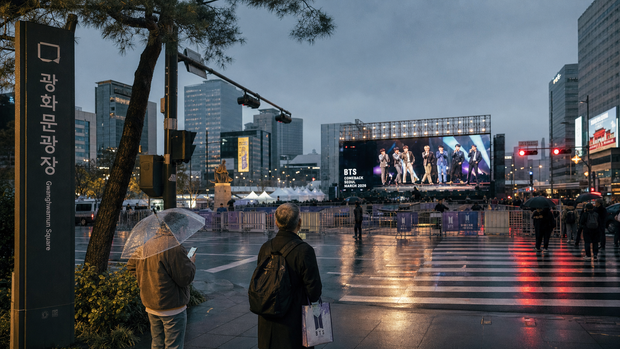
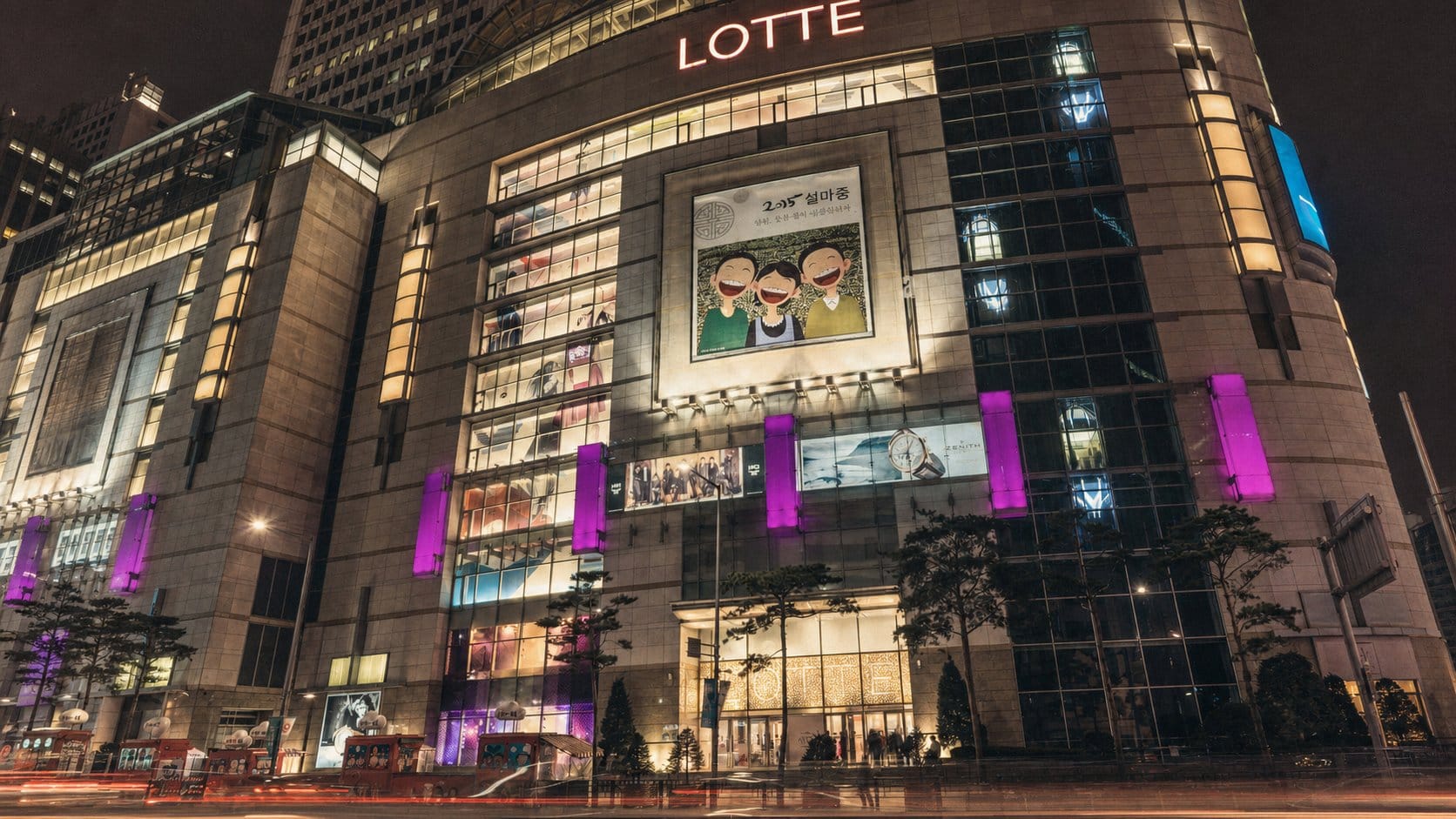
BTS's return to the stage on 21 March 2026 at Gwanghwamun Square in central Seoul marked the first full-group performance by all seven members since mandatory military service suspended the group's activities in 2022. According to reporting by Al Jazeera, 18.4 million viewers watched the Netflix livestream of the concert in real time — a scale that reflects both the endurance of BTS's global audience across the service gap and the continued maturation of streaming as the primary channel for large-scale K-pop event distribution. The economic impact in Seoul was immediate: inbound tourism to South Korea surged 32.7% in the first 18 days of March alone, a gain tourism officials directly attributed to the concert. Lotte Department Store reported a 30% year-on-year sales increase and Shinsegae a 48% increase against the March 2025 baseline. Official BTS merchandise volumes rose 430% in the lead-up week, concentrating substantial consumer spending across Seoul's retail corridors during a compressed but commercially intense event window.
Quick Answer: BTS held their first full-group comeback concert on 21 March 2026 at Gwanghwamun Square, Seoul, after all seven members completed mandatory military service. The simultaneous Netflix livestream drew 18.4 million real-time viewers globally, and South Korea recorded a 32.7% inbound tourism surge in the first 18 days of March — directly tied to the event.
The setting itself carried symbolic weight beyond the music industry. Gwanghwamun Square — bordered by Gyeongbokgung Palace and the country's central government ministries — gave the concert a civic dimension that South Korean media framed as a national homecoming. International coverage from outlets across Southeast Asia, Europe, and North America led not with the setlist but with the economic data, a signal of how thoroughly the BTS event had crossed from cultural into macroeconomic territory.
Retail performance figures reveal how tightly the consumer surge was concentrated. Shinsegae's 48% year-on-year increase in March 2026 — measured against an already K-pop-influenced March 2025 baseline — suggests cumulative momentum rather than a simple single-event bounce. Lotte's 30% gain, spread across its downtown Seoul locations, similarly indicates that fan spending was not restricted to the concert venue but was dispersing into the city's broader retail infrastructure. Fan groups from Japan, the United States, Indonesia, Thailand, and the Philippines accounted for a measurable share of that inbound tourism increase, with group travel packages and concert-adjacent city itineraries coordinated well in advance of the March date.
The merchandise dynamic is particularly instructive for understanding how the K-pop event economy operates. The 430% pre-concert surge in official BTS merchandise was driven by time-limited album drops accompanying the "Arirang" release, commemorative lightsticks, and coordinated fan-club bulk purchasing rounds. HYBE's logistics network — covering both physical retail and its Weverse Shop digital platform — processed a volume of orders in a single week comparable to what many international artists generate across an entire quarter. For fans tracking future concert signals, this pattern of event-adjacent merchandise activity at this scale is a reliable indicator that a major tour leg announcement is imminent.
| Indicator | March 2026 Figure | Comparison Baseline |
|---|---|---|
| Netflix Livestream Viewers | 18.4 million (real-time) | — |
| South Korea Inbound Tourism | +32.7% | First 18 days of March 2025 |
| Lotte Department Store Sales | +30% | March 2025 |
| Shinsegae Sales | +48% | March 2025 |
| Official BTS Merchandise Volume | +430% | Week prior to concert |
📍 서울특별시 종로구 사직로 161
🕒 매일 24시간 영업
⭐ 4.7 (3,828 리뷰)
📞 02-3700-3900
🔗 Google Maps에서 보기
BTS 'Arirang' World Tour 2026: Scale, Schedule, and Revenue
BTS's tenth studio album "Arirang" debuted at No. 1 simultaneously in the United States, Japan, and the United Kingdom — a chart sweep not previously achieved by any K-pop act across those three markets in the same release cycle. The album anchored the announcement of the Arirang World Tour 2026, spanning 80 or more confirmed shows across 23 countries, placing it among the largest single-artist touring campaigns in K-pop history by both volume and geographic coverage, as noted in Al Jazeera's May 2026 coverage of the broader Hallyu economic mobilisation. Projected total tour revenue exceeds $1.4 billion. The Seoul concert dates alone are estimated to generate approximately 1.2 trillion won — roughly $798 million — in city-level economic impact when accommodation, transportation, food service, and retail spending are aggregated using South Korea's standard multiplier methodology.
The tour's regional sequencing follows HYBE's established rollout model: Asia Pacific legs are expected first, with North American and European dates to follow. As of May 2026, city-by-city dates are being released progressively through official HYBE channels and the Weverse platform, which functions as the primary communication hub for ticketing and schedule announcements. Fans should treat HYBE's official website and the Weverse app as the authoritative sources for confirmed dates. Third-party listings — including social media aggregators and ticketing resale sites — frequently carry outdated or speculative information, particularly for markets where formal announcements have not yet been made.
The economic scale of this tour warrants comparison. A projected $1.4 billion in tour revenue would rank the Arirang campaign among the highest-grossing concert tours globally — not only within K-pop but across all popular music genres. The Seoul impact estimate of 1.2 trillion won reflects aggregated spending across the full ecosystem of a concert visit: hotels, transport, food, merchandise, and surrounding retail. For fans planning international travel, the Asia Pacific leg timing suggests that Korean dates are the most likely to fall within the first half of 2026, while North American and European windows are expected to extend the tour into late 2026 and potentially early 2027.
| Tour Metric | Figure | Notes |
|---|---|---|
| Confirmed Shows | 80+ | Dates released progressively via HYBE / Weverse |
| Countries Covered | 23 | Asia Pacific legs expected first |
| Projected Tour Revenue | $1.4 billion+ | Industry projection as of May 2026 |
| Seoul Concert Economic Impact | ~1.2 trillion won (~$798M) | City-level aggregated spending estimate |
| "Arirang" Chart Debut | No. 1 in US, Japan, and UK simultaneously | BTS's 10th studio album |
Hallyu 4.0: South Korea's Official Cultural Industry Strategy
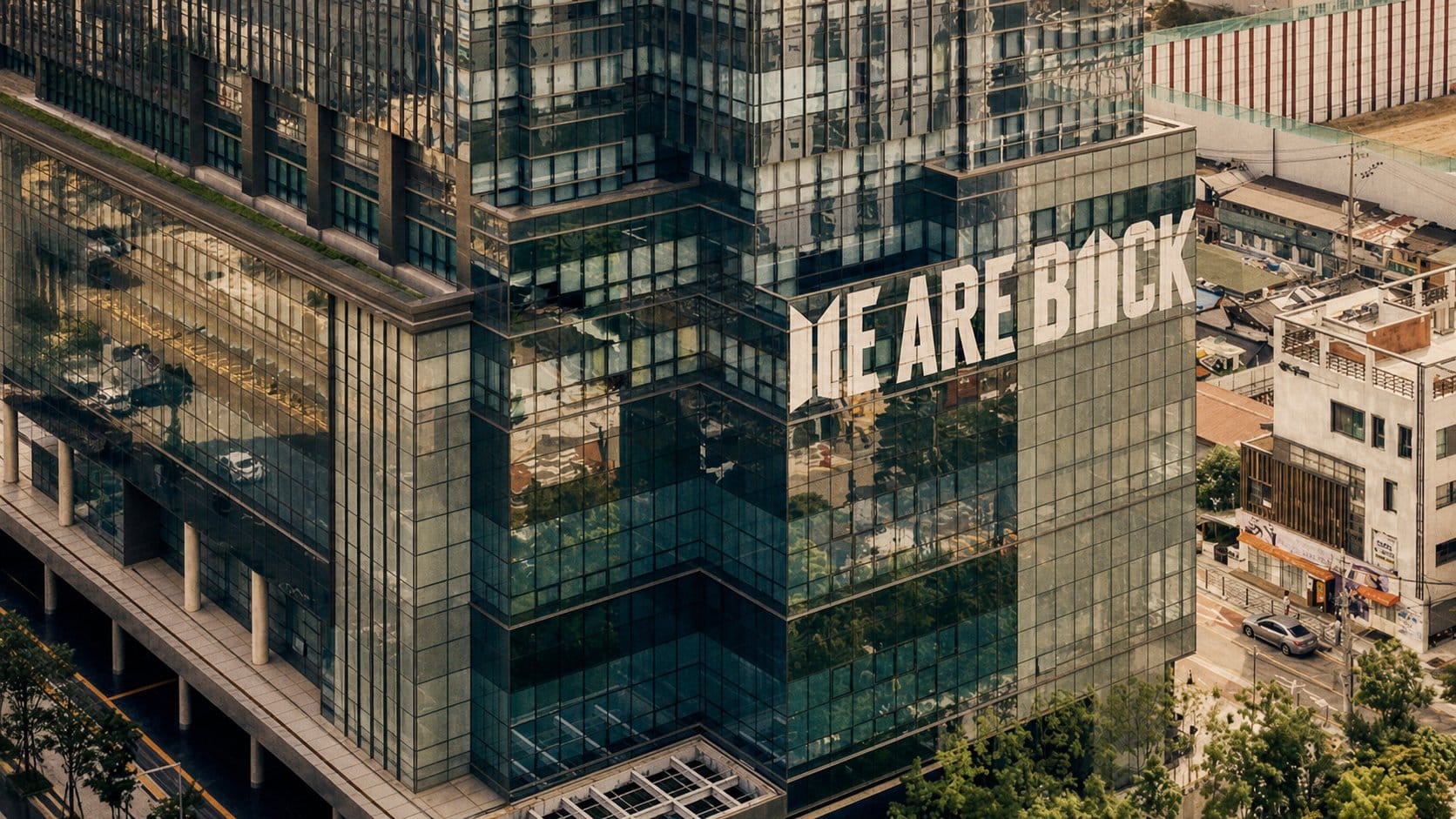
Hallyu 4.0 is South Korea's current government-led framework for scaling the Korean Wave into a formally institutionalised export sector, with a stated target of 300 trillion won — approximately $203 billion — in total cultural industry value. President Lee Jae-myung framed BTS's March 2026 comeback concert as the launchpad for this strategy, connecting a single cultural event directly to a macroeconomic policy agenda in terms that were explicit and public. South Korea currently ranks 11th on Brand Finance's Global Soft Power Index (2026), a position the government aims to advance through targeted investments in streaming infrastructure, international co-production agreements, and institutional support for overseas K-pop fan communities. The framework marks a structural shift from organic cultural export — where individual agencies and artists drove global reach independently — toward state-coordinated cultural diplomacy in which government ministries, investment bodies, and content companies operate in alignment, as reported by Al Jazeera.
President Lee Jae-myung characterised BTS's return as the opening moment of Hallyu 4.0, describing it as South Korea's commitment to building a 300 trillion won cultural economy that would function as a global soft-power instrument — with the cultural sector positioned alongside semiconductors as a primary national revenue driver. — Reported by Al Jazeera, May 2026
The policy pillars of Hallyu 4.0 span four operational domains. First, streaming infrastructure: investment in improved domestic and international content delivery networks to reduce access barriers in Southeast Asia, the Middle East, and Latin America — regions where K-pop viewership has grown fastest since 2022. Second, co-production partnerships: bilateral summit agreements signed in early 2026 with Italy, the Netherlands, Saudi Arabia, and Brazil each included creative industry components targeting content that reaches both Korean and local audiences simultaneously. Third, institutional fan community support: government funding allocated to overseas fan clubs and K-pop cultural centres that serve as grassroots diplomatic agents in their respective countries — pilot programmes have already launched in Indonesia and France. Fourth, creator pipeline development: expanded support for independent Korean producers, songwriters, and directors who supply the broader Hallyu ecosystem beyond the major agencies.
For K-pop fans outside Korea, the practical implications of Hallyu 4.0 are measurable. Co-production investment means more Korean-language content with higher production budgets appearing on Netflix, Disney+, and regional streaming platforms. Institutional support for fan communities means organised fan groups in Europe, North America, and Southeast Asia may receive logistical and financial backing from Korean cultural institutions — a development that, if scaled to the level described in official Hallyu 4.0 documents, would substantially lower the organisational overhead that currently falls on volunteer fan club leadership. The 300 trillion won target, if approached with the same execution discipline South Korea applied to its semiconductor and shipbuilding export programmes, would make the cultural industry comparable in scale to electronics as a national revenue driver by the mid-2030s.
South Korea's Brand Finance soft power ranking of 11th globally reflects a composite of economic influence, cultural exports, diplomatic engagement, and governance perception. The country's cultural sub-index — driven by Hallyu content, K-beauty, and K-food — is identified as its strongest scoring dimension, suggesting that the government's cultural-export focus is calibrated toward where the country's competitive advantages already lie rather than where it needs to build from zero.
Seoul Tourism Surge: K-Pop as the Primary Pull Factor
Seoul's 32.7% inbound tourism surge in the first 18 days of March 2026 was geographically and temporally concentrated in a way that distinguishes it clearly from South Korea's broader seasonal tourism patterns. The spike was an urban, event-driven phenomenon centred on Seoul — not the Jeju Island nature tourism or rural heritage travel that typically shapes Korean visitor numbers outside of peak seasons. Fans from across Asia, North America, and Europe coordinated international travel around the Gwanghwamun concert window, producing a demand pattern more characteristic of a major international sporting event than a conventional tourist season. The districts of Hongdae, Myeongdong, and Gangnam reported record-level foot traffic from international fans during Q1 2026, with K-pop agency flagship stores, idol-themed cafés, and limited-edition merchandise outlets absorbing the sharpest concentration of fan spending.
Hongdae — historically Seoul's hub for independent music venues and street performance culture — saw particular intensity during the March event window. Its density of HYBE, SM Entertainment, and JYP-adjacent retail outlets, alongside K-pop-themed cafés and fan goods shops, made it a natural anchor point for visiting fans. Myeongdong, Seoul's established international shopping corridor, benefited from both the direct spending of fans and the overflow of general inbound tourists drawn to Seoul by the concert's global media coverage. Gangnam's retail strip — encompassing official K-pop agency stores and the COEX mall complex — recorded separately elevated foot traffic during the same window.
This pattern — fans timing Seoul visits around concert windows rather than off-peak seasonal schedules — has significant implications for how South Korean tourism bodies and K-pop agencies coordinate their event calendars. The economic benefit is substantial but compressed: the 18-day surge generated tourism revenue that, by several published estimates, exceeded what Seoul would typically accumulate over six to eight weeks of a standard tourist season. For fans planning future Seoul visits, aligning travel dates with announced major concert windows remains the most reliable way to experience both the event and the full activation of fan culture that concentrates in the city around those dates.
📍 View Hongdae on Google Maps | 📍 View Myeongdong on Google Maps | 📍 View Gangnam on Google Maps
South Korea's AI Adoption Boom and Its Link to K-Pop Content
South Korea recorded a generative AI adoption rate of 31.7% in Q1 2026 — the fastest growth among major economies during the period, according to the Seoul Economic Daily, citing data from Microsoft's AI Economy Institute. That figure represents a 5.8 percentage point increase from June 2025, against a global average adoption rate of 17.8% over the same period — meaning South Korea's AI penetration was running at nearly double the worldwide norm. Three factors drove the acceleration: South Korea's national AI promotion policies, GPT-5's significantly improved Korean-language capabilities, and the expansion of consumer-facing AI features that proved immediately practical for students, office workers, and content creators. The growth is not confined to enterprise use — it is occurring at the consumer level, and K-pop fan communities and creative agencies rank among the early adopters of AI tools for translation, content generation, and fan community management.
Microsoft's AI Economy Institute placed South Korea's Q1 2026 generative AI adoption rate at 31.7% — nearly double the 17.8% global average — identifying government AI policy, GPT-5's improved Korean-language performance, and strong consumer-level uptake as the three primary drivers of the country's accelerated trajectory. — Seoul Economic Daily, May 2026
Within K-pop specifically, AI adoption has moved from experimental to operational across several use cases. Fan translation communities — historically reliant on volunteer translators for lyrics, interview subtitles, and social posts — are now producing translations within minutes of original content release using AI tools. Fan art generation via diffusion models has proliferated on platforms including Twitter/X and Weverse. Agency internal teams are applying AI to fan engagement analytics, content recommendation personalisation, and schedule management across the multi-platform communication infrastructure that defines modern K-pop fandom. These are not peripheral experiments: they are shifting how core fan activities function at scale, and they are doing so faster in Korea than in most comparable markets precisely because of the high baseline AI adoption rate.
The industrial dimension of South Korea's AI pivot provides context for the broader environment in which K-pop operates. Samsung Heavy, HD Hyundai, and Hanwha Ocean are partnering with US and Israeli AI firms to develop autonomous shipping and unmanned vessel technology — a strategic reorientation toward AI-embedded heavy industry. This wider investment climate is creating a talent base and technical infrastructure that cultural industries, including the major K-pop agencies, are beginning to draw on for product development, audience analytics, and AI-assisted content pipelines. The convergence of high consumer AI adoption and industrial AI investment positions South Korea as an unusually well-resourced environment for experimenting with AI-augmented cultural production.
For fans outside Korea, the most visible near-term impact is improved language access. Korean-language content — from album lyrics to fan communications to official HYBE announcements — is now faster to translate and more accurately rendered than at any previous point. This removes a meaningful barrier for audiences in markets where Korean-language literacy is lower, effectively expanding the active, engaged audience for groups whose primary communication remains Korean-first.
Seoul's K-Pop Merchandise and Recommerce Economy
South Korea's secondhand market reached ₩43 trillion — approximately $30.6 billion — in 2025, nearly double its size from four years earlier, with Research and Markets forecasting a compound annual growth rate of 9.2% through 2029, according to SeoulZ's analysis. The premium and fashion recommerce segment alone — which encompasses K-pop photobooks, limited-edition albums, collaborative merchandise, and collectible lightsticks — is projected to reach $7.51 billion by 2029. Fan resale culture has become a structurally significant part of K-pop consumption, particularly for limited HYBE and SM Entertainment releases where official retail supply is deliberately constrained to create secondary market demand and sustain fan engagement incentives across longer post-release windows.
The platform most central to this recommerce ecosystem in Korea is Danggeun Market, known internationally as Karrot. As of 2025, the app reported 21 million monthly active users in Korea and more than 40 million globally, generating ₩270.7 billion — approximately $200 million — in 2025 revenue, a 43% year-on-year increase. While Danggeun Market covers all secondhand categories, K-pop merchandise trading is among its highest-velocity segments in urban areas. Fans use the platform to sell duplicate album copies from mass-purchase rounds, trade limited-edition items sourced at fan meetings, and acquire physical album variants not purchased during official release windows. The platform's hyperlocal matching model means that in-person exchanges are common in Seoul's fan-dense neighbourhoods, particularly Hongdae and Mapo-gu.
Bunjang, the more K-pop-focused recommerce platform, grew to 13.2 million global users in 2025 — a 300% year-on-year increase — with 65.4 new listings per minute across 235 countries. Its cross-border functionality has made it the dominant platform for international fans who cannot access Korean physical retail directly. Buyers in the United States, Japan, Southeast Asia, and Europe use Bunjang to purchase items that sold out domestically within hours of release, including the commemorative "Arirang" album editions that preceded the March 2026 comeback concert. For fans unable to travel to Seoul for official drops, recommerce platforms have become the primary access channel for the physical goods tier of K-pop fandom — a structural shift with implications for how agencies calibrate production volumes and limited-edition release strategies.
Political Renewal and What It Means for K-Pop and Cultural Investment
South Korea's political landscape stabilised significantly between mid-2025 and early 2026 following a period of acute constitutional crisis. President Yoon Suk-yeol's December 2024 declaration of martial law triggered an immediate parliamentary and judicial response: the Constitutional Court unanimously upheld his impeachment, and the June 2025 elections brought Democratic Party leader Lee Jae-myung to the presidency, as documented in Amnesty International's 2026 South Korea report. The new government moved quickly to project governance stability and investor confidence, framing cultural exports — including K-pop — explicitly as instruments of diplomatic soft power rather than purely commercial entertainment products.
The diplomatic realignment has concrete relevance for K-pop's international infrastructure. Bilateral summits in early 2026 with Italy, the Netherlands, Saudi Arabia, and Brazil each included cultural and creative industry components. These agreements create conditions for reduced administrative barriers for Korean artists touring in signatory countries, joint concert venue investment frameworks, and more favourable streaming licensing structures. For K-pop agencies planning European and Middle Eastern tour legs in 2026 and 2027, the governmental agreements represent a meaningful reduction in operational friction — translating into faster venue licensing, improved broadcast deal terms, and in some cases direct co-promotion arrangements backed by cultural ministry budgets on both sides.
Political stabilisation is also broadly positive for K-pop agency capital markets activity. Several mid-tier agencies had deferred IPO plans and international expansion programmes during the uncertainty of late 2024 and early 2025. With governance normalised and the investment environment recovering, those plans are being revisited. The Hallyu 4.0 framework reinforces this dynamic by establishing a policy environment that treats K-pop companies as strategic national assets, increasing the likelihood of favourable regulatory treatment in areas including talent management agreements, content licensing frameworks, and overseas subsidiary operations — factors that affect the commercial viability of the concert touring programmes that fans interact with most directly.
Frequently Asked Questions
When did BTS return from mandatory military service and hold their comeback concert?
All seven BTS members completed South Korea's mandatory military service by early 2026. The group's reunion concert took place on 21 March 2026 at Gwanghwamun Square in central Seoul — an outdoor venue adjacent to Gyeongbokgung Palace. The concert was simultaneously livestreamed on Netflix, drawing 18.4 million real-time viewers globally. It marked BTS's first full-group stage performance in nearly four years and served as both the launch event for their tenth studio album, "Arirang," and the opening event of the Arirang World Tour 2026.
How many countries is the BTS Arirang World Tour 2026 visiting?
The BTS Arirang World Tour 2026 has confirmed 80 or more shows across 23 countries. City-by-city dates are being released progressively through official HYBE channels and the Weverse platform — the authoritative sources for confirmed schedules. The tour follows a regional sequencing model, with Asia Pacific legs expected before North American and European dates. Fans should monitor HYBE's official announcements and Weverse directly; third-party listings frequently carry inaccurate or speculative dates, particularly for markets where formal announcements have not yet been made as of May 2026.
What is Hallyu 4.0 and how does it affect K-pop fans globally?
Hallyu 4.0 is South Korea's current government-led cultural export strategy, publicly framed by President Lee Jae-myung in connection with BTS's March 2026 comeback. The strategy targets a cultural industry value of 300 trillion won (approximately $203 billion) and is built on four pillars: expanded streaming infrastructure, international co-production partnerships, institutional support for overseas K-pop fan communities, and investment in the creator pipeline supplying the broader Hallyu ecosystem. For fans globally, the practical effects include more Korean-language content on major streaming platforms, better-resourced fan community organisations in Europe, North America, and Southeast Asia, and a higher volume of cross-border co-productions featuring Korean artists alongside international collaborators — a structural expansion of the content and event ecosystem that K-pop fans engage with.
Why did Seoul tourism spike so sharply in March 2026?
Seoul recorded a 32.7% surge in inbound tourism during the first 18 days of March 2026 — a figure South Korean tourism officials directly attributed to the BTS comeback concert at Gwanghwamun Square on 21 March. The spike is a clear example of event-driven tourism: fans from Japan, the United States, Southeast Asia, and Europe coordinated international travel specifically around the concert window, rather than visiting during a conventional peak season. This pattern — in which a major K-pop event functions as the primary reason for international travel, with broader tourism activities secondary — has become a predictable and repeatable dynamic in Seoul's visitor economy, particularly for events involving artists with the scale of BTS's global fandom base.
Where can K-pop fans buy official and secondhand merchandise in Seoul?
Official K-pop merchandise is available at agency flagship stores primarily in the Gangnam district and selected Myeongdong retail locations, as well as through the Weverse Shop digital platform for those who cannot visit in person. For secondhand and resale merchandise, Danggeun Market (Karrot) is the dominant Korean recommerce platform with 21 million monthly active users in Korea; fans use it for hyperlocal in-person trades, particularly in Hongdae and adjacent Mapo-gu. Bunjang is the more K-pop-focused recommerce platform, with cross-border functionality allowing international fans to purchase from Korean sellers. The premium K-pop recommerce segment — covering photobooks, limited-edition albums, and collectible lightsticks — is projected to reach $7.51 billion globally by 2029, reflecting how structurally central fan resale culture has become across all tiers of K-pop consumption.
South Korea's Cultural Economy in 2026: The Trajectory Ahead
The convergence of BTS's comeback, the Arirang World Tour, Hallyu 4.0 policy, South Korea's AI adoption surge, and a stabilised political environment in the first half of 2026 represents more than a strong quarter for K-pop. It reflects a structural alignment between governmental strategy, cultural output, technological infrastructure, and global fan demand that is unlikely to unwind quickly. The 300 trillion won cultural industry target is ambitious, but it is grounded in demonstrable momentum: BTS alone generated economic activity measurable in trillions of won within a single concert event's aggregate impact window, and the recommerce ecosystem has scaled to a size comparable to mid-tier industrial sectors.
For fans tracking the event calendar, the near-term priority remains the Arirang World Tour's progressive city-date rollout. Asia Pacific confirmations are the most time-sensitive, and HYBE's official Weverse channel remains the most reliable notification channel for those announcements. For fans considering Seoul visits, the relationship between concert windows and tourism surges is now predictable enough to plan around: the city's fan district infrastructure across Hongdae, Myeongdong, and Gangnam is oriented toward the event-adjacent visit, with official retail, fan cafés, and recommerce activity all concentrated around those windows. Political stabilisation and the Hallyu 4.0 investment framework have created the most favourable environment for large-scale K-pop concert investment and international co-production in several years.
The next 12 to 18 months will indicate whether the Hallyu 4.0 framework translates from policy language into the co-production deals, streaming infrastructure upgrades, and overseas fan community investments that are its stated deliverables. The momentum as of mid-2026 suggests the conditions are in place — the question is whether execution matches the ambition of the target.
Last updated: 2026-05-12. Article based on reporting and data current to May 2026. BTS Arirang World Tour dates are subject to progressive release via official HYBE channels; fans should verify all dates directly with HYBE and Weverse before making travel arrangements.
Related Articles
- 7-Day South Korea Itinerary 2026: Seoul to Busan for Visiting Fans
- Seoul's Historical Soul: Palaces, Hanok, and Creative Districts
- Seoul Street Food Markets & Neighborhood Eats: 2026 Guide
- Korea-UAE K-Pop: Every Major Festival and Concert 2025-2026
- Korean Dramas Starring K-Pop Idol Actors: The 2018 Class
This article was written using information collected and analyzed by NAMANE's in-house K-pop research AI engine. We use AI technology to bring you faster, broader coverage, and in the process some details may occasionally differ from the latest facts. For important information such as dates, venues, and prices, please double-check with official sources.


