
A director who releases one film every few years is not being slow — in Korean cinema, a long silence is usually the sound of financing falling apart. Lee Chang-dong's return after eight years says as much about how prestige films get made now as it does about the film itself.
Why Eight Years Between Films Is a Signal, Not Just a Gap
Lee Chang-dong's eight-year gap is a symptom of how hard mid-budget auteur films are to finance, not a stylistic choice. Possible Love (가능한 사랑) is his seventh feature and his first since Burning in 2018, extending a career defined by long, funding-driven pauses between projects. Across Peppermint Candy, Oasis, Secret Sunshine, Poetry and Burning, each new Lee film has arrived only after years of assembling money and cast — a pattern that makes the composition of this one worth reading closely.
The films behind that pattern are among Korean cinema's most decorated. Jeon Do-yeon won Best Actress at Cannes in 2007 for Secret Sunshine, and Burning took the Cannes screenplay prize in 2018. Those credentials frame Possible Love as festival-tier work rather than a platform genre title.
The reunion itself carries weight. Possible Love pairs Lee with Jeon Do-yeon for the first time since Secret Sunshine, and marks Sul Kyung-gu's third collaboration with the director after Peppermint Candy and Oasis . To that core the film adds Zo In-sung — one of Korea's highest-paid leading men — and Cho Yeo-jeong, giving the project two Cannes-level performers and a marquee commercial star in a single ensemble .
The story matches that scale in ambition rather than spectacle. Co-written by Lee and Oh Jung-mi, Possible Love follows two married couples — Mi-ok and Ho-seok, Sang-woo and Ye-ji — whose sharply different lives become entangled . It is a slow-burn relationship drama, the kind of quiet, performance-led film that traditionally lives in cinemas and travels the festival circuit — which is exactly why the question of how audiences will finally see it matters so much.
The industry framing around the title reflects that stakes. "More than 210 Korean titles have ranked in Netflix's global top 10 over the past five years," said Don Kang, Netflix's Korea content lead, in remarks accompanying the platform's 2026 slate — a reminder that a film built for the arthouse is now arriving inside a streaming-first business.
How a Film Designed for Cinemas Became a Netflix Original

Possible Love was never meant to be a streaming-exclusive title. It was conceived for a theatrical release and was selected for the Korean Film Council's (KOFIC) mid-budget support program, in line to receive 1.5 billion won . That application was later withdrawn after investment talks with a major Korean distributor collapsed, leaving the project without the domestic backing a theatrical run requires.source
With no local distributor willing to commit the capital, Netflix financed the film in full. On April 23, 2025, it was formally confirmed as a Netflix original and classified as an online video product rather than a theatrical movie . That reclassification is not a bureaucratic footnote — it defines the film's default distribution path as the platform, with any cinema window becoming an exception to be negotiated rather than the assumed release.
The producing structure reinforces that orientation. Possible Love is produced by Pinehouse Film, Anonymous Content and NOWFILM — a multinational configuration standard for Netflix originals, not the kind of financing assembled by a film built around Korean exhibitor windows. Anonymous Content's involvement signals a global-platform title from the outset rather than a domestic theatrical property that streaming acquired after the fact.
This path is not unique to Lee Chang-dong. It mirrors a documented contraction in Korean theatrical financing. For 2026, the country's five major distributors — CJ ENM, Lotte Entertainment, Next Entertainment World, Showbox and PlusM Entertainment — penciled in just 22 Korean theatrical films, down from 37 in 2022 . That drop leaves a financing vacuum, and streaming is the capital source filling it. When a distributor slate shrinks by roughly 40% in four years, even an auteur returning after nearly a decade can find that the only party willing to fund the picture is the one that will stream it. The story of how Possible Love became a Netflix original, in other words, is less about one film than about where the money for prestige Korean cinema now lives.source
Confirmed: Q4 2026 on Netflix. A Korean Theater Run — Not Yet.
What Netflix has actually confirmed is narrow: Possible Love arrives as a global Netflix title in Q4 2026. The company's official 2026 Korean slate names the creative team, the four-actor cast and the two-couples premise, but it does not list a Korean theatrical date, a festival premiere, a qualifying run or a firm streaming day . Everything beyond the quarter and the platform is, for now, unstated.
Trade reporting fills the gap, but it is not Netflix speaking. Korea Times describes a staggered hybrid rollout — a run in South Korean cinemas in Q3 2026 ahead of the global Netflix debut. That sequence would reverse the straight-to-platform pattern Netflix has held for Korean-financed work since Bong Joon-ho's Okja premiered at Cannes in 2017. The caveat matters: Screen Daily's coverage of the same four-film slate listed the film as a Q4 Netflix exclusive with no theatrical release noted, so the hybrid plan should be read as reported, not confirmed.
Why arrange a theater run at all? The clearest structural motive is awards eligibility. Academy Award qualification requires a public theatrical run of at least seven consecutive days in the film's country of origin, and a window also builds pre-platform buzz for a Lee Chang-dong picture . Netflix has done this selectively before, giving prestige titles such as Roma, The Irishman and Glass Onion limited runs.
The festival question narrows to one venue. Observers favor a Venice bow over Cannes, because the Netflix–Cannes standoff over French theatrical-window rules remains unresolved; Cannes leadership continues to emphasize theatrical presentation while signaling openness to reconciliation [1][10]. None of this is settled. What exists today is a confirmed platform, a confirmed quarter, and a reported theatrical plan whose shape — Korea first, or Netflix first — will signal how far the company is willing to bend for a returning auteur.
The Numbers That Explain Why No Korean Distributor Would Invest

No Korean distributor would invest in a slow-burn auteur drama because the theatrical market that once funded such films has contracted sharply. Korean cinema admissions fell roughly 45%, from about 226 million in 2019 to around 123 million after COVID, while box-office revenue dropped from about $1.3 billion to $812 million over the same period . Local film production roughly halved . For a mid-budget film with no franchise hook, the math simply stopped working.source
Quick Answer: Korea's theatrical box office fell to about $812 million as admissions dropped ~45% since 2019, while OTT revenue climbed from $546 million (2020) to $1.519 billion (2024) — nearly double theatrical's $924 million. With no distributor willing to fund a mid-budget drama, Netflix stepped in.source
The streaming side moved the opposite direction. Korean OTT revenue rose from $546 million in 2020 to $1.519 billion in 2024, overtaking theatrical revenue of $924 million and widening the gap each year . Netflix's pull reflects that shift: its 2026 Korean lineup holds 33 Korean films and series, and Netflix Korea content lead Don Kang said more than 210 Korean titles had ranked in Netflix's global top 10 over the prior five years . For 2026, Korea's five major distributors penciled in just 22 theatrical films, down from 40 in 2023 .source
The theatrical side is not empty, though. 2026 delivered genuine counter-signals — all distributed by Showbox — that complicate the case that cinemas are finished:
| 2026 Korean theatrical release | Result | Distributor |
|---|---|---|
| The King's Warden | All-time Korean box-office record, ~KRW 151.8 billion (~$108–110M) source | Showbox |
| Colony (Yeon Sang-ho) | 71.85% domestic market share on opening weekend | Showbox |
| Salmokji: Whispering Water | Most-watched Korean horror release ever (~$22M) source | Showbox |
Those results show a theater can still draw crowds for the right title . Yet they are concentrated in one distributor and in high-concept, event-driven films. A quiet drama about two married couples fits none of those molds — which is precisely why, when investment talks collapsed, the platform, not the multiplex, became the only door open.
Korea's Policy Bet: A Six-Month Wall Between Streaming and Screens
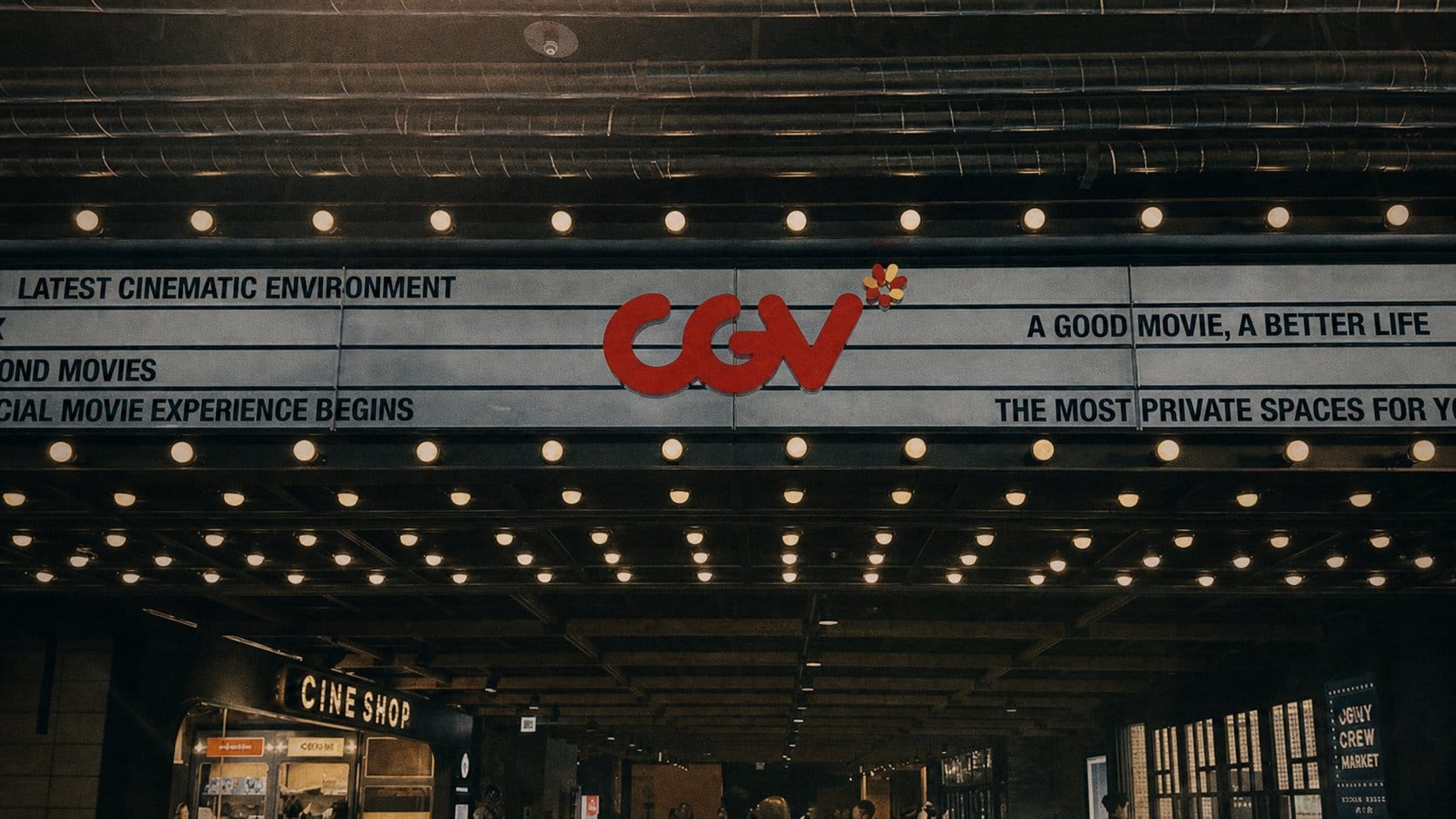
Korea's government is trying to build a legal barrier that would force films like Possible Love back into theaters first. The Ministry of Culture, Sports and Tourism and the Korean Film Council (KOFIC) launched a public-private consultative committee whose opening session brought together 22 filmmakers and executives — including Culture Minister Chae Hwi-yong alongside figures from studios, distributors, cinema chains and IPTV platforms — with the goal of reaching a voluntary "holdback" agreement by August 2026 . A holdback is a contractual delay that keeps a film in cinemas for a set period before it can move to streaming.
Running in parallel is a stronger instrument. A National Assembly bill would impose a mandatory six-month theatrical window before any film migrates to a streaming platform — binding law rather than an industry gentlemen's agreement . The two tracks reflect a familiar tension: whether the market can be nudged into self-regulation, or whether Seoul must legislate the window into existence.
Minister Chae framed the committee's ambition in deliberately cautious terms, acknowledging that a rigid rule could backfire on the very producers it aims to protect.
"A holdback agreement that could minimize potential side effects by reflecting market realities while maximizing industry revenues," — Chae Hwi-yong, Minister of Culture, Sports and Tourism (source: Korea Herald).
The urgency behind the policy push is visible on the exhibitor side, where the financial strain has grown severe enough to reshape the market. Two of the country's largest cinema chains, Lotte Cinema and Megabox, are merging their operations — consolidation that signals how much revenue theaters have shed since the pandemic — while the government has rolled out ticket-discount campaigns to coax audiences back into seats . Together, the committee, the bill and the merger describe a system trying to defend a business model in real time.
For a slow-burn auteur drama already financed by Netflix, the stakes are direct. If either the voluntary deal or the six-month law takes hold before the film's release, the reported hybrid rollout stops being a Netflix choice and becomes a regulatory question .
Three Developments That Will Determine How You Watch Possible Love
Three concrete milestones will decide whether Possible Love reaches you in a Korean cinema first or arrives straight to your Netflix home screen: the August 2026 holdback deadline, the fall festival calendar, and the Q3-to-Q4 rollout window. Each is scheduled to resolve before the film's confirmed Q4 2026 debut , so the answer is likely within months, not years.
- The August 2026 holdback deadline. KOFIC and the Culture Ministry are targeting a voluntary theatrical-window agreement by August 2026 . If it is finalized before the film drops, and if a parallel National Assembly bill mandating a six-month window advances, Netflix could be required to hold the global release until after a Korean run — making Lee Chang-dong's return the first real test case of the framework.
- The fall 2026 festival season. Observers expect a fall-festival bow, with Venice favored over Cannes given the unresolved Netflix–Cannes standoff over theatrical-window rules . A premiere would function as a de facto qualifying run — Academy eligibility requires a public release in the country of origin plus at least seven consecutive theatrical days — and settle the awards question before streaming.
- The Q3→Q4 transition. Watch for Netflix or director-level confirmation of the reported hybrid rollout, which trade reporting says would open in South Korean cinemas in Q3 2026 before the global debut . If it materializes, it sets a precedent for how Netflix handles prestige Korean auteur cinema.
The takeaway is narrow and testable. If no theatrical window is announced, Possible Love becomes the highest-profile evidence that Korea's art-cinema tradition has structurally migrated to streaming — the exact outcome the holdback bill is designed to prevent . Between now and Q4 2026, the presence or absence of a Korean cinema date is the single signal worth tracking.
Frequently asked questions
When will Possible Love be available on Netflix?
Netflix has confirmed Possible Love for Q4 2026 on its official 2026 Korean slate, but no specific streaming date has been announced. A separate Korean theatrical run in Q3 2026 has been described by Korea Times trade reporting, but that timing is not officially confirmed by Netflix.
Will Possible Love get a theatrical release in South Korean cinemas?
It is reported but not confirmed. Korea Times describes a staggered hybrid rollout — opening in South Korean cinemas first, then the global Netflix debut . Netflix's own announcement names only Q4 2026 streaming and lists no theatrical window . Korea's proposed six-month streaming holdback could also factor in if it takes effect before the film drops.
Why did Lee Chang-dong make his comeback on Netflix instead of in cinemas?
The film was originally conceived for theatrical release and was selected for the Korean Film Council's mid-budget support program, set to receive 1.5 billion won, but the application was withdrawn after investment talks with a major Korean distributor collapsed. With no domestic distributor willing to invest, Netflix financed the project in full and, on April 23, 2025, it was classified as a Netflix original online video product rather than a theatrical movie.
Could Possible Love qualify for the Academy Awards?
Only if it receives a theatrical run. Academy Award qualification requires a public release in the country of origin and a qualifying theatrical run of at least seven consecutive days. If Netflix arranges a Korean theatrical window — even a limited one — the film becomes eligible; without one, it cannot enter the race. This awards eligibility is the most cited motivation for any theatrical run and part of why a fall-festival bow is expected.
What is Korea's theatrical holdback debate, and why does this film matter to it?
Korea's holdback debate centers on a proposed six-month wall requiring films to stay exclusive to cinemas before migrating to streaming. Korean cinema admissions fell roughly 45% since 2019, while OTT revenue climbed from about US$546 million to US$1.519 billion. The Ministry of Culture and KOFIC are targeting a voluntary holdback agreement by August 2026, alongside a National Assembly bill imposing the six-month window. As a prestige auteur film that shifted from planned theatrical to Netflix after distributor funding collapsed, Possible Love has become the clearest test case for whether that policy is necessary.
Enjoyed this article? Subscribe to get new stories by email whenever they're published.
This article was written using information collected and analyzed by NAMANE's in-house K-pop research AI engine. We use AI technology to bring you faster, broader coverage, and in the process some details may occasionally differ from the latest facts. For important information such as dates, venues, and prices, please double-check with official sources.


