
Spring 2026 Timing: Cherry Blossoms or Festival Season?
Spring in Seoul splits into two distinct travel windows, each with its own personality. Cherry blossoms peak around April 7–12 — give or take roughly three days depending on that year's temperatures — turning riverside promenades and palace paths into corridors of soft pink. According to Let's Seoul, the city then shifts into full festival mode through late April and May, anchored by Seoul Spring Festa (April 30–May 5) at Han River Park — a five-day event drawing more than 500,000 visitors with K-pop concerts, K-beauty booths, K-fashion shows, and drone light shows. The practical implication for a 2-day K-pop itinerary is clear: choose your window based on what you prioritize. Early April delivers spectacular natural scenery concentrated around a narrow 5–7 day bloom. Late April through early May delivers live event energy and a denser calendar of K-culture programming. Both windows fully support the fan activities in this itinerary.
Quick Answer: Seoul's cherry blossoms peak approximately April 7–12, 2026 (±3 days). For K-pop fans, the late April–May window adds Seoul Spring Festa (April 30–May 5), which draws 500,000+ visitors with K-pop concerts and K-culture events at Han River Park. Choose early April for blossoms, or late April–May for live event programming.
Timing within the blossom window matters considerably. Weekday mornings between 7 and 9am are significantly quieter than weekends at both Yeouido and Seokchon Lake — the two main blossom corridors in central Seoul. Arriving before the midday wave cuts wait times for photos and reduces congestion on narrow paths where crowds can make relaxed movement difficult. By contrast, weekend afternoons at peak bloom, particularly at Yeouido where tour buses arrive throughout the day, can feel genuinely uncomfortable for anyone trying to move at their own pace.
Seoul Spring Festa operates across multiple stages at Yeouido Hangang Park and adjacent areas. The 'Wonder Show' opening ceremony is scheduled for May 3 at Yeouido Hangang Park. General park entry is free, but individual experience programs are ticketed at approximately ₩5,000–30,000 per slot, and reservation slots via the official Seoul Festa portal typically open in mid-April. K-pop concert stages within the festival grounds have historically filled fast once announced — building this into pre-trip planning rather than leaving it to chance is worthwhile.
The table below compares both spring windows at a glance, including their signature highlights and recommended base neighborhoods for each.
| Window | Date Range | Signature Highlights | Crowd Intensity | Recommended Base Neighborhood |
|---|---|---|---|---|
| Cherry Blossom Window | ~April 7–12 (±3 days) | Pink canopy tunnels at Yeouido (1.7km) and Seokchon Lake (2.5km); Lotte World Tower backdrop; palace grounds | Very high on weekends; noticeably lighter on weekday mornings before 9am | Mapo-gu (Hongdae), Yongsan, or Jamsil (for Seokchon Lake proximity) |
| Festival Window | April 30–May 5 | K-pop concerts, K-beauty booths, K-fashion shows, drone light shows at Han River Park; 500,000+ visitors across five days | High throughout; peaks on concert days and weekends; weekday afternoons are comparatively manageable | Mapo-gu (Hongdae) or Yeouido (closest to Han River Park festival grounds) |
Day 1 Morning: K Star Road, COEX, and SM Entertainment's Kwangya
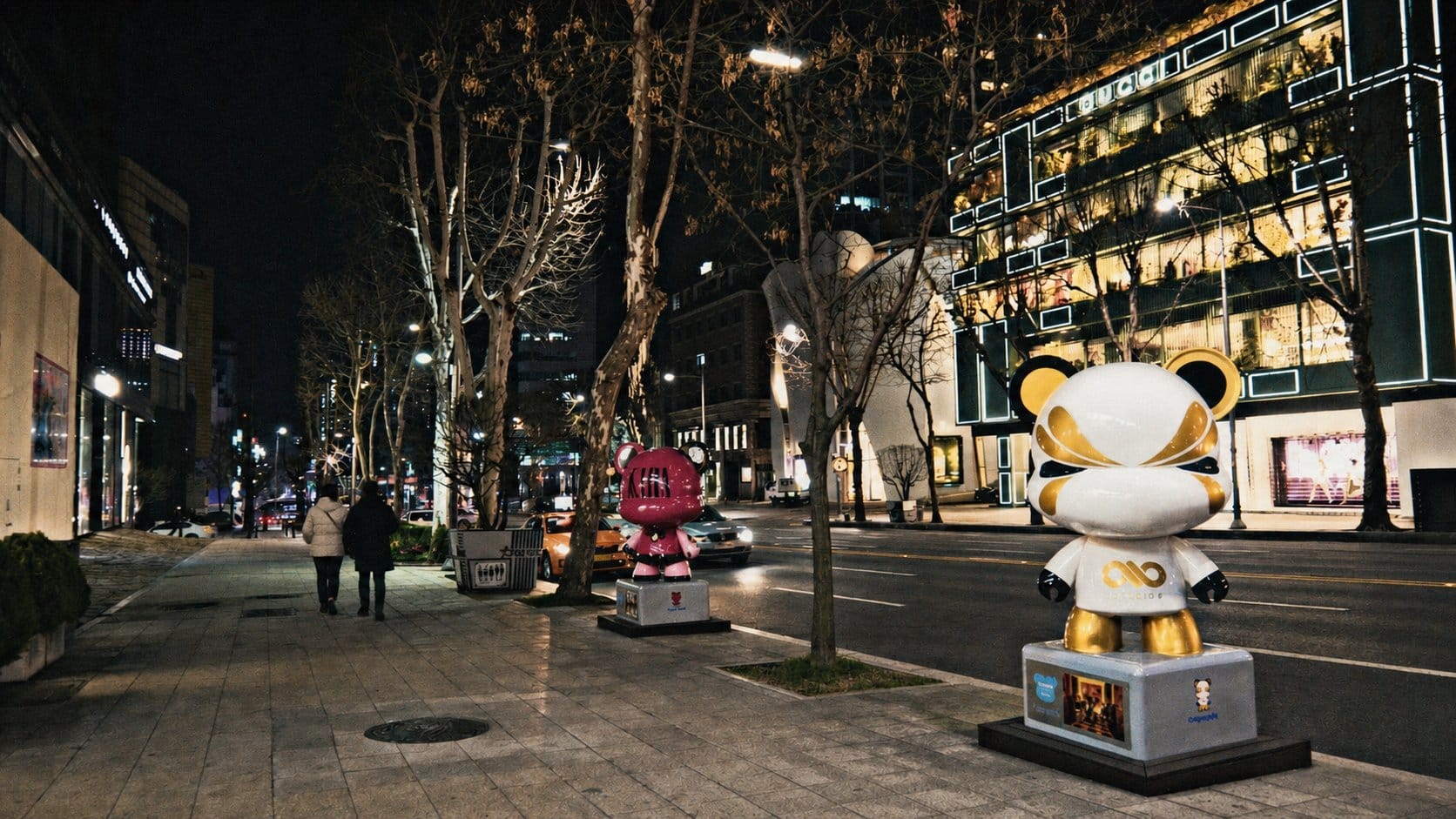
The first morning of this itinerary moves efficiently through Gangnam and Seongsu-dong, covering three landmarks that each represent a different dimension of K-pop's public presence in Seoul. K Star Road is a 1km open-air promenade near Apgujeong Rodeo Station (Exit 2), lined with roughly 20 'GangnamDol' bear sculptures — colorful, oversized figures representing K-pop acts from long-established groups to current chart leaders. The promenade is free, open 24 hours, and takes 40–60 minutes to walk at a relaxed pace with stops for photos. According to South Korea Hallyu, this stretch of Apgujeong-dong remains one of the most immediately accessible K-pop landmarks in Seoul — no booking, no queue, usable at any hour. From there, a short walk east toward COEX brings you to the PSY Gangnam Style statue at the mall's East Gate, a compact photo stop before heading onward.
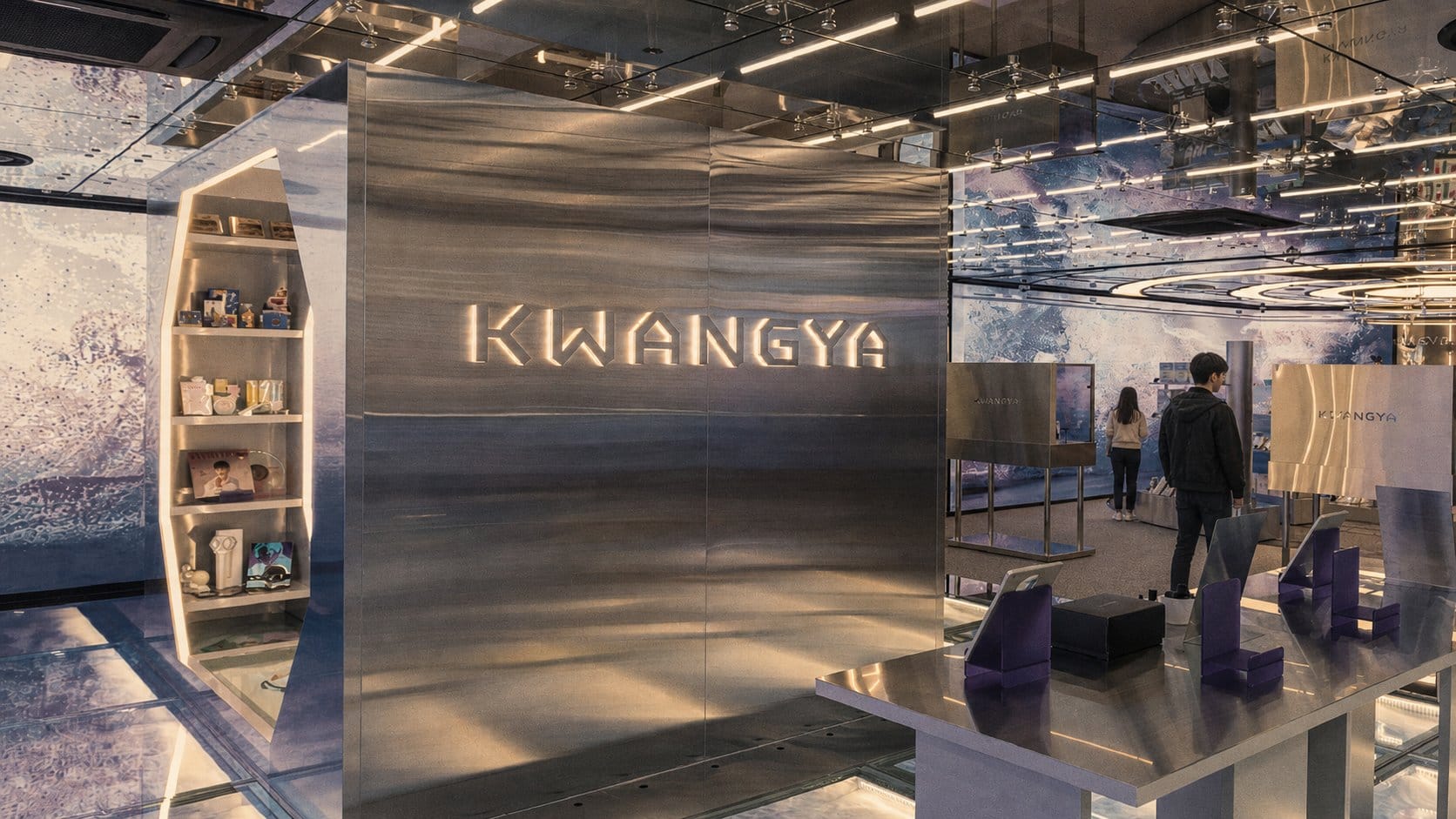
The metro routing from K Star Road to Kwangya is straightforward. From Apgujeong Rodeo Station, take the Bundang Line northeast to Seoul Forest Station. Total travel time is approximately 15–20 minutes depending on transfer timing. Seoul Forest Station Exit 5 places you directly on the block where Kwangya — SM Entertainment's official flagship public store — operates. This is not a fan-run pop-up or a third-party retailer: it is SM's own venue, stocking official albums, light sticks, stage-outfit displays, and limited-edition merchandise for artists including aespa, NCT, and EXO.
Kwangya's AR photo booths are one of the store's more distinctive features. Visitors can generate digitally composited images alongside aespa members or select NCT units using in-store augmented reality hardware — the output is printable and downloadable on-site. Trazy's Seoul K-pop experience guide recommends arriving before noon to beat the afternoon rush, which builds from around 1pm on weekdays and considerably earlier on weekends. Budget 60–90 minutes for the full Kwangya visit — longer if you plan to use the AR stations, which can carry queues of 15–20 minutes per session during busy periods.
Merchandise pricing at Kwangya follows standard SM retail: official mini-albums typically run ₩13,000–18,000, full albums ₩18,000–28,000, and limited or special-edition sets considerably higher. Light sticks for current SM acts generally fall in the ₩45,000–60,000 range. The store also carries season-specific releases and collaboration items that are not always available through SM's online storefront — a practical consideration for fans targeting sold-out or Korea-exclusive items.
Day 1 Afternoon: Hongdae Fan Stores and K-Pop Dance Classes
Hongdae — the area surrounding Hongik University in Mapo-gu — is the most concentrated zone for K-pop retail and fan culture in western Seoul. The afternoon here moves between two distinct kinds of experience: browsing the district's layered network of fan stores and merchandise stalls, then switching to an active, participatory format with a K-pop dance class. WithMuu in AK Plaza (2F, a short walk from Hongdae Station Exit 5) carries a broad stock of photo cards, albums, and fan accessories across all major agencies. POCA Photo Card stores operate in multiple Hongdae locations and sell individual photo cards from ₩3,000, making them accessible for fans working with tight budgets. According to South Korea Hallyu, the main commercial strip outside Hongdae Station holds the densest concentration of K-pop retail outside Myeongdong — allow 60–90 minutes to browse without feeling rushed.
Independent fan-goods stalls along the pedestrian lanes often carry fan-produced items — prints, handmade pin sets, unofficial photobook compilations — created by local fan communities and available through no other retail channel. Prices vary considerably; scanning these stalls before entering the larger stores is a practical order of operations for collectors who want to compare what is on offer before spending.
"The demonstration-first format means complete beginners are moving alongside the group within the first ten minutes. We don't stop to explain technique — we show, repeat, and adjust in real time," explains a Hongdae studio instructor featured in Trazy's K-pop fan experience guide.
K-pop dance classes near Hongdae and Hapjeong Station run 1 to 1.5 hours and are structured as group sessions with a single lead instructor. The demonstration-first approach — showing the full chorus or point choreography first, then breaking it into short repeatable segments — means no prior dance experience is necessary. Visit Seoul's official hallyu guide lists several studios in the Hongdae and Hapjeong area that accommodate English-speaking participants; Klook and Trazy both host bookable listings with English descriptions and verified reviews. Book 1–2 days ahead during spring high season; same-day walk-ins are possible outside peak periods but are not reliable during April and early May.
Budget guide for the Hongdae afternoon: individual photo cards run ₩3,000–15,000 depending on rarity and current demand; albums range ₩13,000–30,000 at most retail stores; a 1–1.5 hour K-pop dance class costs approximately ₩30,000–45,000 per person. Total outlay for the afternoon — moderate shopping and one dance session — typically falls in the ₩60,000–120,000 range per person, depending on what you pick up.
Day 1 Evening: Street Performances and Noraebang in Hongdae
Hongdae's evening atmosphere shifts noticeably from around 7pm on Fridays and Saturdays as street performers begin claiming their designated spots along Festival Street. The performances here are primarily by aspiring K-pop groups — teams that practice idol choreography and perform it for rotating crowds in organized street slots, rather than informal busking. Performances are free to watch, require no reservation, and continue throughout the evening across several street stages. The energy is unscripted and varies night to night: some groups perform with backing tracks broadcast through portable sound systems; others use live instrumental support. According to South Korea Hallyu, this street performance culture is distinct to Hongdae and represents one of the few places in Seoul where aspiring idol groups perform regularly for a public audience at no charge.
After the street performances, noraebang (private karaoke rooms) are within walking distance of every Hongdae street exit. Room rates typically run ₩15,000–25,000 per hour for a group room; some venues offer flat-rate late-night packages. Song catalogs in Hongdae noraebangs are generally current and well-maintained, with substantial K-pop selections covering releases through the most recent two to three years. This is a genuinely integral part of fan culture in Seoul — singing your group's discography in a private room, tambourine in hand, is a different kind of engagement with the music than a ticketed concert.
Dinner options near Hongdae Station include pojangmacha (outdoor tent stalls serving tteokbokki, soondae, and fried skewers), Korean BBQ restaurants, and convenience store meal sets. Most sit-down meals run ₩10,000–25,000 per person; pojangmacha eats cost considerably less and double as a social experience on busy evenings. If you are eating before the street performances begin, aim to be seated before 6:30pm — popular restaurants in the Hongdae strip fill quickly on weekend evenings during spring season.
Day 2 Morning: HYBE Headquarters and Yongsan Fan Spots
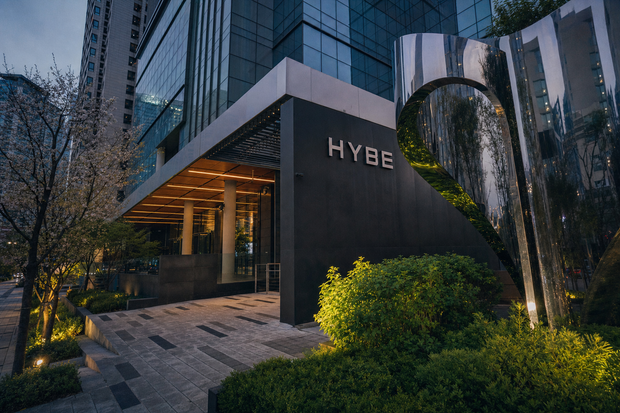
HYBE's headquarters in Yongsan-gu is the creative and administrative home of BTS, SEVENTEEN, TXT, LE SSERAFIM, and several other acts across the HYBE Labels roster. The building — a multi-story glass-and-steel structure with a distinctive geometric facade — is not open to the general public. Interior access requires an industry affiliation or a scheduled appointment; there is no public lobby, ticketed attraction, or in-building gift shop. Fans visit for exterior photography and for what is effectively a hallyu pilgrimage: placing themselves at the physical address where albums are produced and careers are shaped. According to Trazy's guide to K-pop entertainment buildings in Seoul, HYBE headquarters draws a steady stream of international fans year-round, with ARMY-affiliated visits clustering around member birthdays and comeback periods.
"For dedicated fans, standing outside HYBE's glass facade is not simply a photo opportunity — it is a point of connection with the creative process itself. The proximity is meaningful in a way that does not require explanation," notes a Seoul hallyu travel specialist cited in Visit Seoul's official hallyu guide.
Before visiting, check the Weverse app or the Fab platform for any active HYBE ground-floor pop-up campaigns. HYBE has periodically activated the building's ground-level space as a themed pop-up tied to specific artist campaigns — a BTS-related pop-up ran through mid-April 2026. Whether a pop-up is running significantly changes what you encounter: no active pop-up means a 15–20 minute exterior stop; an active pop-up may extend your visit to 45–60 minutes with queuing. The Weverse announcement timeline for these activations is typically one to two weeks ahead of launch.
The back alleys near Yongsan Station host fan-run birthday cafes — small venues temporarily decorated with idol-themed banners, photo displays, and themed drink menus, operated by fan clubs during a member's birth month. These rotate constantly; the most current listings are tracked by fan communities on X (formerly Twitter) and the Fab app. A coffee stop in nearby Hannam-dong pairs naturally with the Yongsan morning: Hannam-dong's café strip runs along the hillside streets between Hangangjin and Hannam stations and is 10–15 minutes on foot from the HYBE building. Allow 60–90 minutes total for the full Yongsan morning, including any pop-up time and transit.
Day 2 Afternoon: Myeongdong K-Pop Retail and HiKR Ground
Myeongdong is the most tourist-accessible concentration of K-pop retail in Seoul, layered across an underground mall, department store basements, and specialist street-level shops within a compact and walkable grid. The Myeongdong Underground Mall — accessible from Exit 6 of Myeongdong Station — anchors the retail cluster, with Music Korea and Buruttrak operating nearby as dedicated K-pop music merchandise stores. Lotte Young Plaza's basement carries a broad range of current and back-catalog releases across multiple agencies. According to South Korea Hallyu, this combined cluster offers the widest range of K-pop product accessible to foreign visitors in a single neighborhood in Seoul. Allow 60–90 minutes depending on how focused your shopping priorities are.
One destination within Myeongdong that operates differently from standard retail is the 'Space of BTS' lifestyle corner on the 8th floor of Shinsegae Duty Free. This is not a standard merchandise store: it presents BTS-curated design and lifestyle items — home goods, stationery, and limited-edition collaborations — in a styled retail environment that reflects the members' aesthetic sensibilities rather than conventional idol merchandising. Foreign visitors with a passport can access duty-free pricing on qualifying purchases.
| Destination | Location / Access | Hours | Entry | What to Expect |
|---|---|---|---|---|
| Myeongdong Underground Mall | Exit 6, Myeongdong Station | 10am–10pm (most stores) | Free | Albums, photo cards, fan accessories across multiple shops in a single walkable corridor |
| Music Korea | Near Myeongdong Underground | 10am–9pm | Free | Wide album selection across current and back-catalog releases; light sticks and official goods |
| Lotte Young Plaza (Basement) | Adjacent to Myeongdong Station | 10:30am–8pm | Free | Multi-agency K-pop merchandise; albums and fan accessories |
| Space of BTS (Shinsegae Duty Free, 8F) | Myeongdong Shinsegae building | 9:30am–8:30pm | Free (duty-free pricing available with passport) | BTS-curated lifestyle and design items; distinct from standard idol merchandise retail |
| HiKR Ground | Near Cheonggyecheon Stream | Tue–Sun, 10am–7pm | Free | K-pop music video set recreations using stage-quality props and immersive AV displays |
HiKR Ground, open Tuesday through Sunday from 10am to 7pm with free entry, is a multimedia K-pop experience space rather than a retail environment. The facility allows visitors to step into recreated music video sets using stage-quality props and high-grade audiovisual displays. Trazy flags HiKR Ground as a stop that does not overlap with anything else in the city — it is worth 45–60 minutes, and works best if you photograph or record as you move through it.
If your trip falls on a Sunday, the afternoon can include SBS Inkigayo at the SBS building in Mok-dong — the flagship weekly K-pop chart show with a live studio audience watching current idols perform. Tickets are free but competitive; apply 2–4 weeks ahead via Trazy or through the official SBS application. Full booking details are in the pre-arrival booking section below.
Cherry Blossom Routes to Add to the Itinerary
Seoul's two most accessible cherry blossom corridors — Yeouido and Seokchon Lake — work as natural extensions of a K-pop-focused day rather than standalone detours requiring separate planning. The Yeouido Spring Flower Festival runs along Yunjung-ro Road, where 1,886 cherry trees line a 1.7km path that forms a canopy-style pink tunnel at full bloom. According to Let's Seoul, peak bloom falls approximately April 7–12, with petal fall typically beginning 10–14 days after peak — the viewing window is real and narrow. Admission is free. Weekday mornings before 9am are significantly quieter than afternoons and weekends, when the 1.7km path can become difficult to move through comfortably. Plan for 60–90 minutes at Yeouido including transit from central Seoul.
Seokchon Lake in Jamsil — accessible from Jamsil Station on Lines 2 and 8 — offers a 2.5km blossom path that frames the Lotte World Tower in the background, a composition that K-pop artists have used repeatedly in social media content and album photography. The lake loop takes 45–60 minutes on foot and sits five minutes from Jamsil's K-pop retail zone, making it a practical add-on to Day 2 for visitors staying on the eastern side of the city. Once blossoms drop, crowds at both Yeouido and Seokchon fall sharply — arriving a day or two after peak means considerably less congestion on the same paths.
Before visiting either location, searching your group's name alongside 'Yeouido' or 'Seokchon' on X or Instagram surfaces the specific angles that fan communities have already identified and documented. Idol-referenced shot positions tend to be pinpointed quickly by fan networks and are generally the most photogenic spots on each path — a practical use of existing community knowledge rather than arriving without reference points.
Timing note for two-window trips: if you are aiming to experience both the cherry blossom peak and Seoul Spring Festa, note that the two windows do not overlap. Peak blossom typically concludes 2–3 weeks before the festival begins at the end of April. A trip targeting both requires either a longer stay or a return visit. For a strict 2-day itinerary, pick one window and build accordingly.
What to Book Before You Arrive in Seoul
Booking timelines for Seoul's K-pop experiences vary significantly depending on the activity. SBS Inkigayo studio audience tickets sit at the longest lead time — apply 2–4 weeks before your target Sunday through Trazy (English-friendly interface) or directly via the official SBS application. Tickets are free, but demand consistently outpaces supply during popular recording weeks. Check the confirmed artist lineup before submitting an application — lineup information is typically announced approximately one week before each recording date. Applying without first confirming the lineup risks committing a Sunday slot to a show that does not feature acts you follow. Inkigayo records on Sundays only; if Sunday does not fall within your Seoul dates, it is not available regardless of booking lead time.
K-pop dance classes at Hongdae and Hapjeong studios are considerably more flexible: booking 1–2 days ahead via Klook or Trazy is typically sufficient outside the peak cherry blossom and festival weeks. Same-day walk-ins are possible during quieter periods. During April's blossom season and Seoul Spring Festa week, however, popular sessions fill several days in advance. Many studios in the Hongdae area accept direct bookings in English via their own websites or through Instagram DM — a useful backup if platform listings show as sold out.
Seoul Spring Festa (April 30–May 5) has free general admission to Han River Park grounds, but specific concert stages and individual experience programs require advance registration via the official Seoul Festa portal or Naver. Official slot releases typically open 2–4 weeks before the event; check from mid-April. K-pop concert stage registrations within the festival have historically gone fast once announced.
For transit, pick up a T-money card at Incheon Airport upon arrival — it covers metro, city bus, and convenience store purchases throughout Seoul with no pre-booking required. Load ₩30,000–50,000 for a two-day visit, which covers all metro trips in this itinerary with room to spare. For accommodation, book 1–2 months ahead if visiting in April during cherry blossom peak — room rates in central neighborhoods typically rise 20–30% at peak bloom, according to Let's Seoul. Mapo-gu (near Hongdae), Yongsan, and Gangnam all position you well for both the Day 1 and Day 2 routes in this itinerary.
Frequently Asked Questions
When do cherry blossoms peak in Seoul in spring 2026?
Seoul's cherry blossoms are forecast to peak around April 7–12, 2026, with a margin of approximately ±3 days depending on that season's temperatures. The two most accessible viewing locations are Yeouido (Yunjung-ro Road, 1.7km tree-lined path, free entry) and Seokchon Lake near Jamsil Station (a 2.5km loop framing Lotte World Tower). Weekday mornings before 9am have the lightest foot traffic at both sites. Petal fall typically begins 10–14 days after peak, and crowds at both locations drop sharply once blossoms pass.
Can K-pop fans visit inside HYBE headquarters in Seoul?
No. HYBE's headquarters building in Yongsan-gu is not open to the general public. The interior requires industry credentials or a scheduled appointment; there is no public lobby, gift shop, or ticketed visitor experience inside. Fans visit for exterior photography of the glass-and-steel facade. HYBE occasionally activates the ground floor as a pop-up space during specific artist campaigns — a BTS-related pop-up ran through mid-April 2026, for example. Check the Weverse app or the Fab platform before visiting to understand whether a ground-floor activation is currently running, as this significantly affects what you can see on arrival.
How do I get tickets to SBS Inkigayo as a foreign visitor?
SBS Inkigayo studio audience tickets are free but competitive. Foreign visitors can apply through Trazy (English interface available) or via the official SBS application. Apply 2–4 weeks before your target Sunday recording date. Artist lineups are confirmed approximately one week before each recording, so verify the lineup before submitting your application to confirm the acts you follow are scheduled. Inkigayo records on Sundays only — if your Seoul itinerary does not include a Sunday, this option is unavailable regardless of how far in advance you apply.
Are K-pop dance classes in Hongdae suitable for complete beginners?
Yes. Studios near Hongdae and Hapjeong Station specifically run beginner-oriented group sessions lasting 1–1.5 hours. The standard format begins with instructor demonstration of the full routine or chorus, then breaks it into short repeatable segments for the group to practice. No prior dance experience is expected or required. English-speaking instructors or bilingual staff are available at most studios that market to international visitors. Book 1–2 days in advance via Klook or Trazy during spring season; same-day walk-ins may be possible outside peak periods but are not guaranteed.
What is Kwangya and where is it in Seoul?
Kwangya is SM Entertainment's official flagship public store in Seoul — not a fan-run venue or third-party retailer, but SM's own retail and fan experience space. It is located at Seoul Forest Station on the Bundang Line, Exit 5. The store sells official albums, light sticks, and limited merchandise for SM artists including aespa, NCT, and EXO, and features AR photo booths where visitors can generate digitally composited images alongside SM artists. Budget 60–90 minutes for a full visit, including any time waiting for the AR photo booth stations. Arriving before noon is recommended to avoid afternoon crowds, which build from around 1pm on weekdays.
Building Your Two Days: What to Keep in Mind
This itinerary is designed to be modular rather than fixed. The Day 1 route from Apgujeong to Hongdae runs well throughout the entire spring season and does not depend on cherry blossom timing. Day 2's Yongsan-to-Myeongdong sequence is similarly flexible, though the optional SBS Inkigayo component locks to Sundays only. The spring window decision — blossom season versus festival season — shapes the experience at the itinerary's edges (Yeouido, Seokchon Lake, Han River Park) without changing any of the core fan destinations in Gangnam, Seongsu-dong, Hongdae, or Myeongdong.
The tasks requiring the most lead time — SBS Inkigayo tickets, April accommodation, and Seoul Spring Festa program registrations — should be addressed 3–4 weeks before departure. Everything else in this itinerary, including dance classes and Kwangya, can be organized within a few days of arrival or even on the day itself during quieter periods. A T-money card from Incheon Airport on your arrival day covers all transit; every destination listed here is on the Seoul Metro network.
Spring 2026 carries a dense calendar for K-culture events in Seoul, with Seoul Spring Festa anchoring late April and major concert events following through June. If your schedule has any flexibility, the late April through early May window stacks festival programming, mild temperatures (15–23°C through May), and the closing stretch of the blossom season into a single trip window. For those locked into early April, the cherry blossom peak delivers a visual experience that the city does not replicate at any other time of year — plan around the 7am window and weekday timing, and it remains genuinely worth the effort.
Last updated: 2026-05-06. This article reflects confirmed event dates, venue information, and pricing available as of publication. Cherry blossom peak dates are based on meteorological forecasts and may vary by ±3 days. Verify event-specific booking links, artist lineups, and operating hours through official sources before travel.
Related Articles
- 7-Day South Korea Itinerary 2026: Seoul to Busan for Visiting Fans
- Seoul's Historical Soul: Palaces, Hanok, and Creative Districts
- Seoul Street Food Markets & Neighborhood Eats: 2026 Guide
- Korea-UAE K-Pop: Every Major Festival and Concert 2025-2026
- Korean Dramas Starring K-Pop Idol Actors: The 2018 Class
This article was written using information collected and analyzed by NAMANE's in-house K-pop research AI engine. We use AI technology to bring you faster, broader coverage, and in the process some details may occasionally differ from the latest facts. For important information such as dates, venues, and prices, please double-check with official sources.


